The first thing I noticed when we landed at Auckland in New Zealand was the difference in integration. Personnel at the air port included Maori people and it became apparent they weren’t separate as Aboriginals were in Australia. They, to my eye, seemed fully integrated. So I looked up why this might be. Maori are Polynesian people who came to New Zealand in the 1300s. They built settlements which could be defended. They were in a better position to negotiate and understand Europeans. This impacted on the relationship going forward.
Our campervan here although through the same company as before was an older model. More robust inside with some better and some worse features.
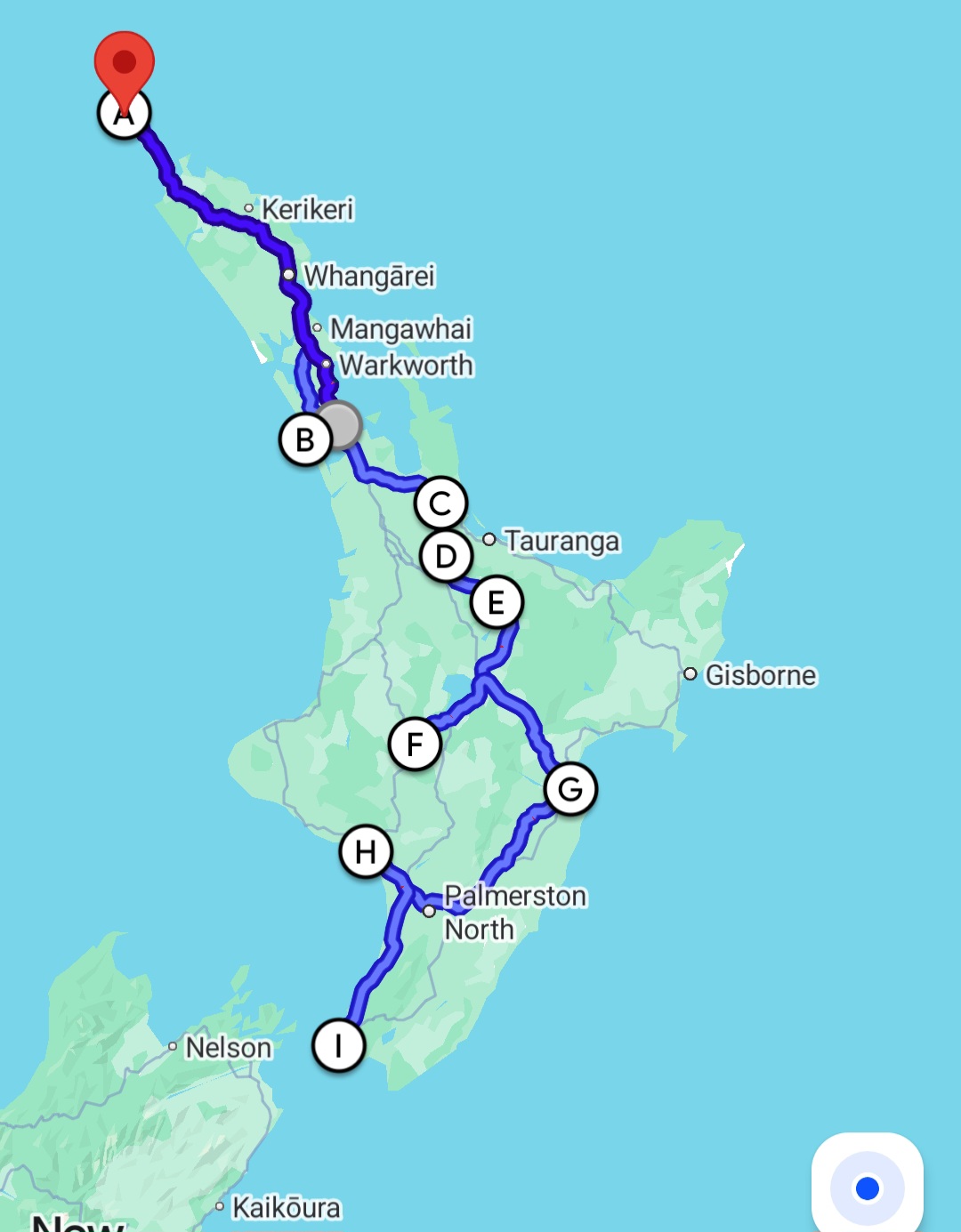
We set off for the top of the North Island to then head back down to Wellington ready to go to the South island.
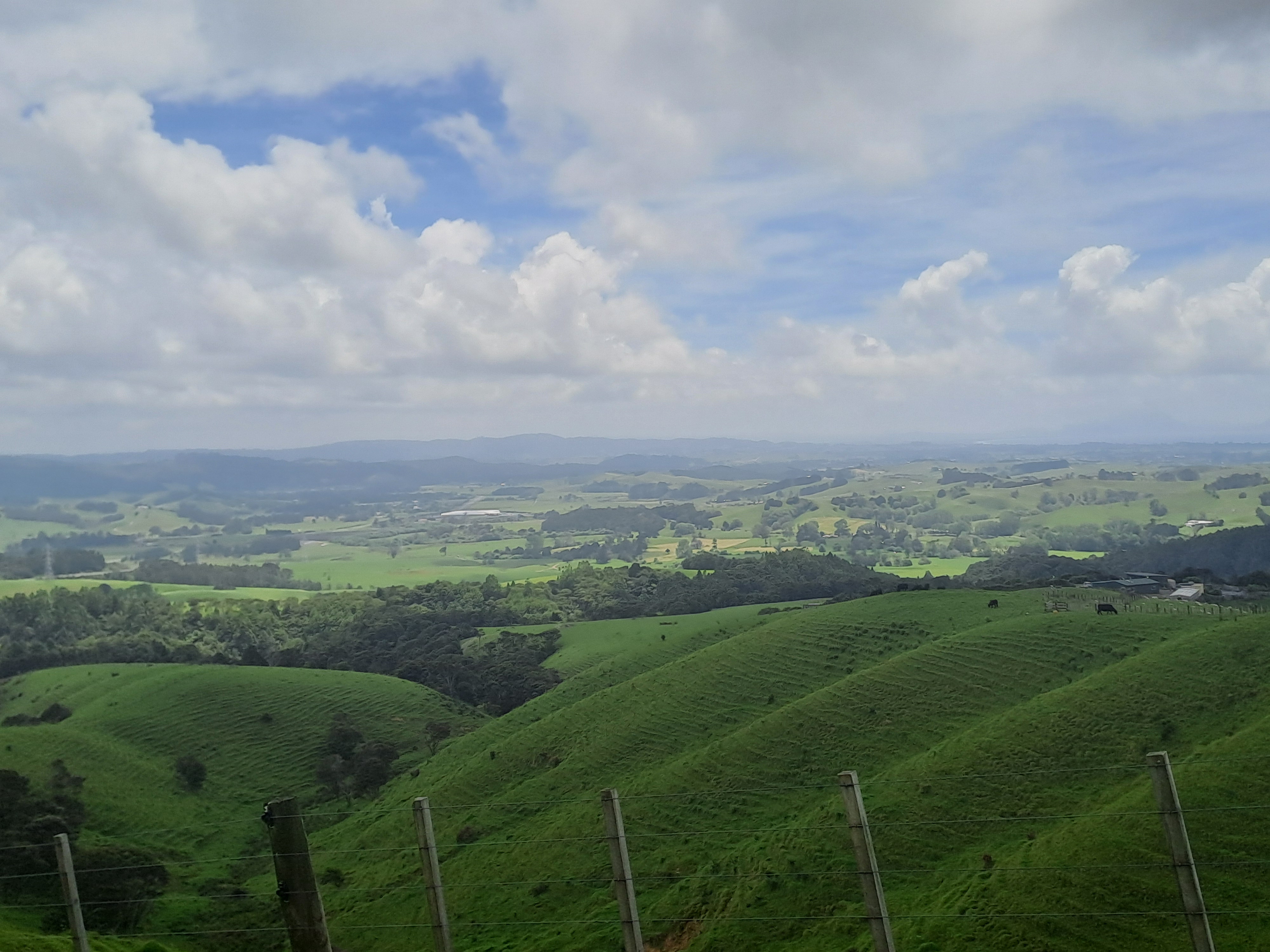
After Australia this was all so green and in the main, short distances, although the top section being long and thin, involved greater distances and a more spread out population. We found it amusing that one of the first places we drove past was Sheep World!
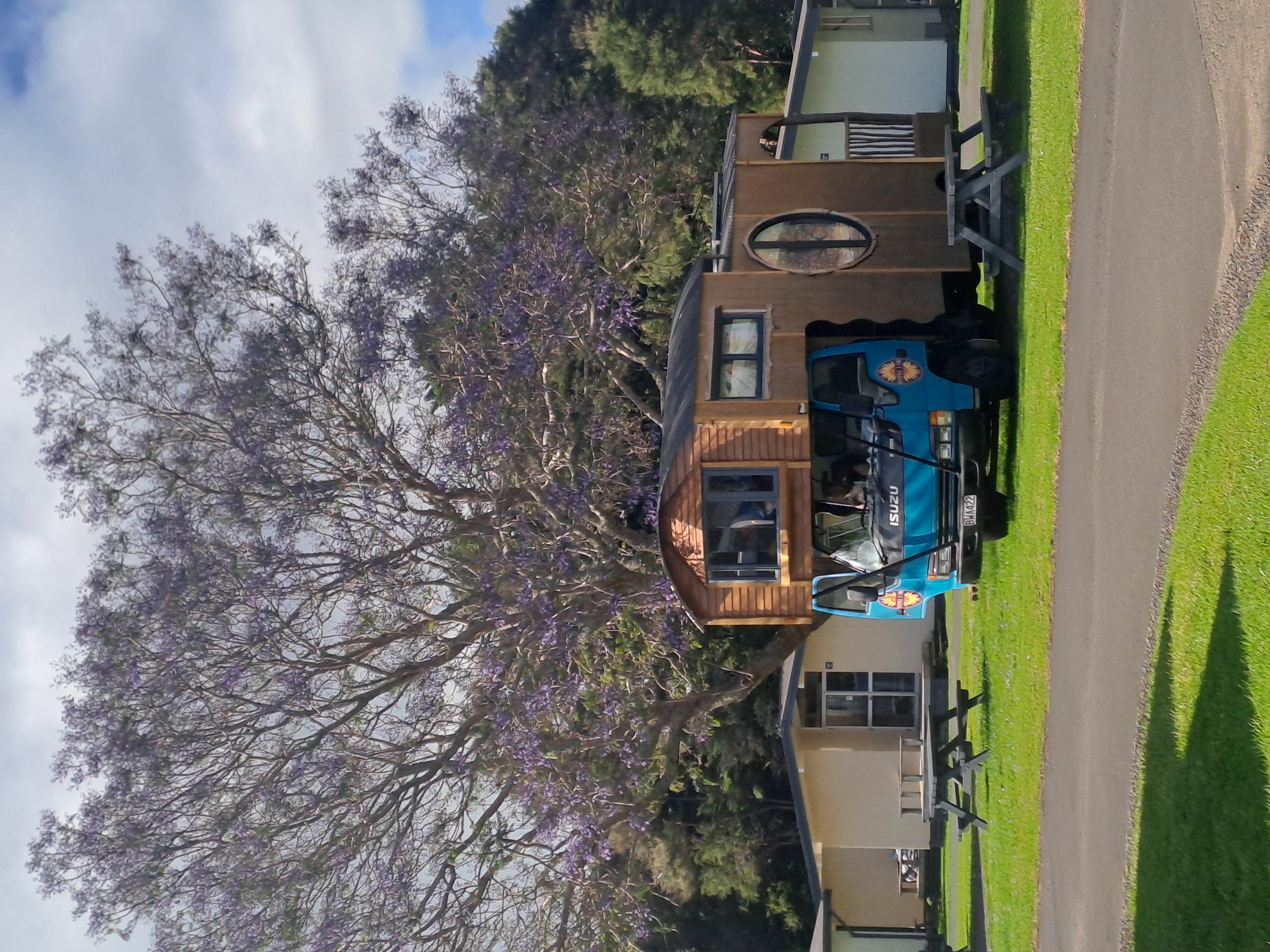
Our first night was at Whangarie part way up. On the way we discovered some of the threats to the native population. Kiwi are small and flightless and prey to imported animals such as stoats and cats. Hence the poison. The are also disinfectant measures in woodlands to protect the Kauri tree from dieback. We loved the caravan/motorhome below.


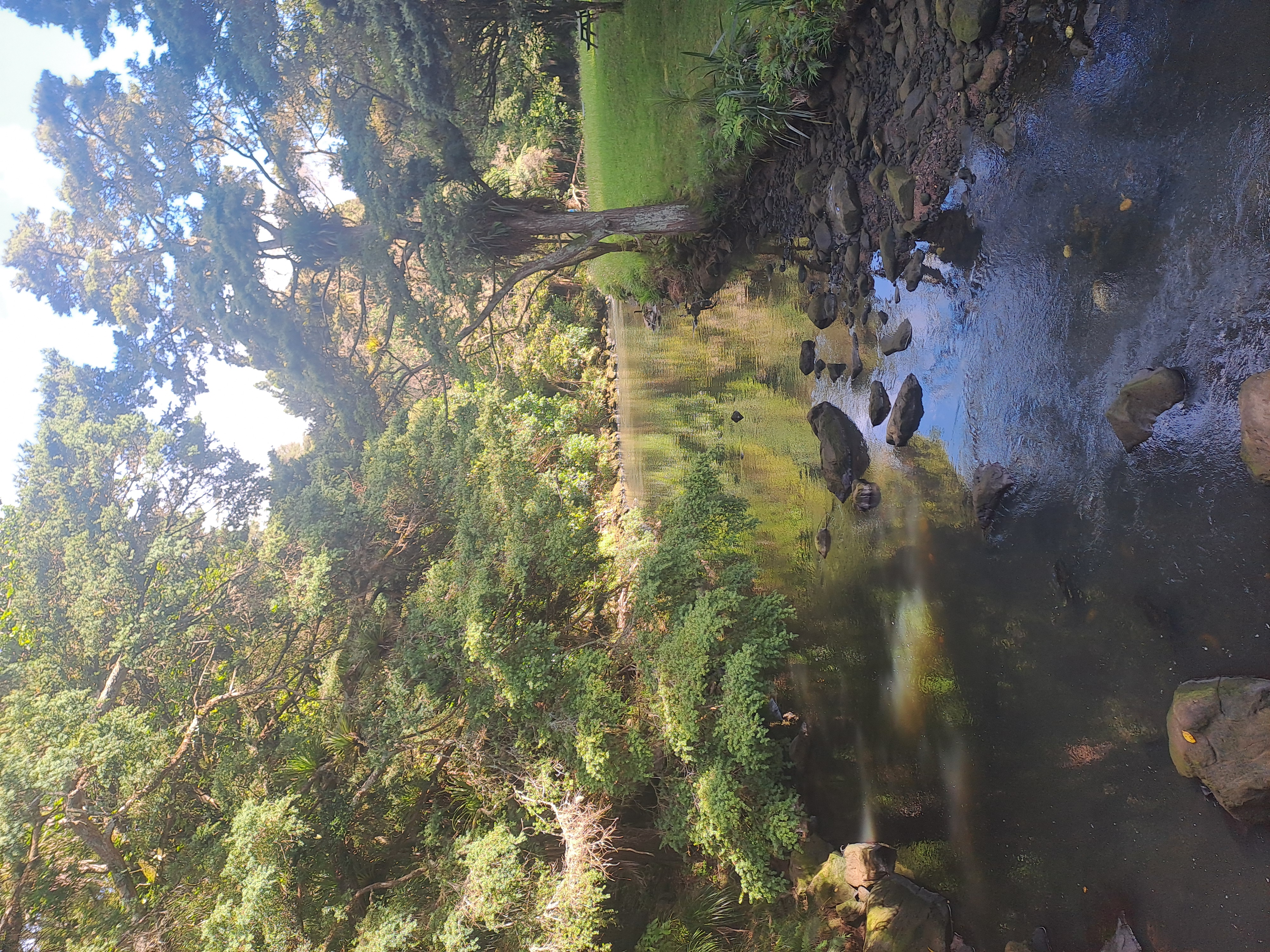
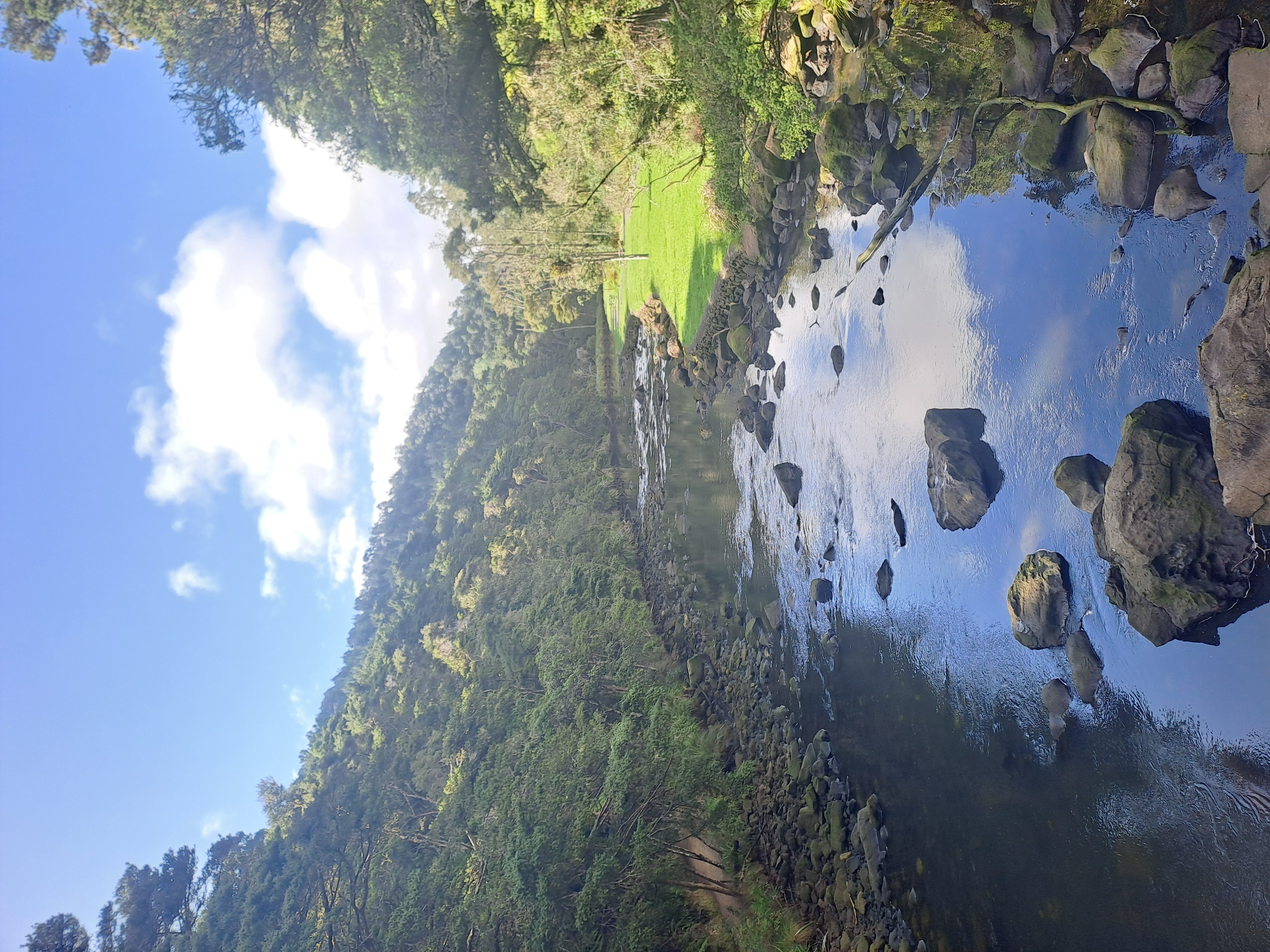
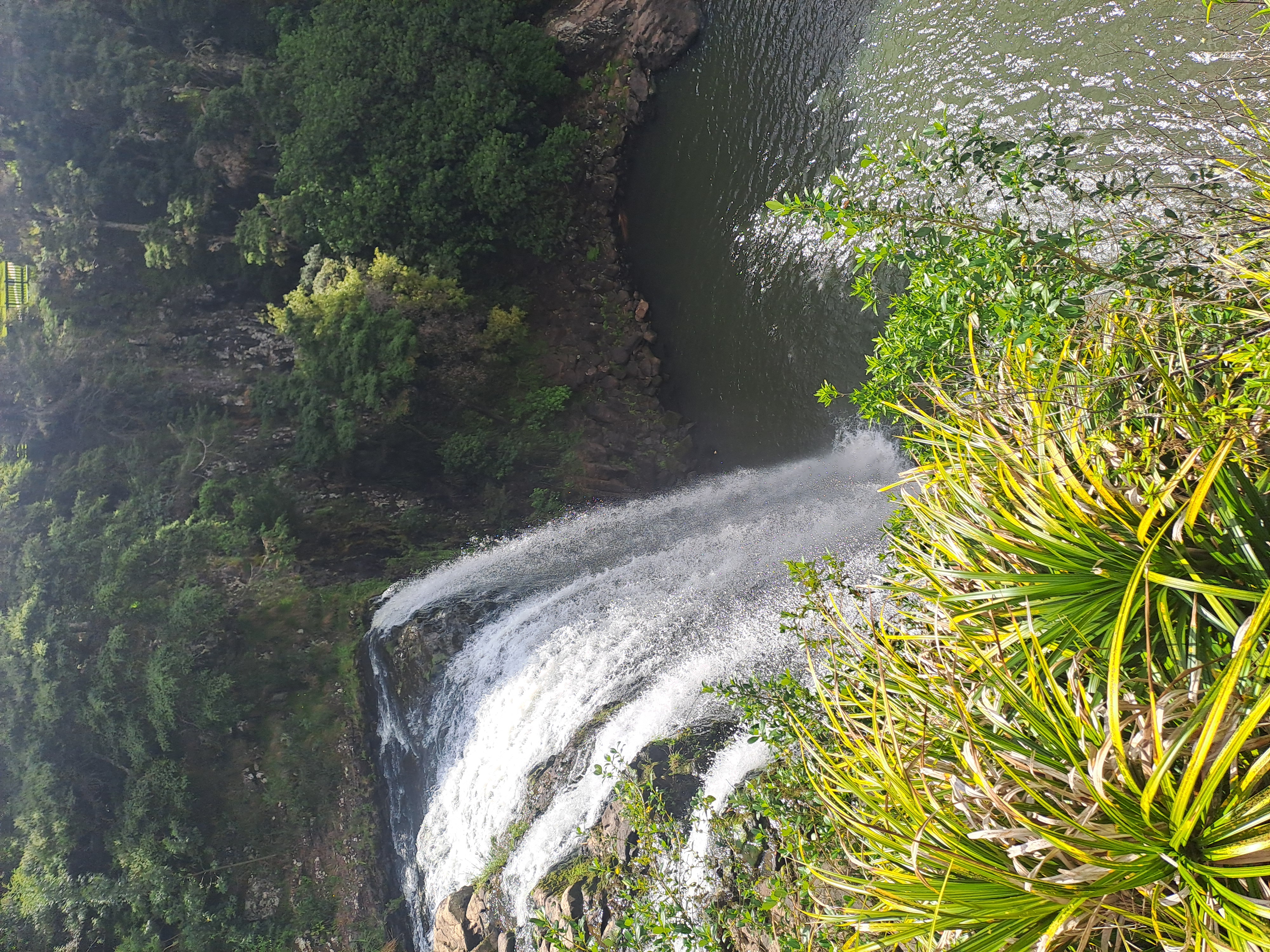
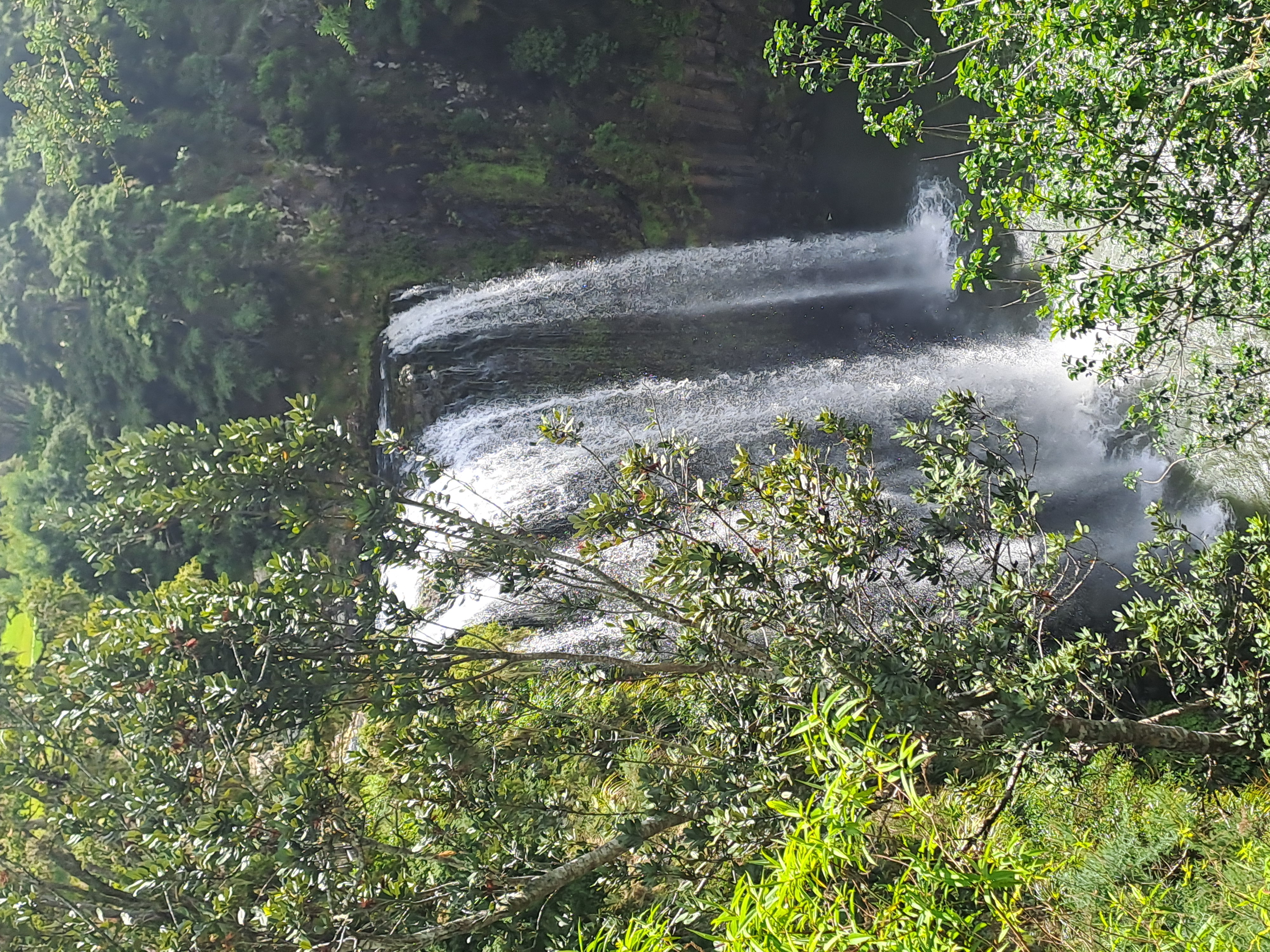
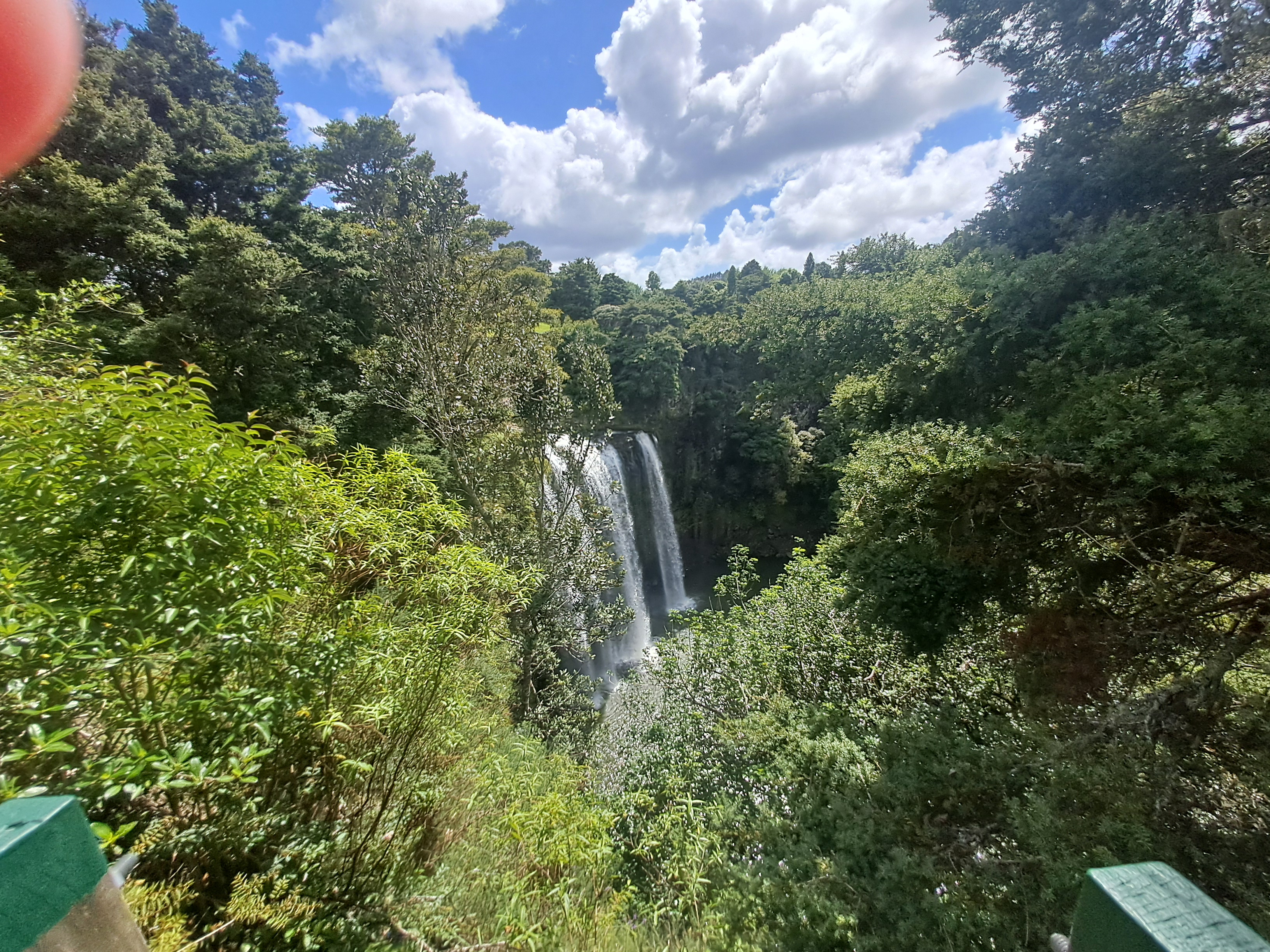
Next morning I left through the back of the site and followed a trail through the rain forest to waterfalls and to meet Ashley. Unfortunately the charger I took with me didn’t work and I missed shots of the swing bridge (swinging as I walked along it) and the falls from the bridge opposite them at the bottom.



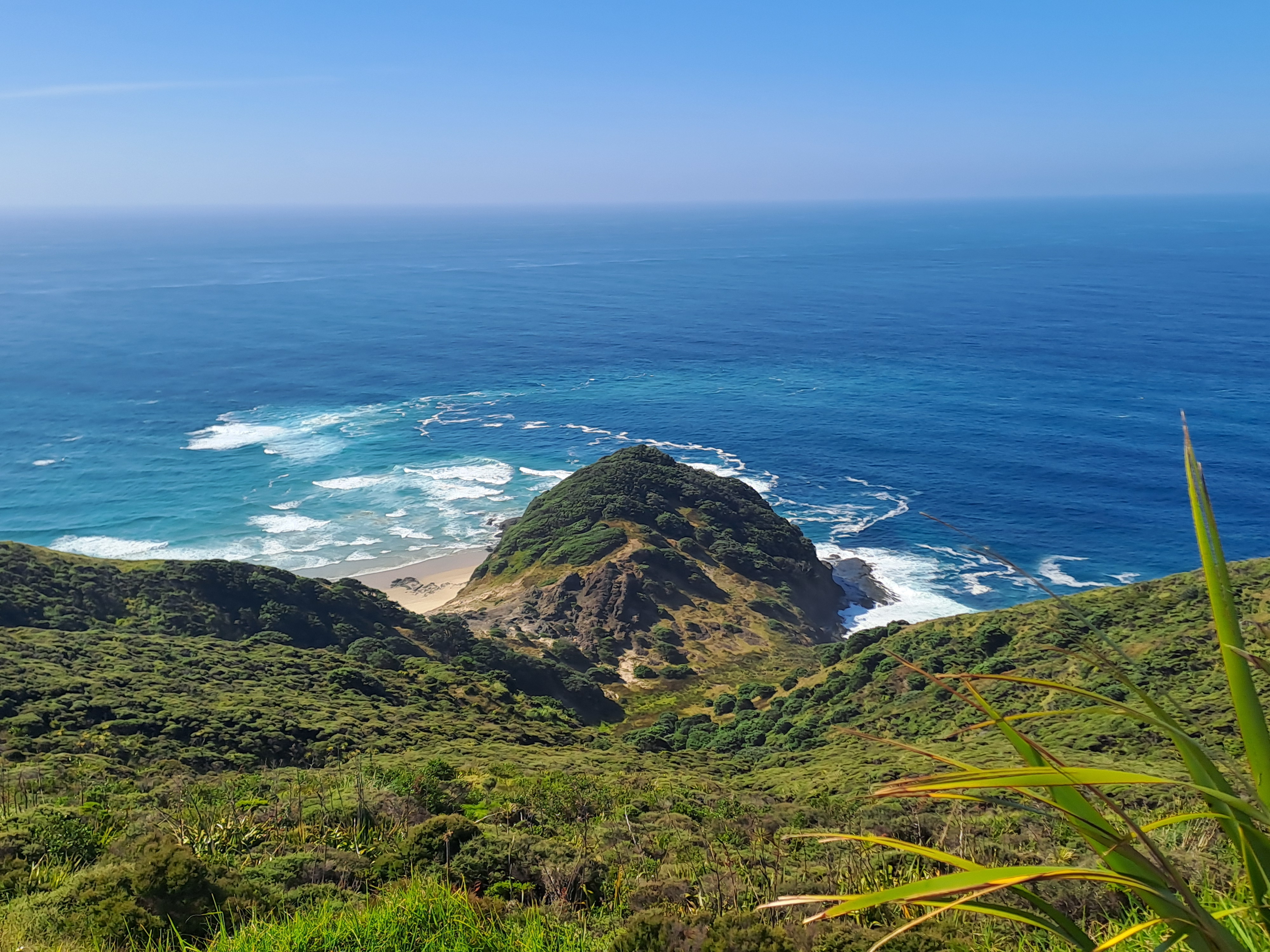
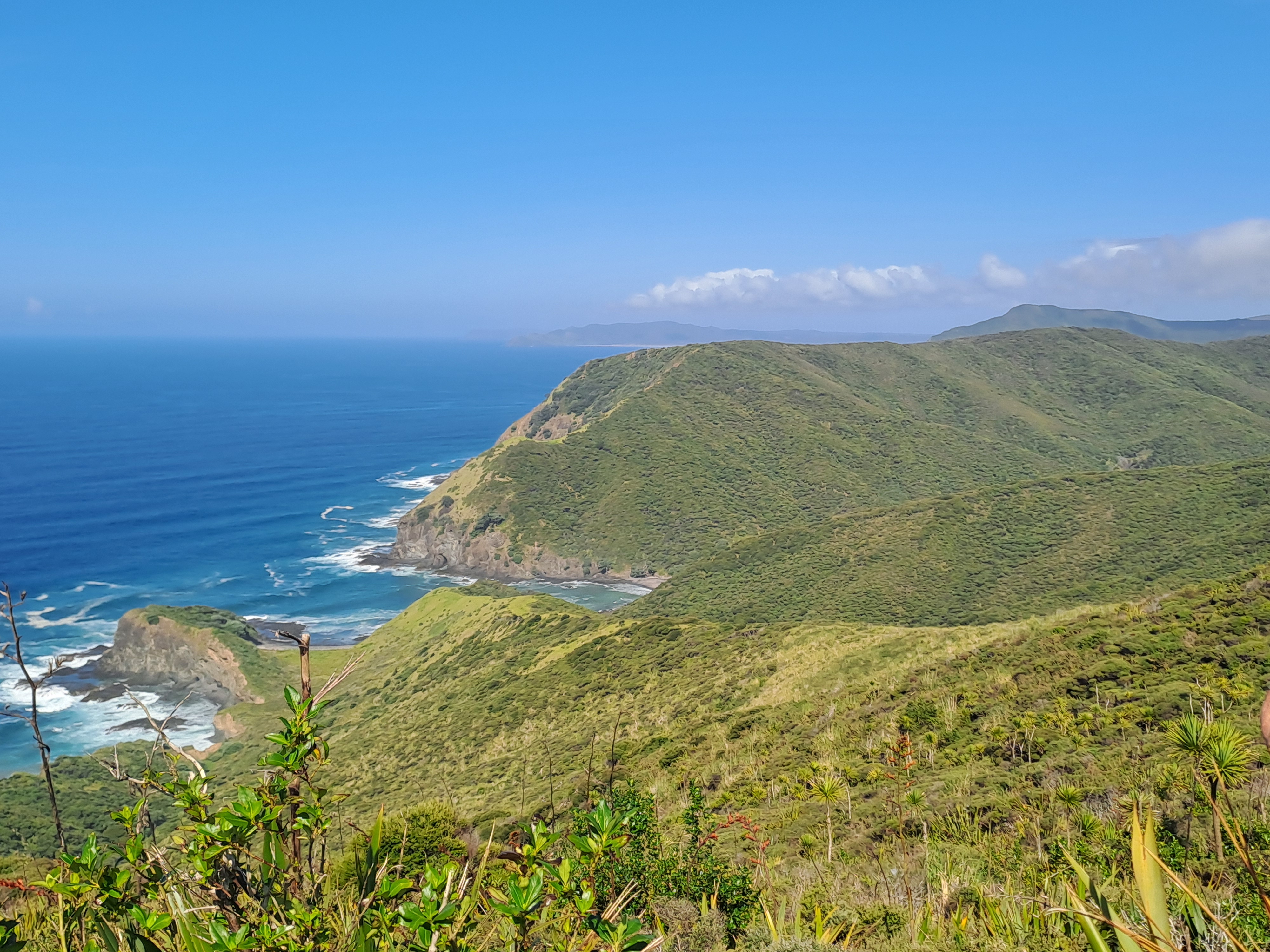
Onwards to Cape Reinga at the very top of the island complete with lighthouse.
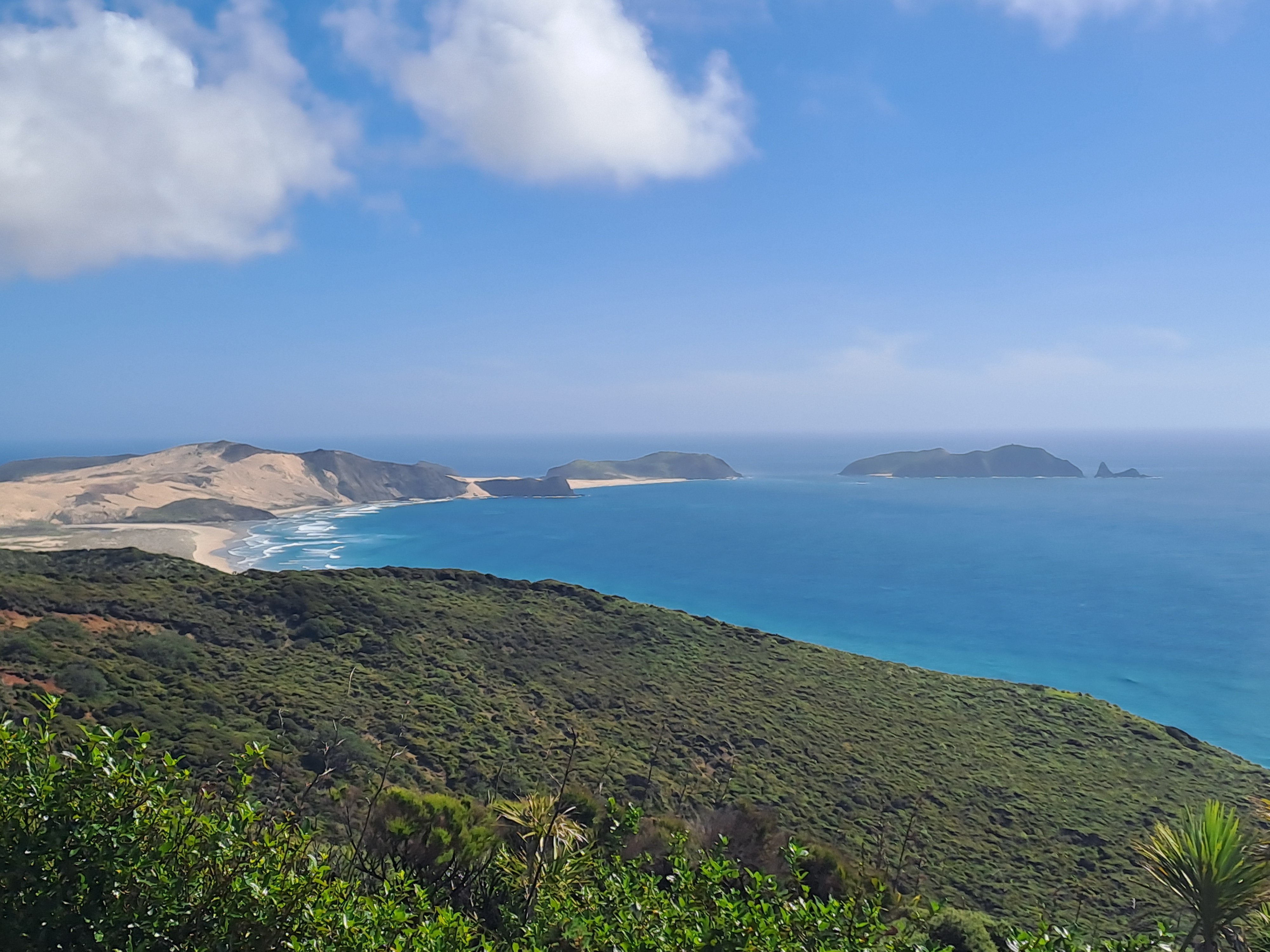
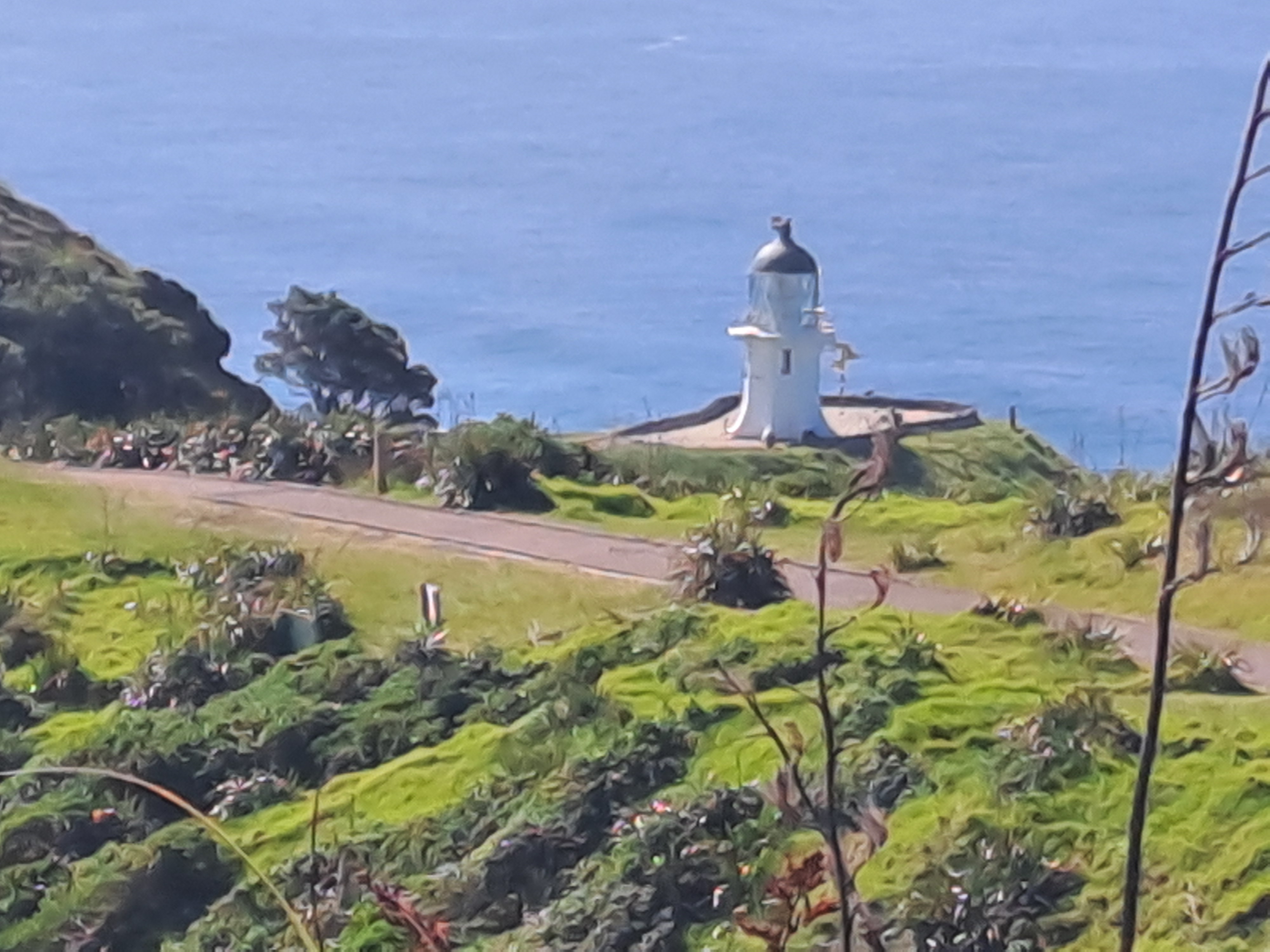
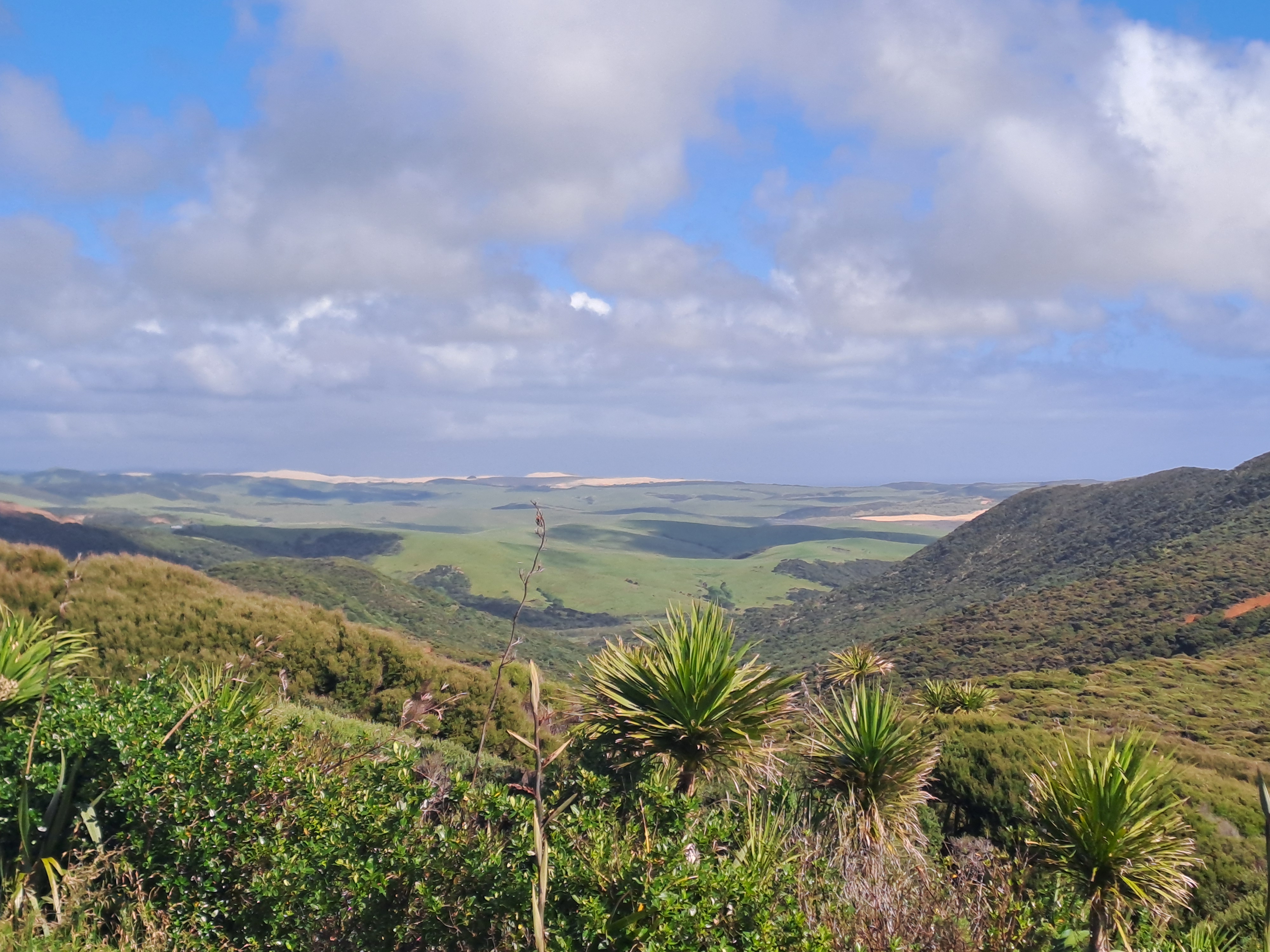
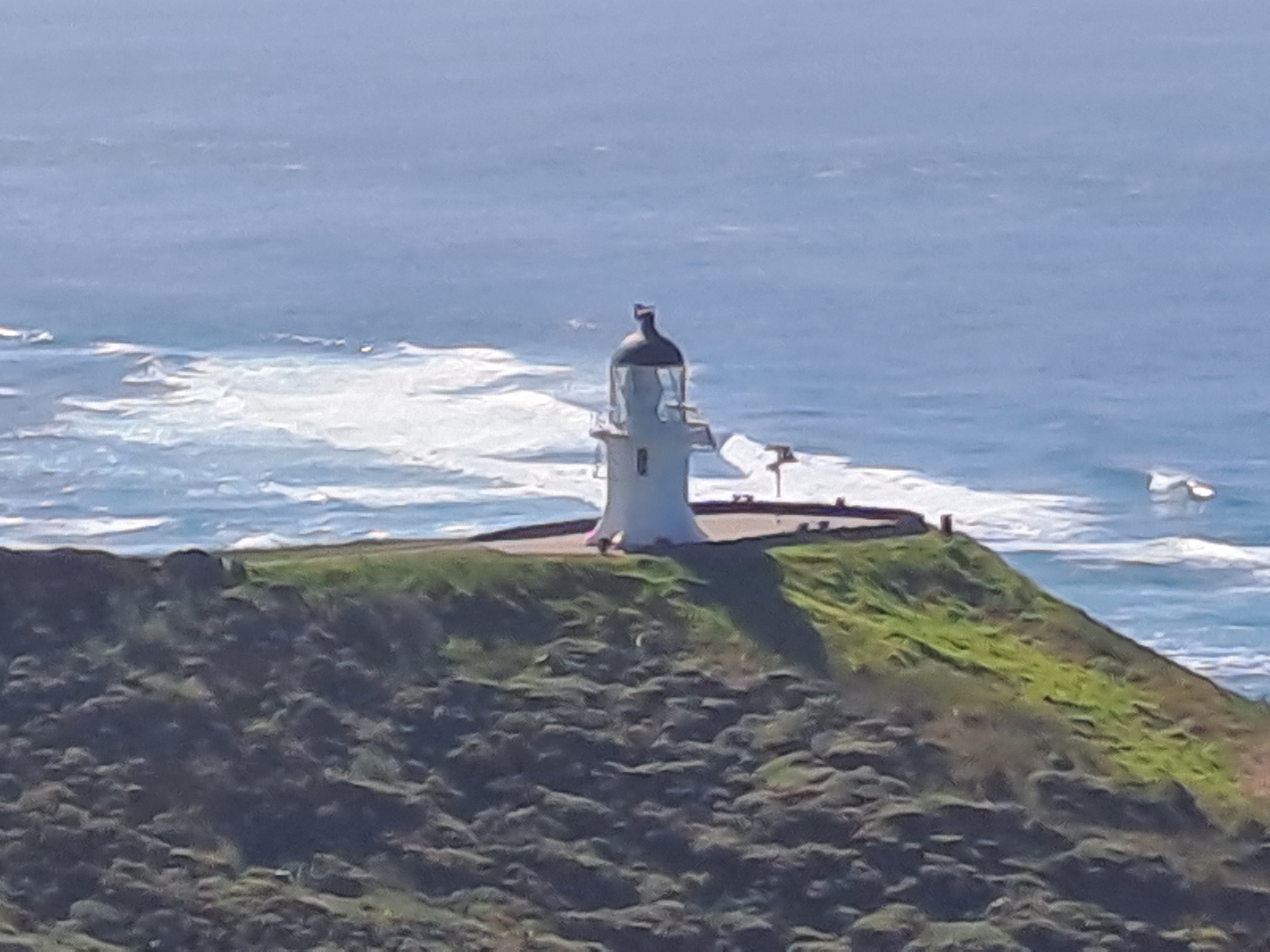
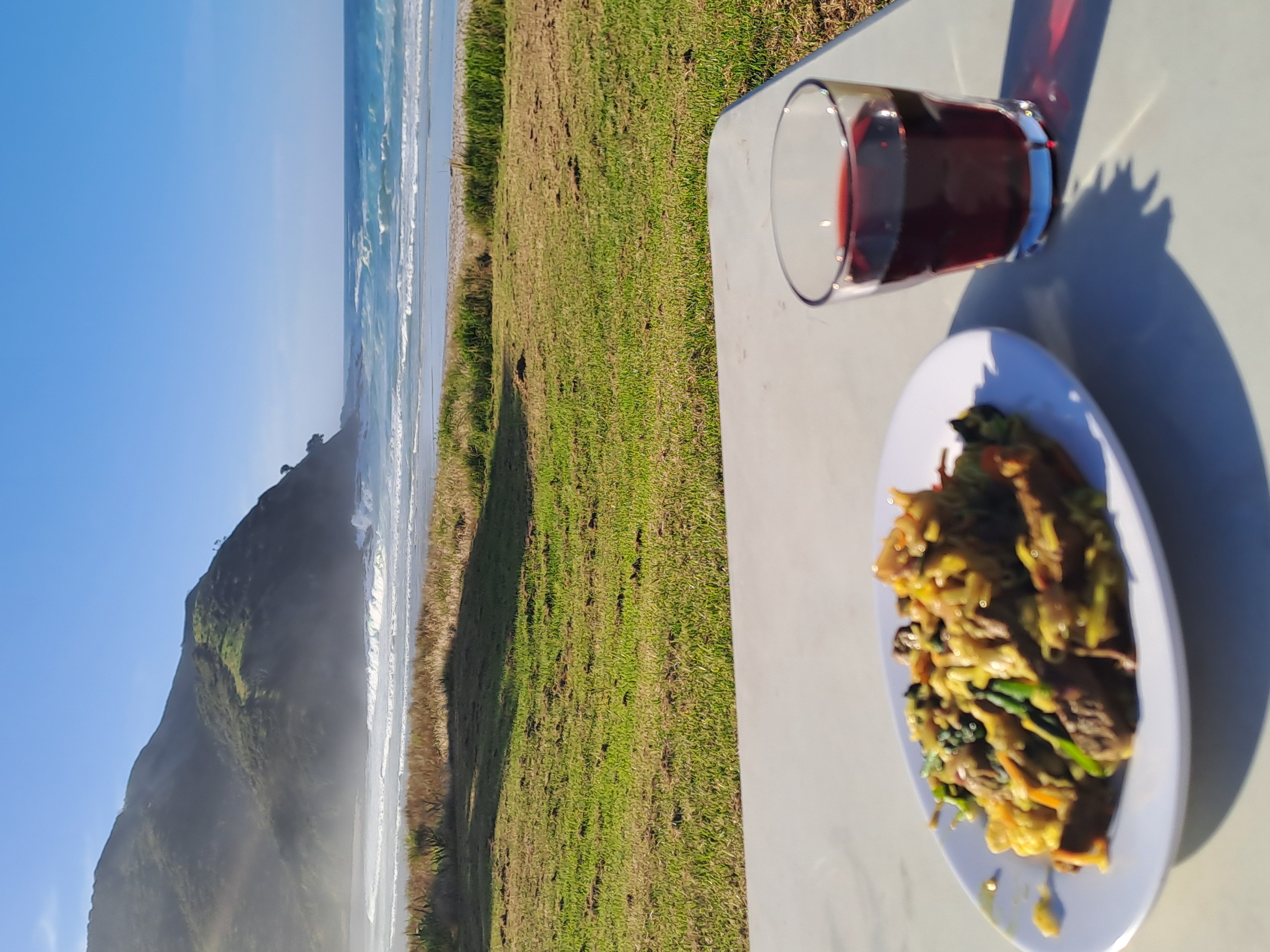
Here, staying in a national park, we had a wonderful beach side view and enjoyed the waves crashing on the beach and rocks. I wasn’t particularly tempted to go in, but found that we were banned from entering the water or fishing here. There was a Rahui due to someone being swept off the rocks a couple of days earlier. Swimming in New Zealand is very dangerous on quite a bit of the coast.
Rāhui is a temporary prohibition or restriction on the use of a specific area, resource, or activity in Māori culture. It is placed to protect natural resources, allow for their regeneration, or remove the tapu (spiritual restriction) associated with an event like a death.
I hadn’t realised before but New Zealand has more death from drowning than Australia. Over 40 per year.
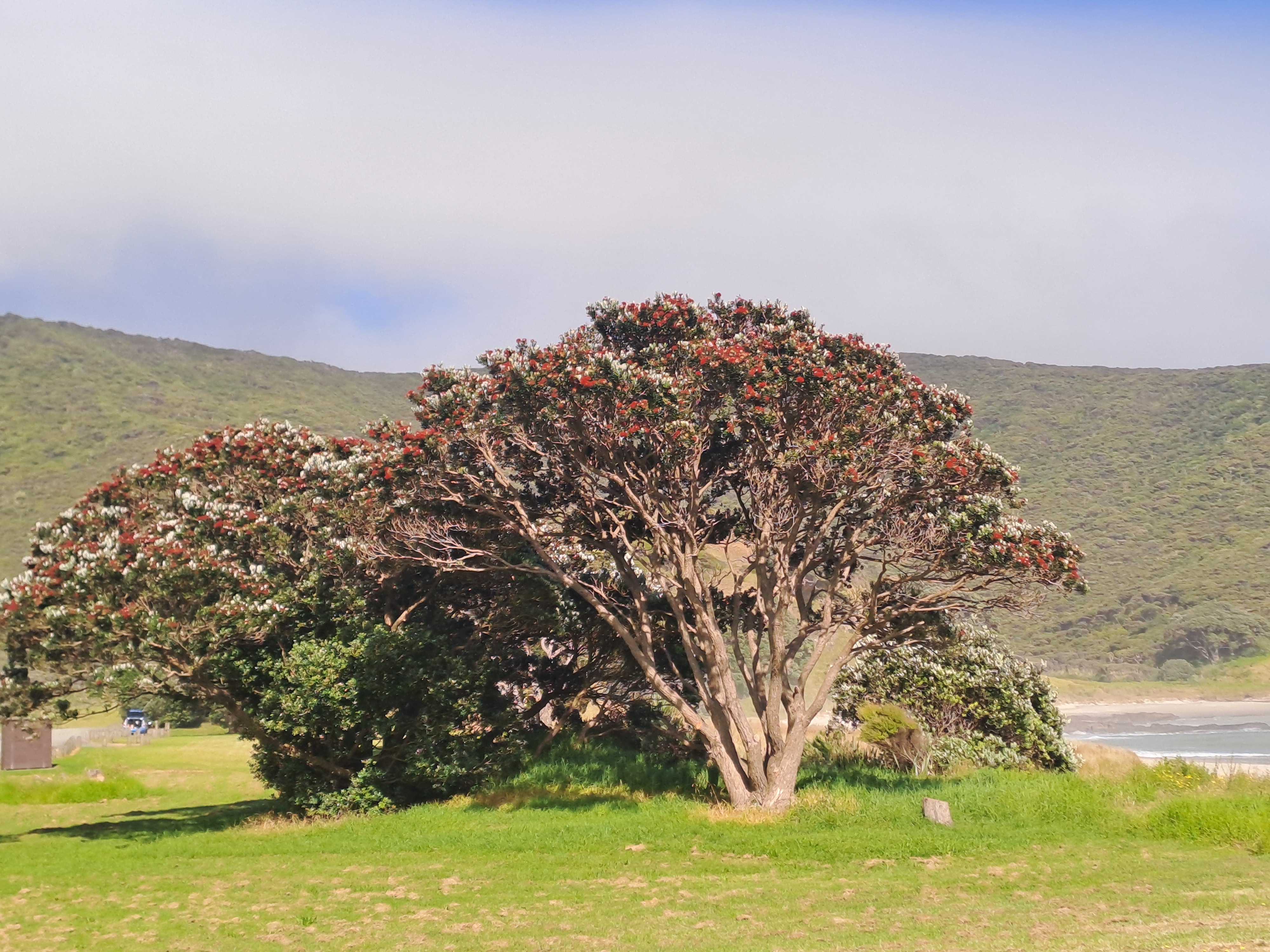
Its a shame such beauty hides such danger. We still enjoyed dinner by the beach whilst staying safe. We also saw our first New Zealand Christmas tree. Named for its red flowers in December time



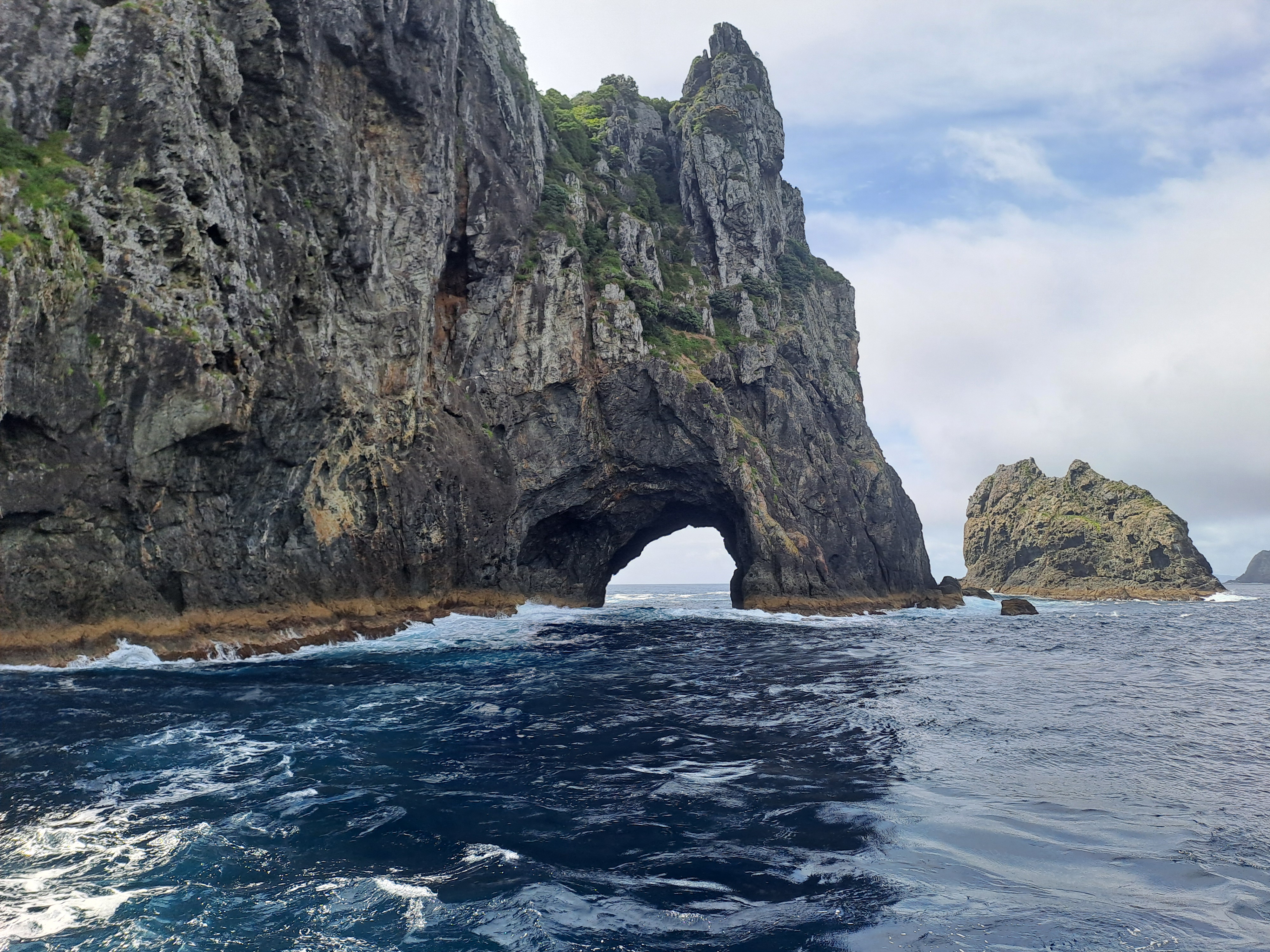
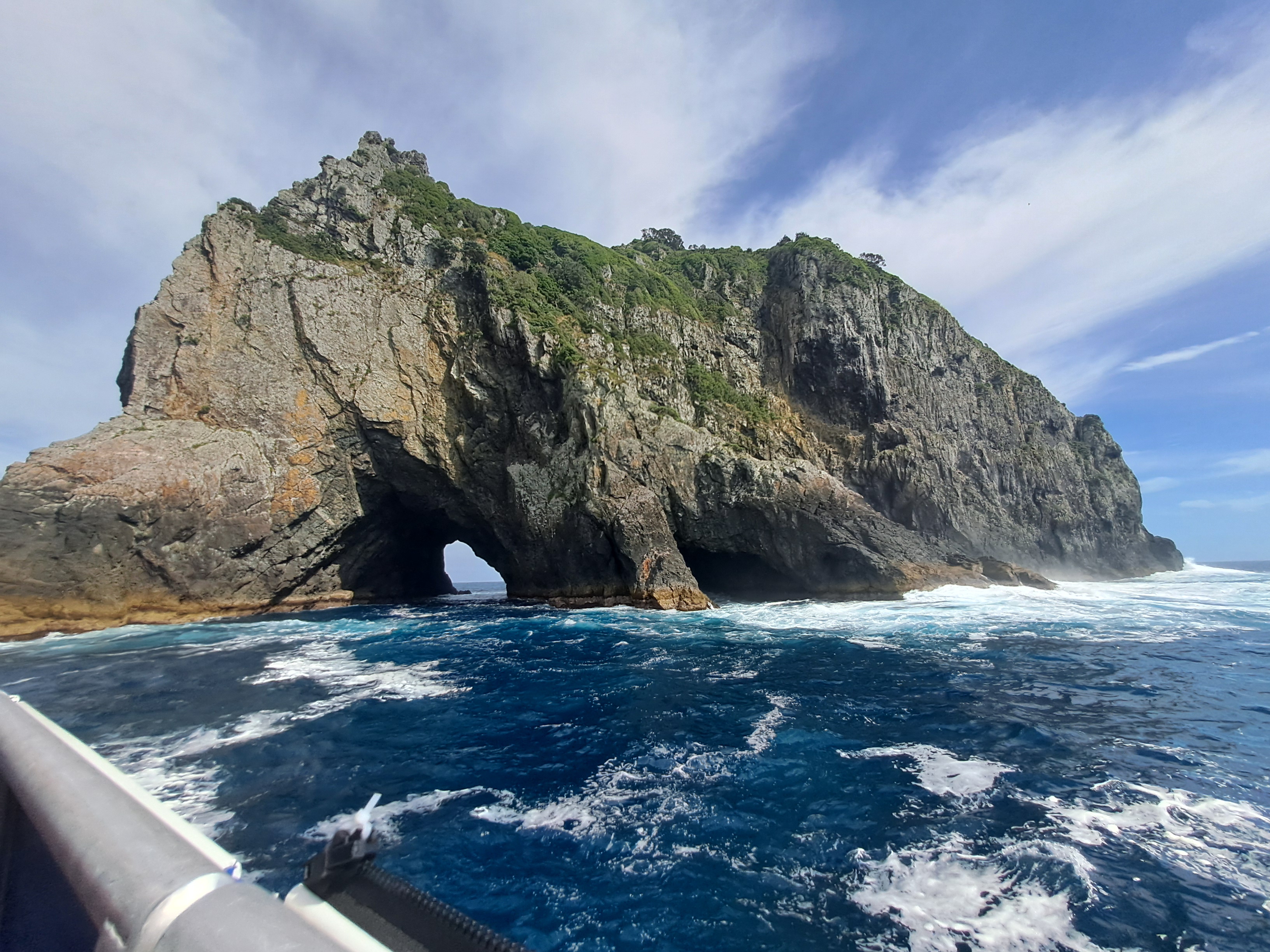
Our return journey was via the Bay of Islands and a day out on the water enjoying the Islands and the hole in the rock.
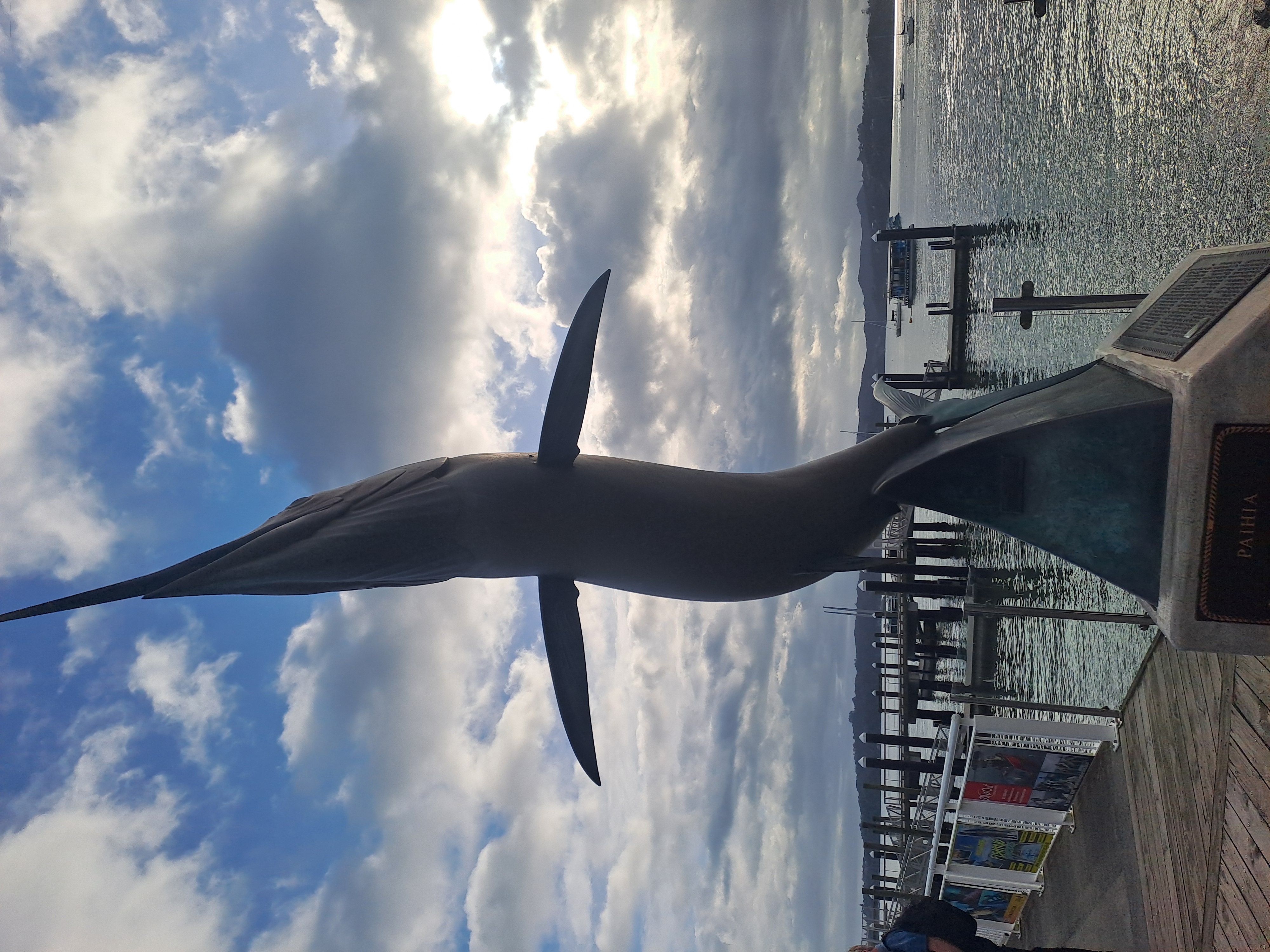

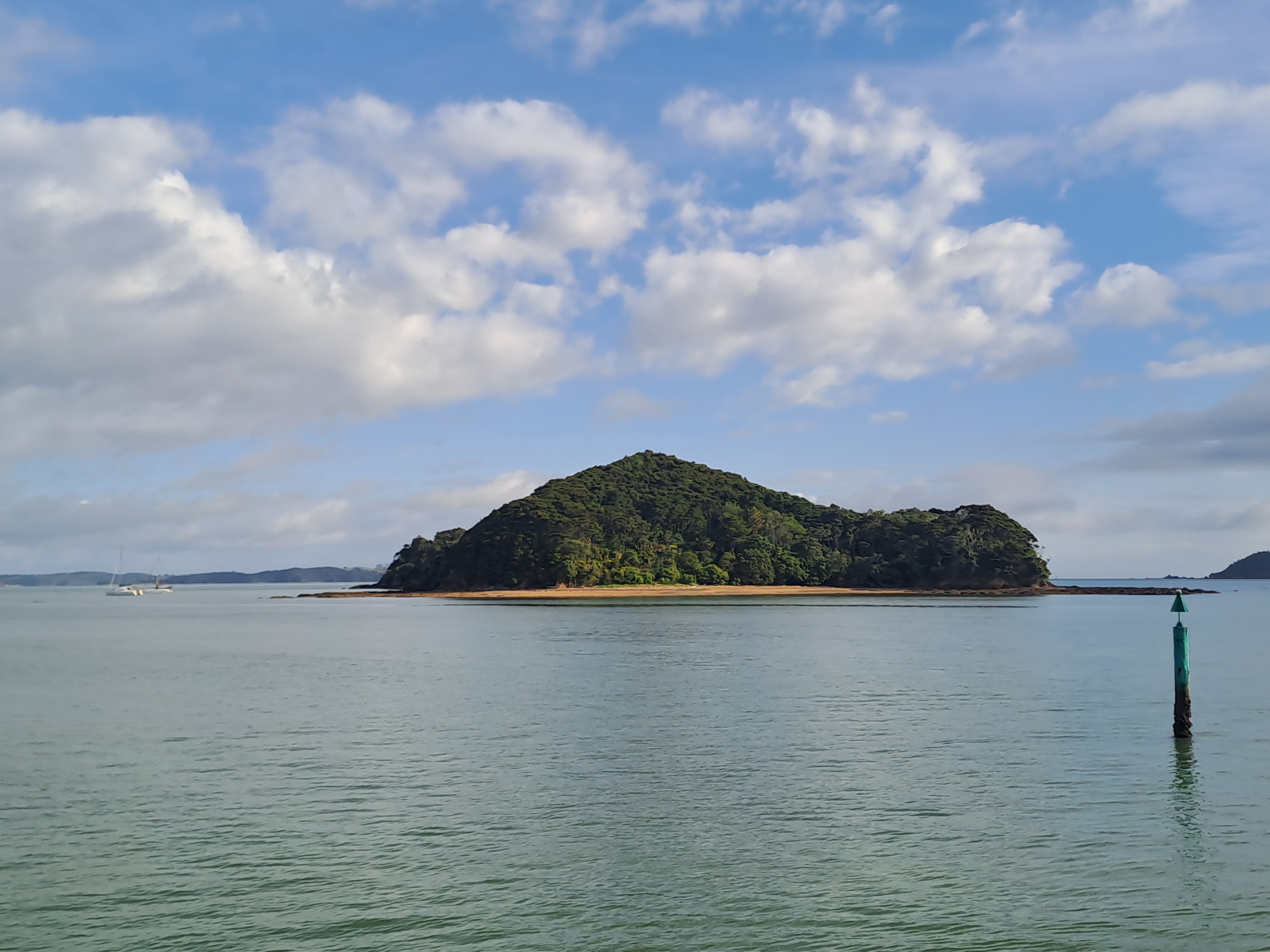

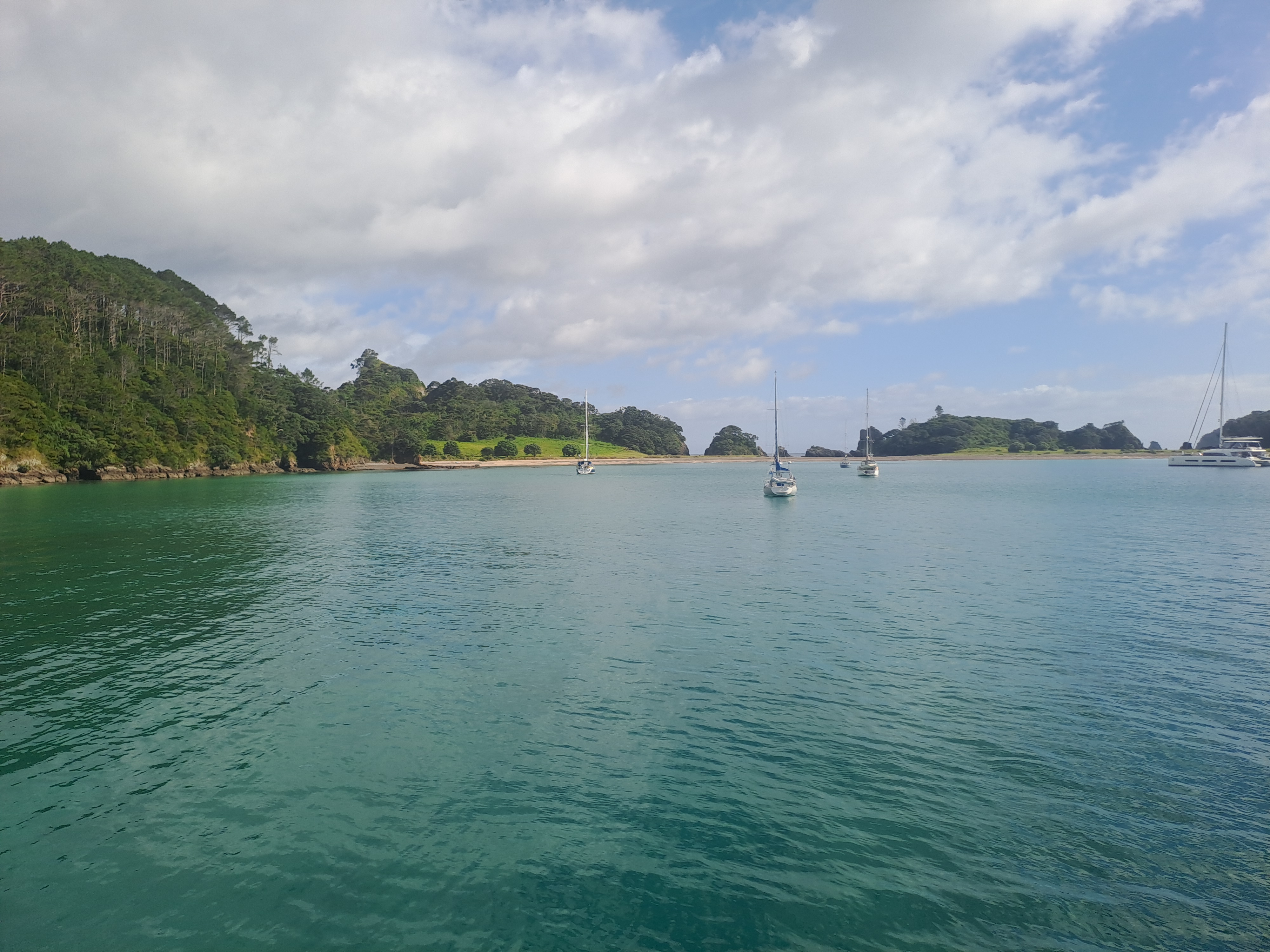

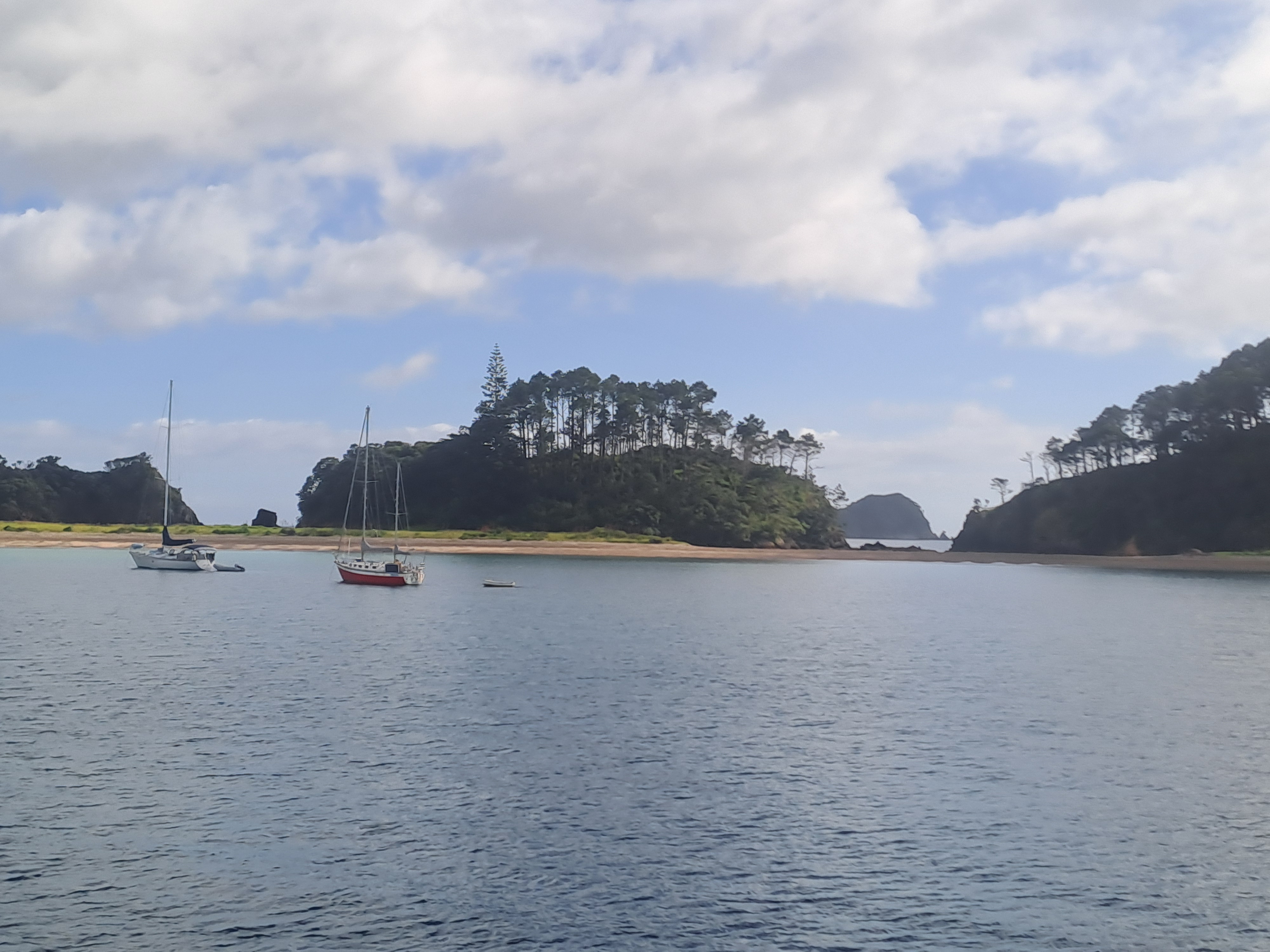

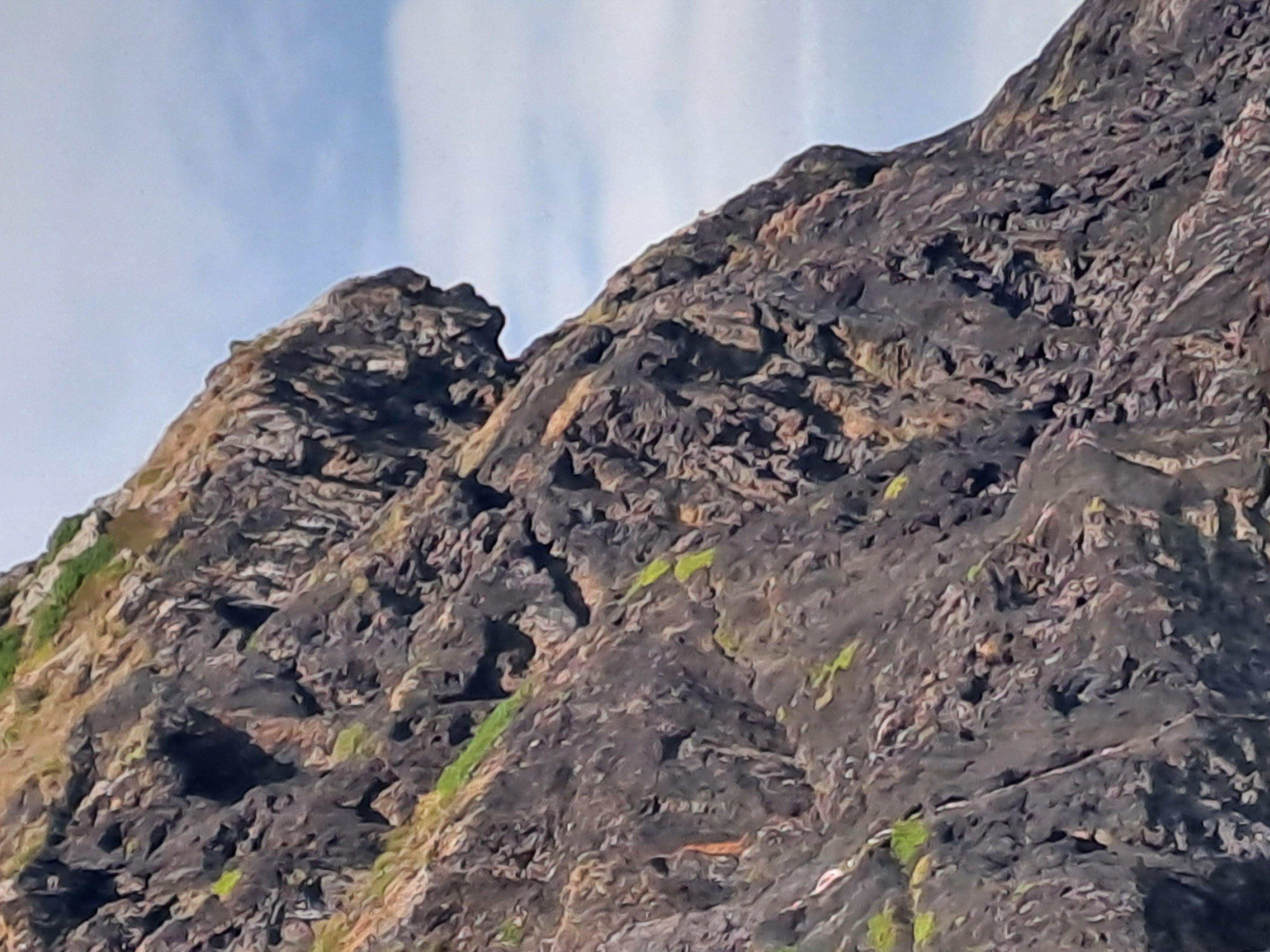
It seems that the boat we were on often goes through the hole, however conditions weren’t right for us so we went around the rock and saw the pregnant lady. She is actually made up of several different rocks that separate out as you go around and the illusion breaks up.



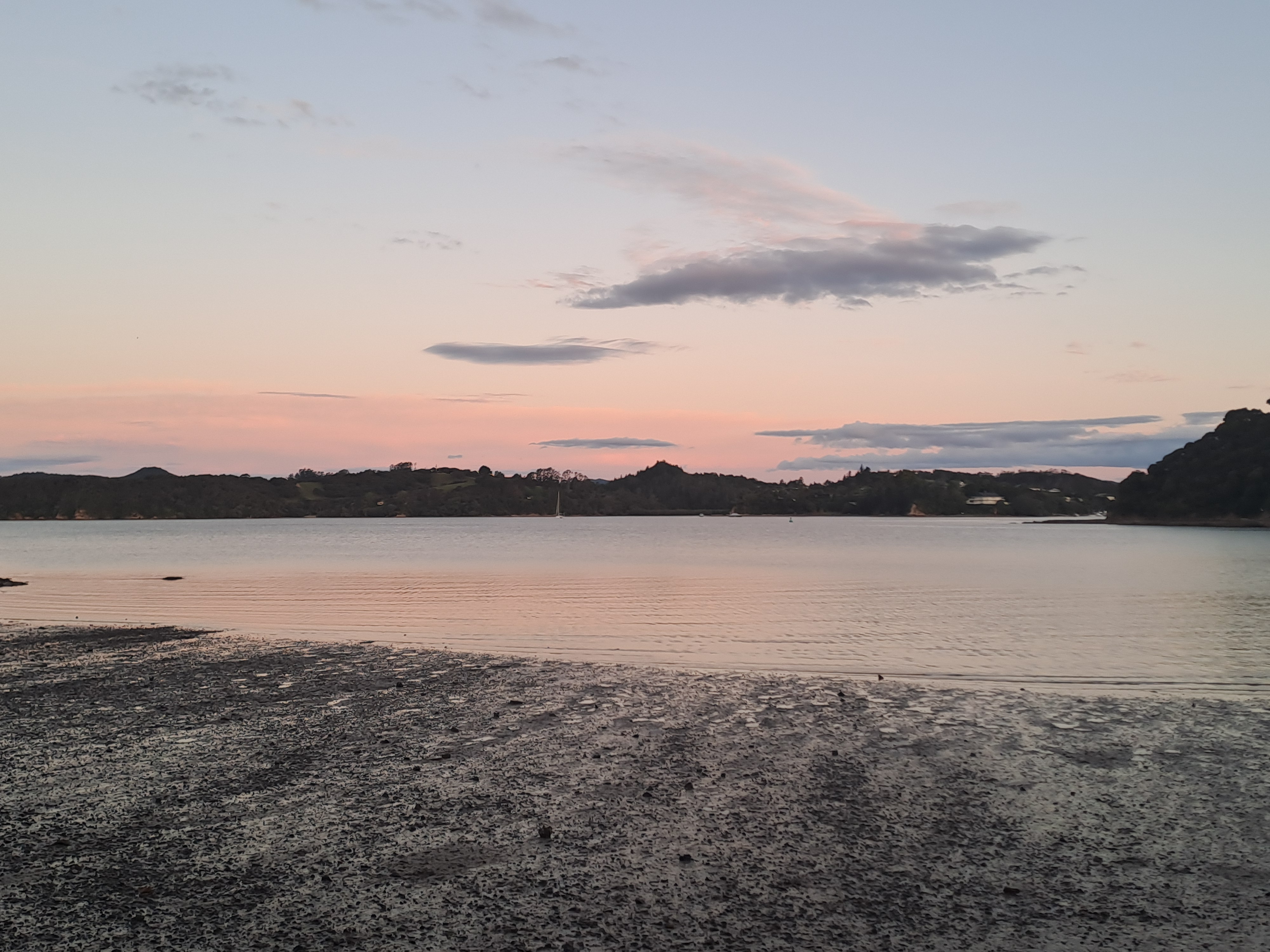
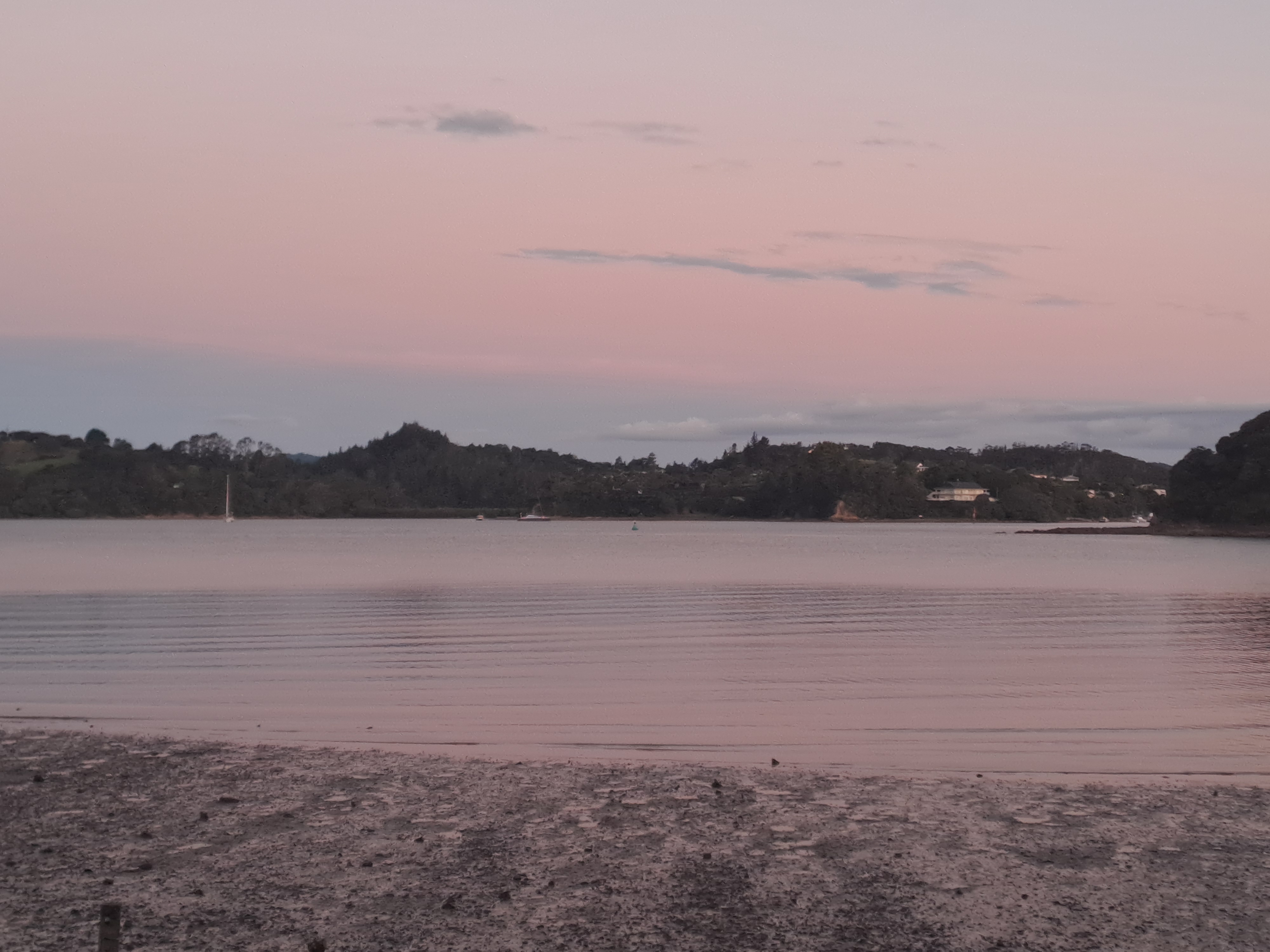
Again we were by the sea overlooking the water from our site
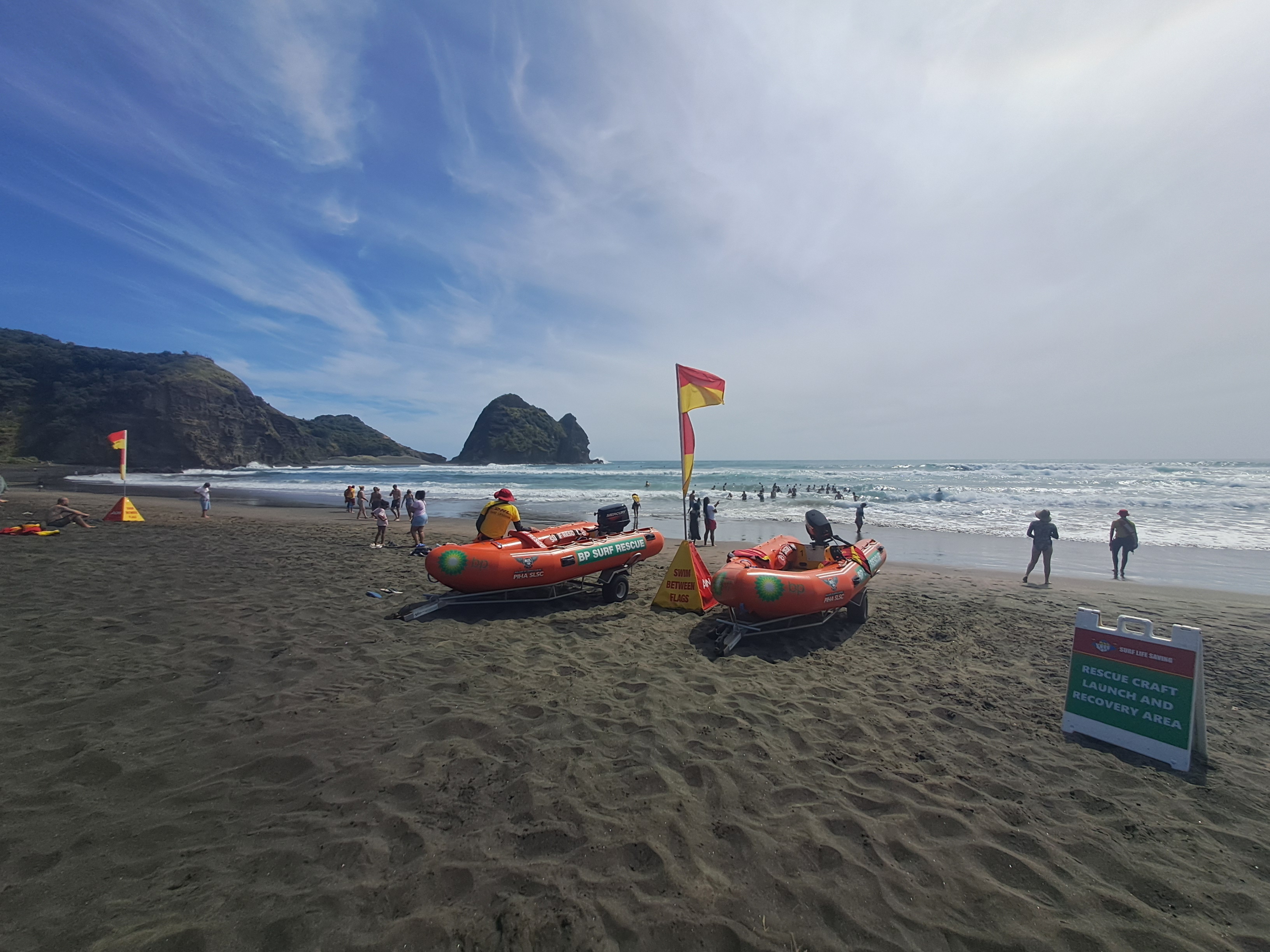
From the East coast we went to the west at Piha and another dangerous beach with recent death. Here there was a very narrow strip between the flags for swimming. Even then, there were three life guards on the water, two on the beach and two rescue boats. Further life guards were resting back from the beach
I thought about climbing Lion rock, but discovered this was closed due to storm damage.
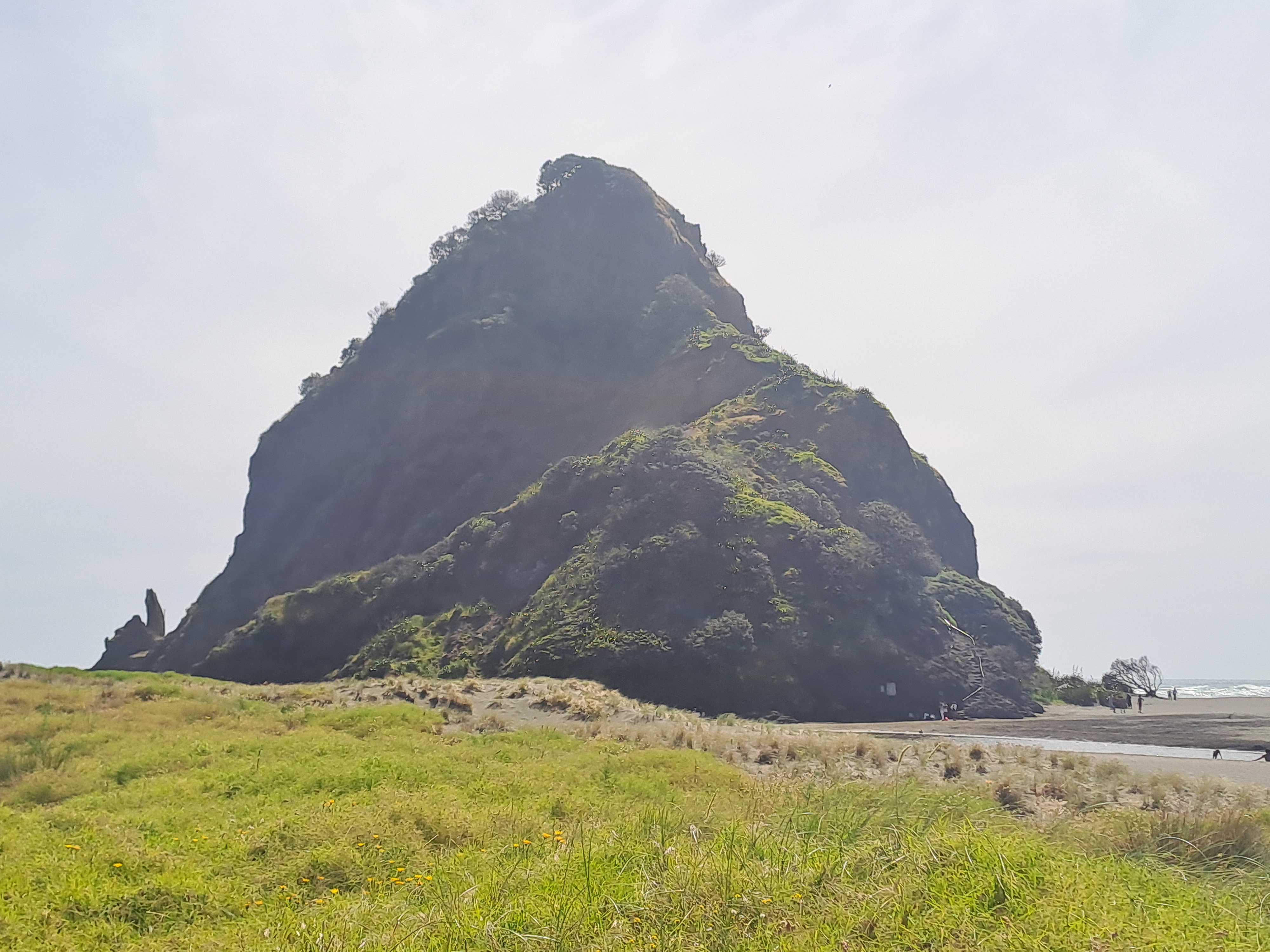

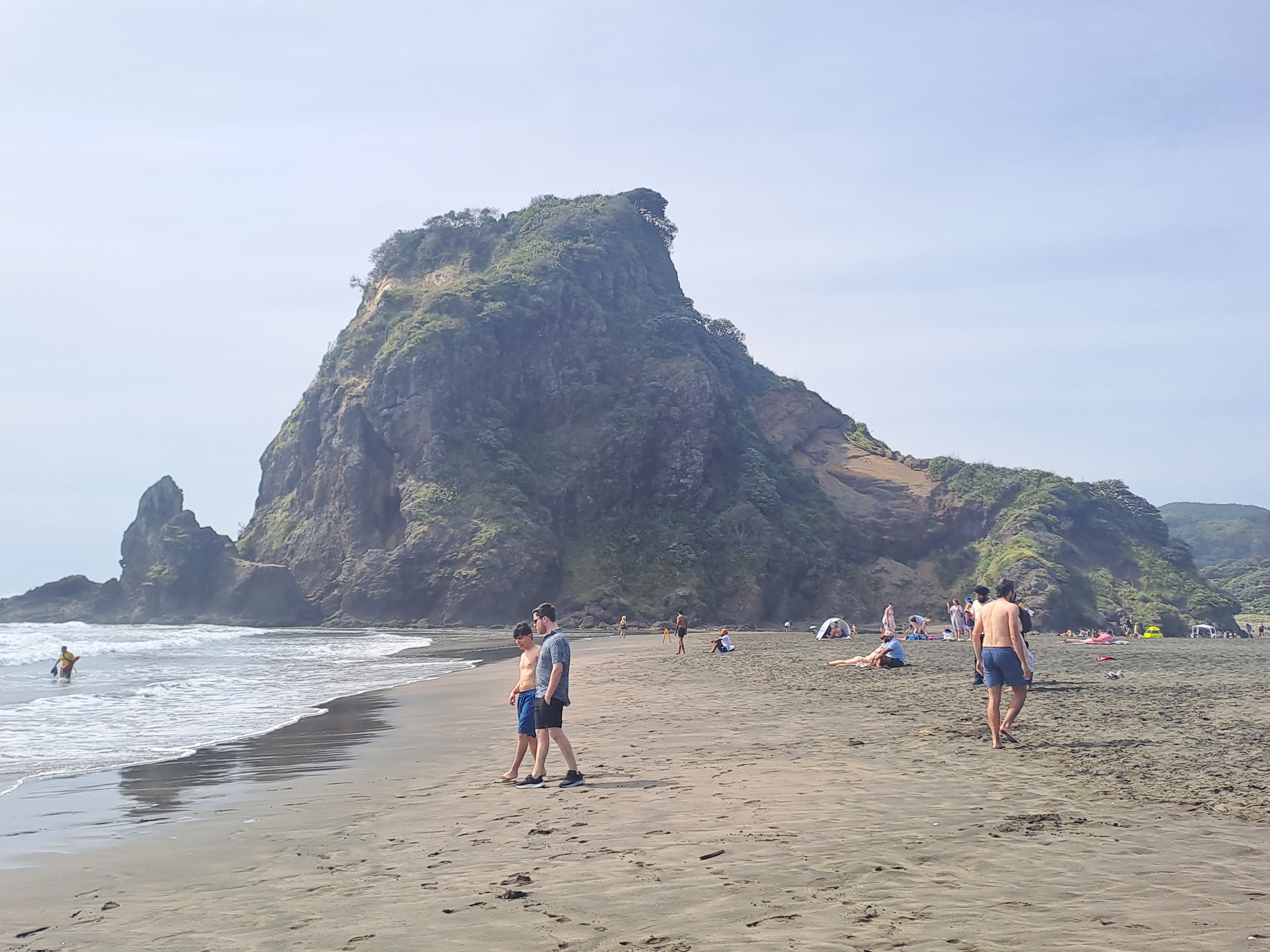
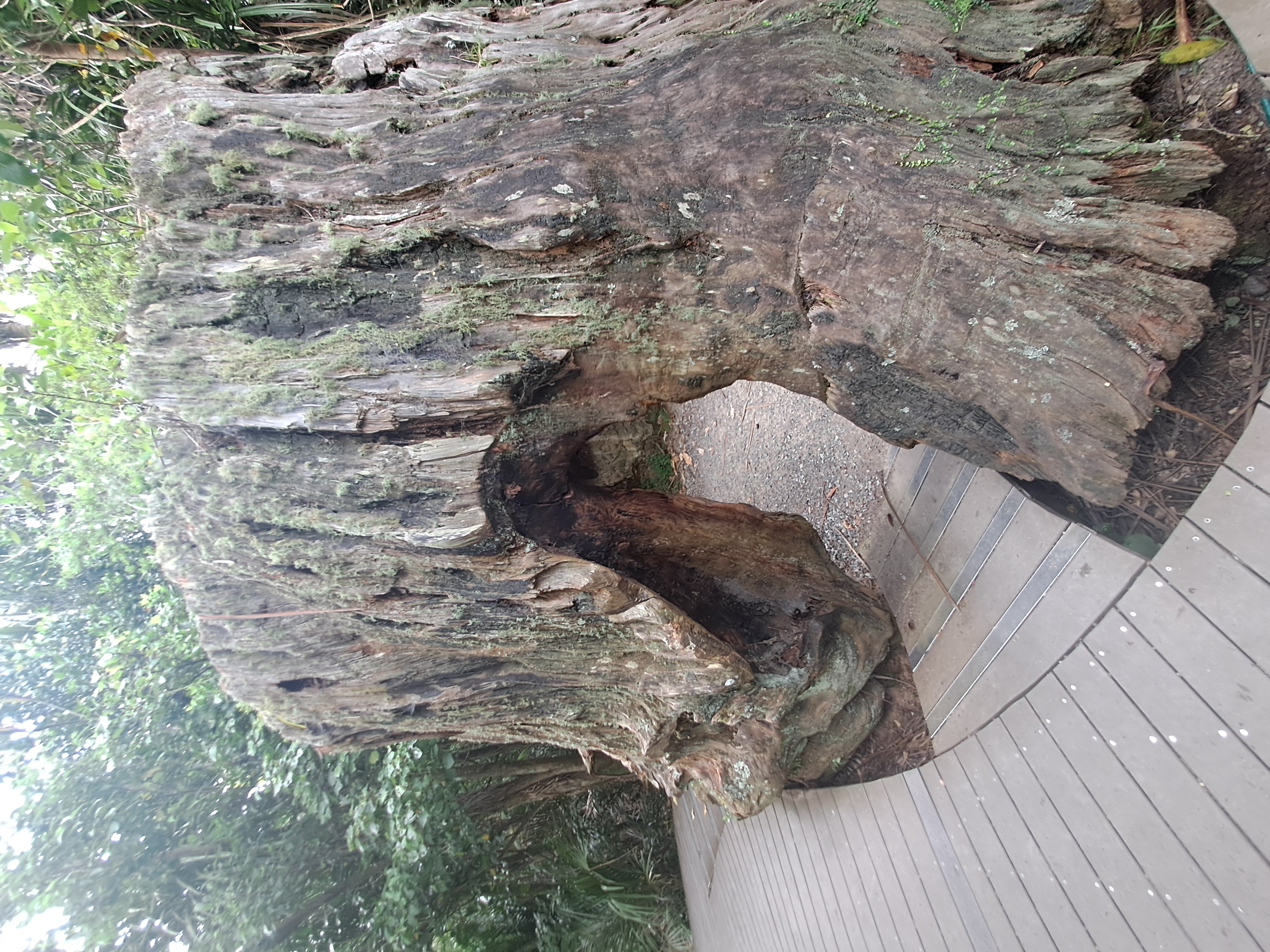
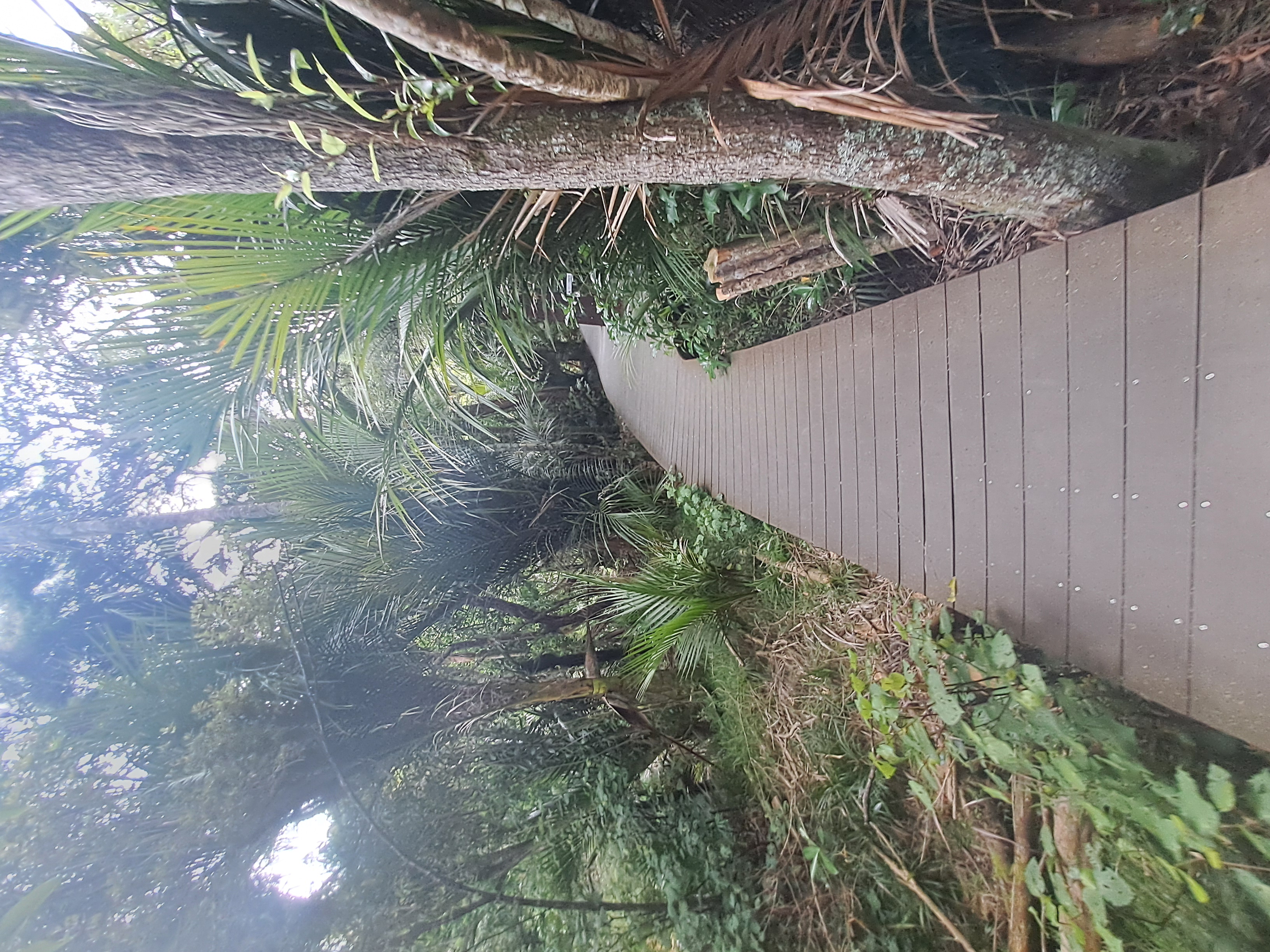
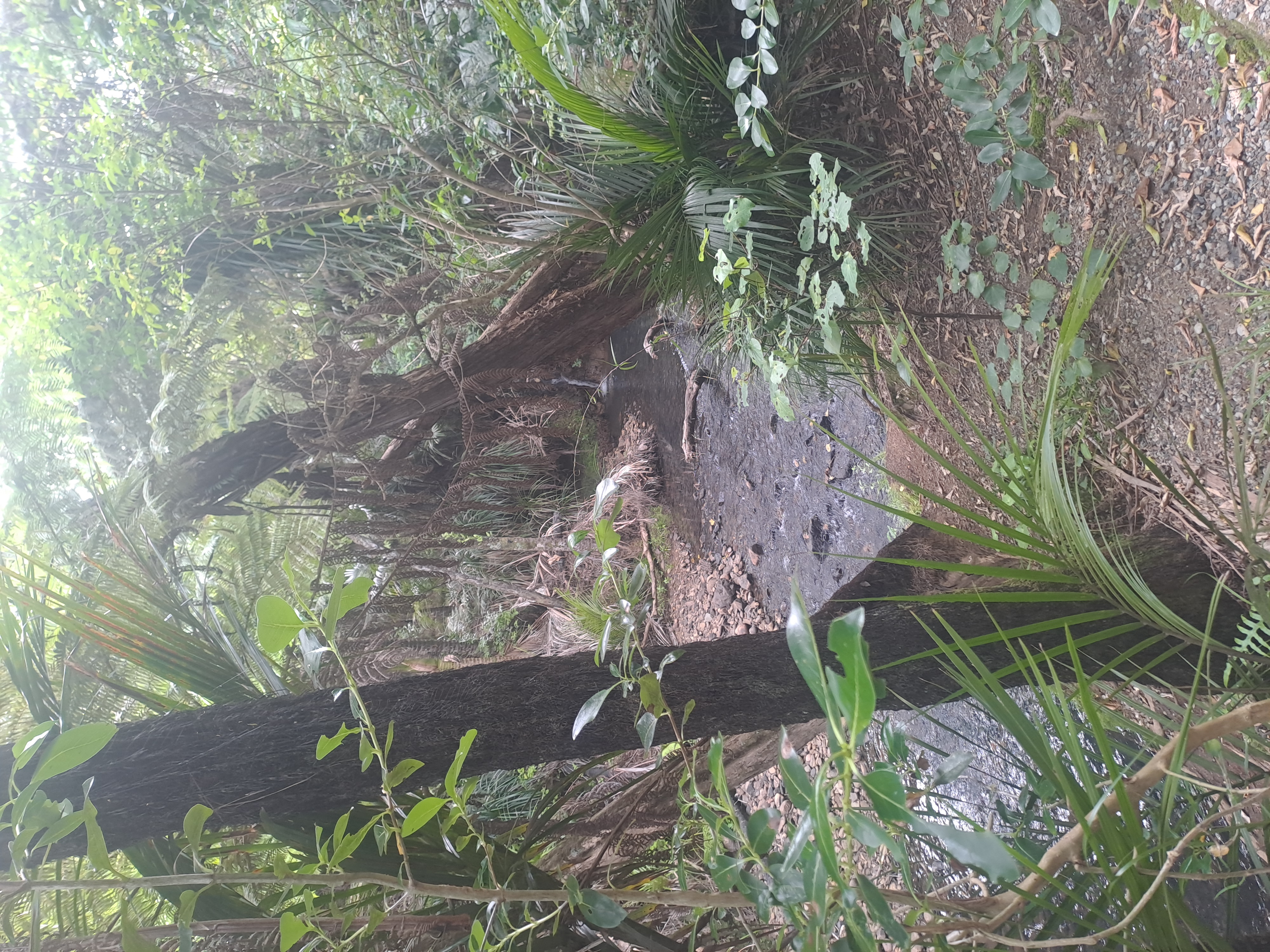
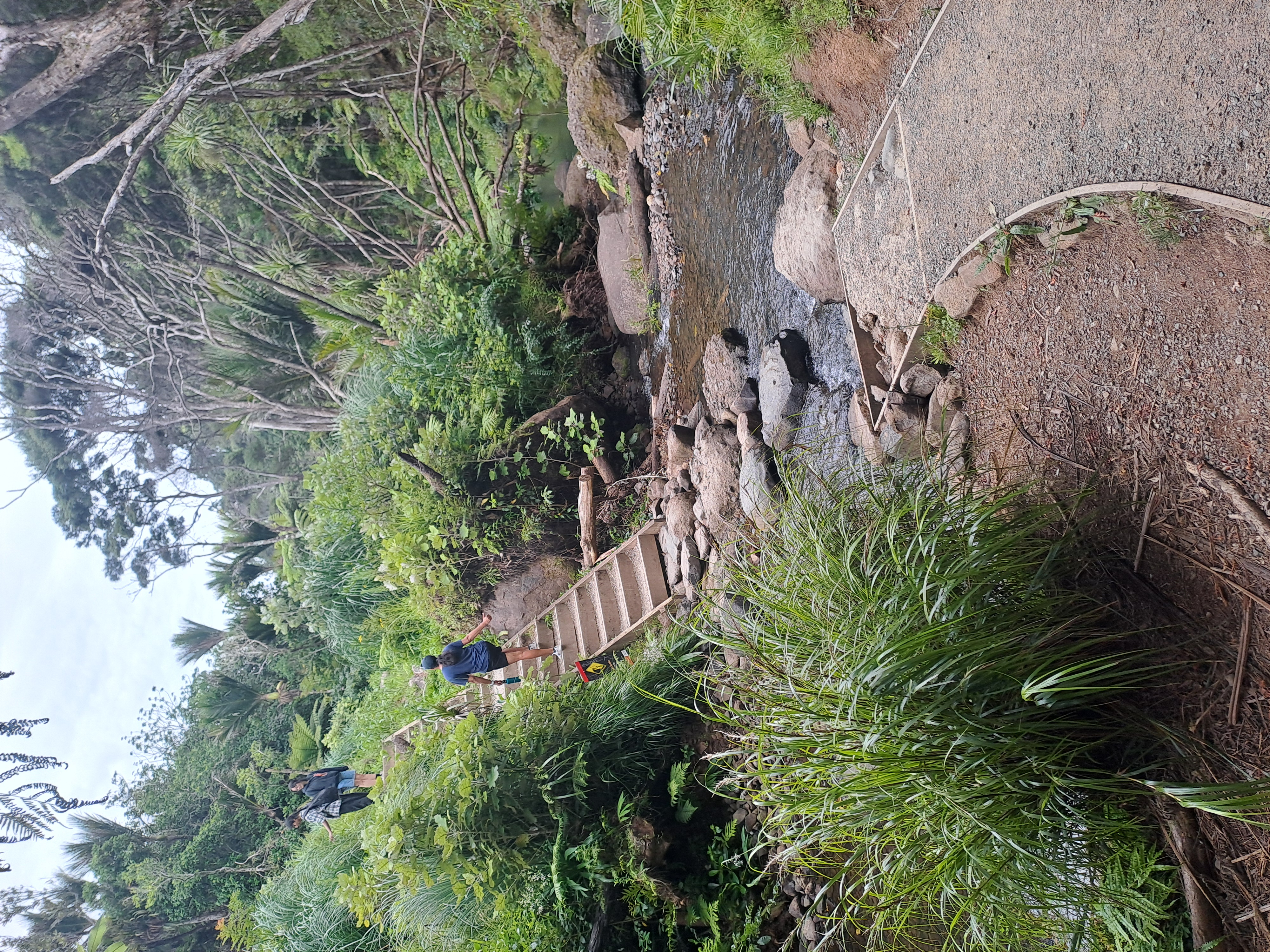
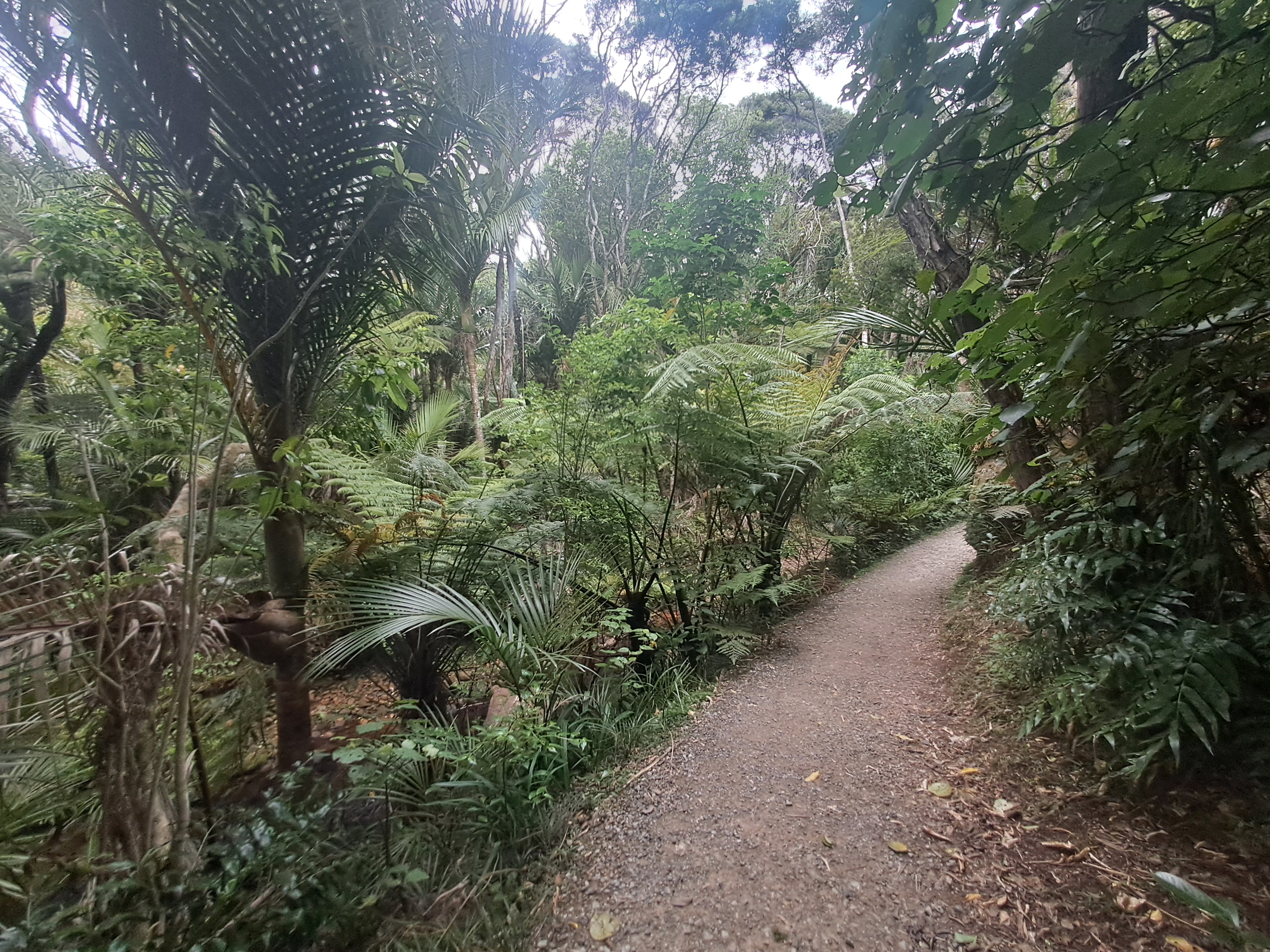
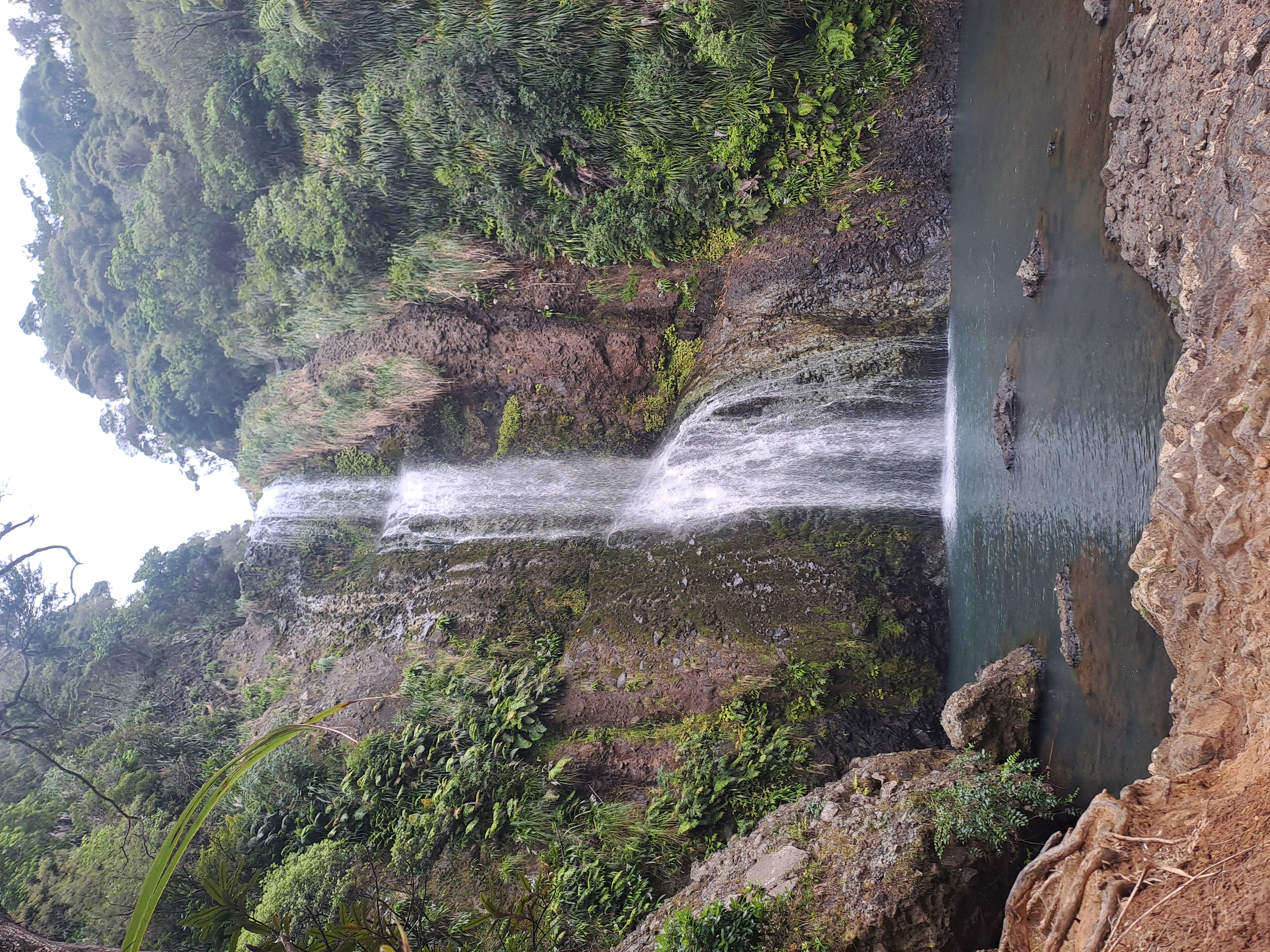
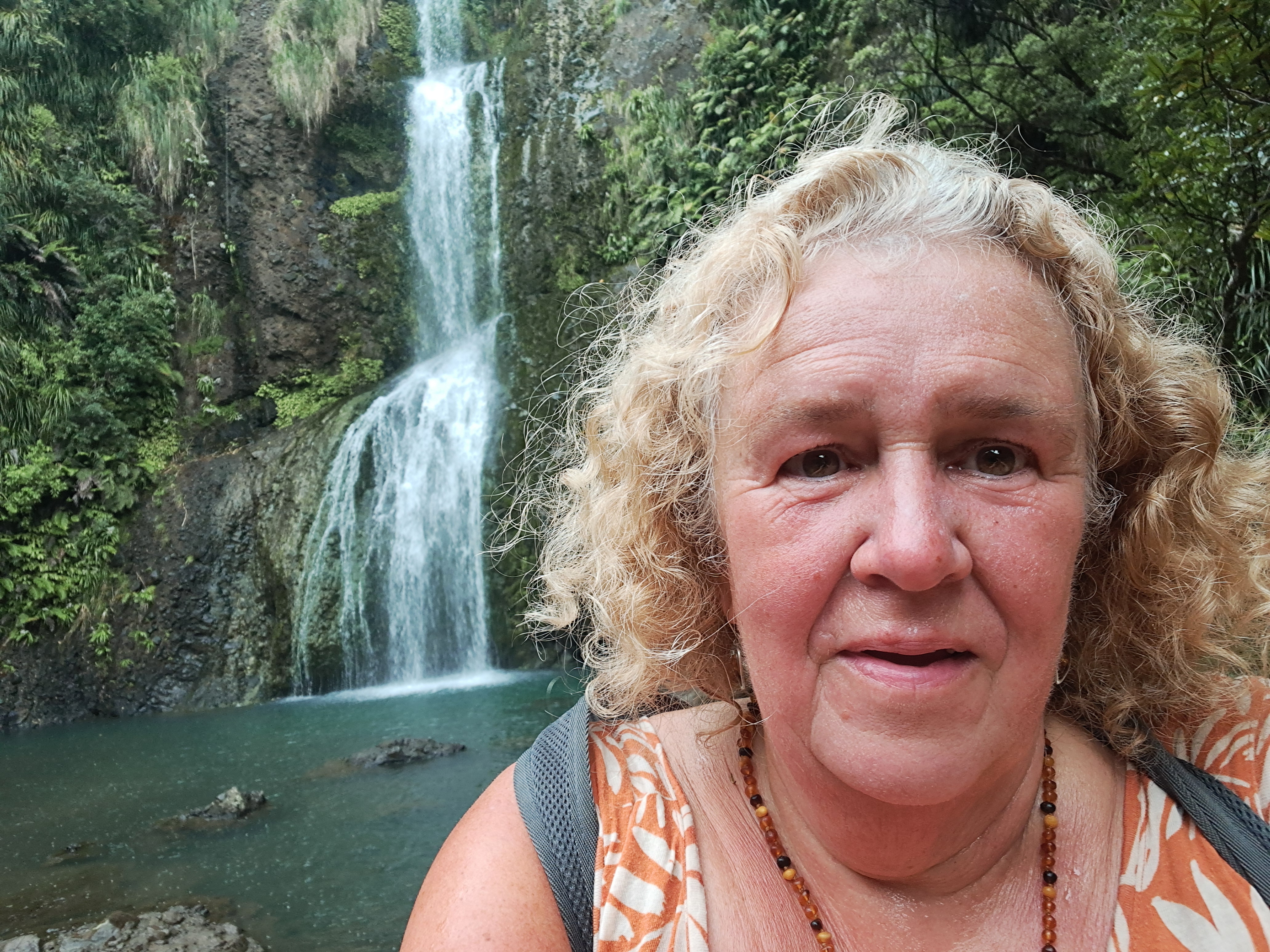
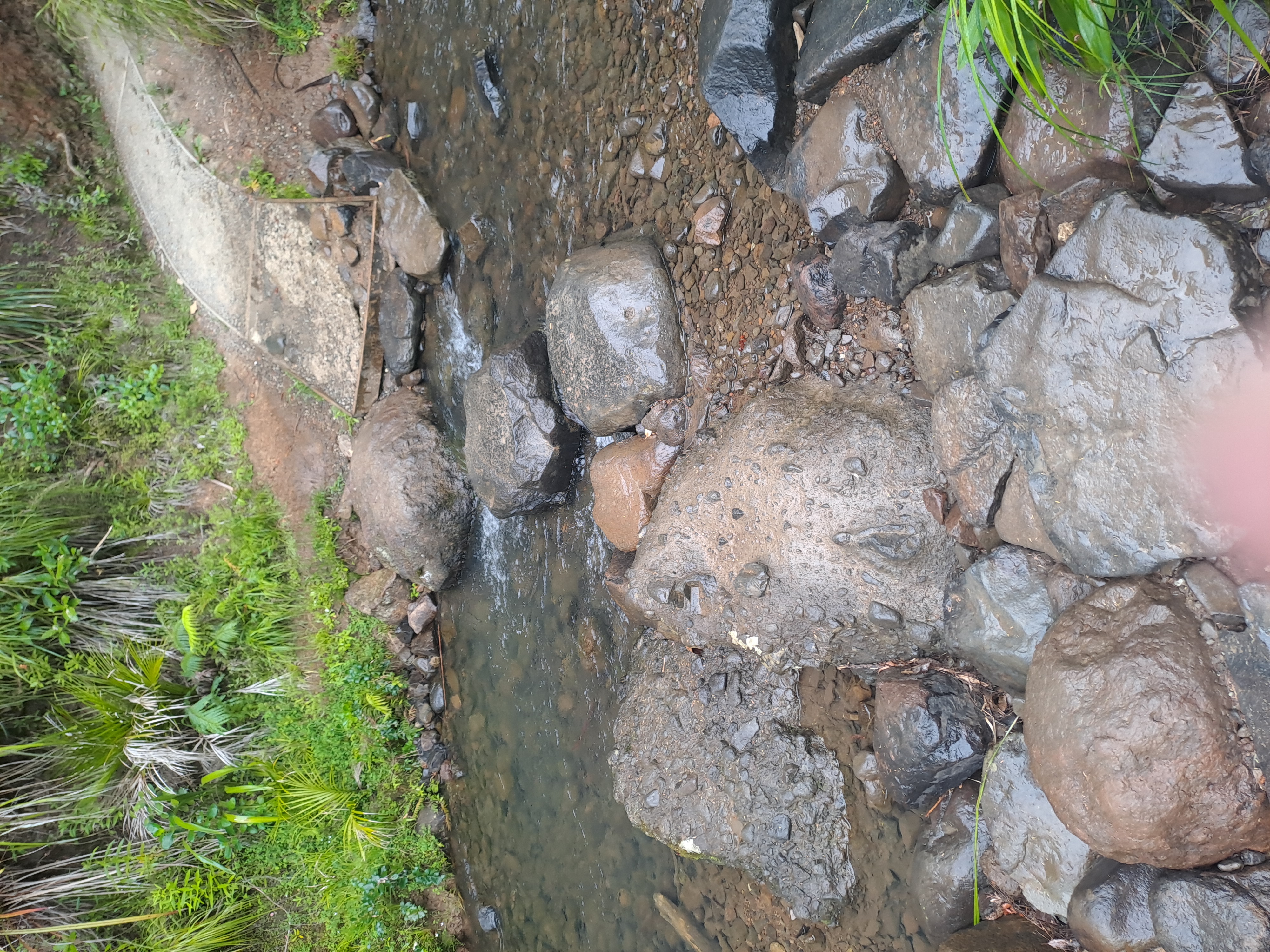
The campsite said that the local walks often had closures due to storms too. I did manage one walk to see falls. It was magical walking into the forest. Much of the walk was on boardwalk although there was a stepping stone crossing and stone rock scramble bits. Rain made the way slippery on the return and decided that I would keep to one walk.


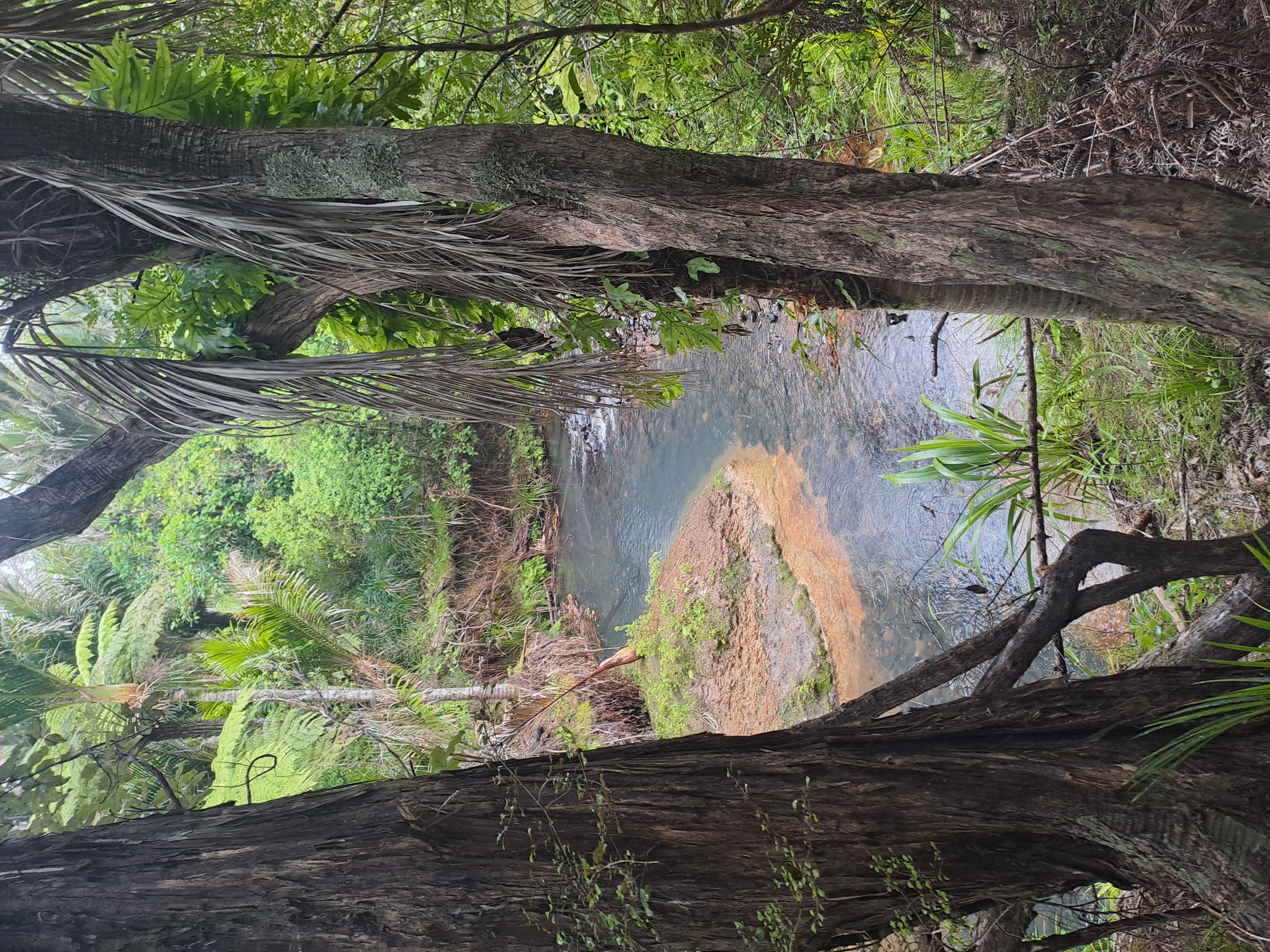
Rain also made the return to Auckland seem hazardous as the roads got very slippery and we skidded twice accelerating from stop on hills.
We actually thought from weather reports that it had been continually raining for several weeks. However, this was the first rain in a while, hence the slippery roads.
You know you’ve picked a duff campsite when the receptionist asks you to have a look and decide if you want to stay. It was dire. Luckily we found a really great alternative next to the water again.
From here we went dolphin watching and found a whole pod rounding up fish, and swimming backwards and forwards across by the boat.
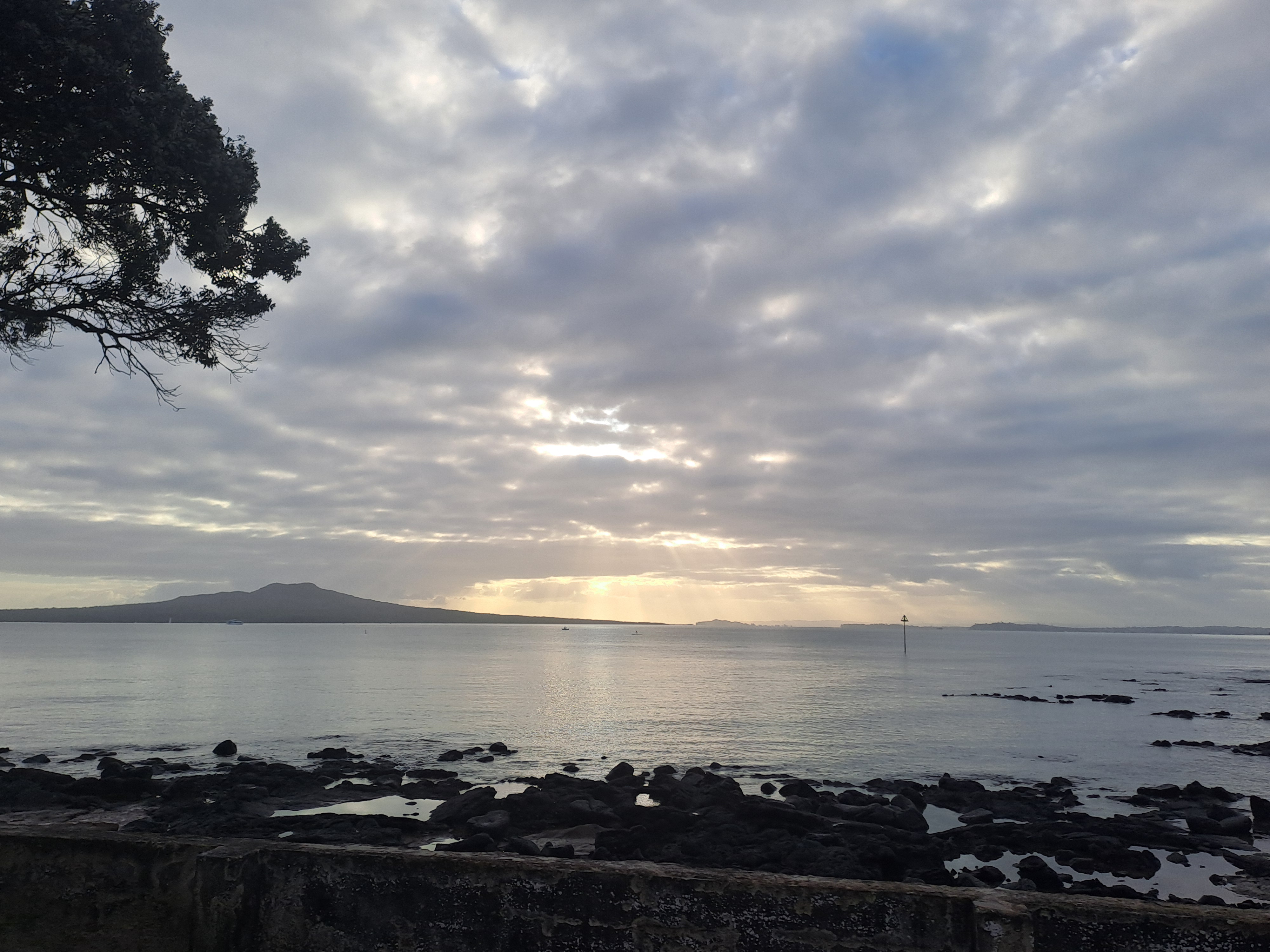


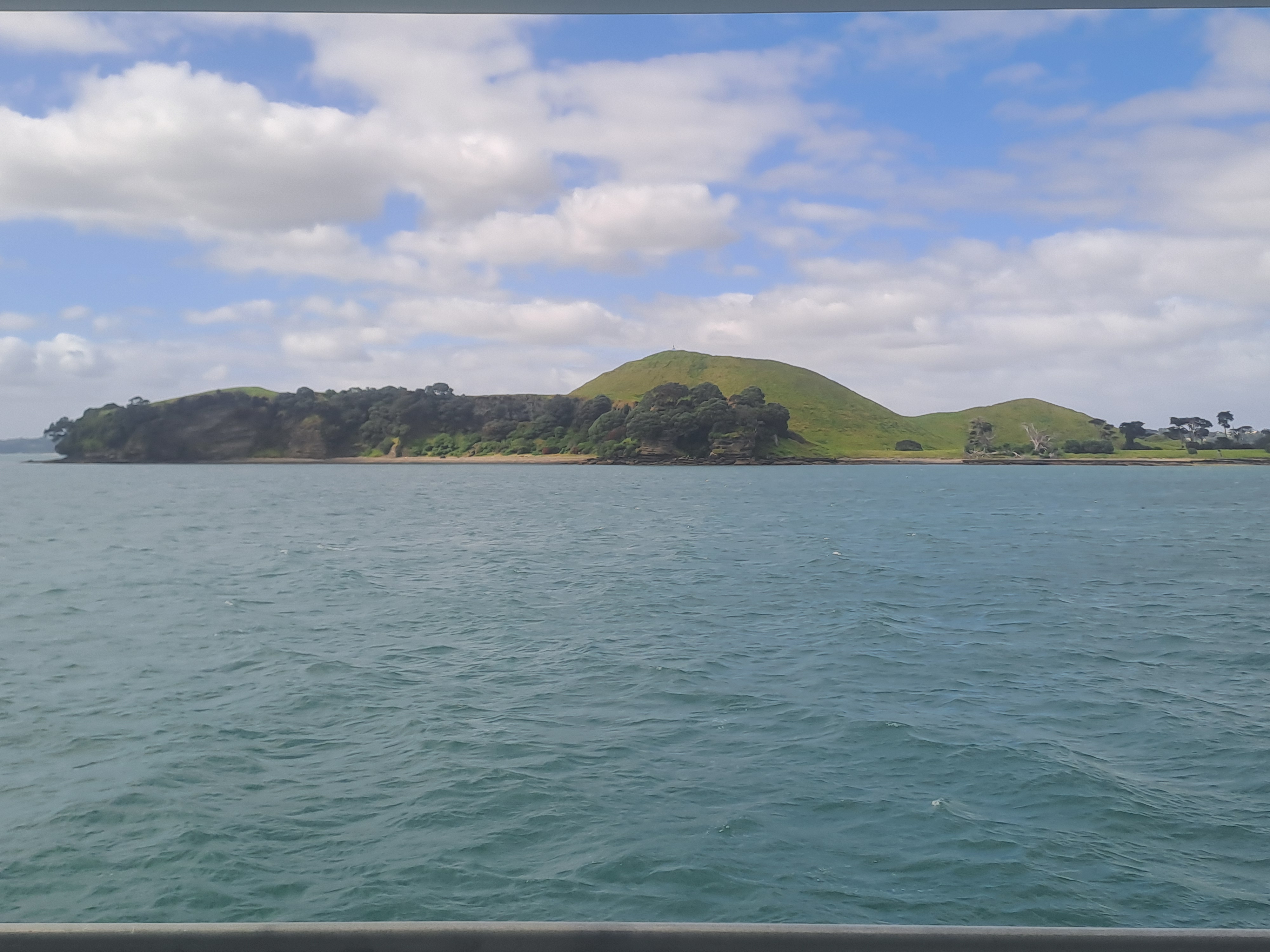
We then went to Rotoroa. Rotoroa Island was purchased by The Salvation Army in 1908. When Rotoroa Island first opened it was registered as a certified inebriates home under the 1906 Habitual Drunkards Act, which meant that men arrested for drunkenness could be committed under the Act to Rotoroa Island for up to two years. Men so committed could leave the island only after first appearing before a magistrate. However, moving forward it was felt more effective for treatment to be in the community.
The island opened to the public for the first time in over 100 years on Sunday 27 February 2011.The island, which was used by The Salvation Army as an alcohol and drug addiction treatment centre, provided physical and spiritual care for over 12,000 admissions until its closure in 2005. In 2008, Neal and Annette Plowman, who have long-admired the Army’s work, established a generous trust devoted to the redevelopment of Rotoroa as a visitor destination, ensuring its unique history as a place of recovery and renewal was respected and preserved. The Salvation Army is the sole beneficiary of that trust. The history of the islands is exhibited there. While is now provides sanctuary to wildlife, including the Kere and Kiwi.
Unfortunately we only had a short time to explore this lovely island and see the Kere one of the varieties of flightless birds in New Zealand. Kiwi are nocturnal so we didn’t see any of these.

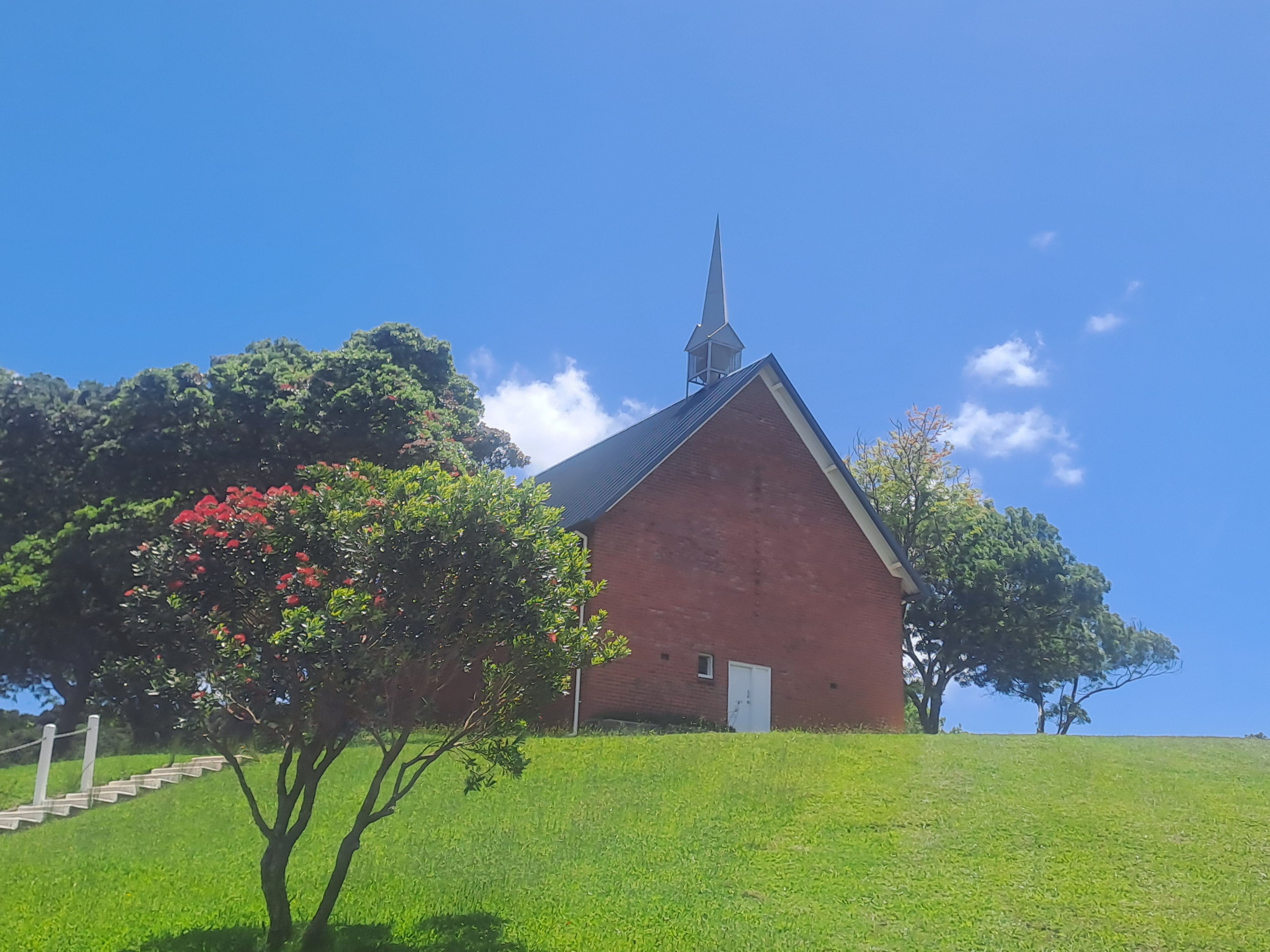
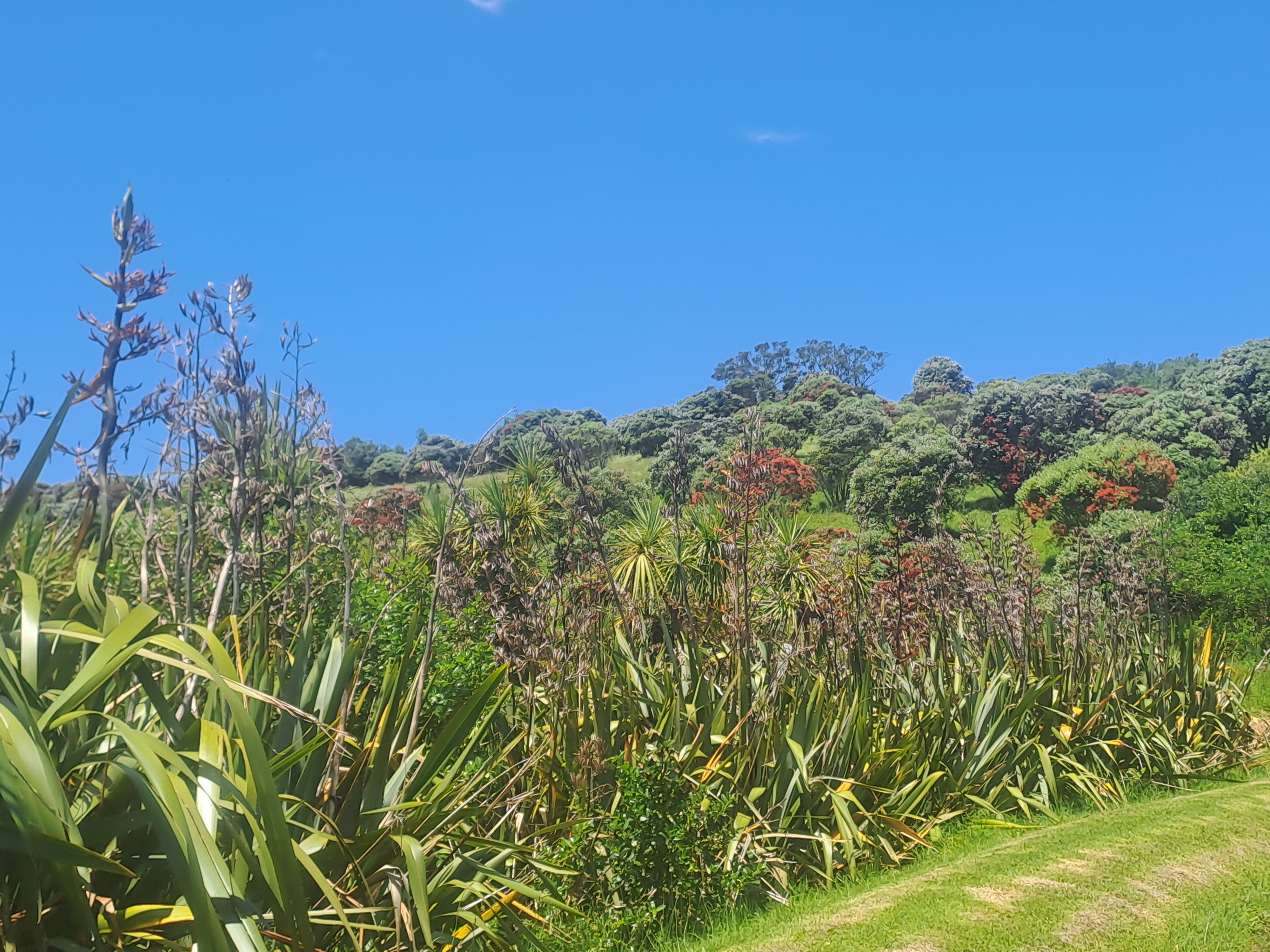
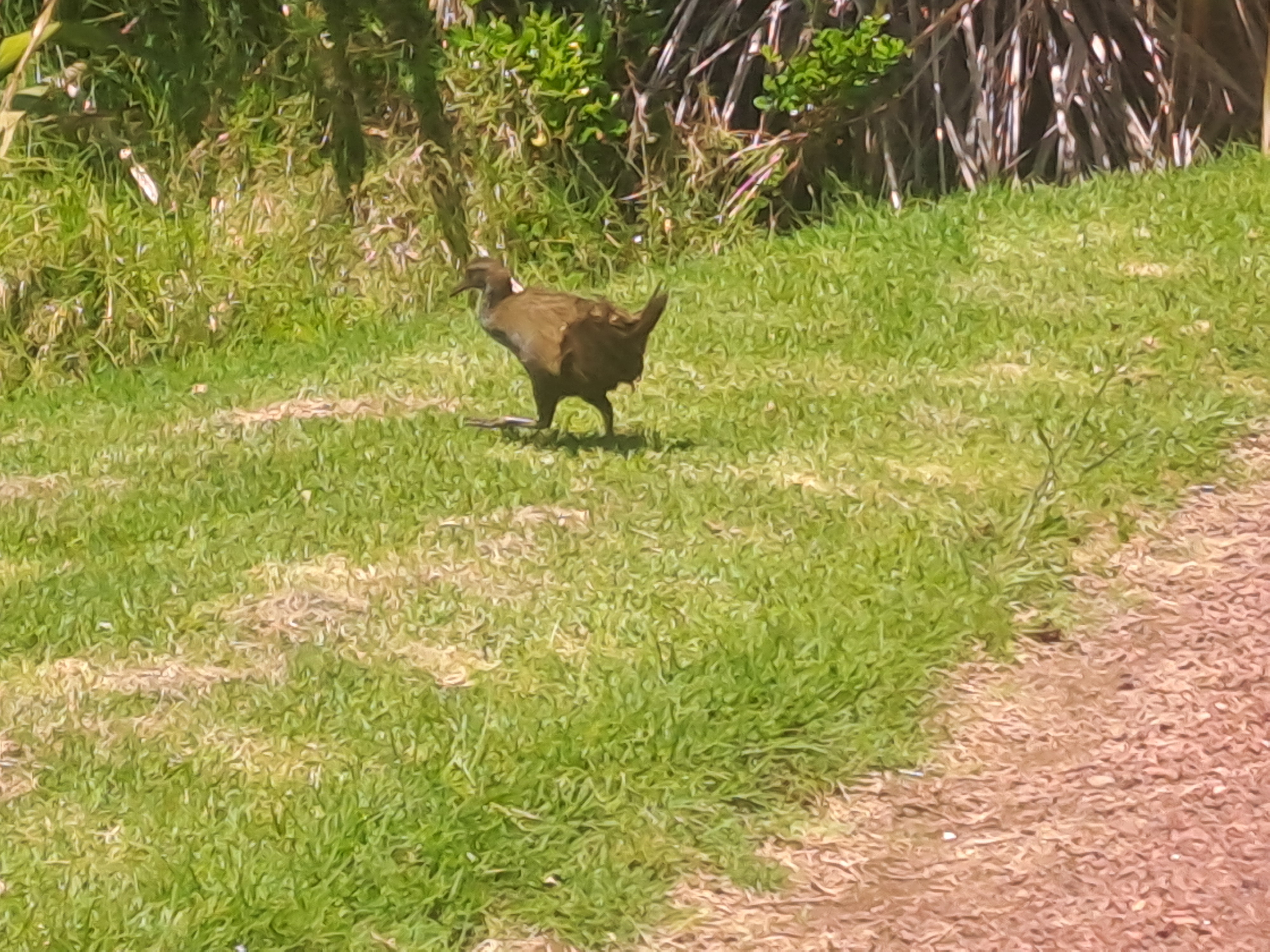


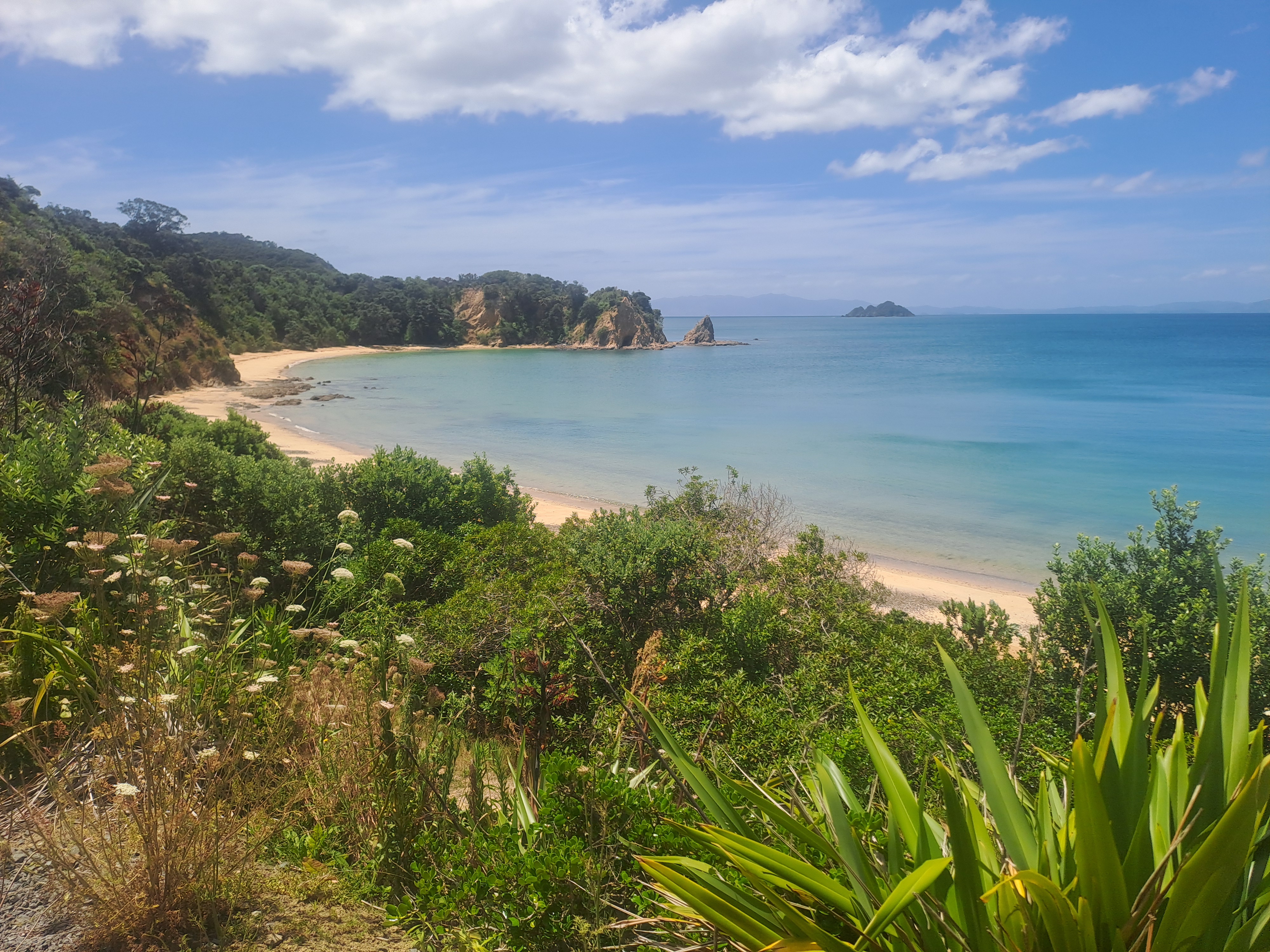
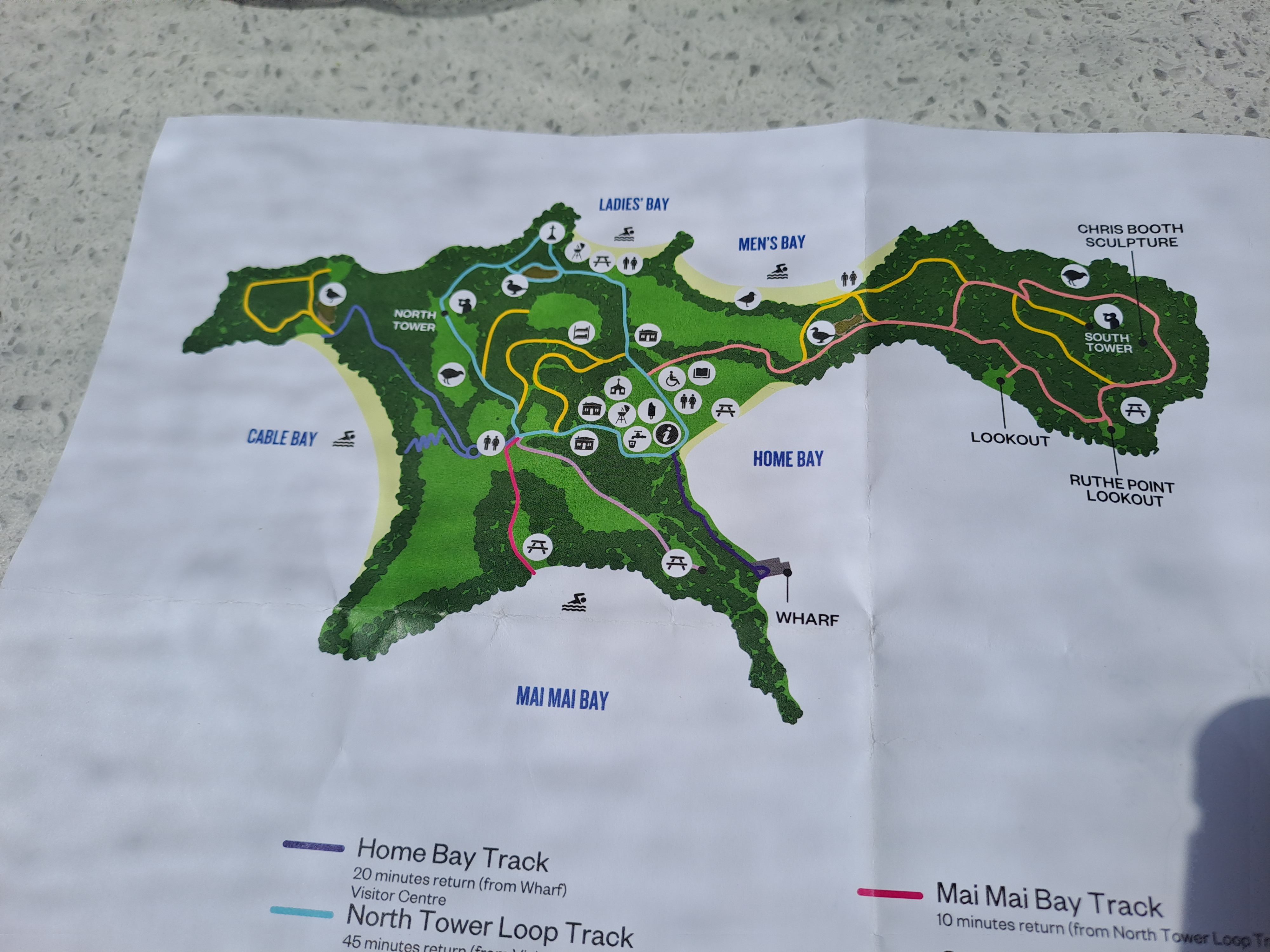
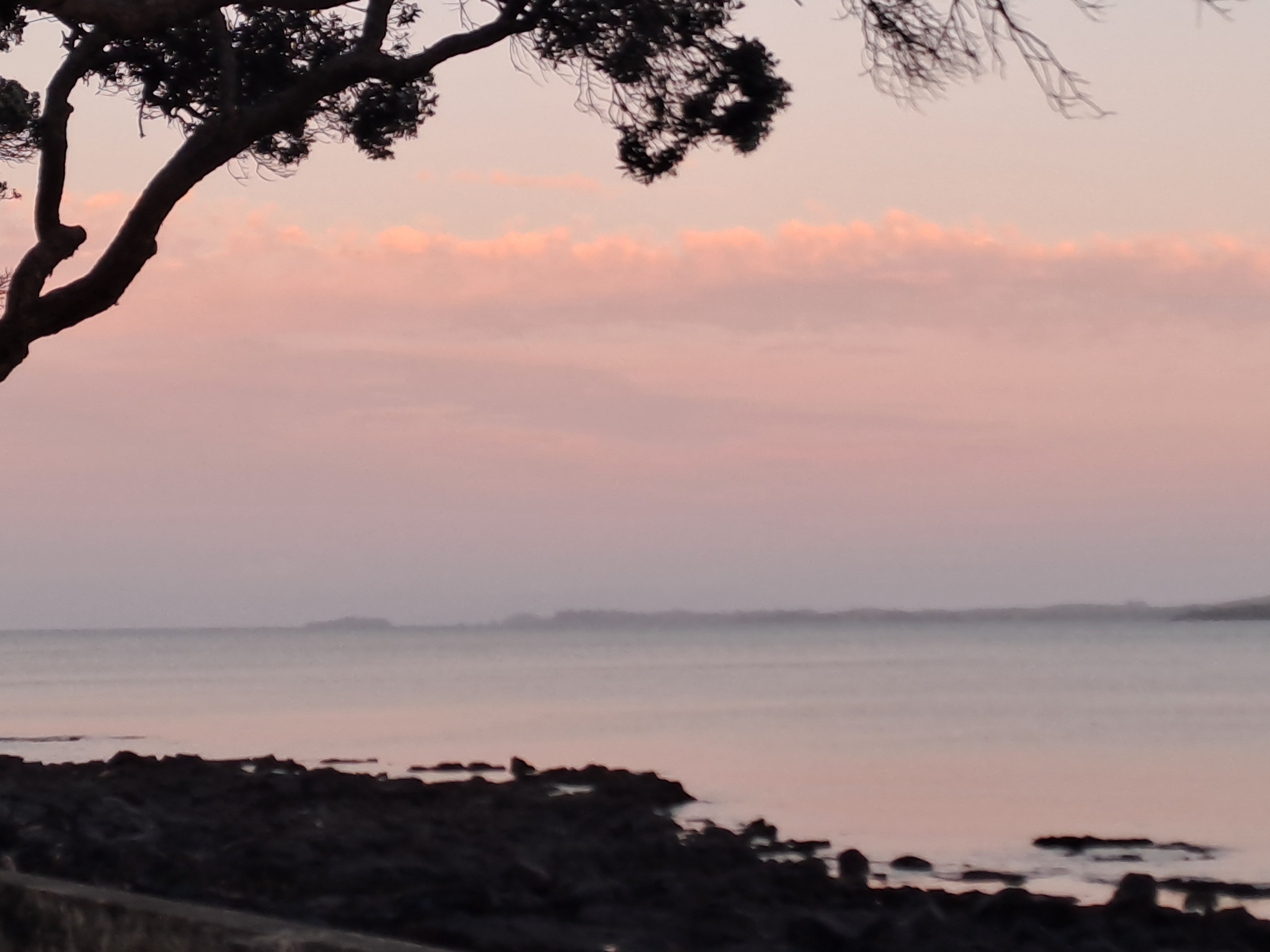
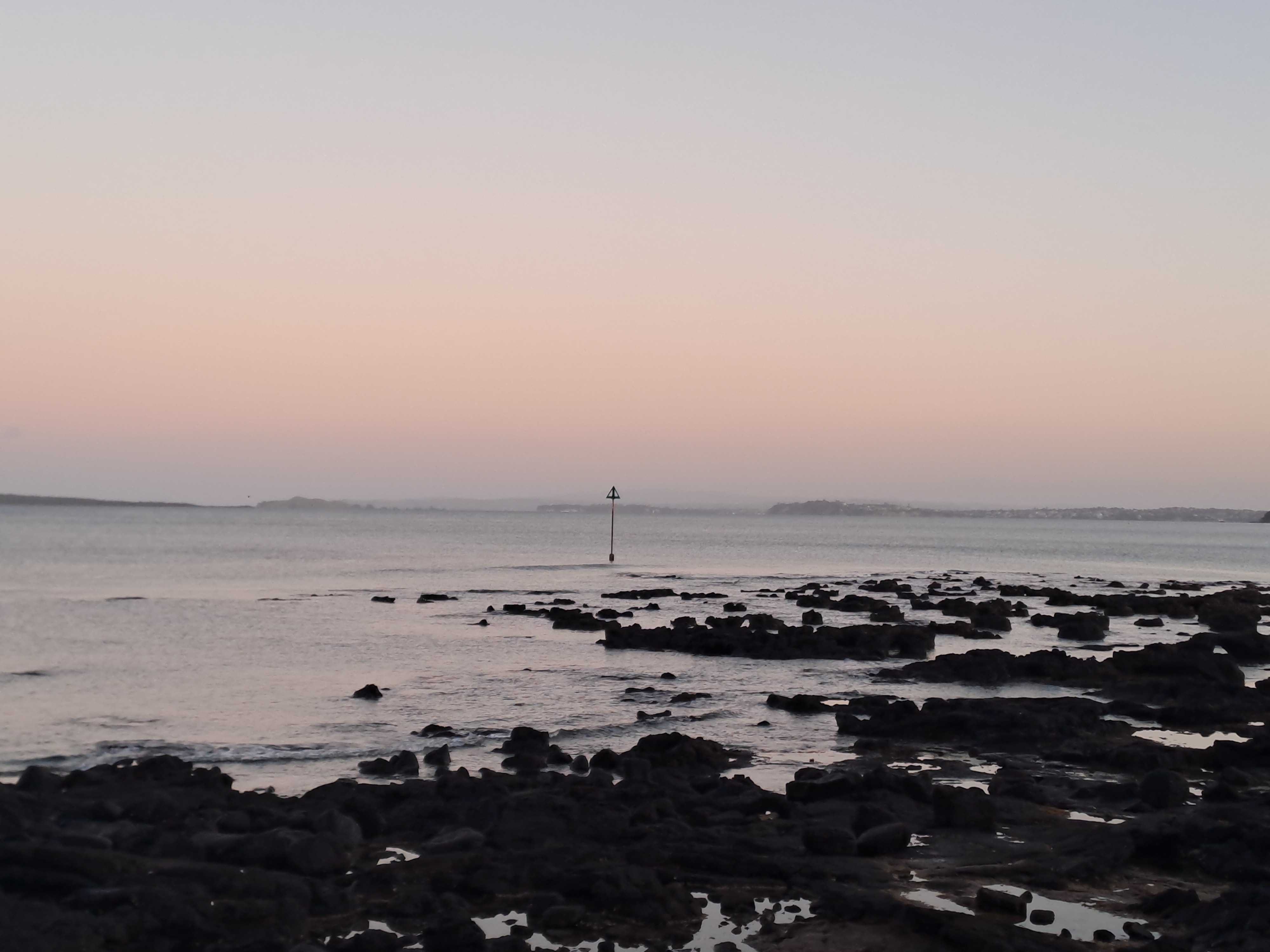
Below is the sunset from our campsite.
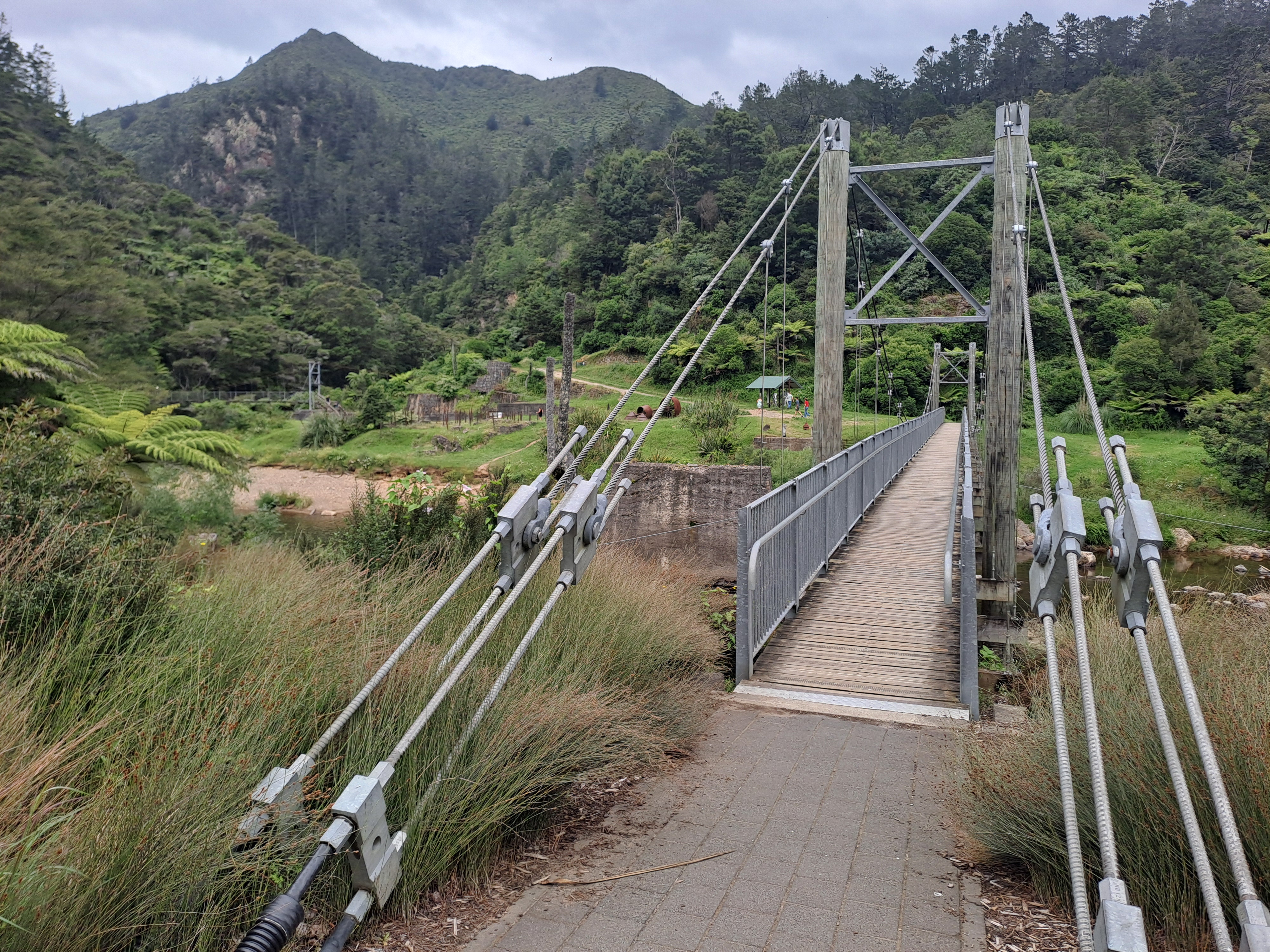
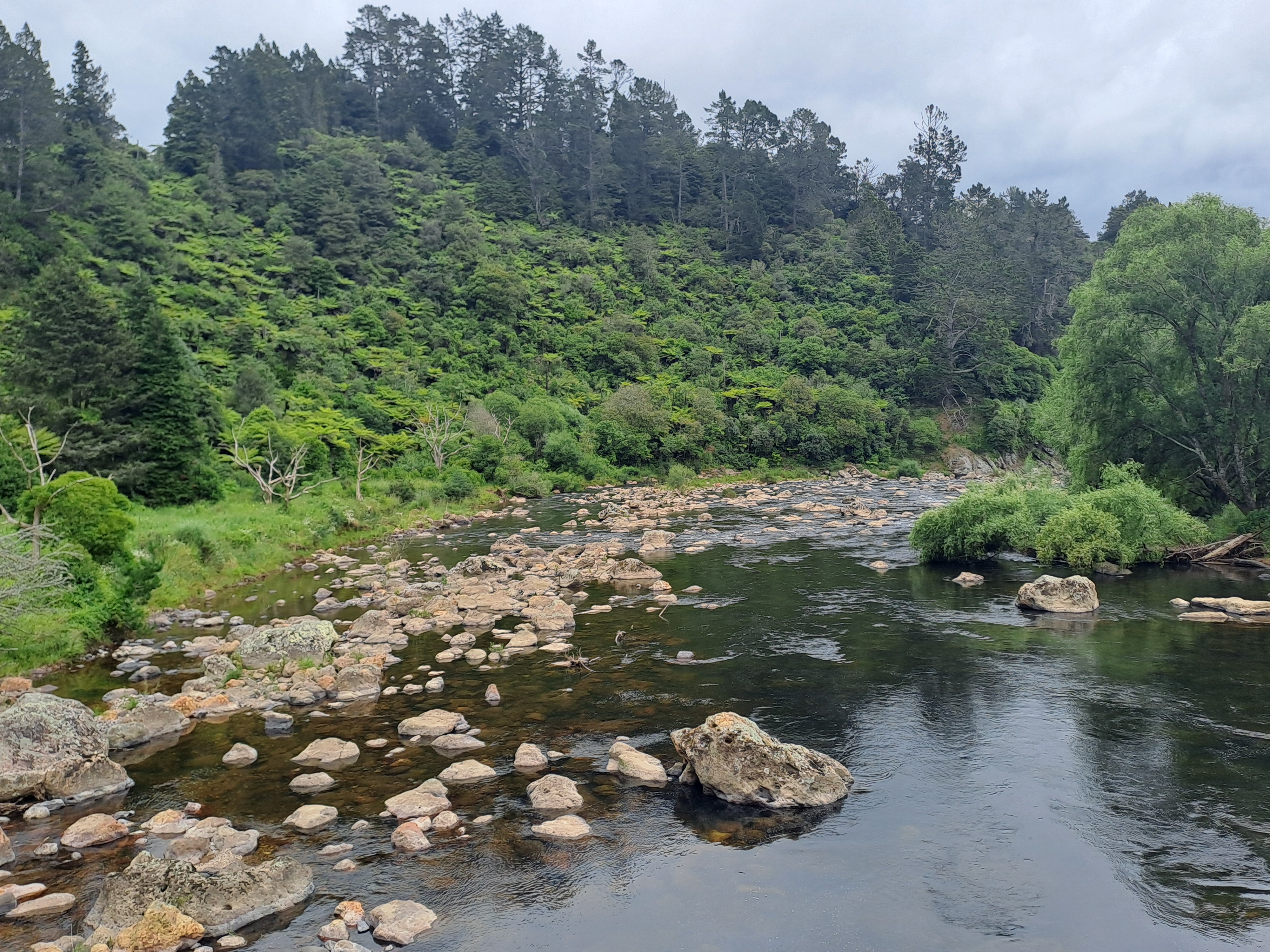
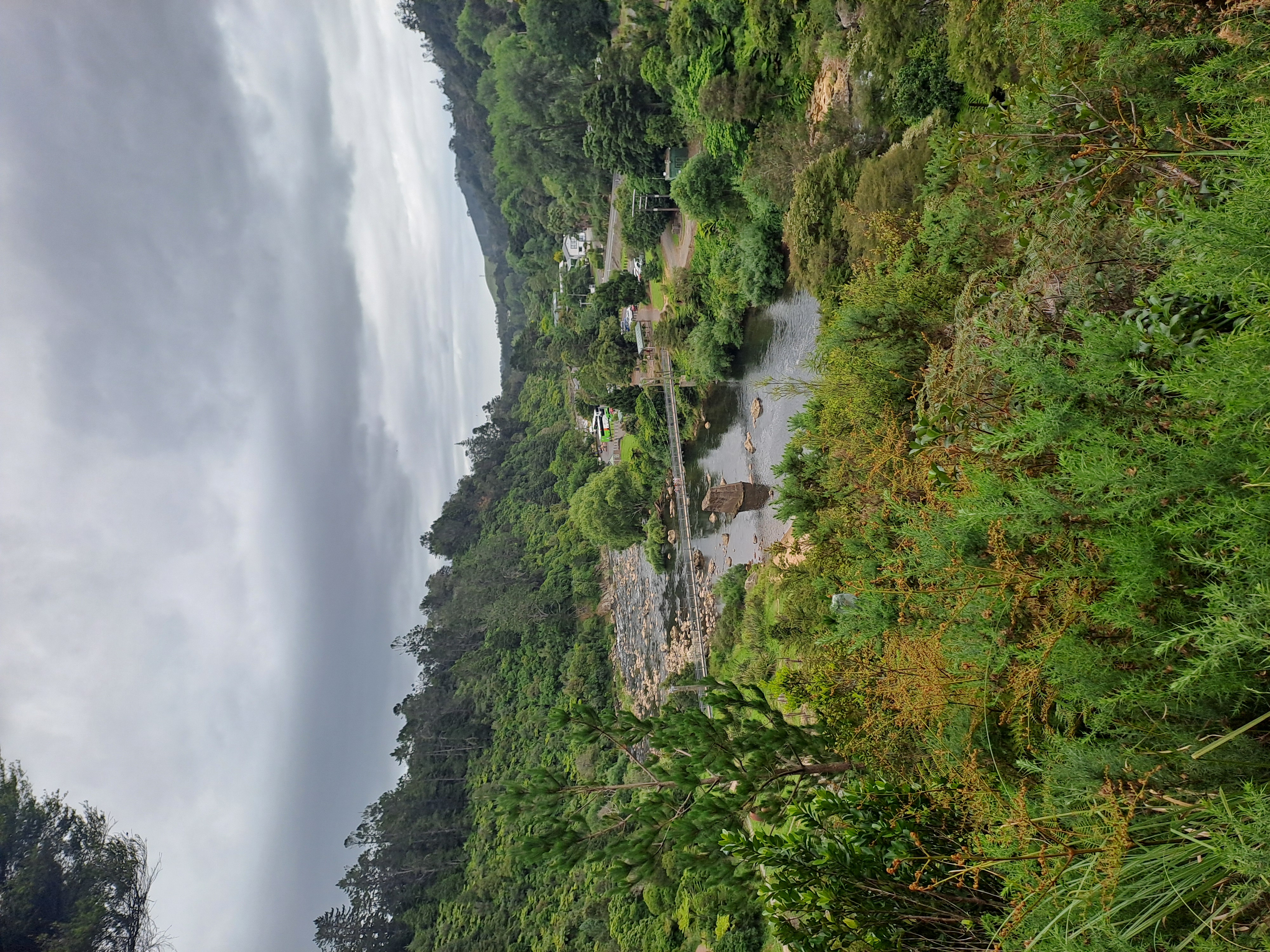
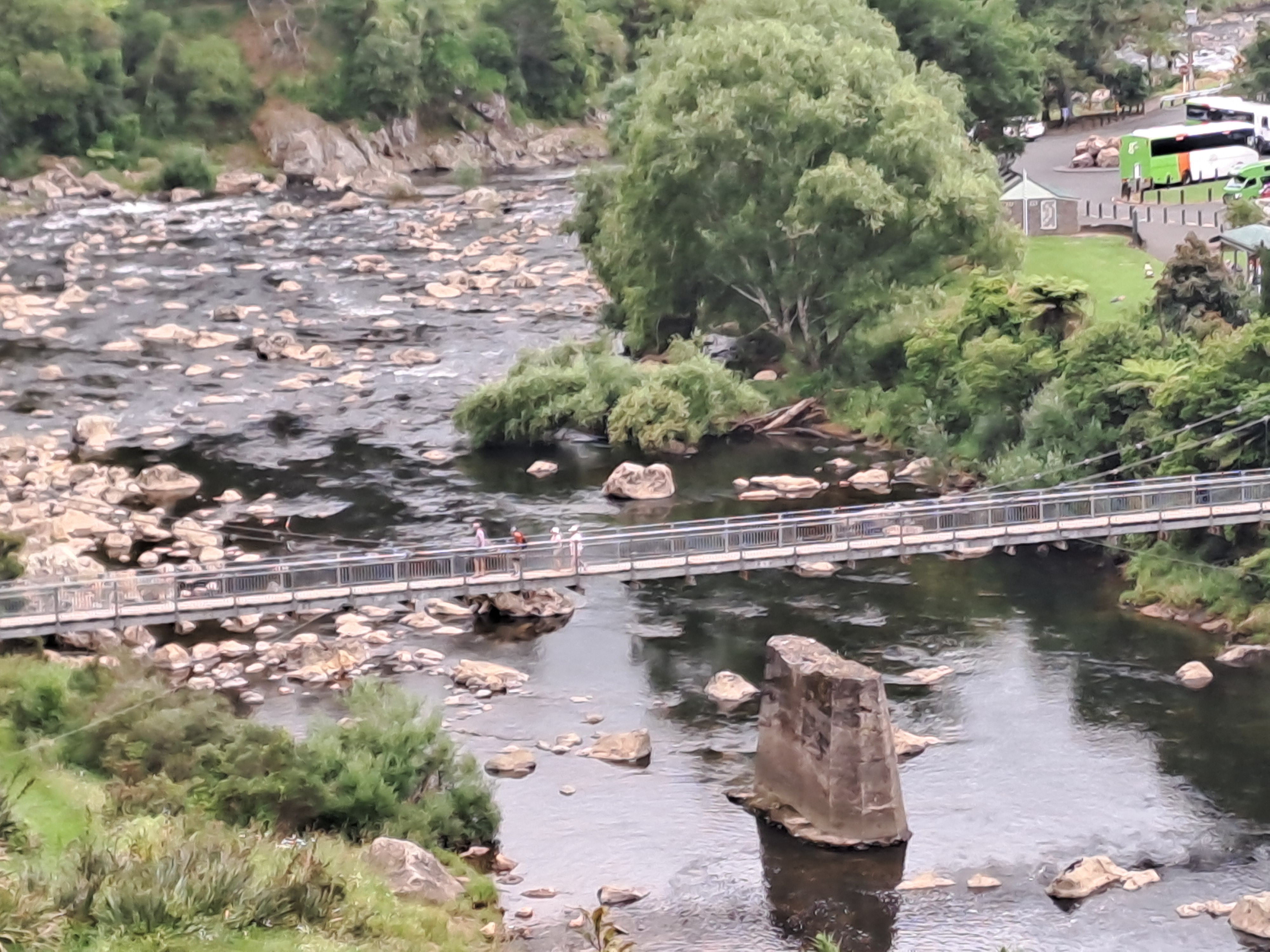
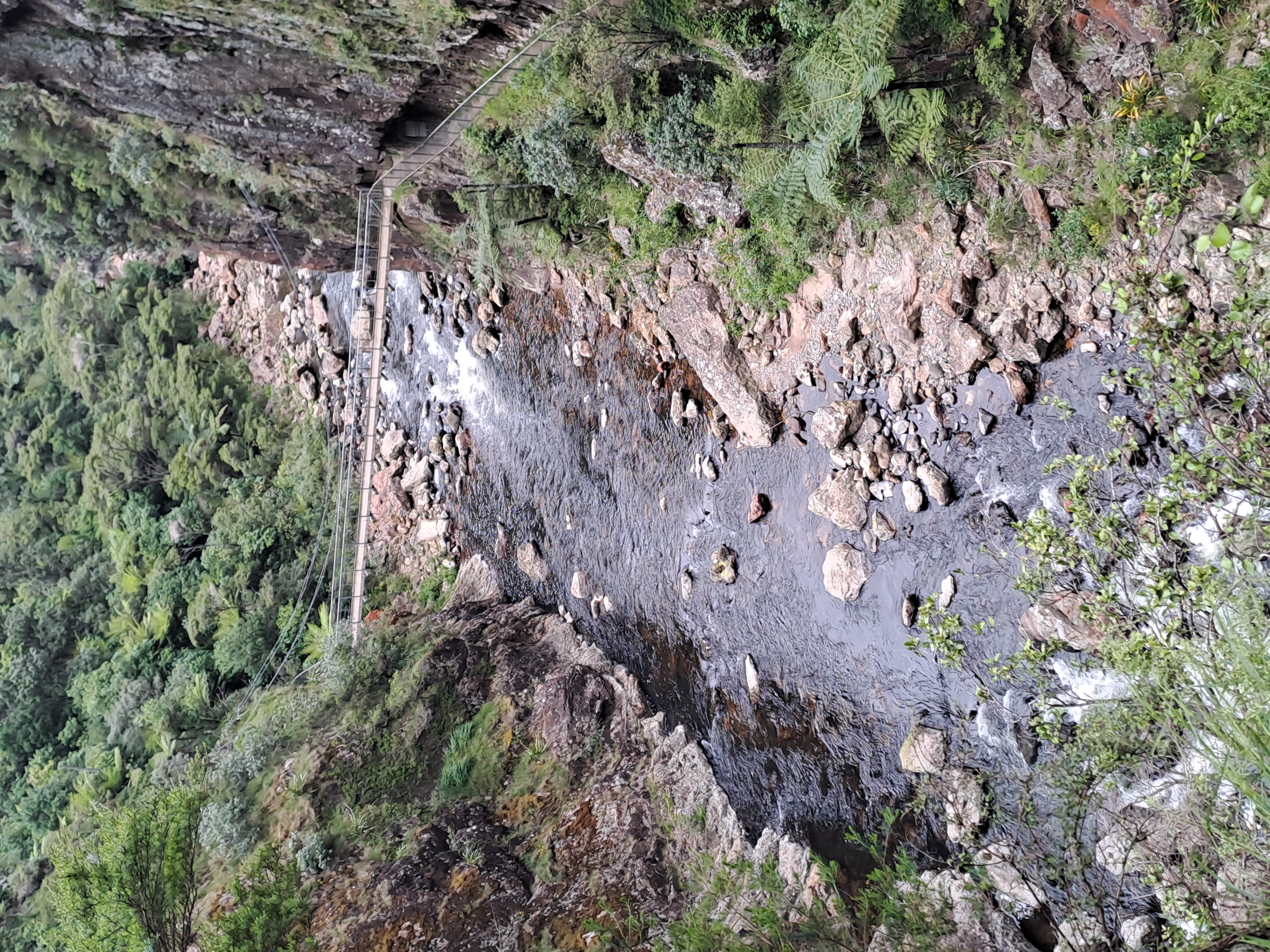
Onwards towards Matamata, our campsite before Hobbiton! On the way we stopped off at Karangahake gorge to see the sights. This was the site of a gold mine. Now the tracks are used for hiking with a bit of history thrown in. The crossing is provided by a swing bridge, with a warning about having too many people on at once.
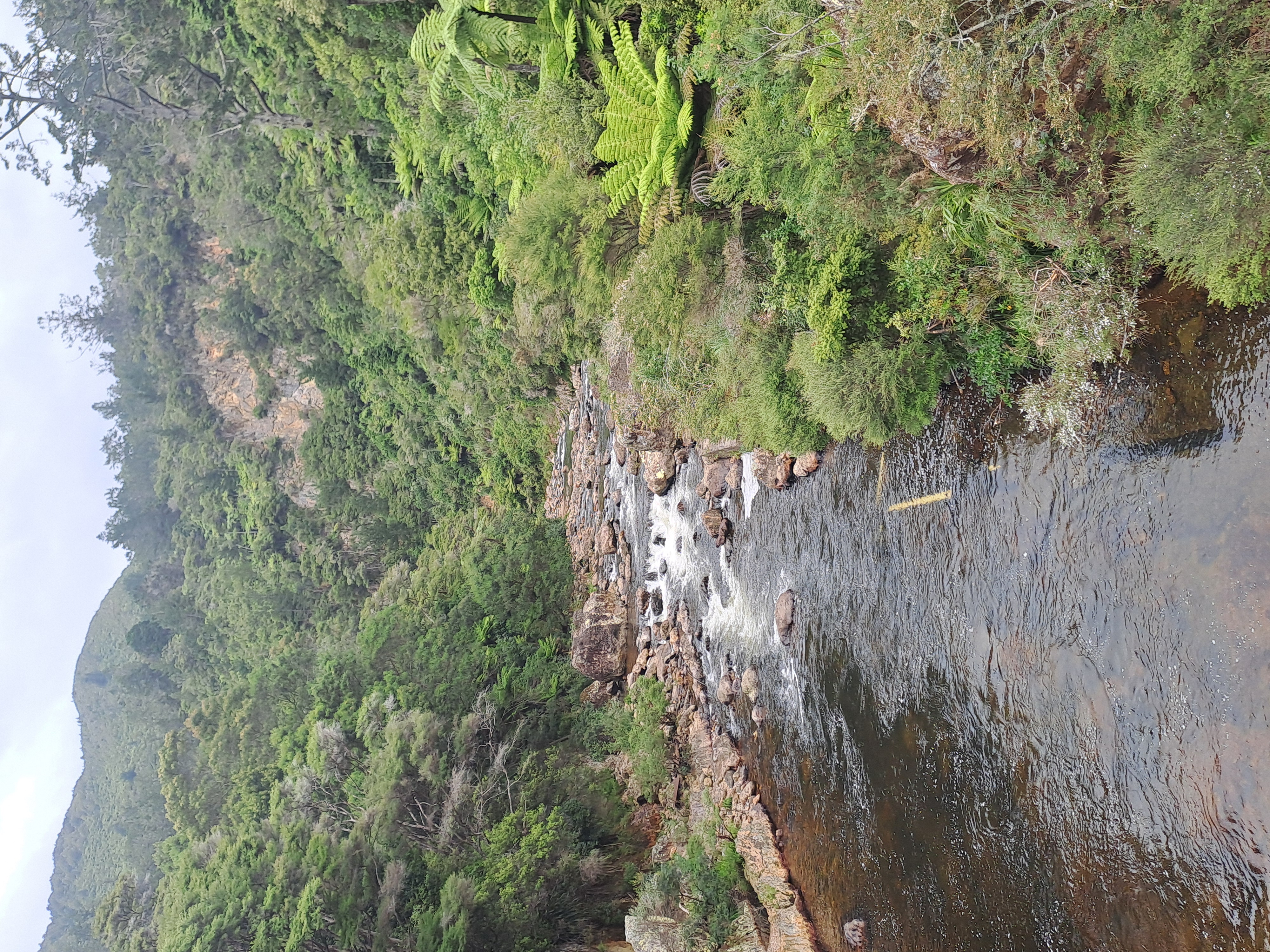
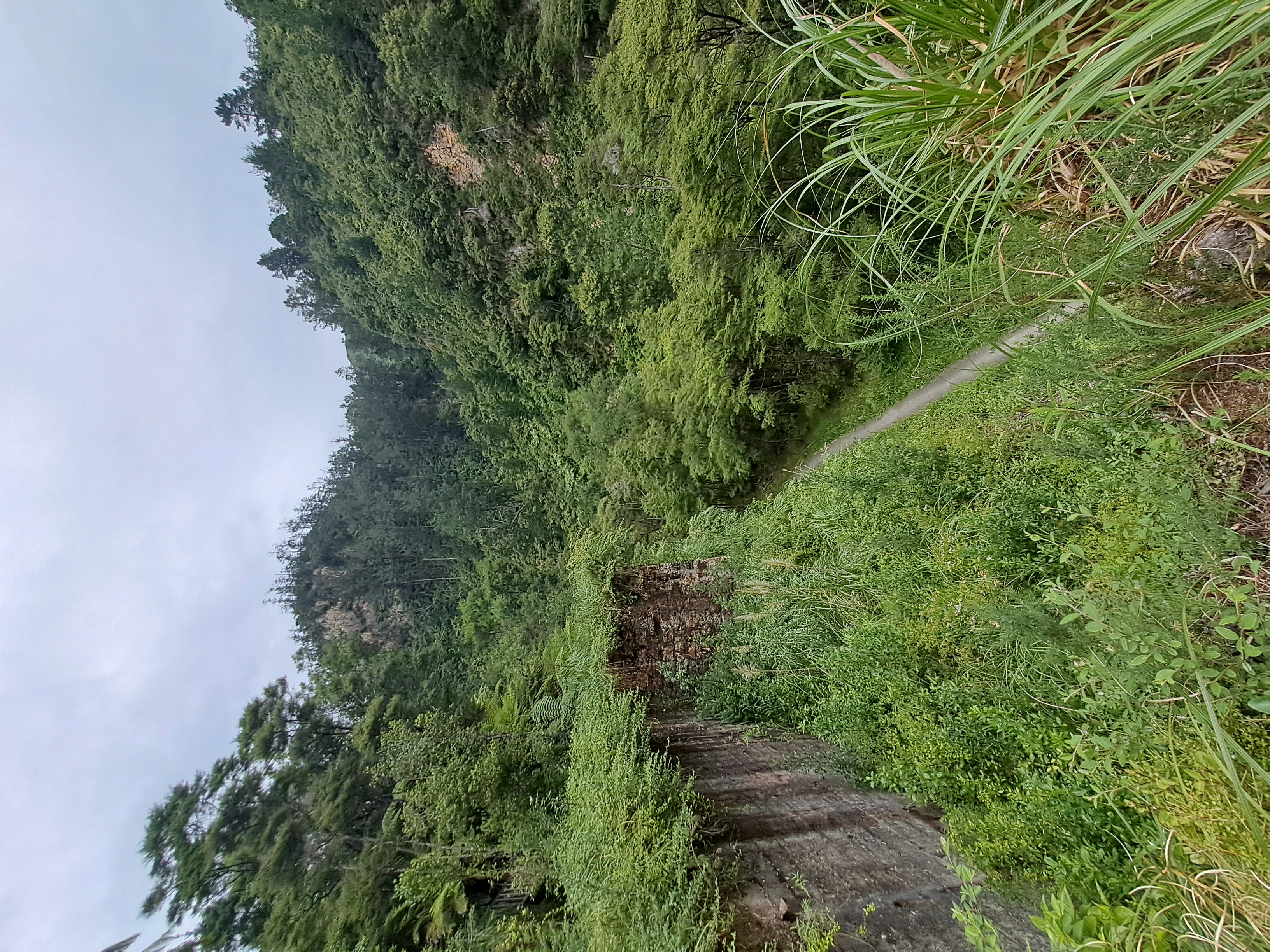
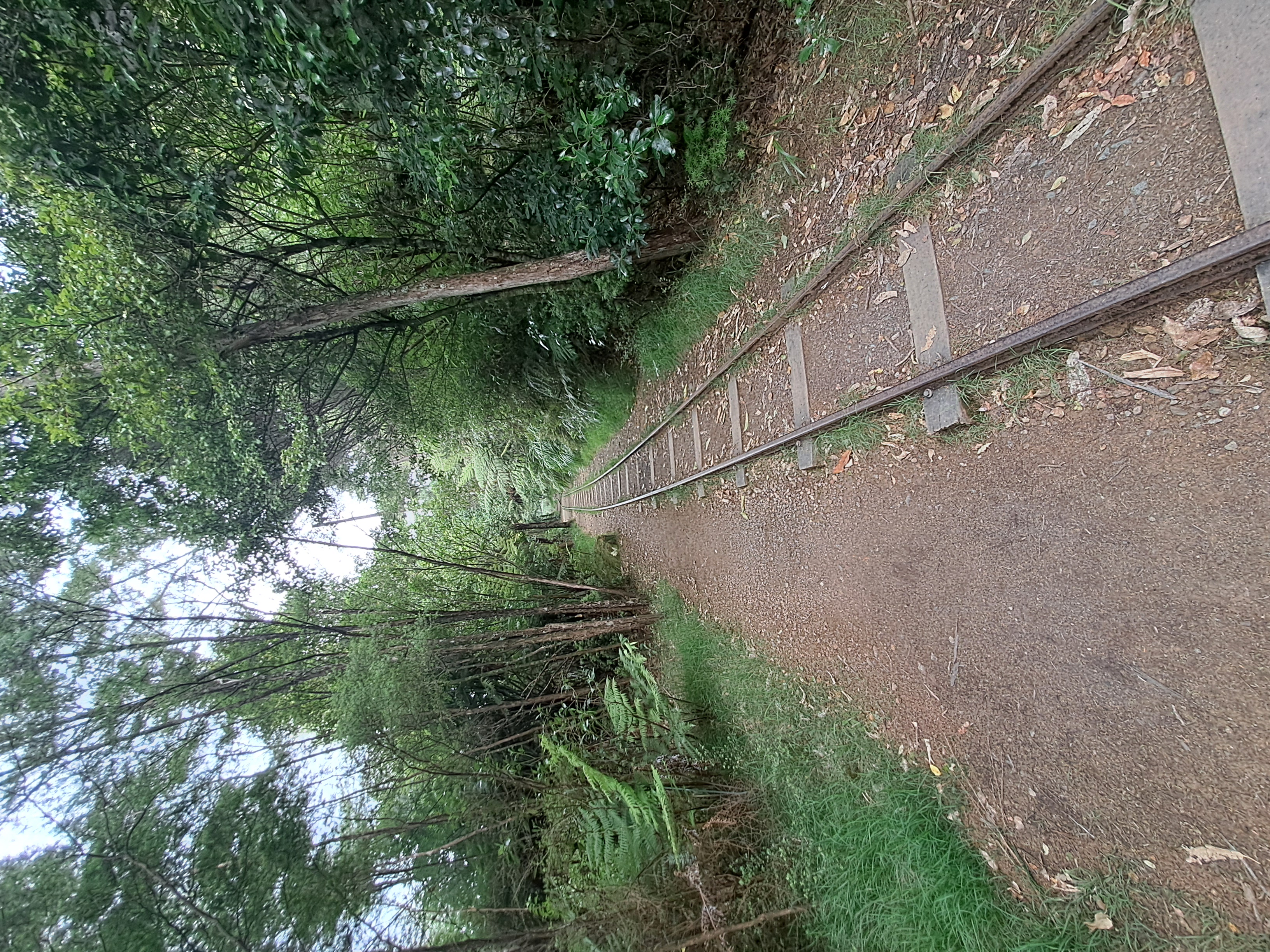
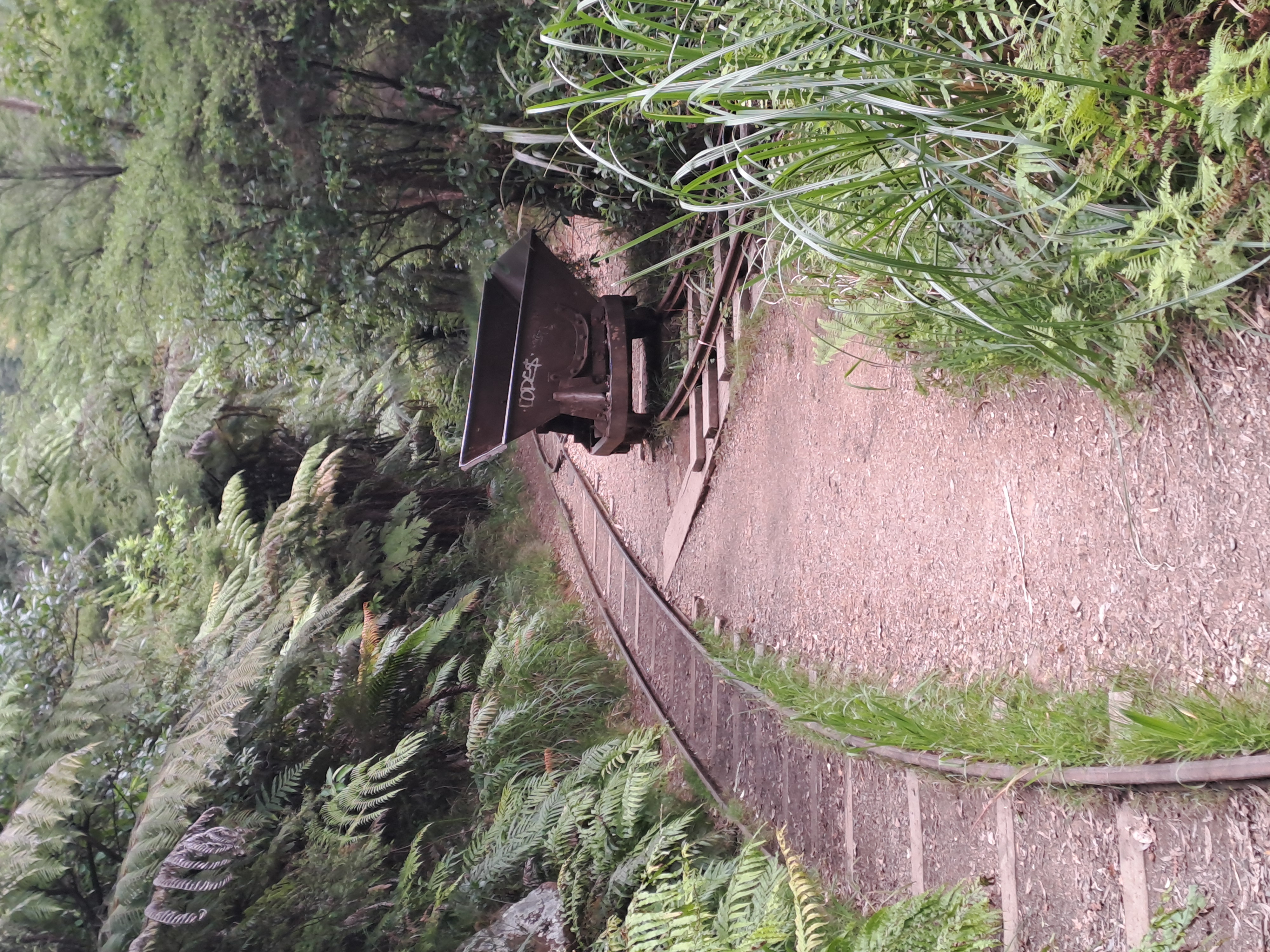
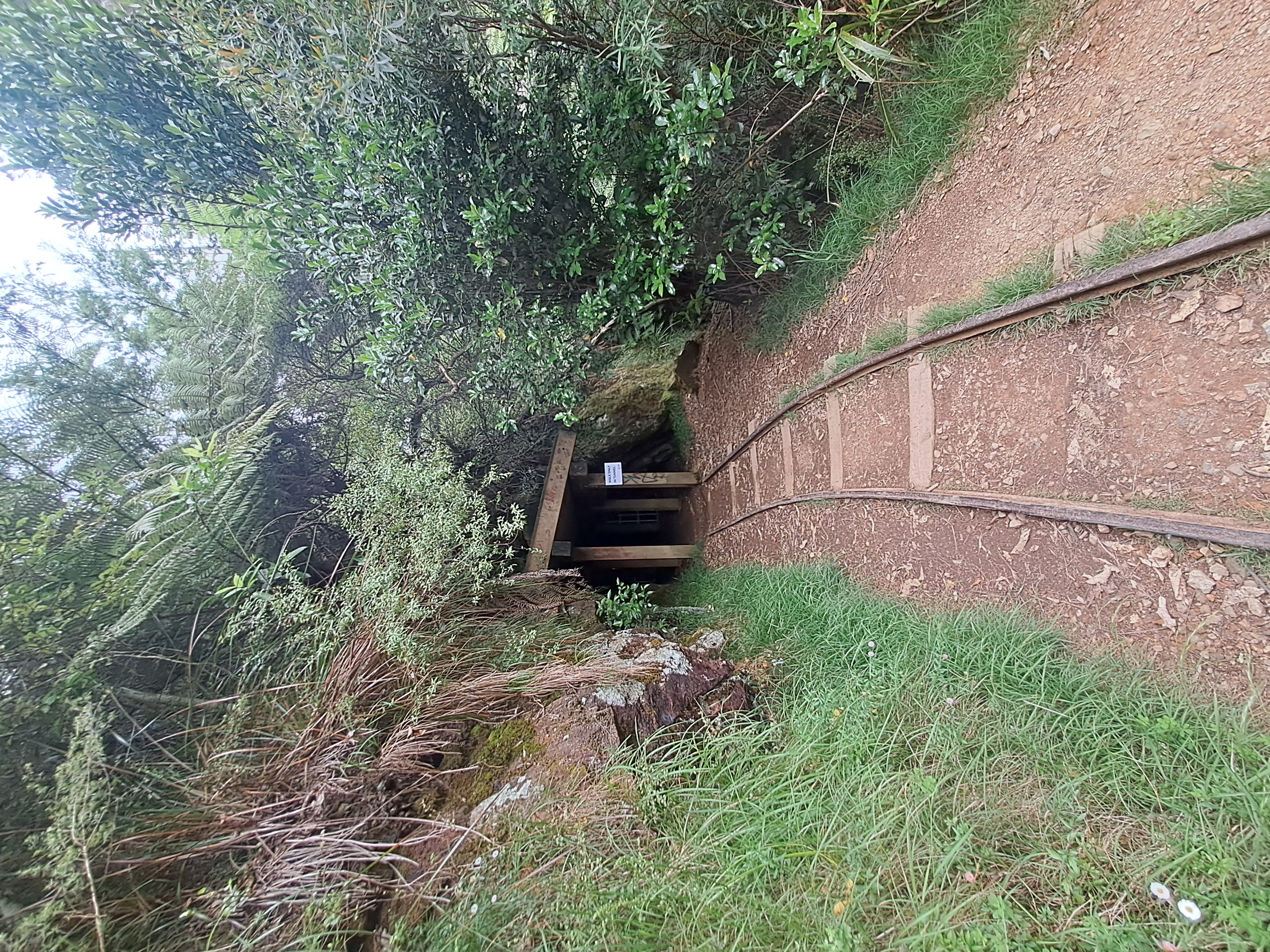
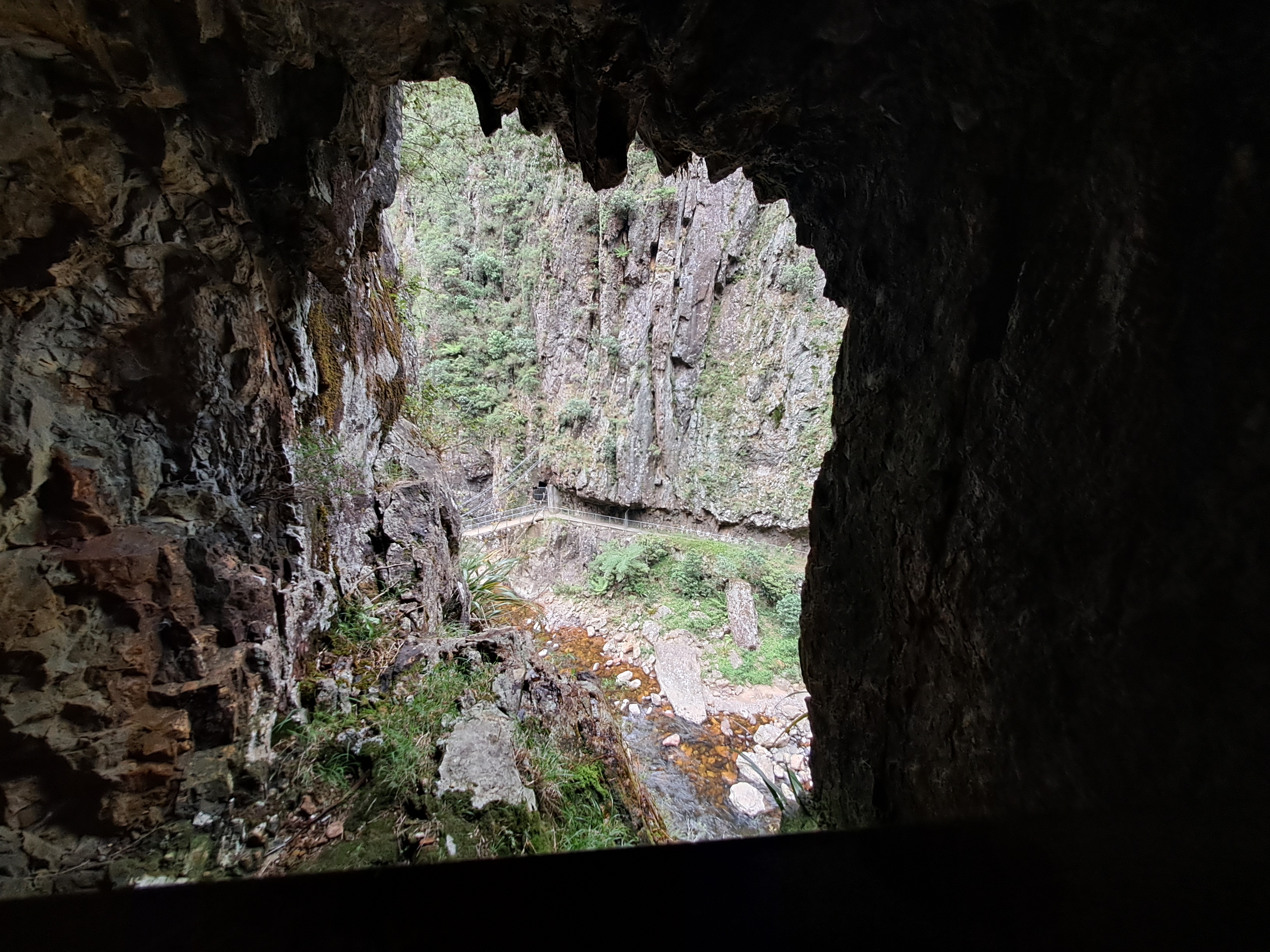
Climbing up the gorge using the handy steps provided, I came to the old railway line used for the mine and also various explanations of the processes and all the nasty chemicals used. I was glad I’d brought my head torch as the part through the tunnel was rather long with puddles to avoid. That section was called windows due to openings in the side wall of the tunnel.
At the end it was back down again and across another bridge, only to find the rest of the route was closed, so back up again with my rapidly fading torch and note to myself to charge it.

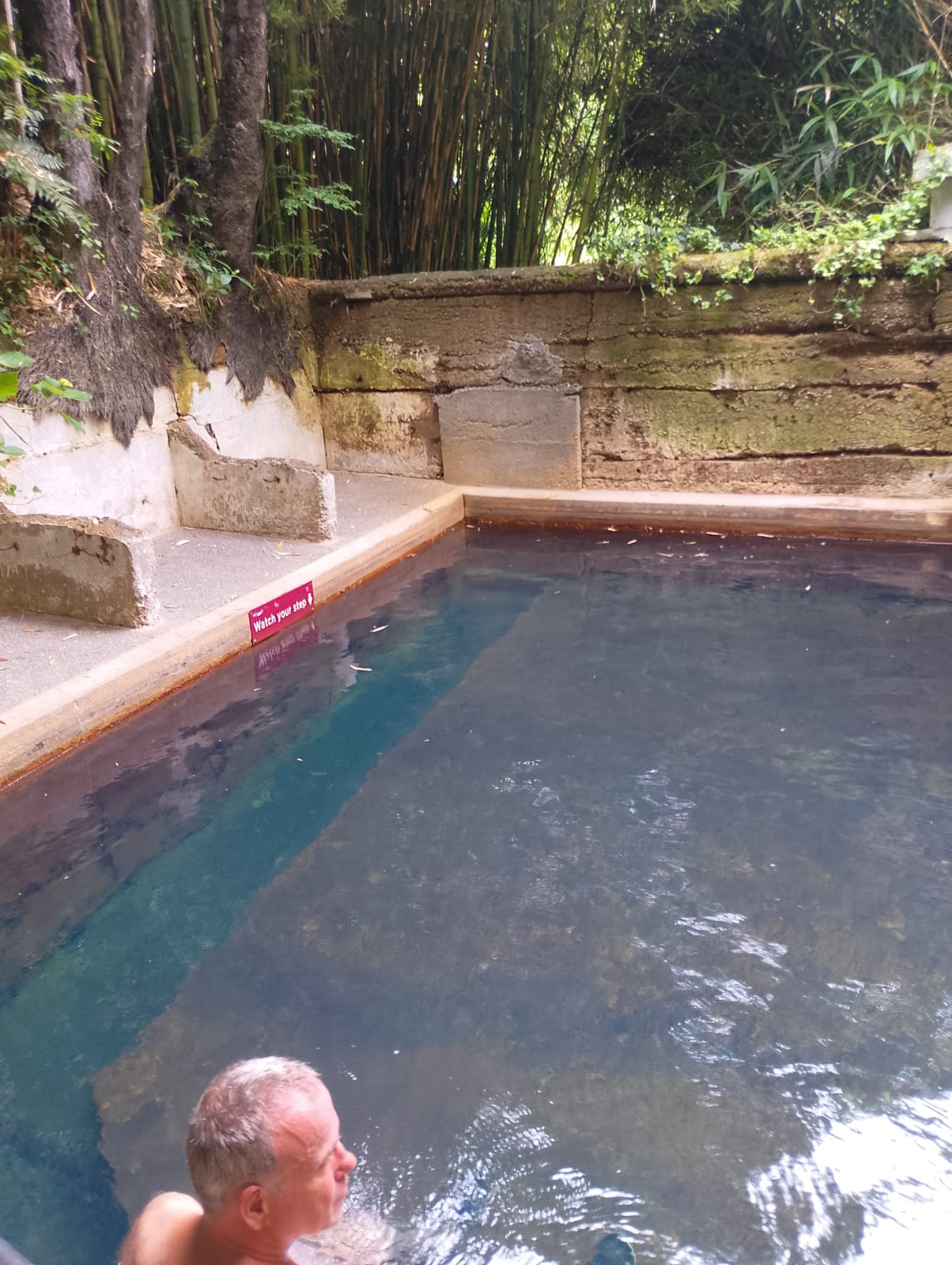
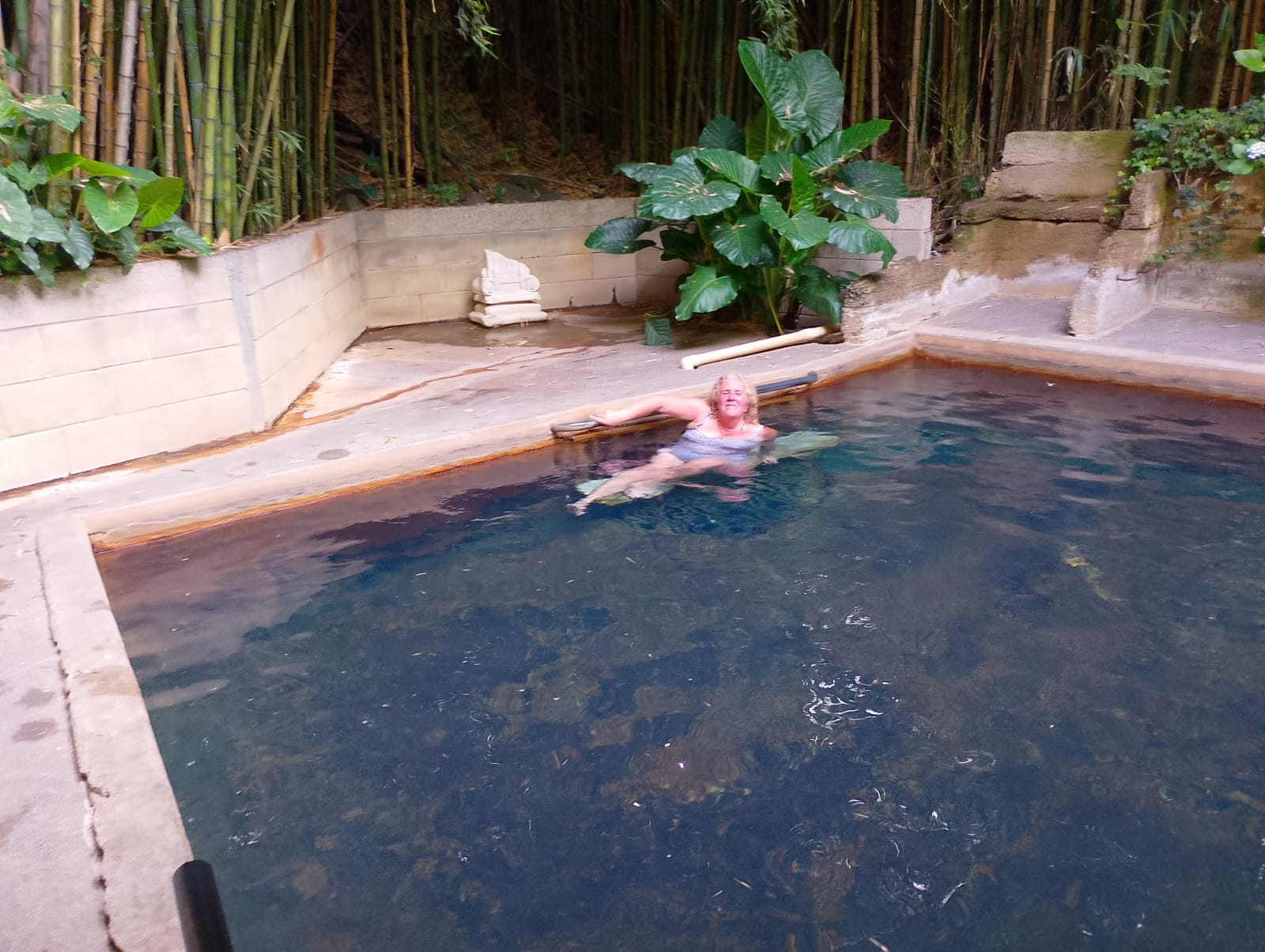
we were now in the thermal area of New Zealand so we had to try out the thermal pool at the campsite. Lovely and warm.
New Zealand gets a lot if its energy from geothermal sources. Between that water turbines and wind power they cover most of their needs.

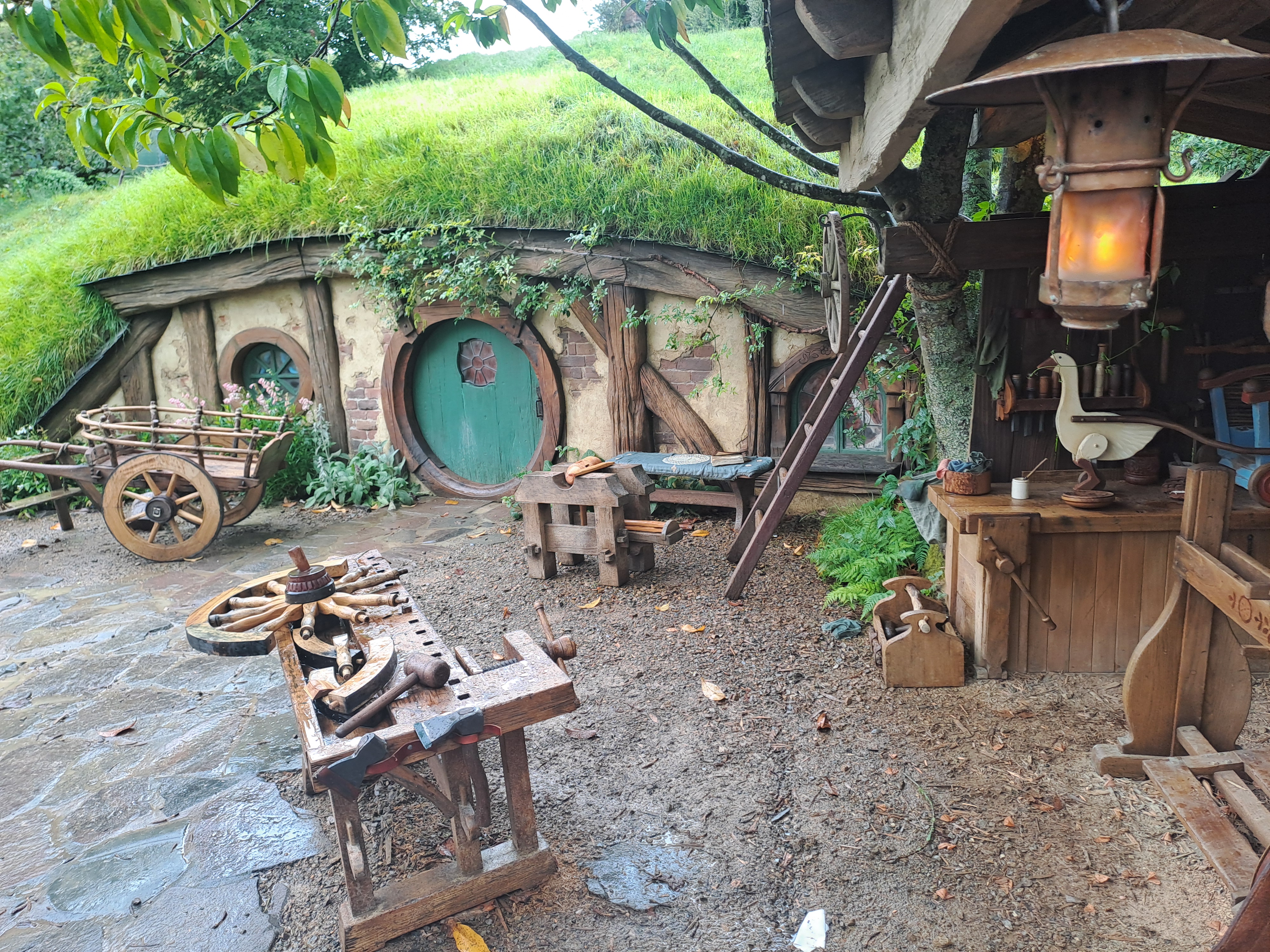
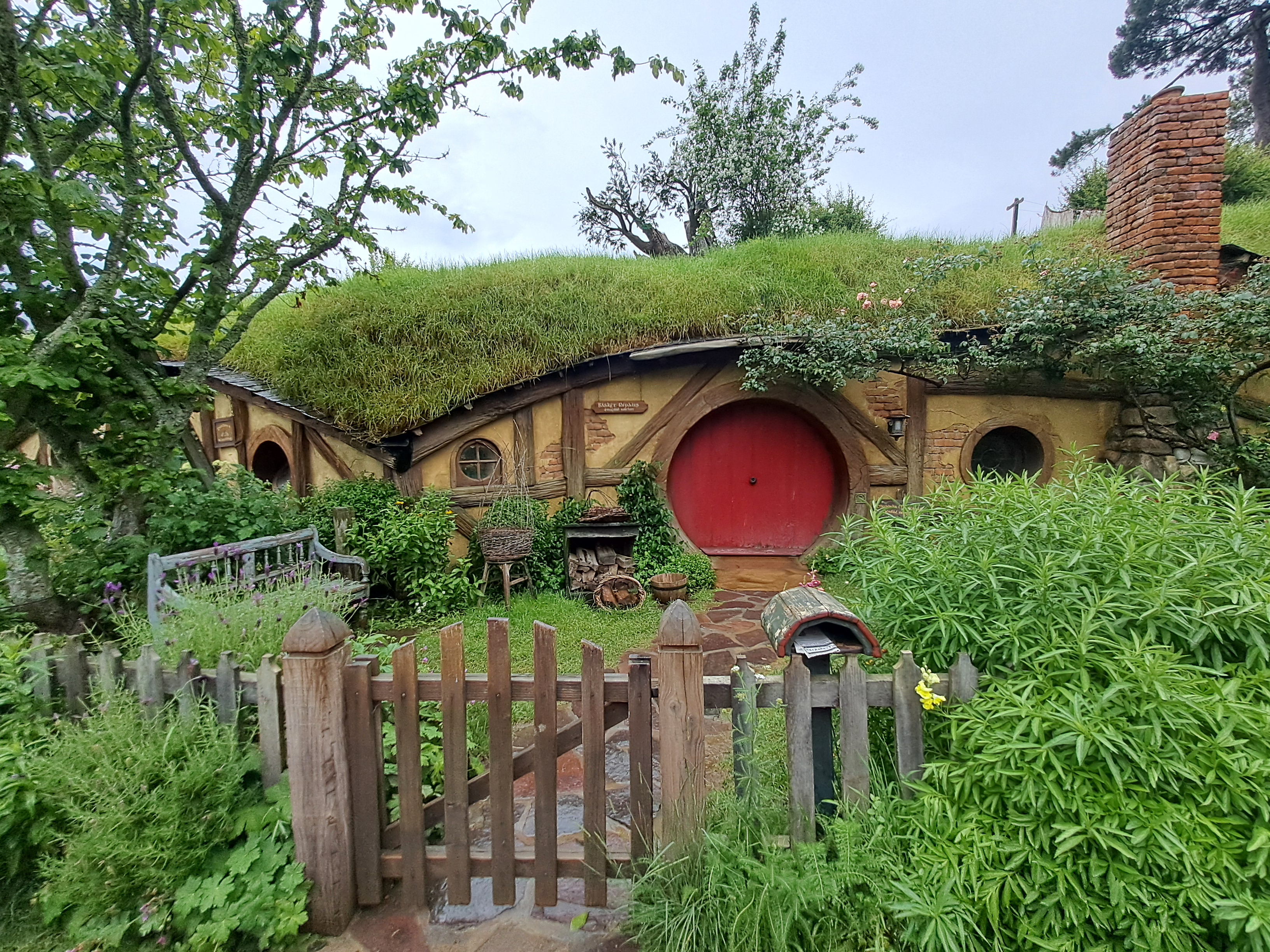
And so to one of my highlights and a day so good even Ashley enjoyed it, and I can assure you Hobbits are not his thing. We got to see lots of Hobbit holes of various sizes. Sized so they could make the person next to them appear big of small. Filming used distance as well so when it looked like Bilbo was opposite Gandalf he might actually be behind and to the side.
The original set from Lord of the rings was pulled down. So when The Hobbit was filmed it was rebuilt with the idea of making it more permanent.
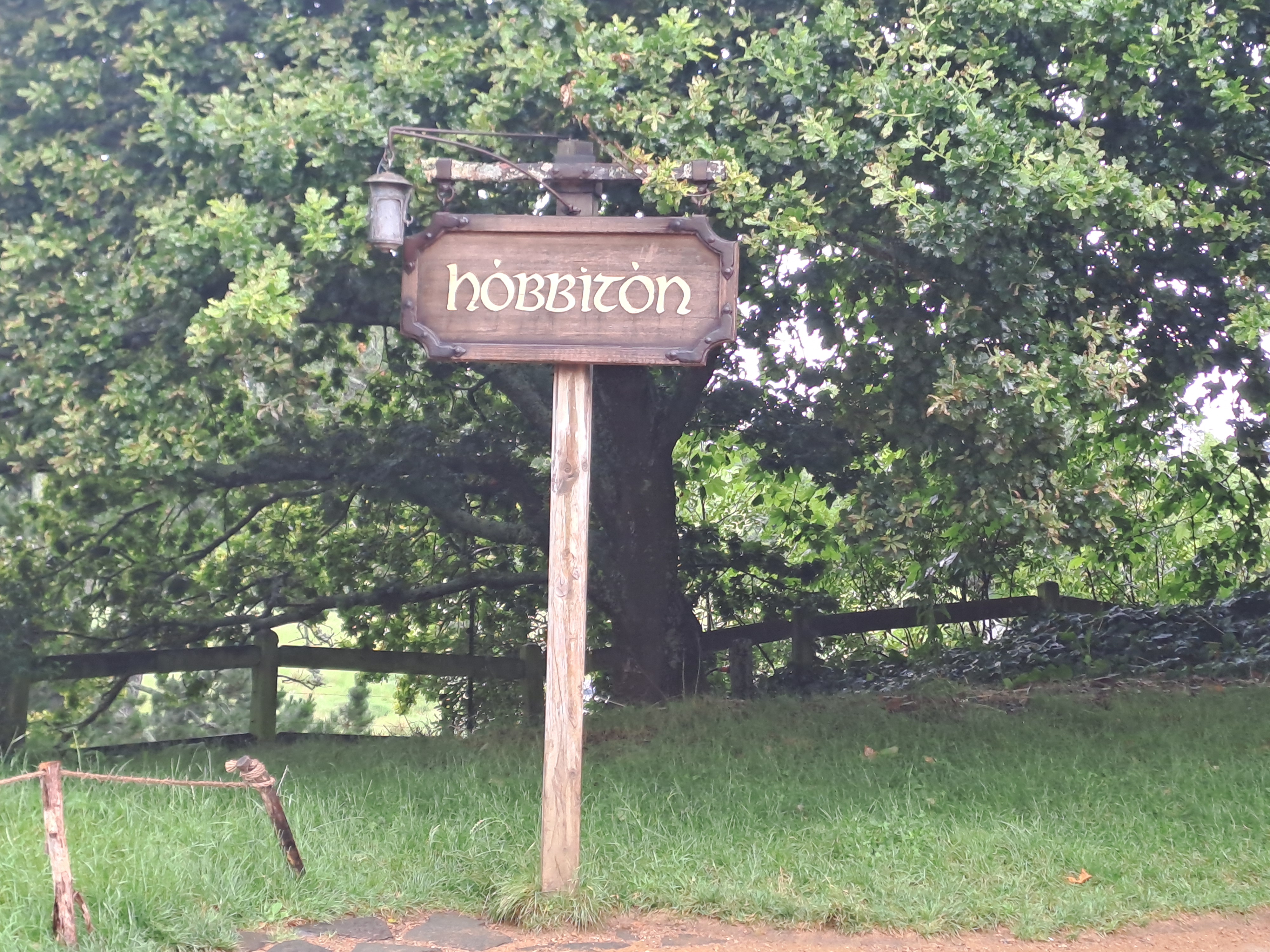
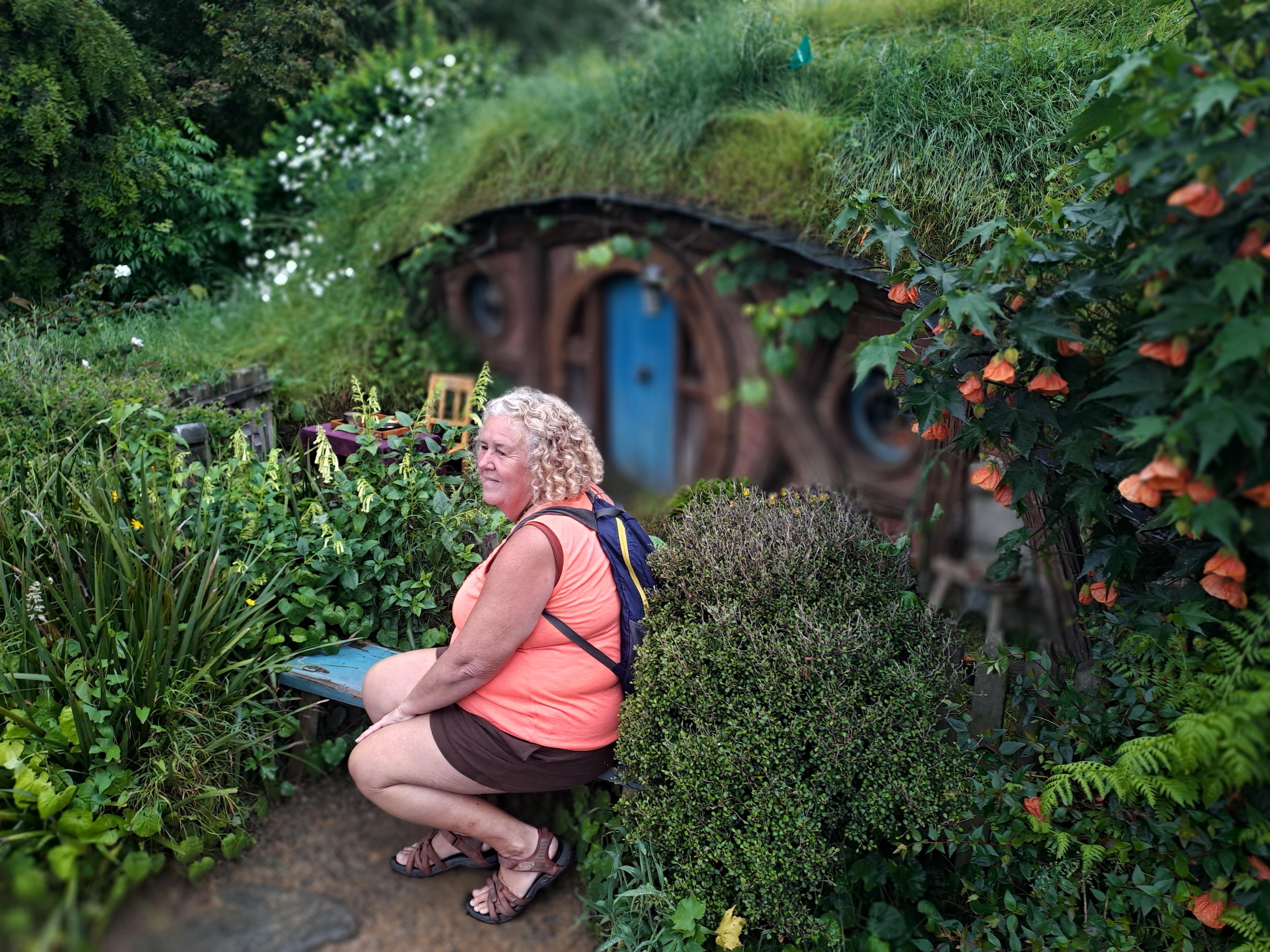
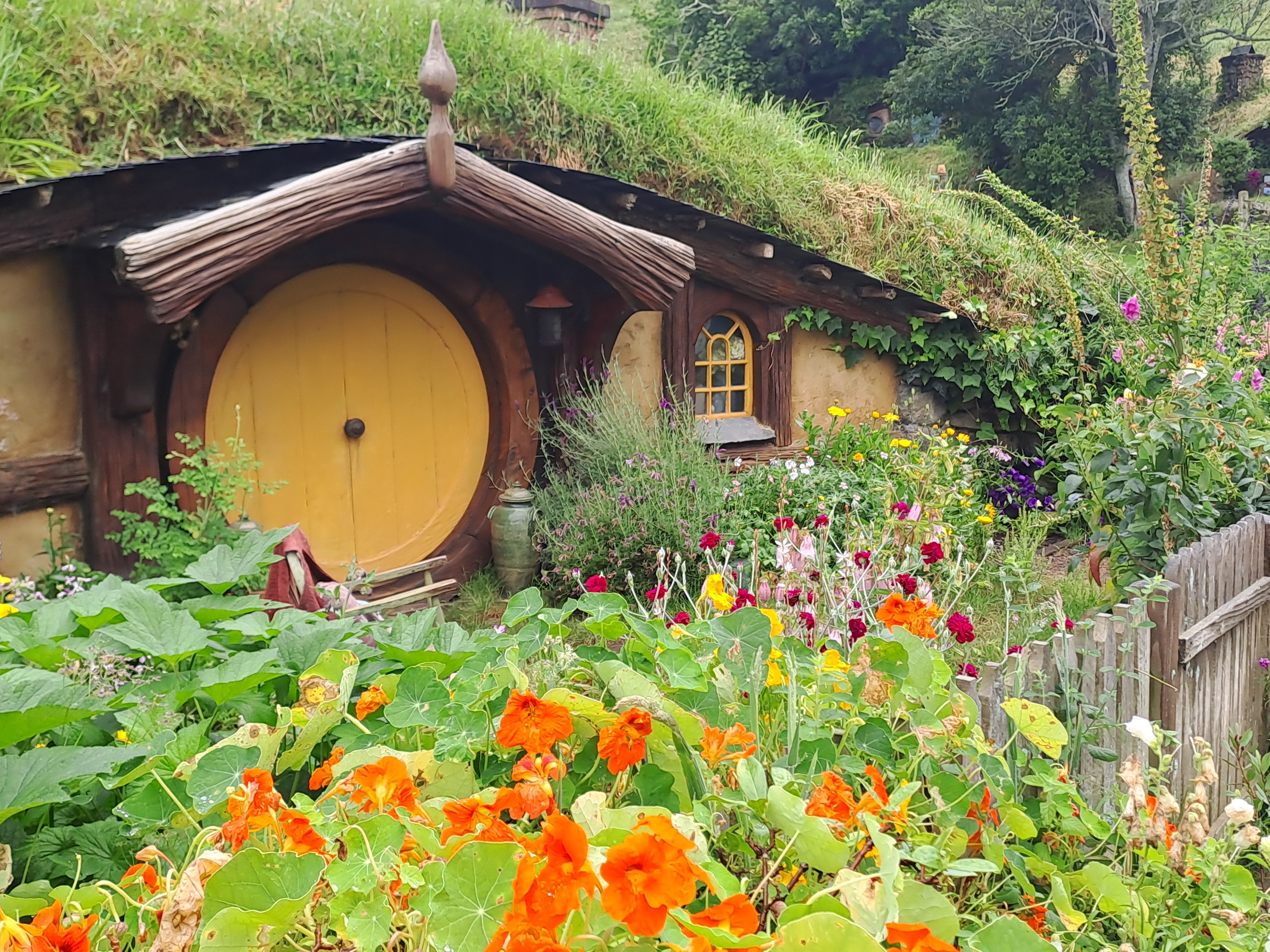
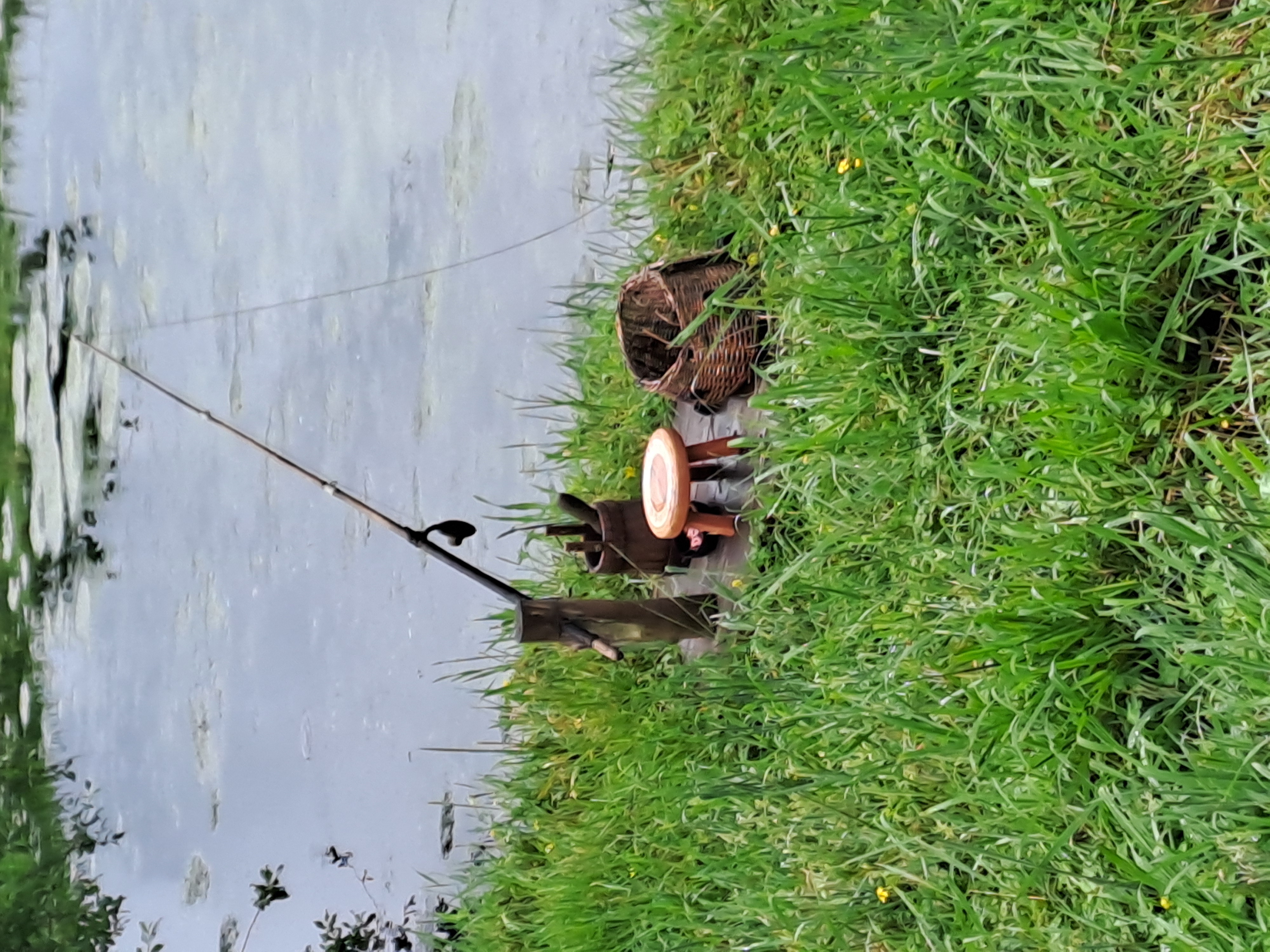


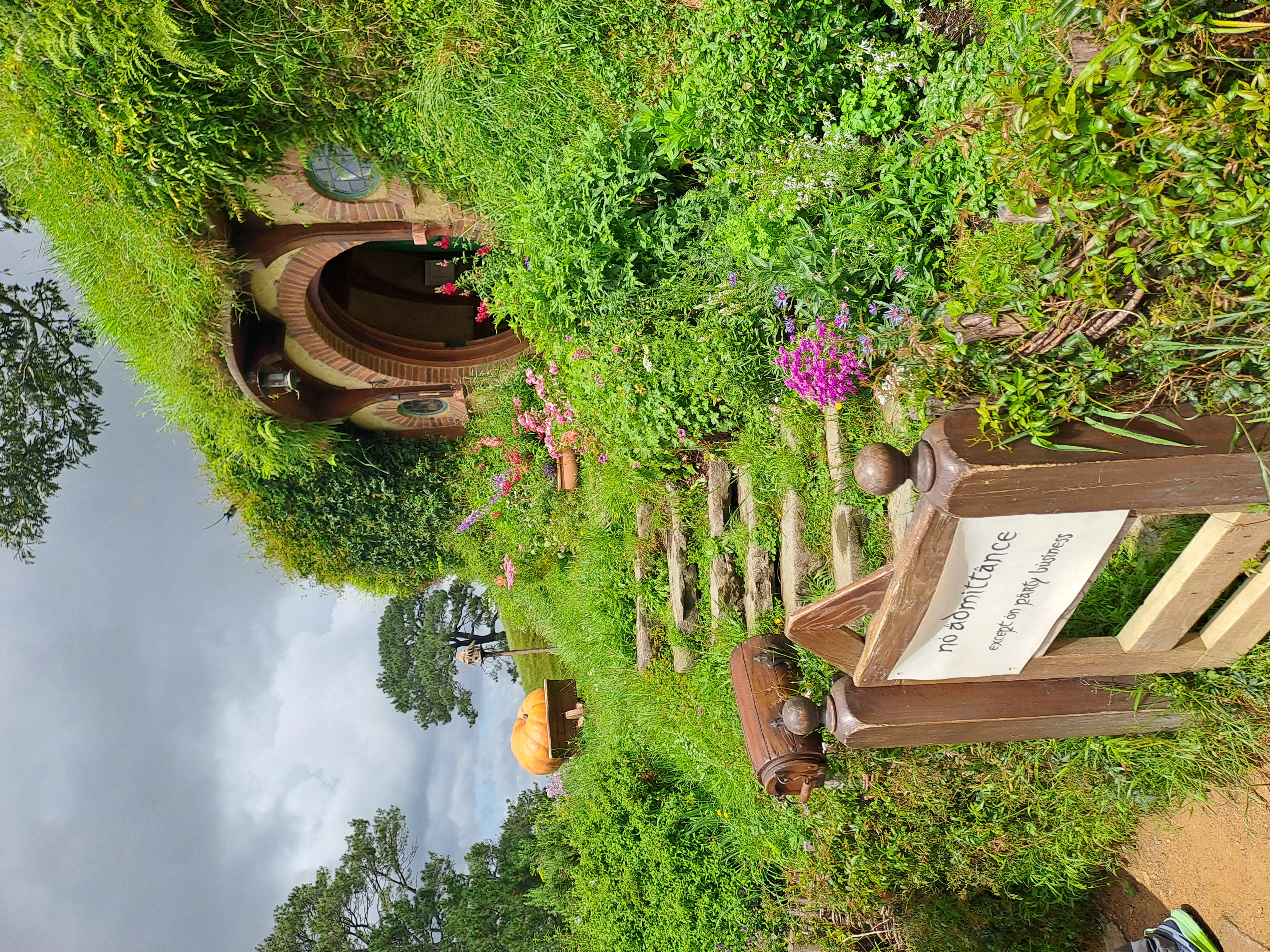


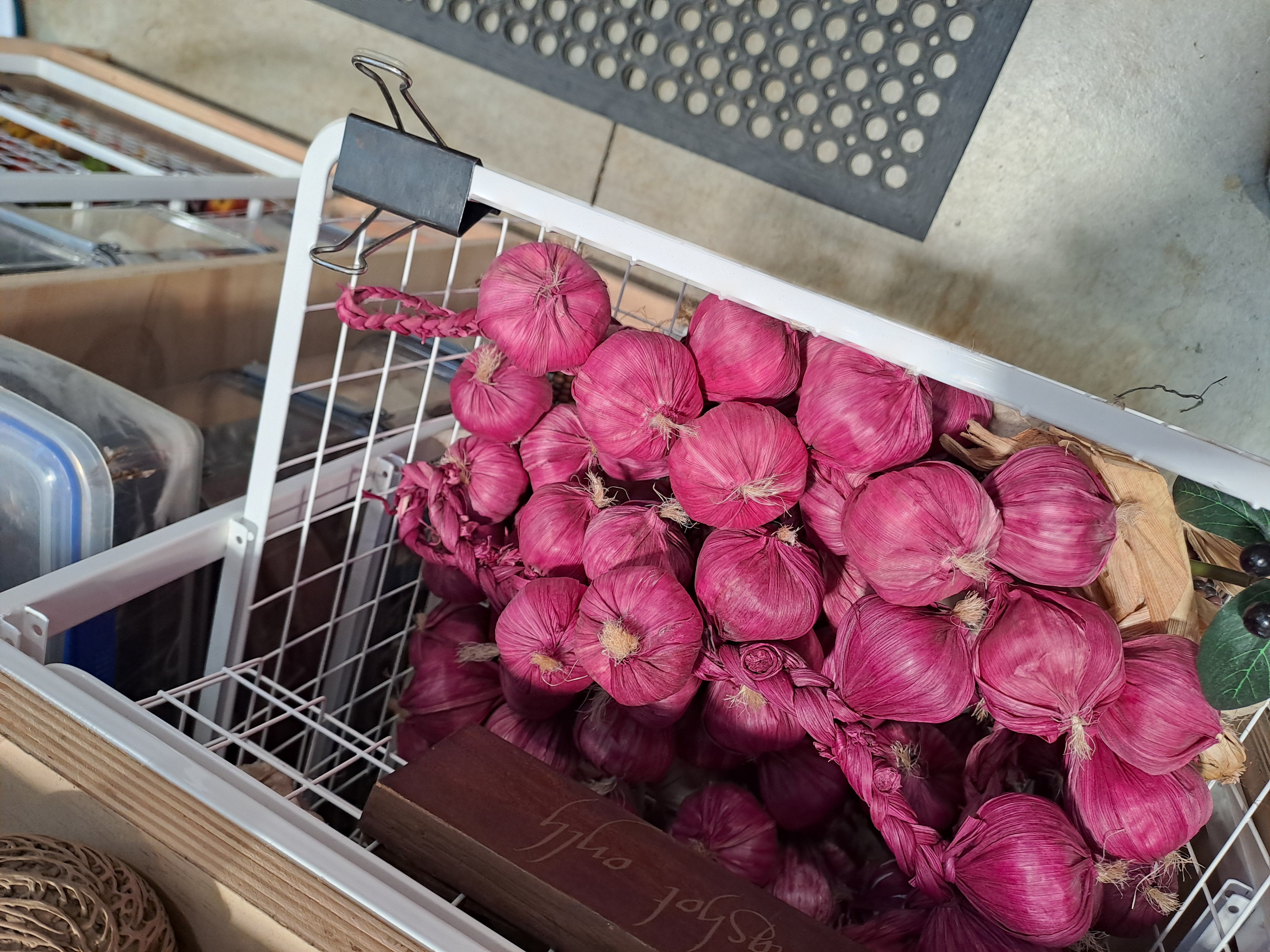
There is tremendous attention to detail throughout which is what makes it so charming. Two hobbit burrows have been created to allow us to see the inside, and again there was so much fine detail. These were built for the public, however. The actual inside filming was done in Wellington .



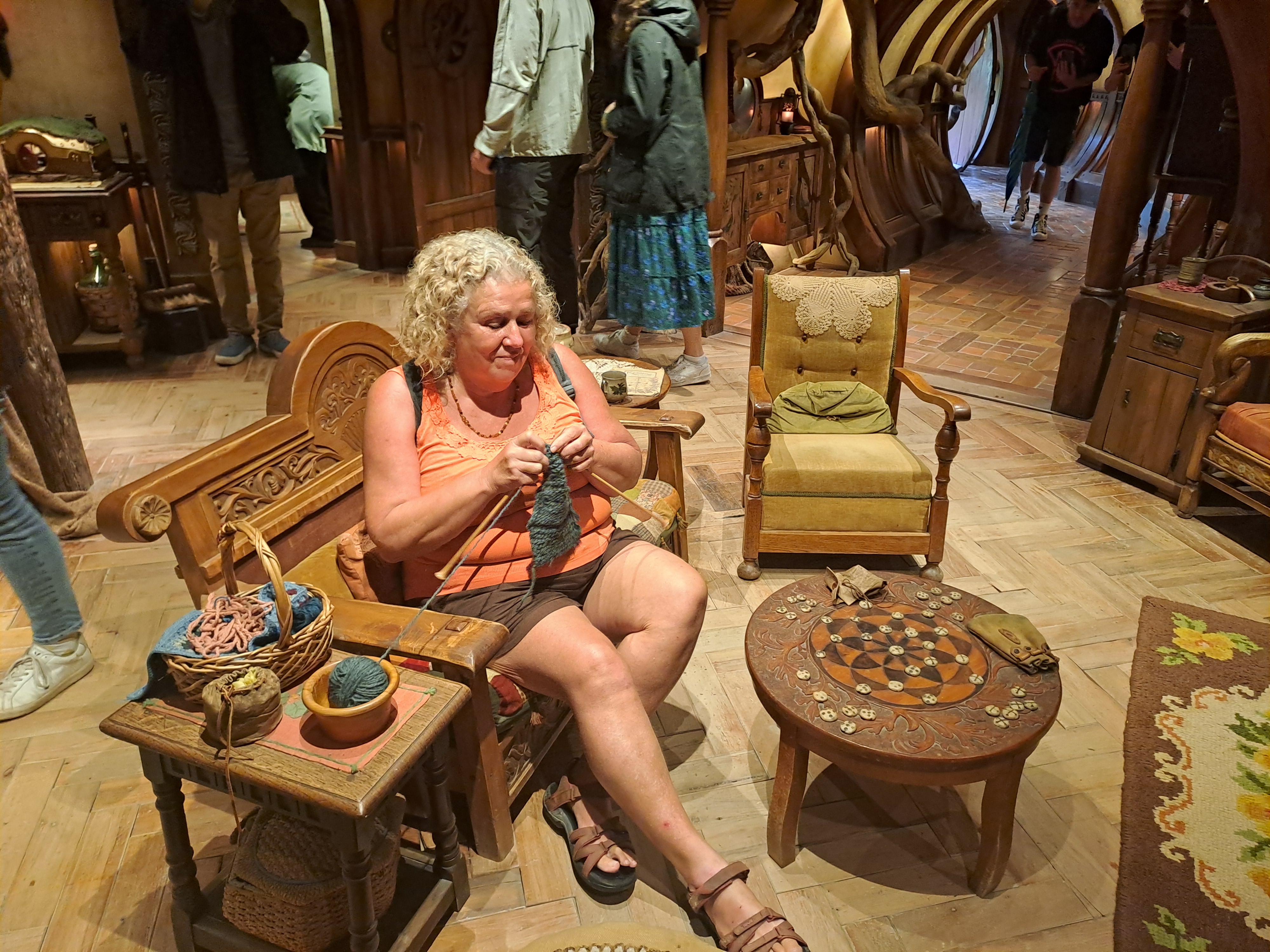


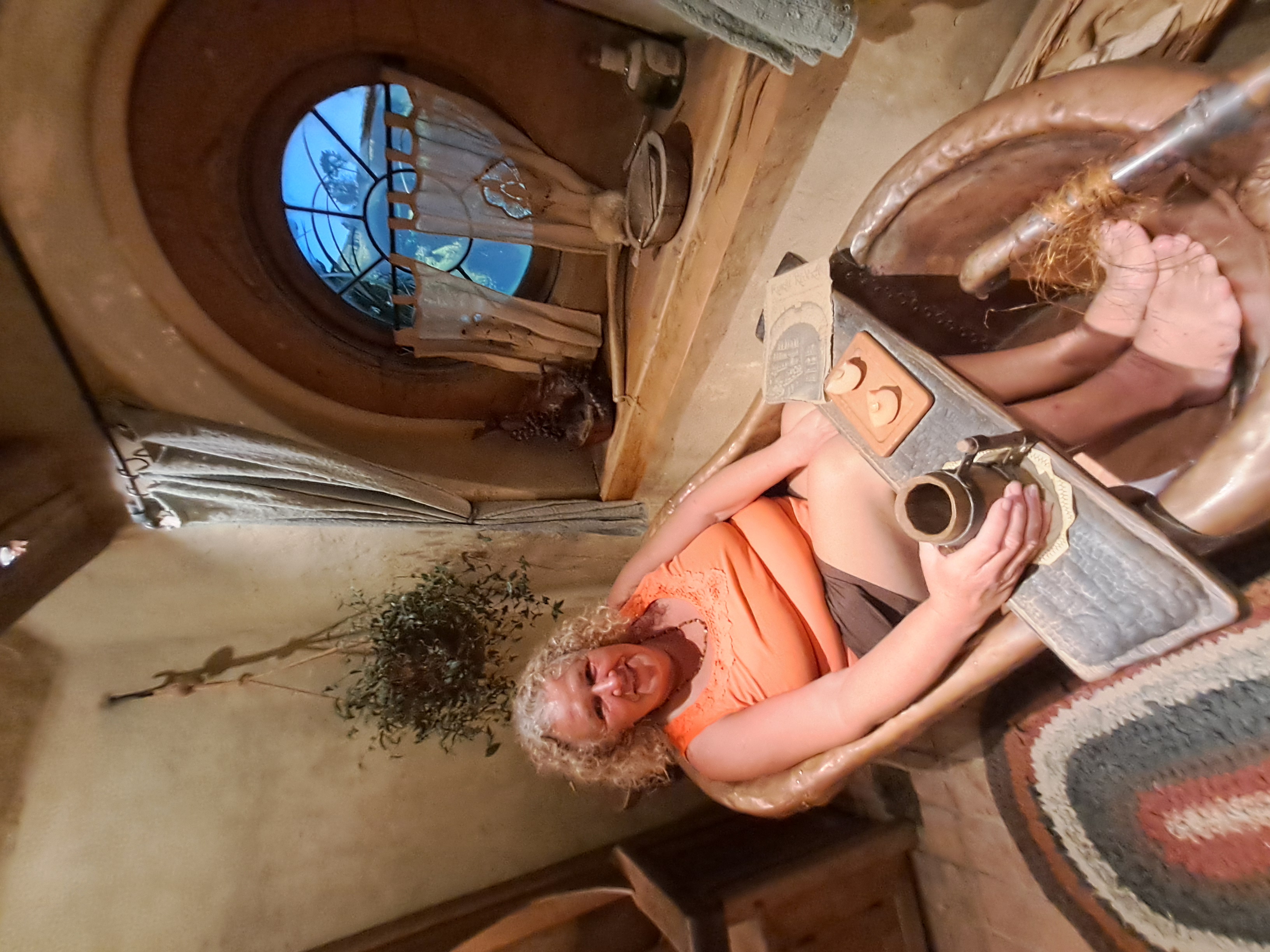
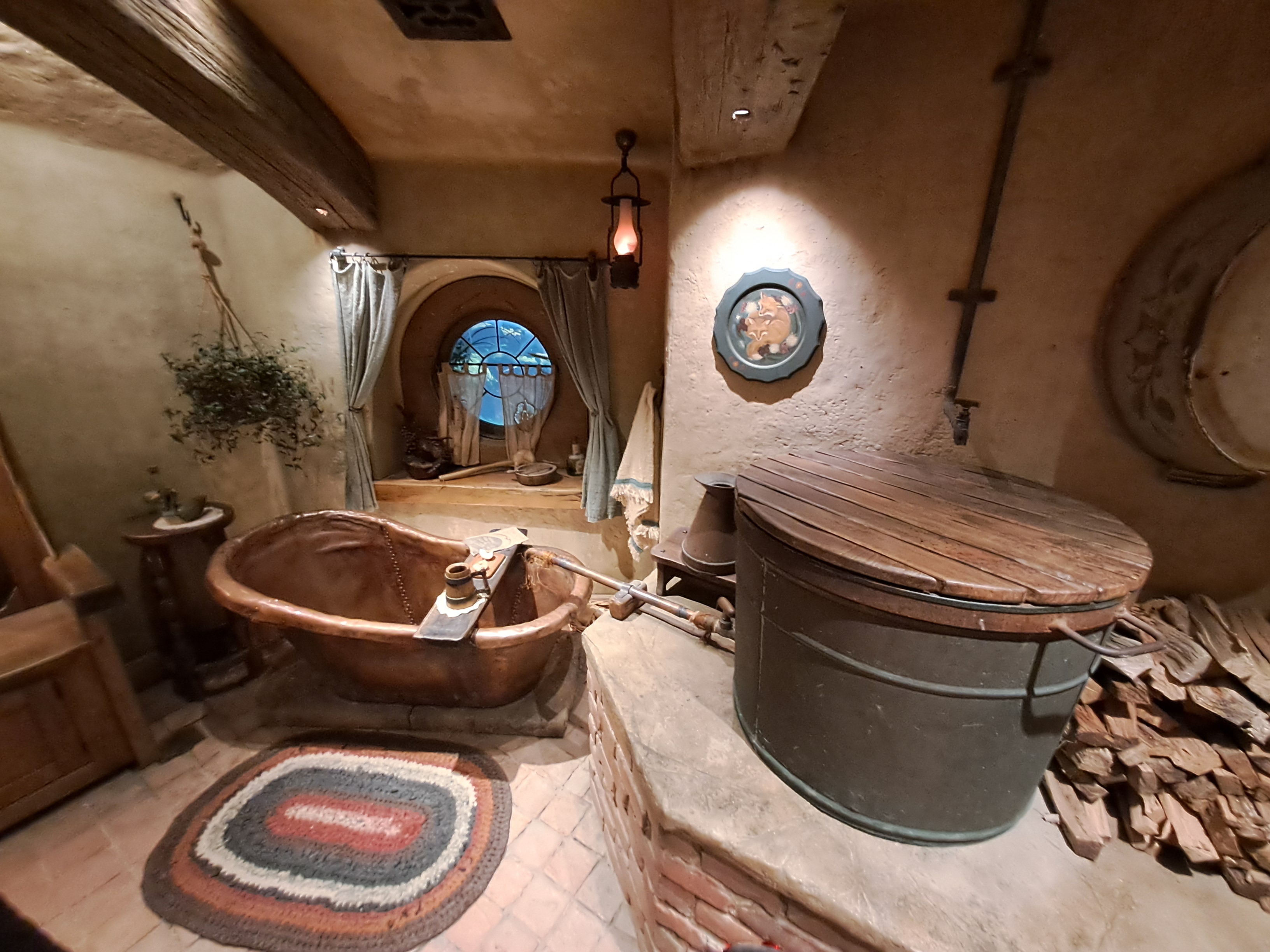
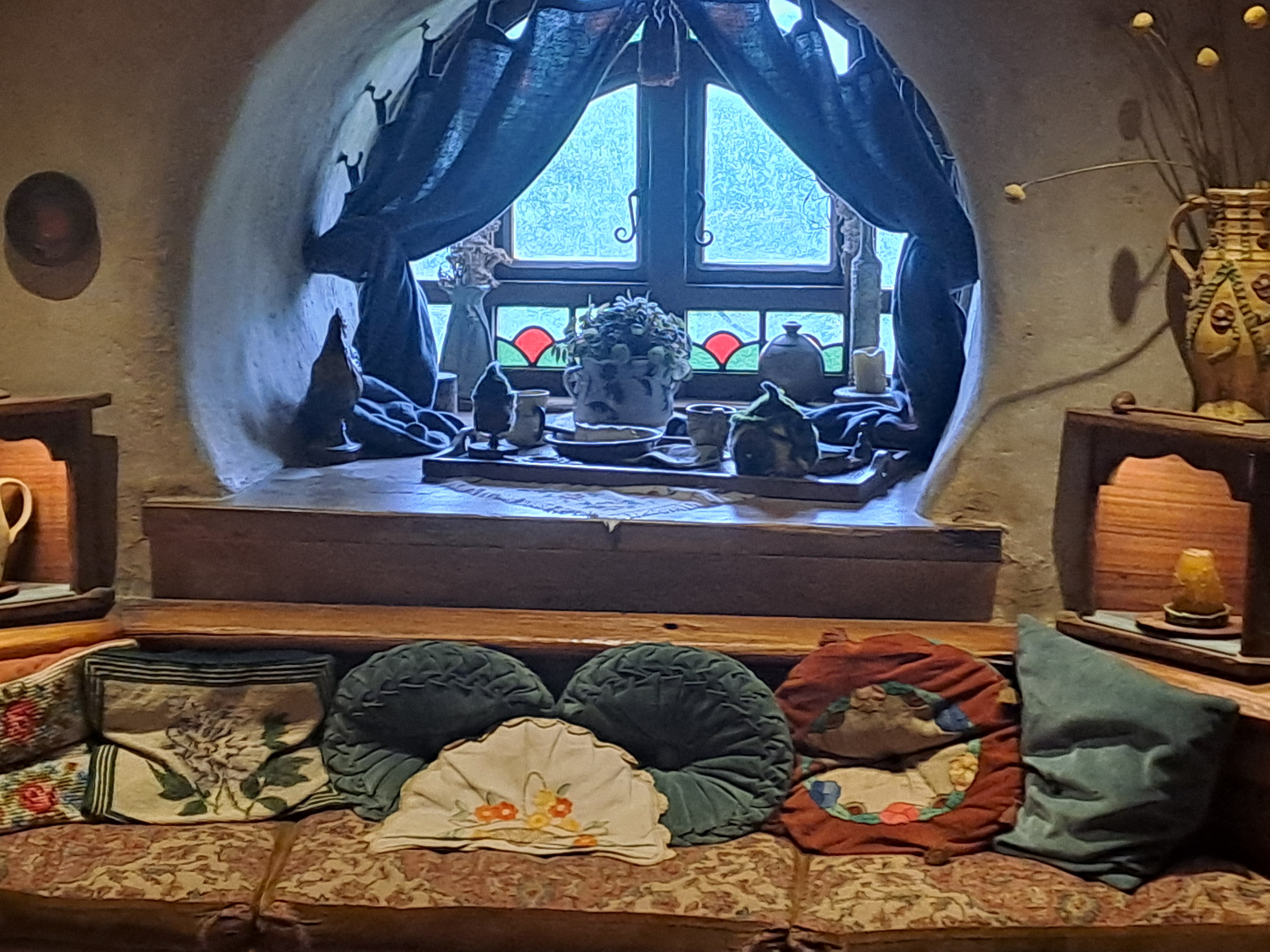
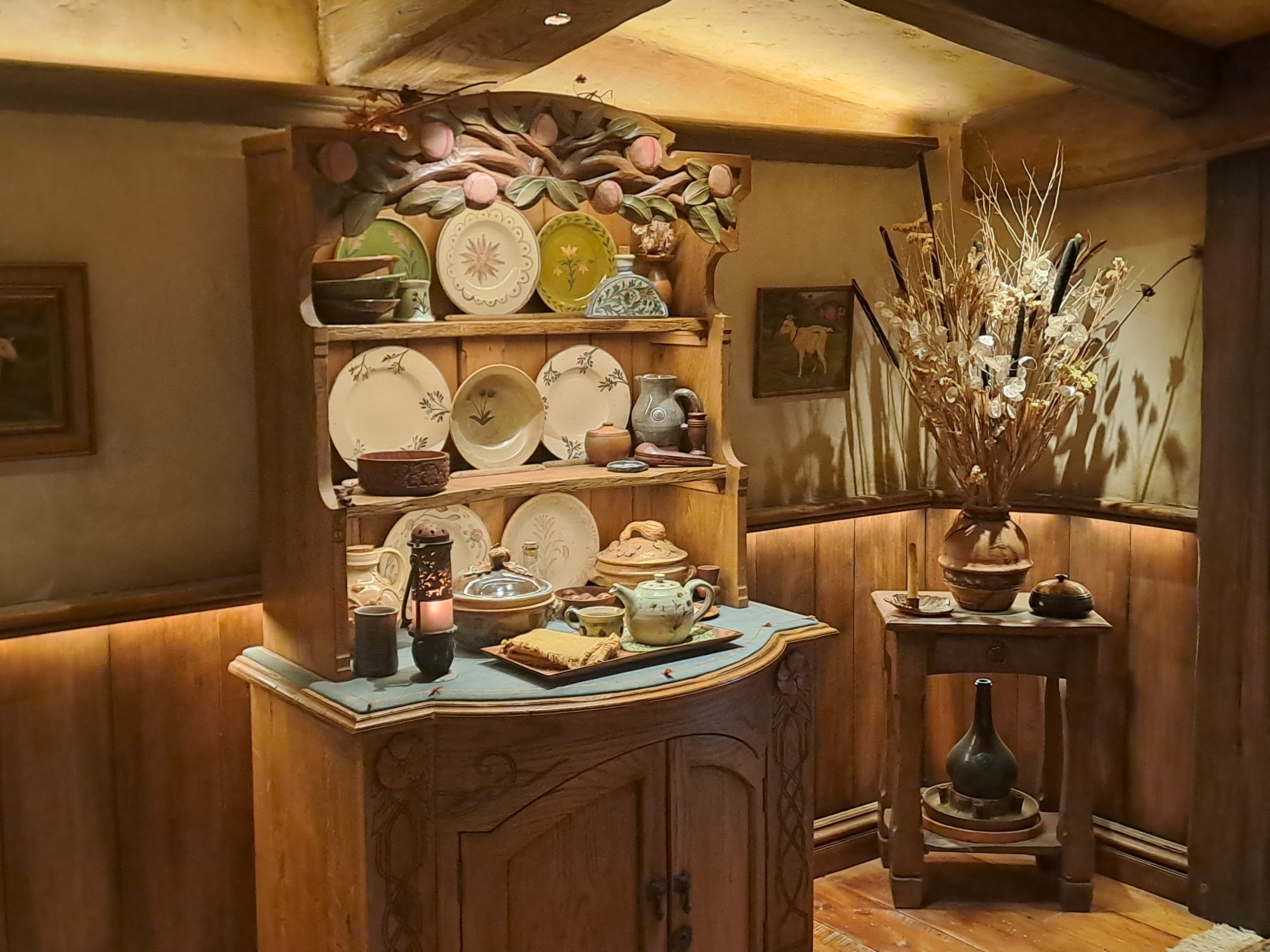
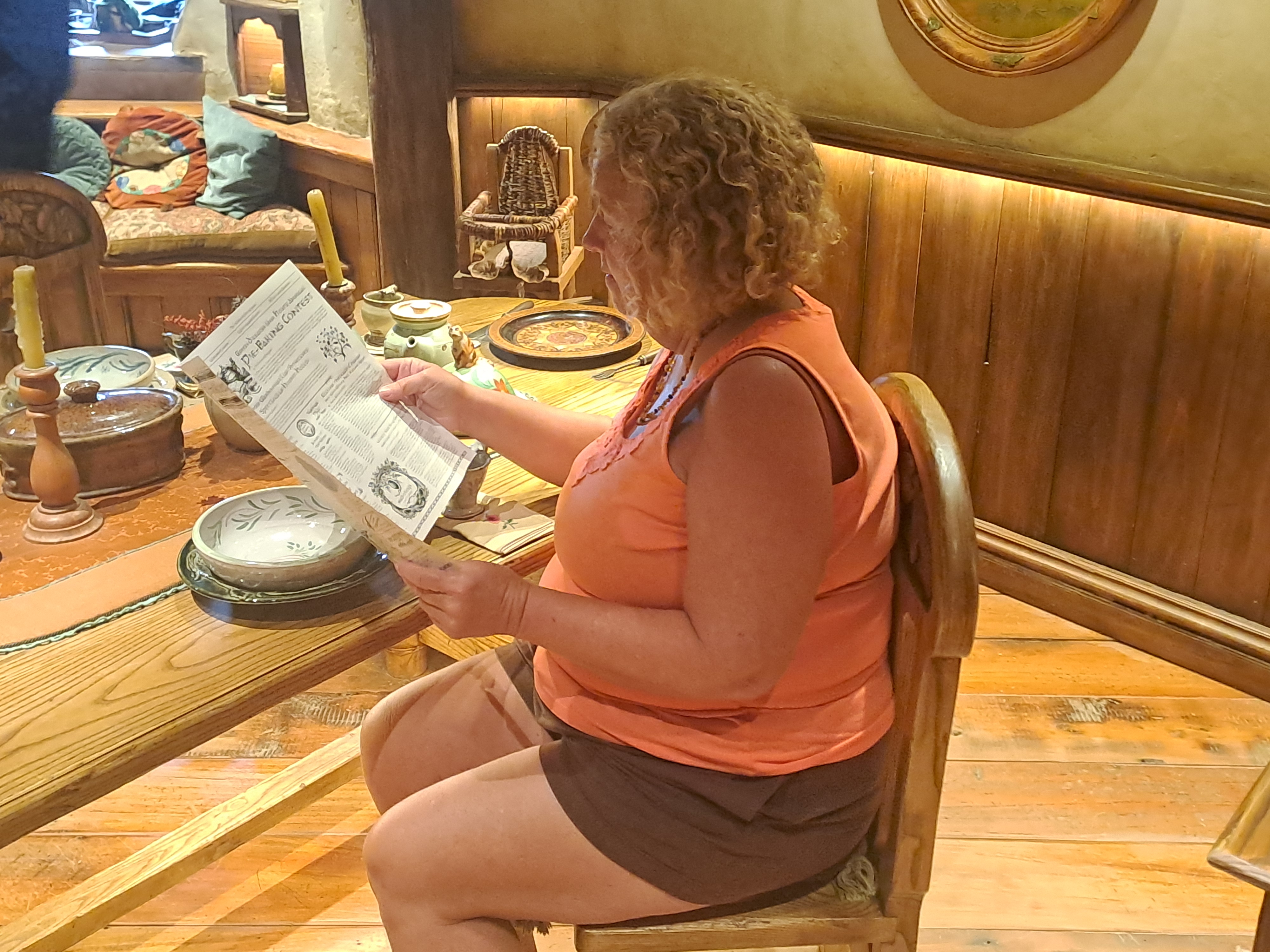

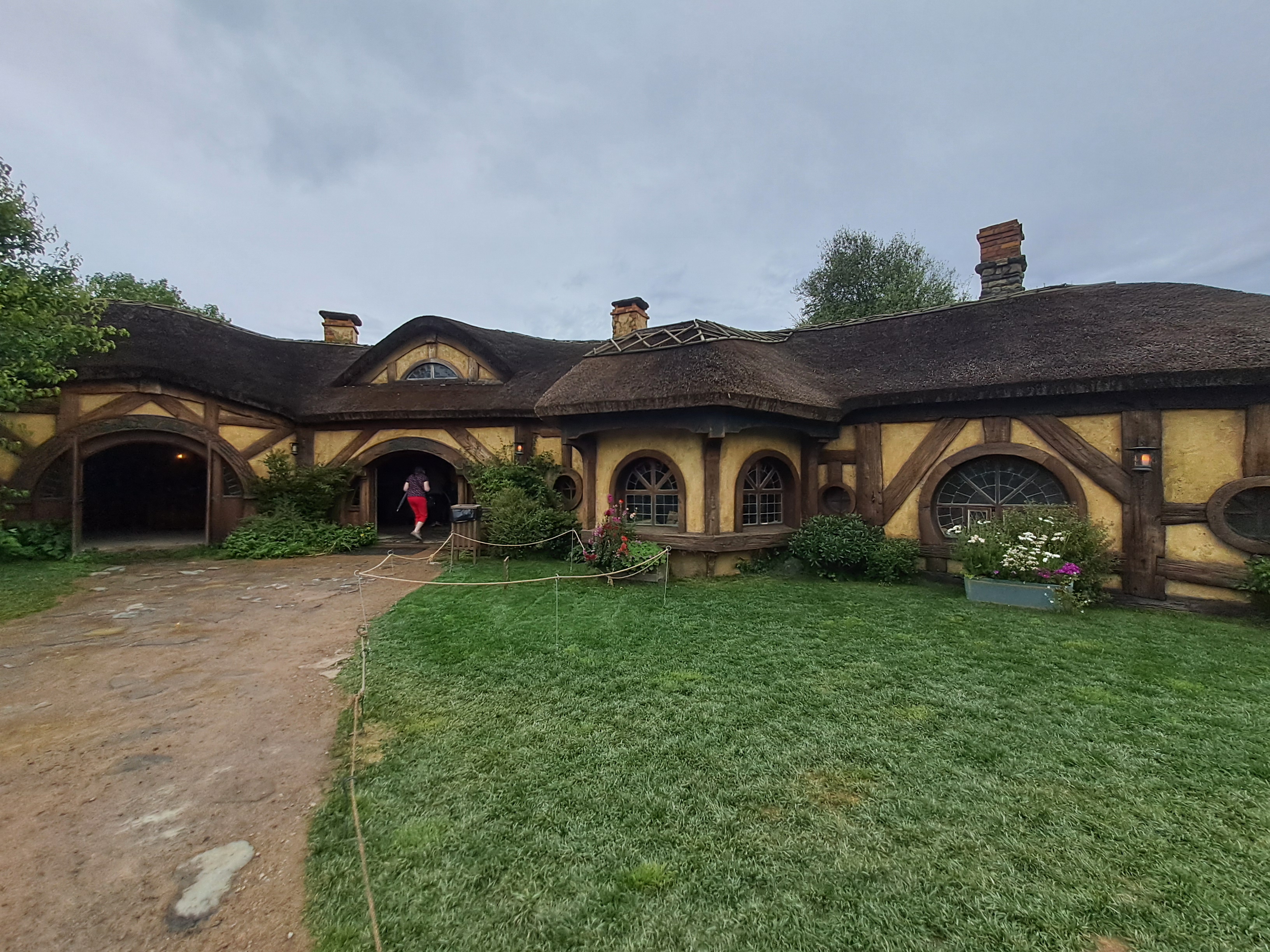
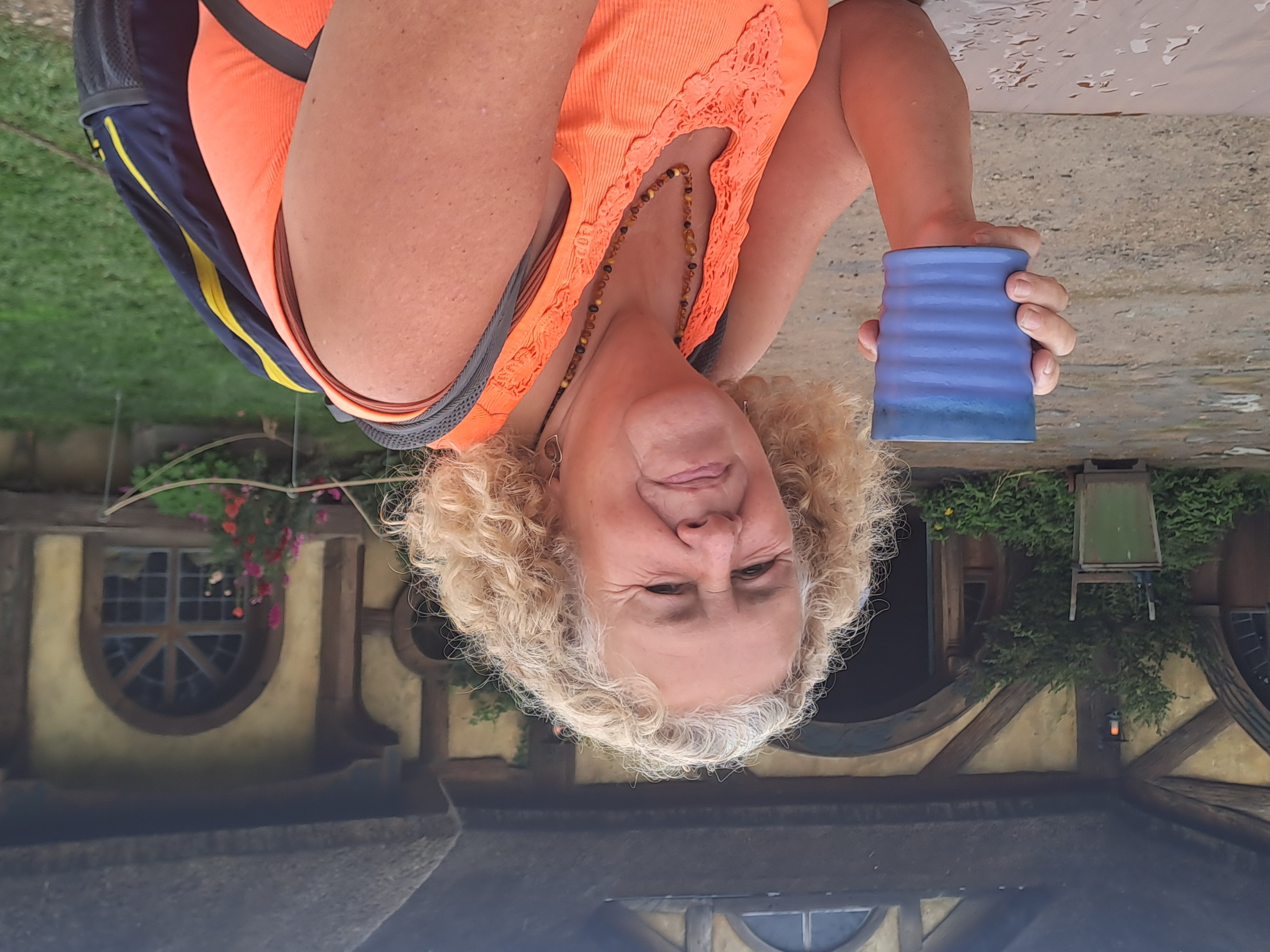
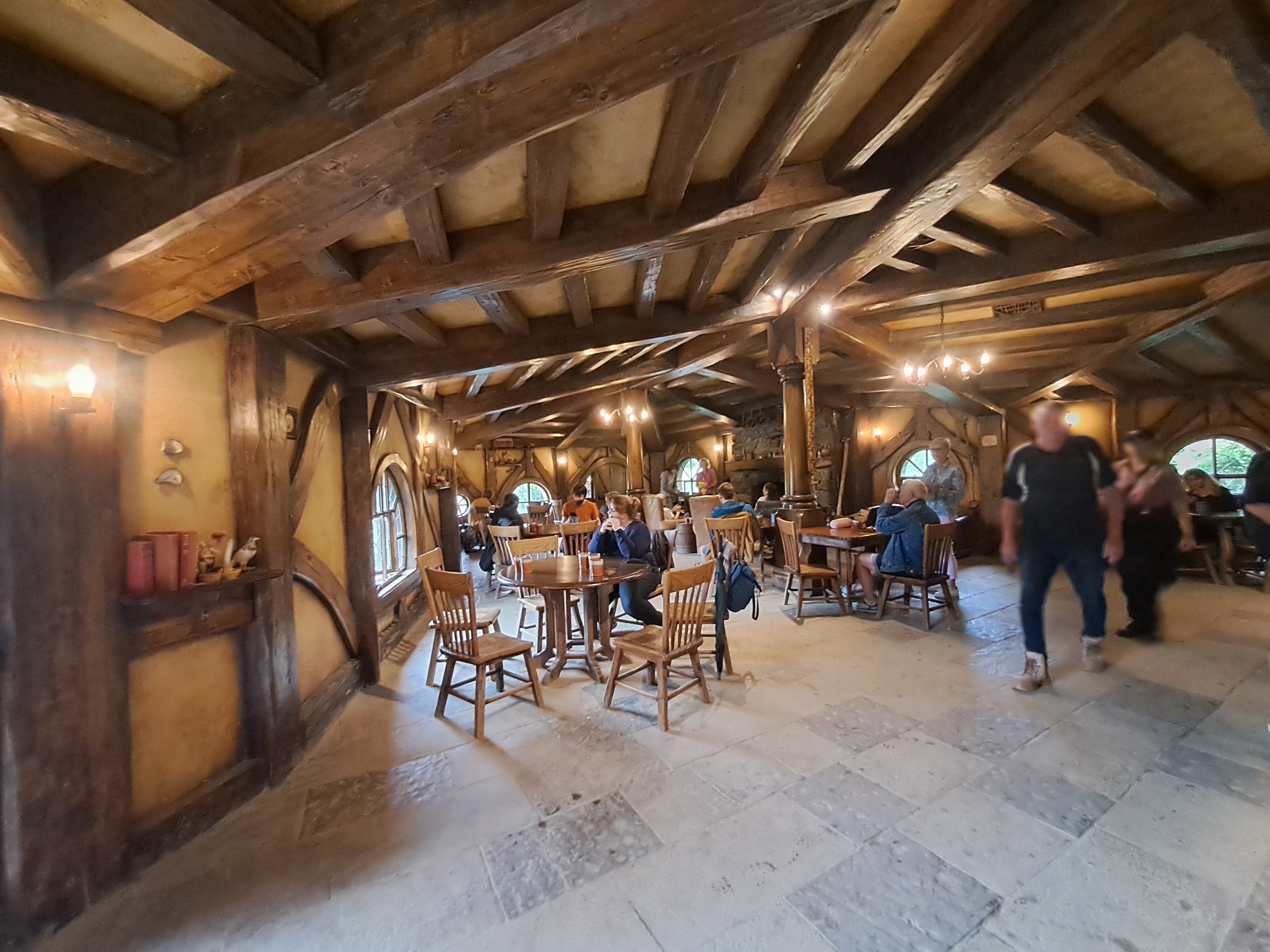
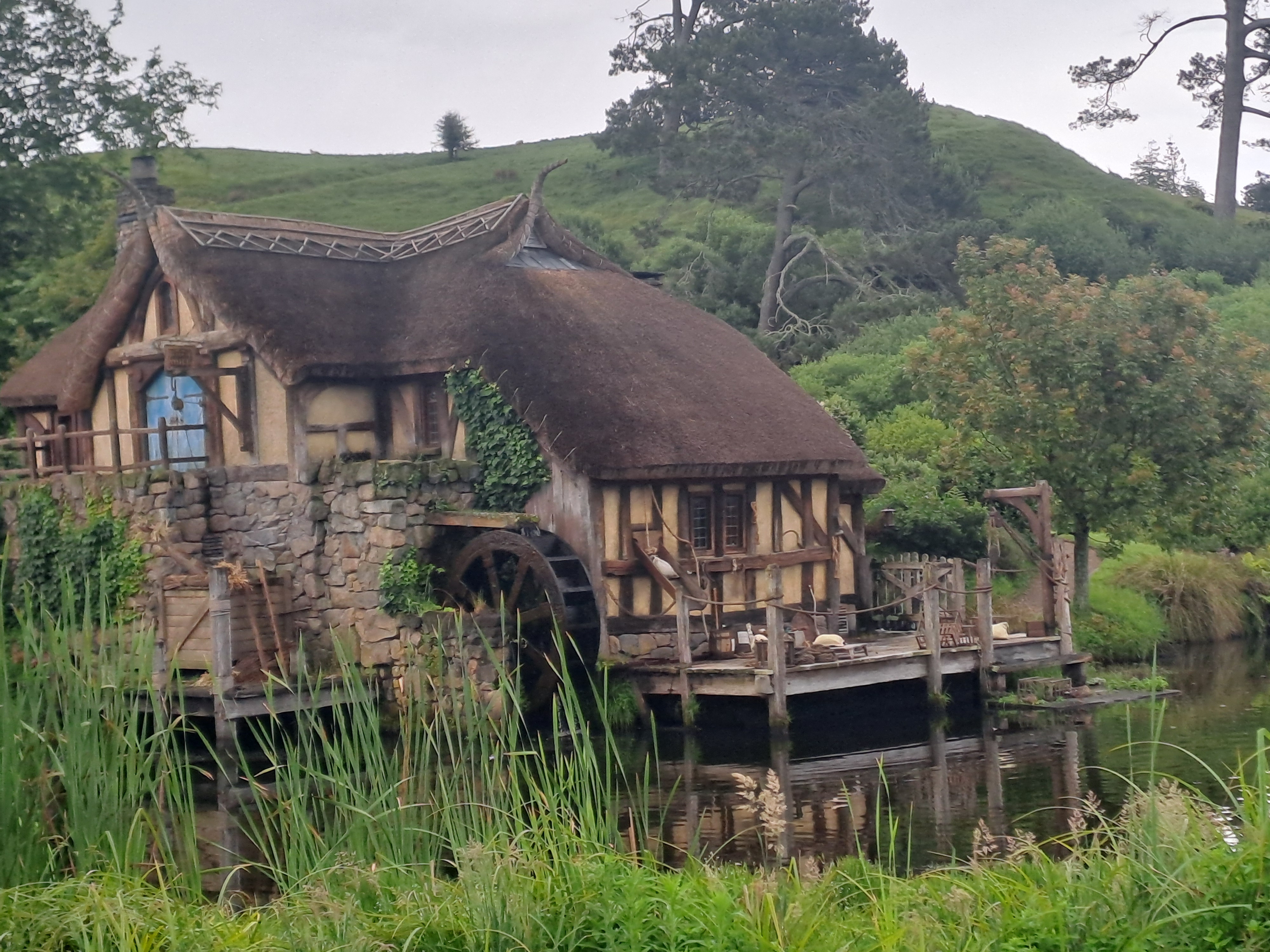
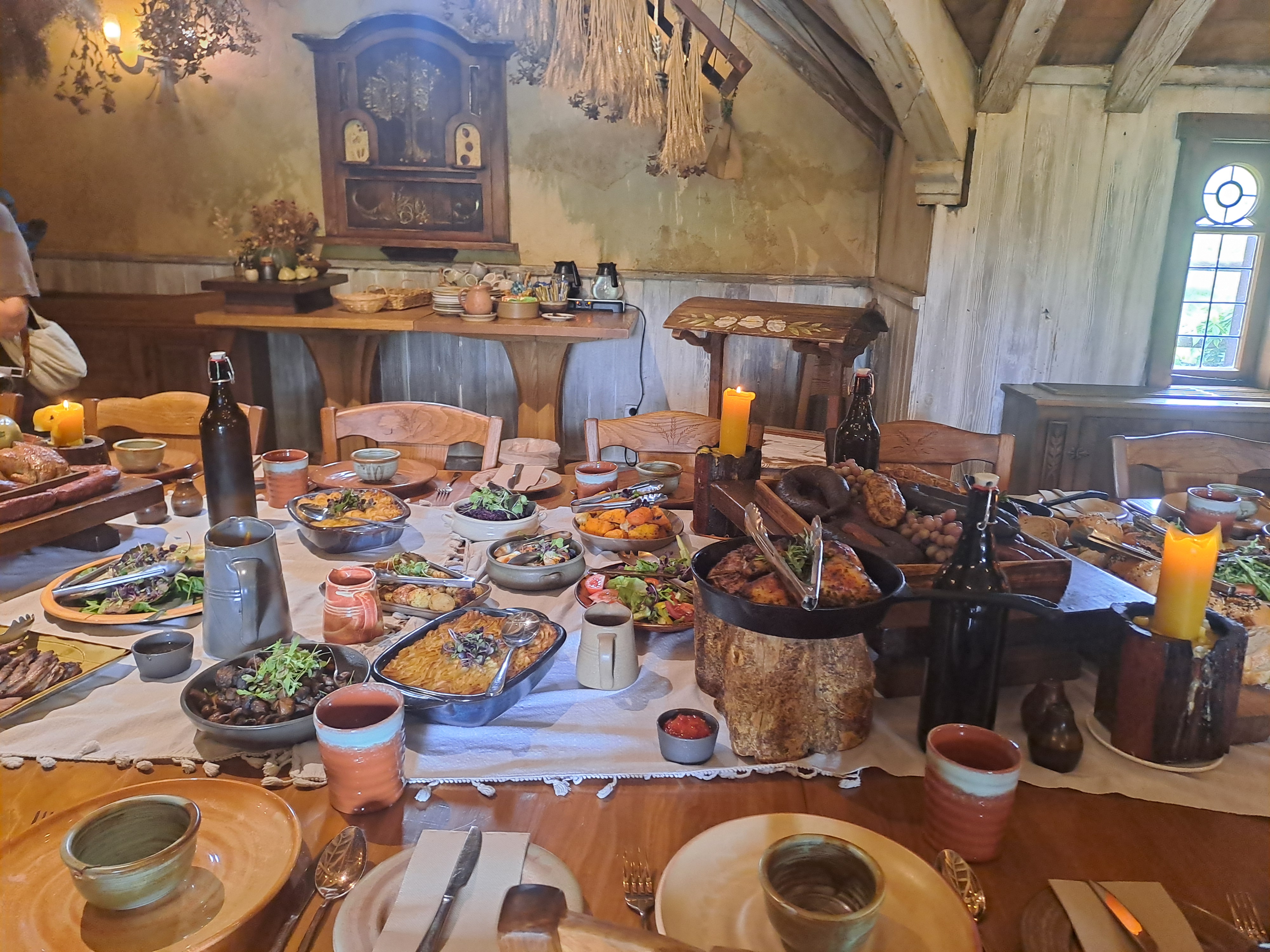
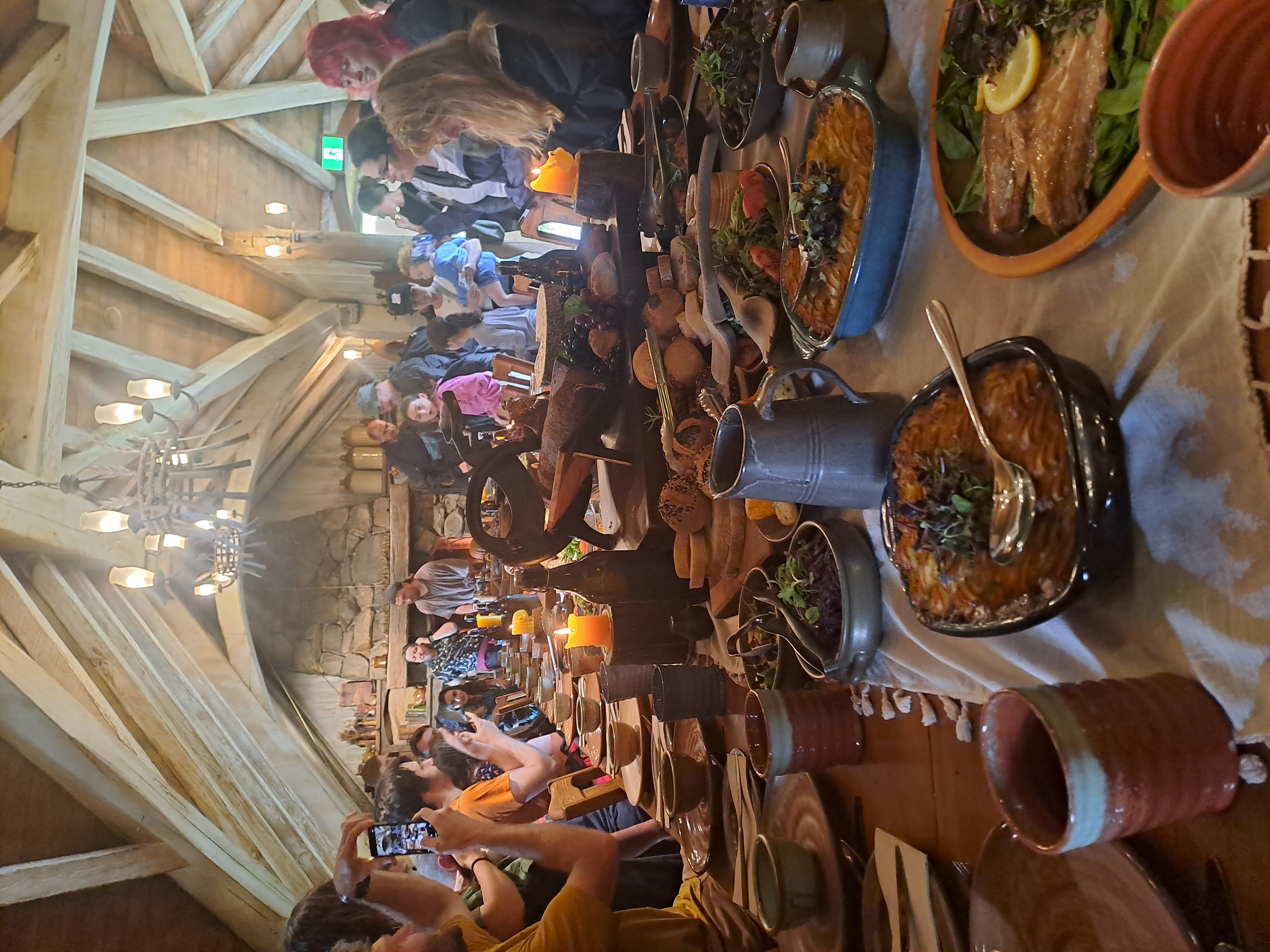
We had to try out the local hostalry so we each had a brew at the Green Dragon and then went on to The Mill for a hobbit style meal, where seconds were encouraged. It was magnificent. We were shown around by an actual hobbit from the film. No fancy dress though. She happened to be 5 foot 2 inches with curly hair so she was in when they recruited locally. Shame I was just in the wrong place. We happened to see the 2 second clip with her in on video on the shuttle bus. She was carrying a seat for Bag End as Bilbo returned.
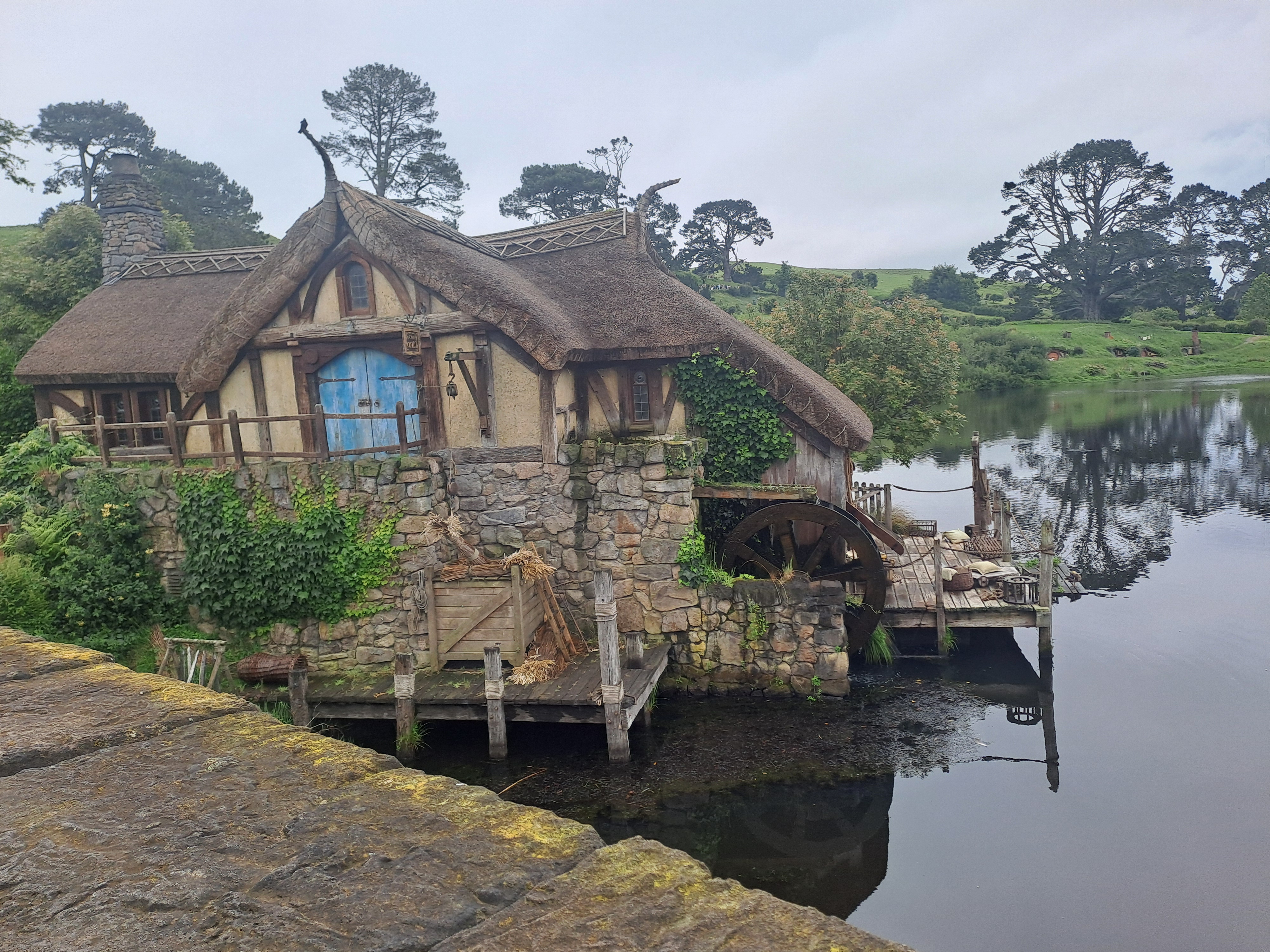

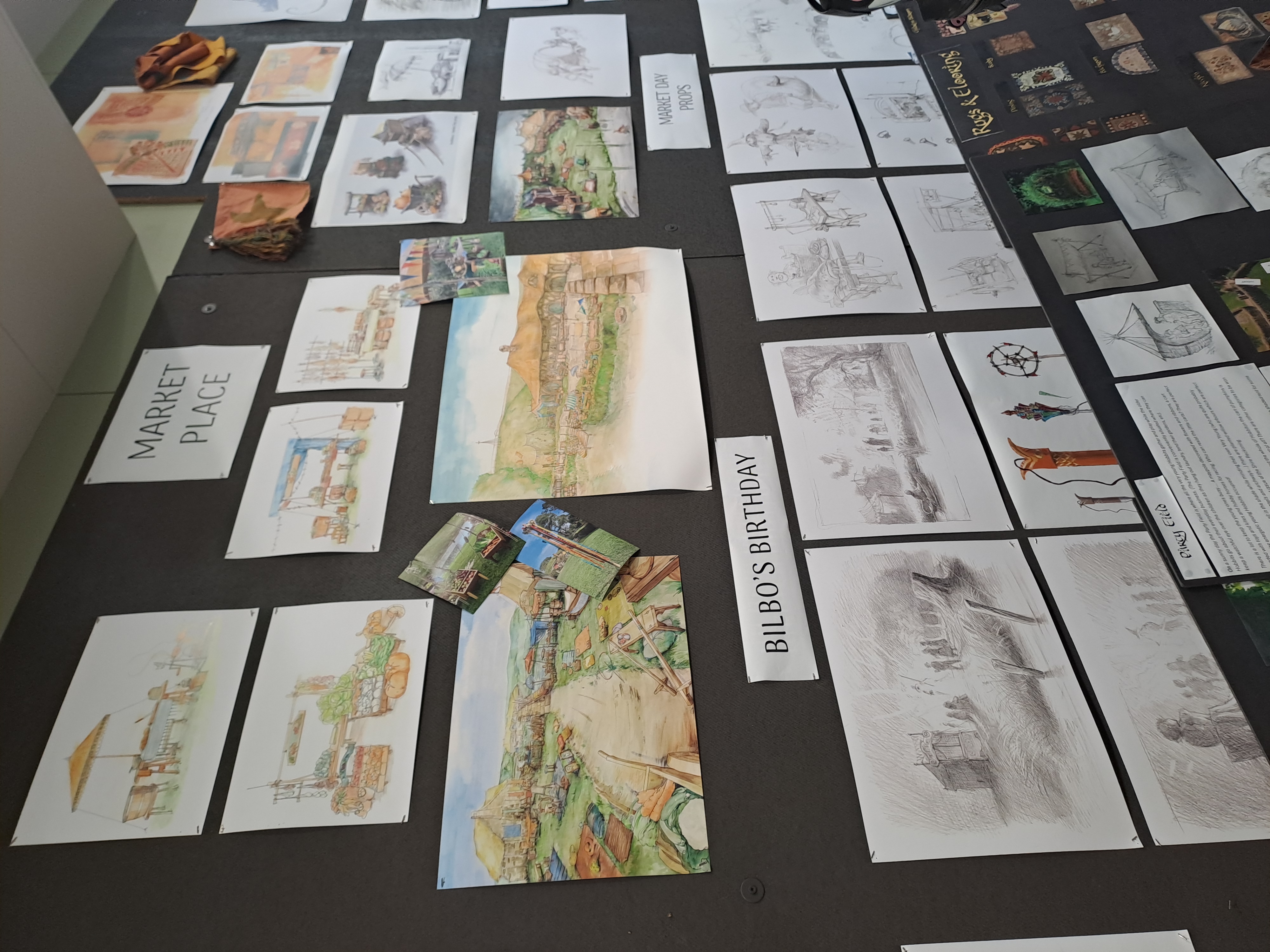
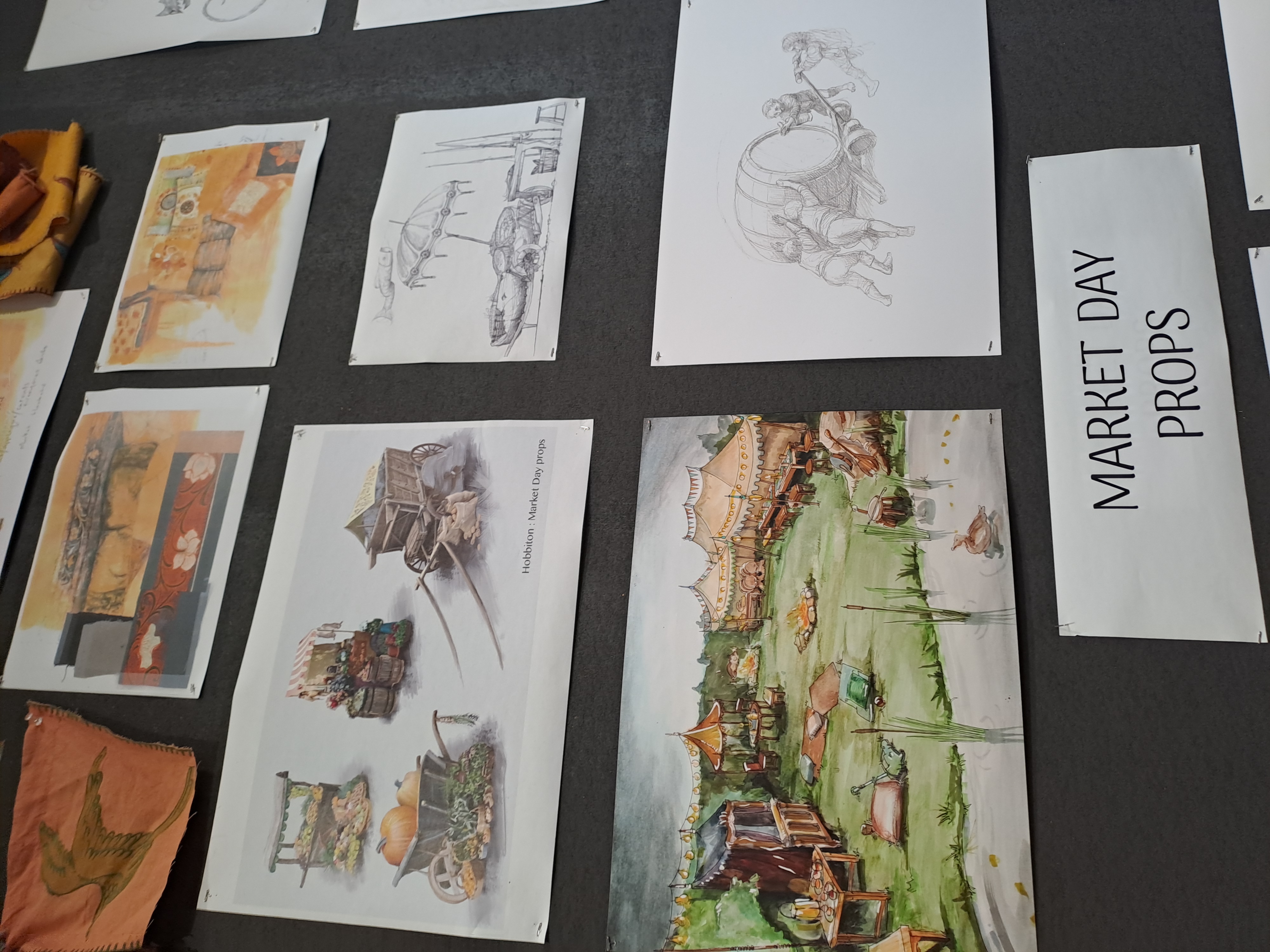
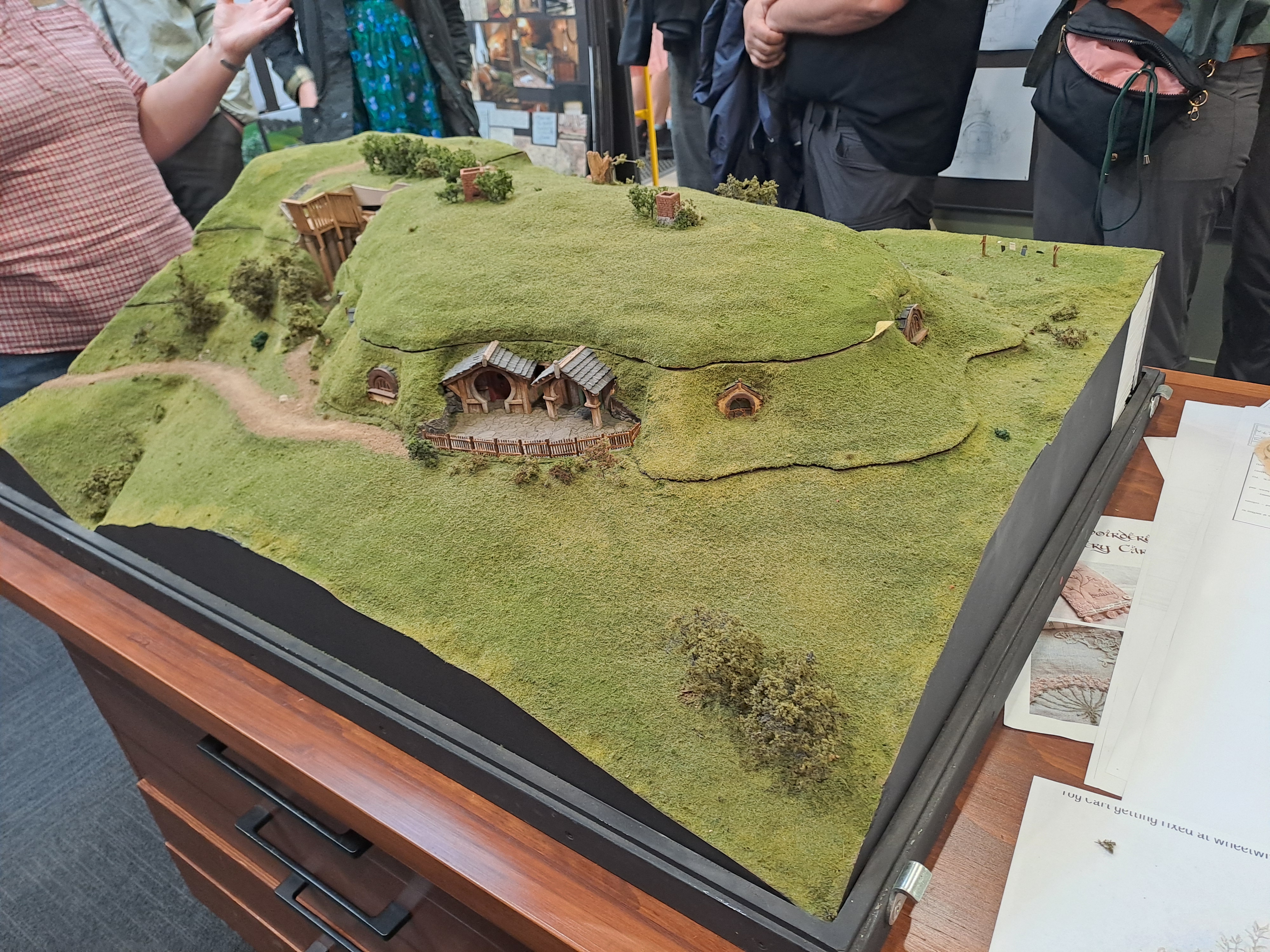
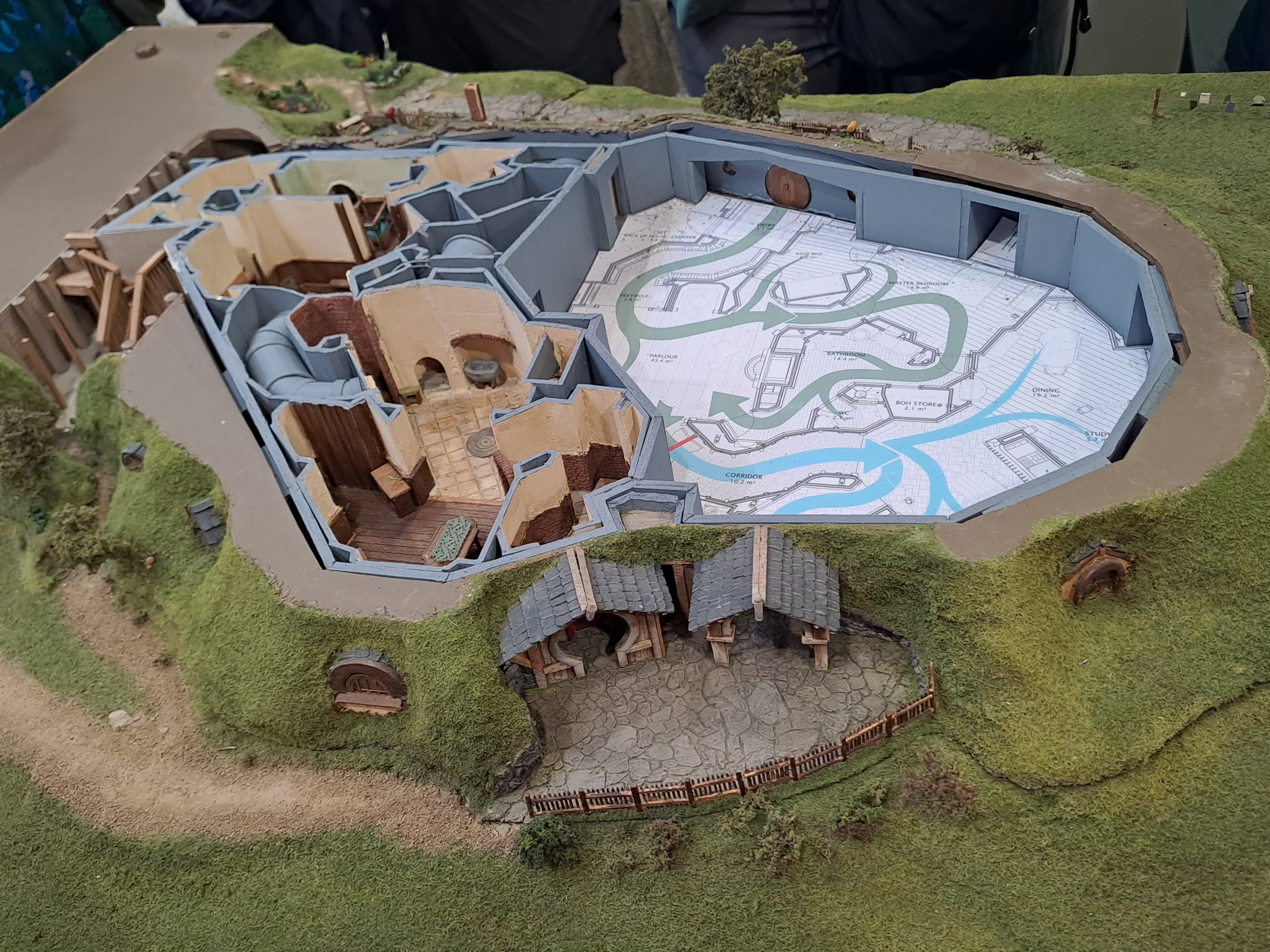
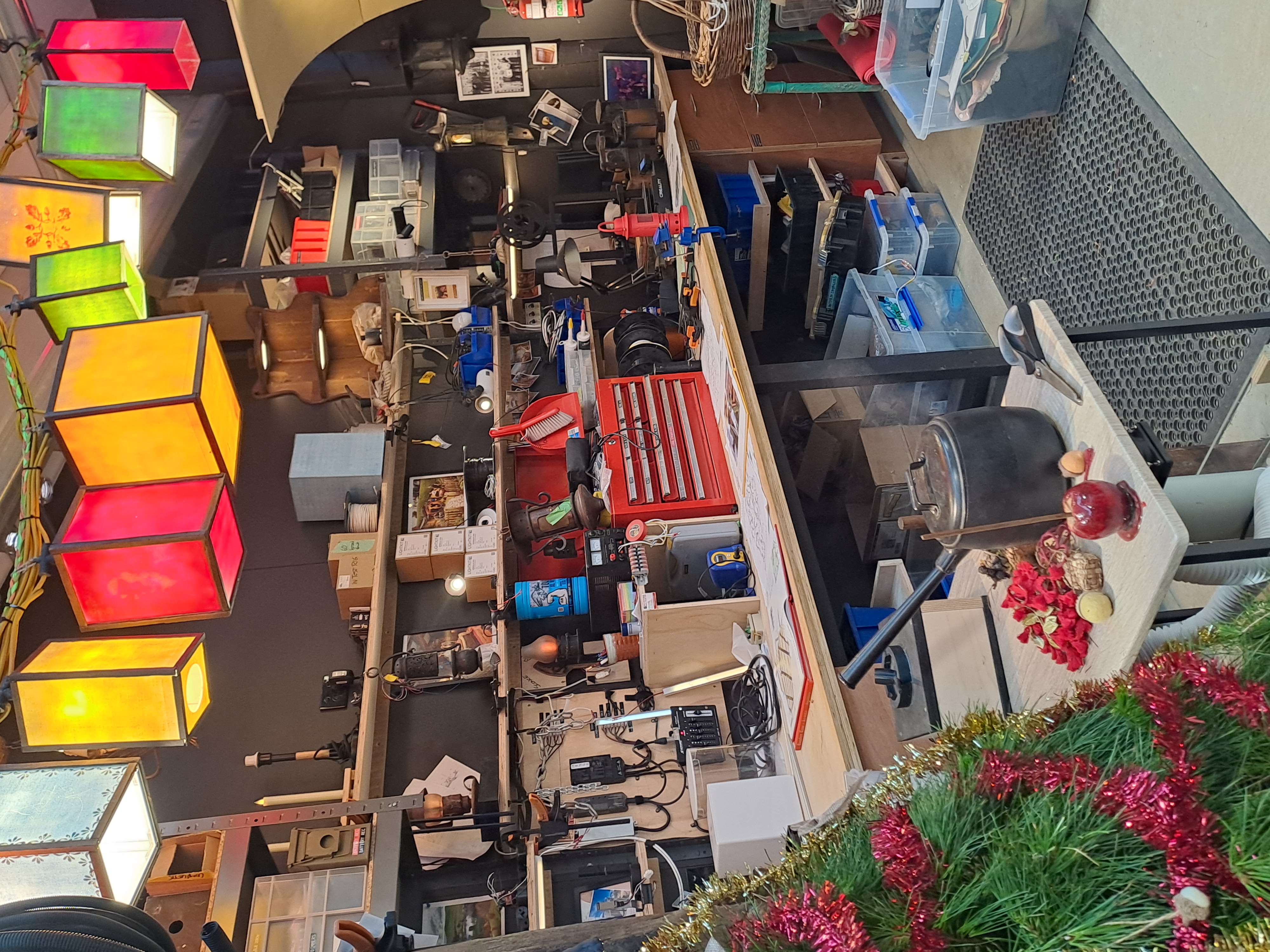
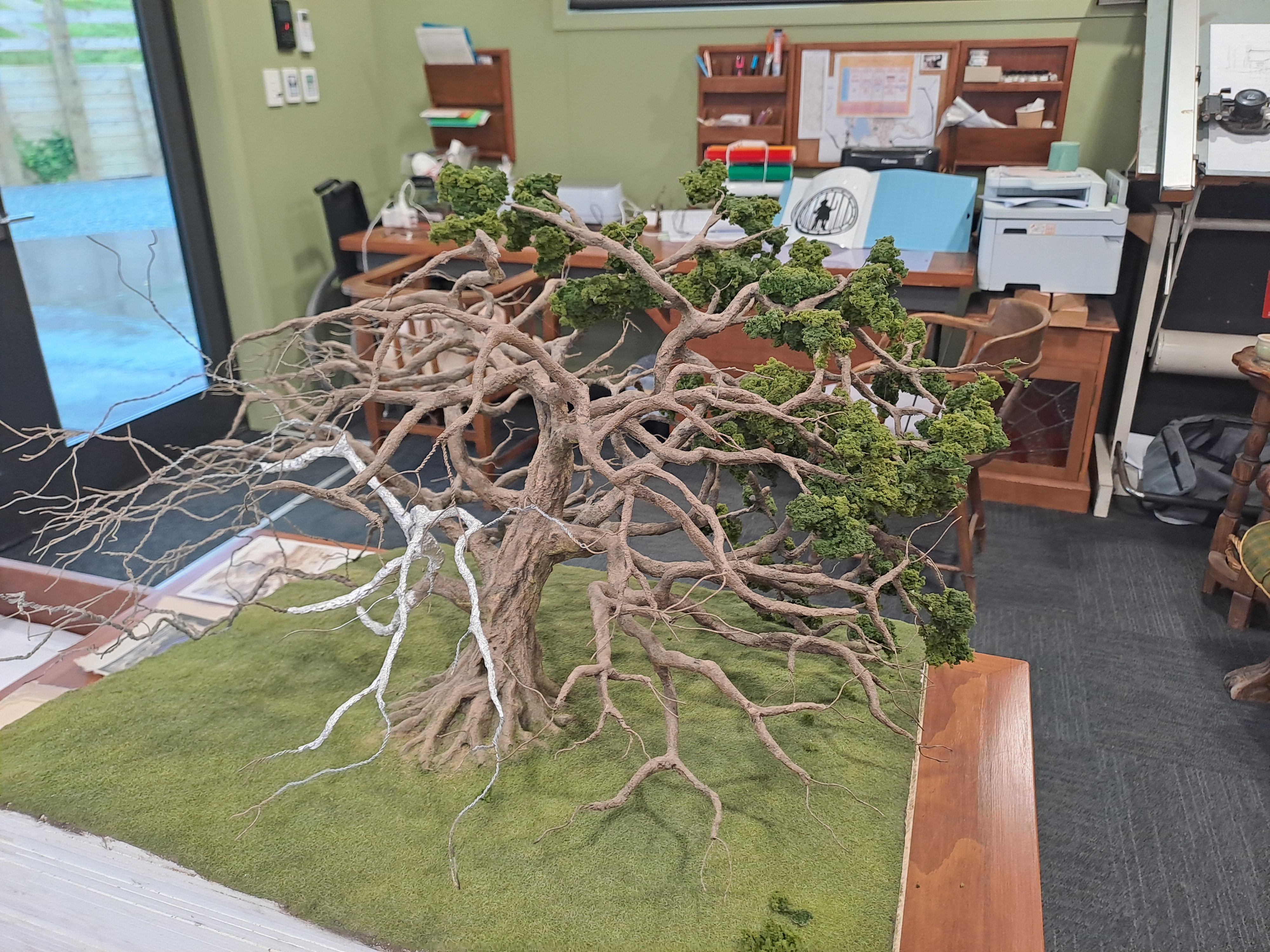
To finish we went up to the studio to see some of the design sketches and a model of the burrows. There are permanent staff employed maintaining and enhancing the site. Replacing damaged or missing items and making new things. We saw a model of the tree above Bag End which had to be made.



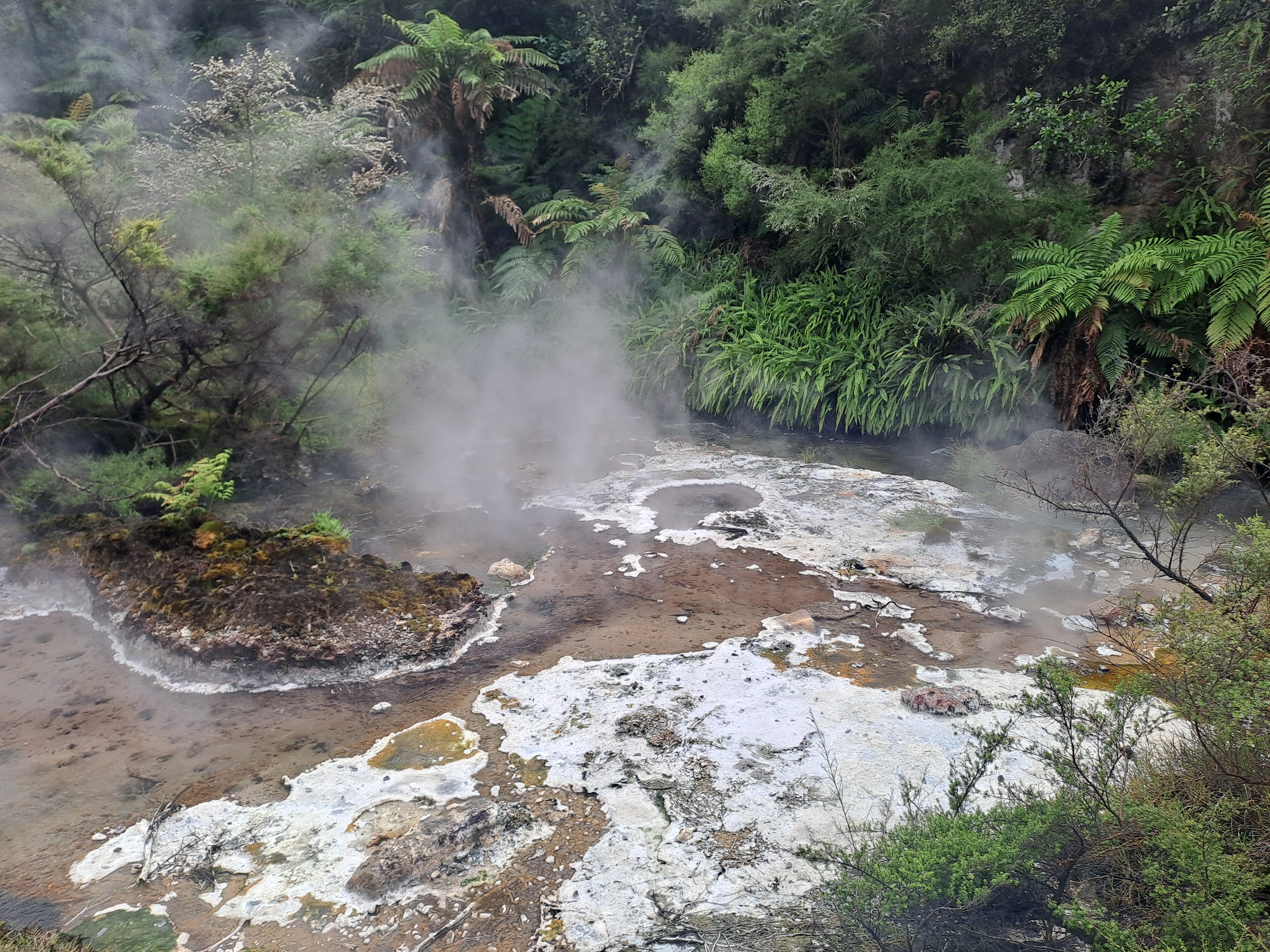
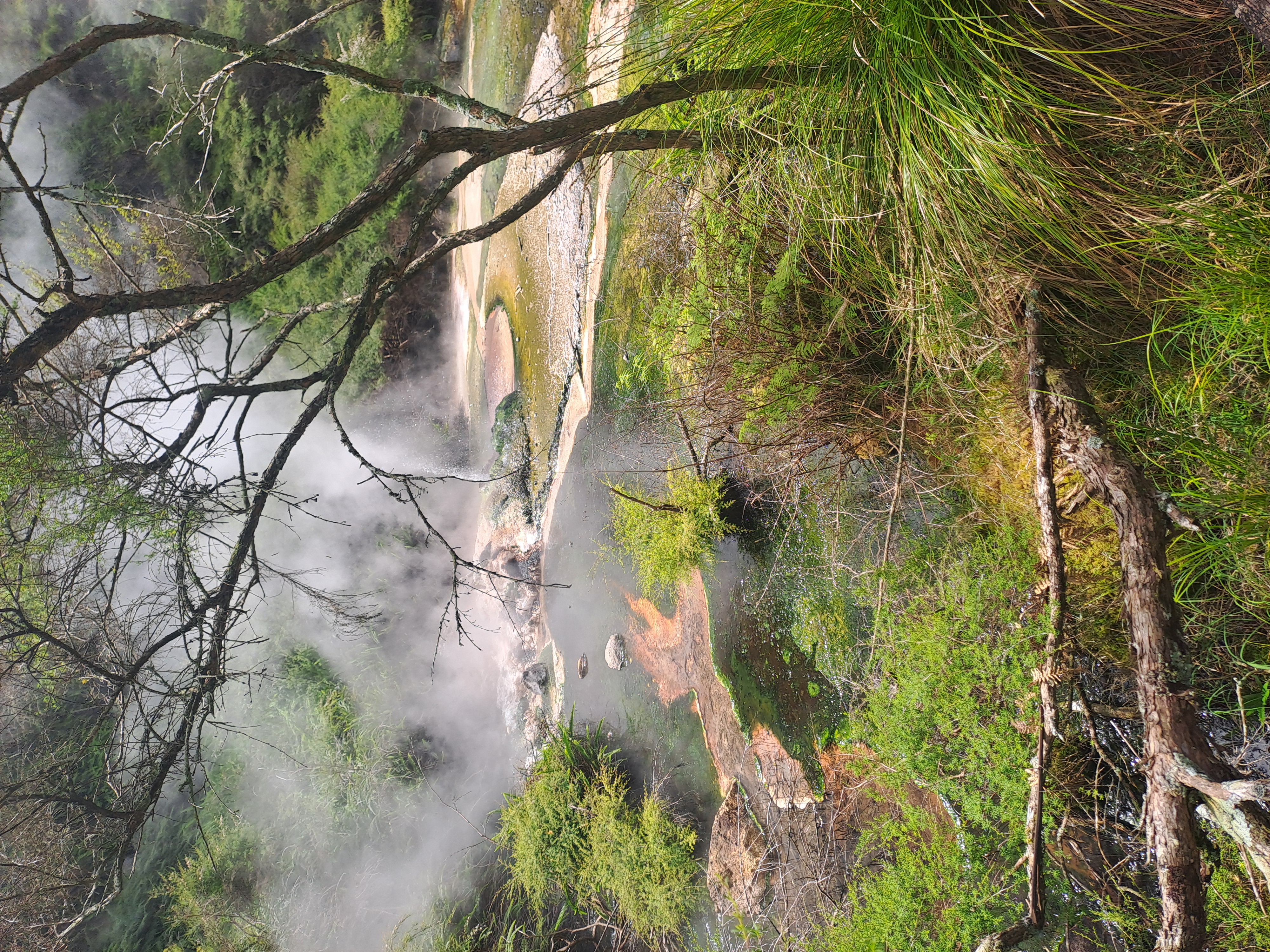
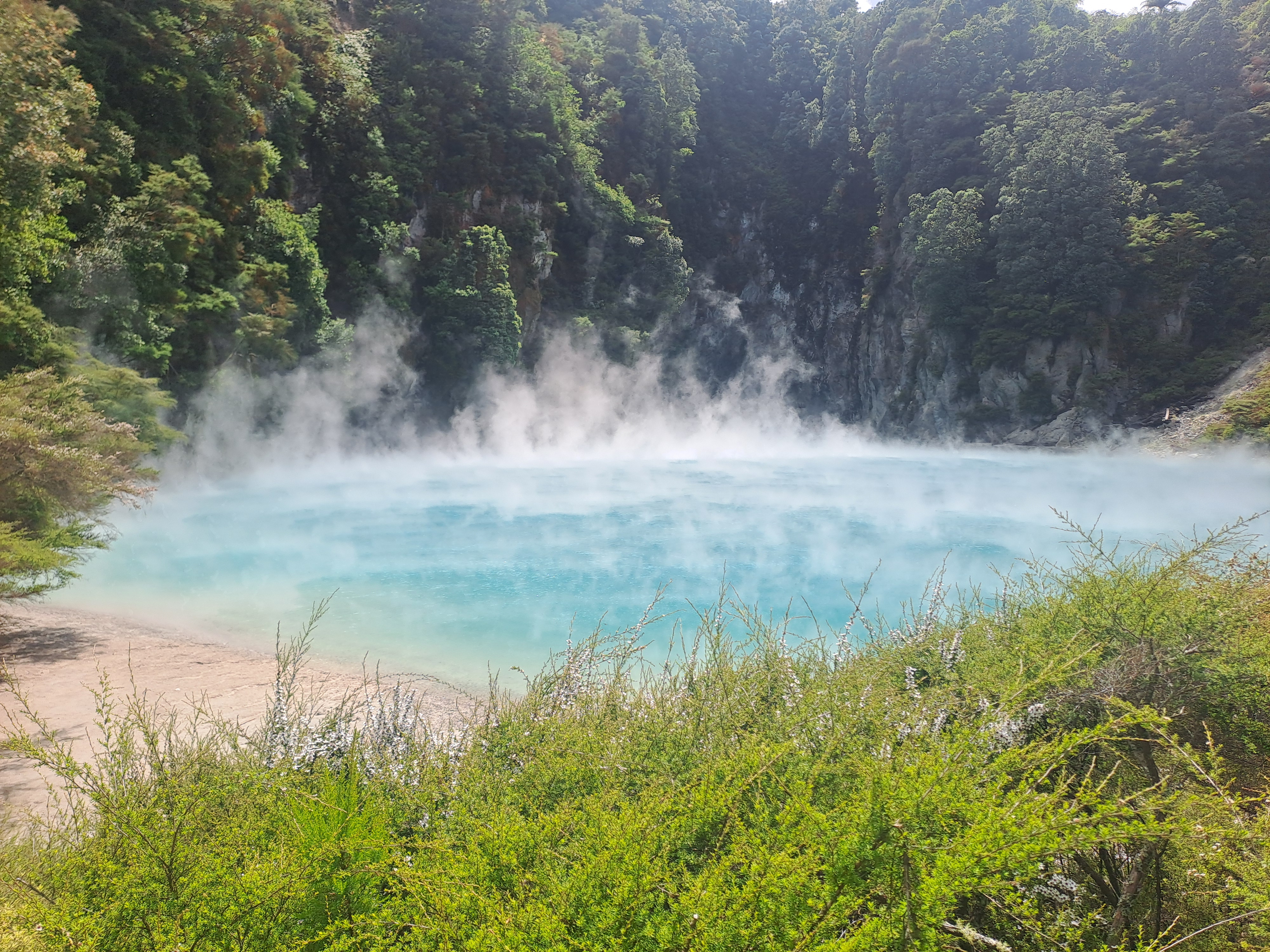
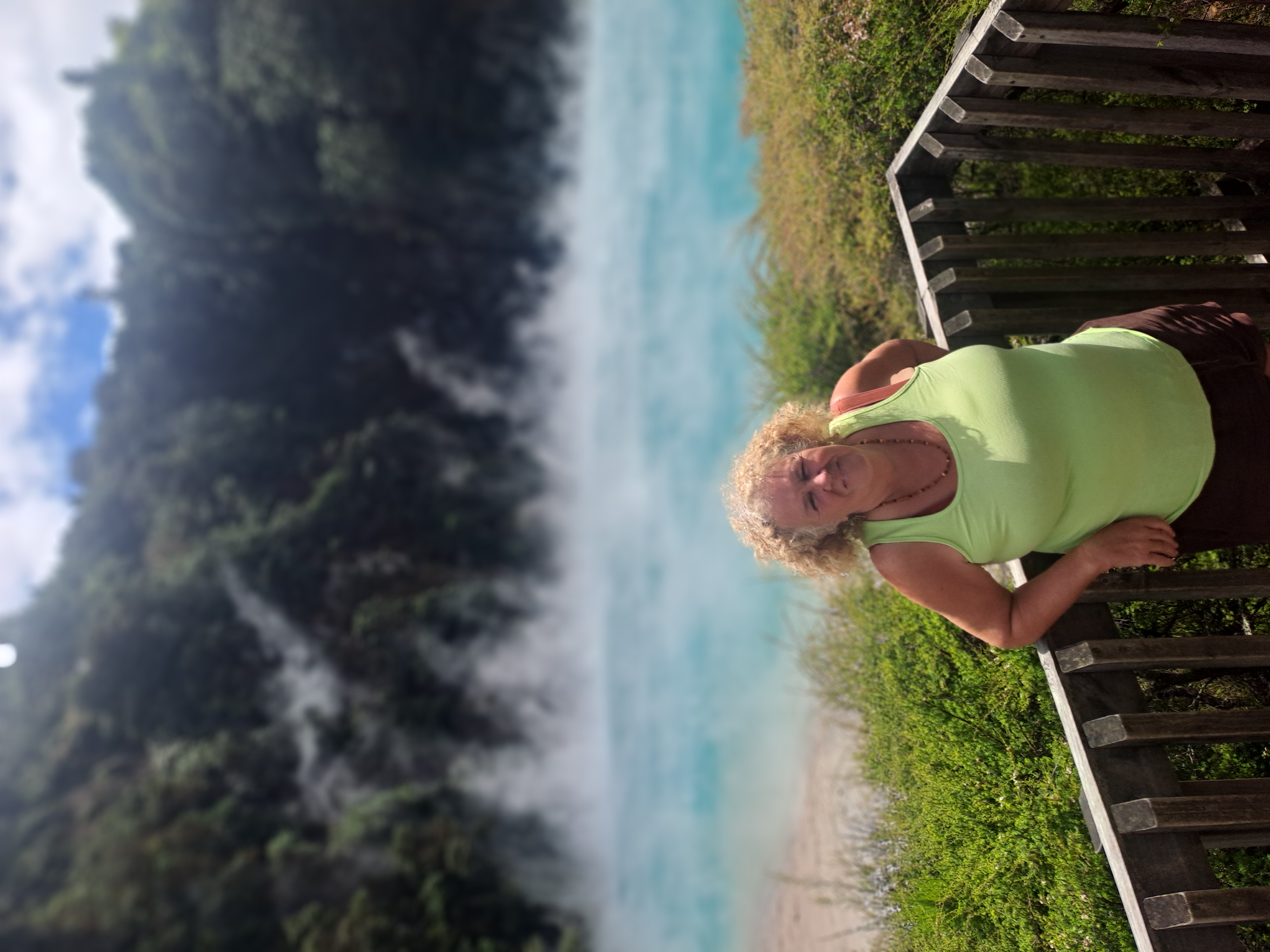
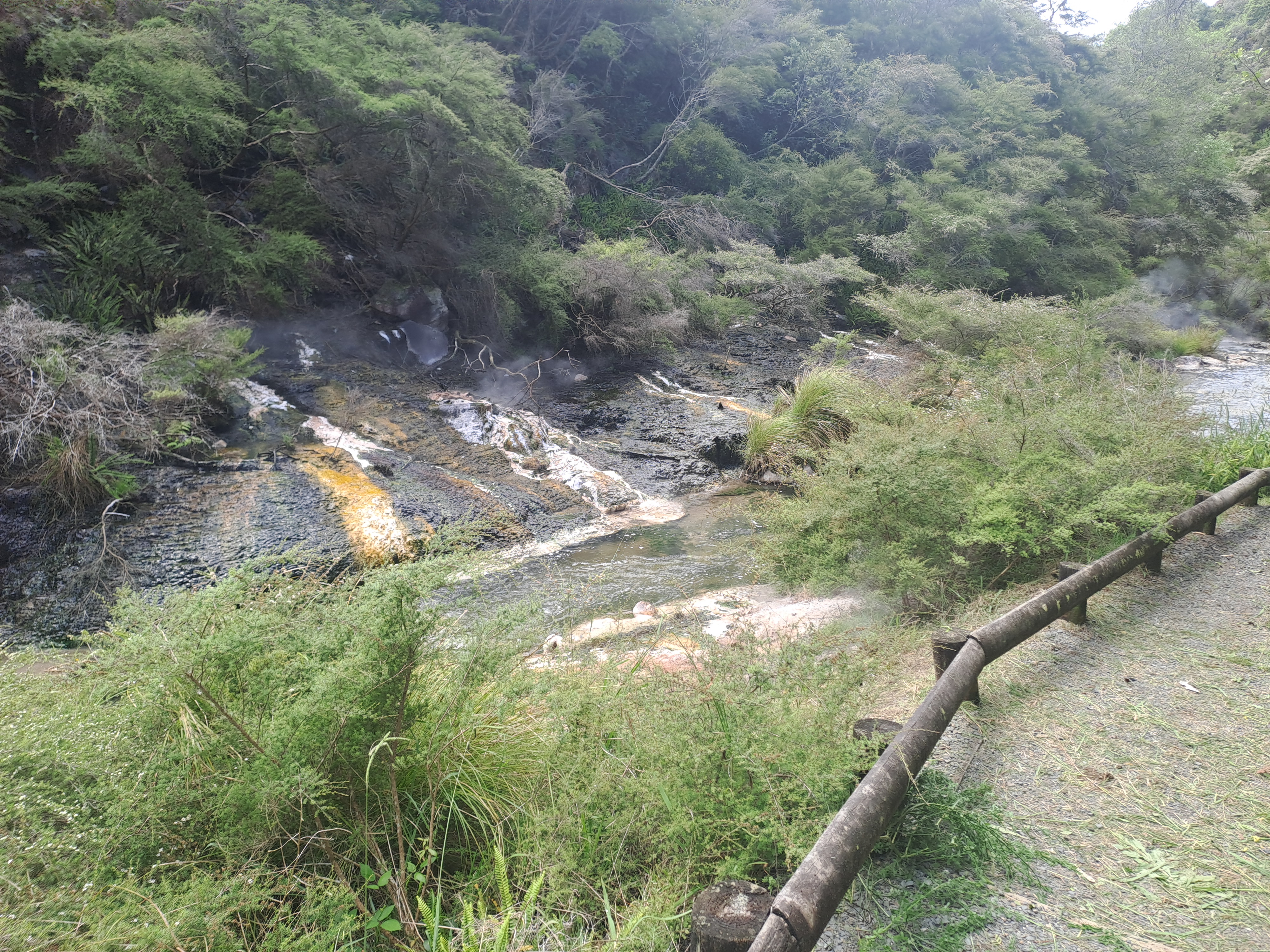
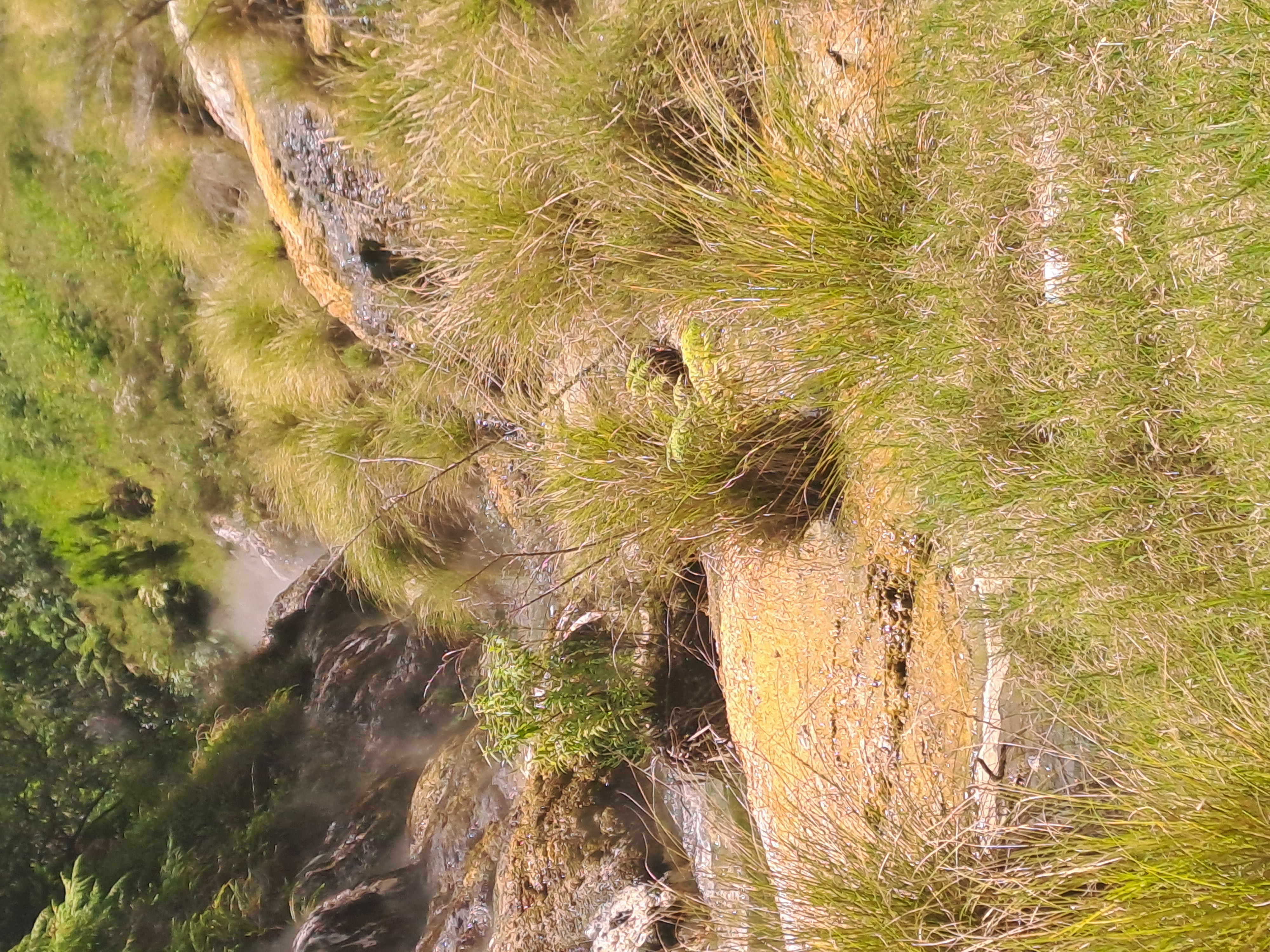
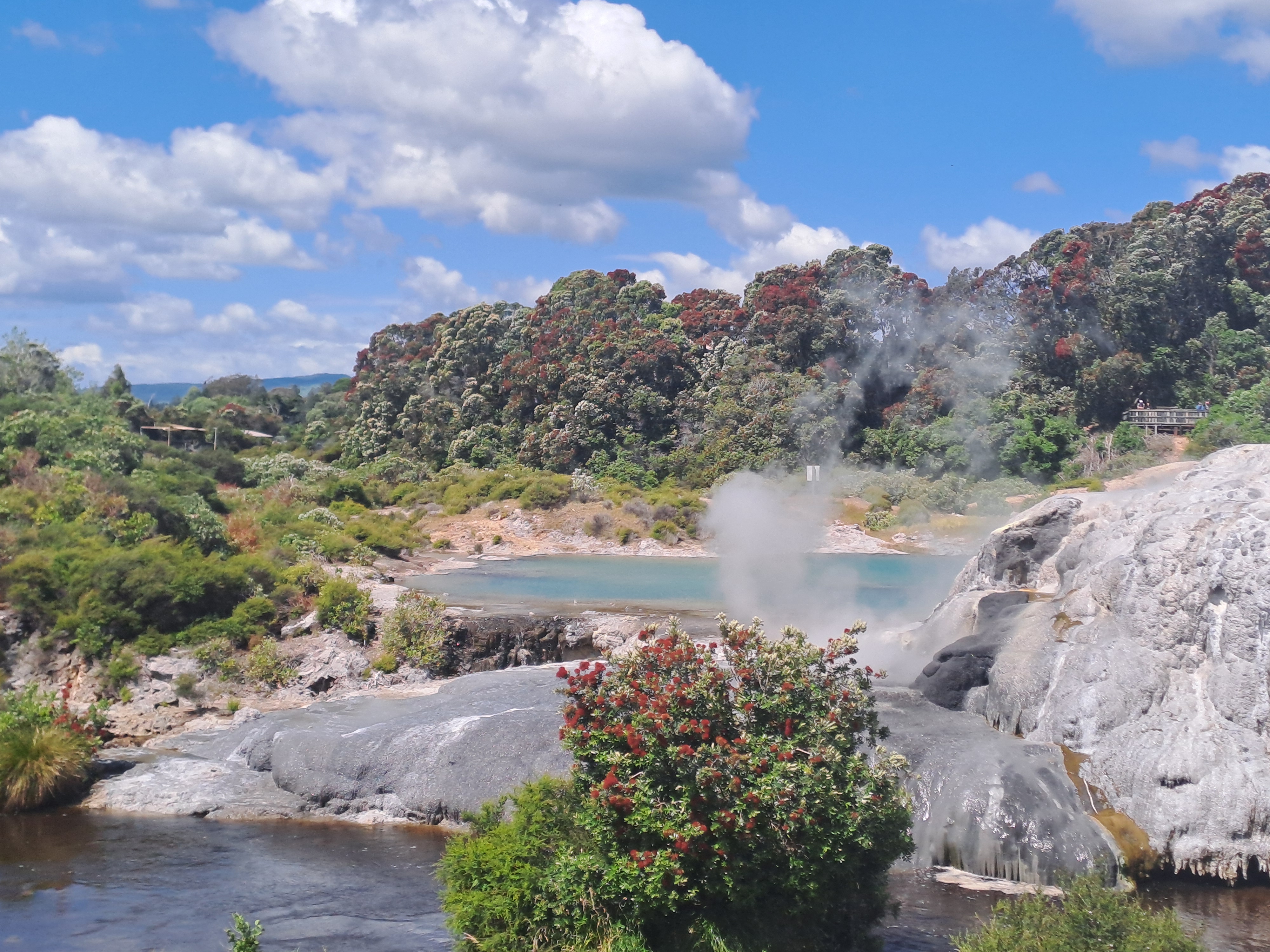
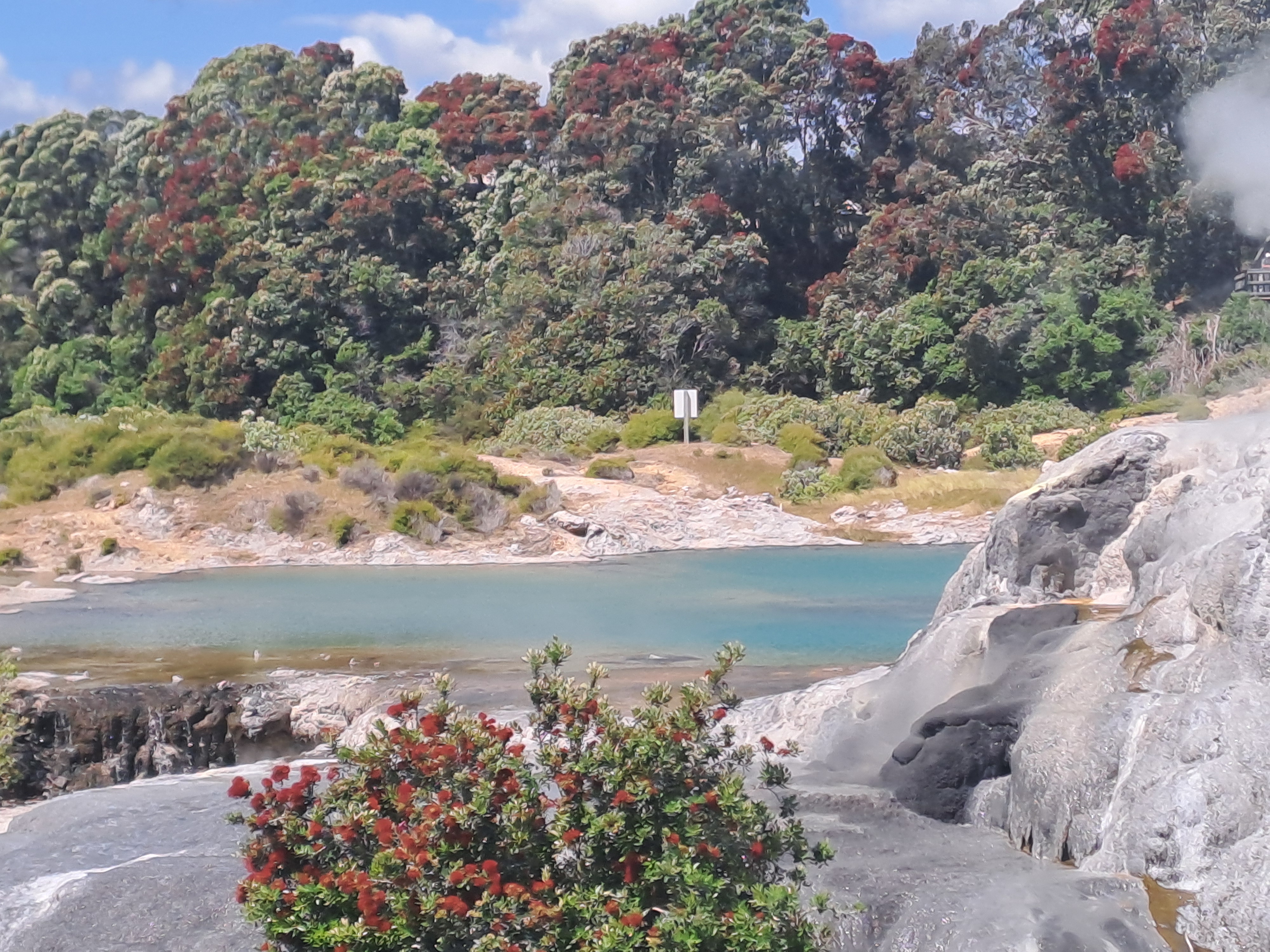
How do you top Hobbiton, you don’t, but a close second was the thermal wonders of Rotorua. Walking through the Thermal Park, seeing all the colours and steam.
We saw the lady Knox geyser which is set off every day by the addition of soap which breaks down the surface tension and allows it to go off. This is beneficial as it reduces the pressure. The bottom pictures are of the champagne bowl.

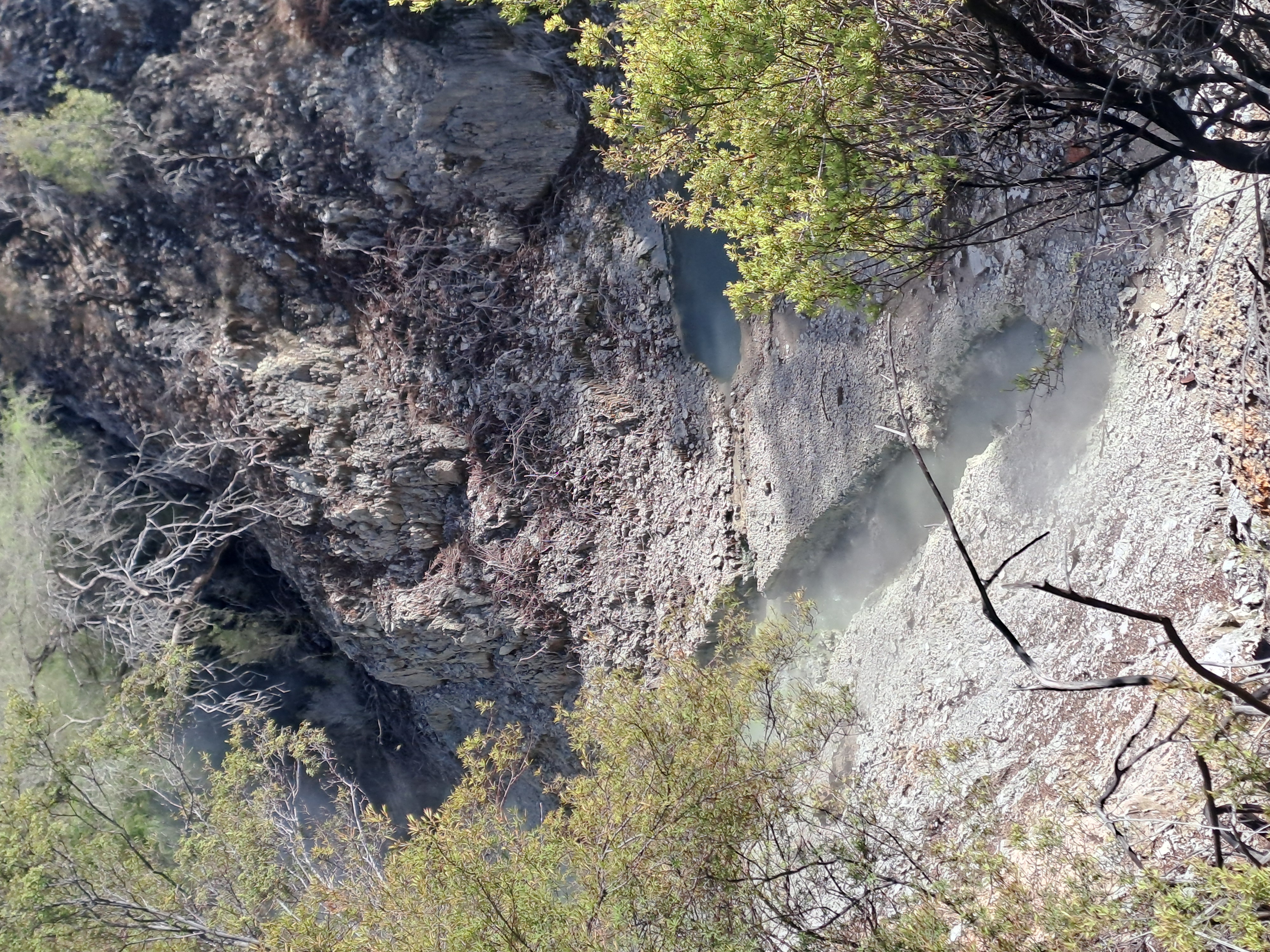
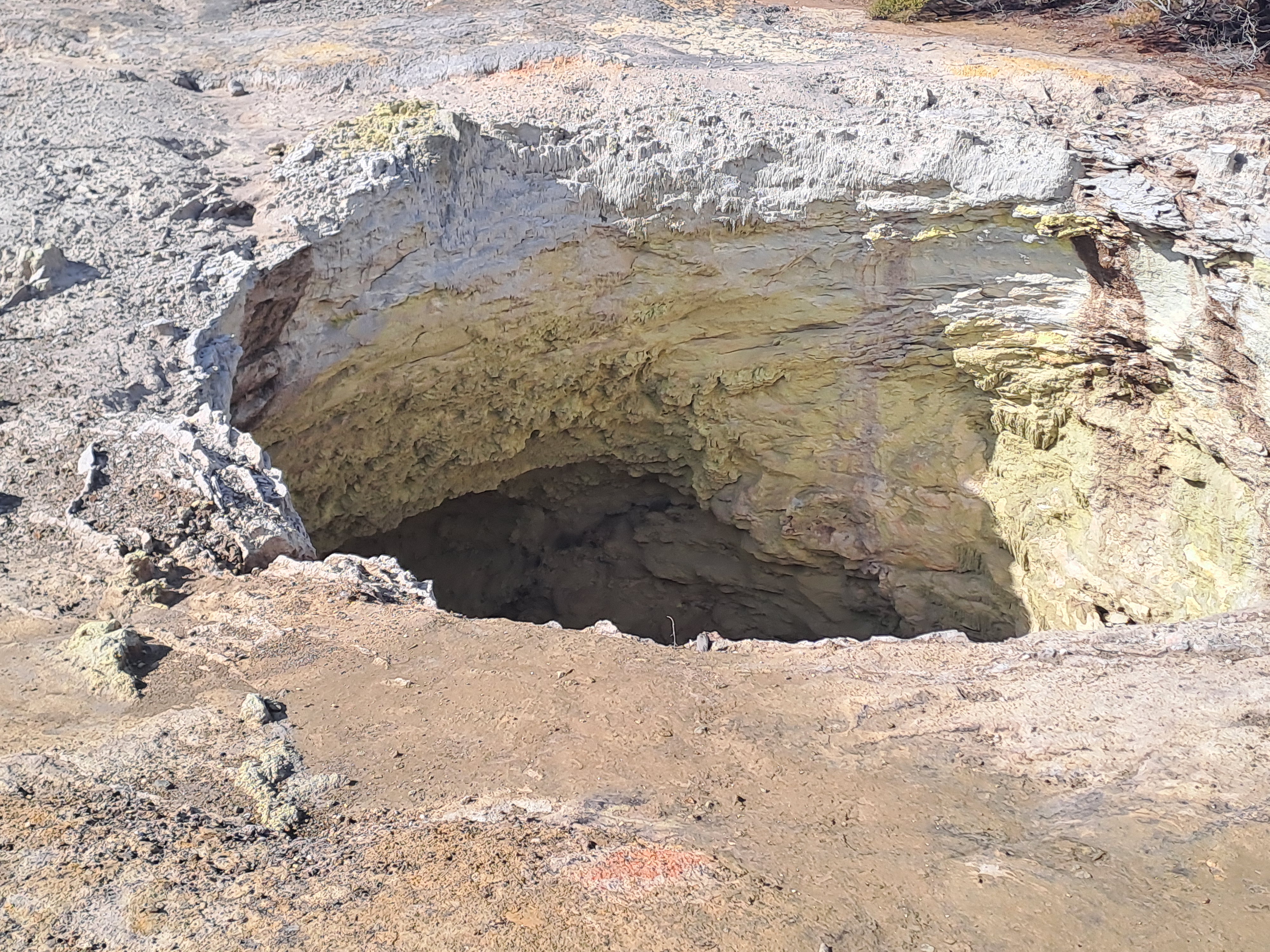
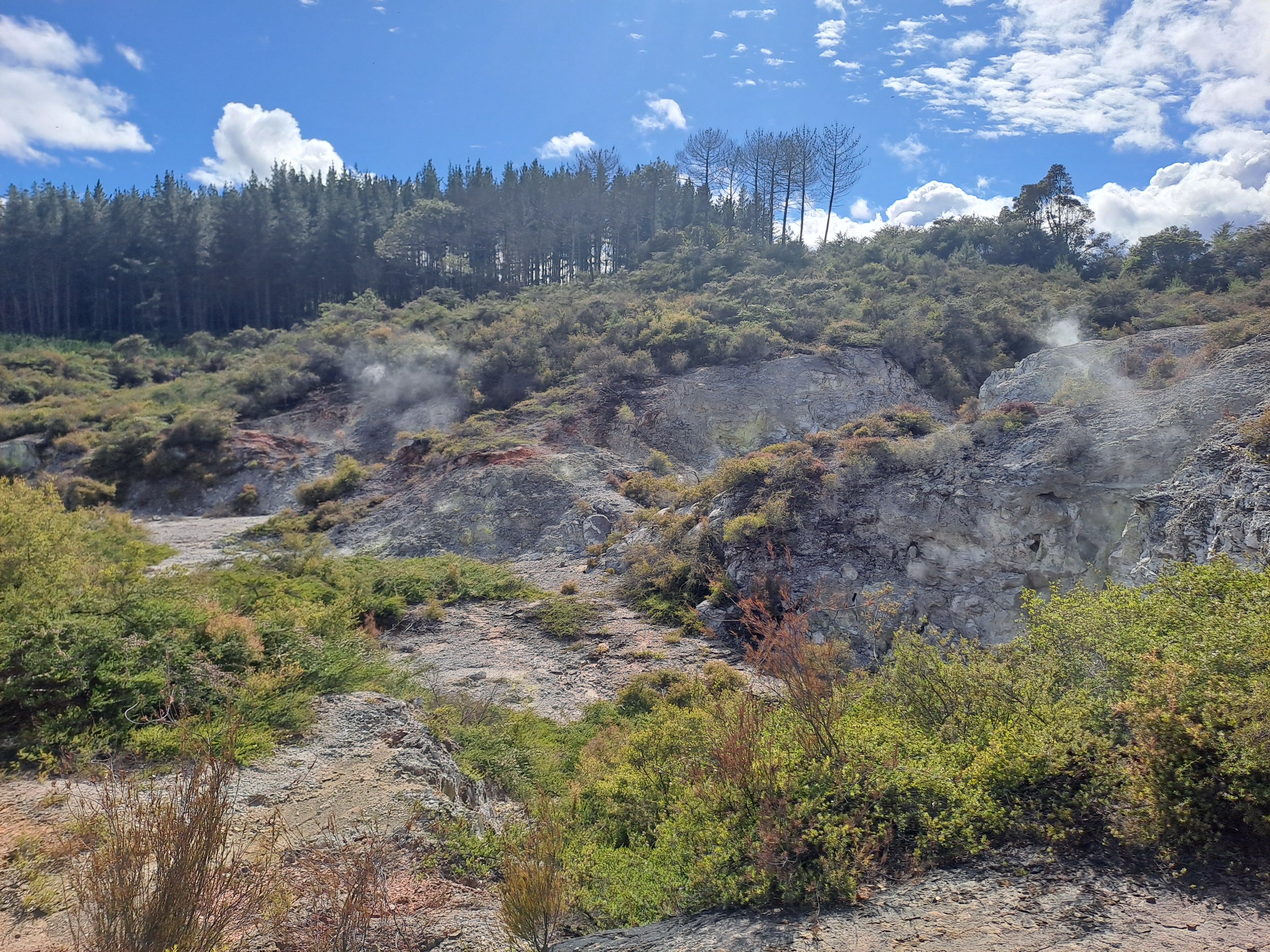
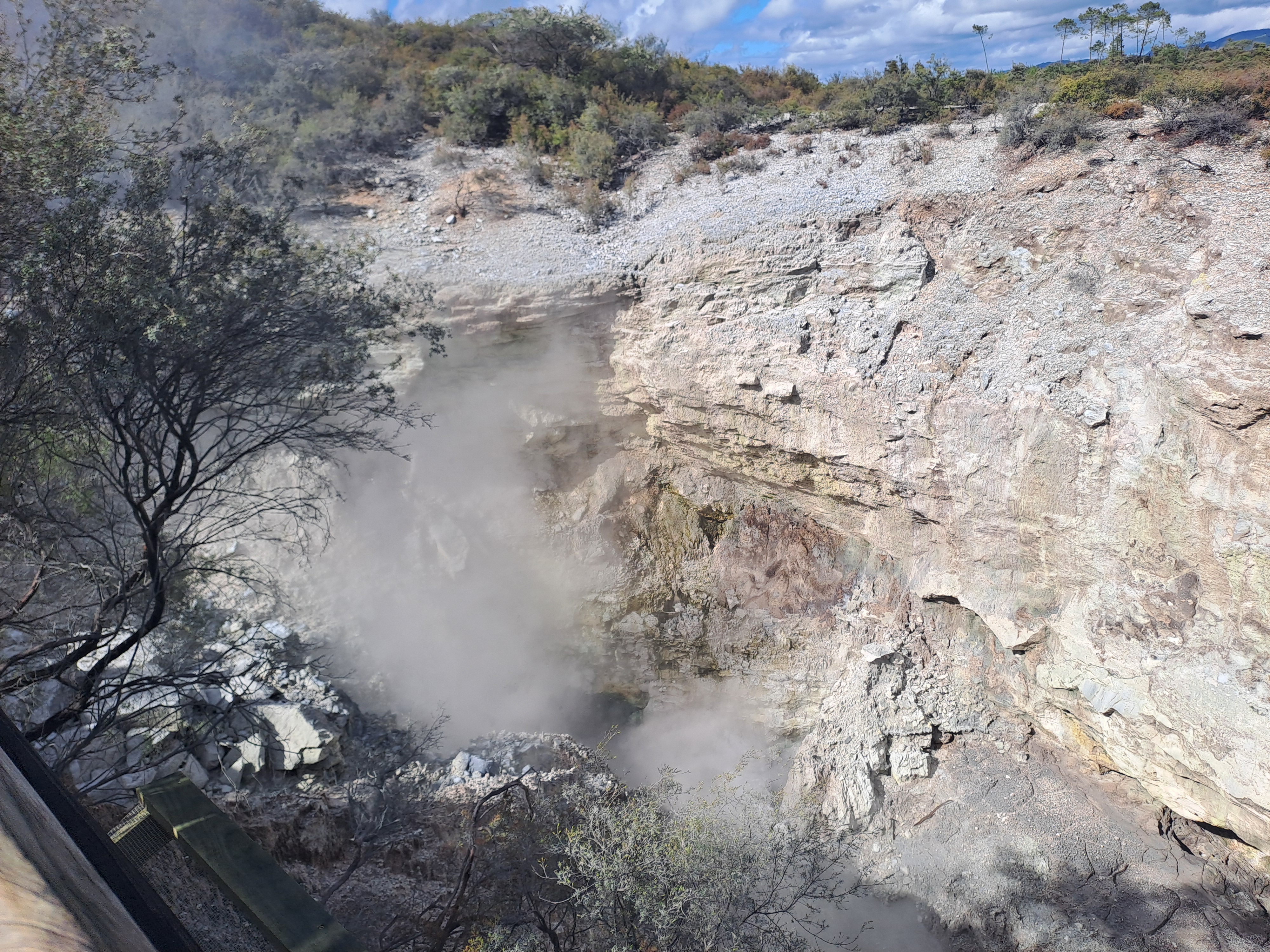
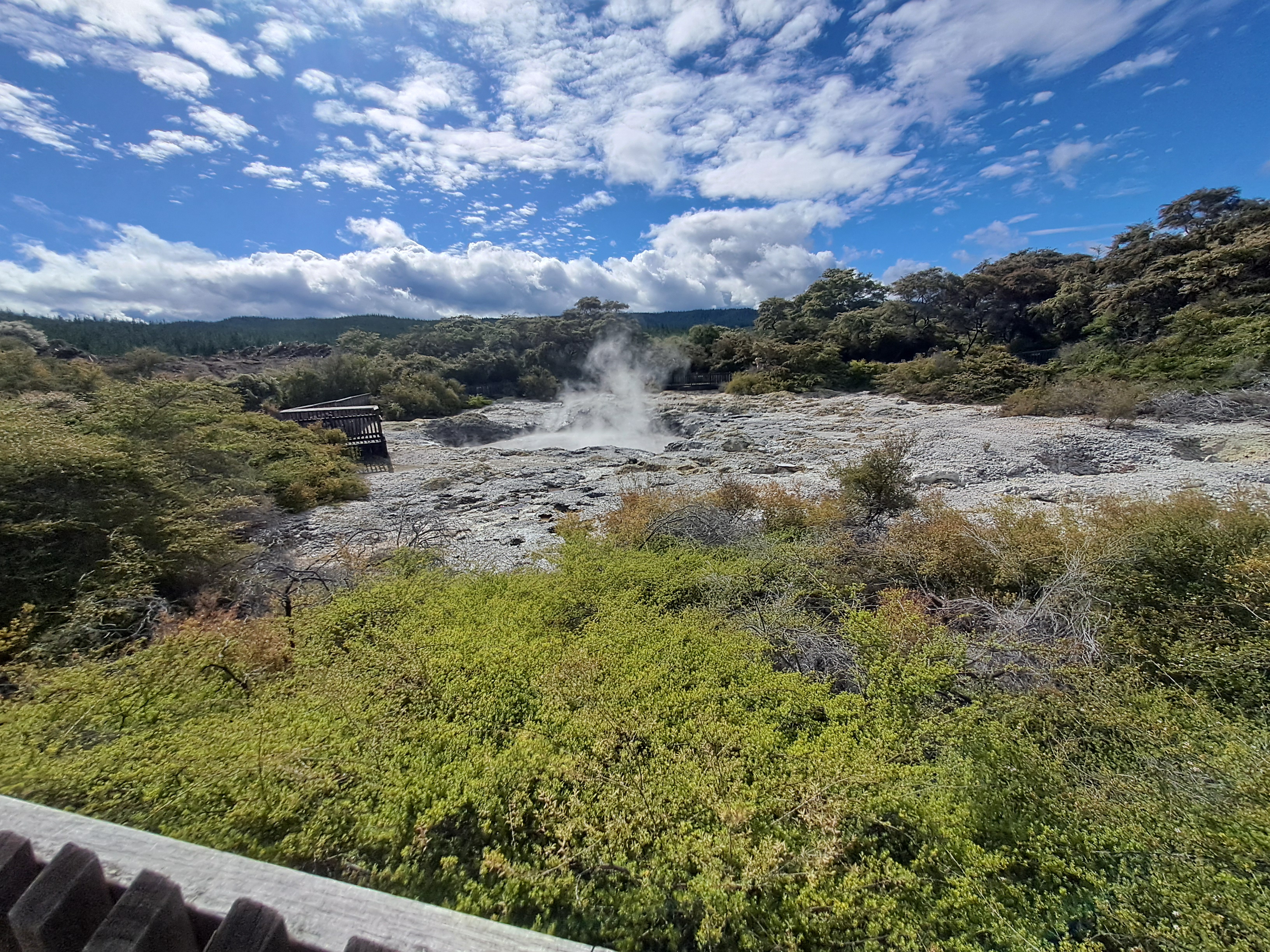
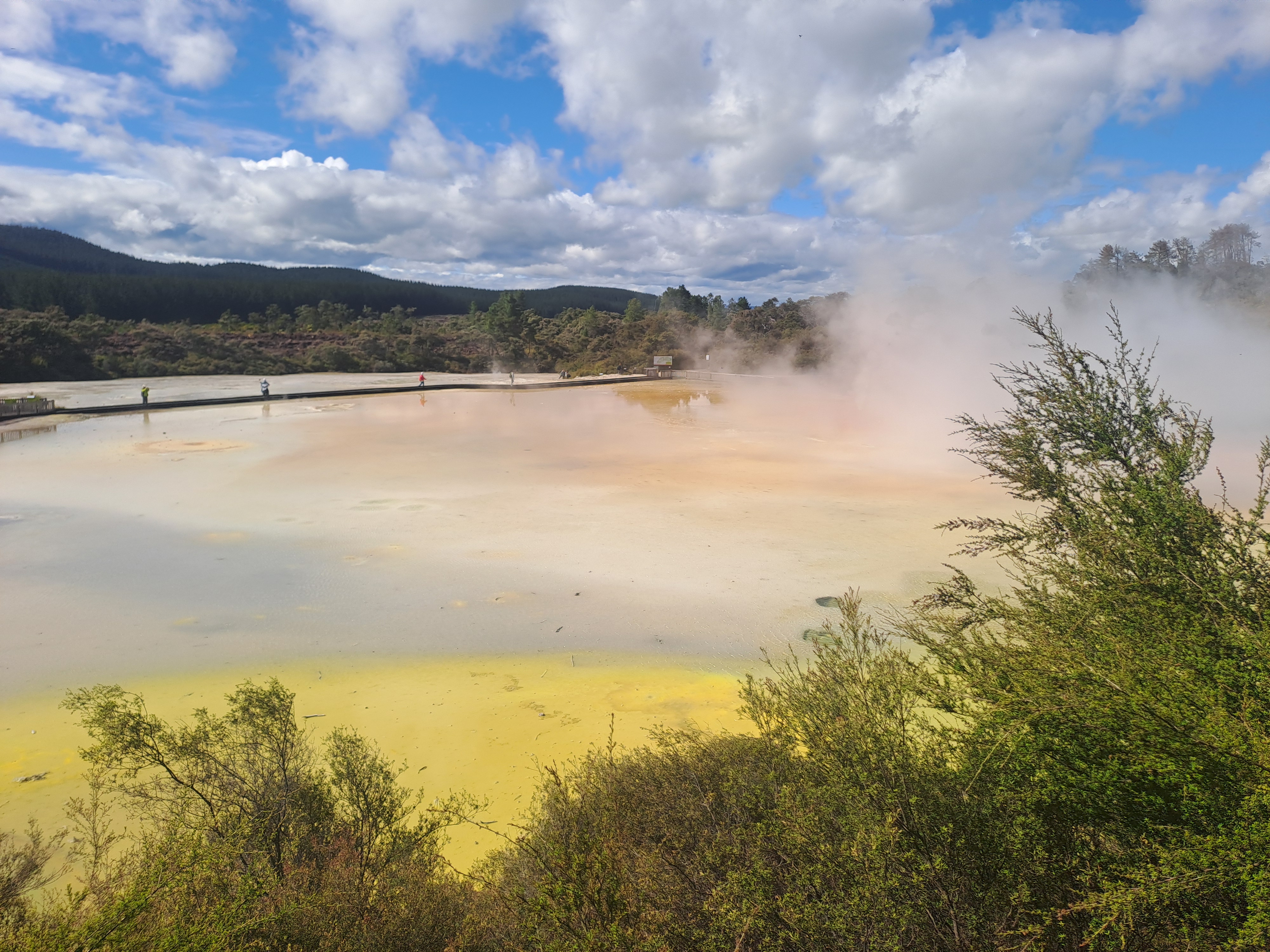


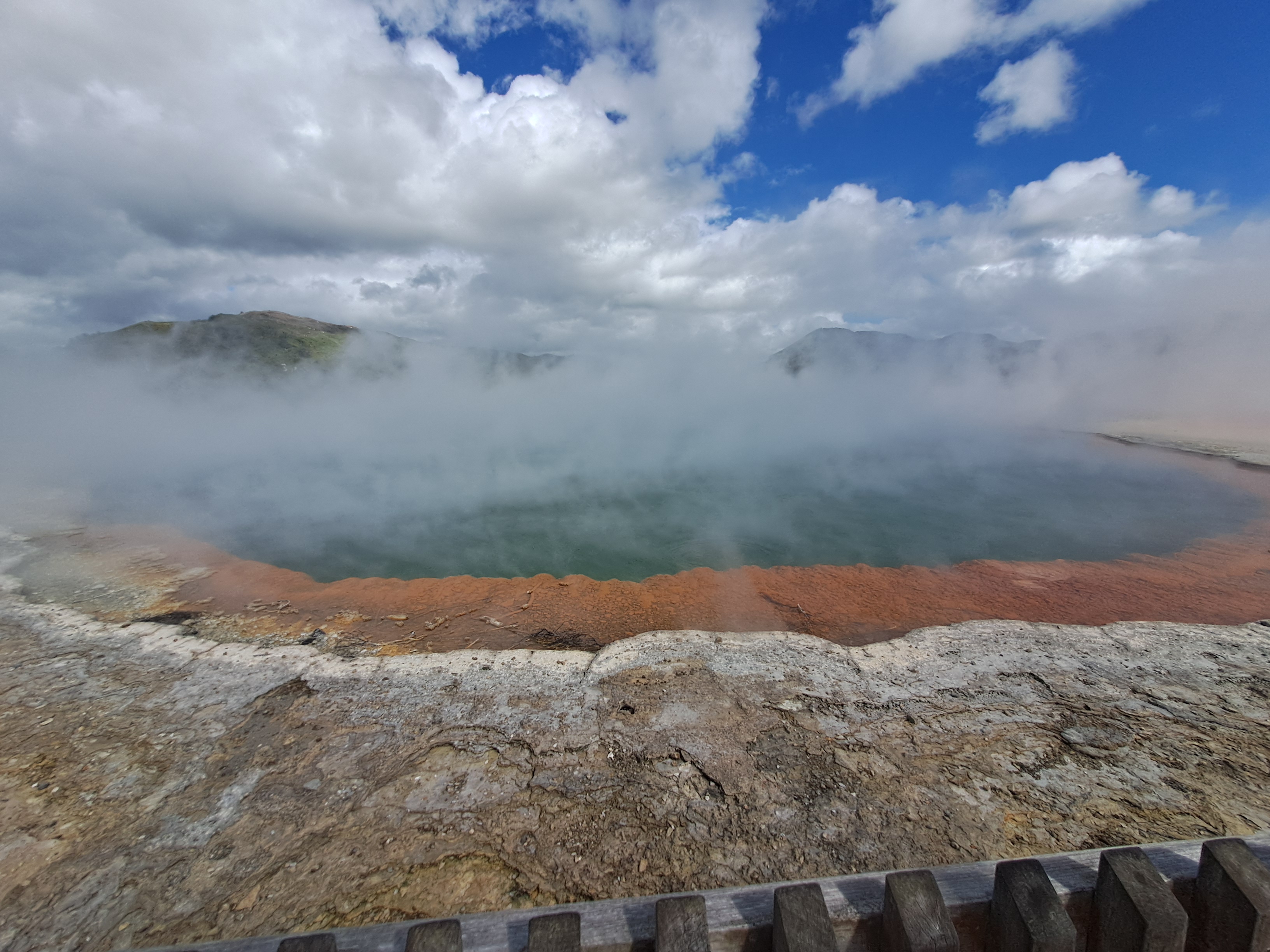
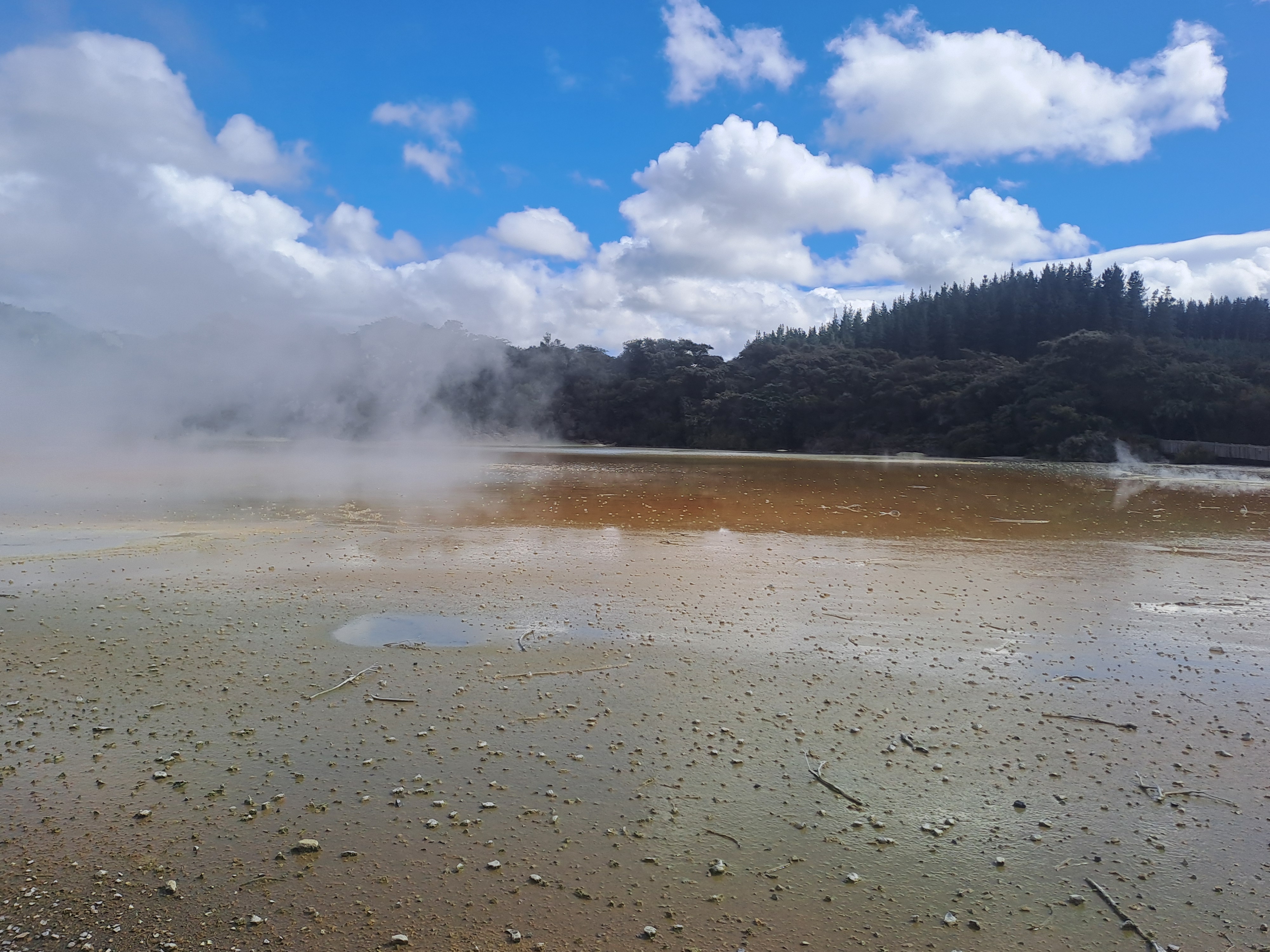
The colours were amazing. We were warned to not step off the board walk onto seemingly solid surface as it can break through with life changing or fatal results.

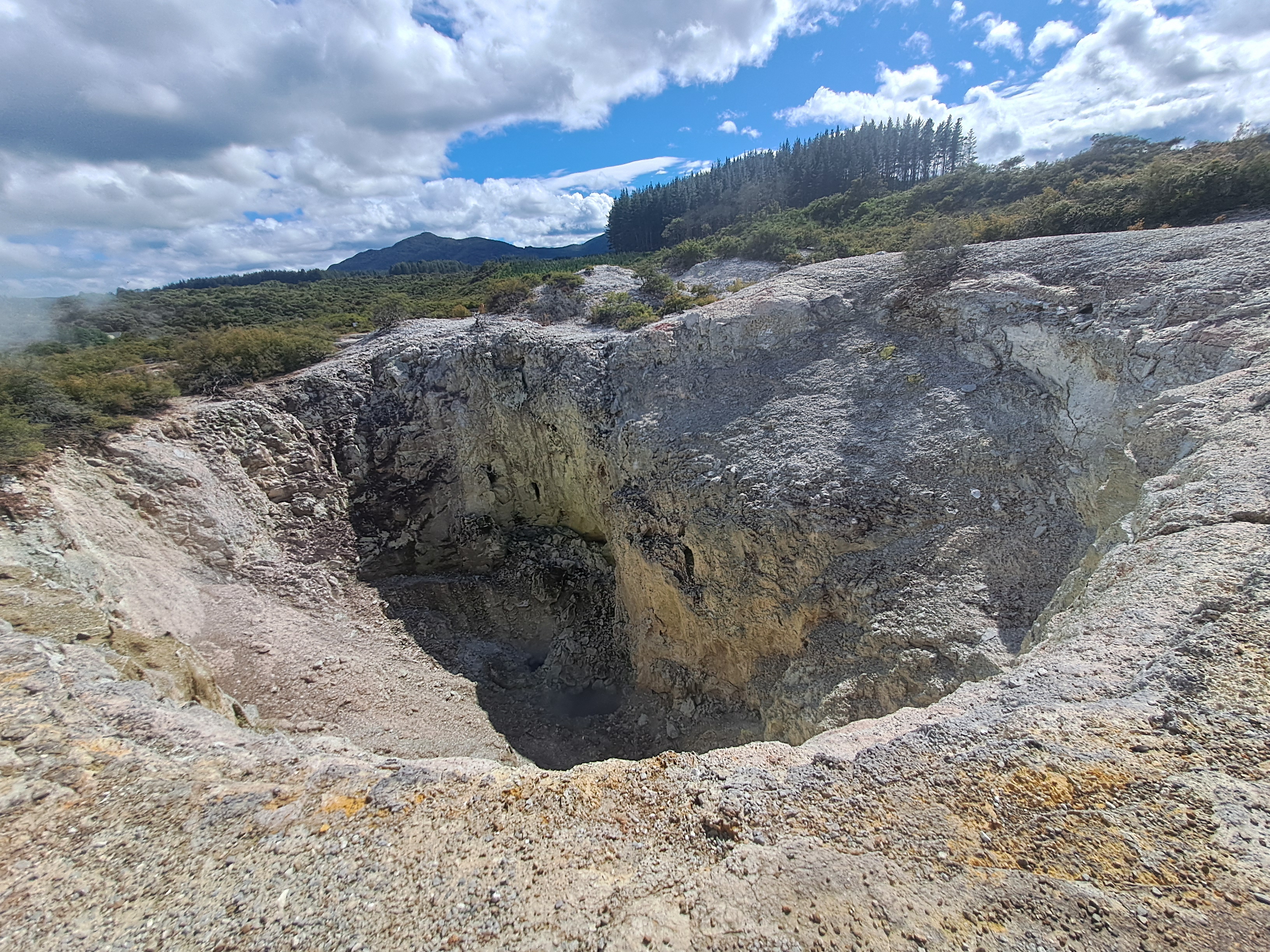
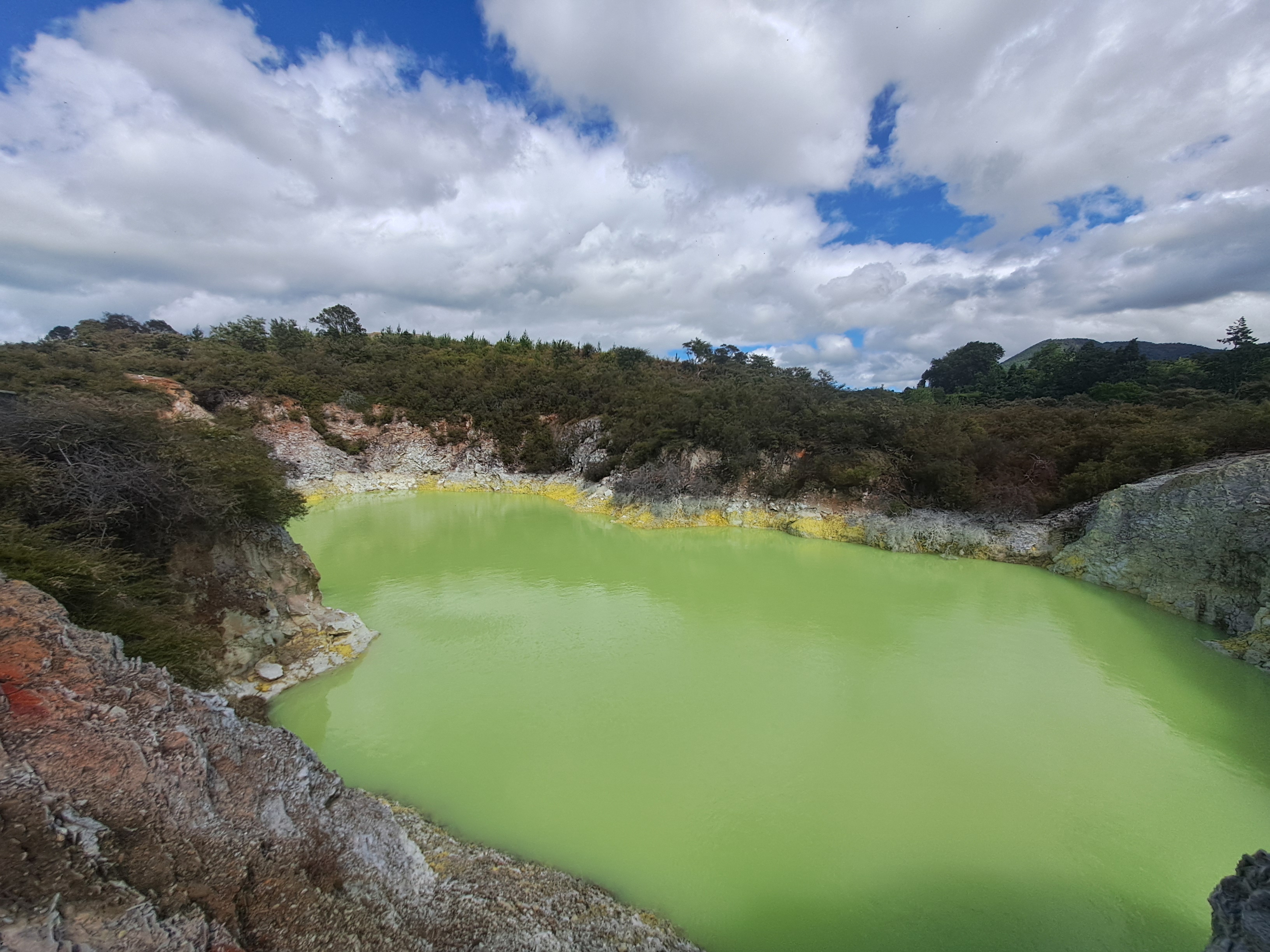
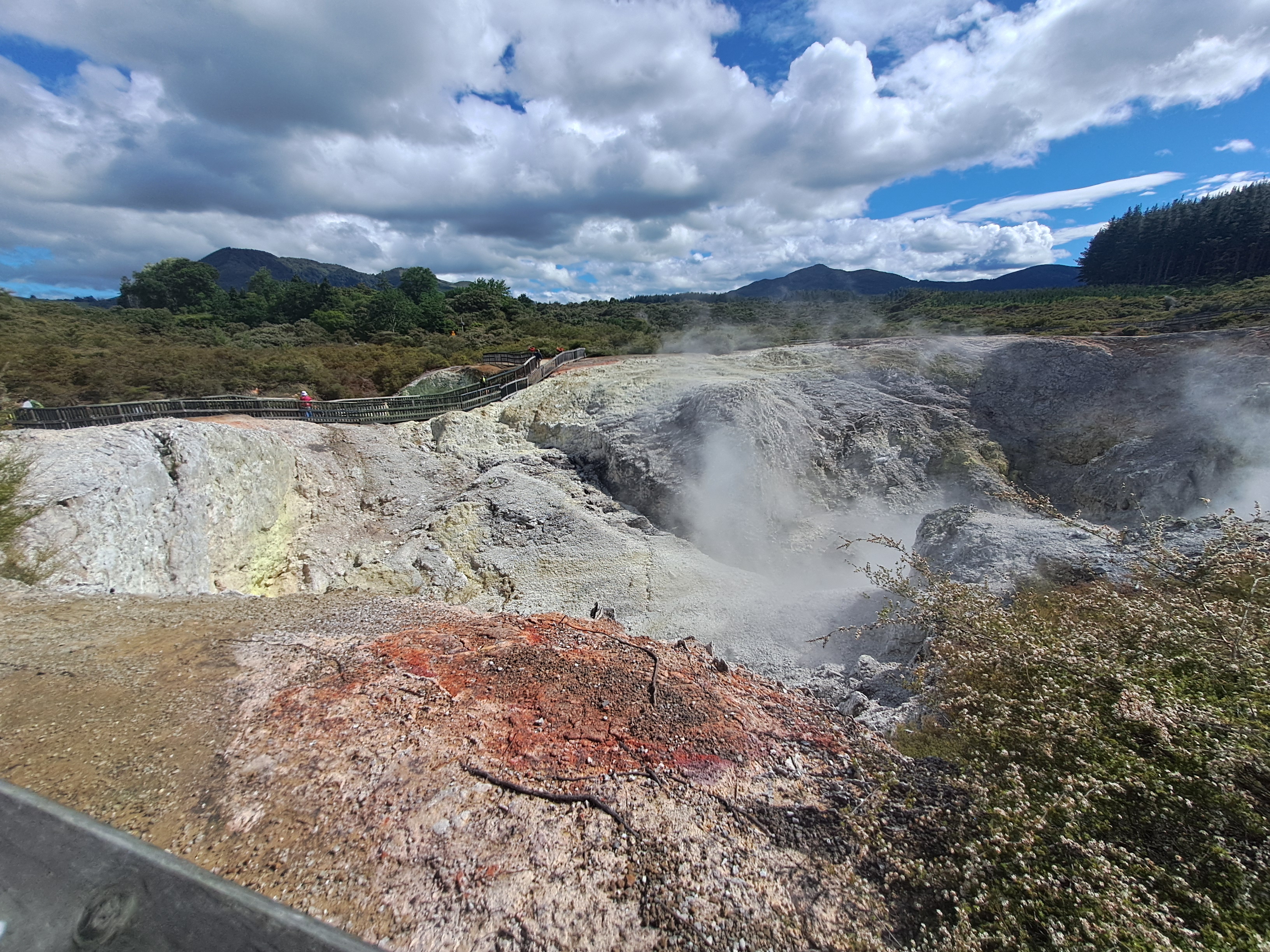
We also went for a walk around the locality to see the pool covered in red algae, and more thermal waters.All set in the rainforest.


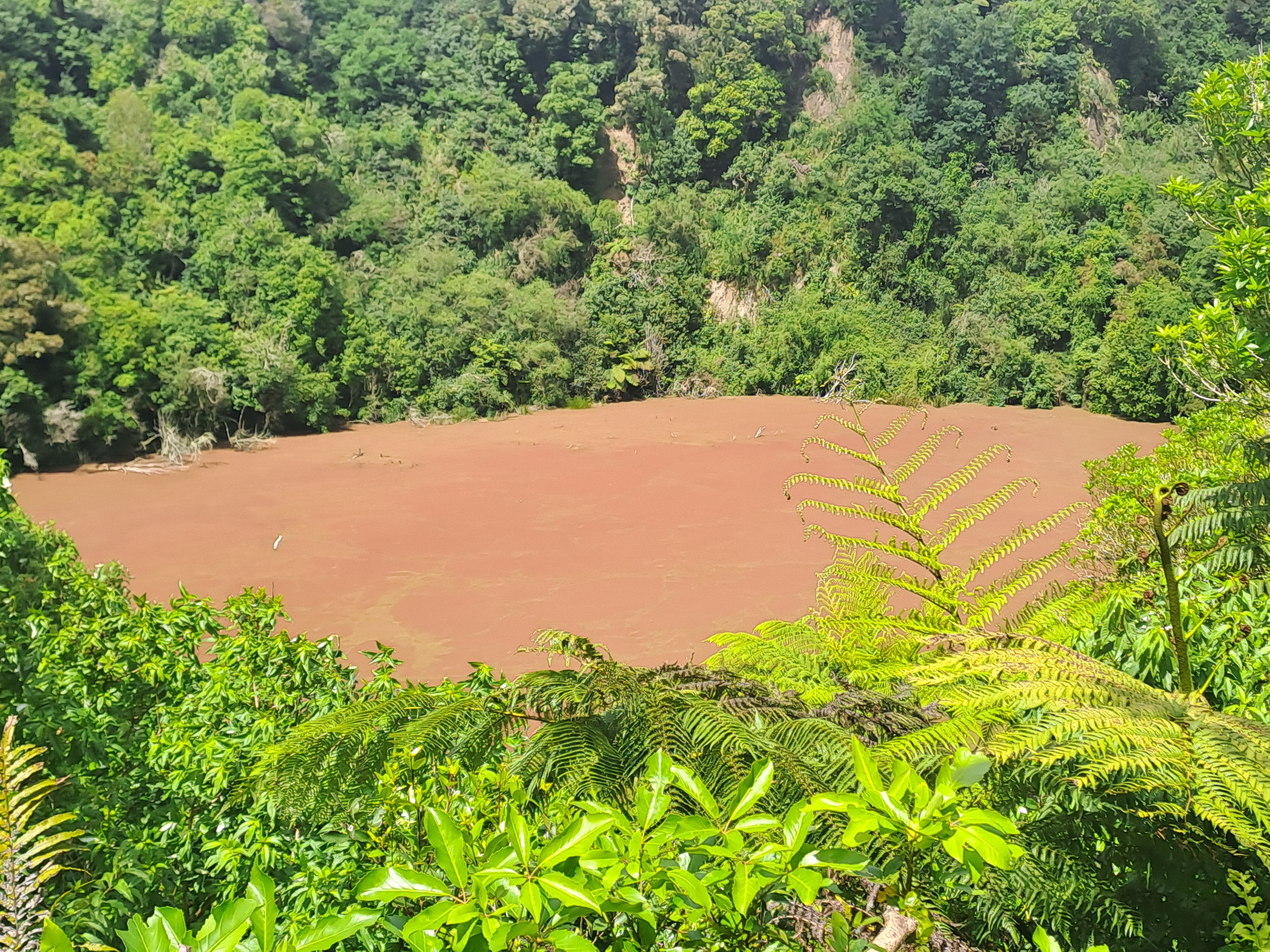
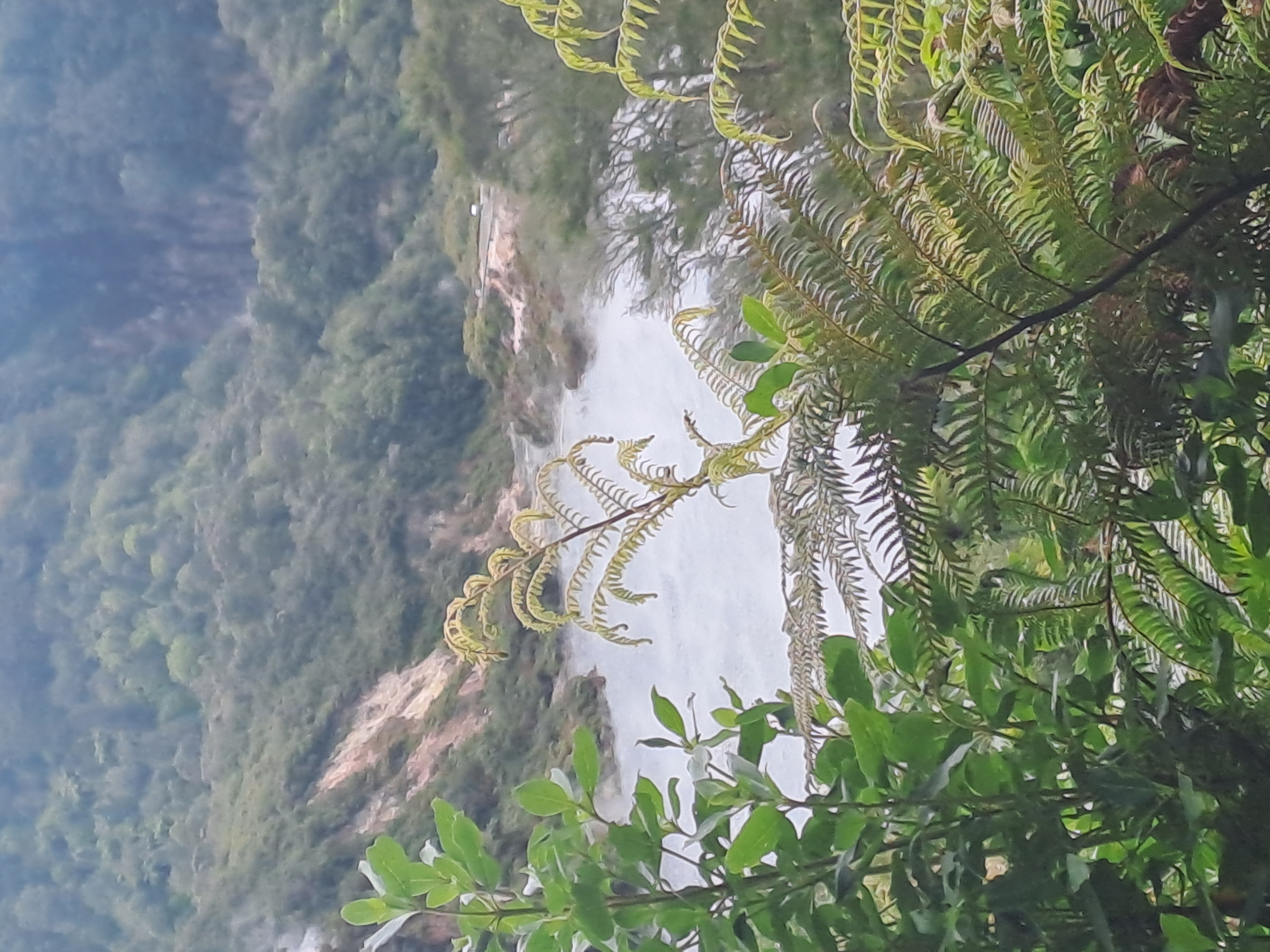
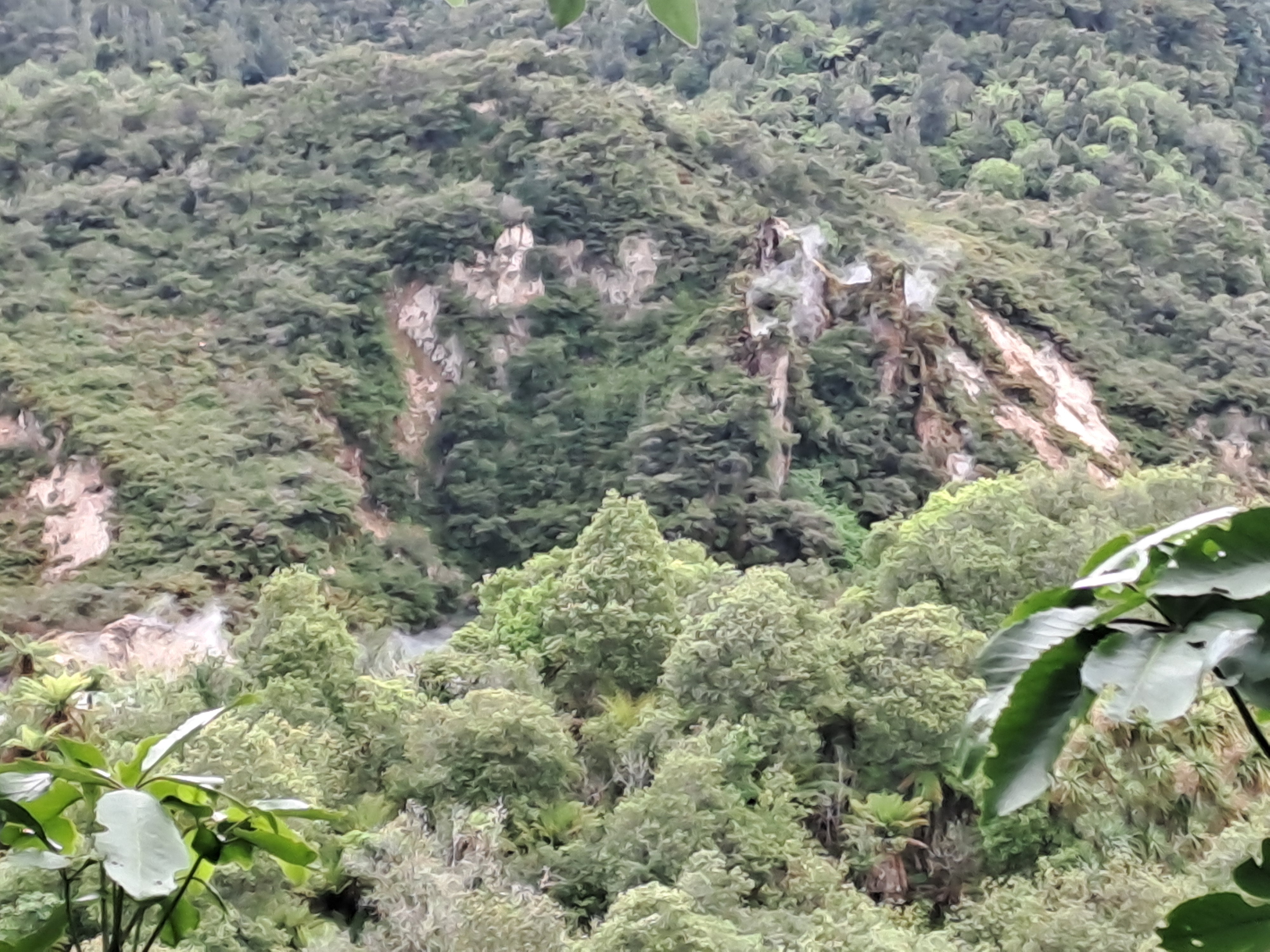
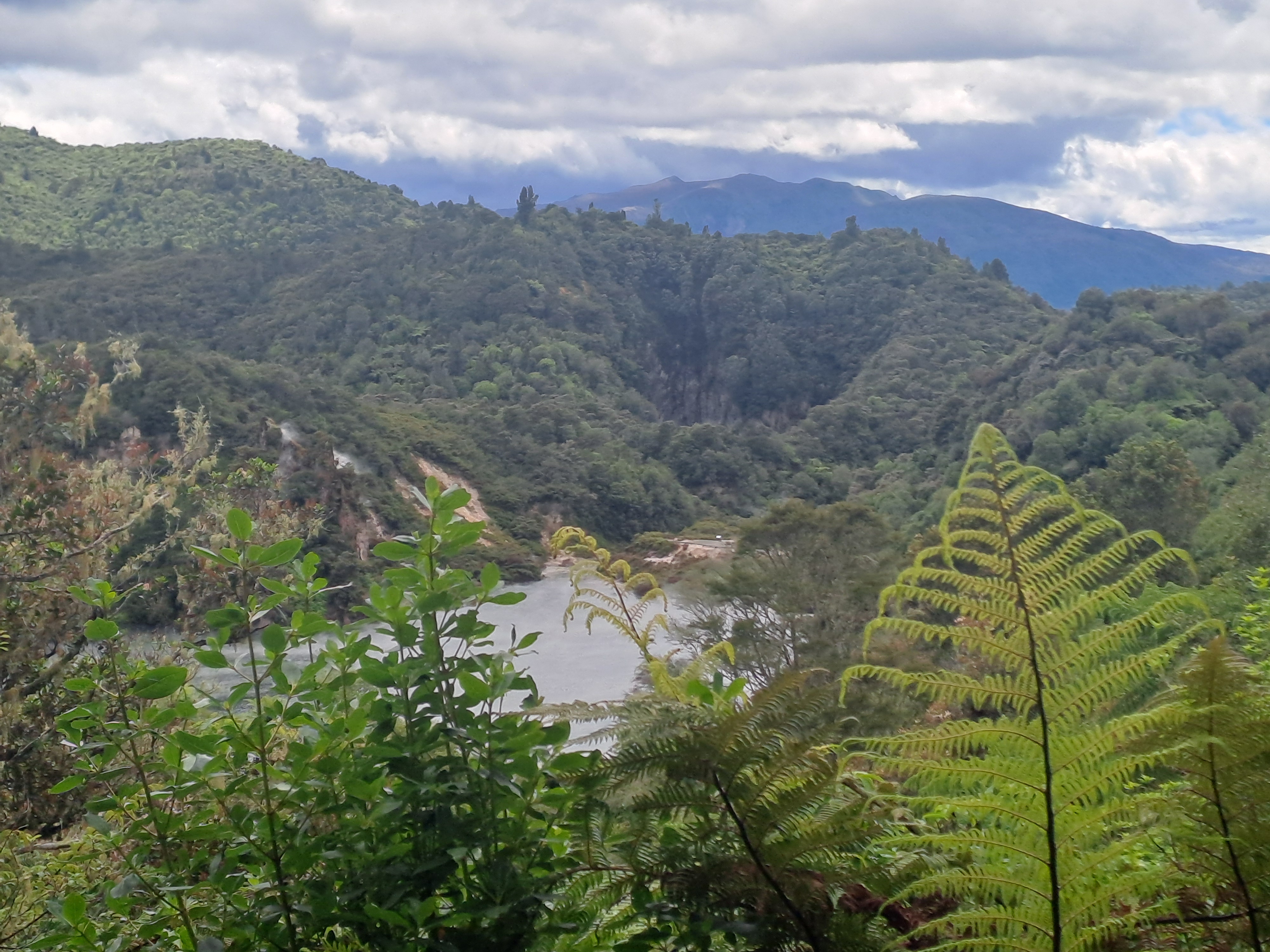
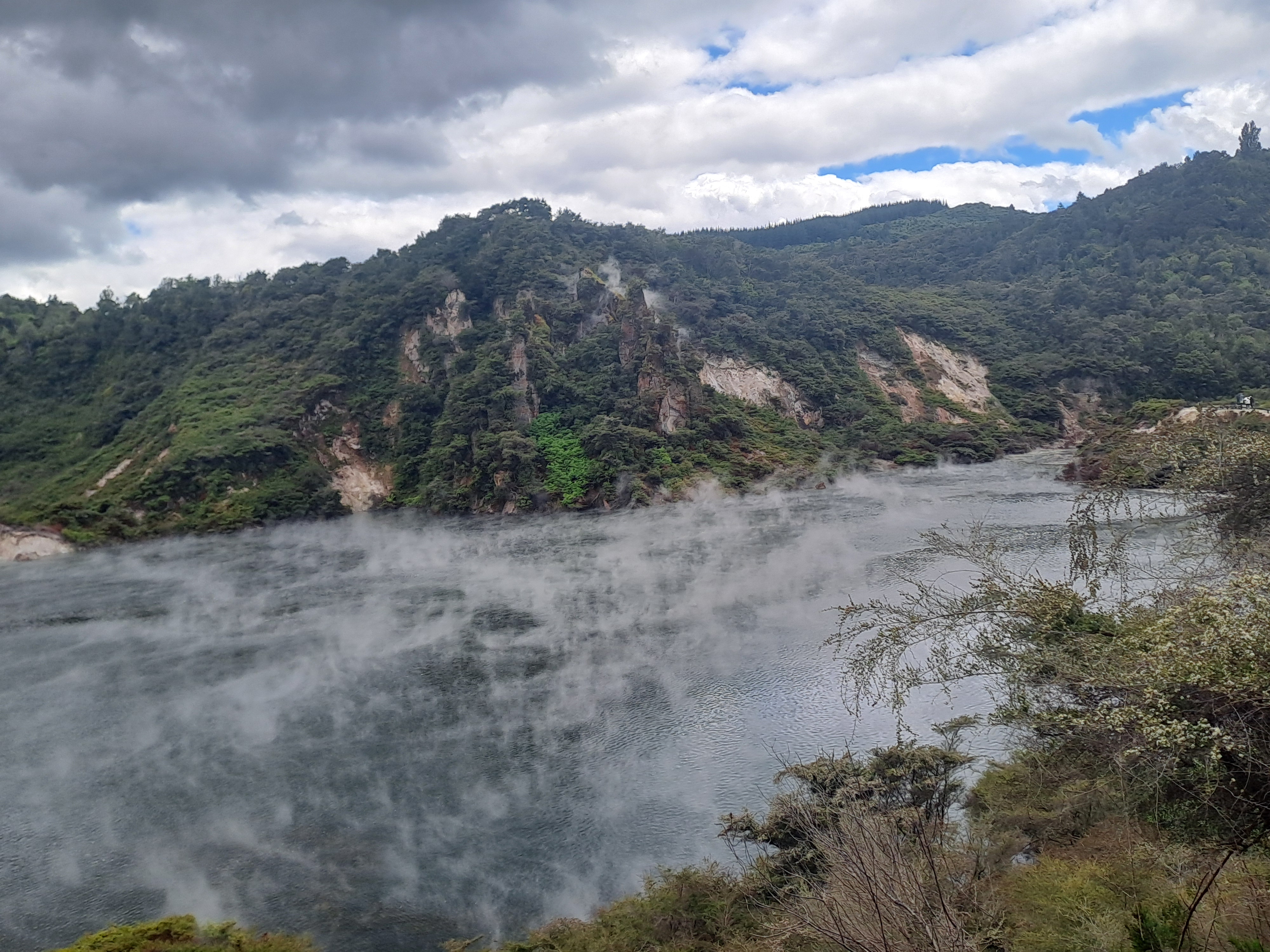
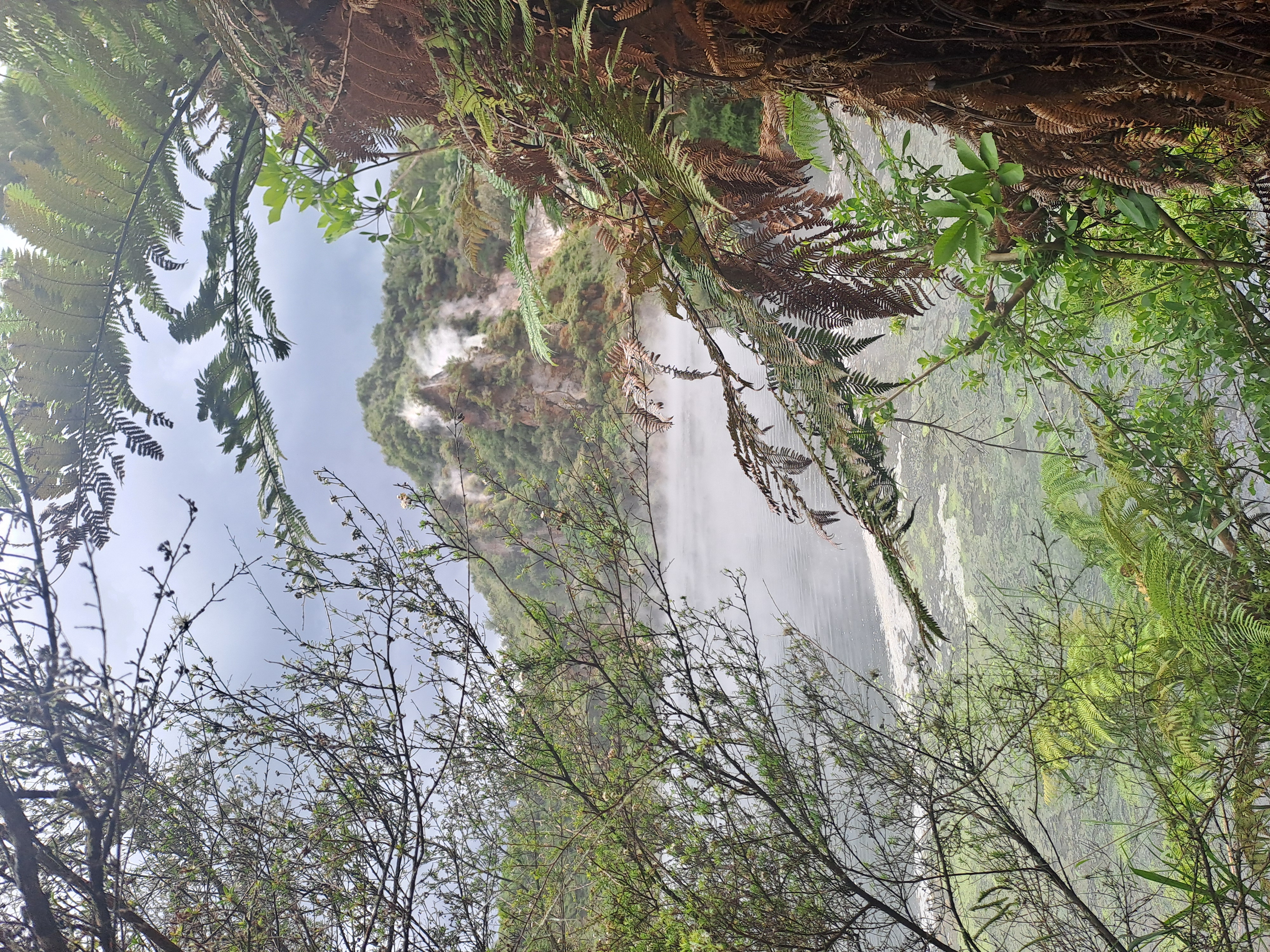
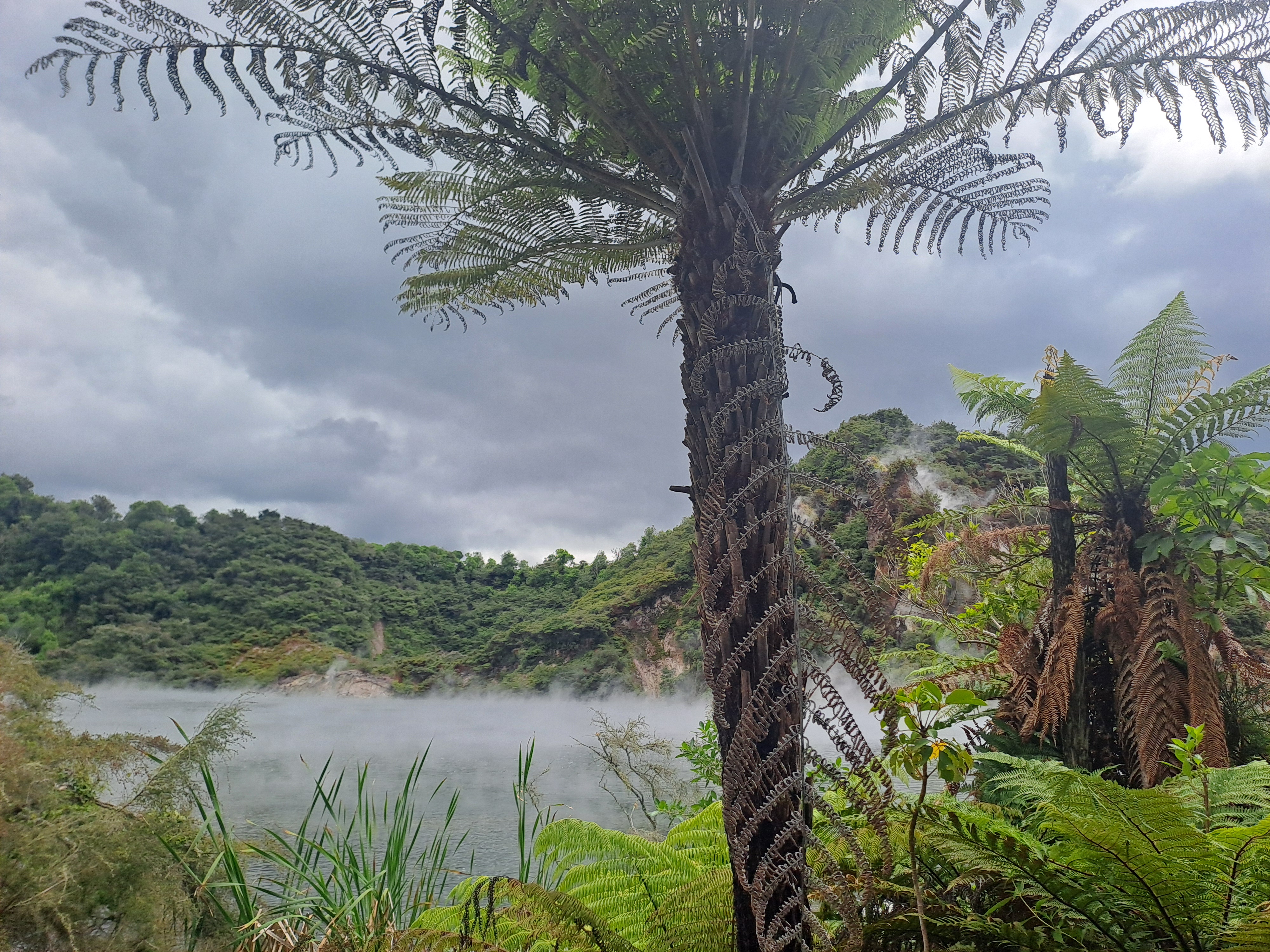
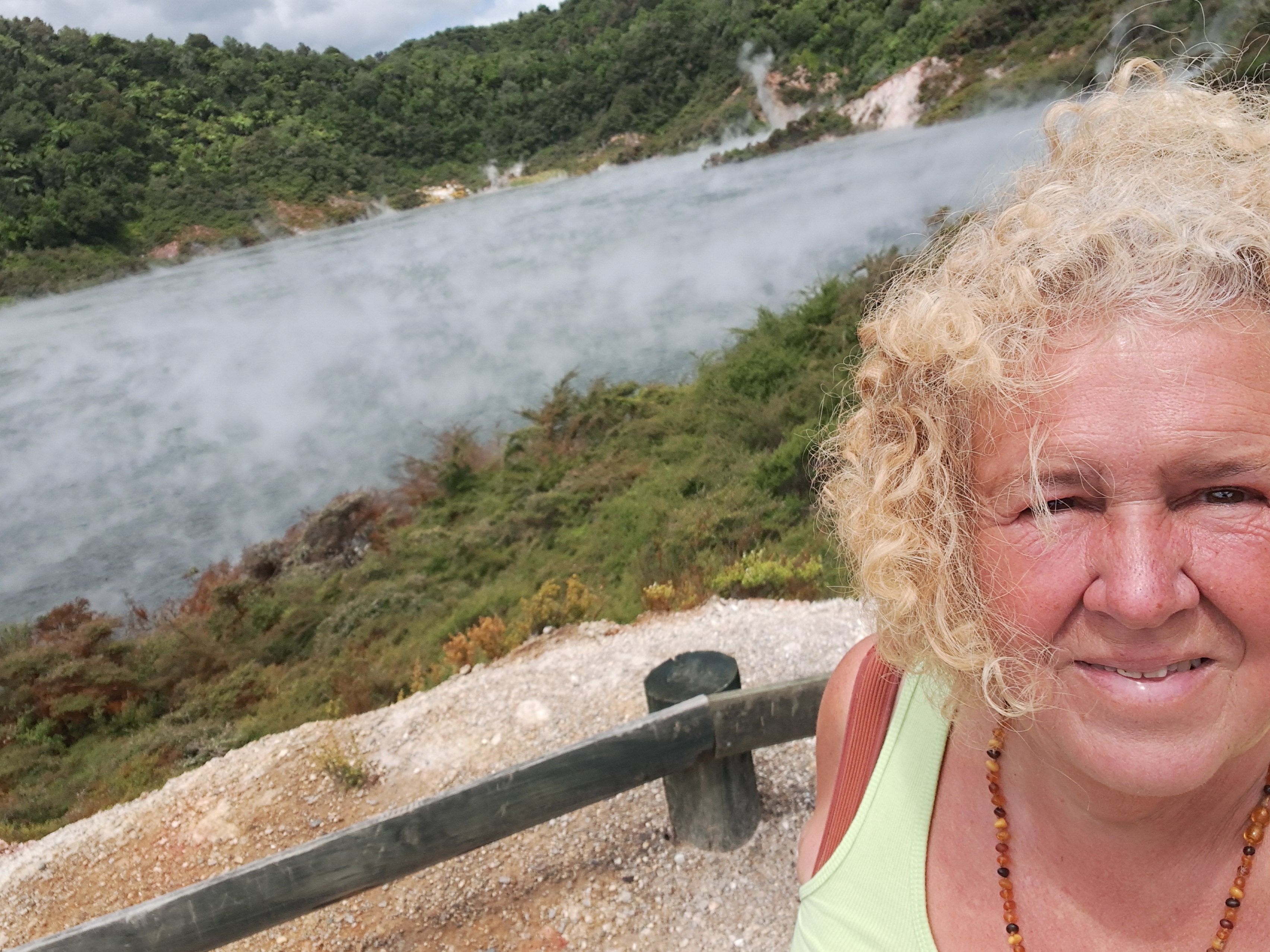
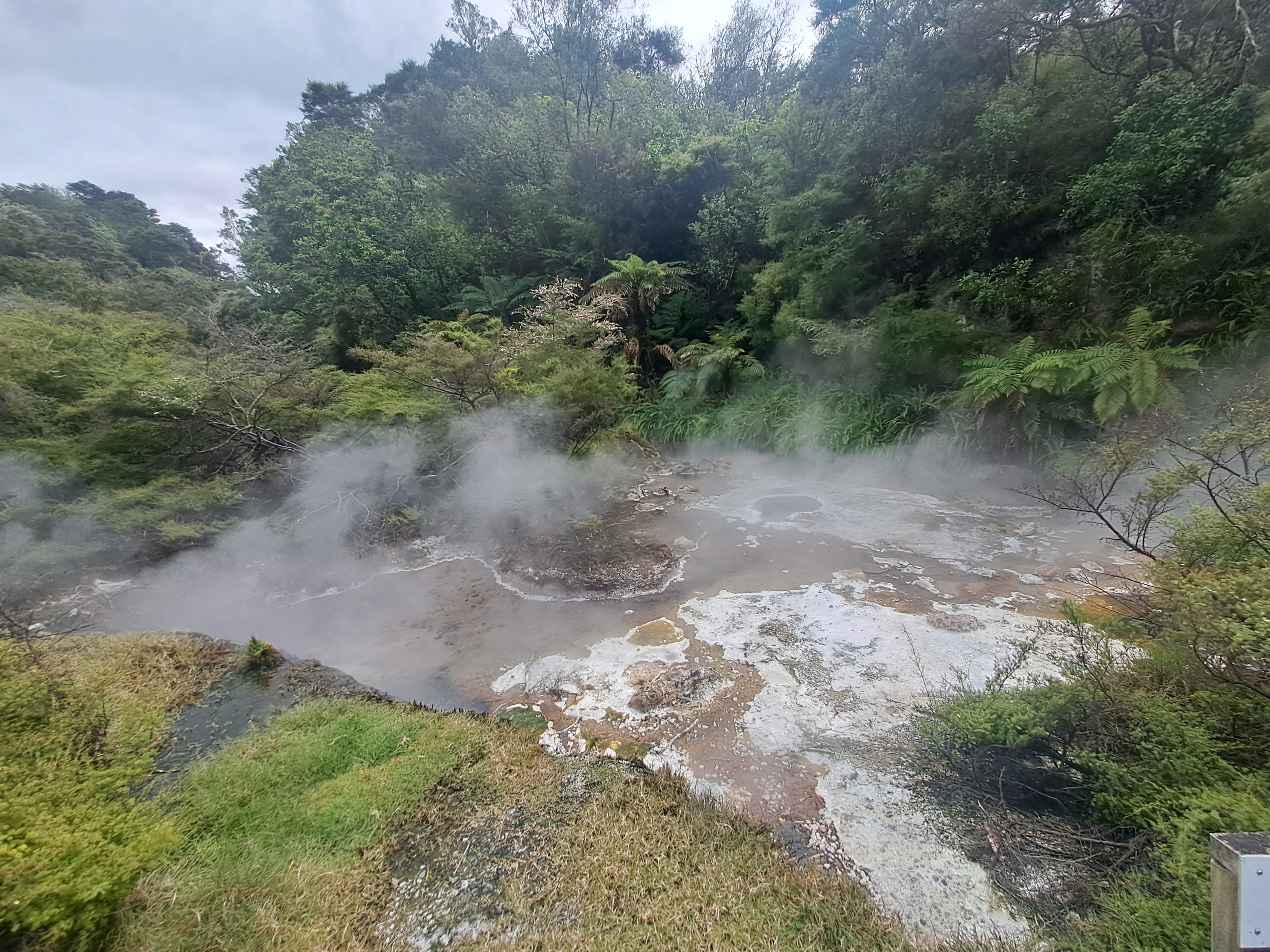
This was the area of the black geyser at one time the most powerful geyser in the world. The geyser was seen erupting in late 1900. Its eruptions were observed reaching up to 1,500 feet (460 m) in height, and it excited worldwide interest. Day trip visitors from Rotorua were keen to see the geyser erupting regularly for 5–6 hours out of a cycle of about 36 hours, and a tourist trip called the “Round Trip” ran from the summer of 1902/1903. The geyser was the catalyst for tourism to the Waimangu Valley.
Eruptions were so violent that tourists had to observe from quite a distance. An international rugby player and his friends crept closer only to be scalded and swept away by a violent ereption. The geyser became extinct in 1908.


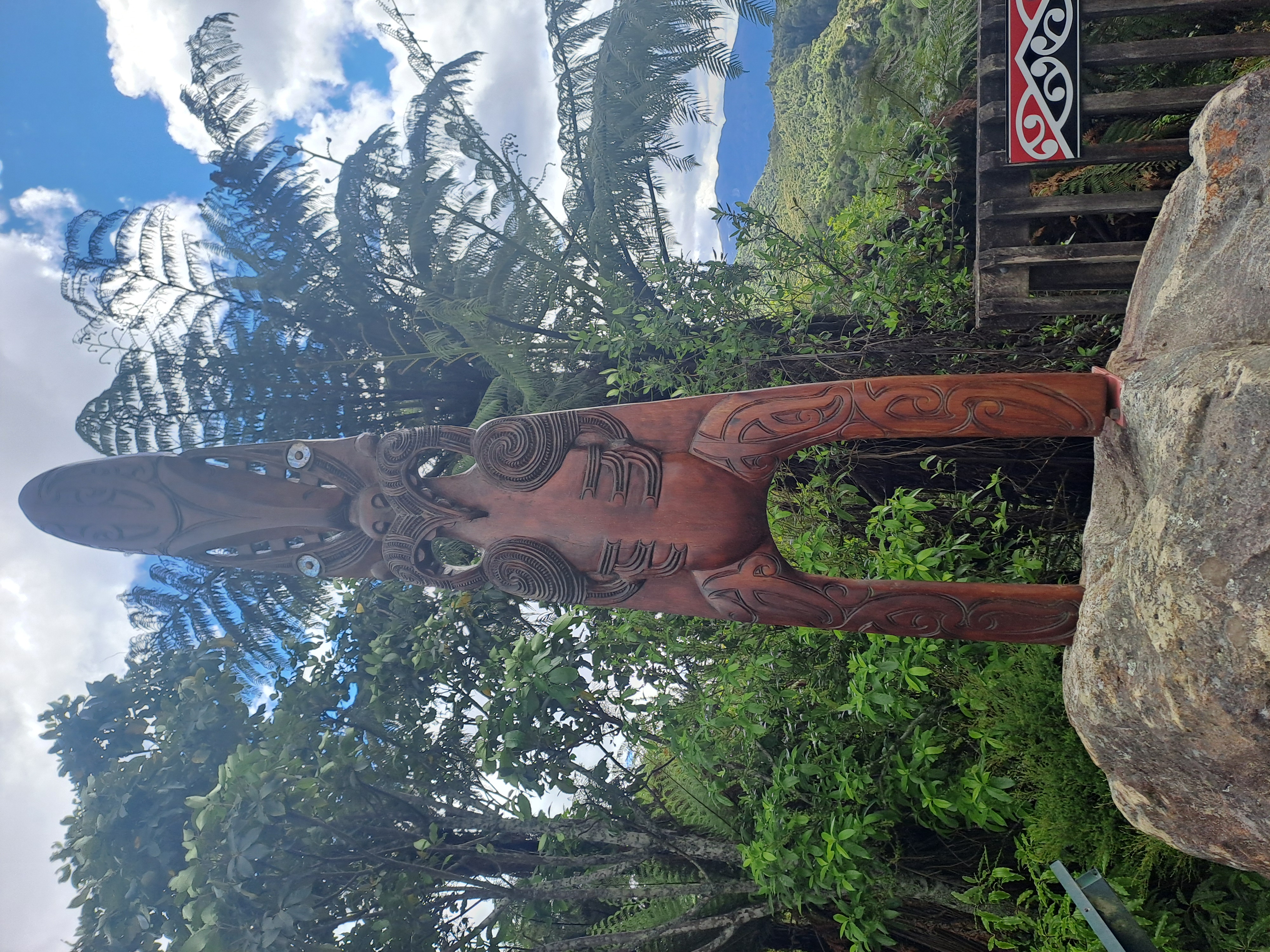
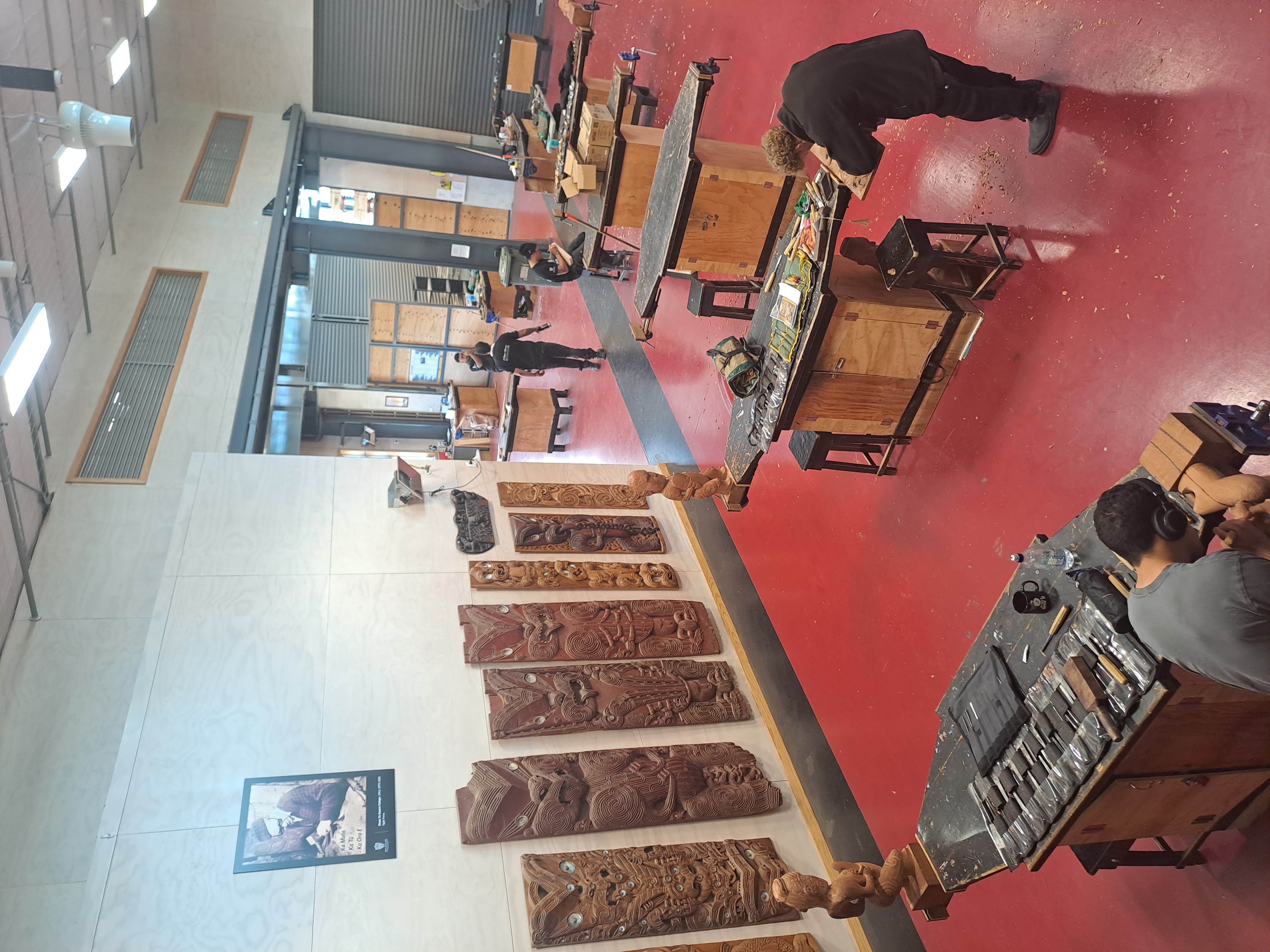
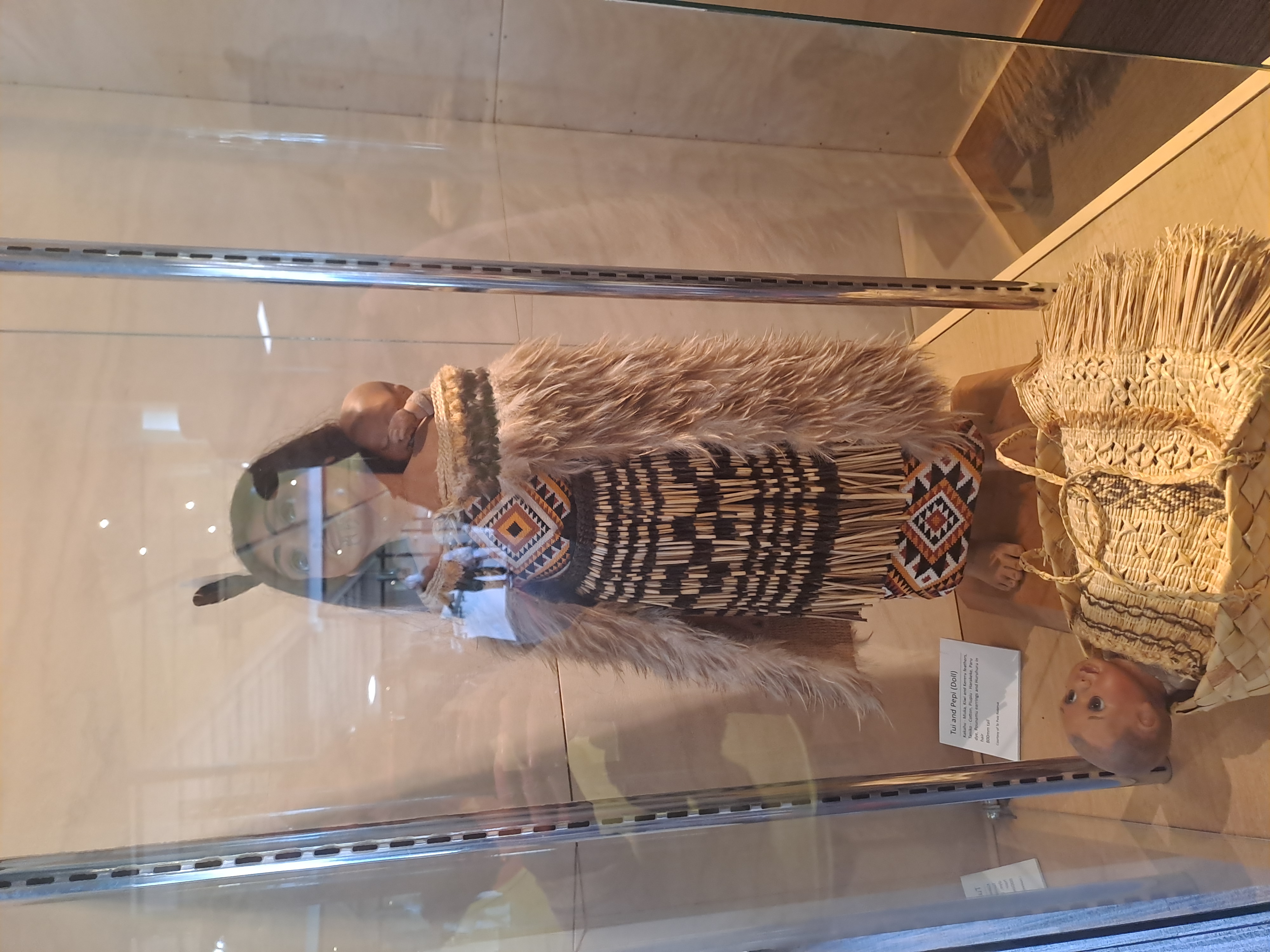
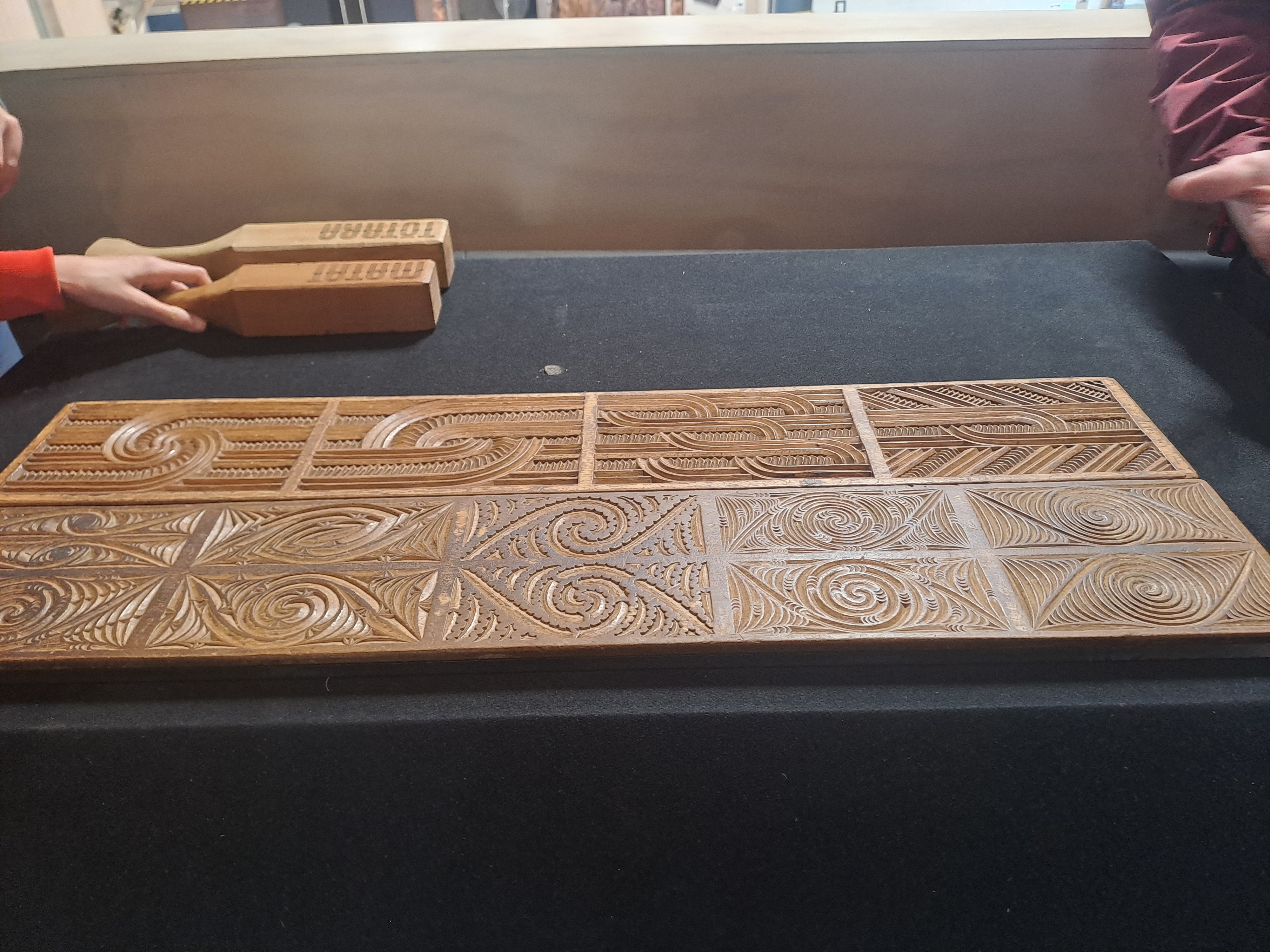
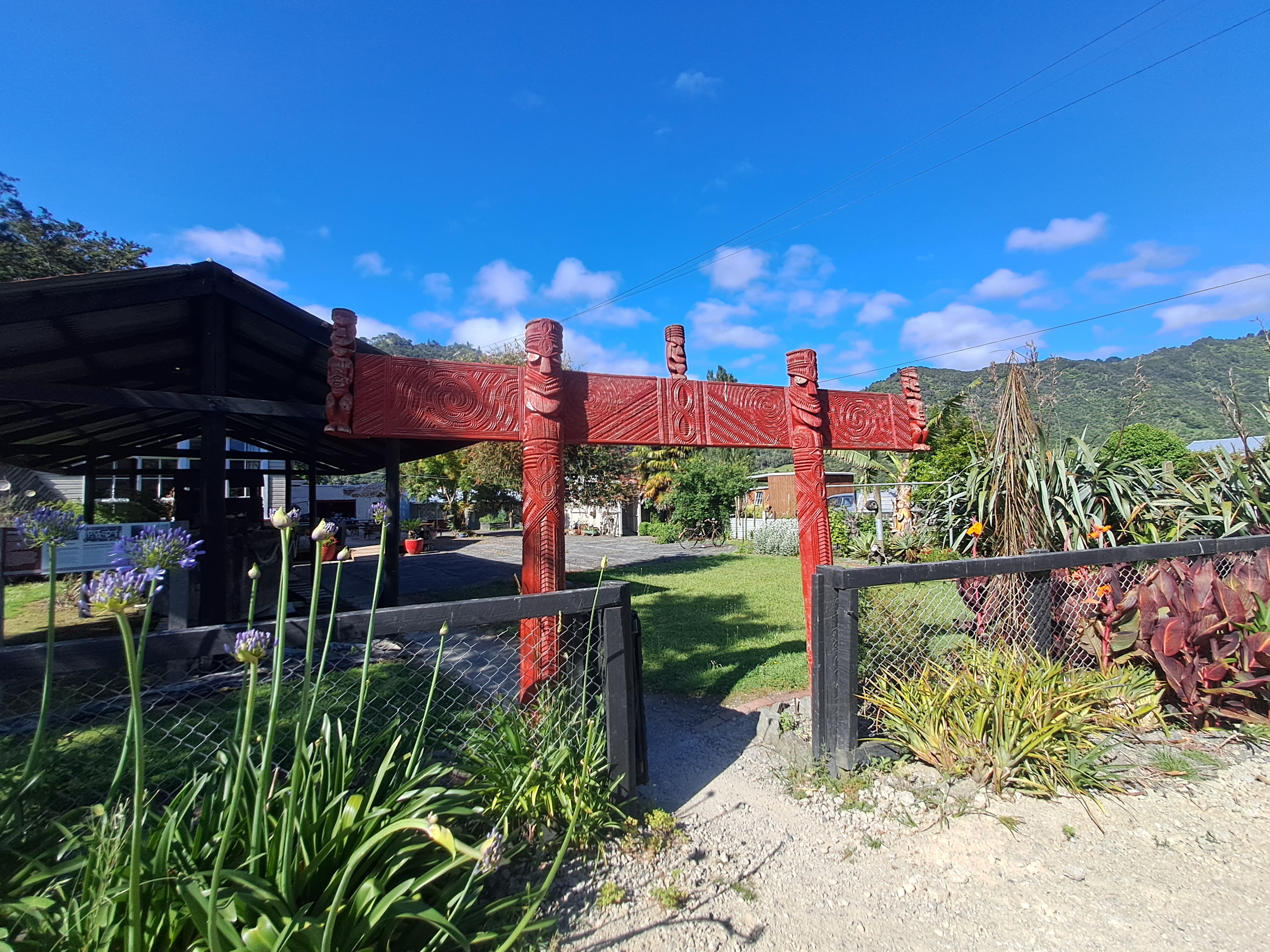
We were then treated to the Maori craft centre and saw examples of the carving, a meeting house and food storage house
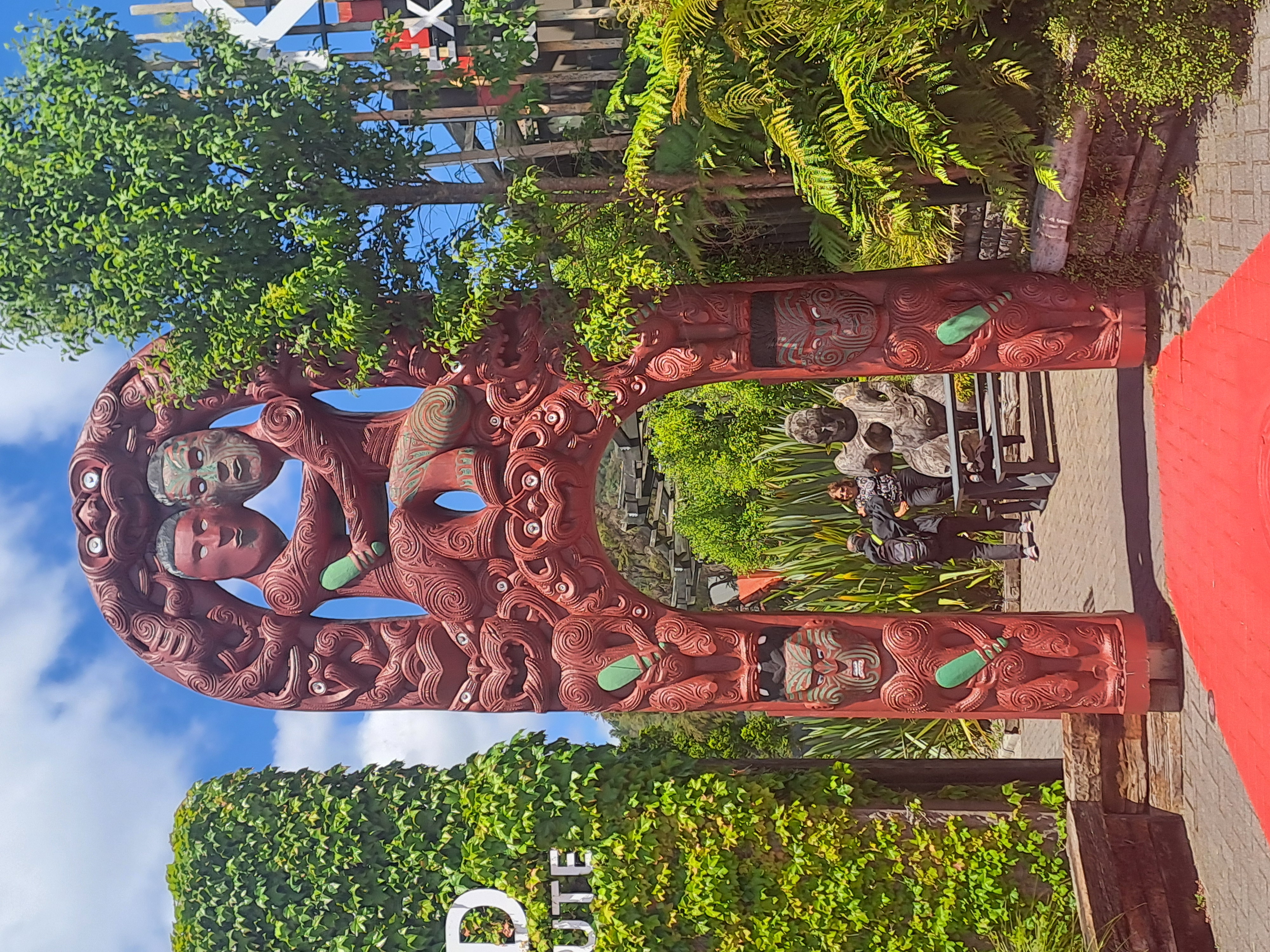

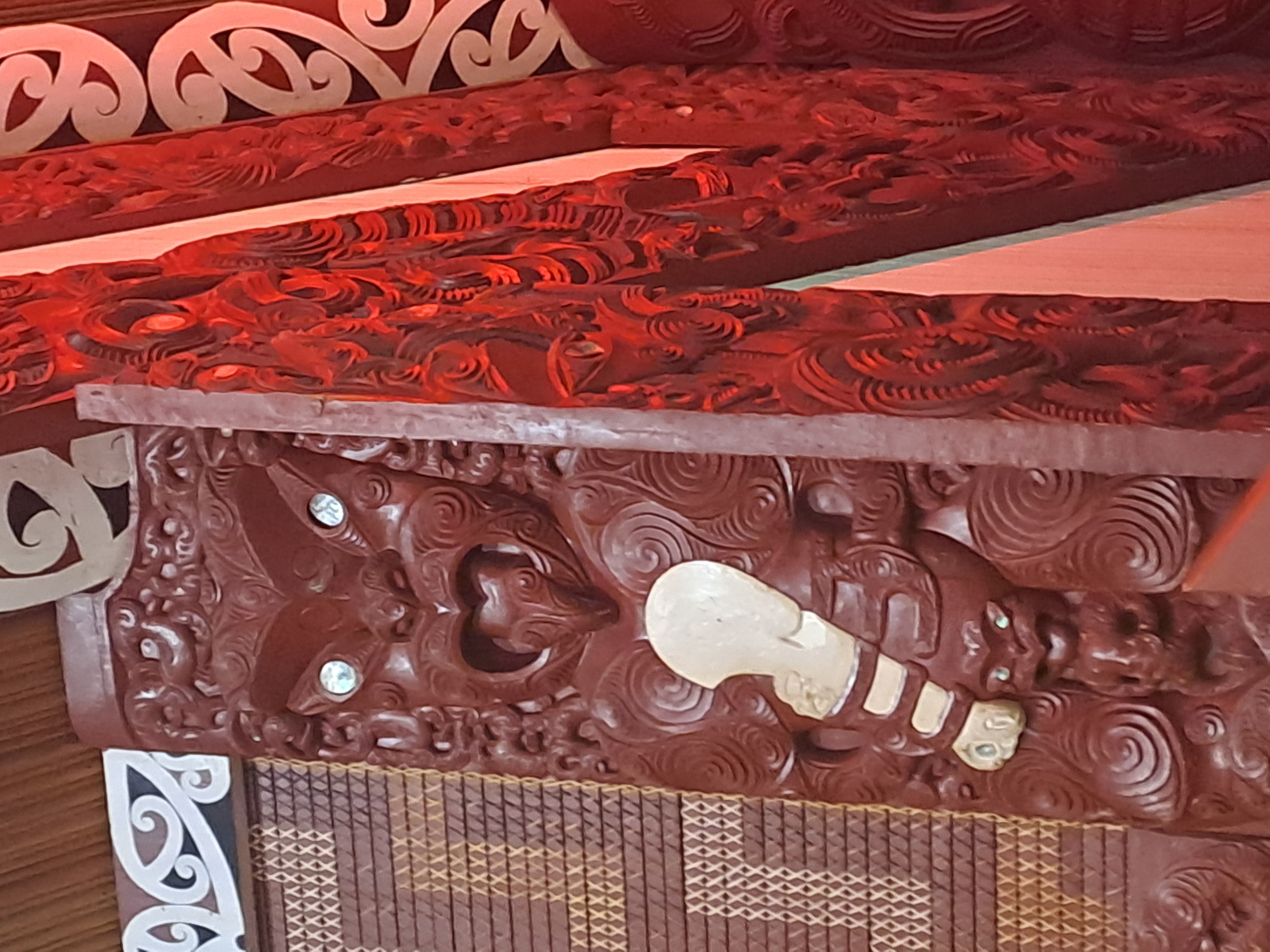


The students there are working learing the skills needed to keep their culture alive. There is only a small intake every year for wood carving, stone and bone carving, and weaving.
A person is considered Maori if they have Maori blood in them, however little. So the red headed guide we had was just as Maori as the rest.
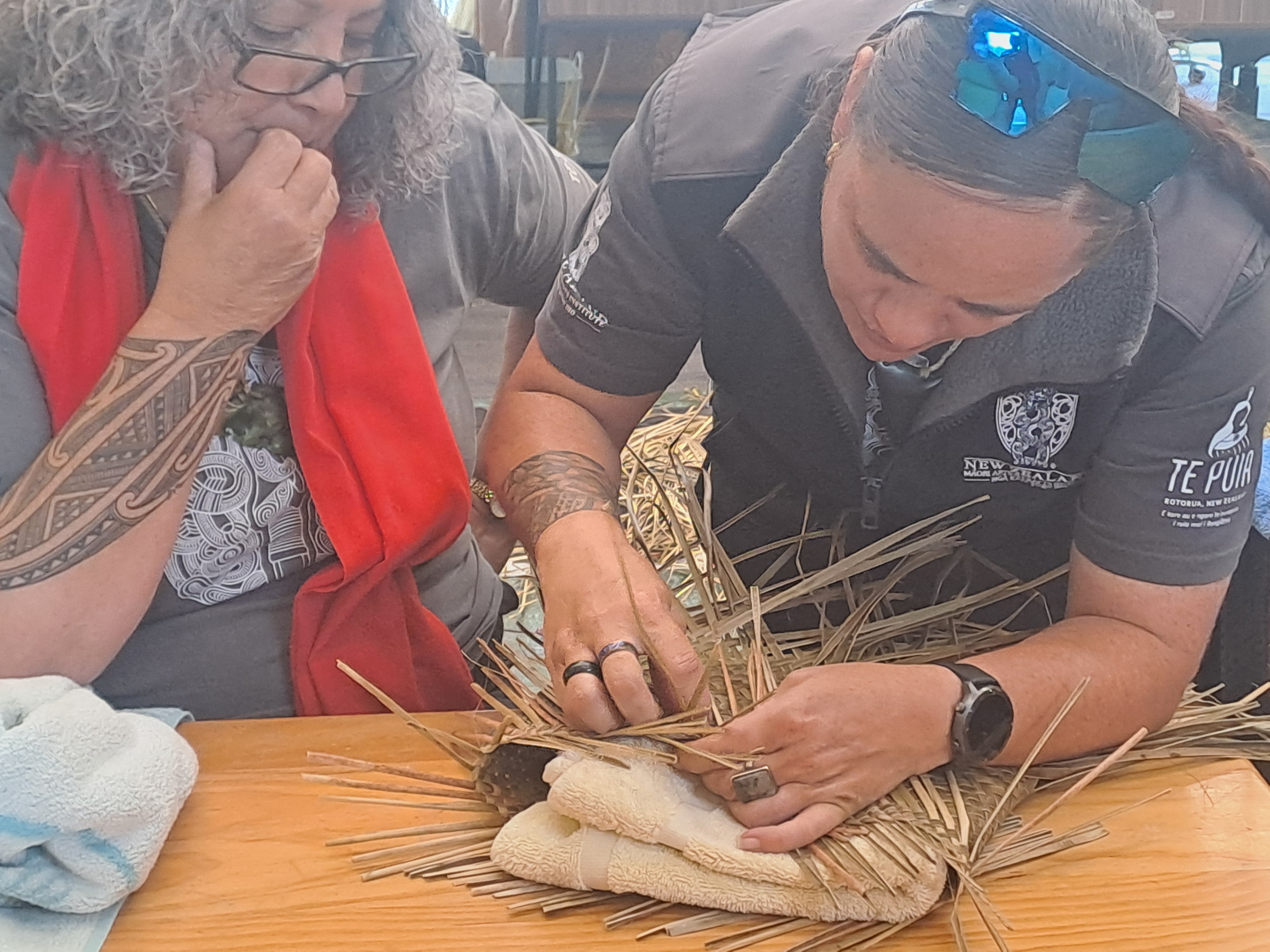
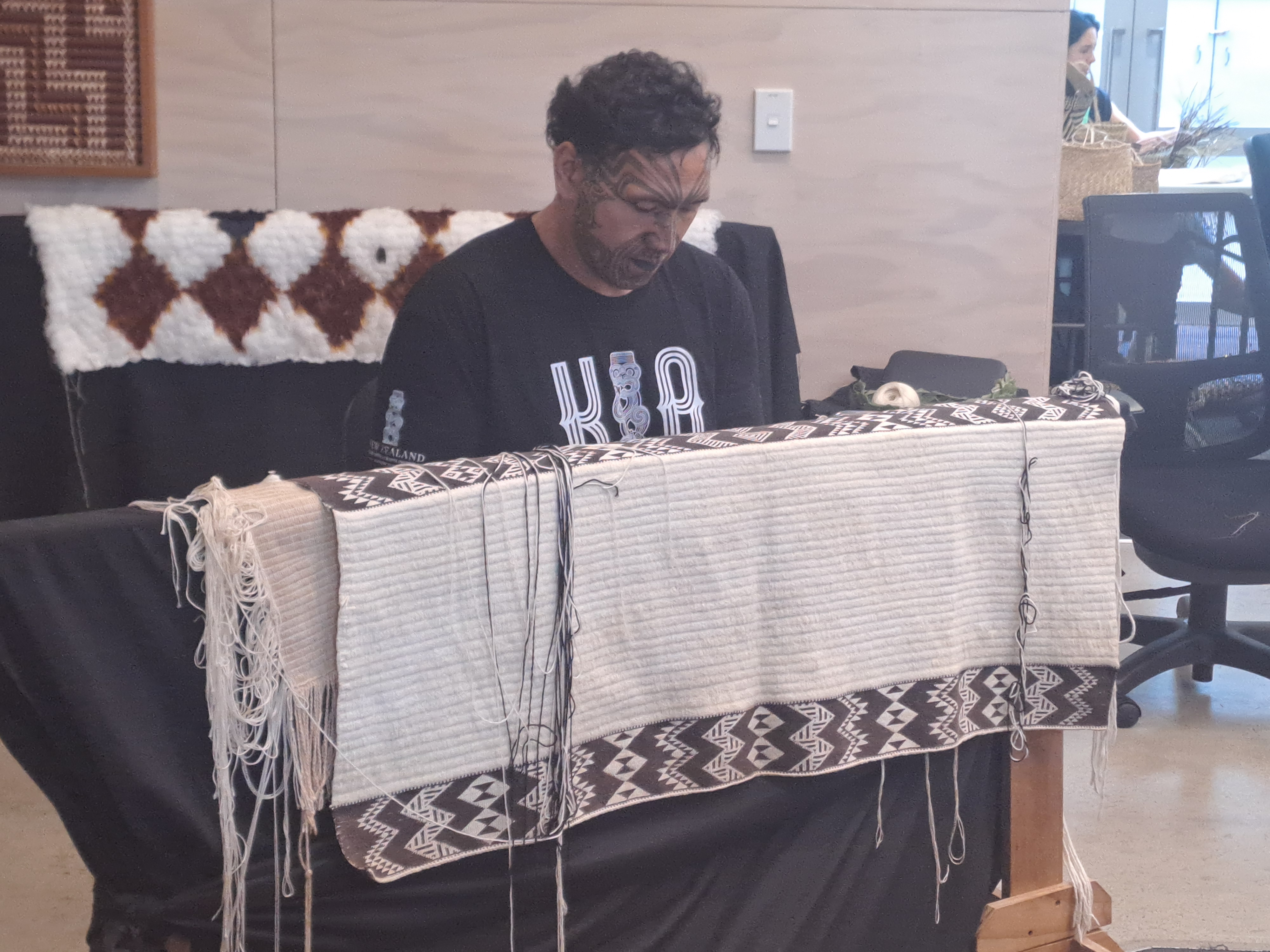
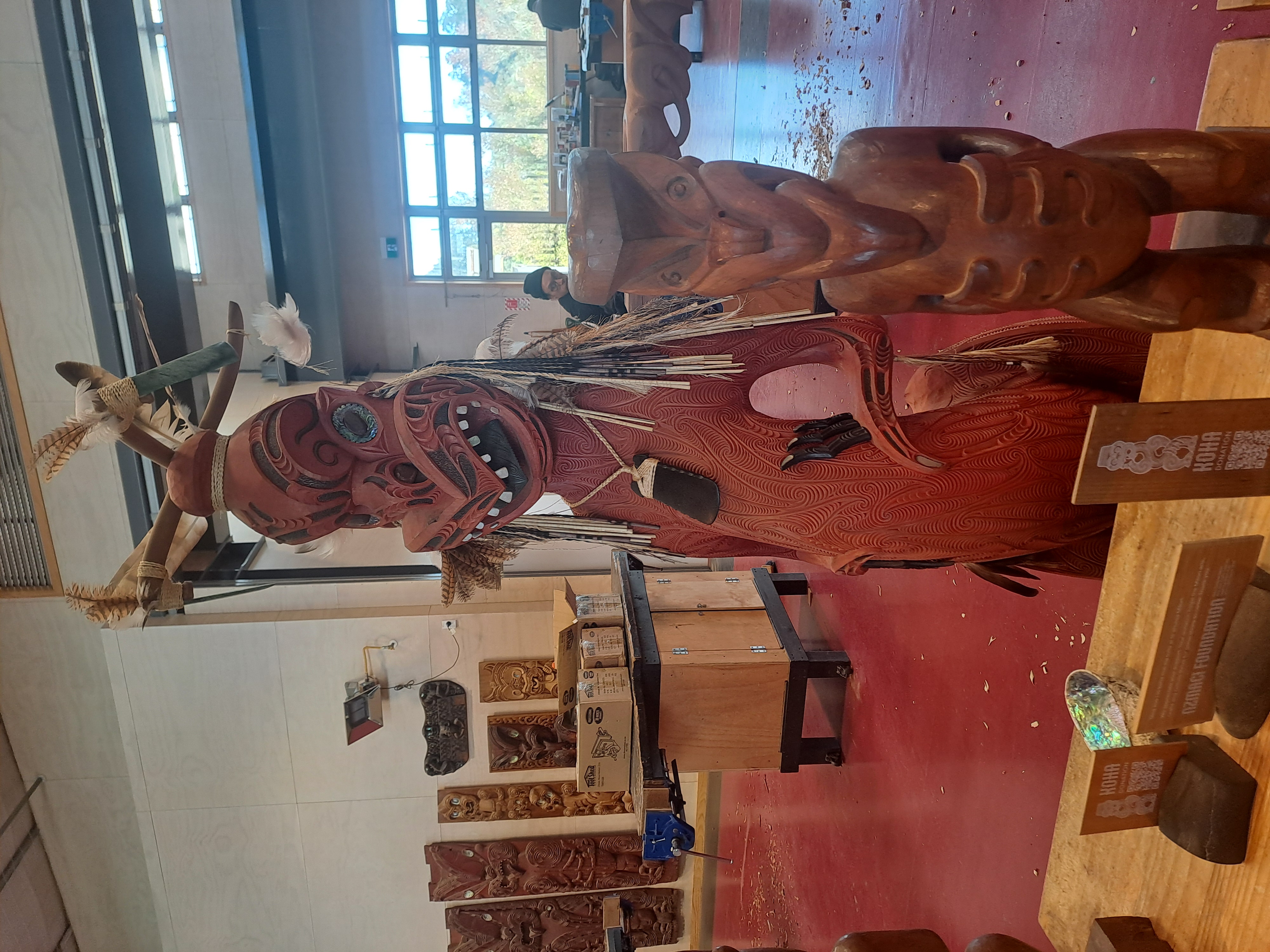
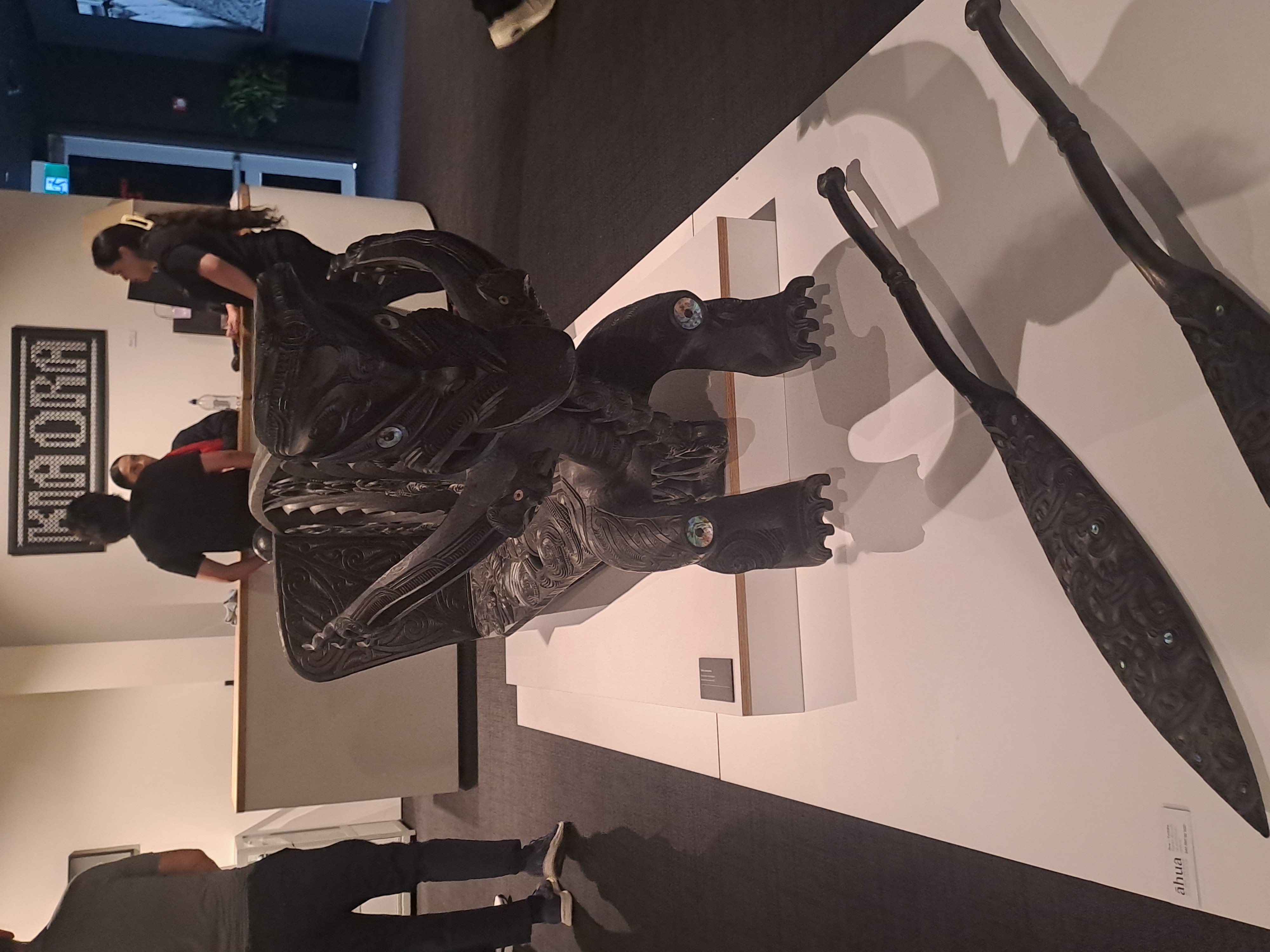
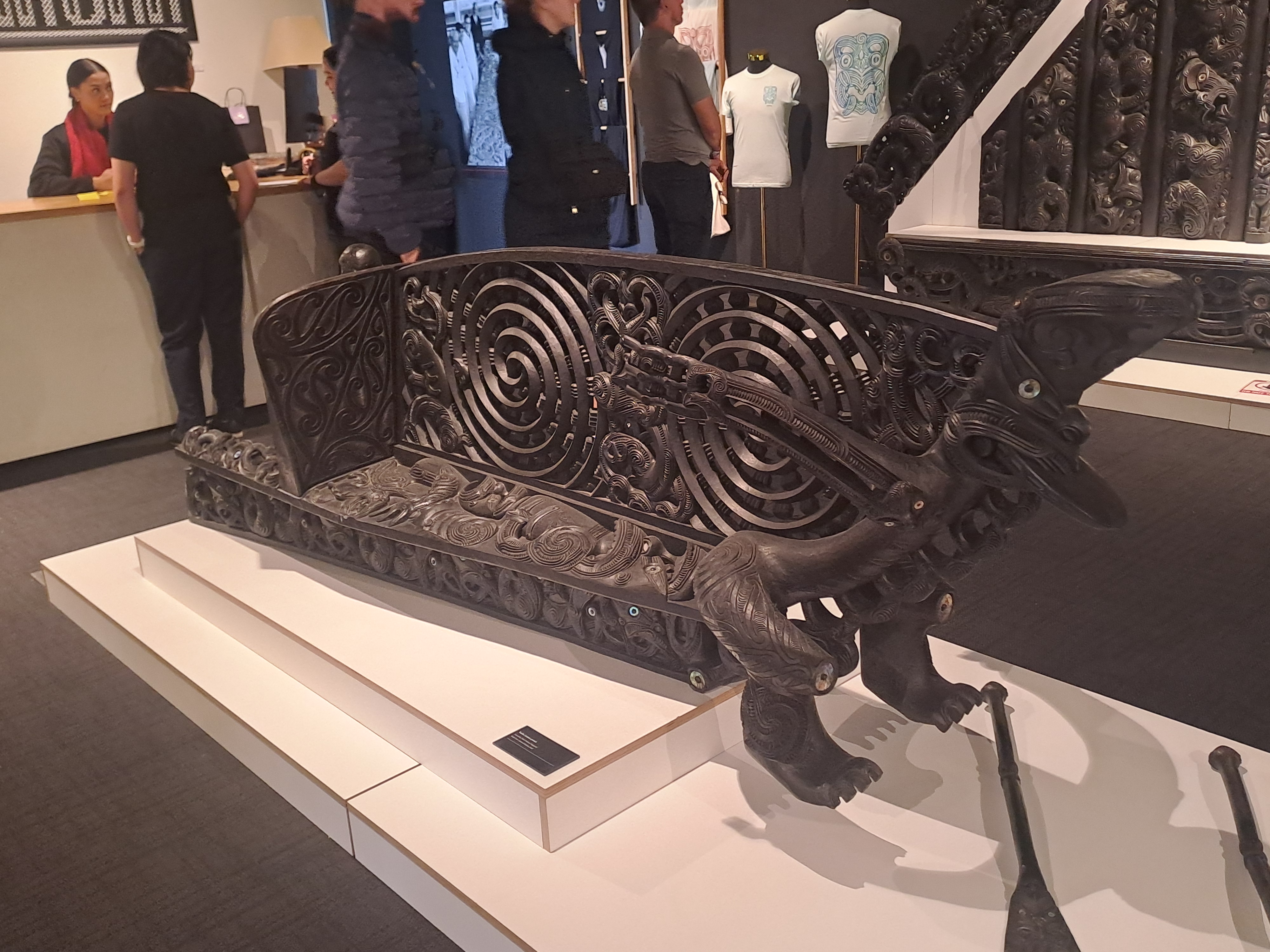
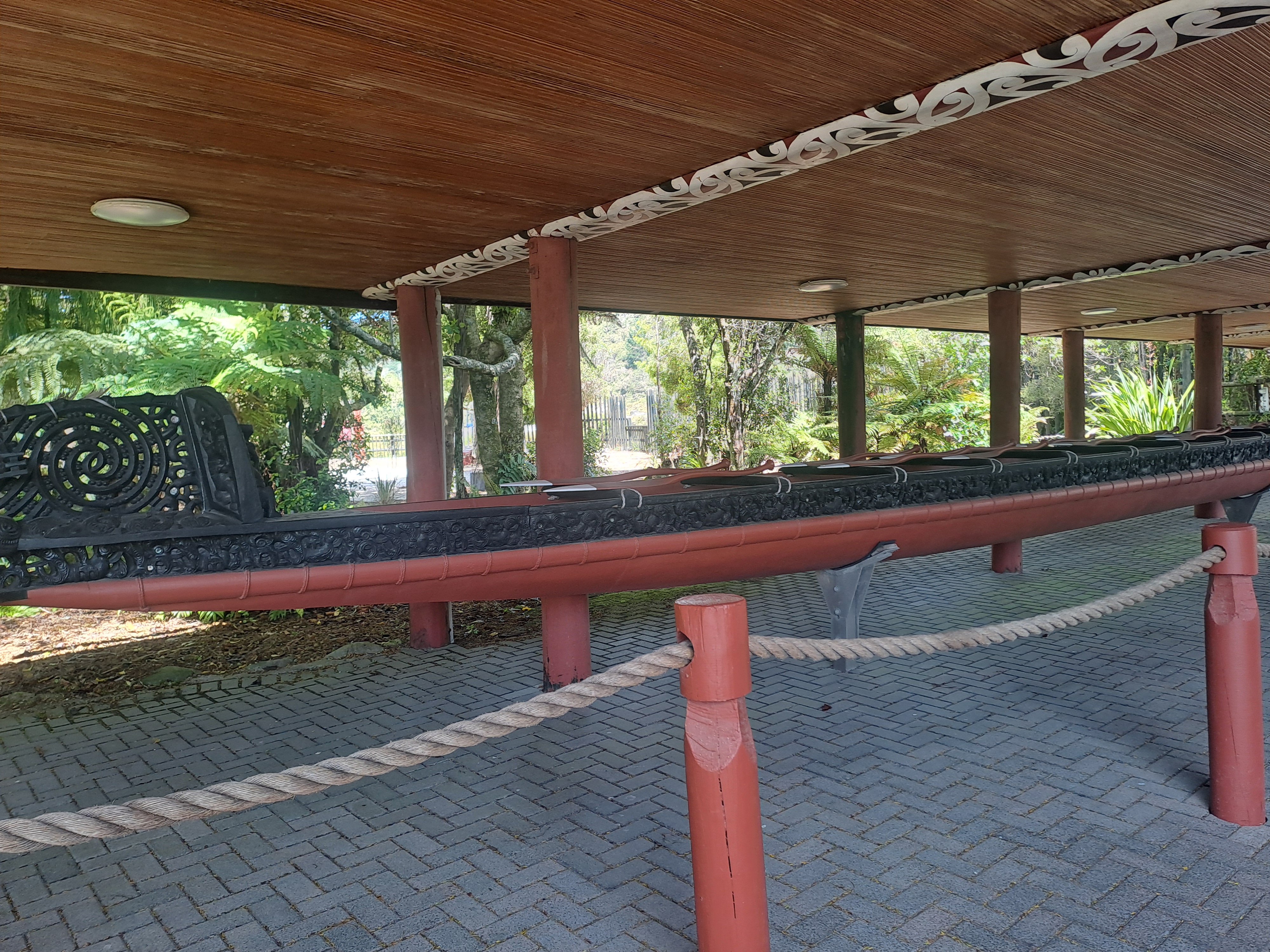
We saw examples of their boats. However the ones used to get to New Zealand would have have been joined together as catamaran.
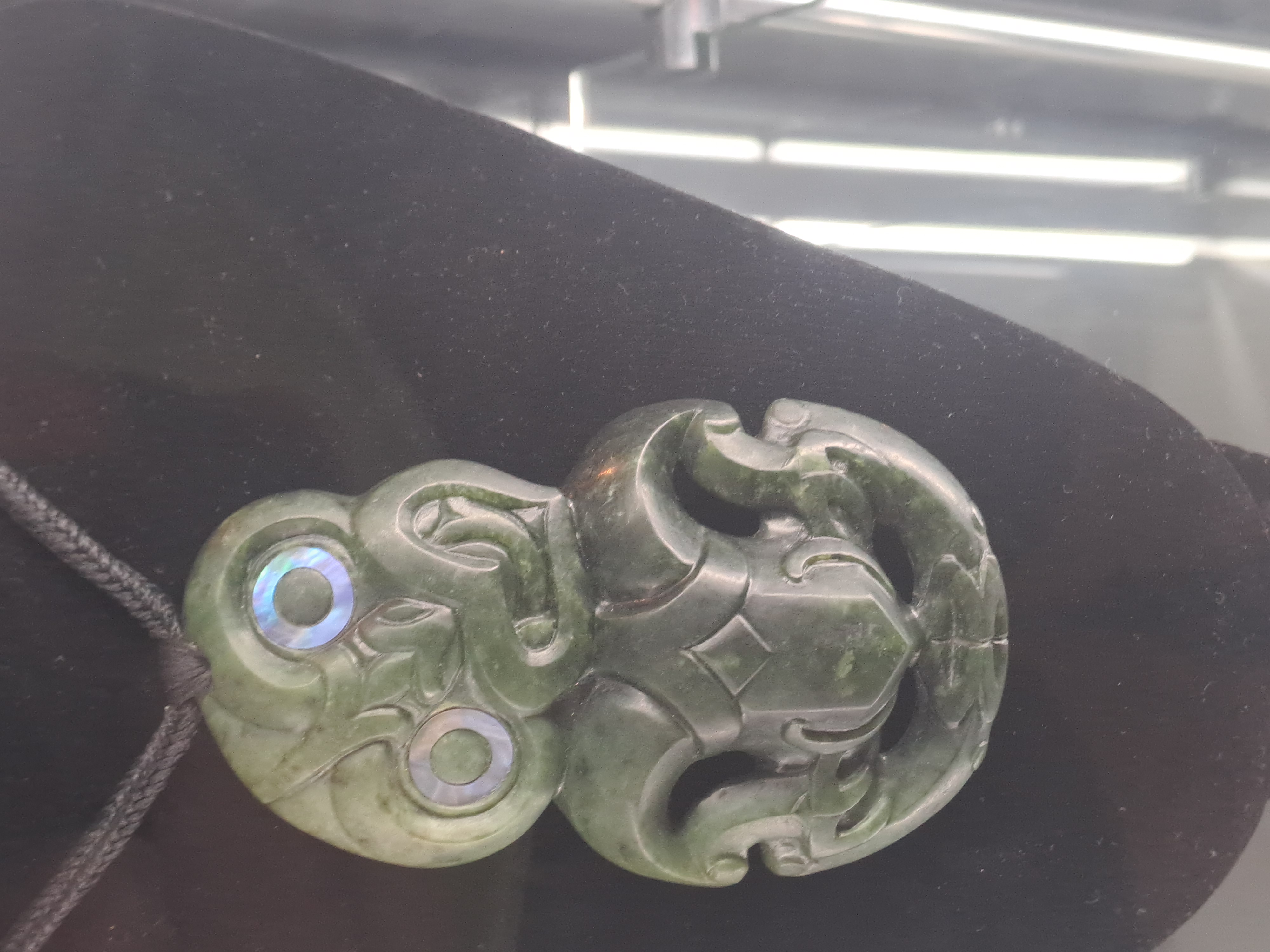


We went to a Kiwi house. No pictures they are kept in the dark and only there, as at many of the other wildlife sanctuarys, due to necessity. They are released when possible in a safe place. They are not sociable birds so are kept separately, apart from when mating. I was surprised at how small they were.
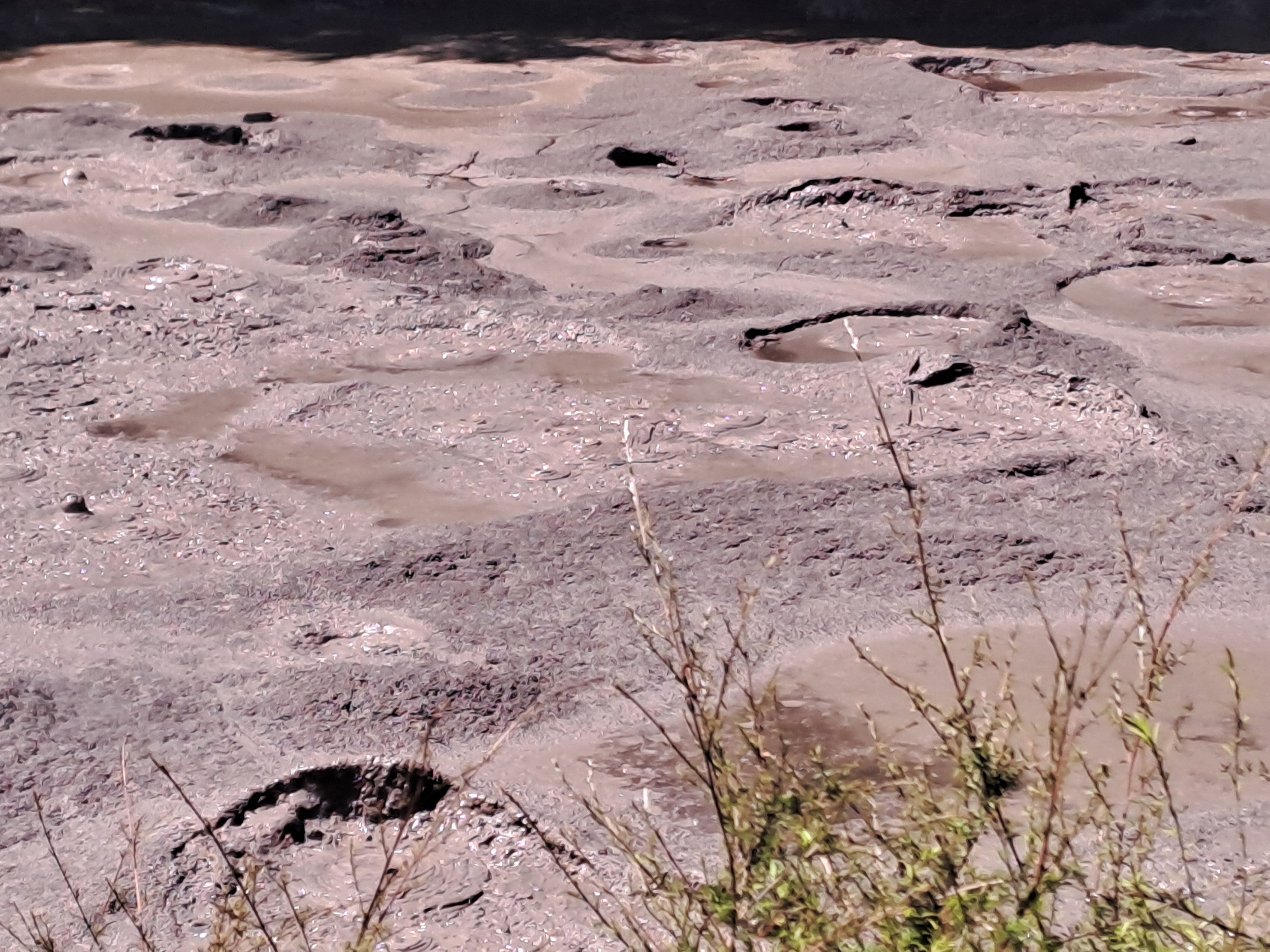
After this another tour of thermal wonders. The mud isn’t quite same in a picture as a video but it was bubbling away.

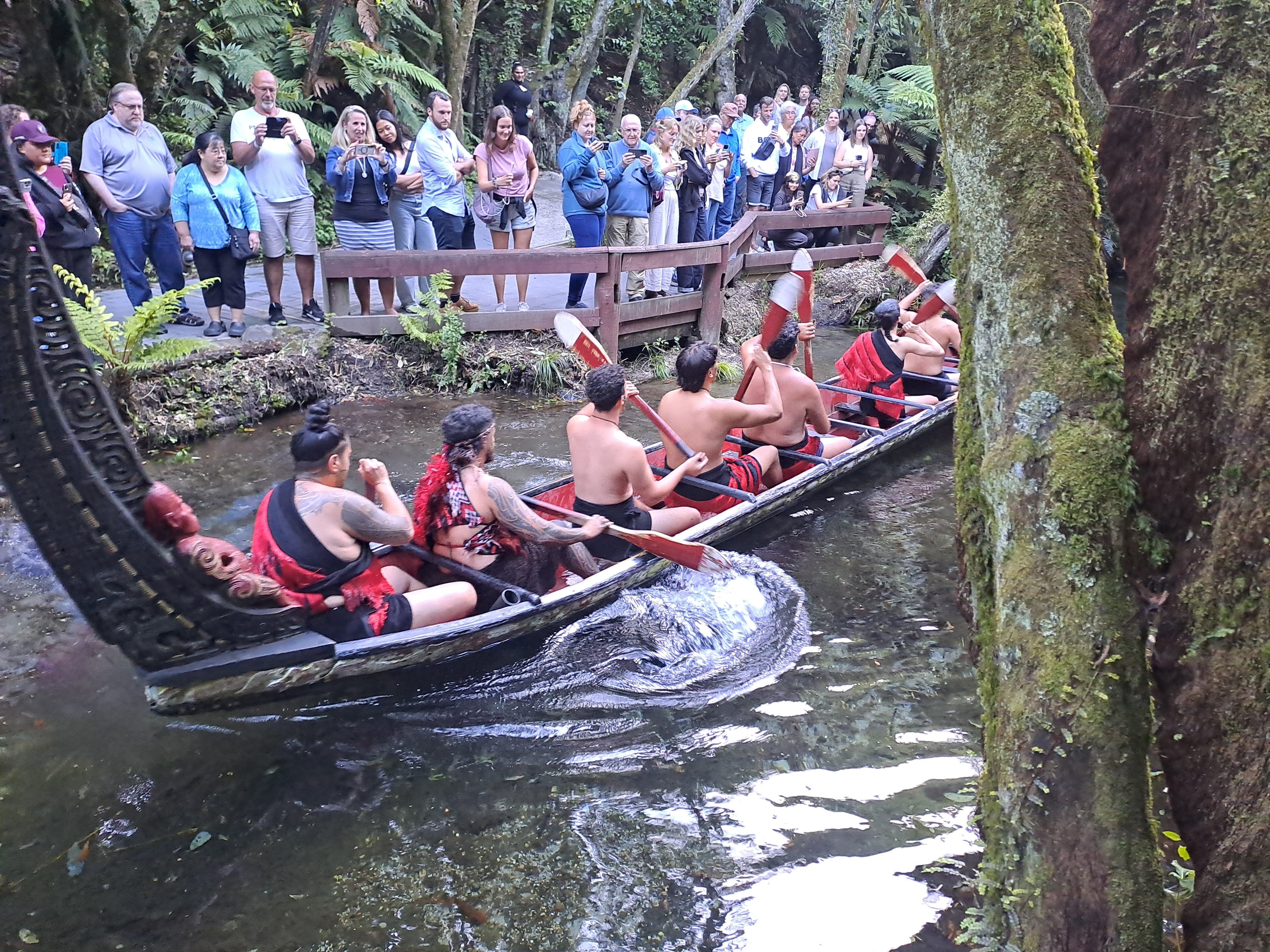
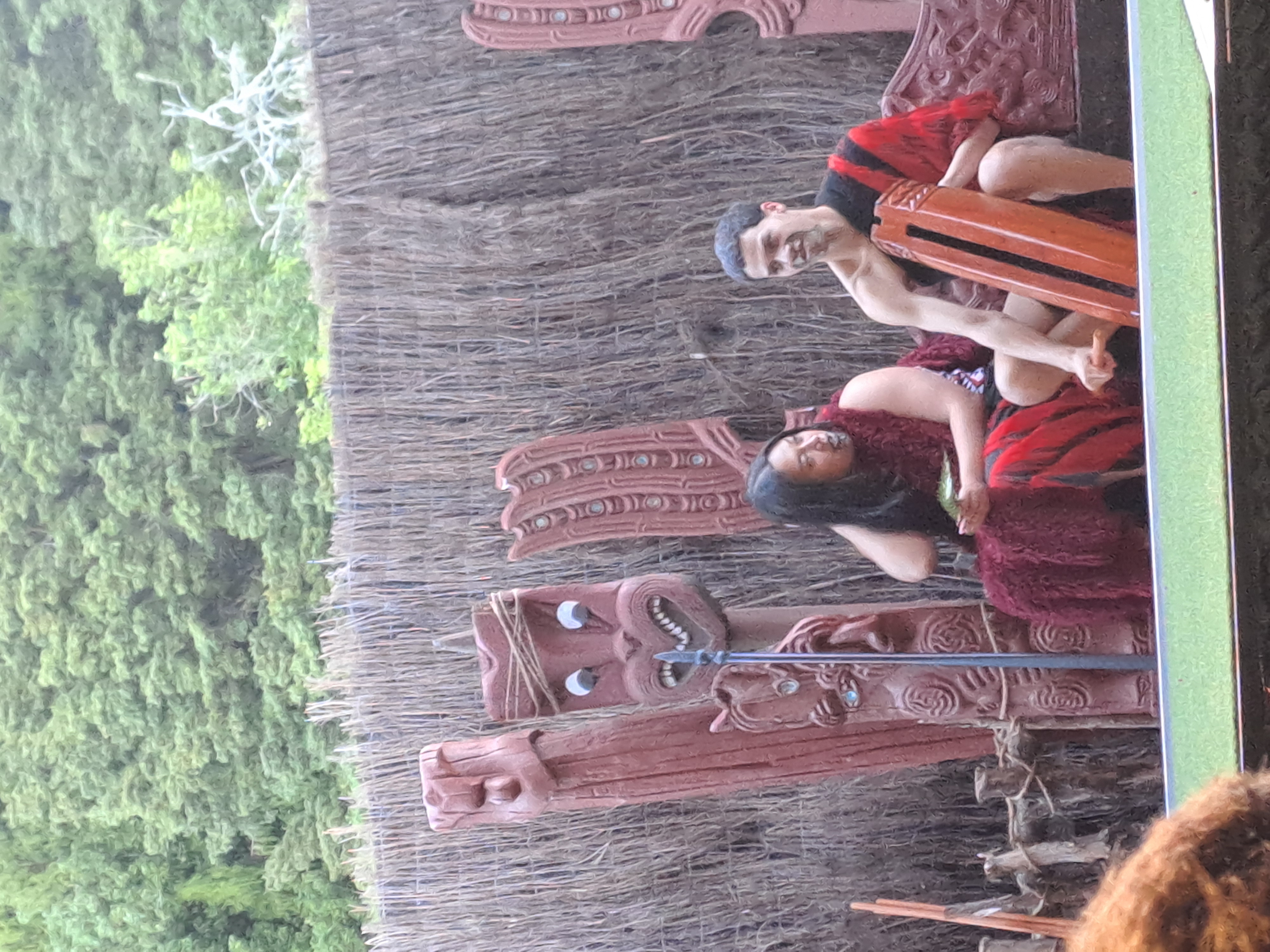
We finished off our stay at Rotorua with a Moari cultural evening. It started with explanations of Moari culture and then a walk through the rain forest down to the river to see a canoe and a haka.
We then went to have a look at the food which had been cooking in a pit on the ground, before seeing some Moari singing and war like dancing.

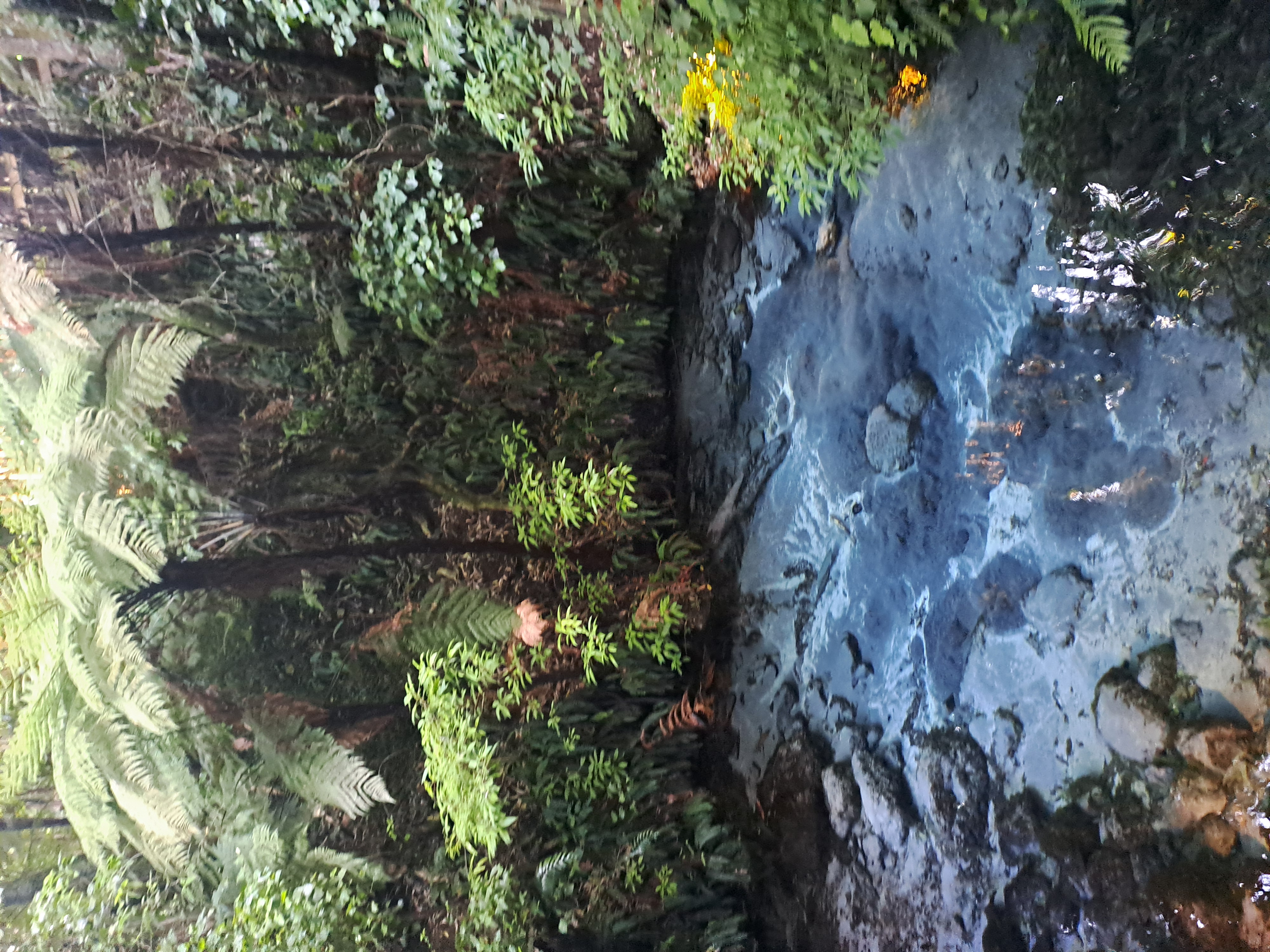
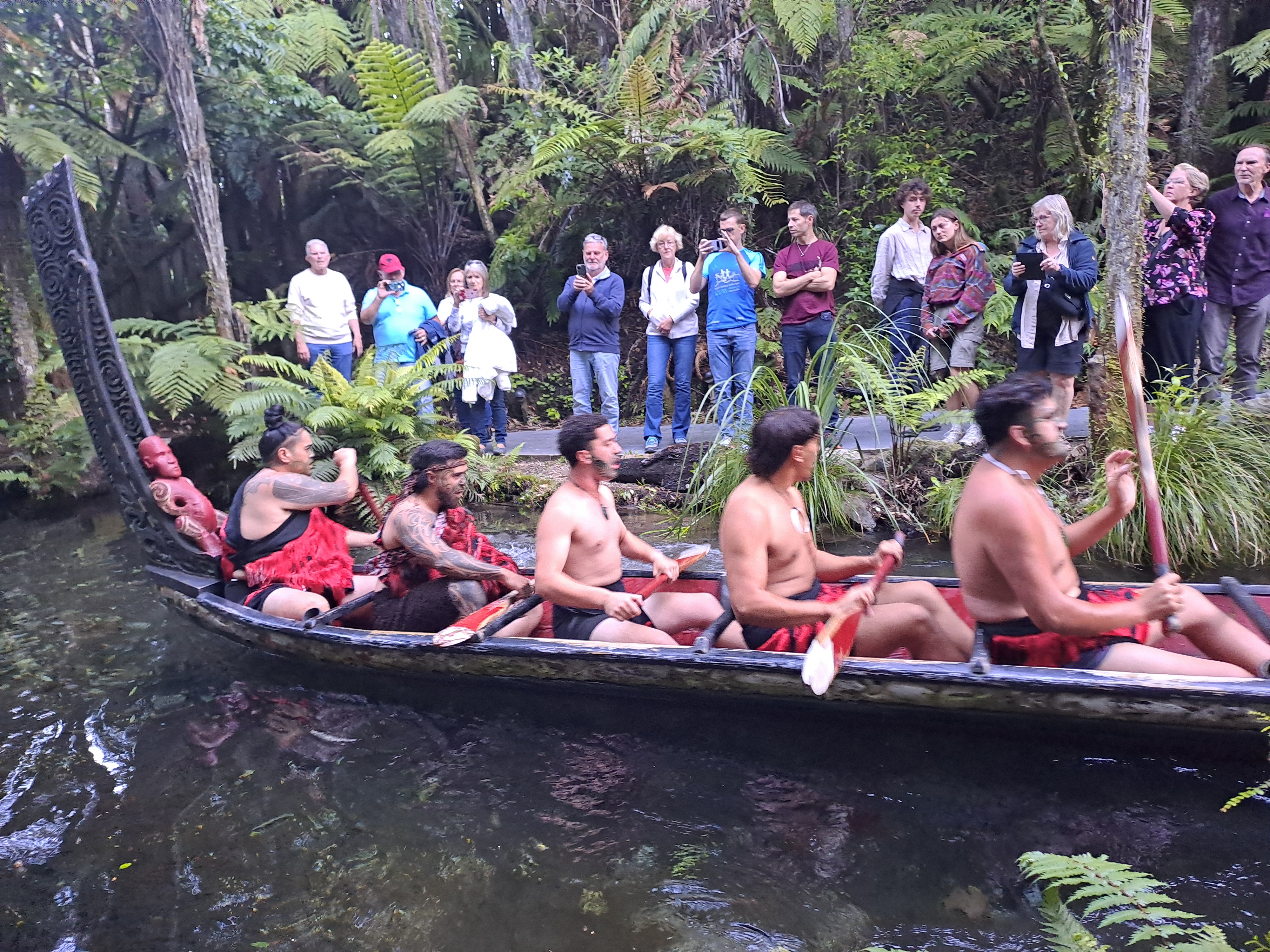
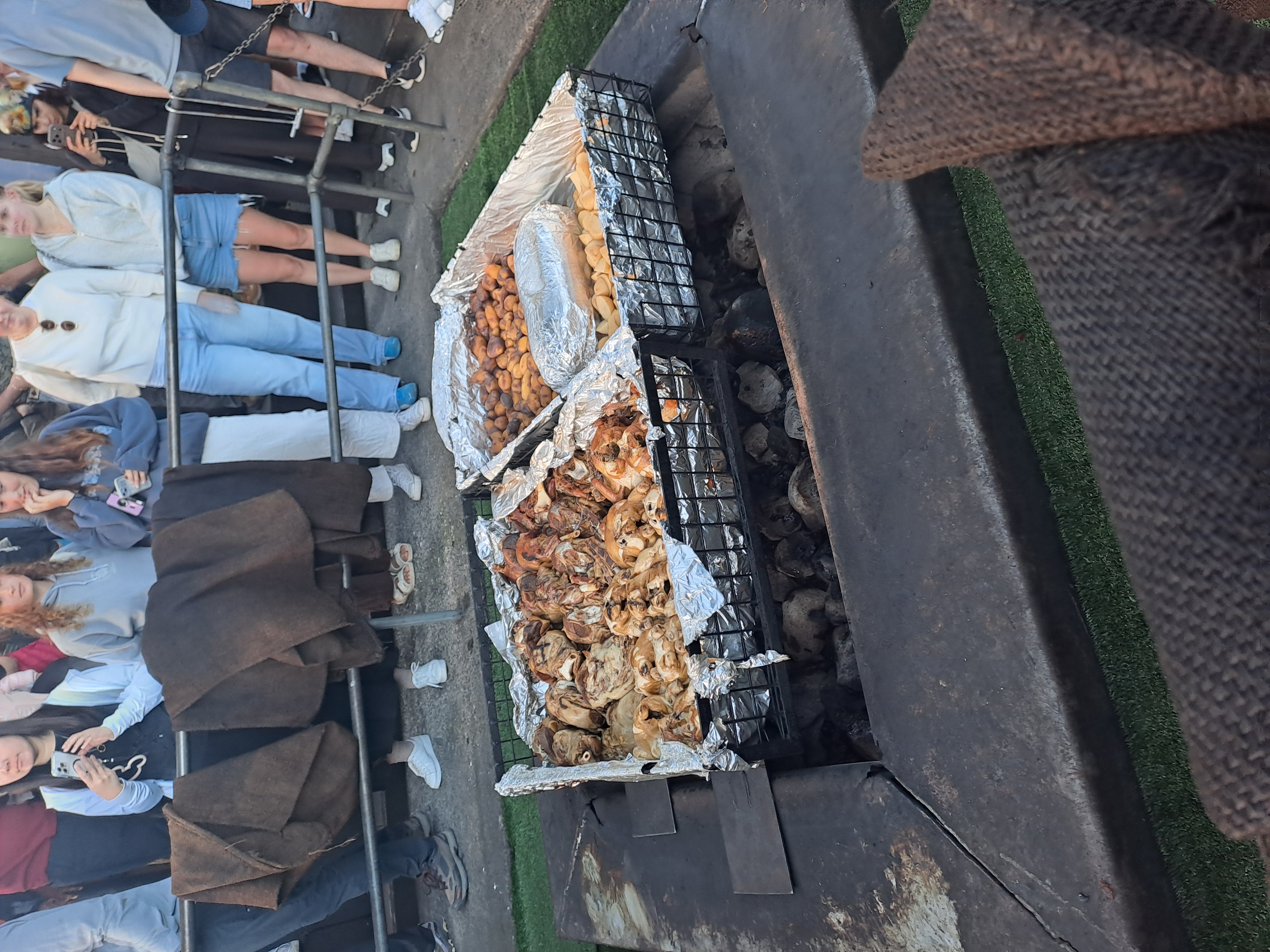
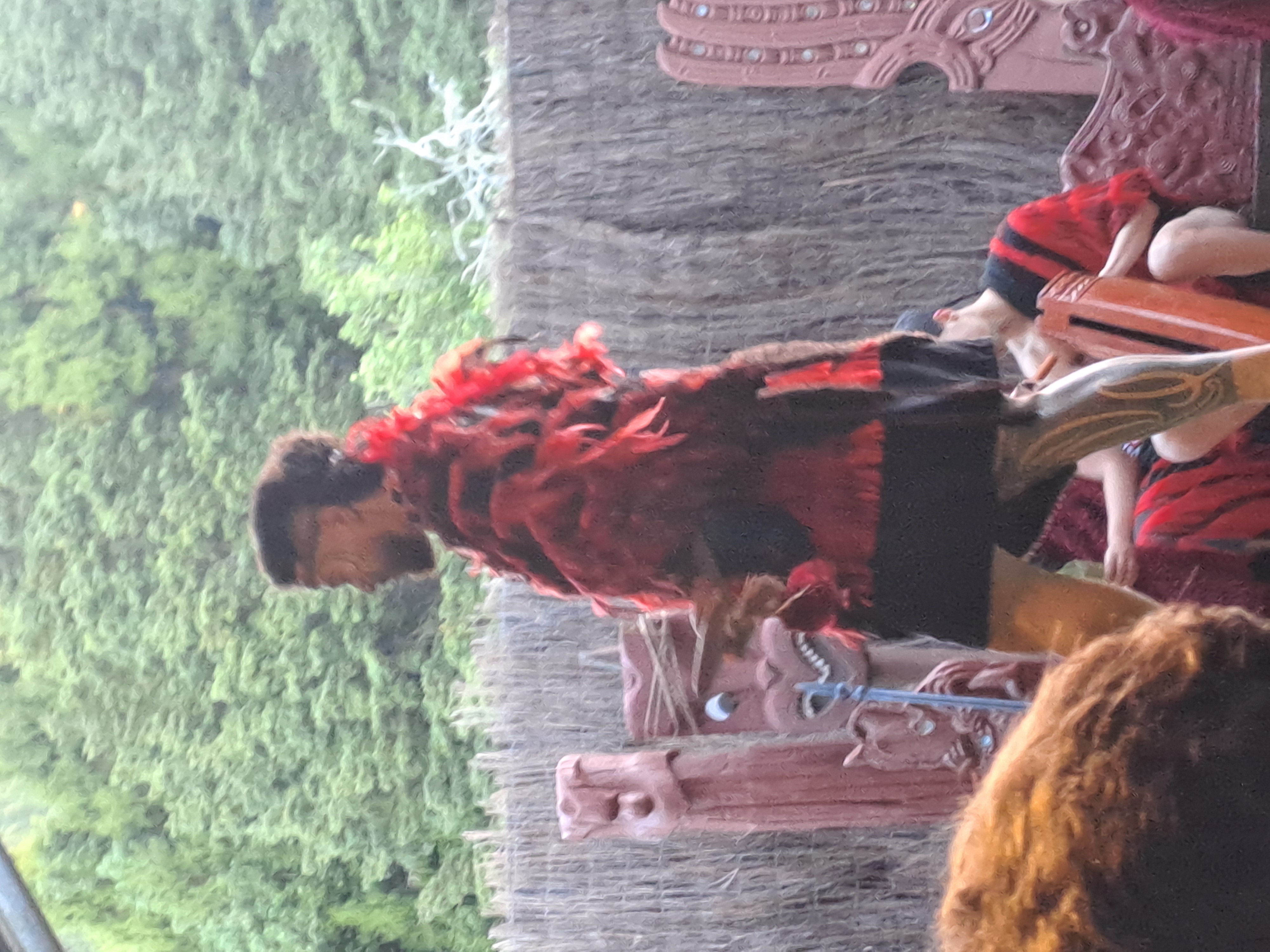
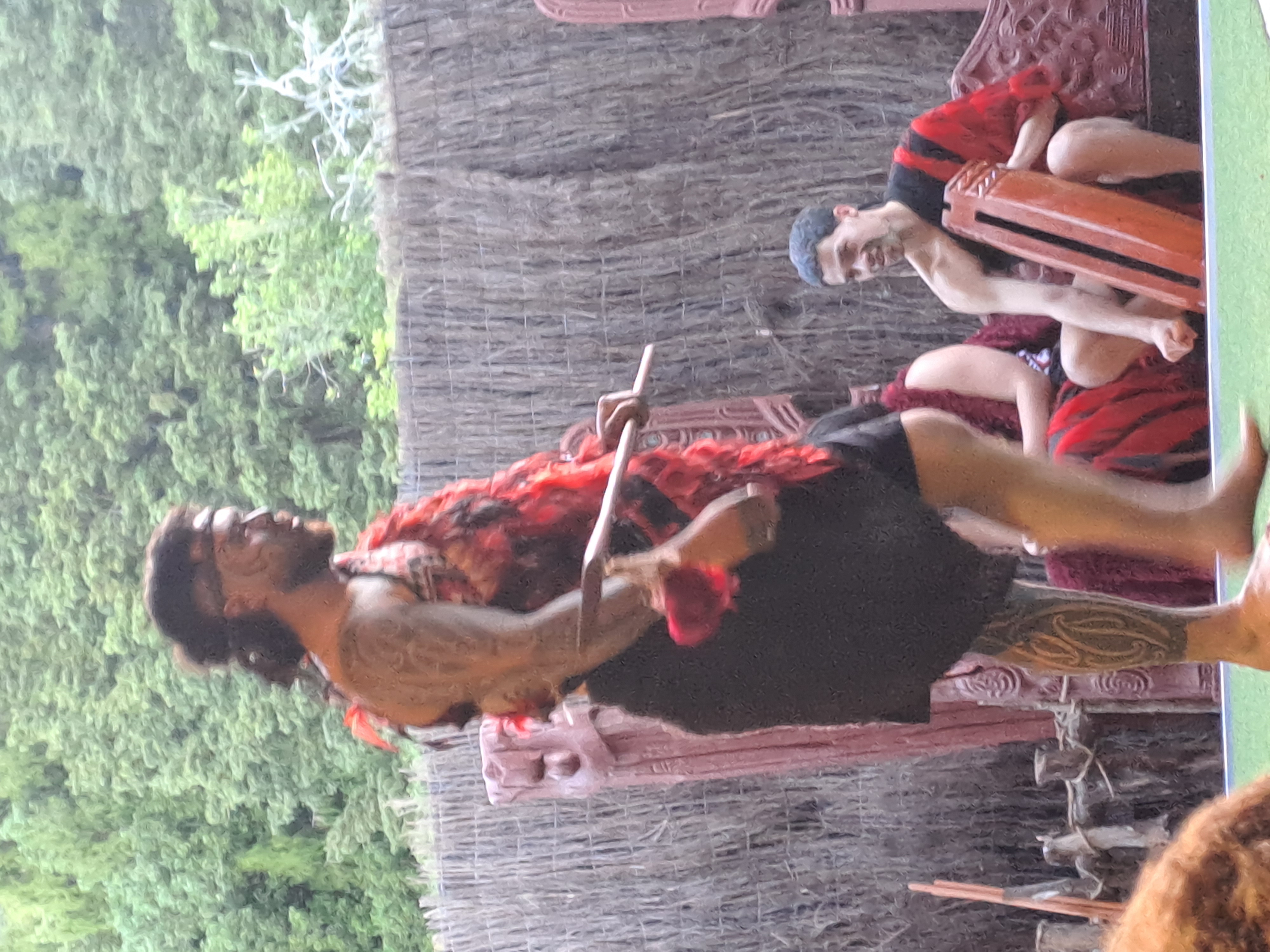
After our meal we went back down to the river and we were able to see glow worms in the bush along the path. Sadly they don’t look like much in a photo.
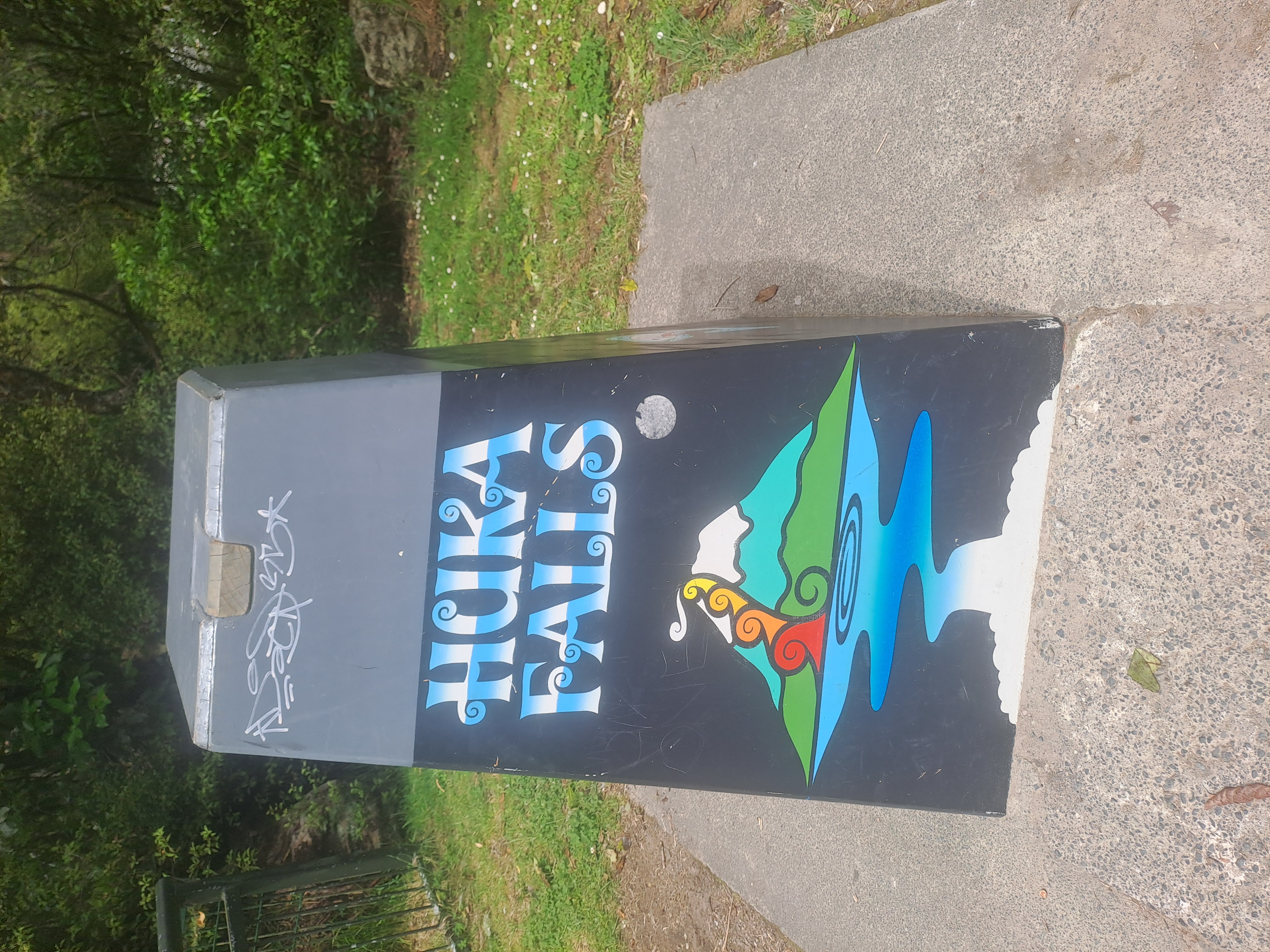
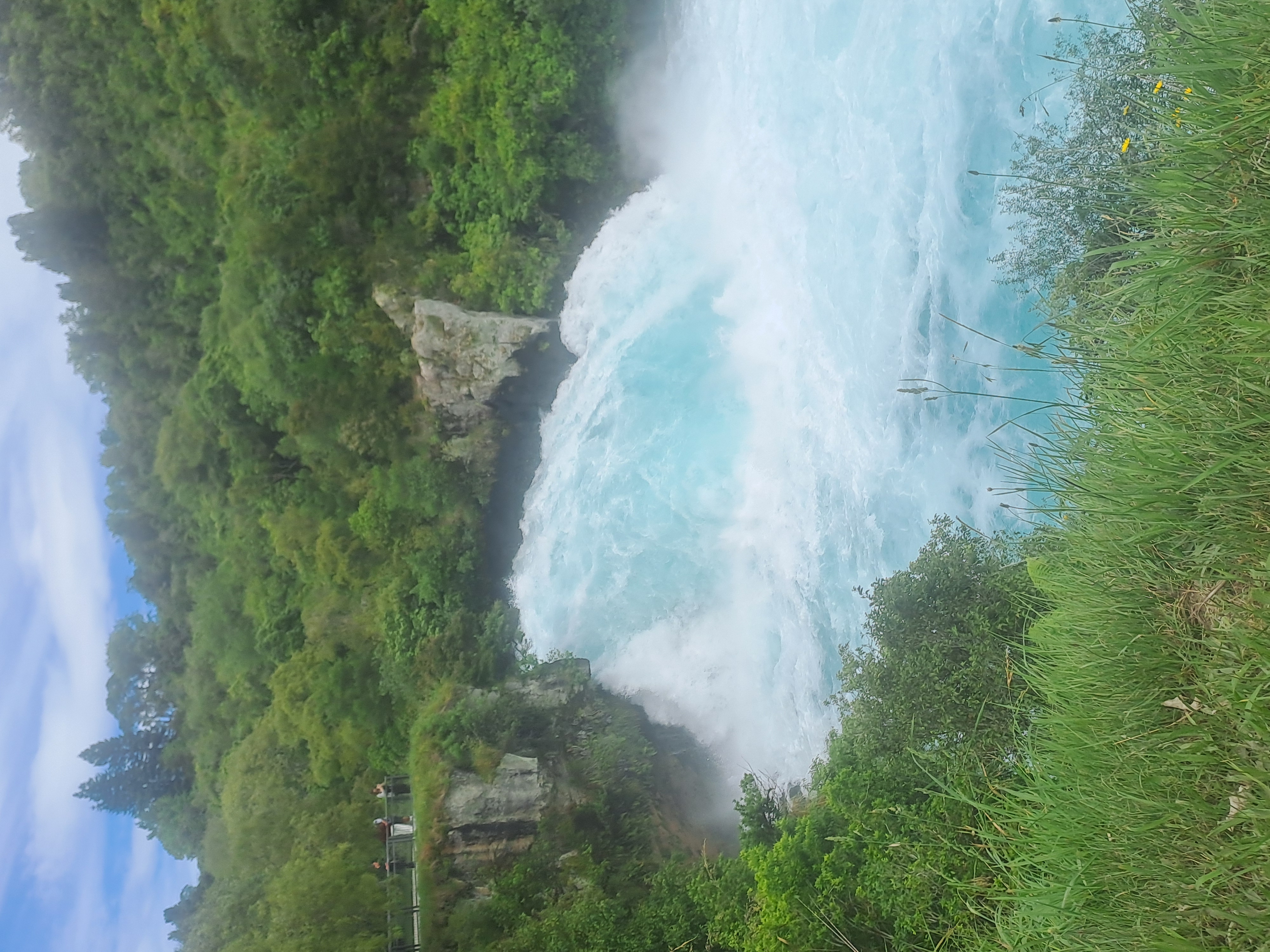
Our next visit was to Tongariro National Park and on the way we stopped at Huka Falls.A long stretch of fast moving river and falls. A beautiful blue which is apparently due to the water’s low temperature. We then drove along the banks of Lake Taupo.


The next day was the day of my big walk. It didn’t get off to too good a start when at 4.45an there seemed to be no shuttle or passengers. A check of the website indicated that the time was now 5.30 for booking, completely at odds with my stern email saying 4.45 or else. I eventually started to hear movement and found some fellow campers up ready for the shuttle which was apparently from the main road not the lodge at the campsite.
The shuttle came and my name wasn’t on the list. The lovely driver let me on however, and said she’d sort it out. It transpired that all the bookings had been switched to a new provider and they’d got me on the wrong date, so I didn’t get the email with the new arrangements in time.
The Tongariro Alpine Crossing is a 22.7 km walk going up 765m and down around 1 100m. There is a lot of information on the website along with lists of what you need to take with you due to the likelihood of changing weather. I had carefully packed my bag, heeding the warning that it would be checked and I worried about not being allowed to go. It turned out no checks and everyone else had smaller bags.
Our driver told us she’d done the walk in 4.5 hours and we should all be able to. A bit of a shock as I was fully expecting to take at least 8 hours. She looked about my age too!
It seemed everyone else had packed more what I would normally pack and I had an extra load that I didn’t need. However, I reasoned carrying it must be good for me.
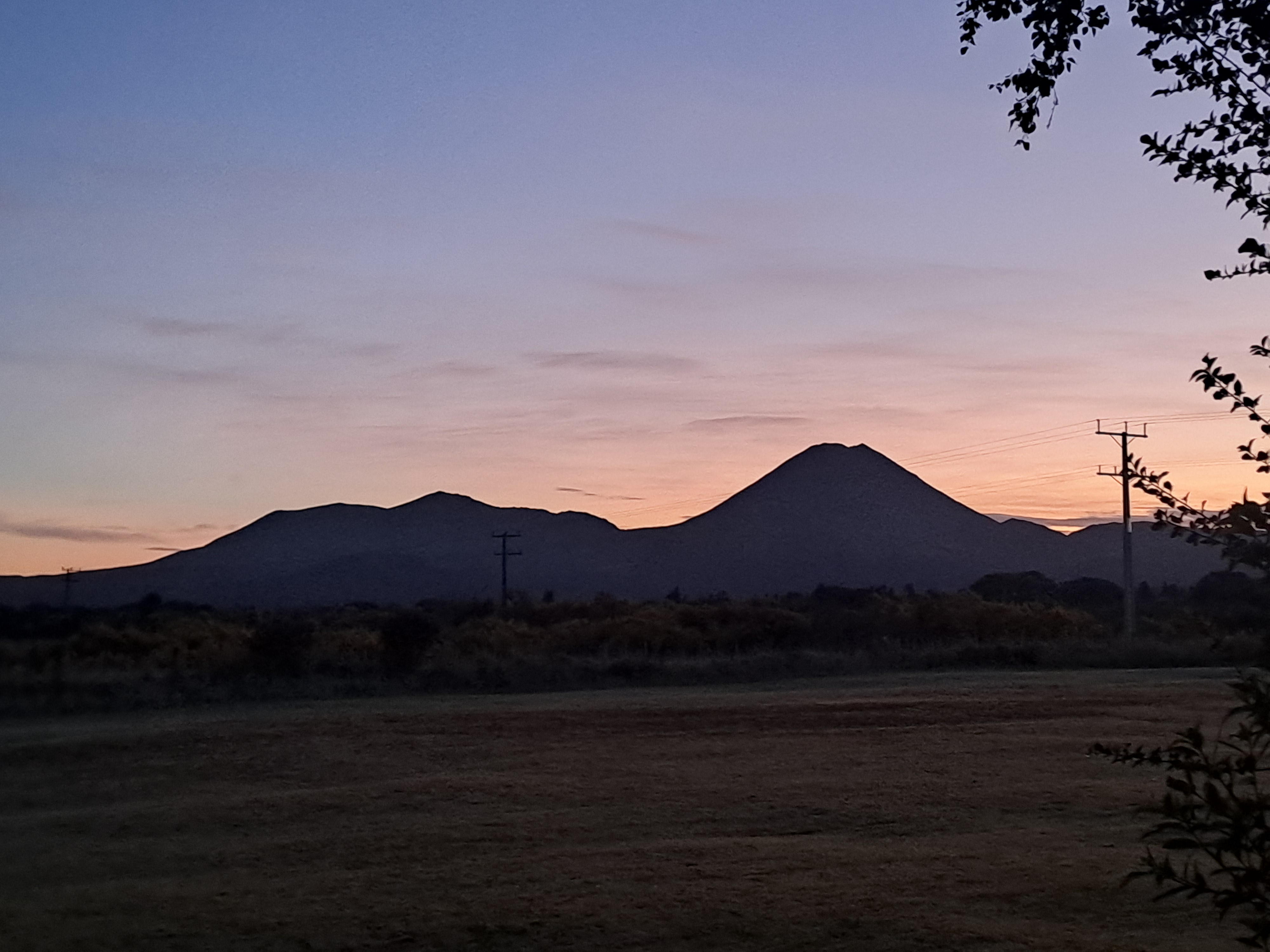
It was a glorious sunrise, and walking was a pleasure. Much of the shuttle ride and the first kilometres of the walk was black from a bush fire a month previously, but after that it was beautiful.
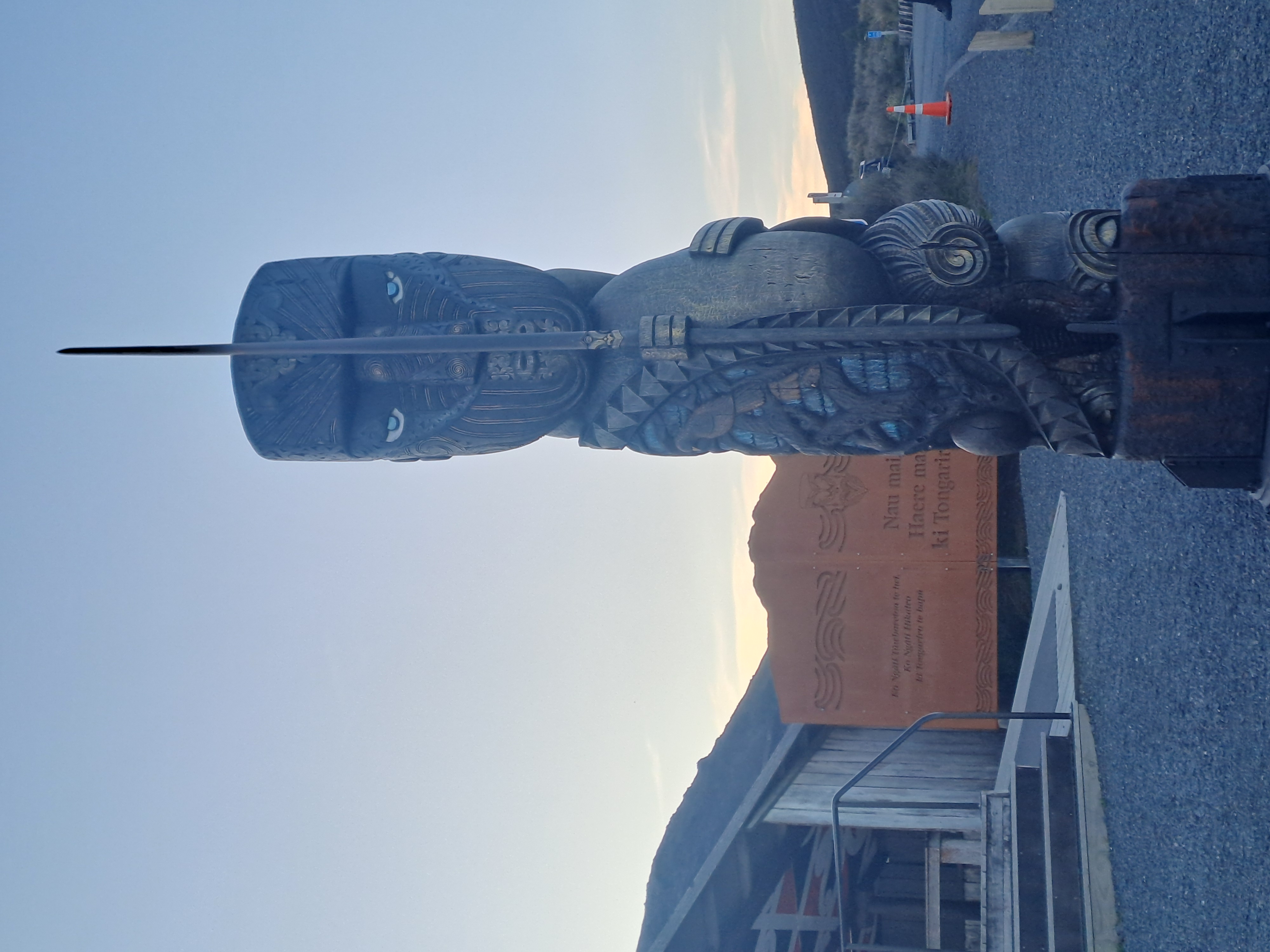
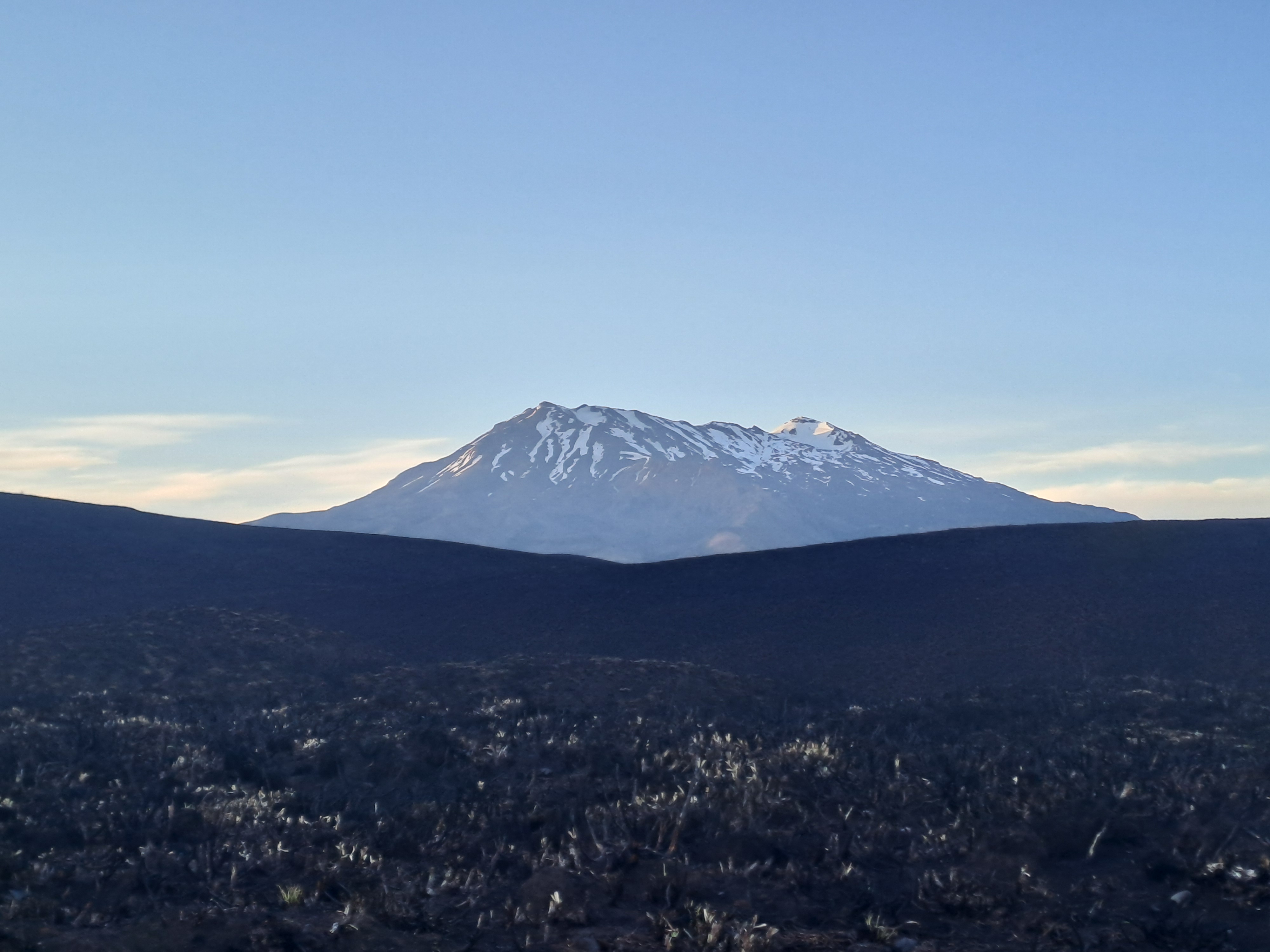

The first section was little streams and lots of small alpine plants, the was hardly anyone there, just our shuttle and I was behind them after talking to the bus driver.
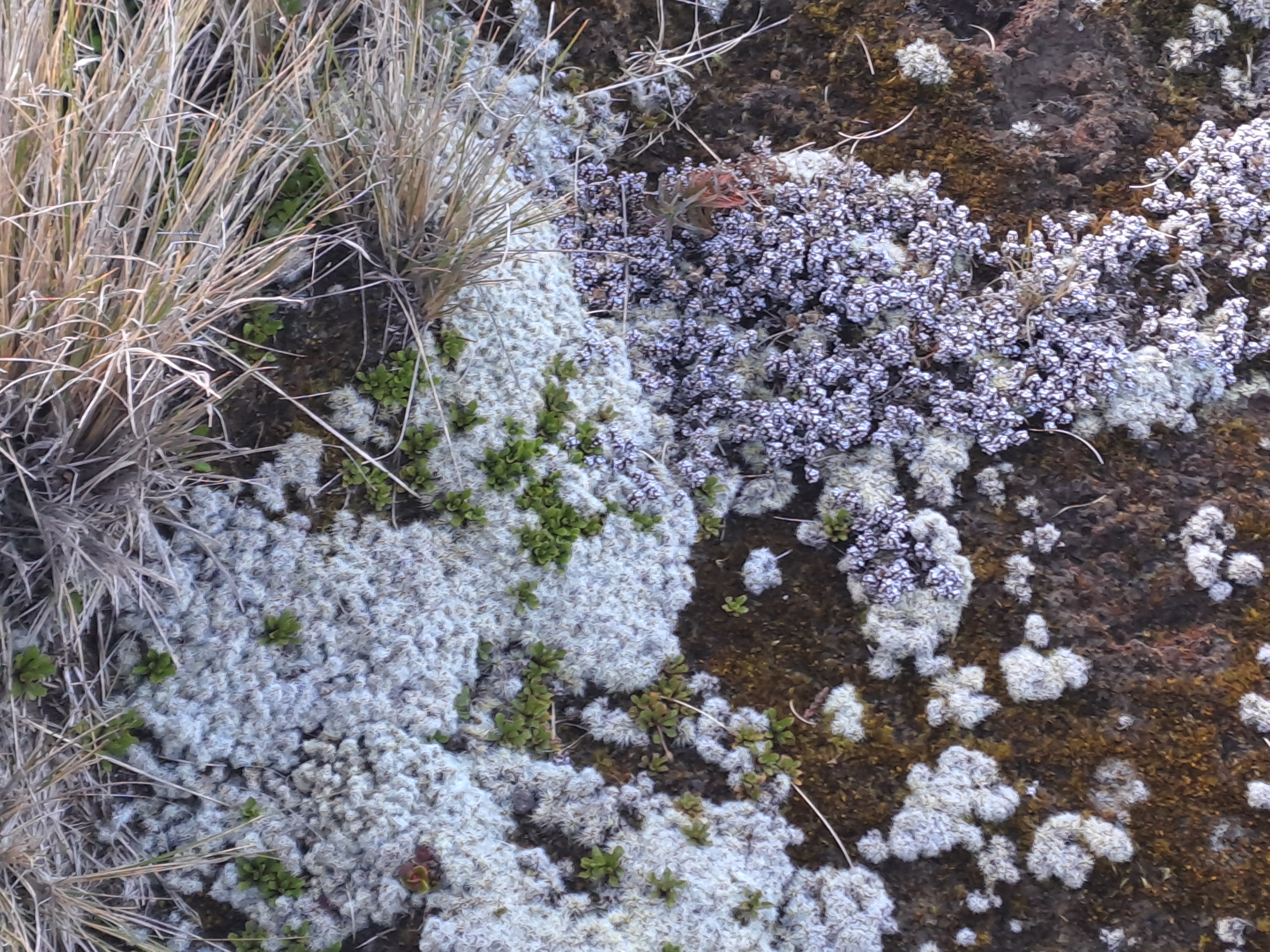
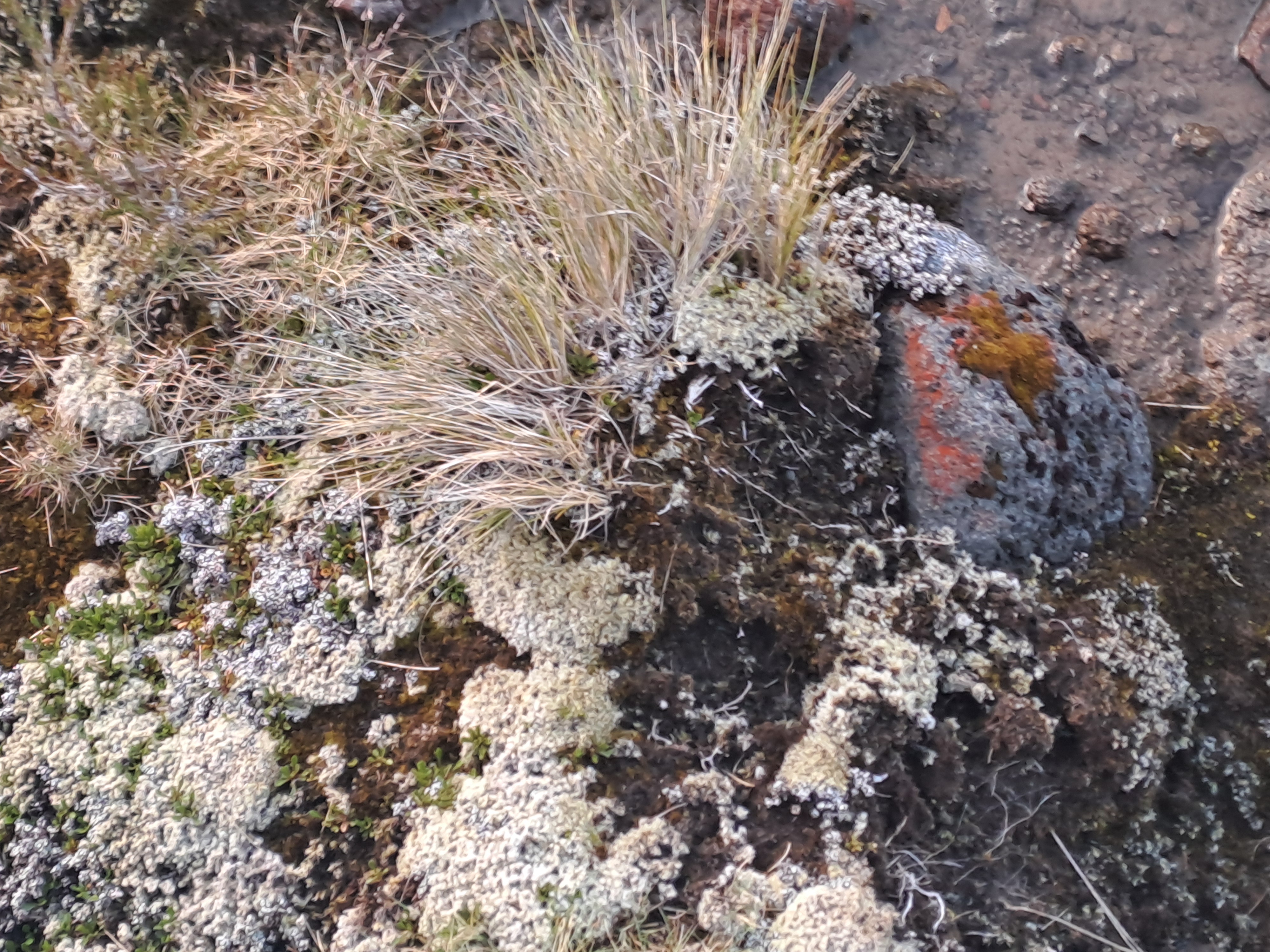
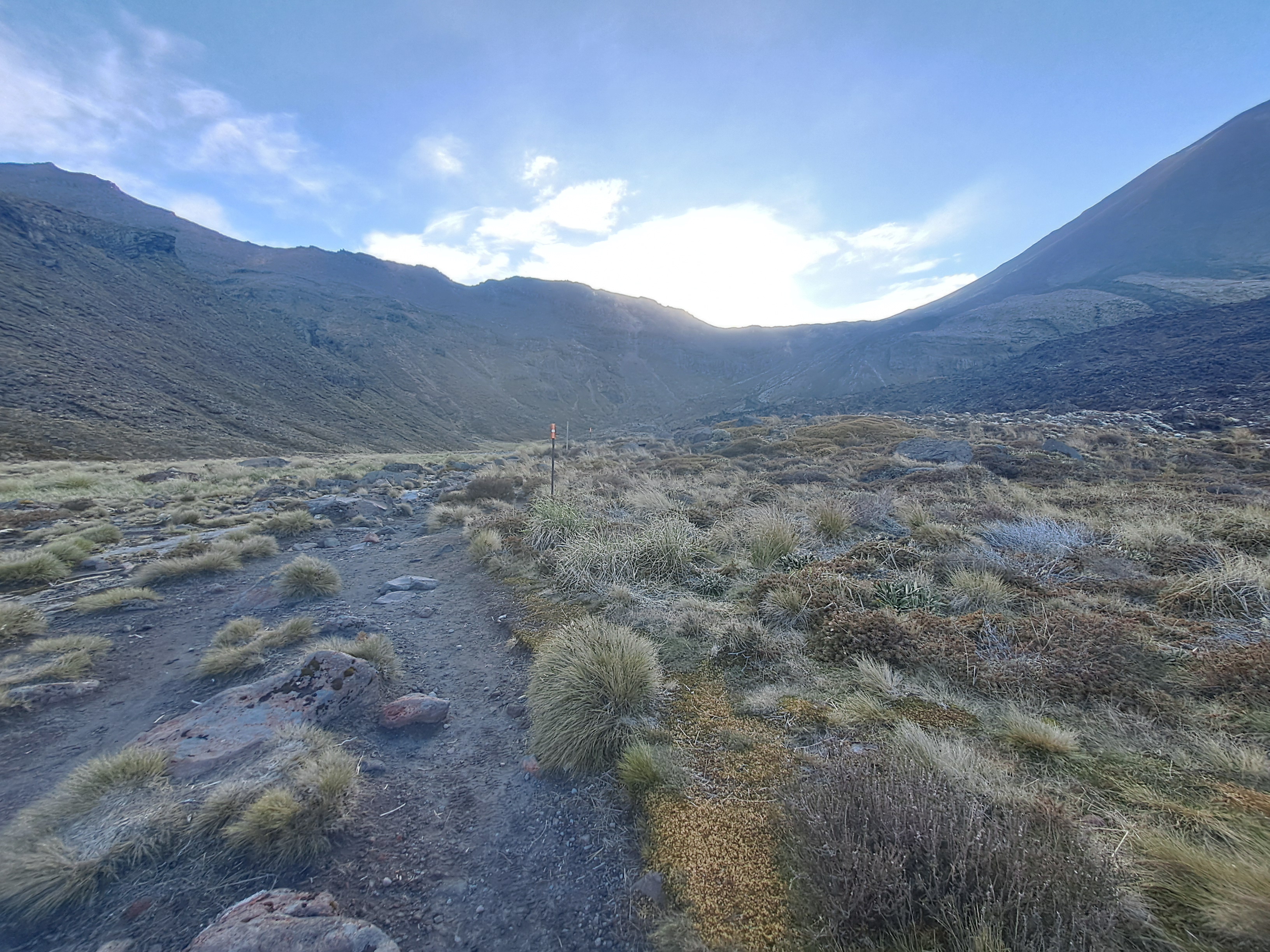

After that we started climbing and the plants gradually disappeared. However, we started to get views across behind us. It was evident that the path suffers a lot of wear and tear from the elements, particularly the run off when the snow melts. It must be a continual battle to keep it up. I tend to wonder how they get the materials to such a remote location. However seeing a large dumpy bag made me realise it must be by helicopter.


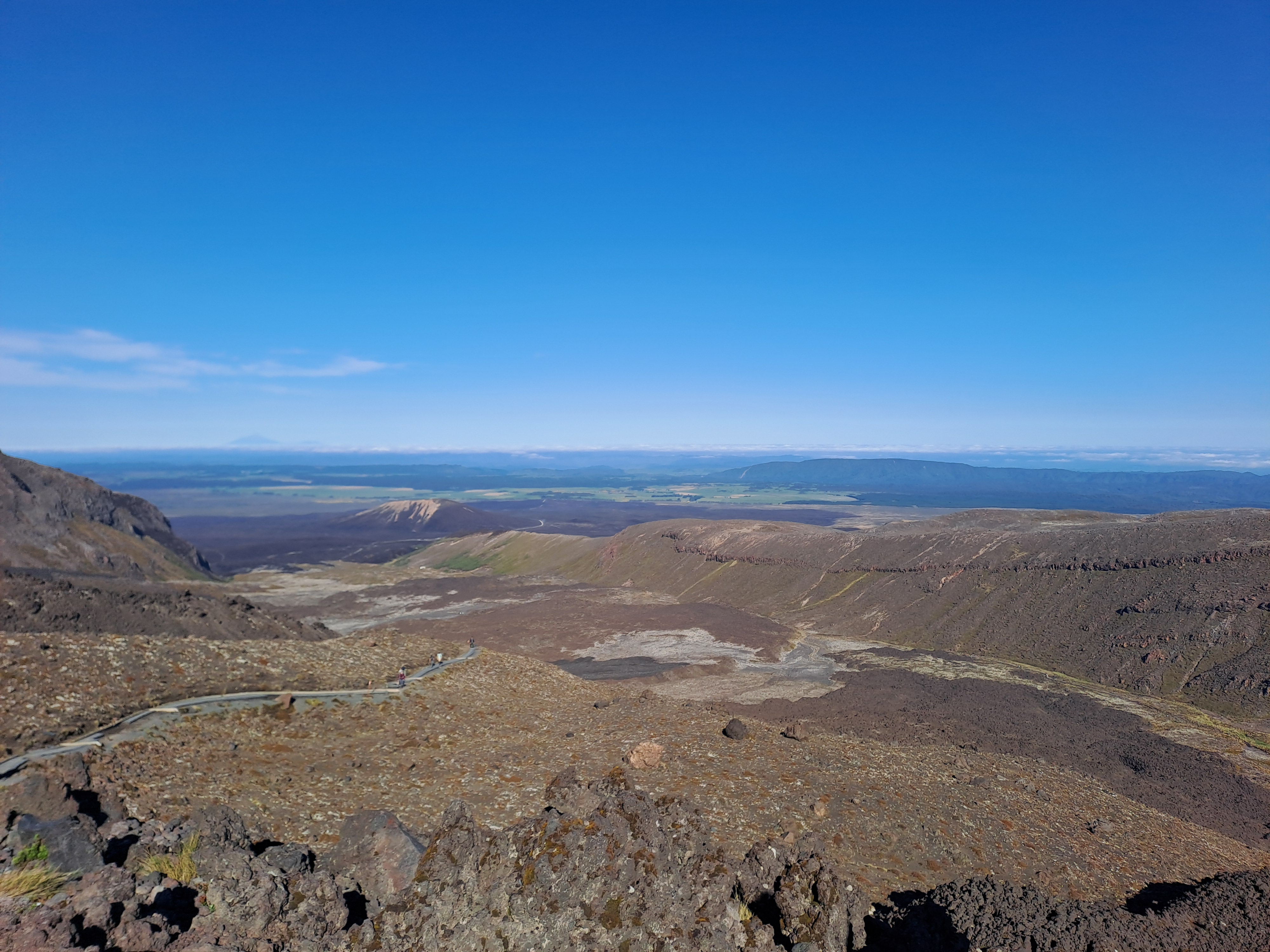
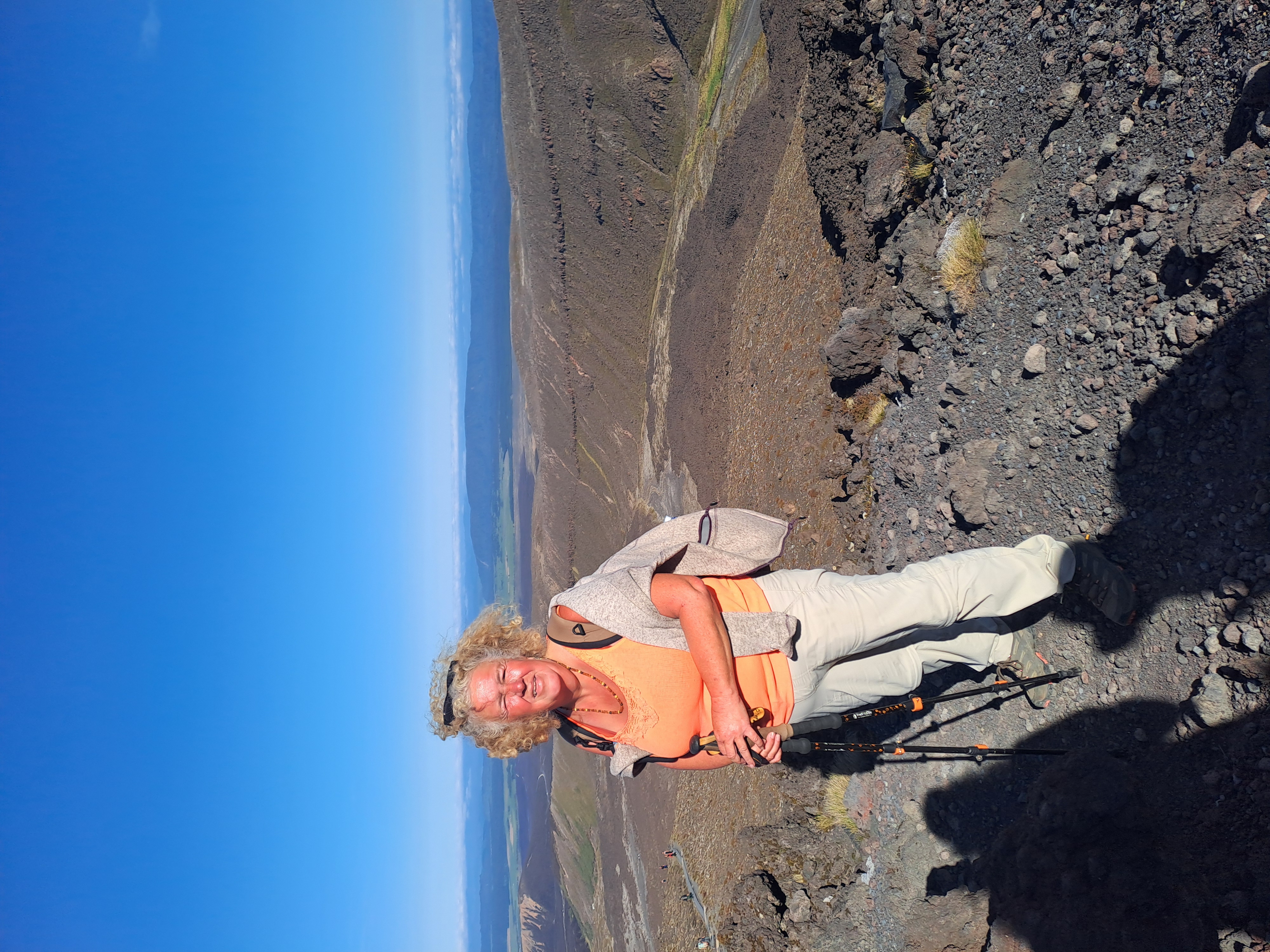
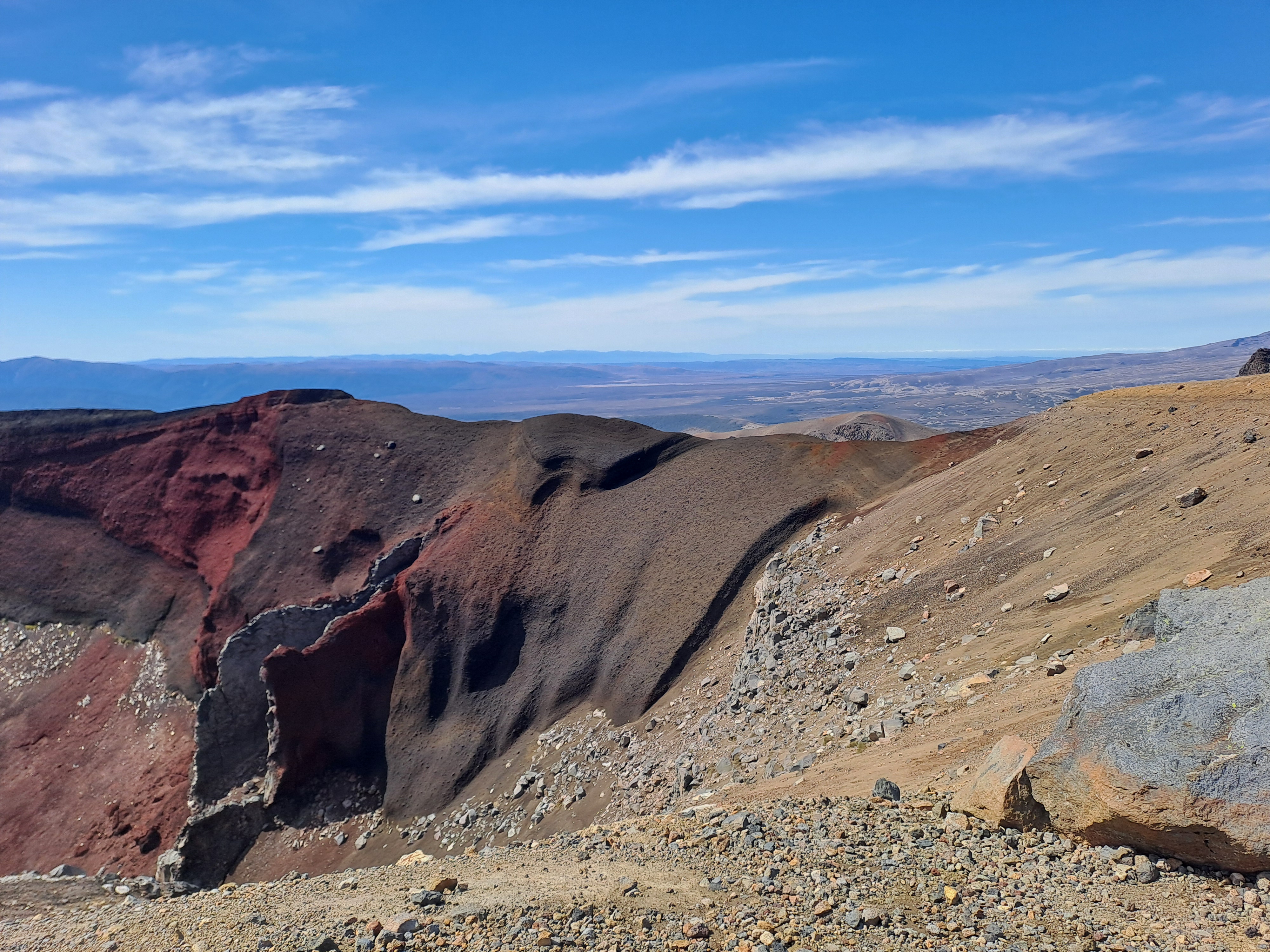
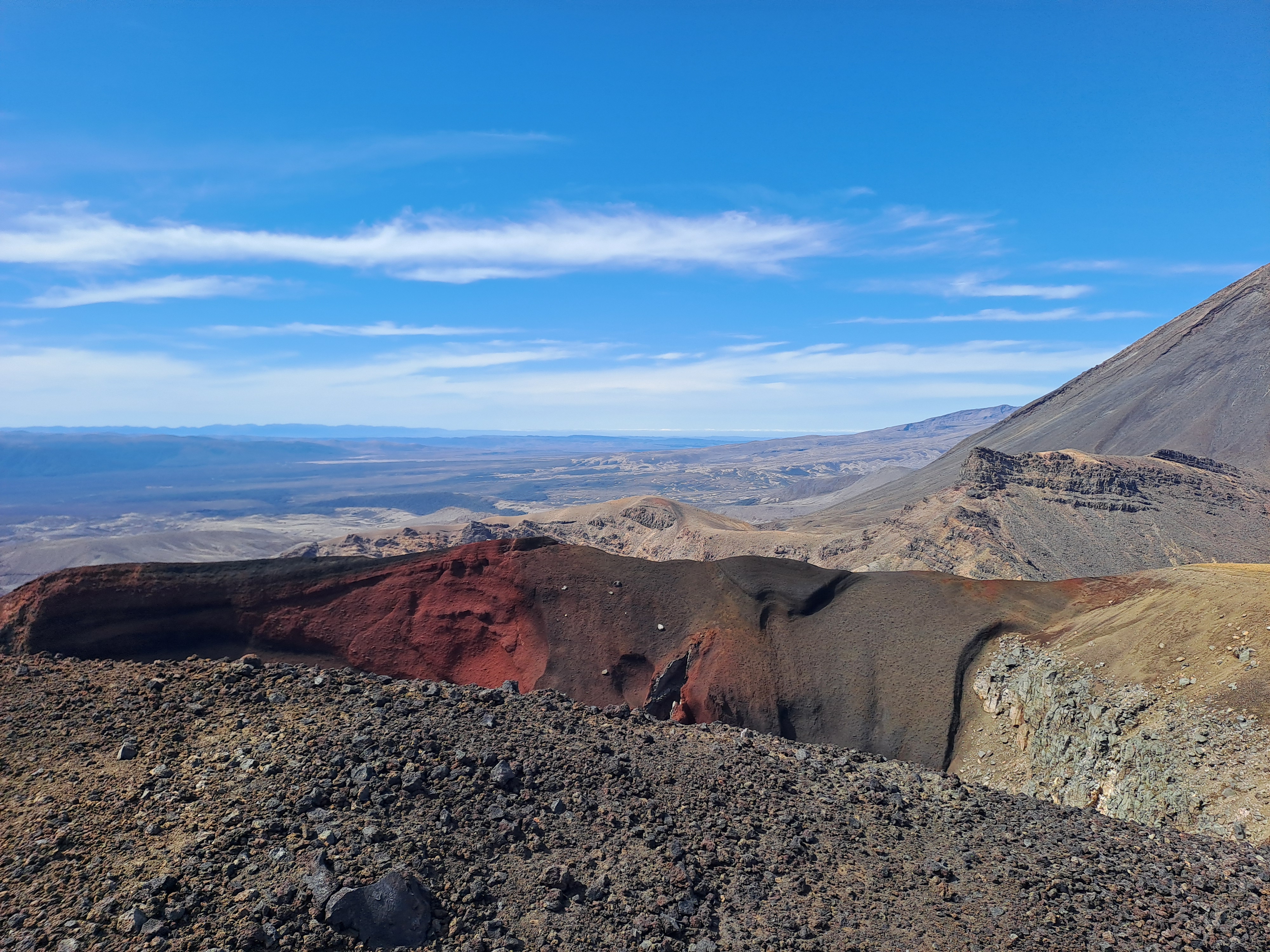
There were various dire warnings about to carrying on. Warnings that the worst was still to come. We climbed steep sets of stairs, where I happily sat to get my breath back and all the later shuttle passengers started passing me. After many many steps and slopes, We crossed the red crater a flat area of smooth mud.
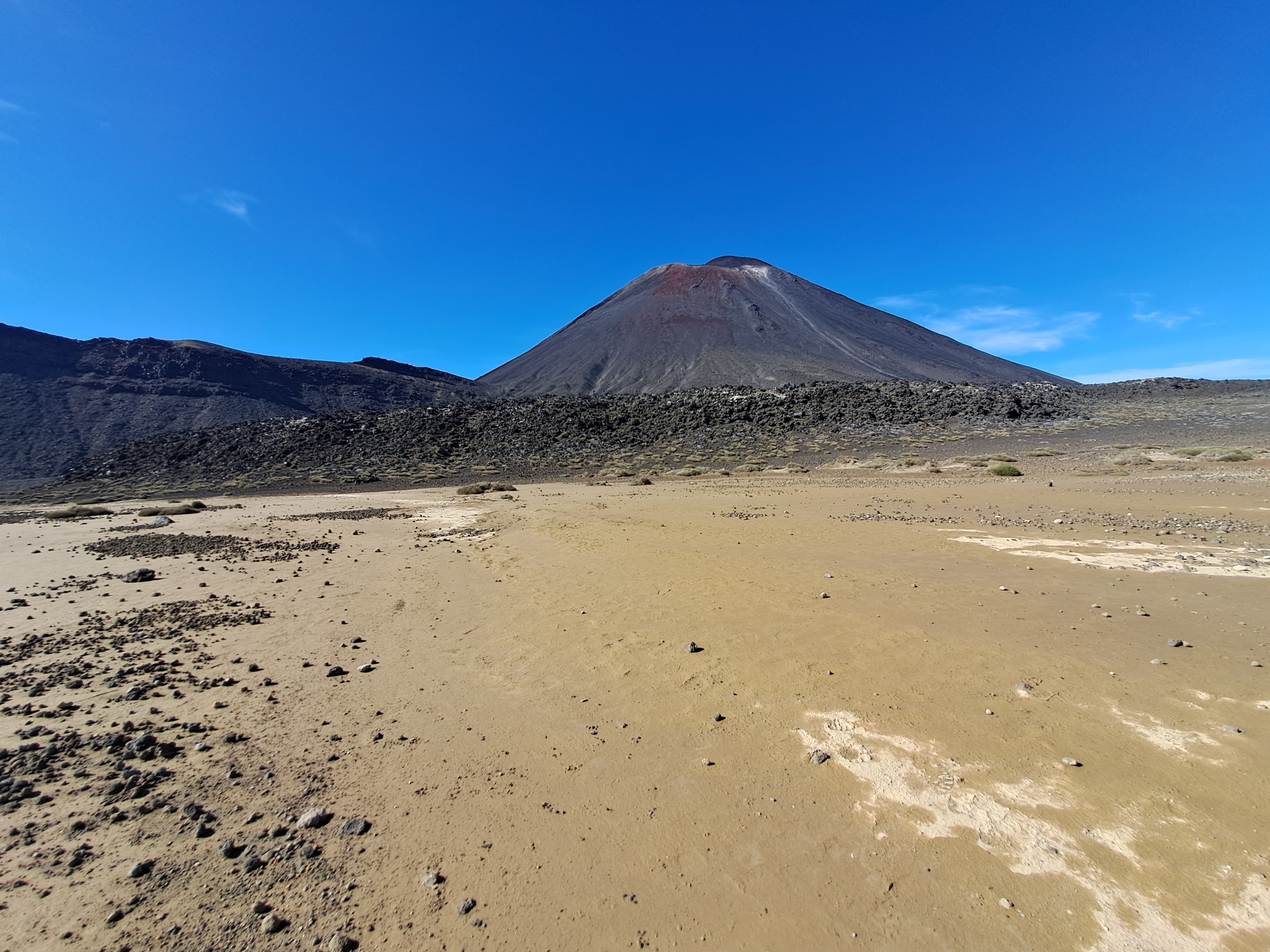
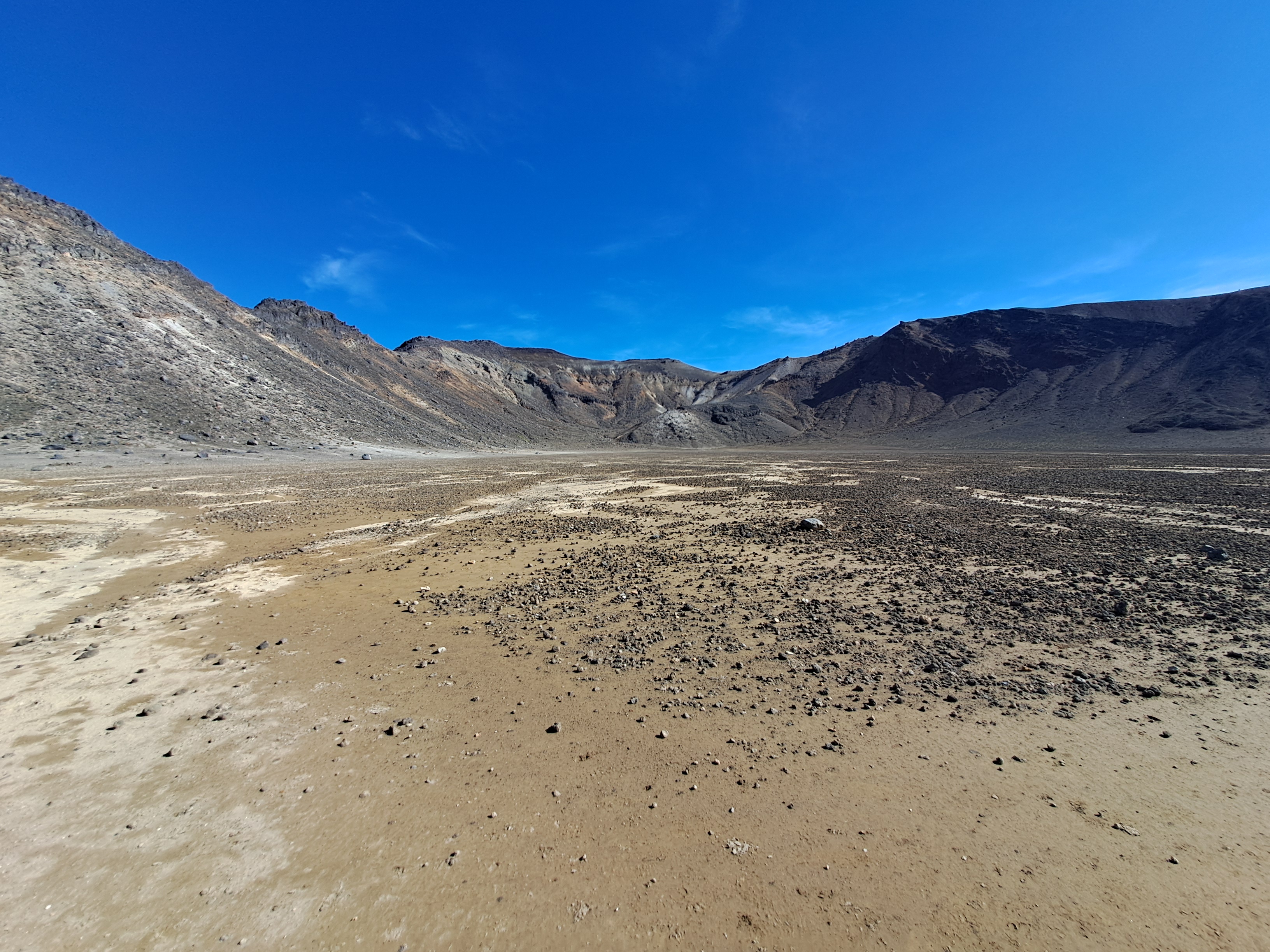

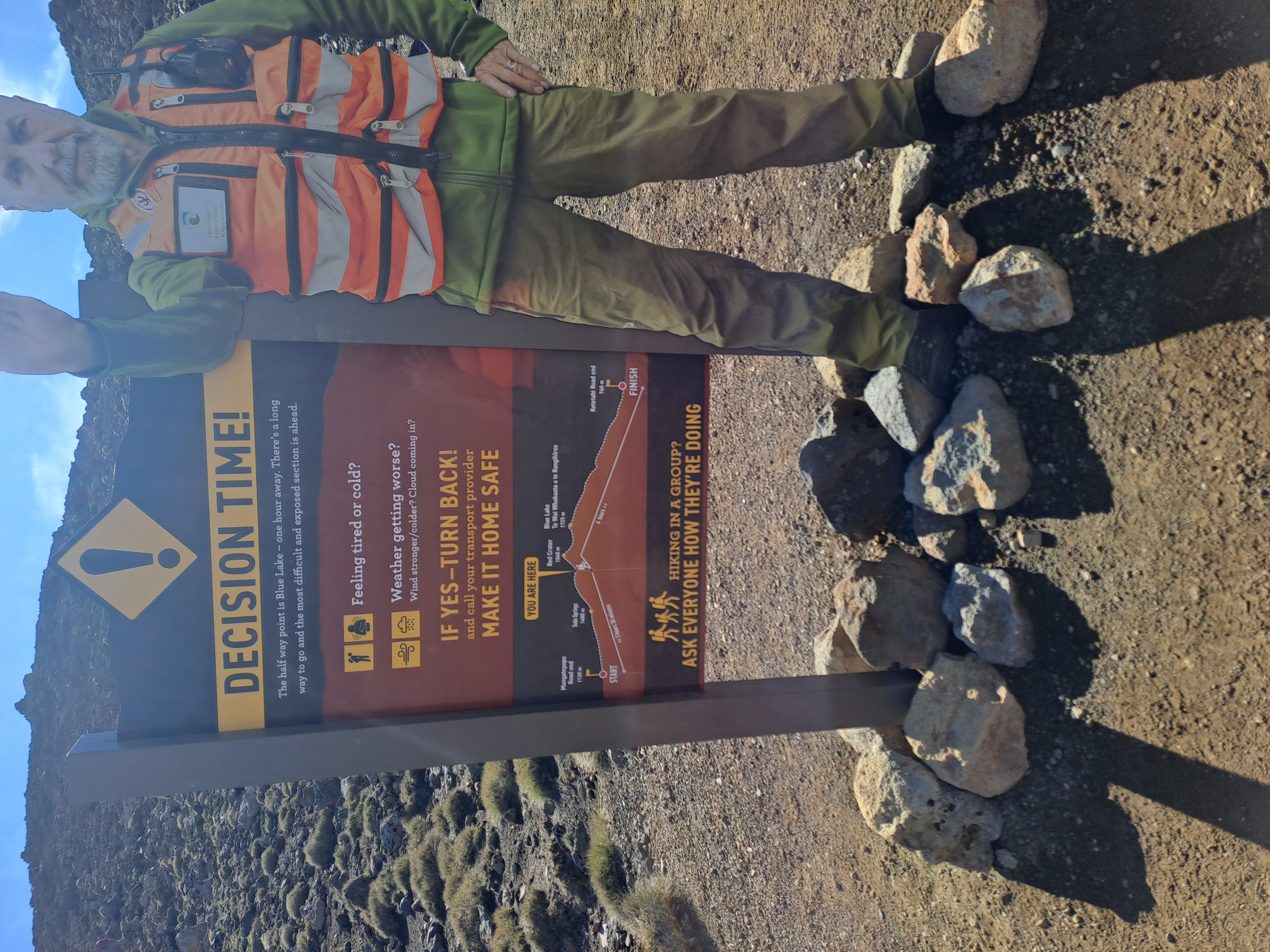
I also got to see Mordor, as this was the film location. As we left the crater the wind suddenly hit us climbing up a narrow ridge and my fleece had to go back on incase it blew away. The top was a very brief encounter, as the decent started immediately down a slope of loose scree, sliding with every step.

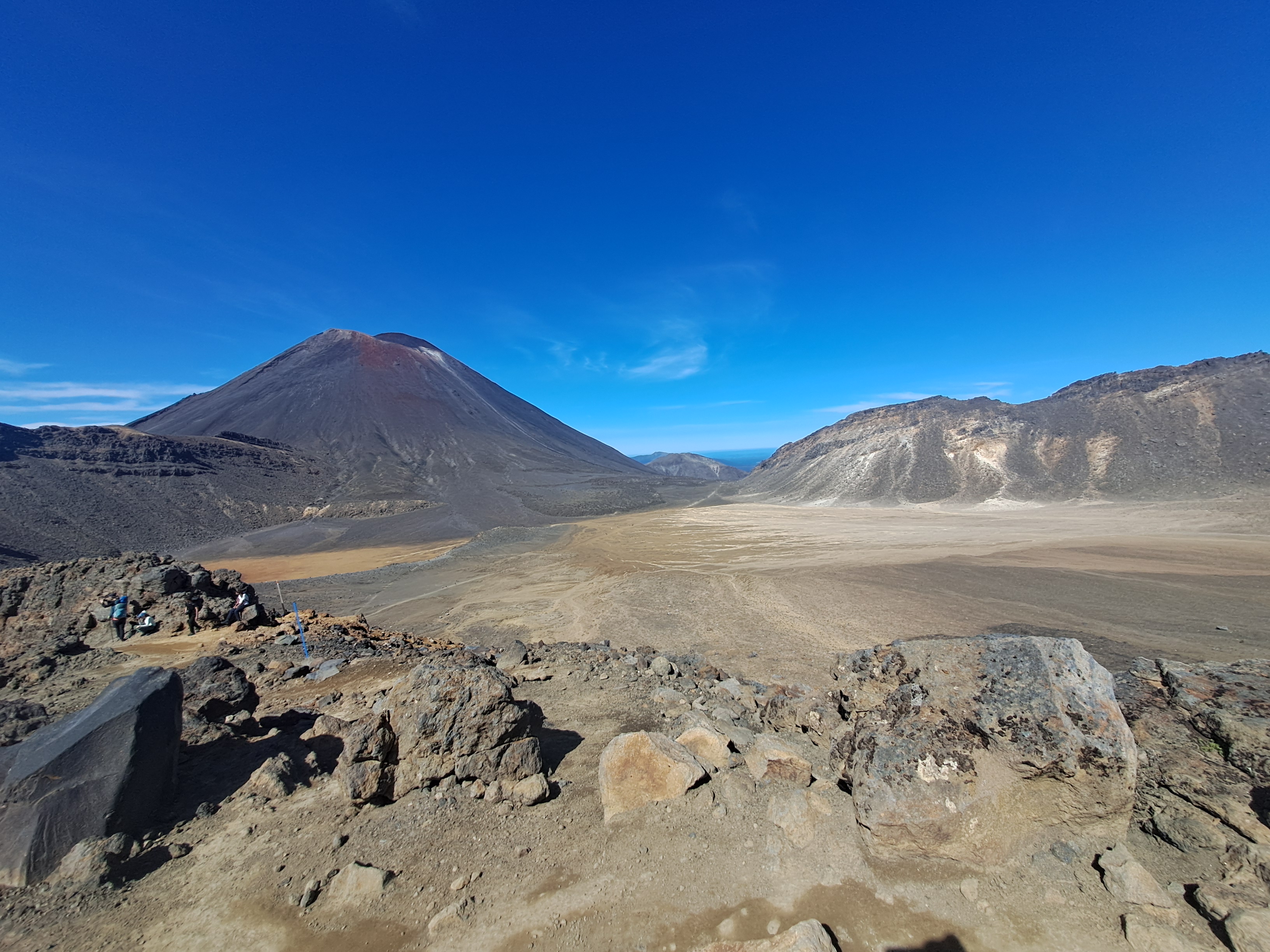
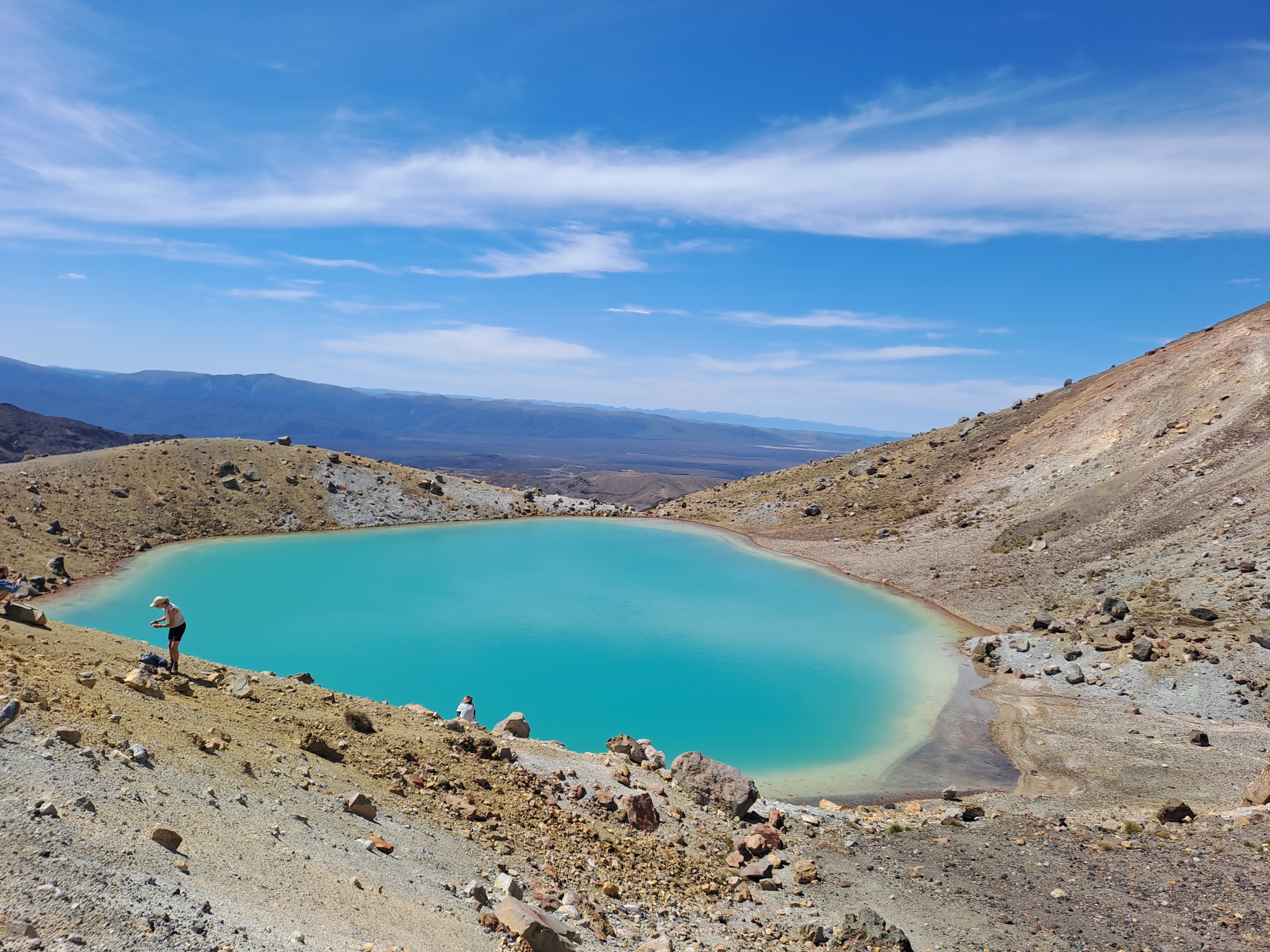
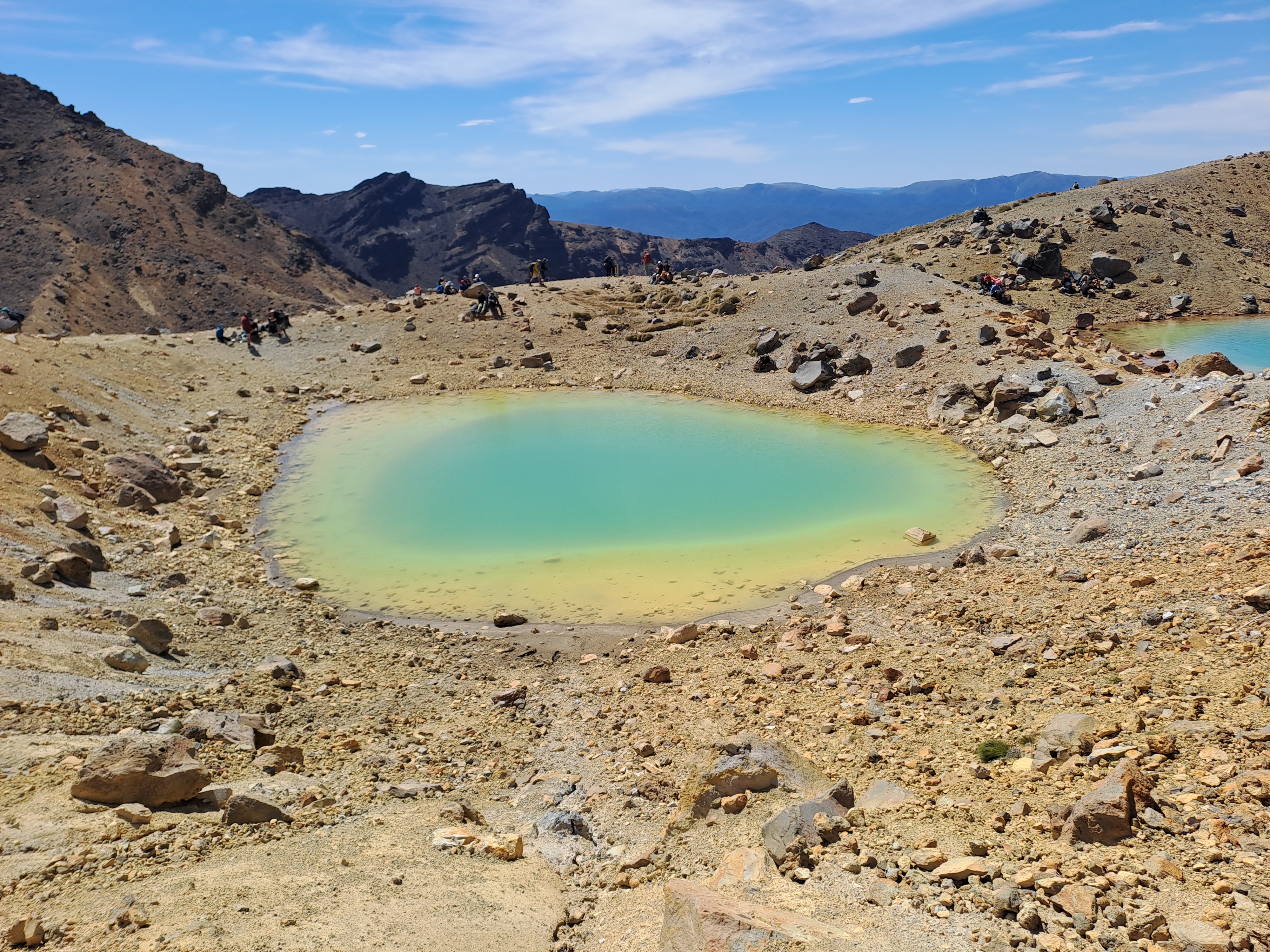
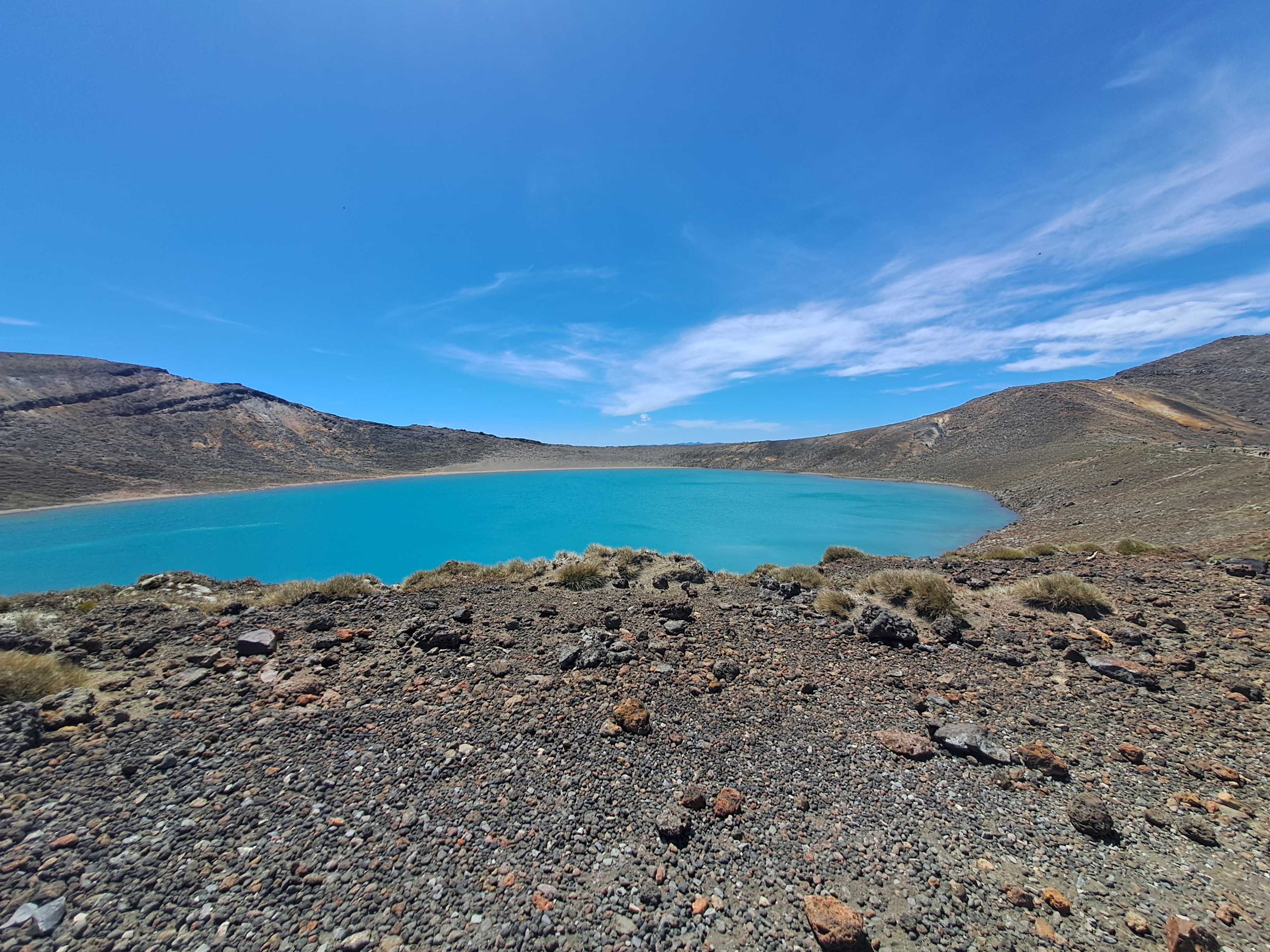
However here we saw the emerald lakes and they were glorious. Posing for the picture below was actually difficult as the slightest movement threatened a slip and a fall. Most people seemed to fall at least once. Most people including me stopped for a while by the lakes for lunch. Although I didn’t dare stop for too long as I was worried about making the shuttle, I was so slow.

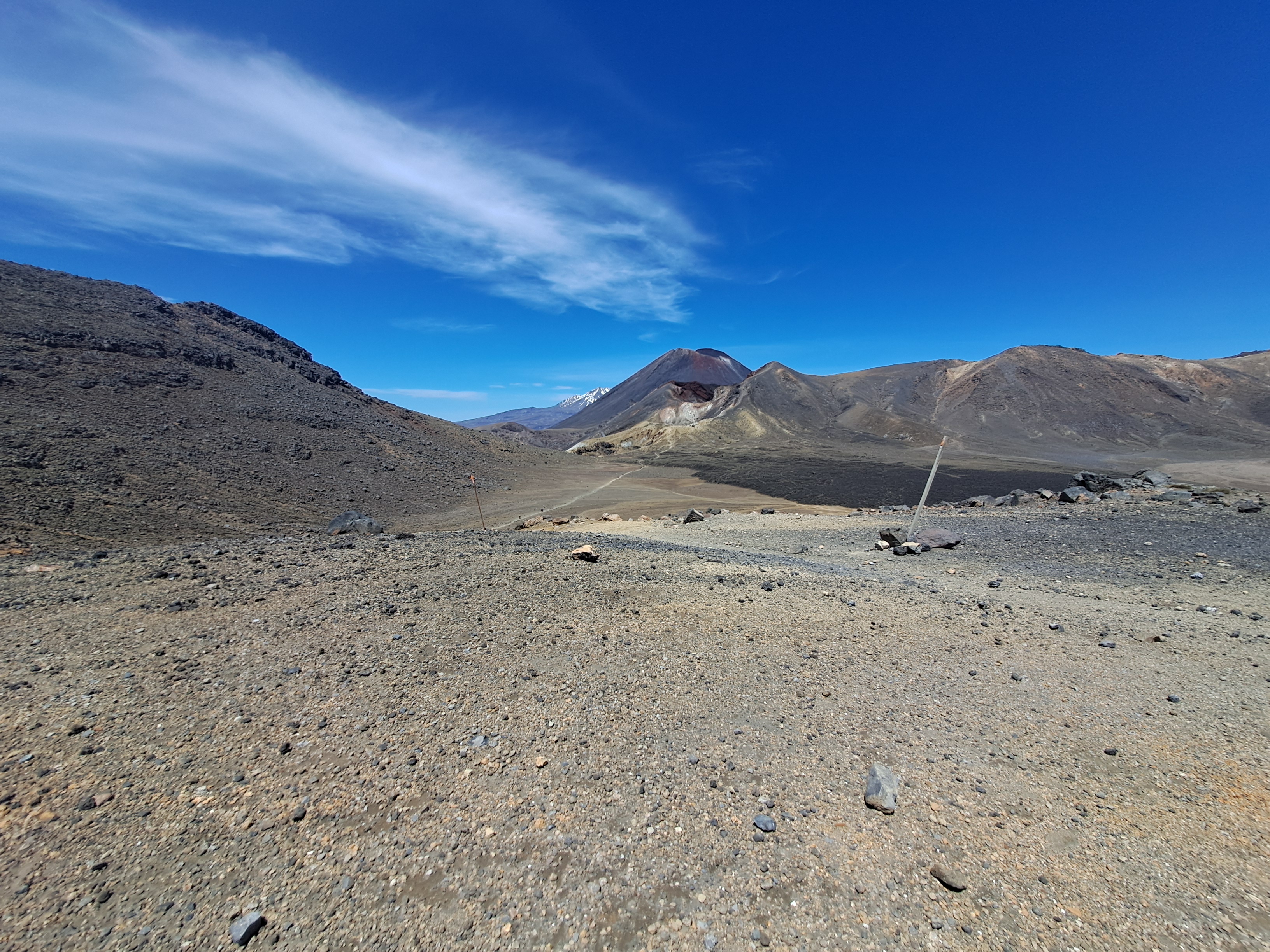
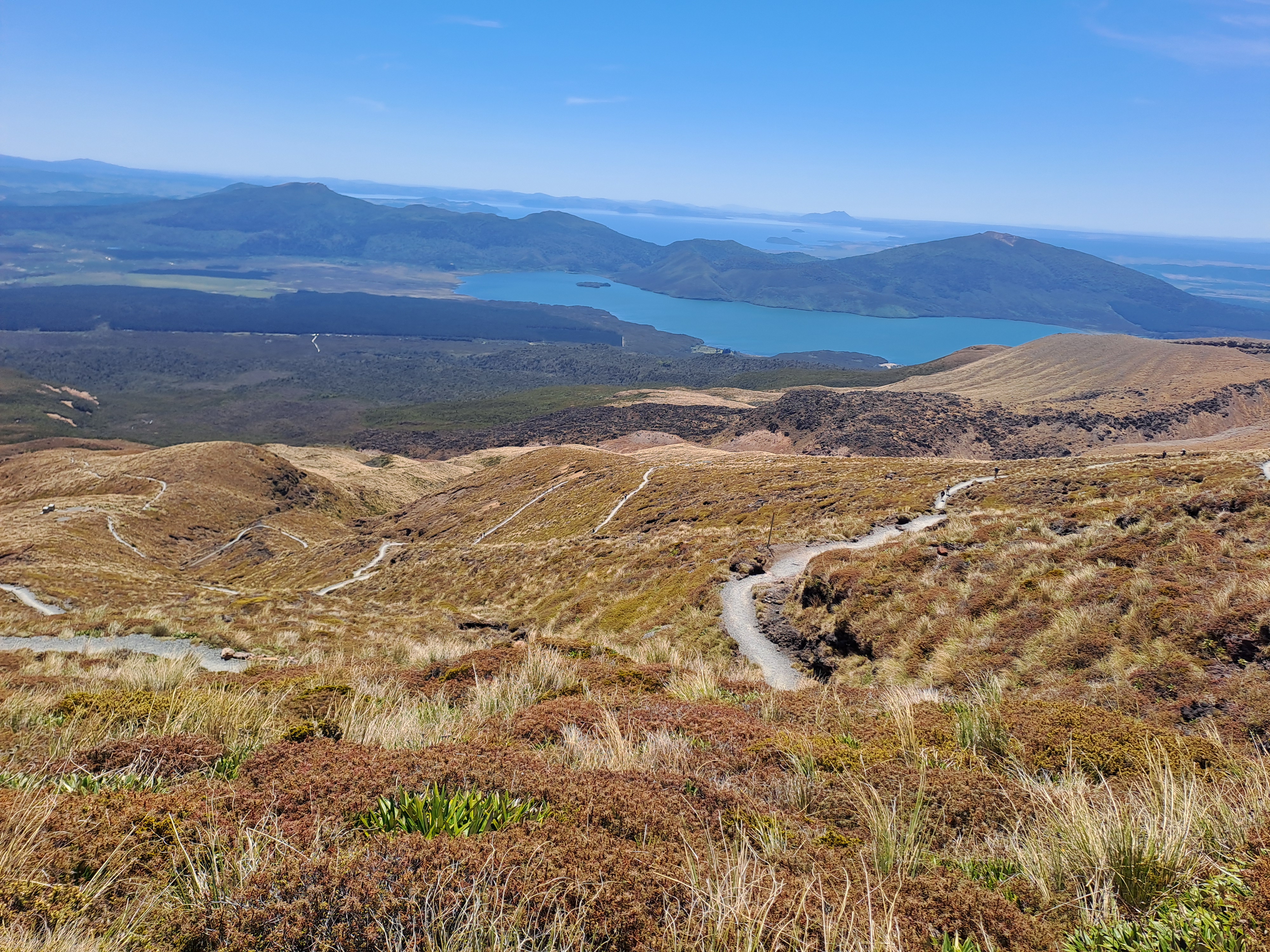
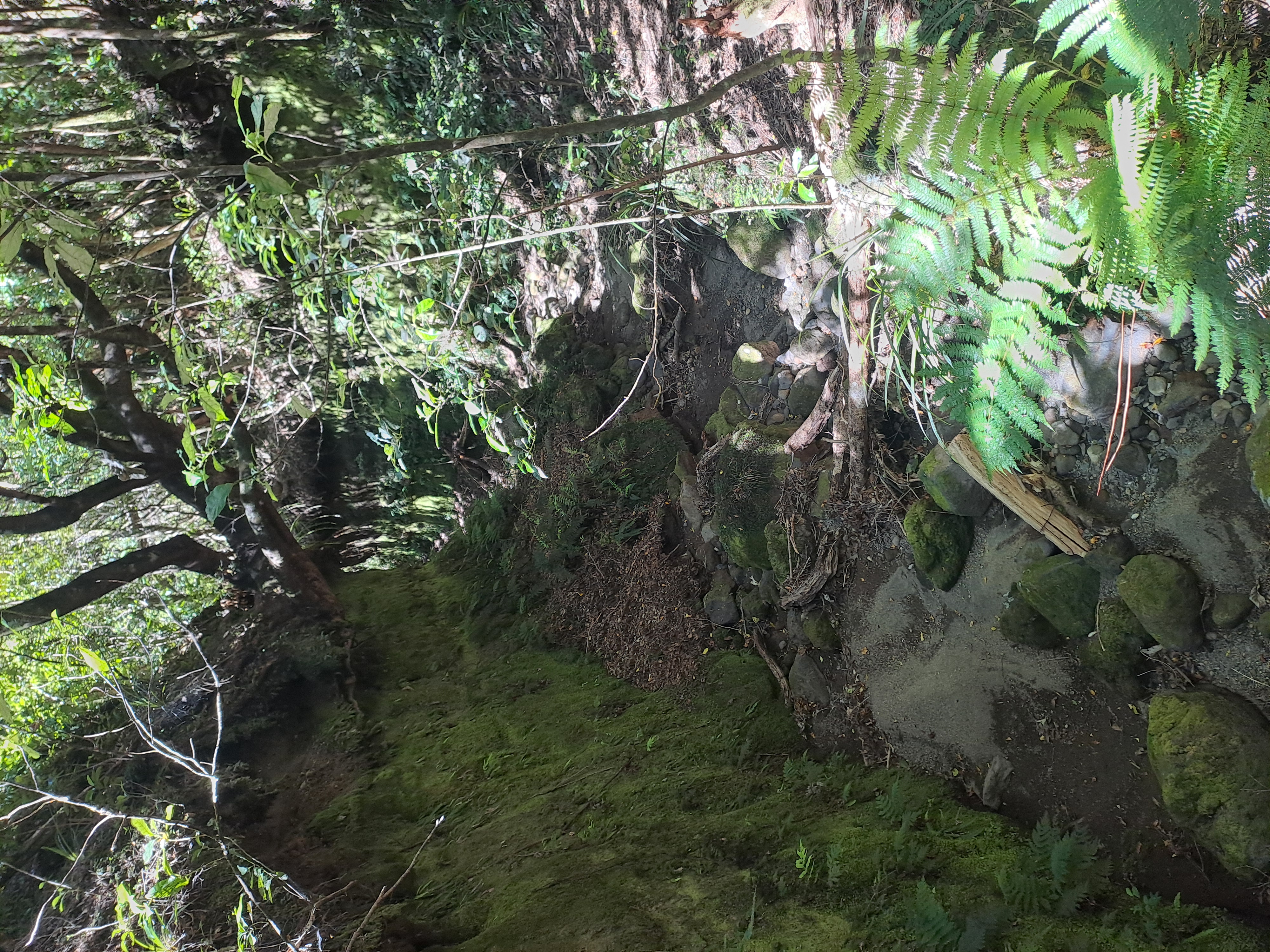
Then the long road down to the return shuttle car park . Strangely this was the most difficult part, due to my tired and aching body and I slowed down drastically as each set of stairs jarred ny hips and toes. I had to keep checking that I would make the shuttle bus, as I watched younger people leap down the steps I had to gently lower myself down. The bottom stretch was through lovely rainforest and a rushing volcanic stream with many warnings not to hang about in the area or drink the water. Finally I got to the pick up point with 15 minutes to spare. My anxious driver was pleased to see me and had been worrying about me. She admitted thst she could no longer do the walk, she was 60 now! Suddenly I felt do much better about my achievement at 65 🤣 I got back in time hor a shower and a glass of wine to celebrate before Ashley arrived back from his day out with a takeaway as I’d told him it was that, or him cooking, as I could barely move.

Ashley’s day out had been on a golf cart converted for travelling on a now deserted train line.
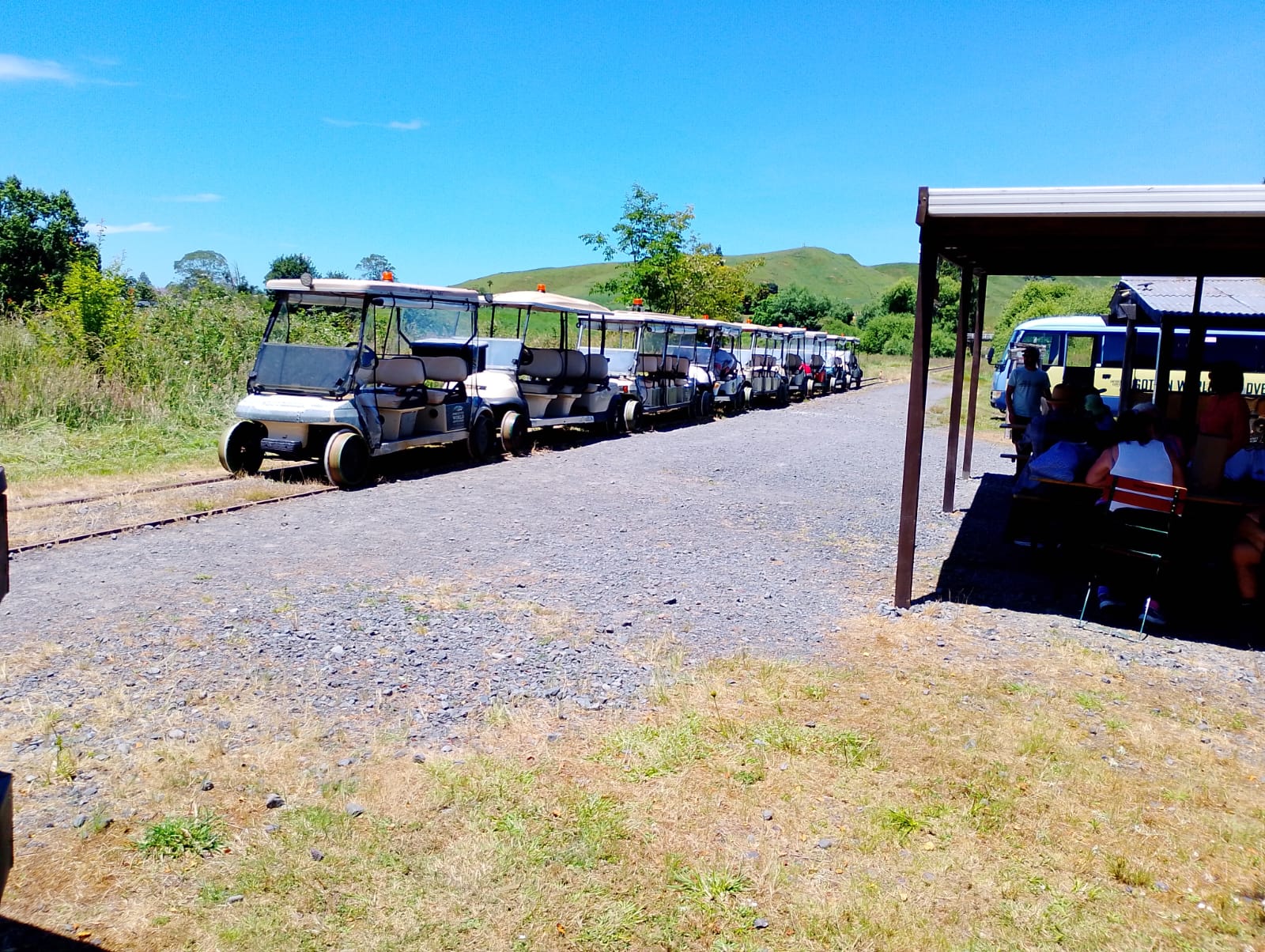


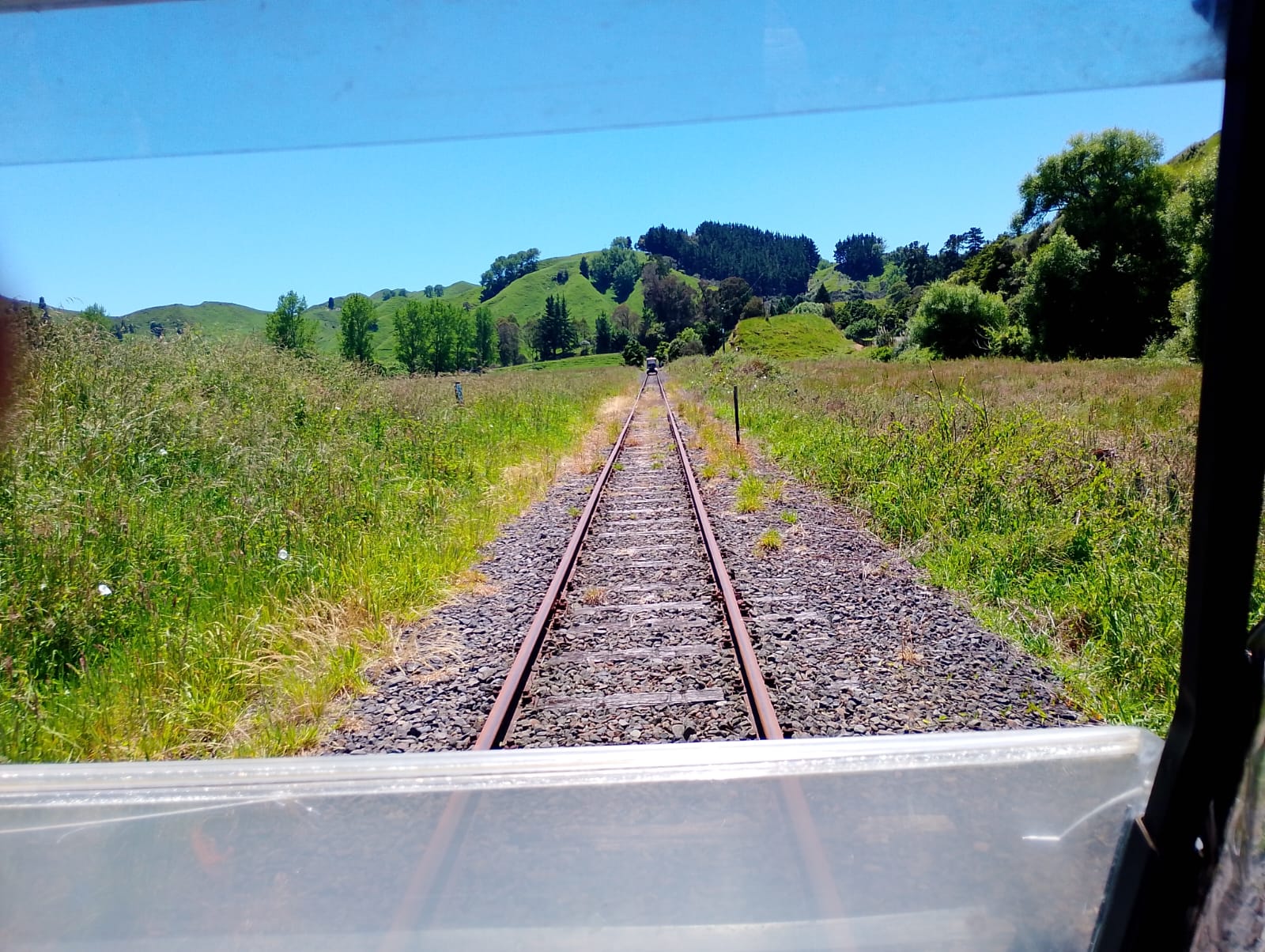


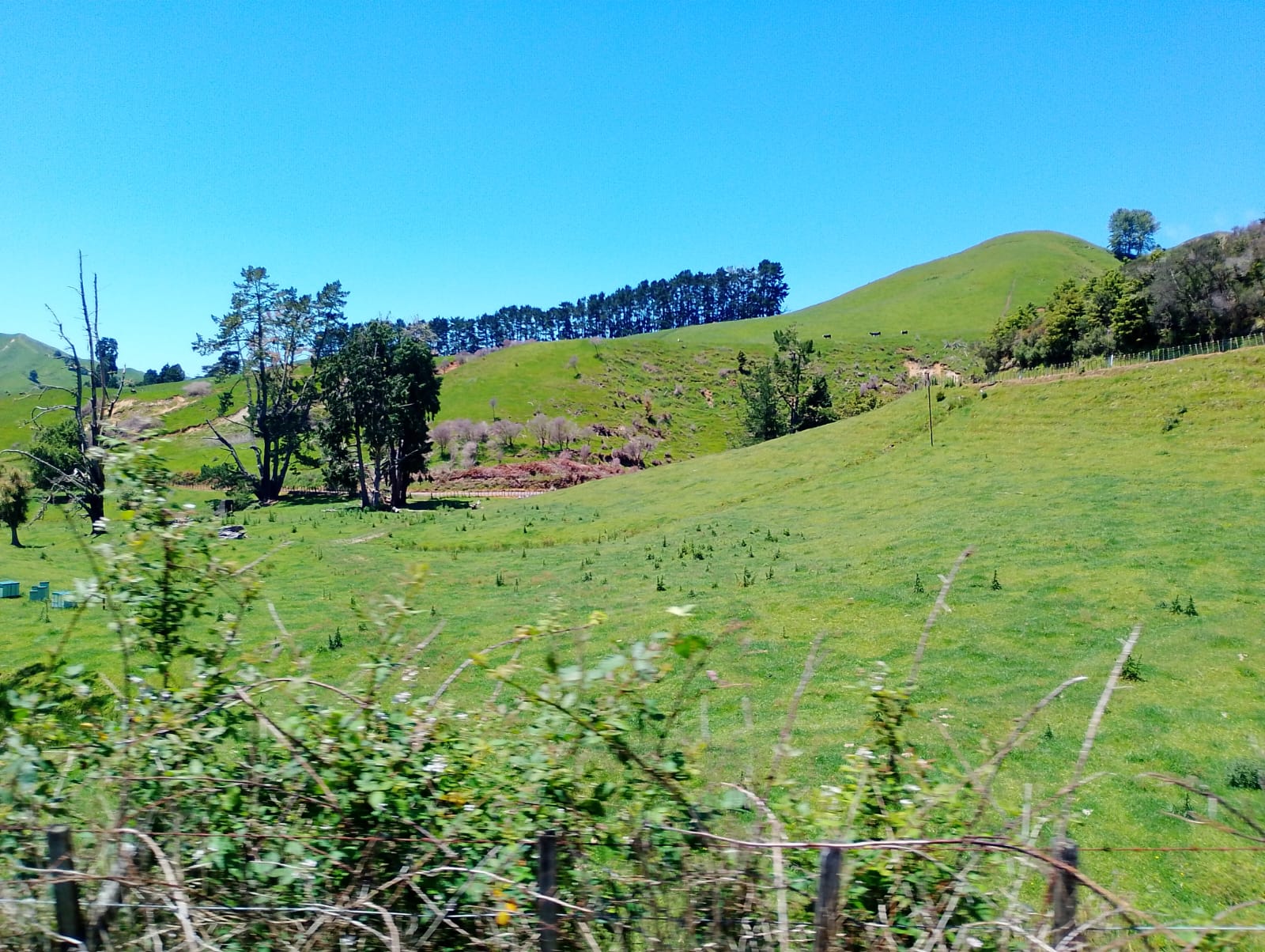
It included a winery, but no wine!
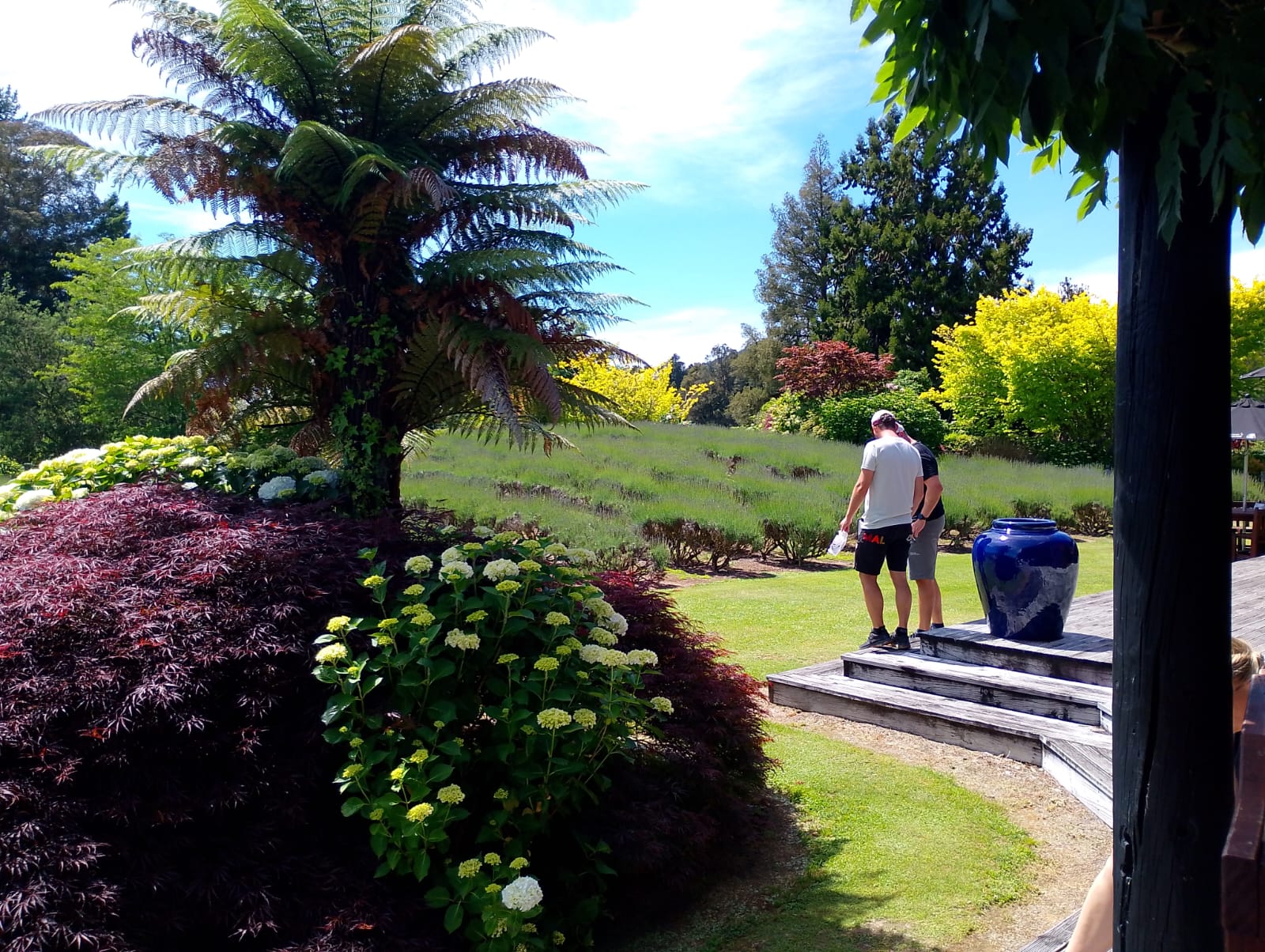

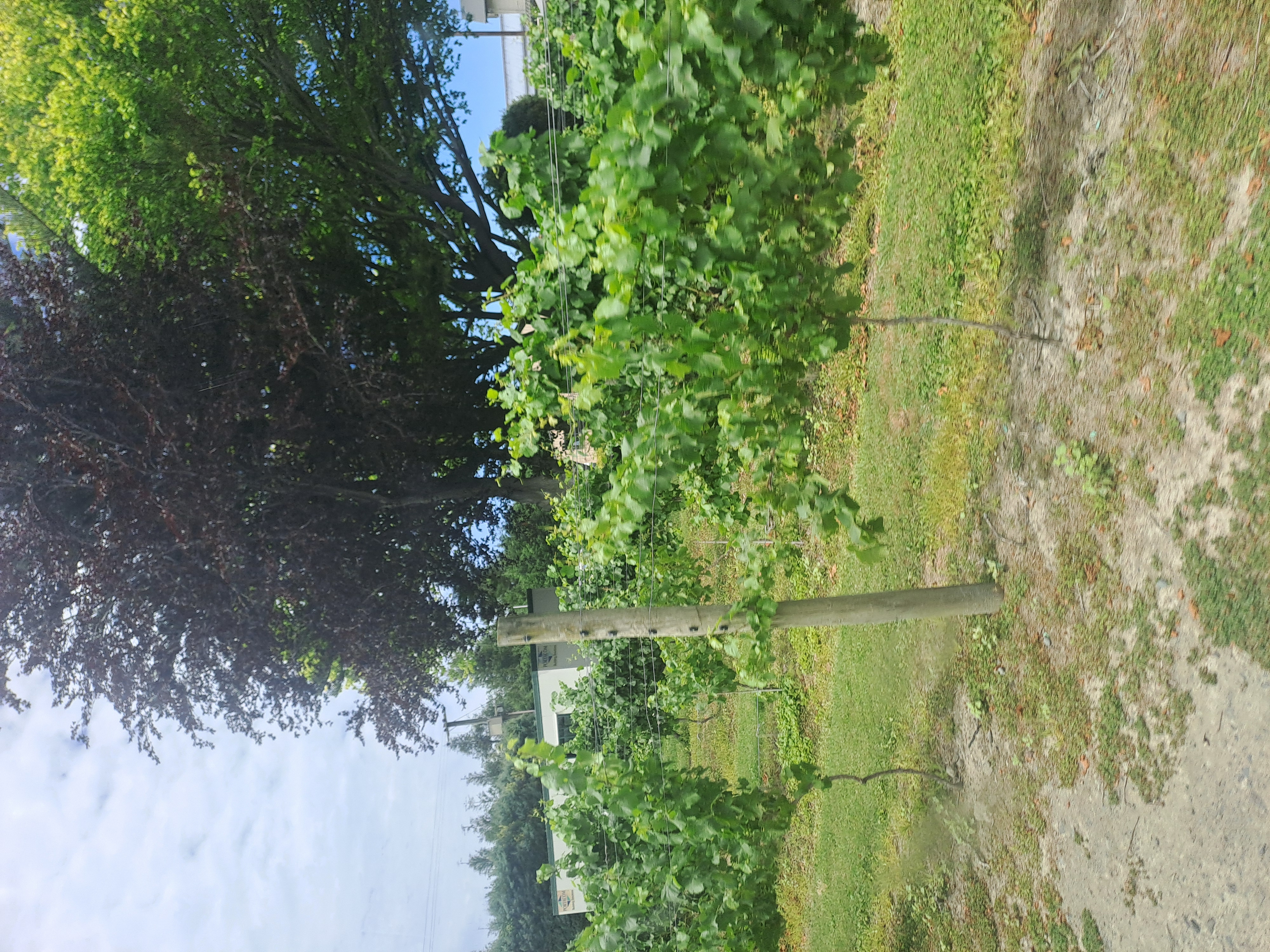
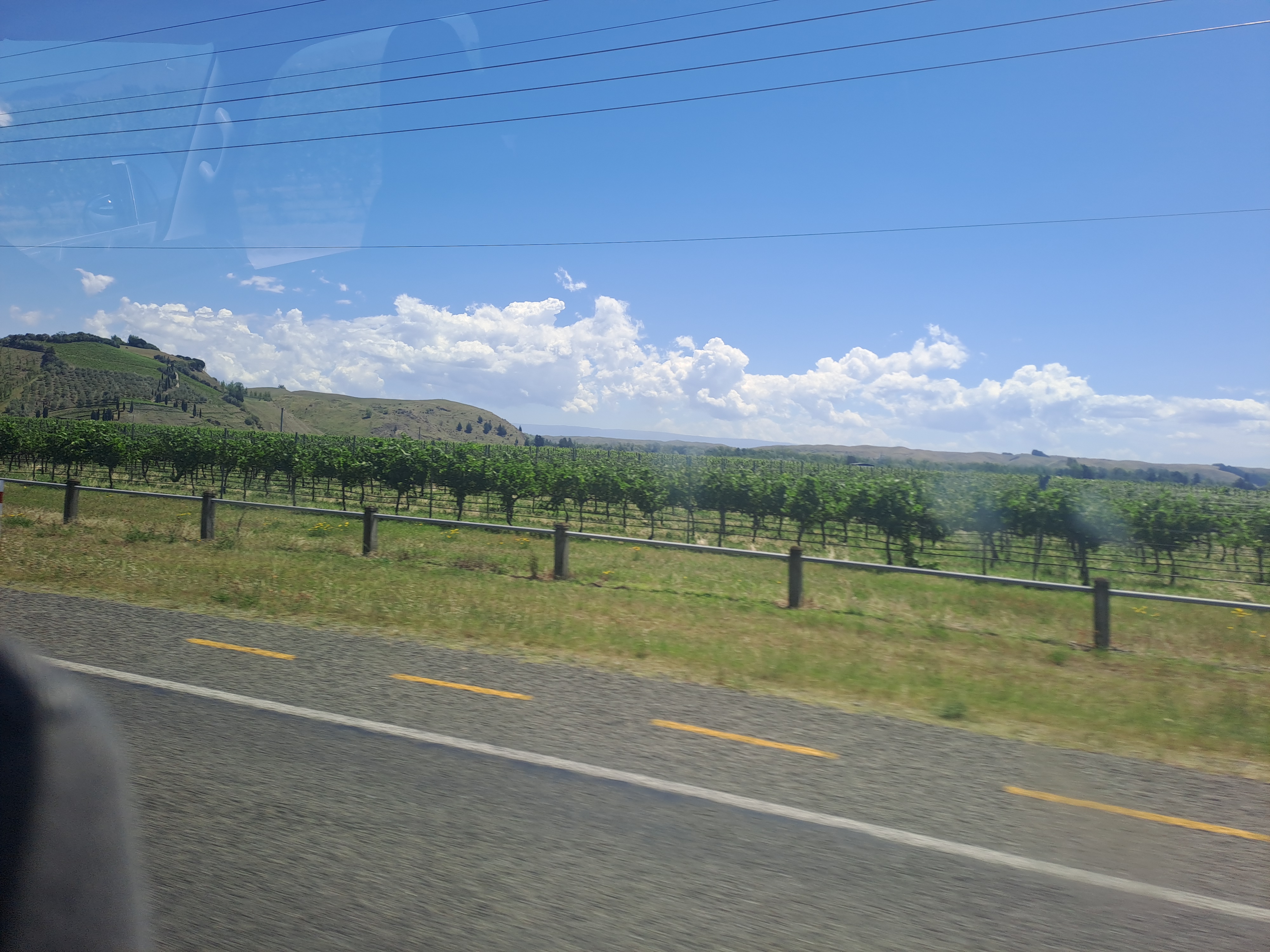
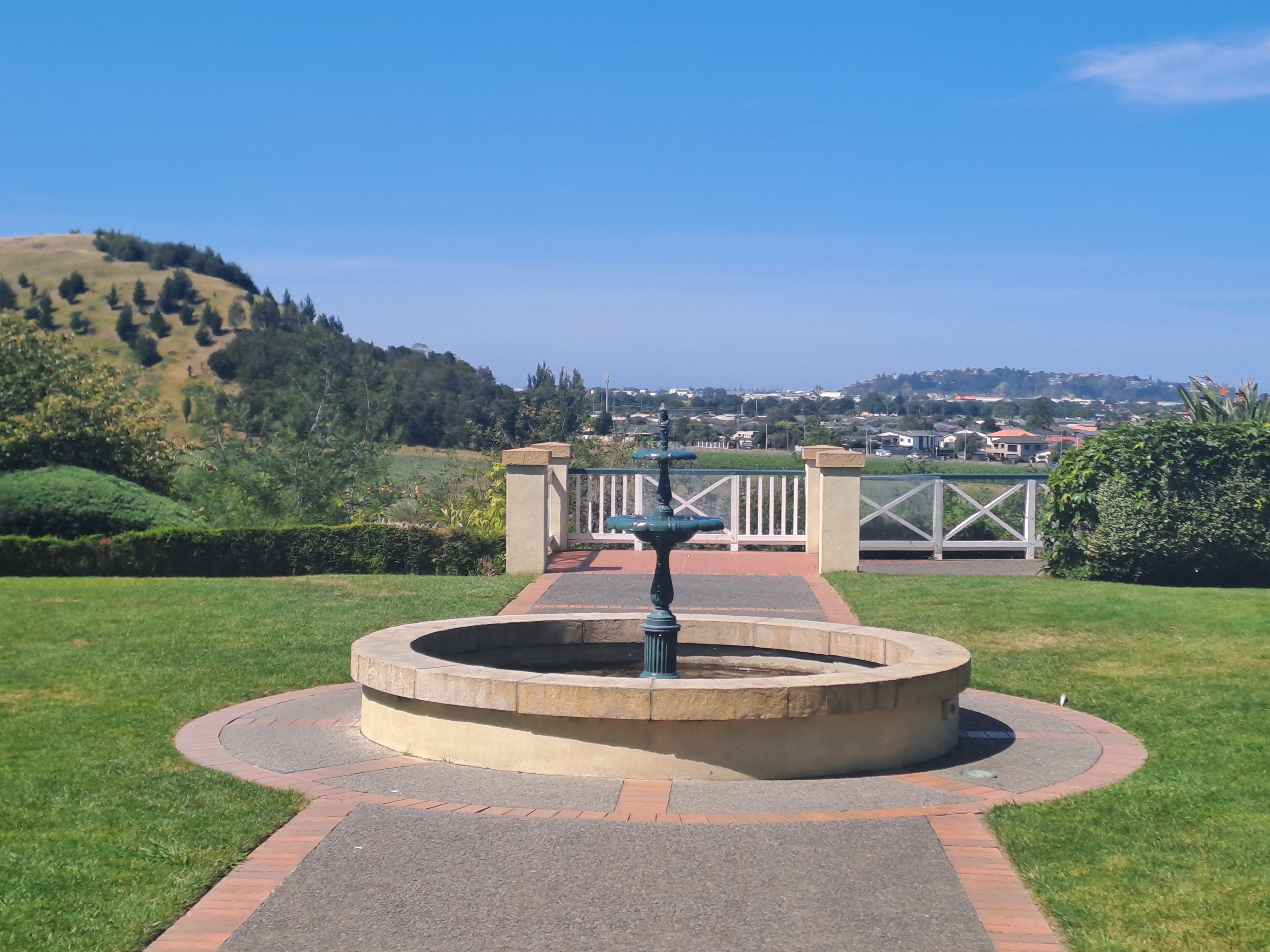
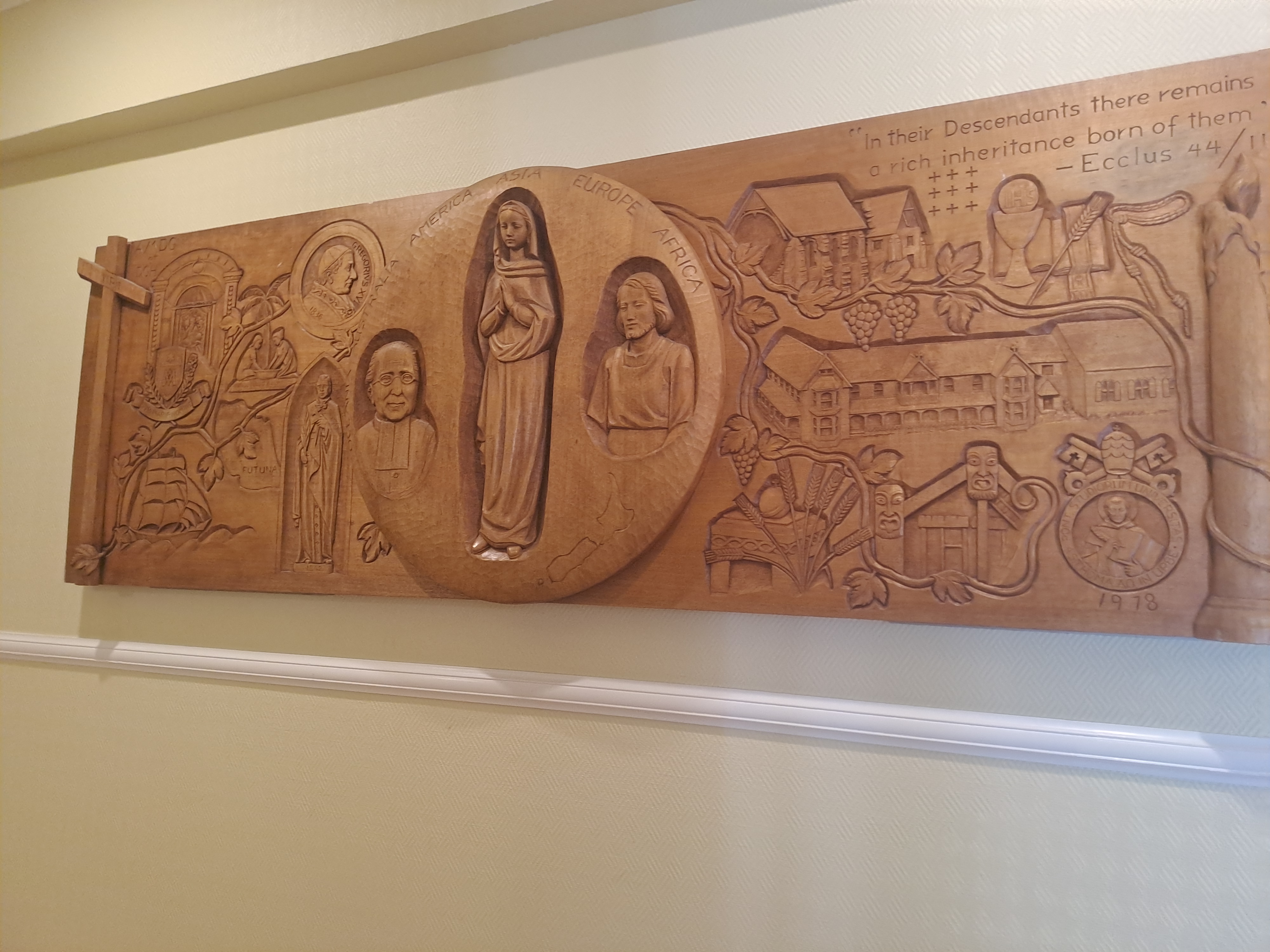
After the national park we went for an easier option and headed to Napier for a day wine tasting. This proved so much easier, so unfortunately we didn’t get to see much of the art deco Napier us famous for, but we did see a monastery that had been moved from it’s original location.
In 1851, a group of French missionaries brought with them generations of winemaking knowledge and a few treasured vines to the Hawke’s Bay. Their vision was humble but enduring: to establish a self-sufficient mission that included a vineyard.
In 1870, Brother Cyprian Huchet, son of a Loire Valley vigneron, rose to the role of Cellar Master and made history by crafting and selling New Zealand’s first recorded commercial wine. That spirit of innovation continued over the next century. Mission Estate produced the country’s first Méthode Traditionelle in 1963, and in 1983, created New Zealand’s first whole bunch-pressed, barrel


We the headed to the West coast and Whanganui for our last couple of days before Wellington. We headed out for the day with one of the local posties to fo the mail run along the Whanganui River.
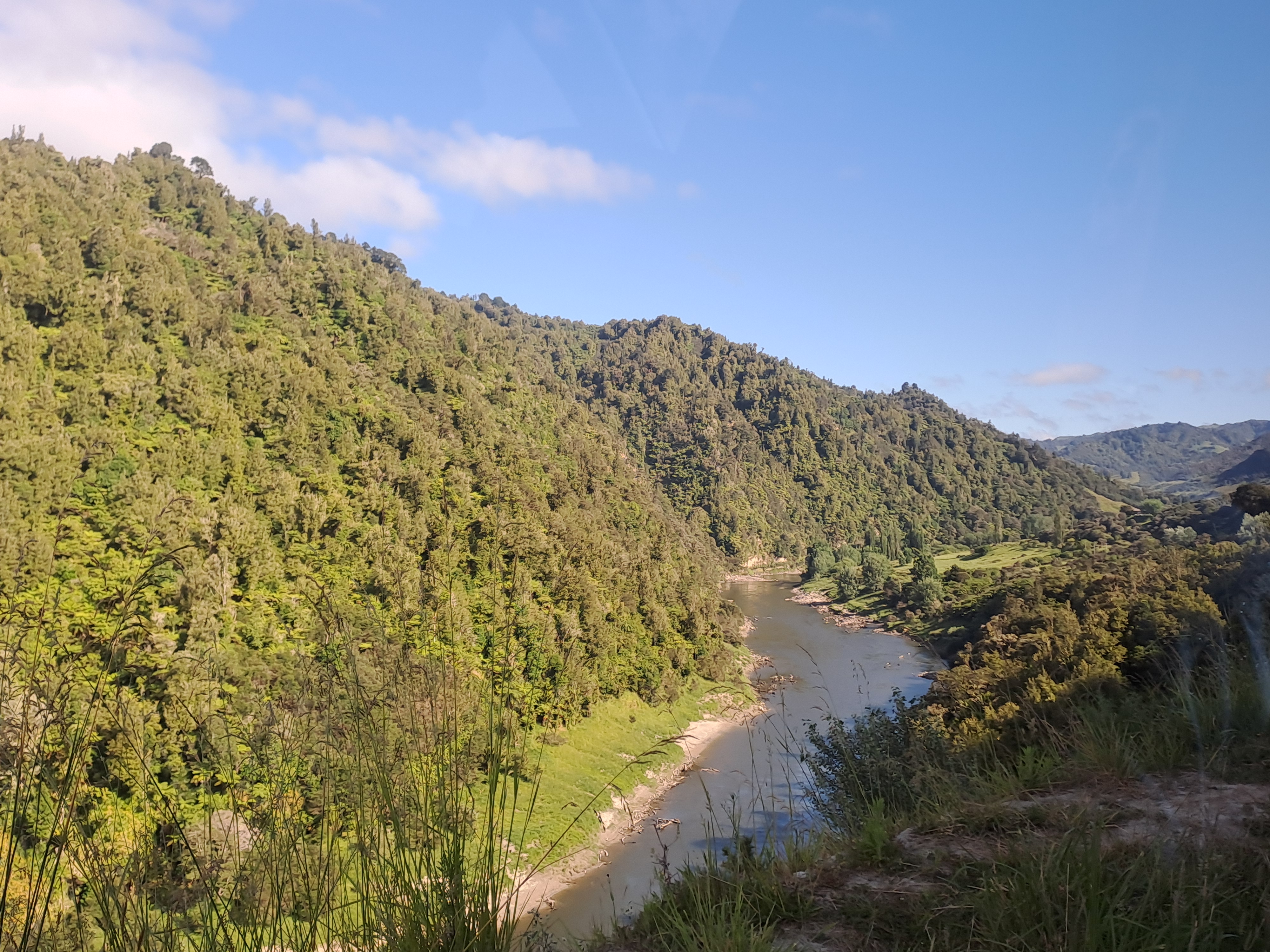
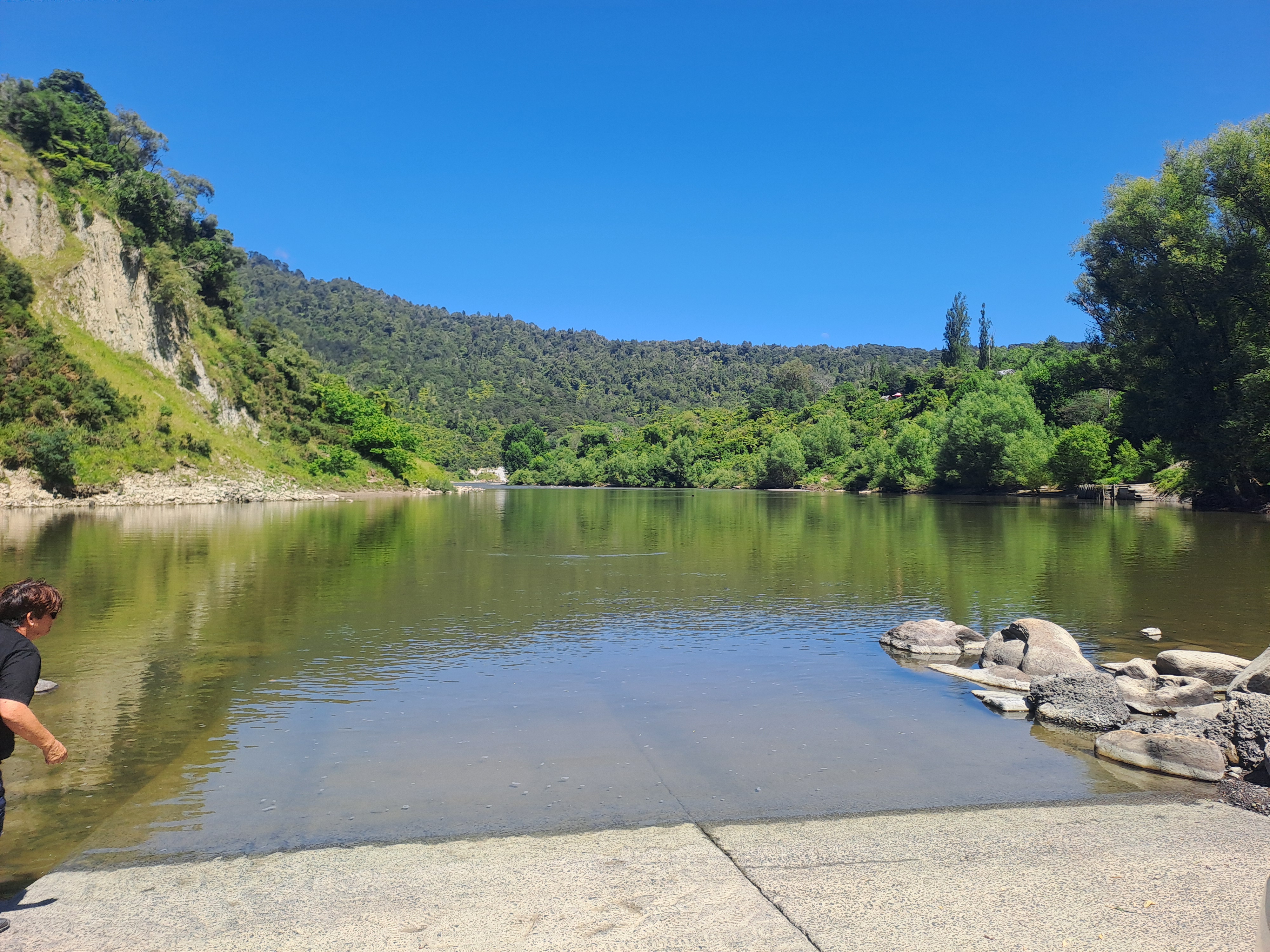
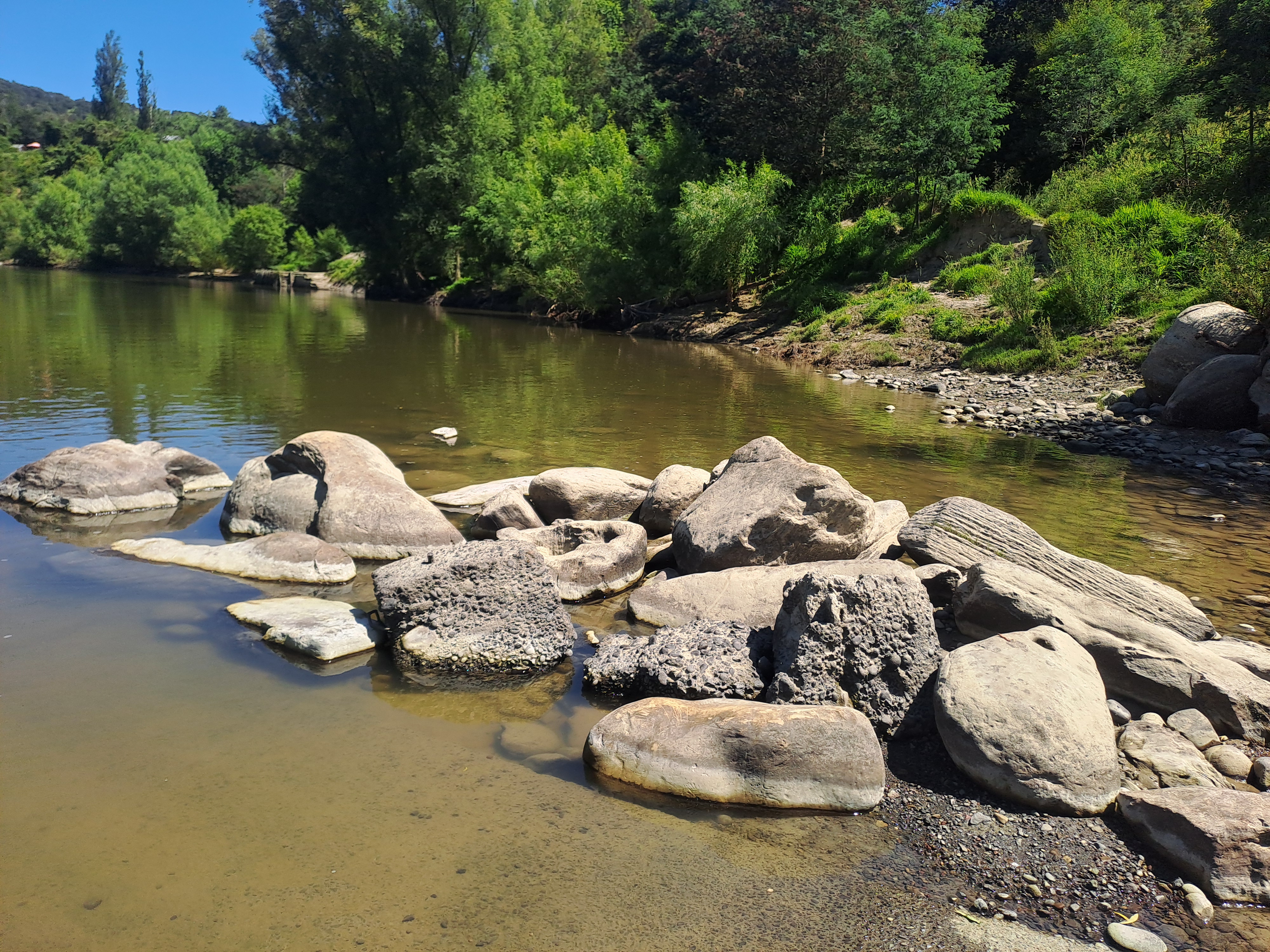
This river has legal status as a person, it is so central in importance to the local Moari. The community we were visiting had developed alongside the river before the road we travelled on was built. The people farmed locally and took their products to market by boat. Nowadays the river is used more for recreational purposes than for travel needs. However, as the river was the highway people lived on both sides of the river and the road is only on one side, so some water transport is still needed to cross the river.
We were introduced to a variety of unusual mail boxes as people take a pride in their originality.
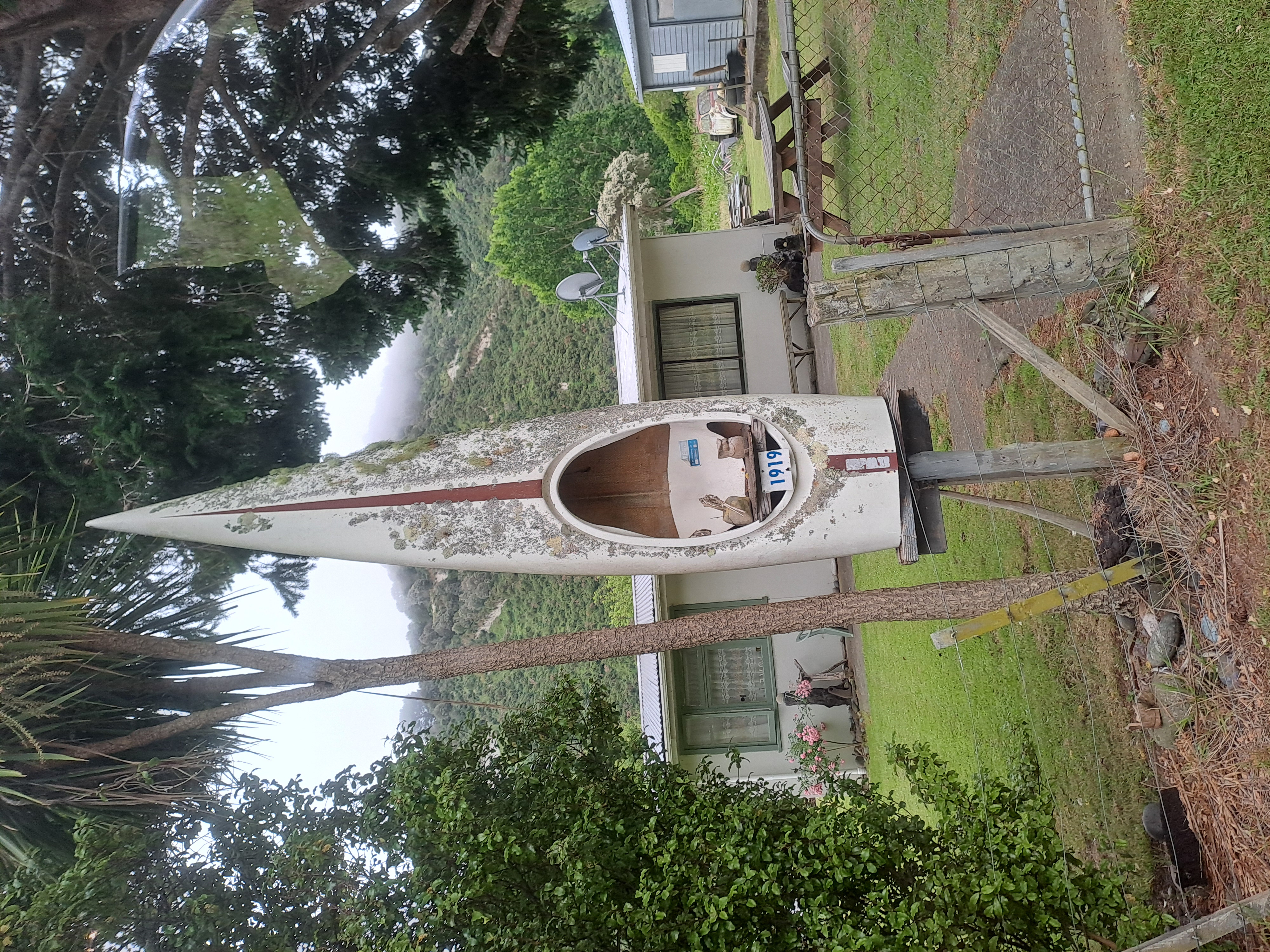
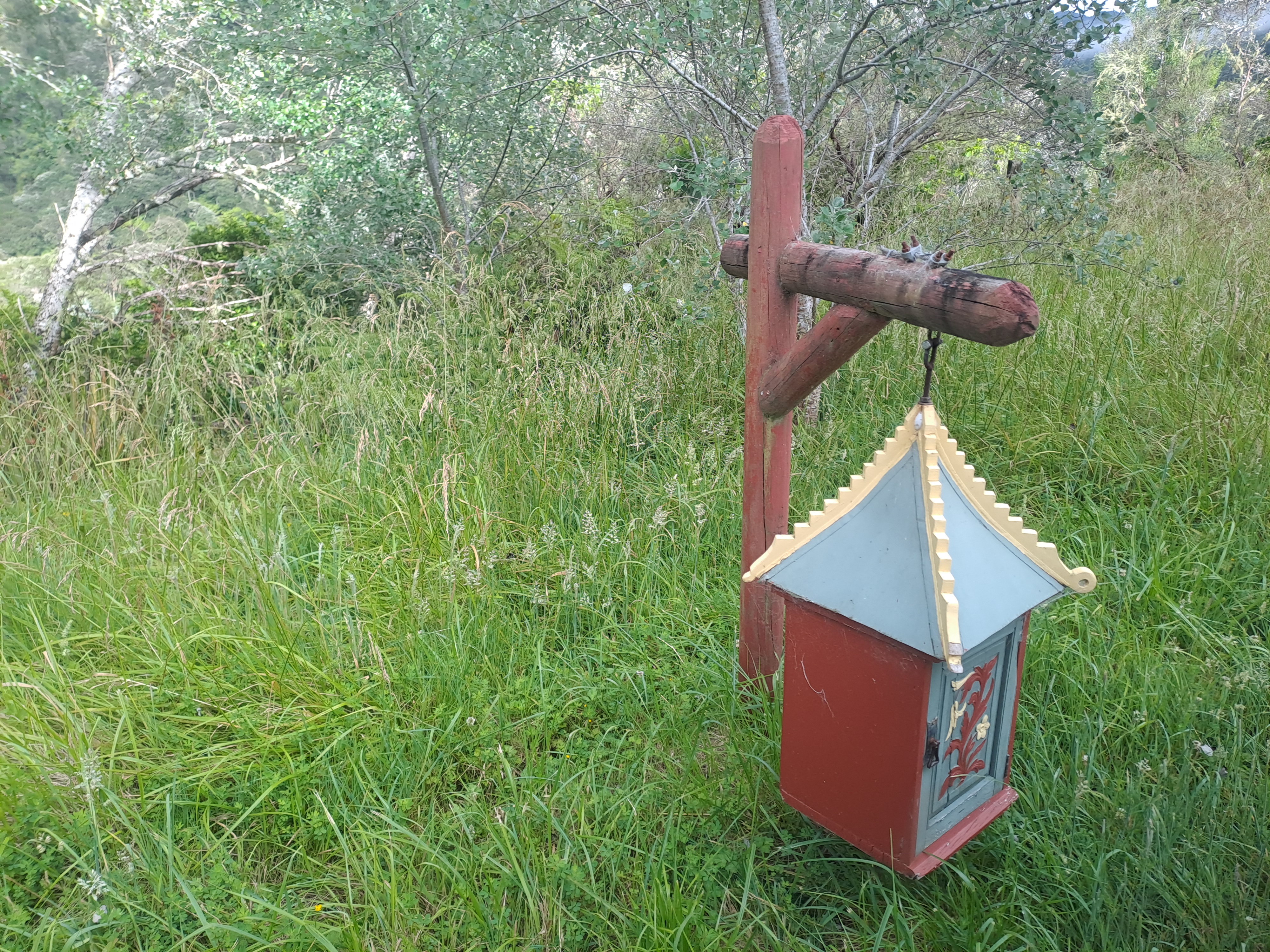
We were also introduced to the community centre for the community, the ancestor houses, community house and the church, as the community has become Christian.

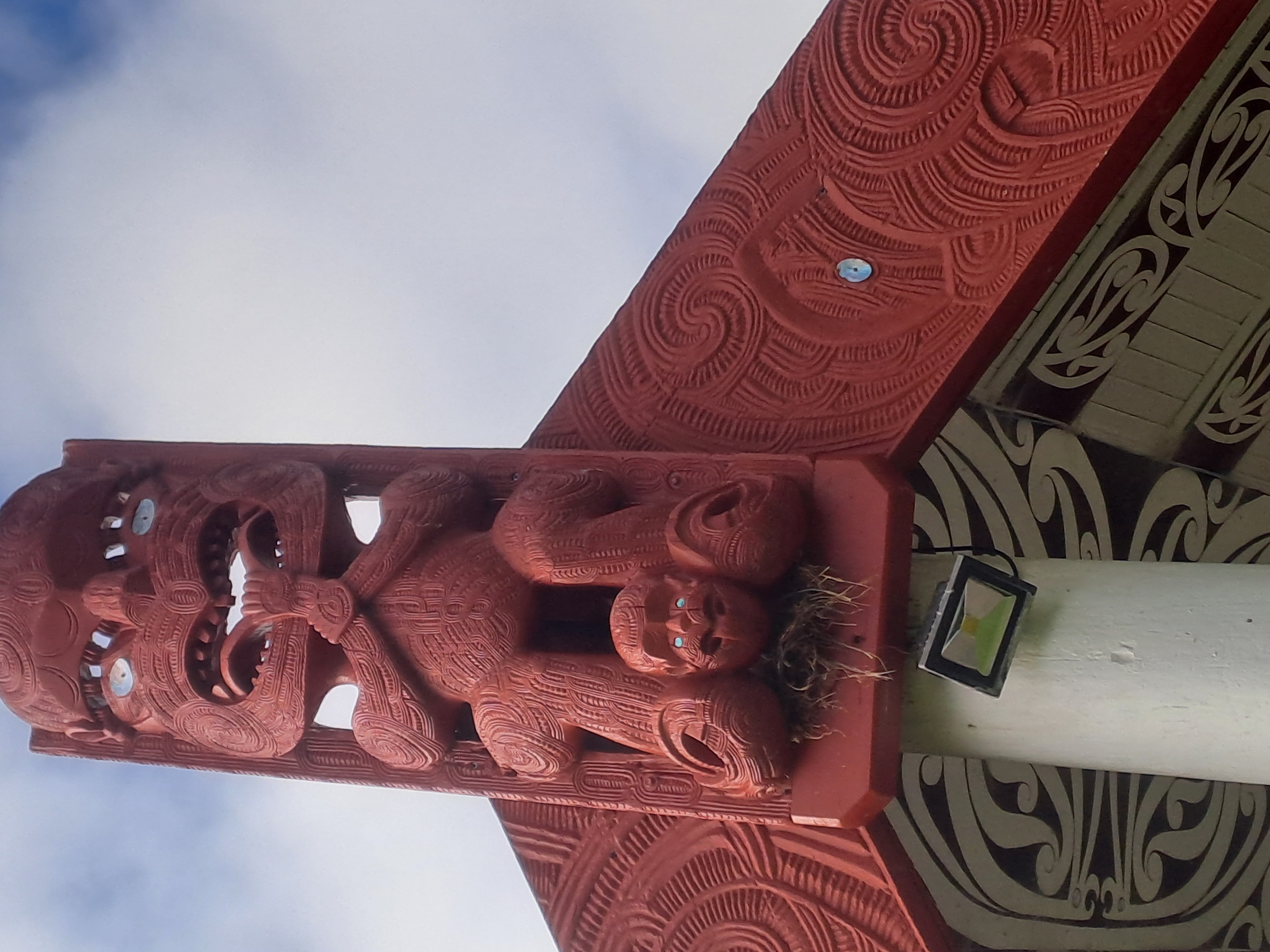

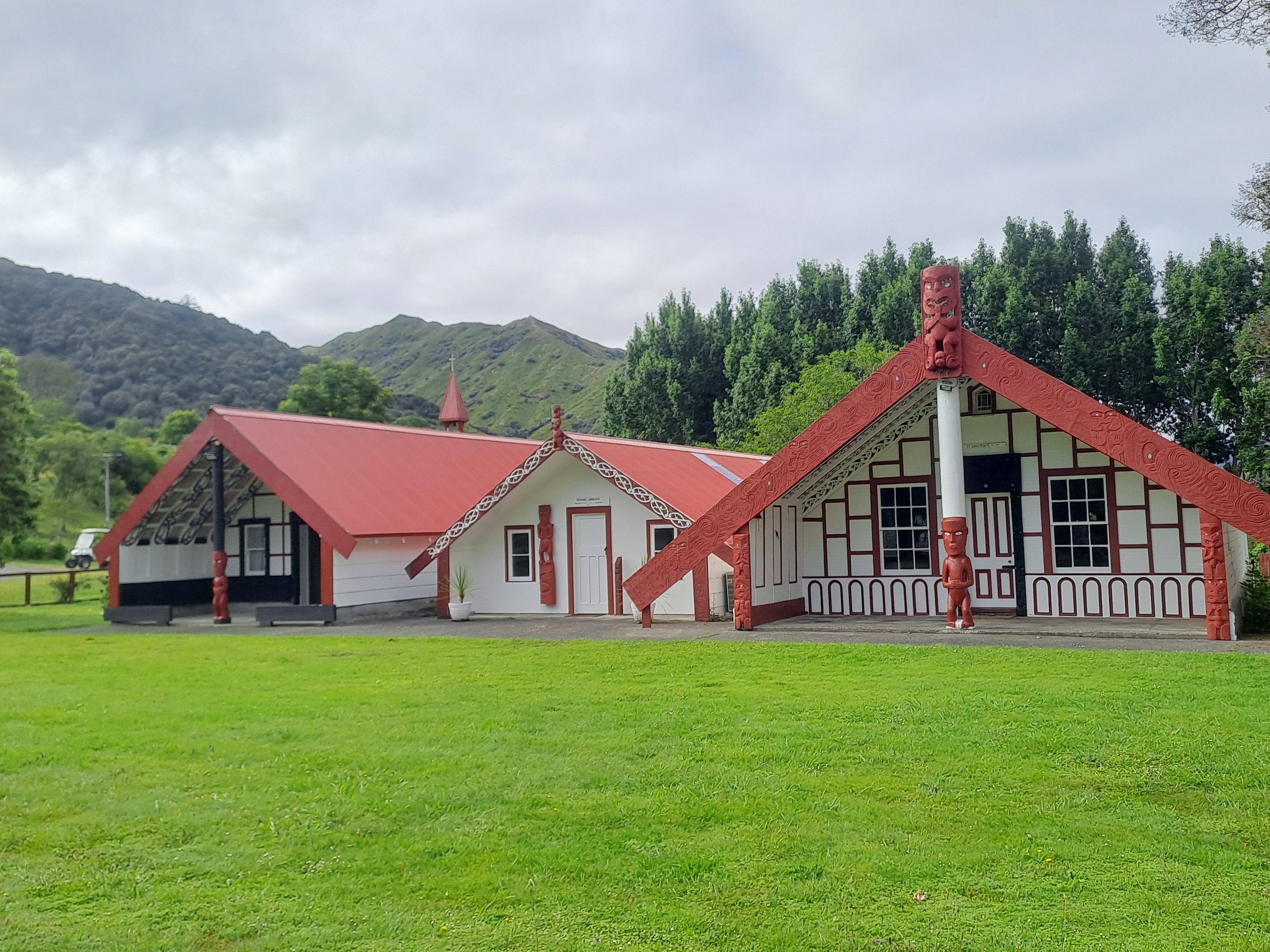

We were introduced to the local cafe and claim to fame the River Queen filmed locally with boat used on display.

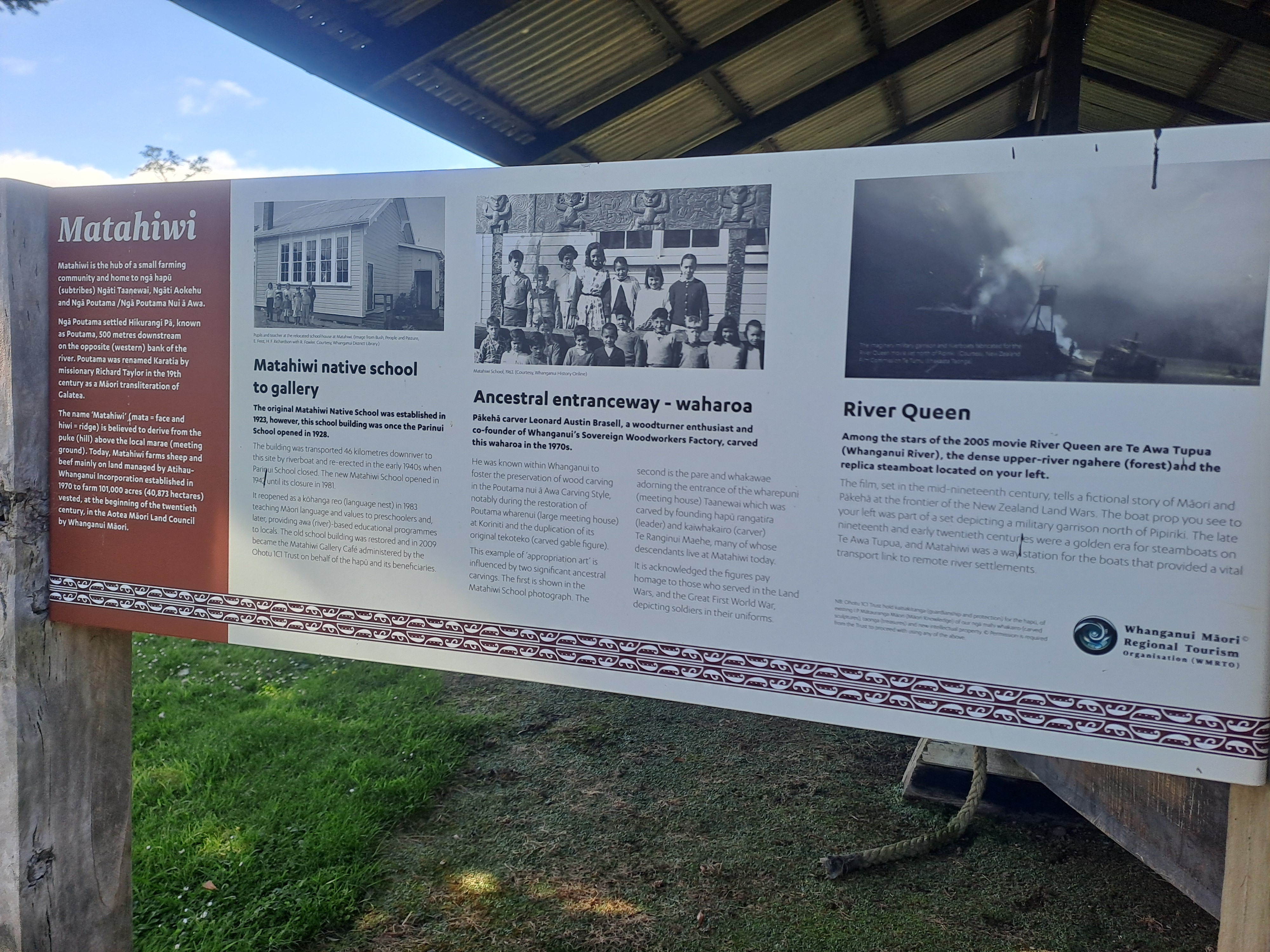
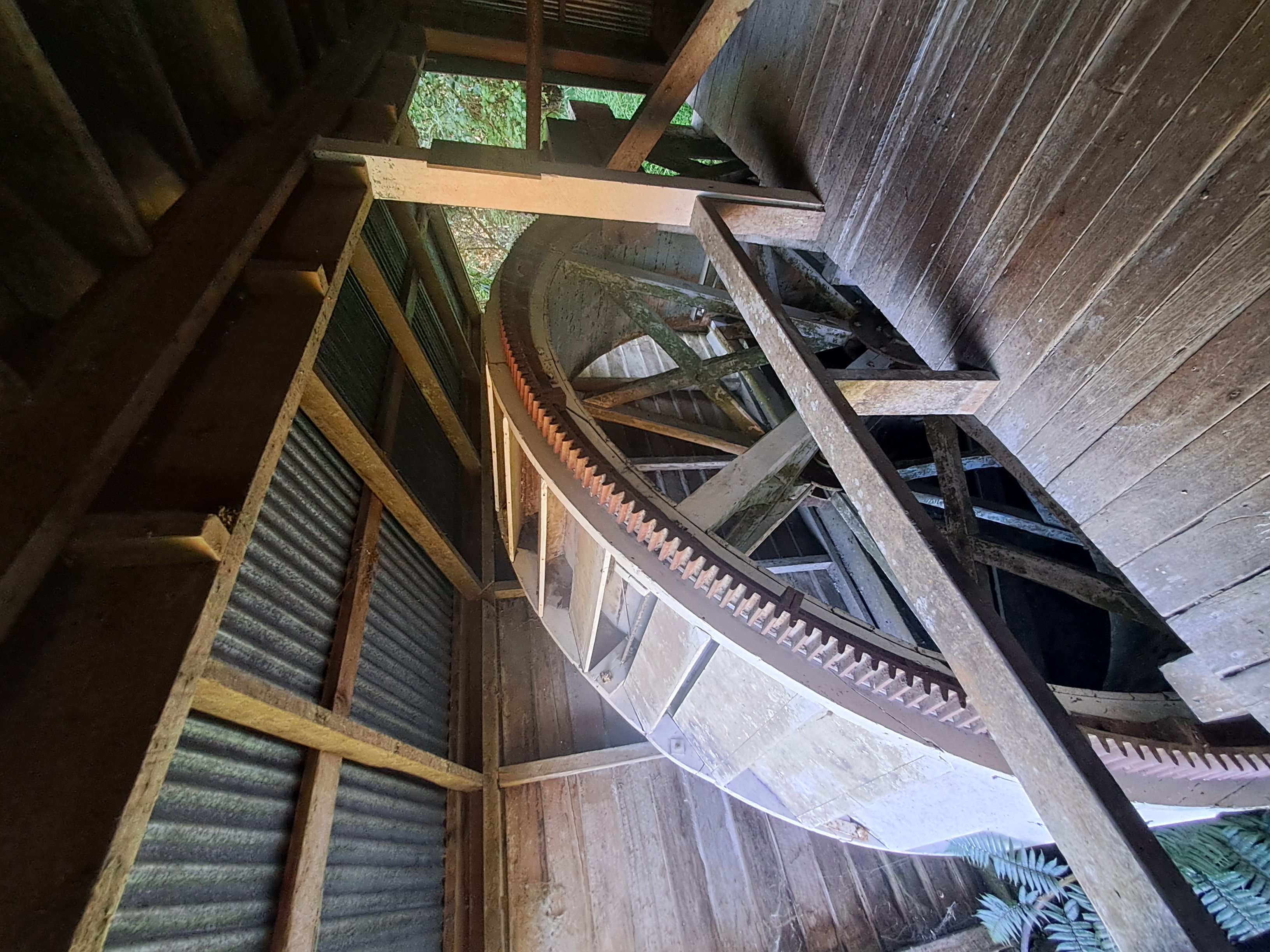
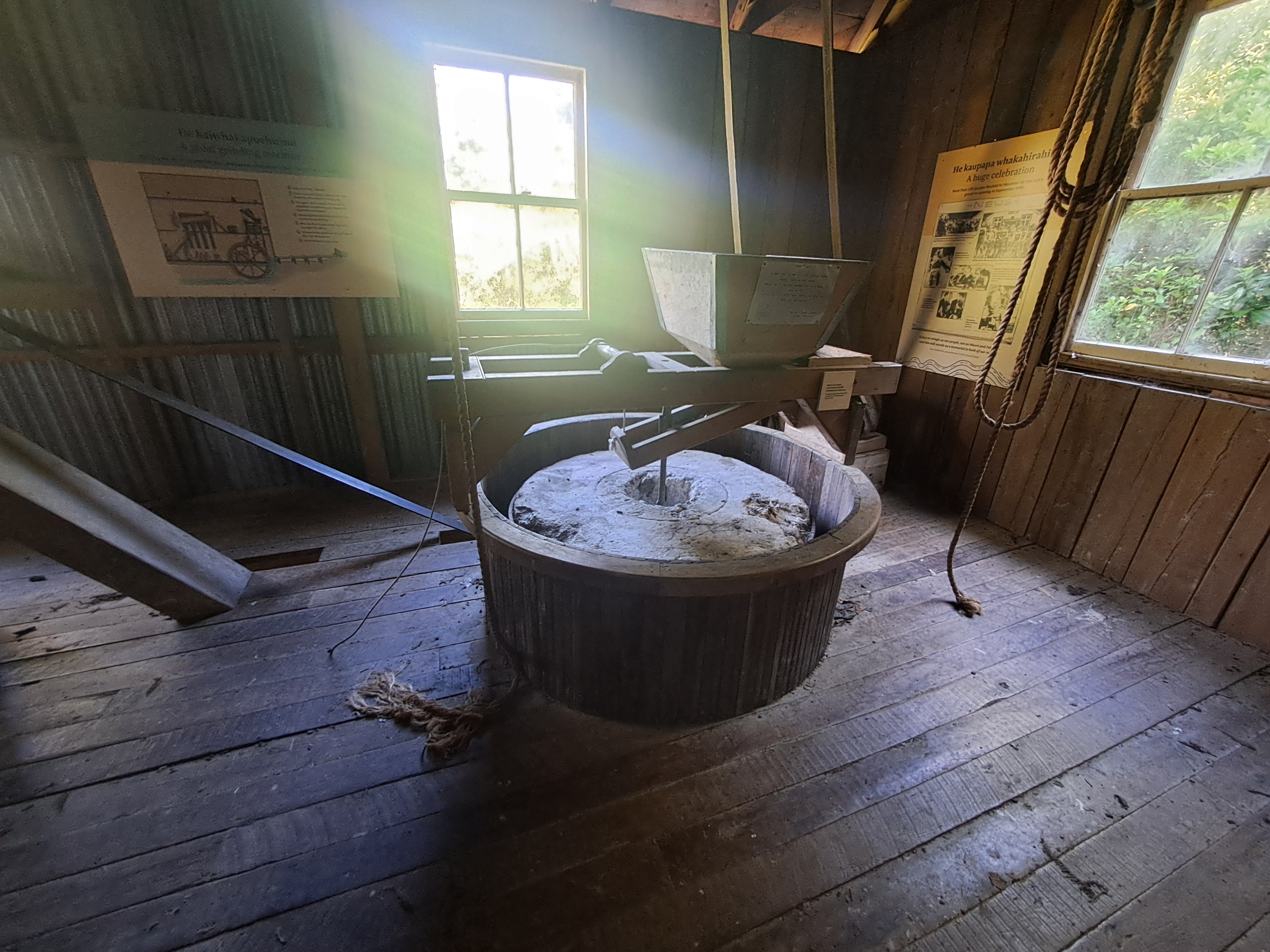
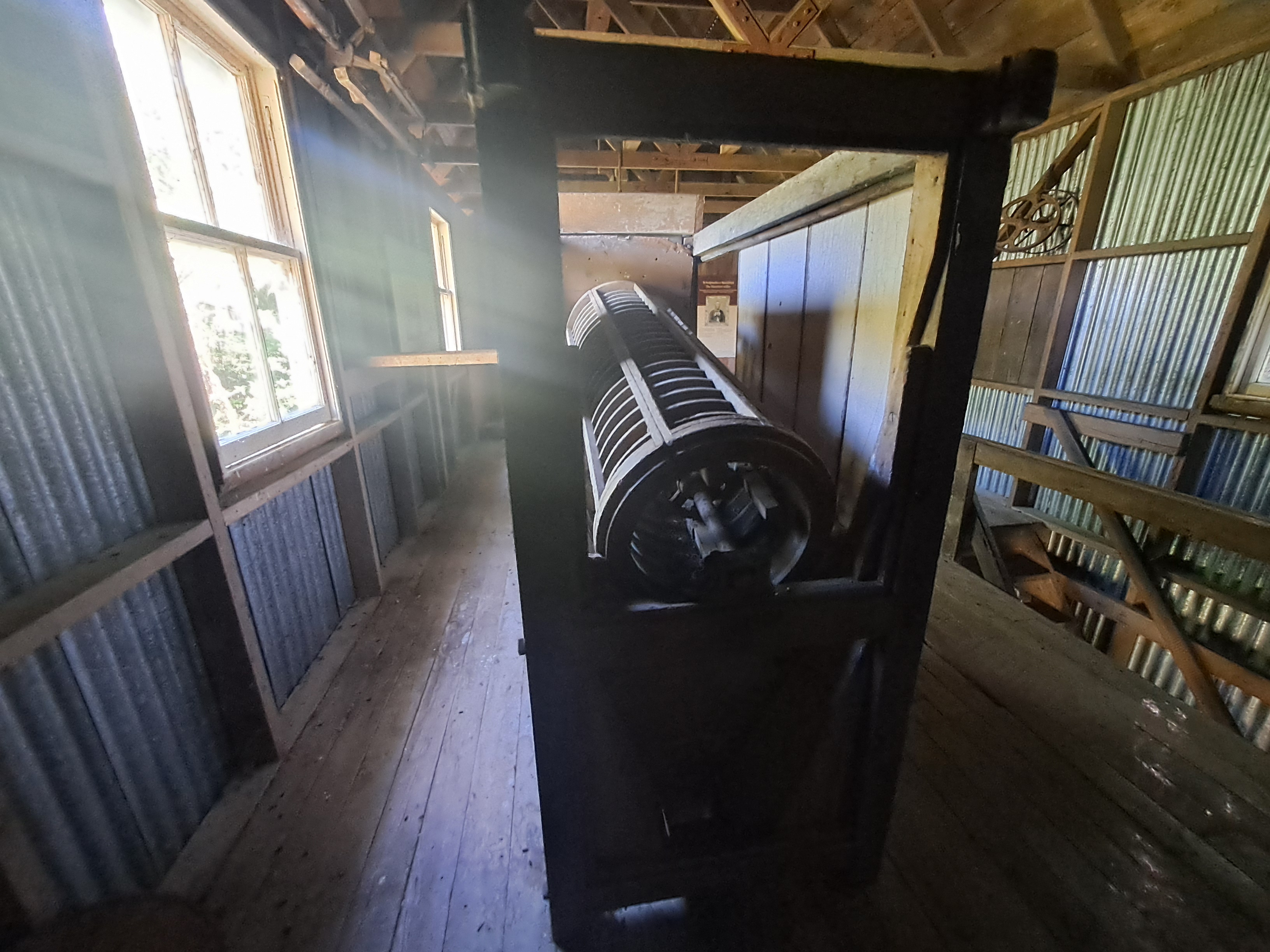
We went to the local mill not in use any more but once the hub of the grain production. The area has changed a lot in the lifetime of our postie as she talked about how much of the area was cultivated when she was a child and about the aging of the population. Children get sent away for their secondary education and often stay away. She came back when she bought the mail contract, which she now combines with tourism
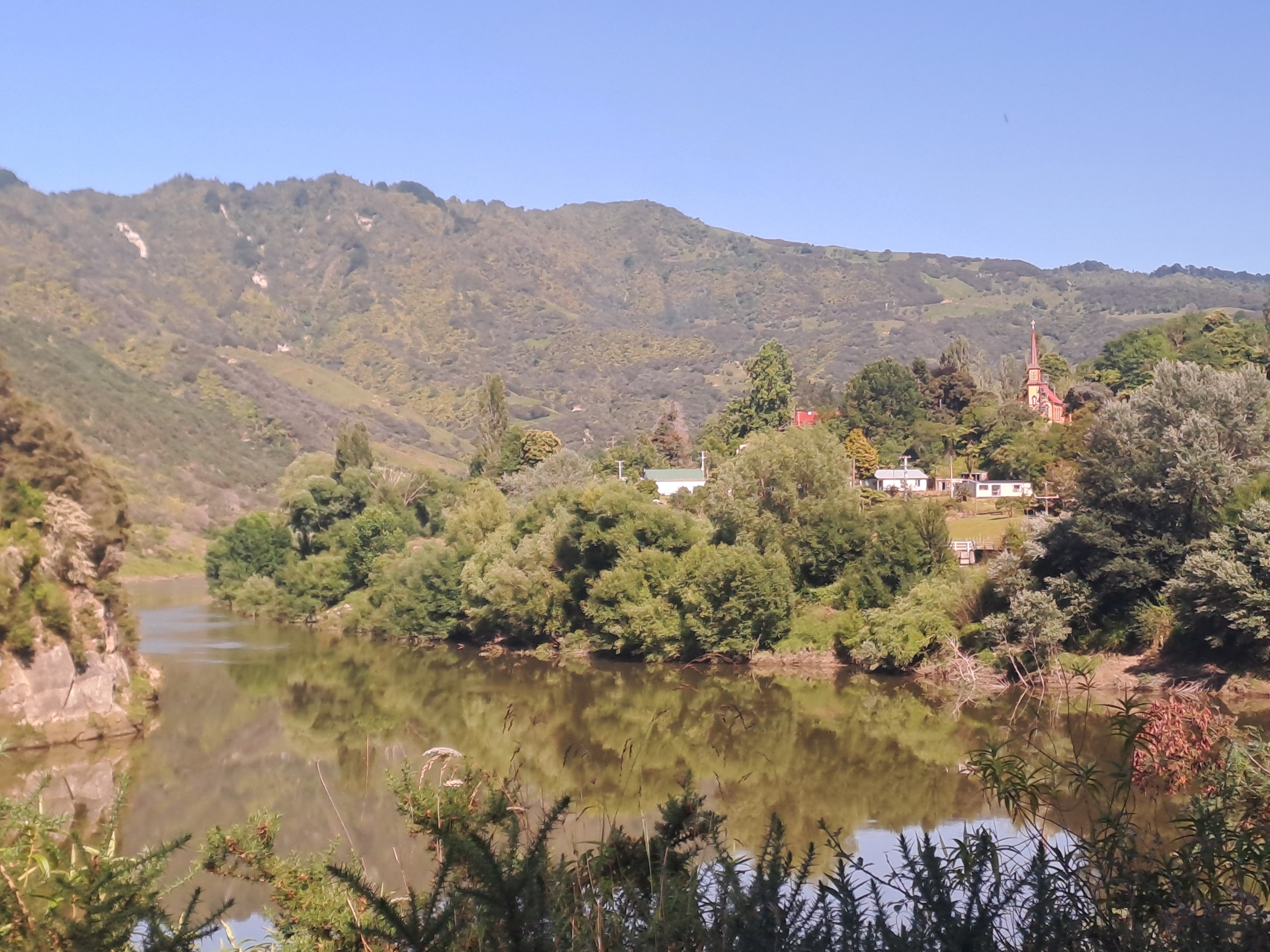
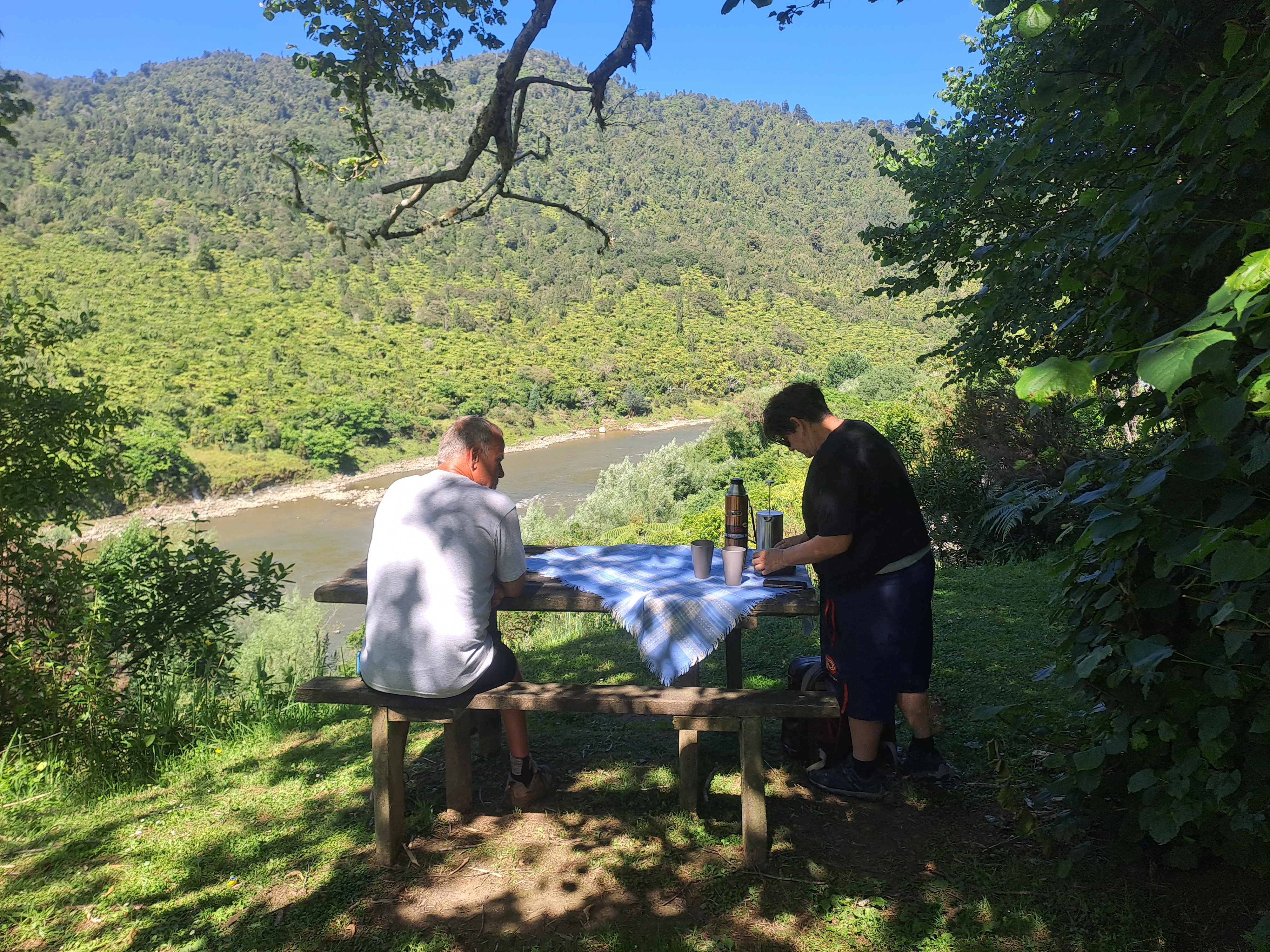
We stopped for lunch with a wonderful view over the river.

Our last visit was the Jerusalem convent to see the church there and the stations of the cross. The church us a blend of European and Moari cultures. Showing the adoption of the Catholic beliefs by the community.
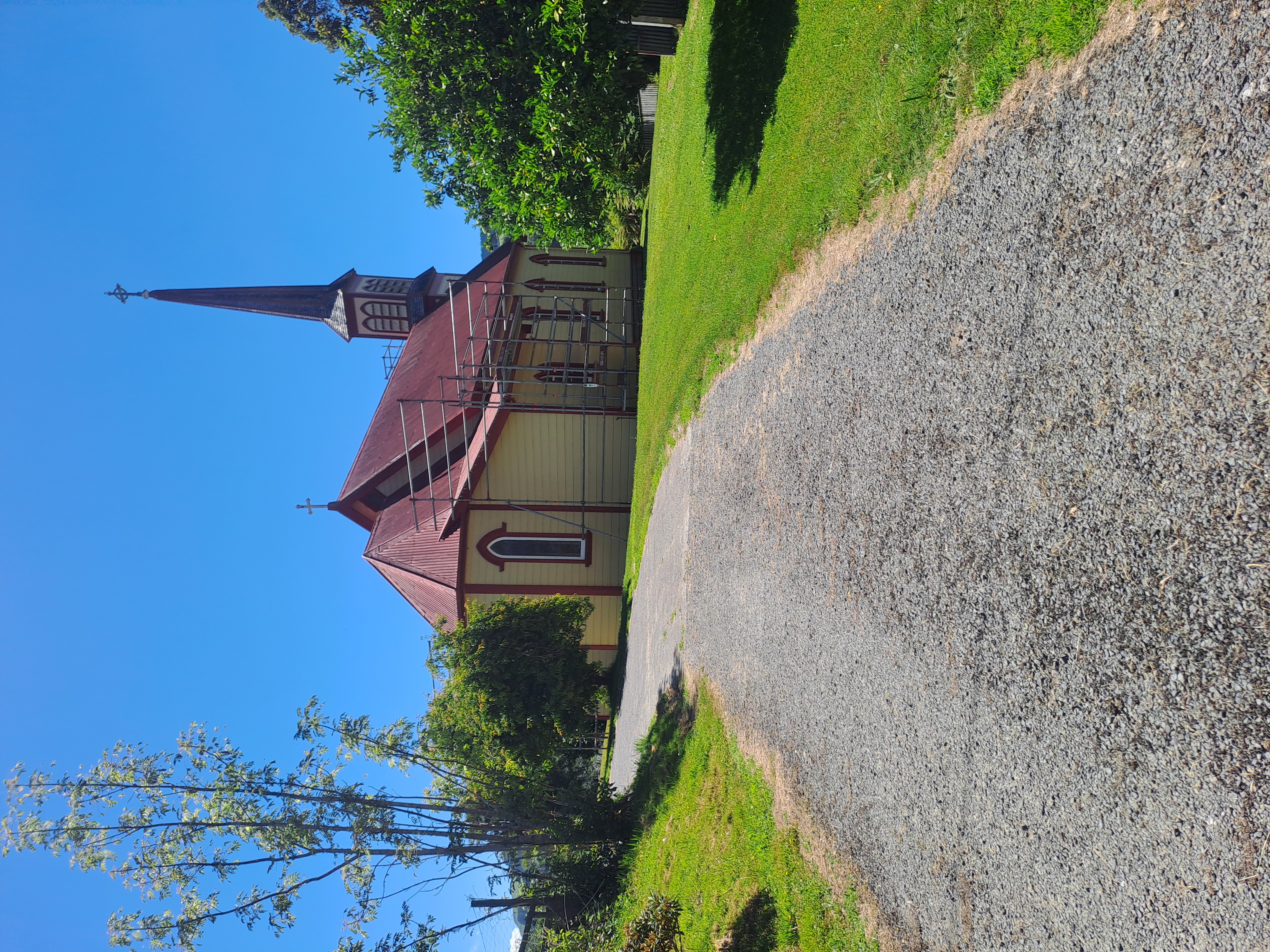
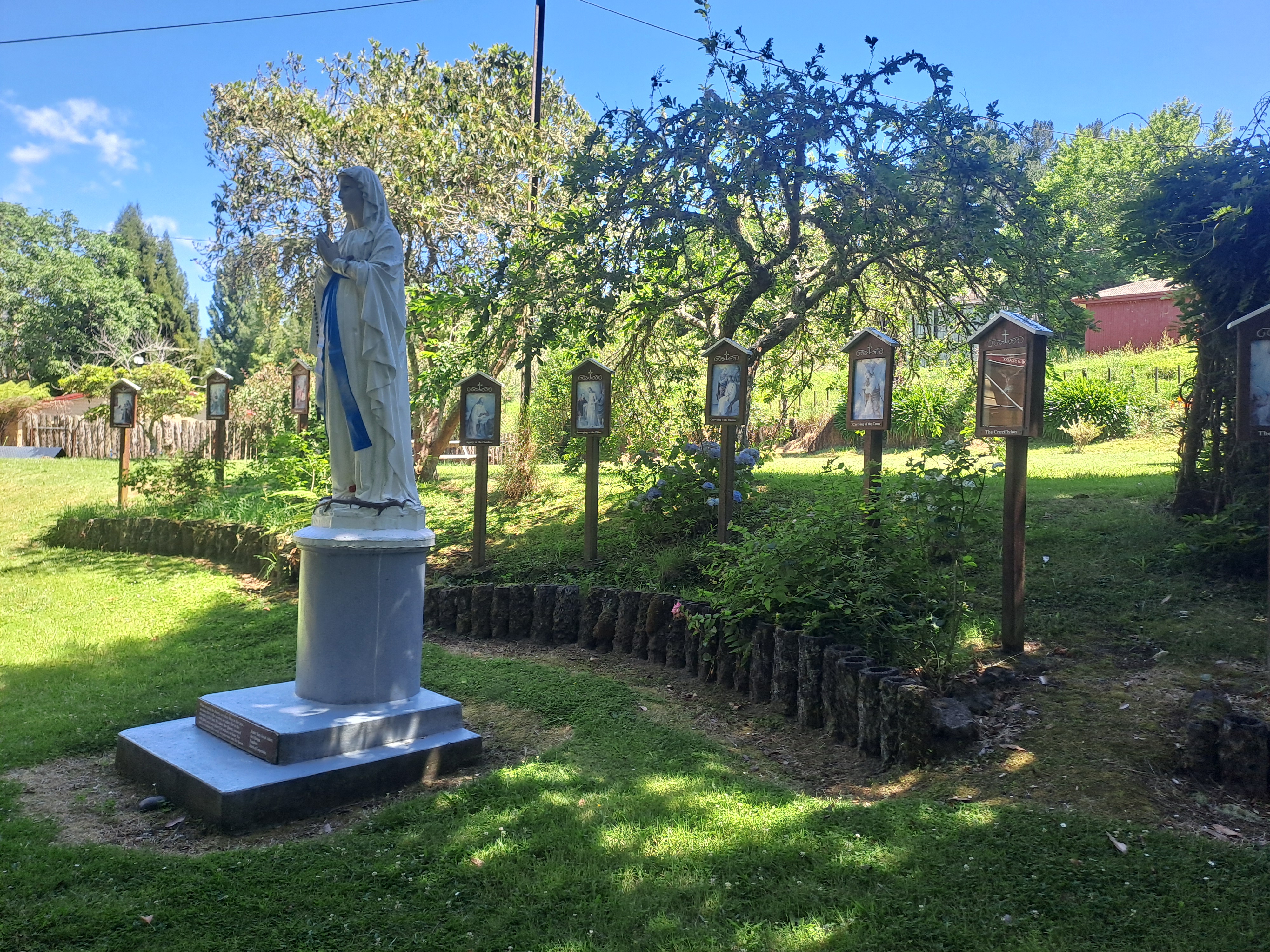
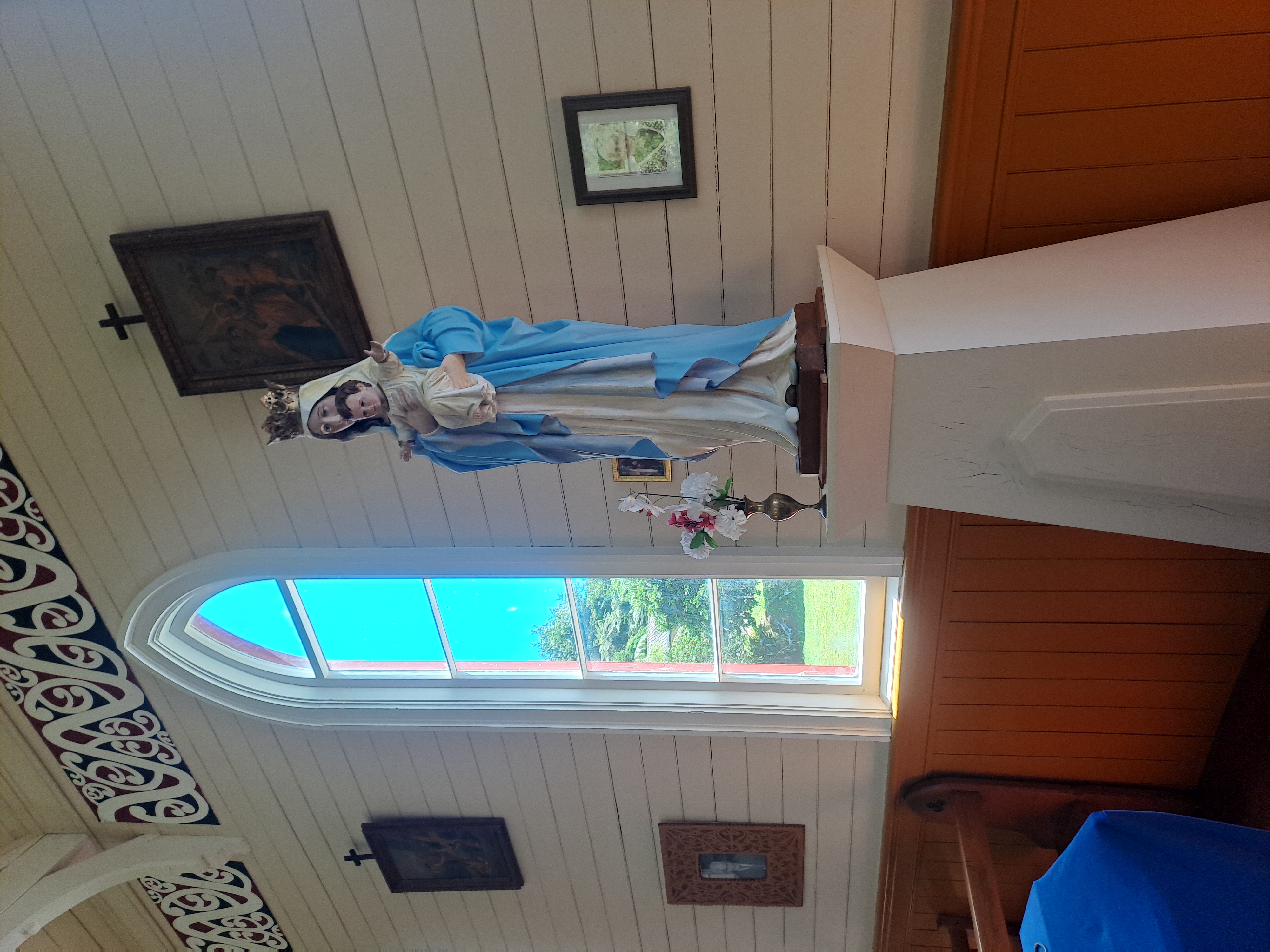


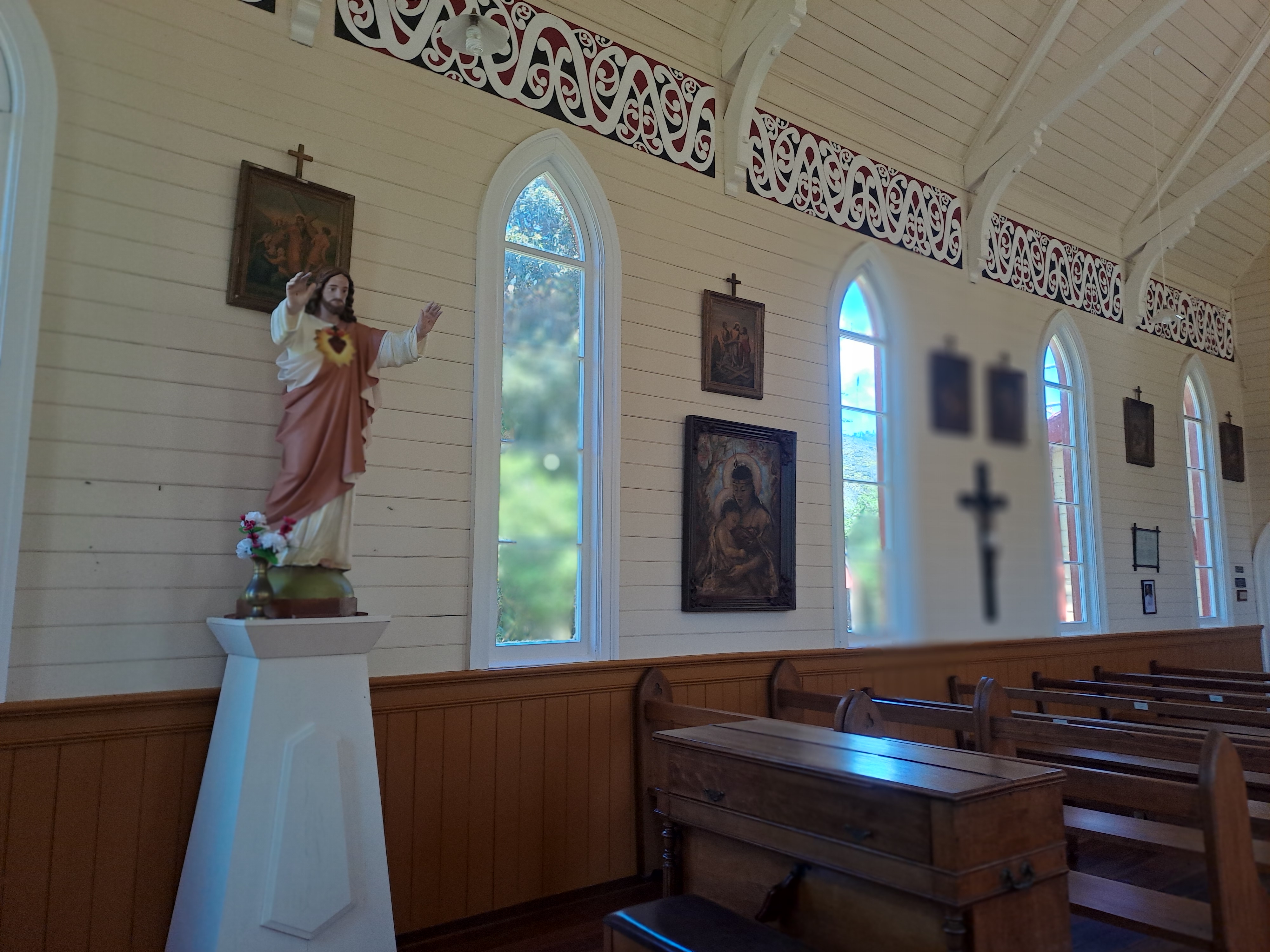
We took our last pictures on the way back and enjoyed the sunset.

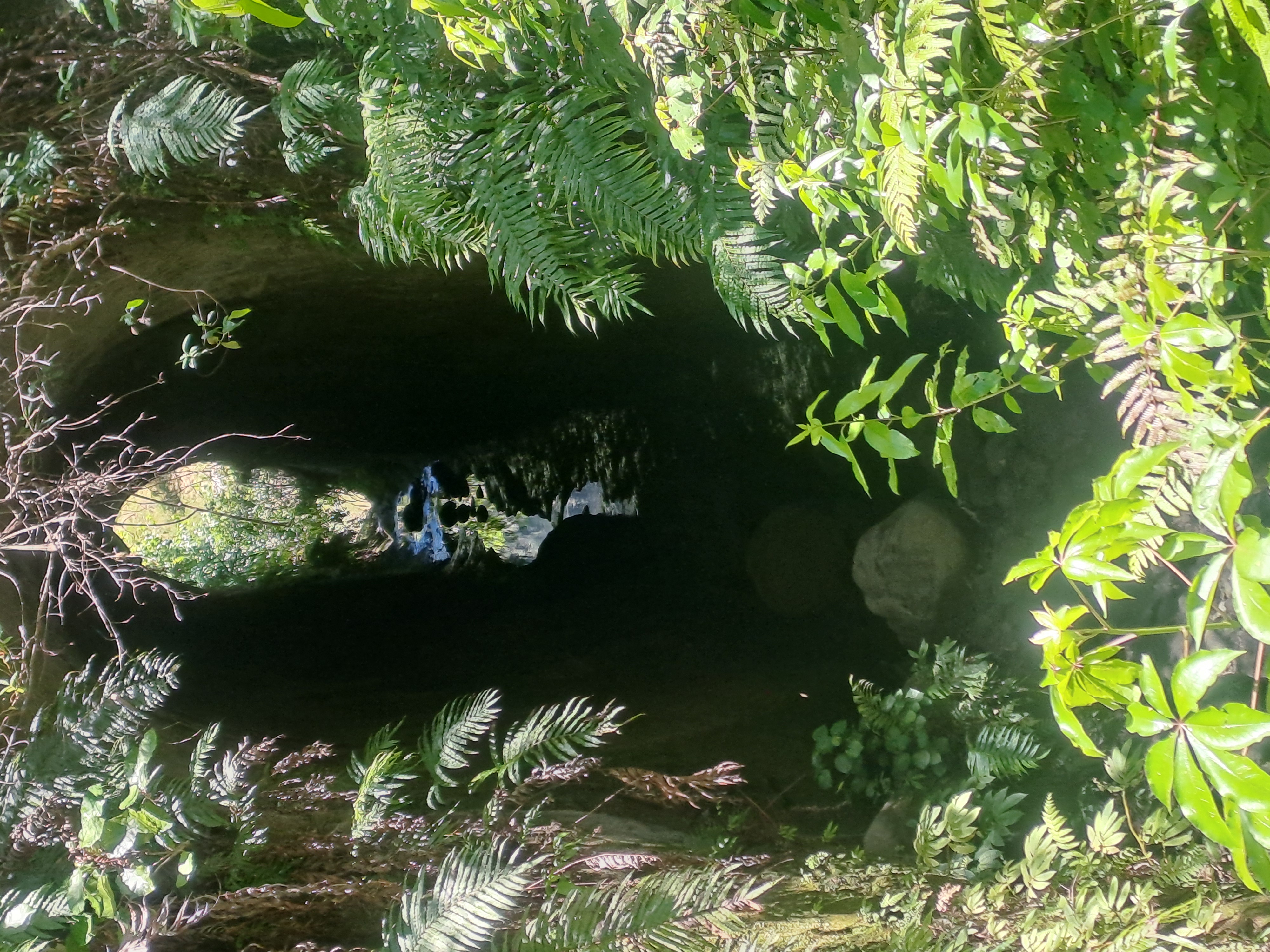
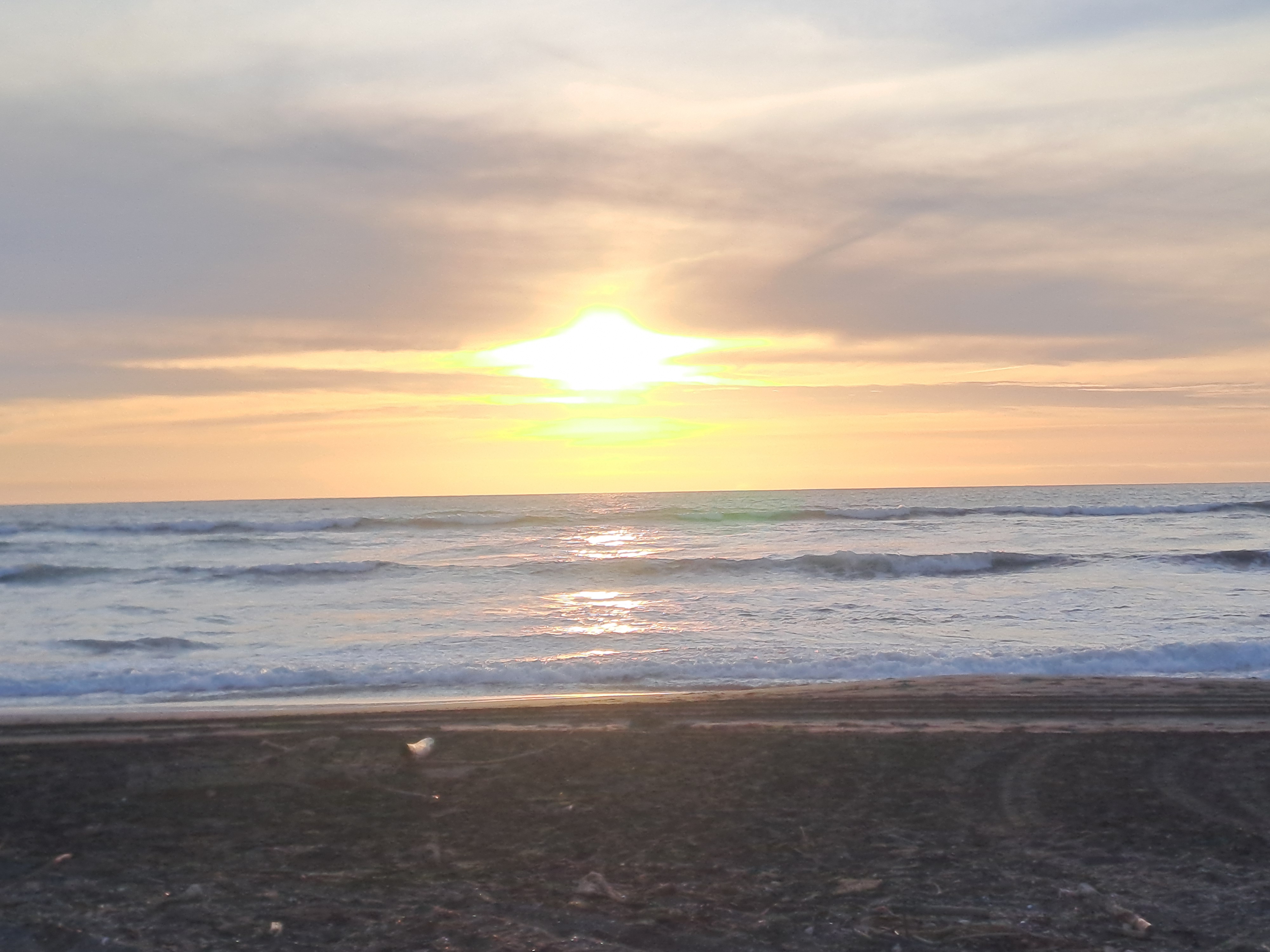
We had a look around Whanganui the next day. The main town is based across ths all important river.

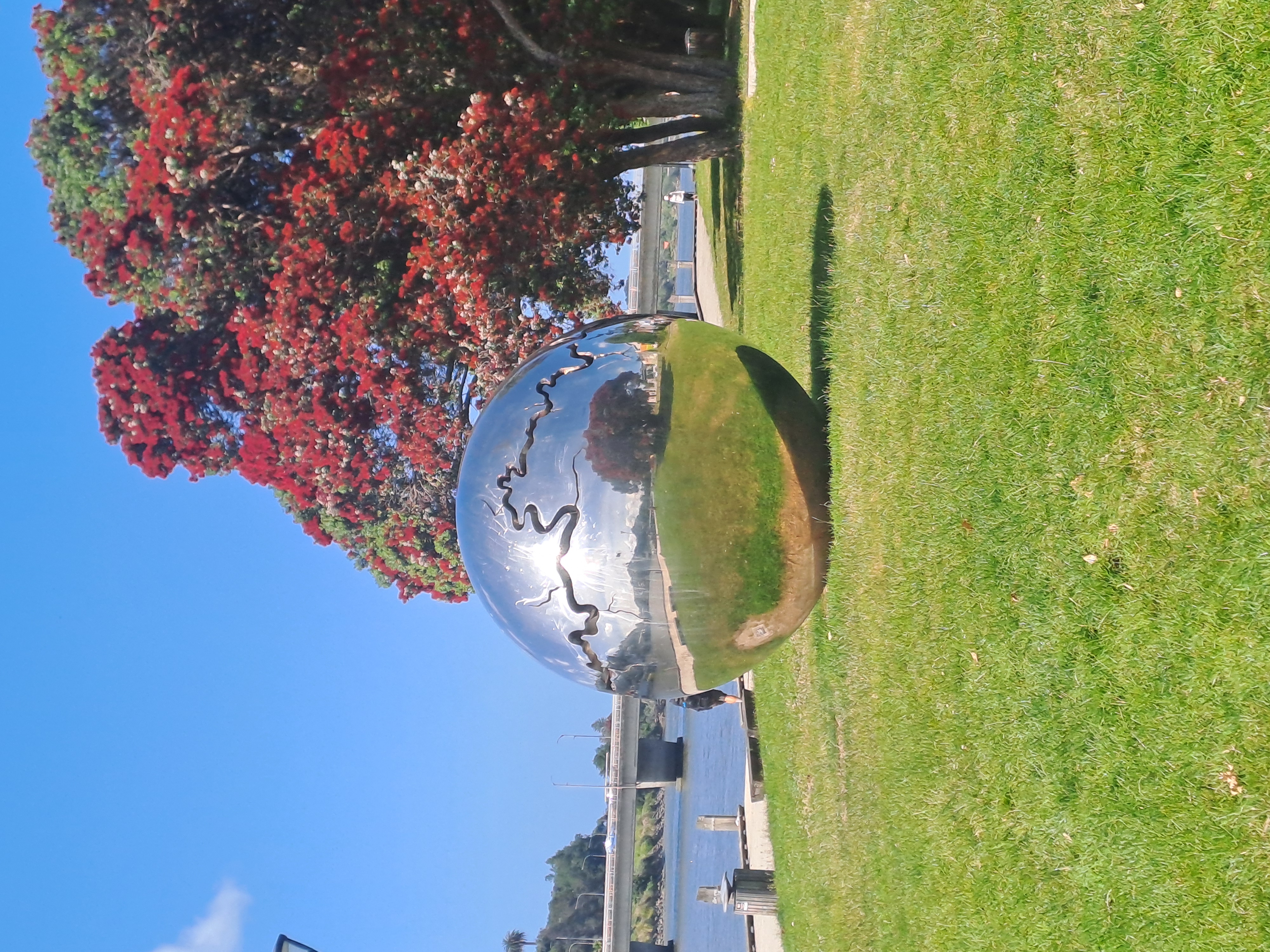
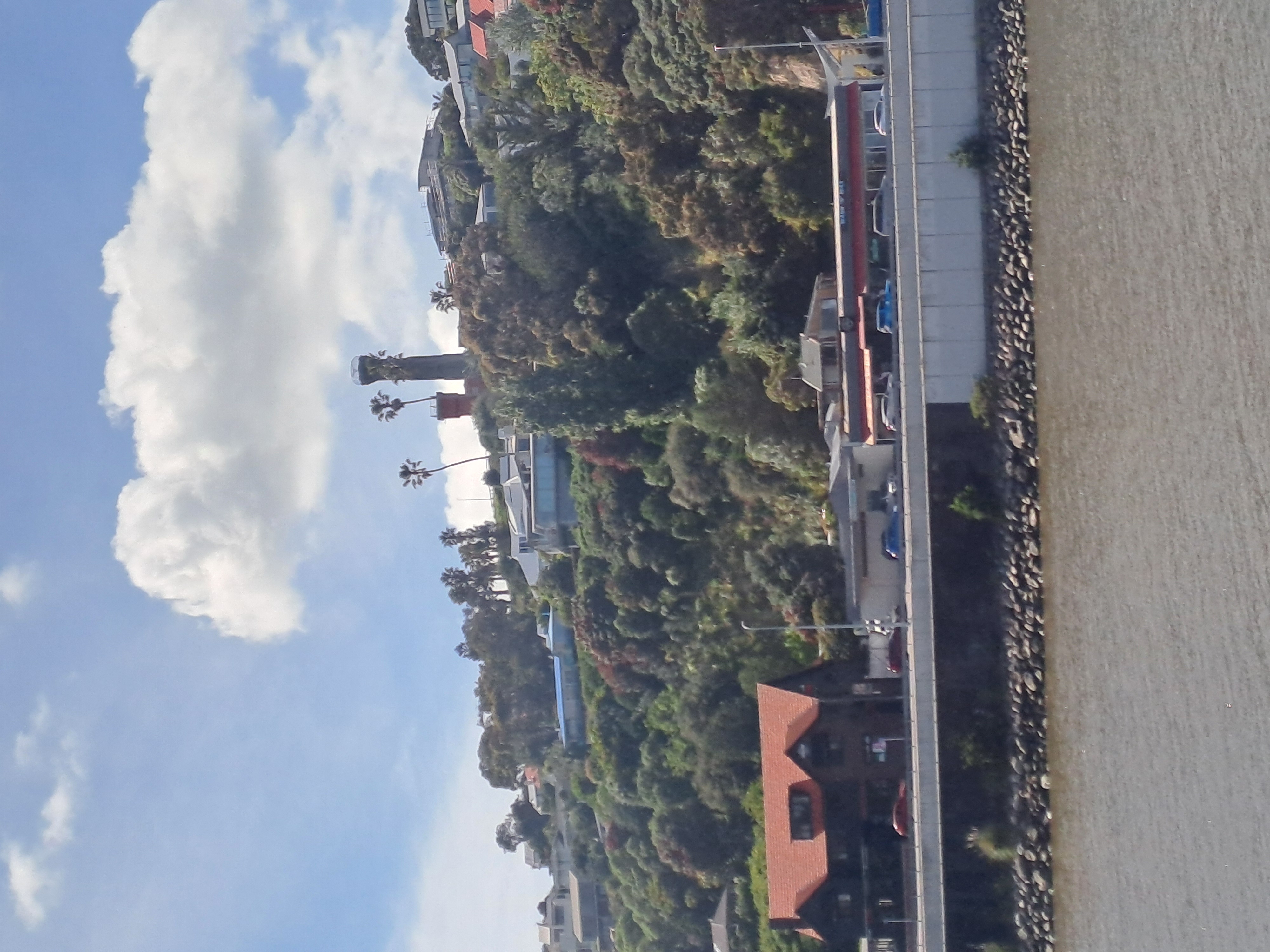

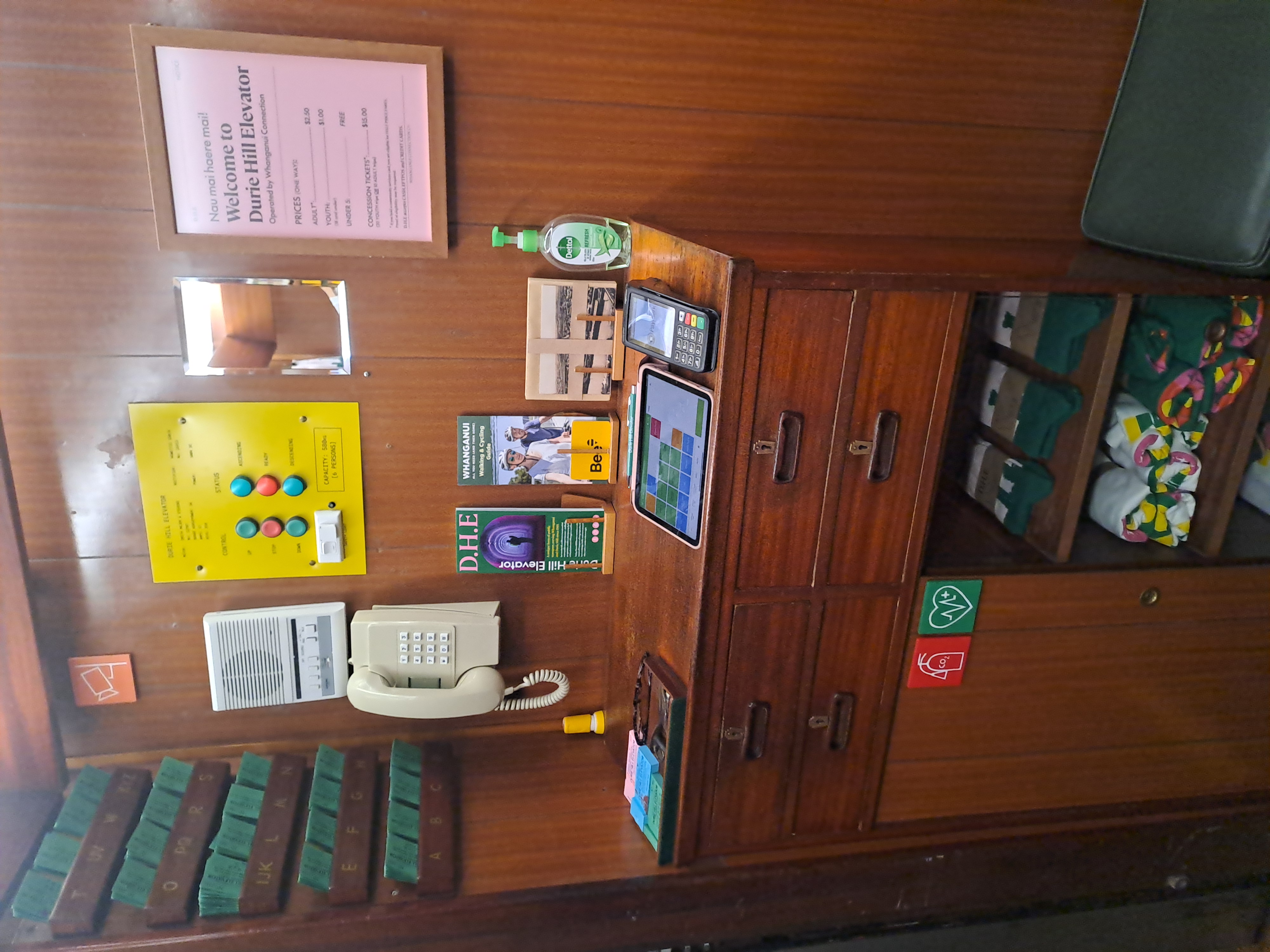
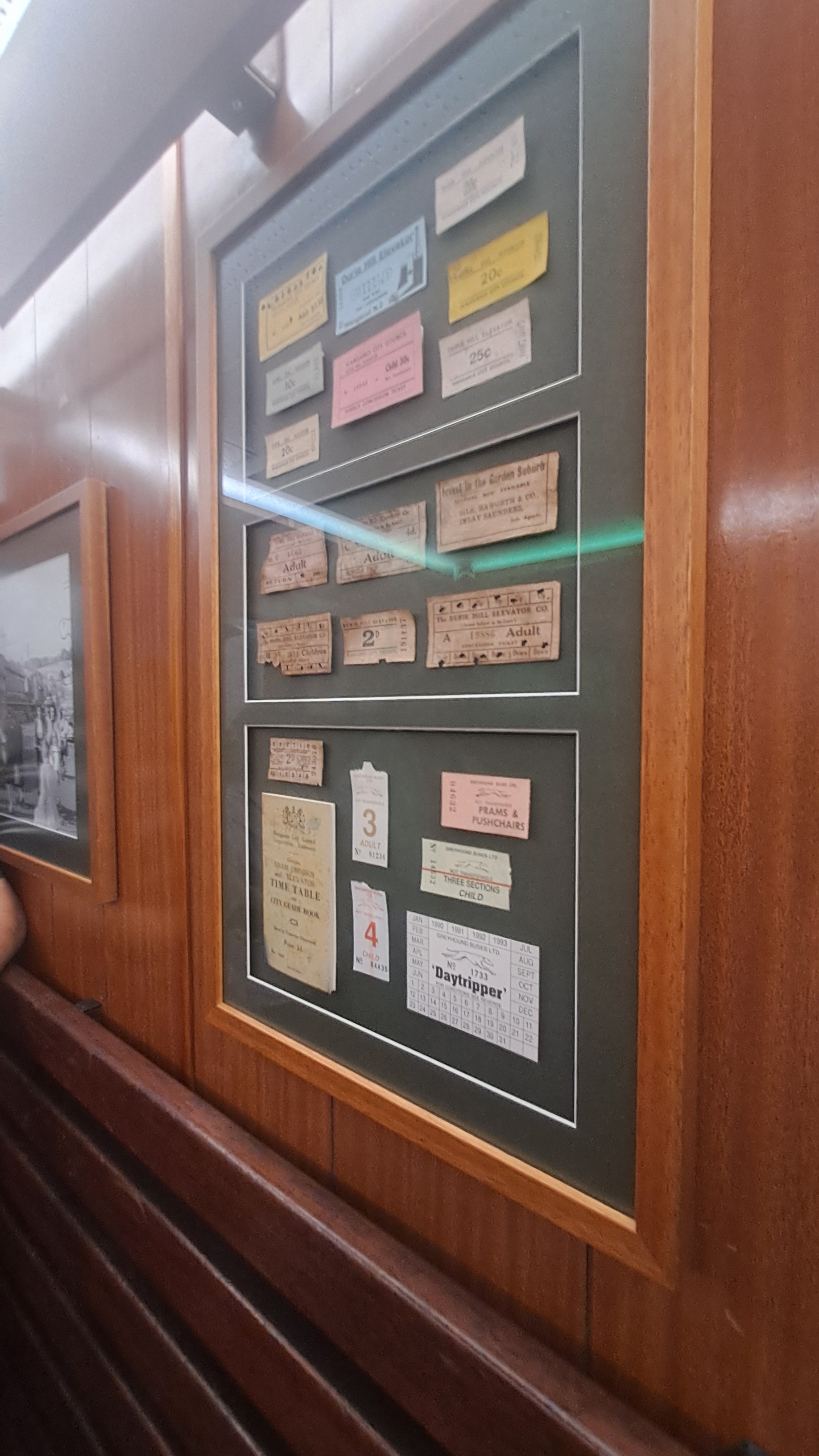
We crossed the river to go the underground elevator. A historic feature of the town. The entrance tunnel had ever changing light displays and the colours move along the tunnel. The elevator its self had the original features abd displays if tickets etc.


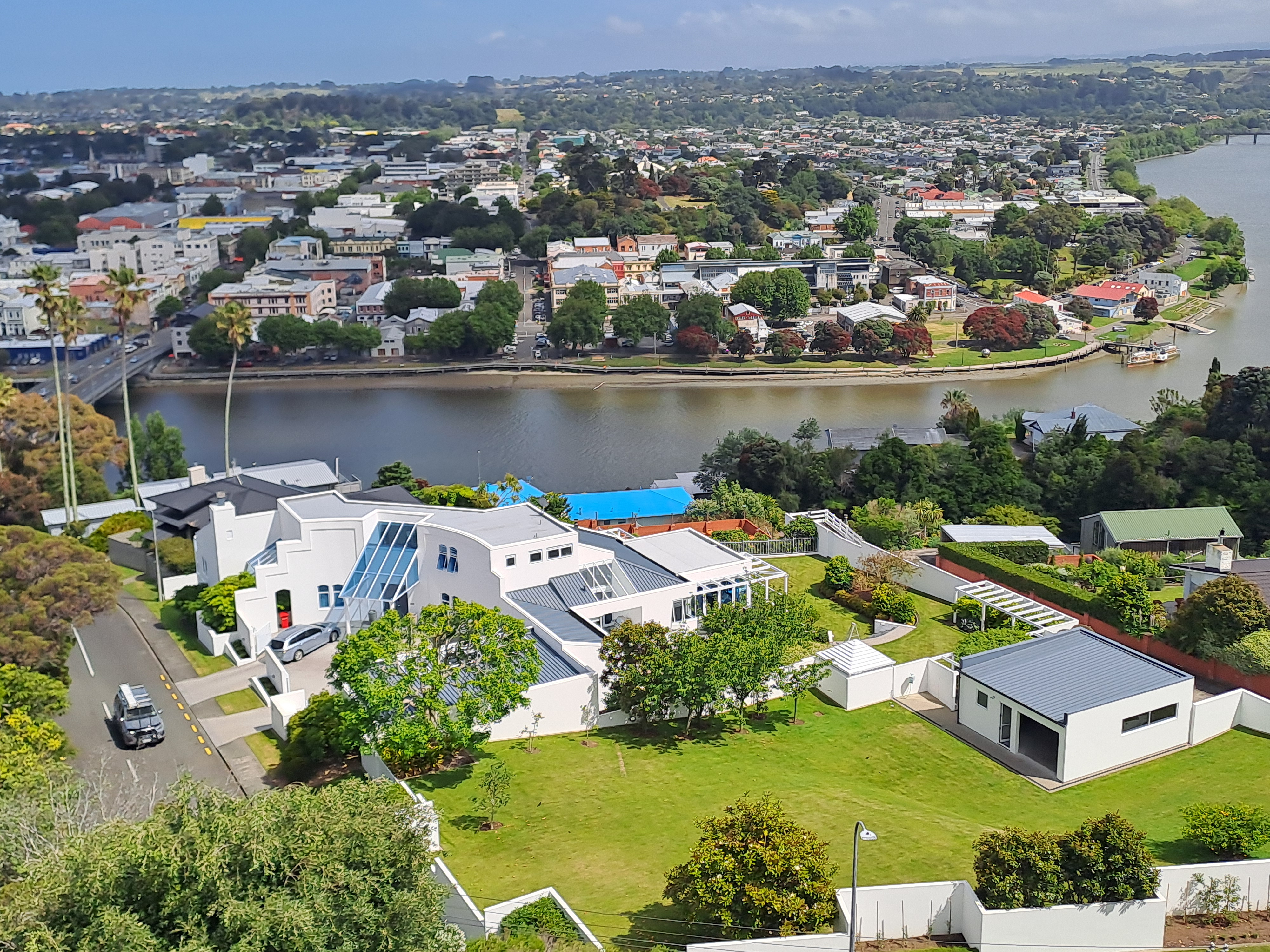
From the top of the hill you could climb up on the roof over the elevator for the views. Including one rather large and presumably piece of prime property.

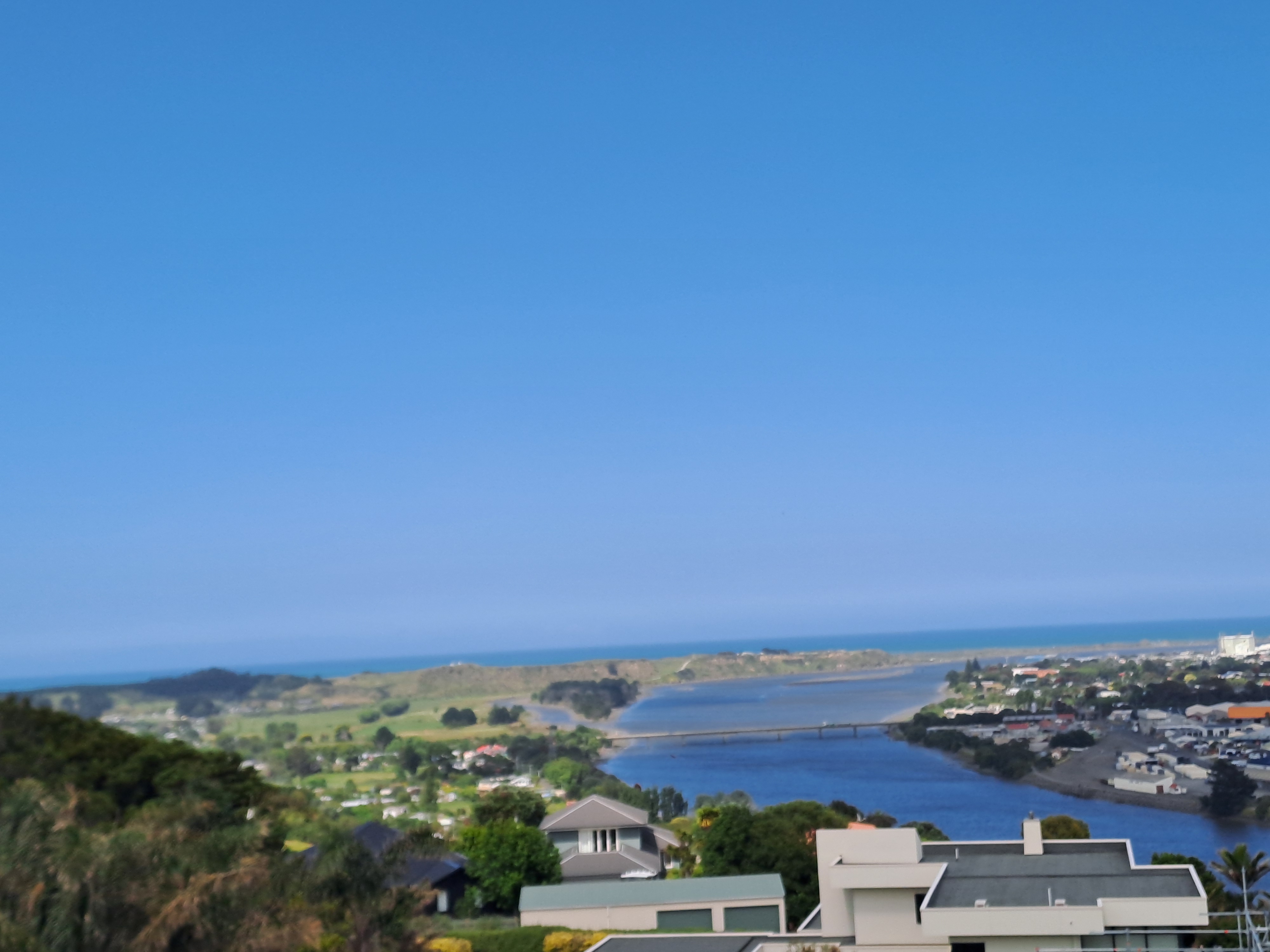
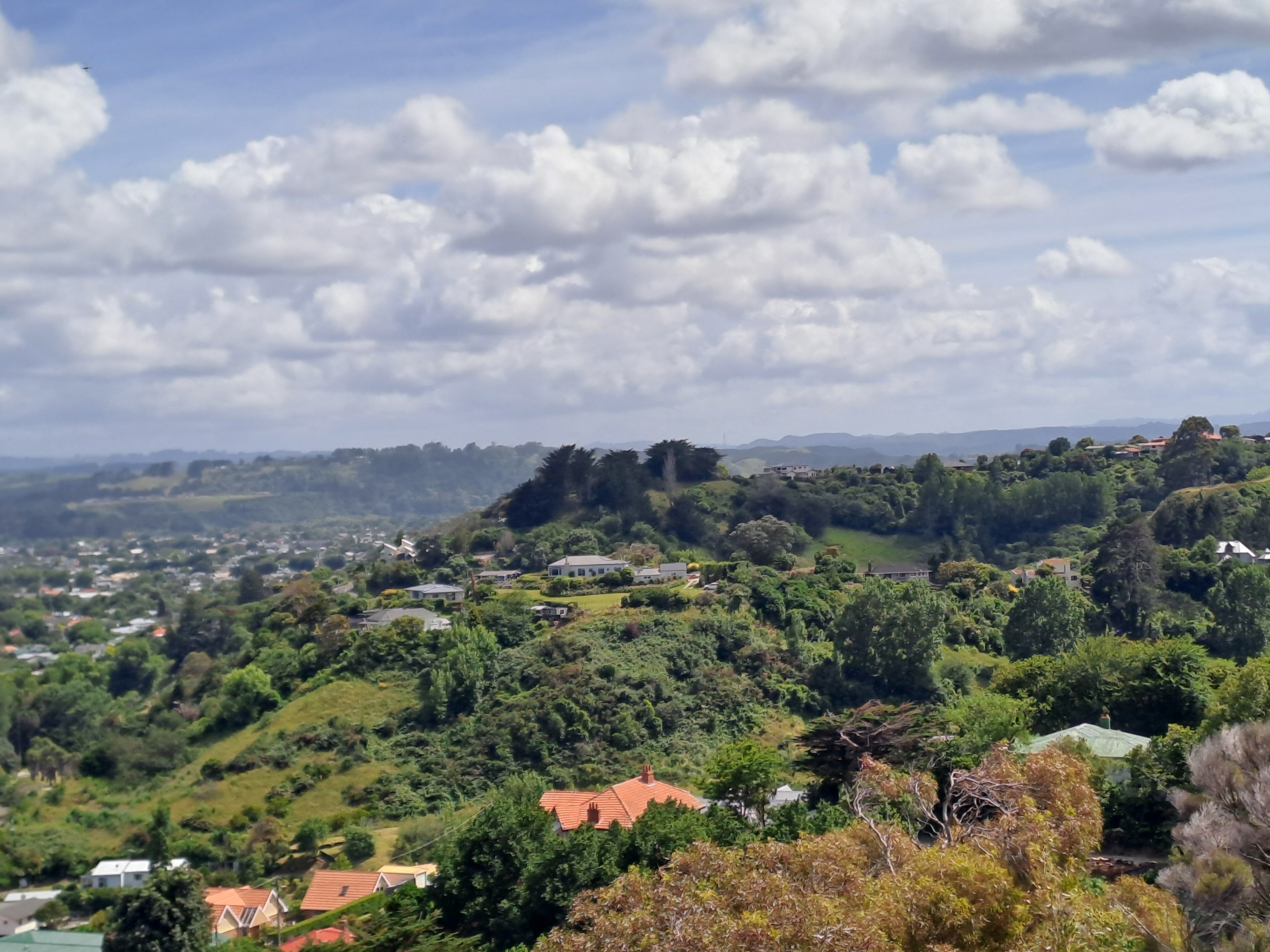
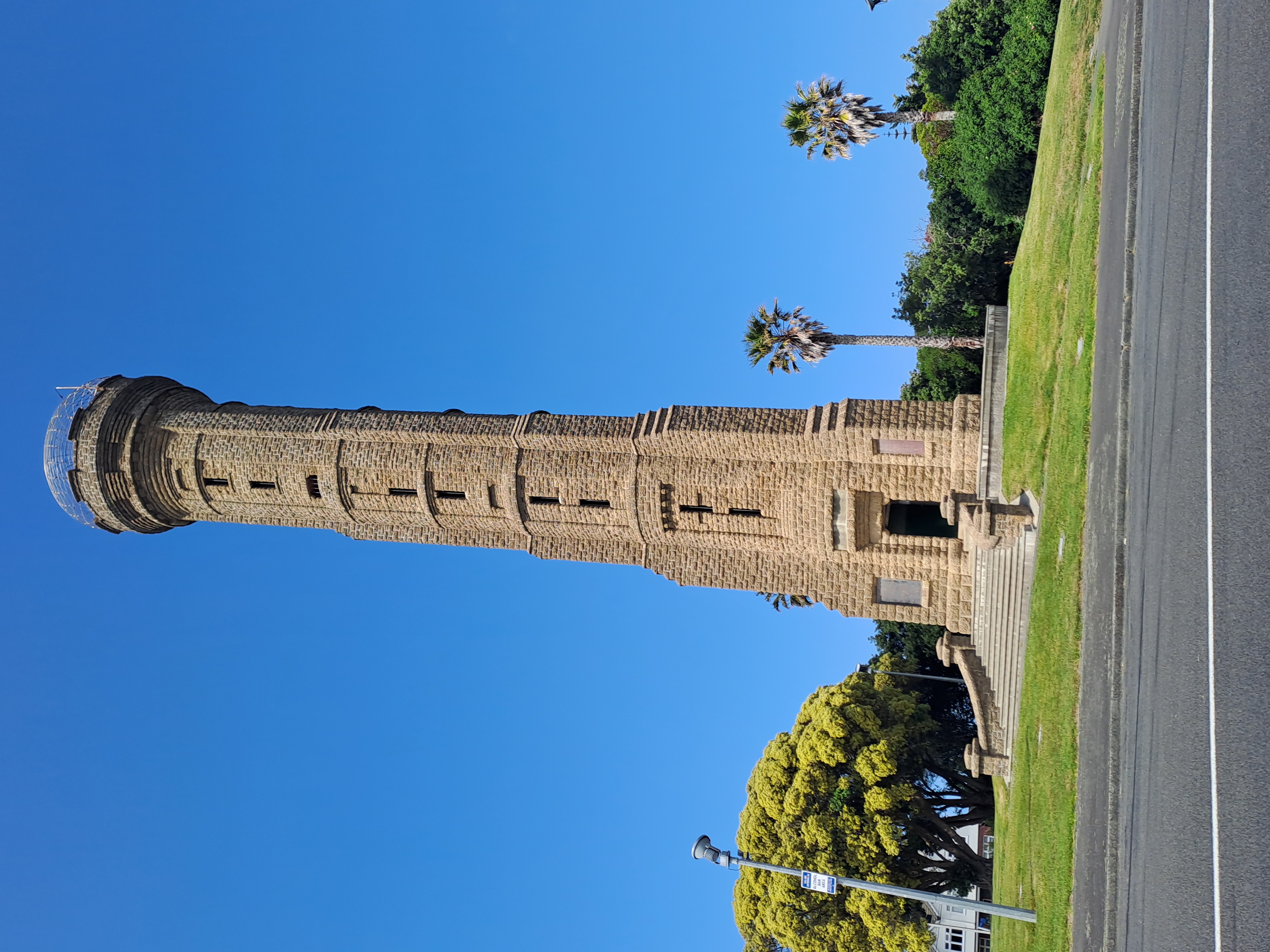
The war memorial tower was also up here built after WW1.
And then on to our last stop on the North Island, the capital Wellington. The capital has been moved several times due to tensions between the Islands. It has previously been Dunedin, South and Auckland, North. So Wellington is a compromise.
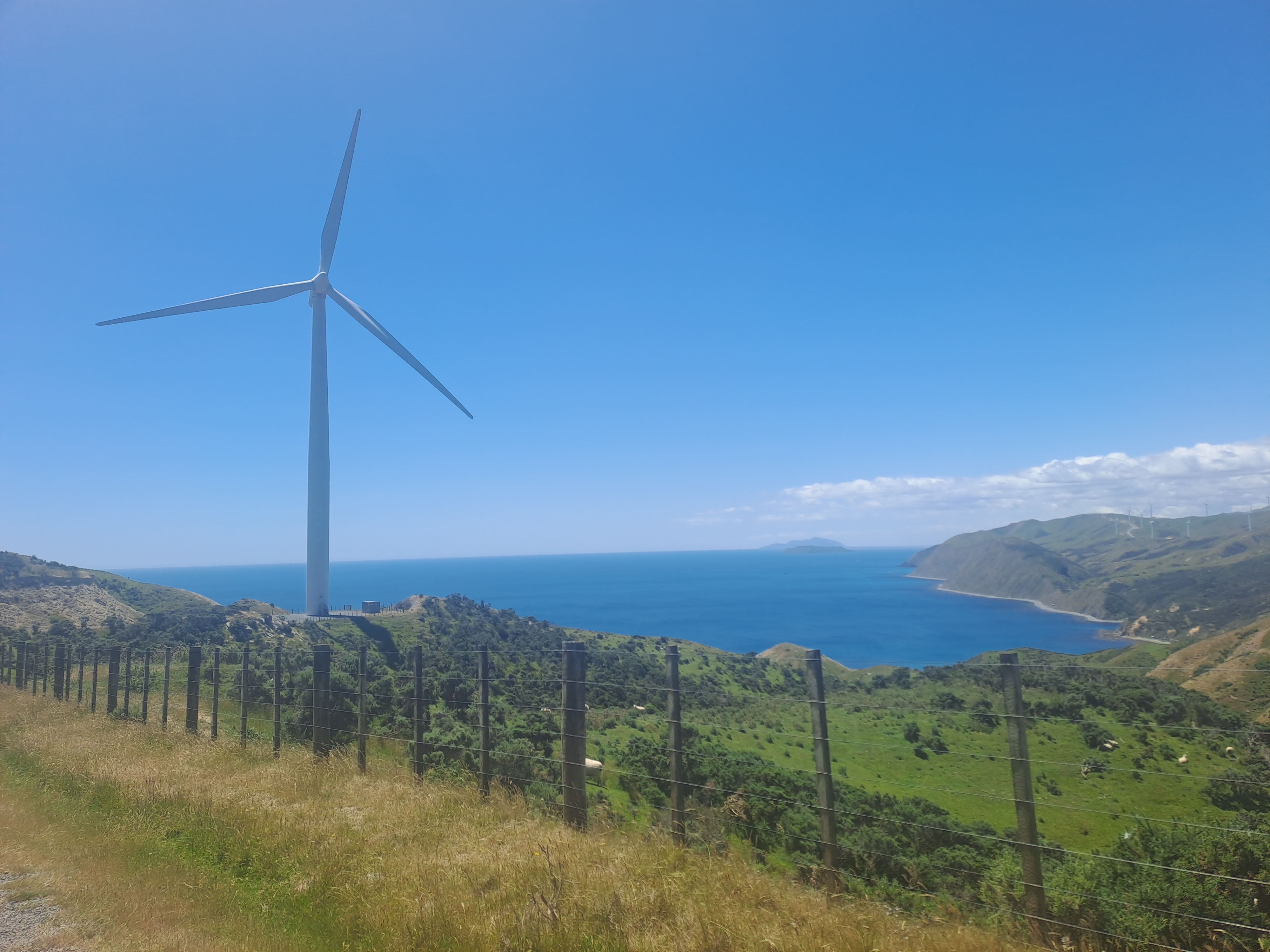
As we had time to spare we drove around the hills above Wellington looking for a view over the city. We weren’t successful in that, we found lots of narrow steep windy roads and eventually arrived at the wind farm via a particularly narrow track terrified something would come the other way. We found a few other visitors to our surprise.
There were also few short hikes around the site and so to my surprise I got my first sight of the South Island across the straits.
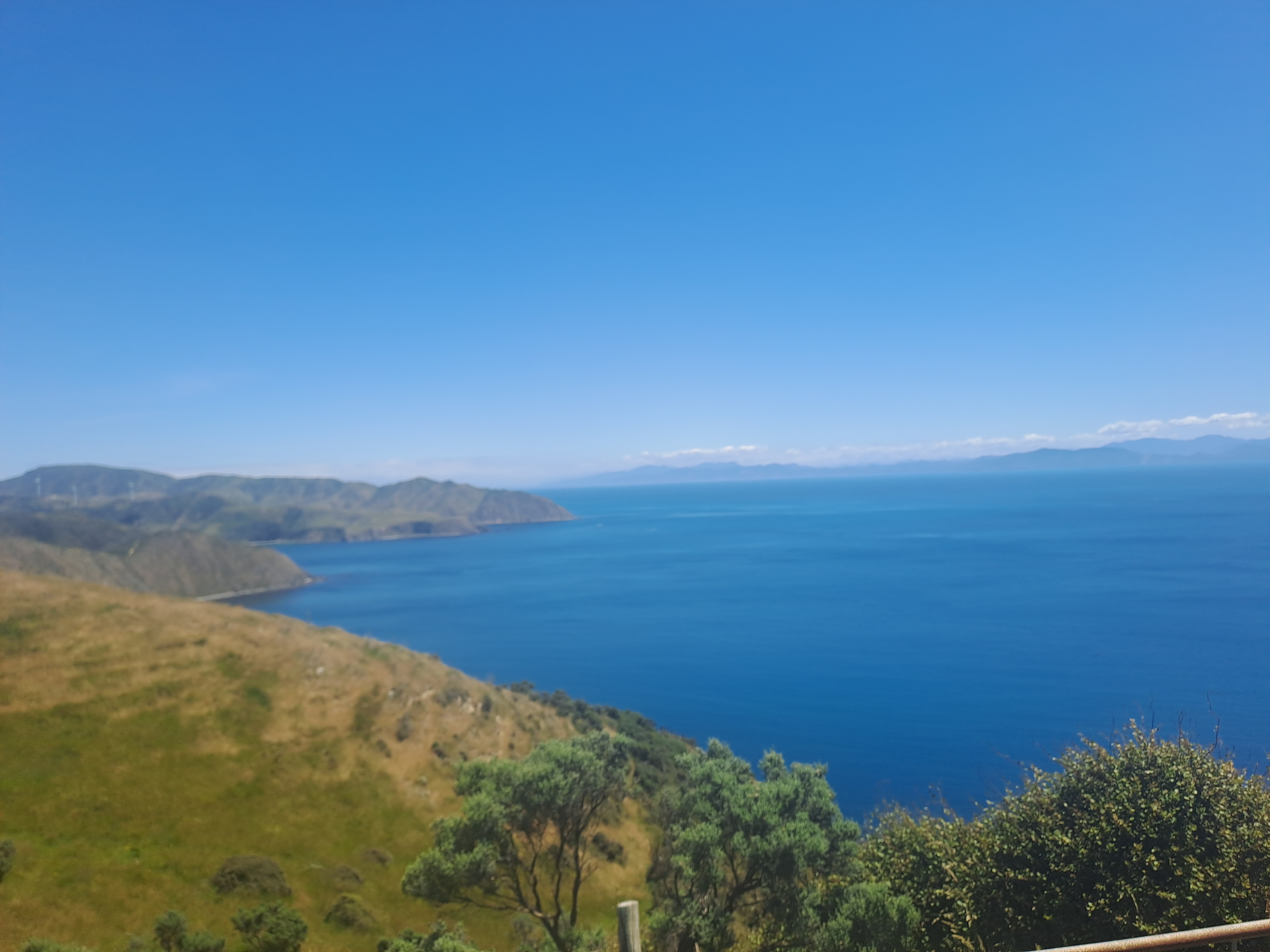


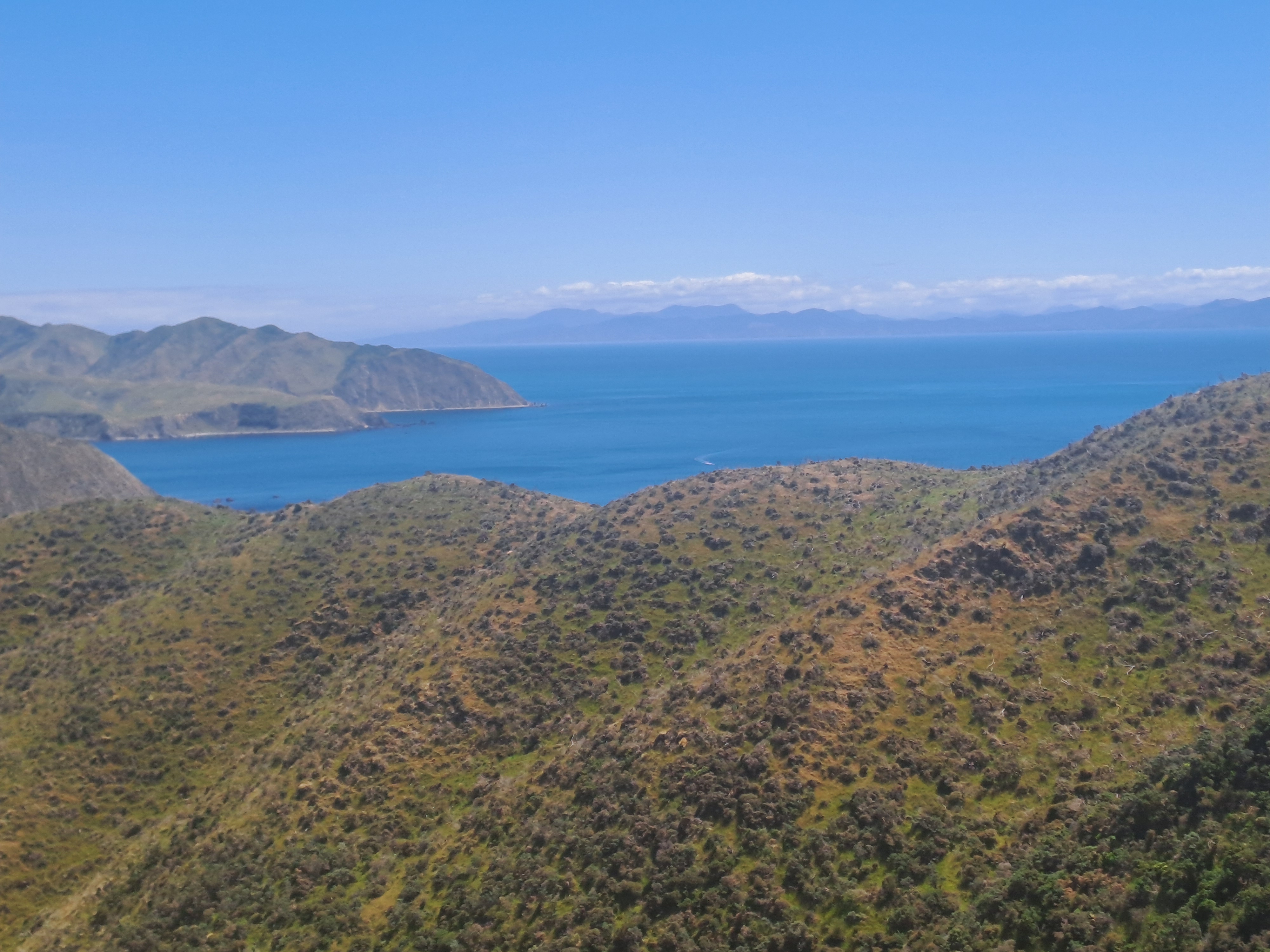

Next day we went on a tour to see the sights of the city. We saw many of the wooden houses, built because of the likelihood of earthquakes. Originally everything had to be built of wood.
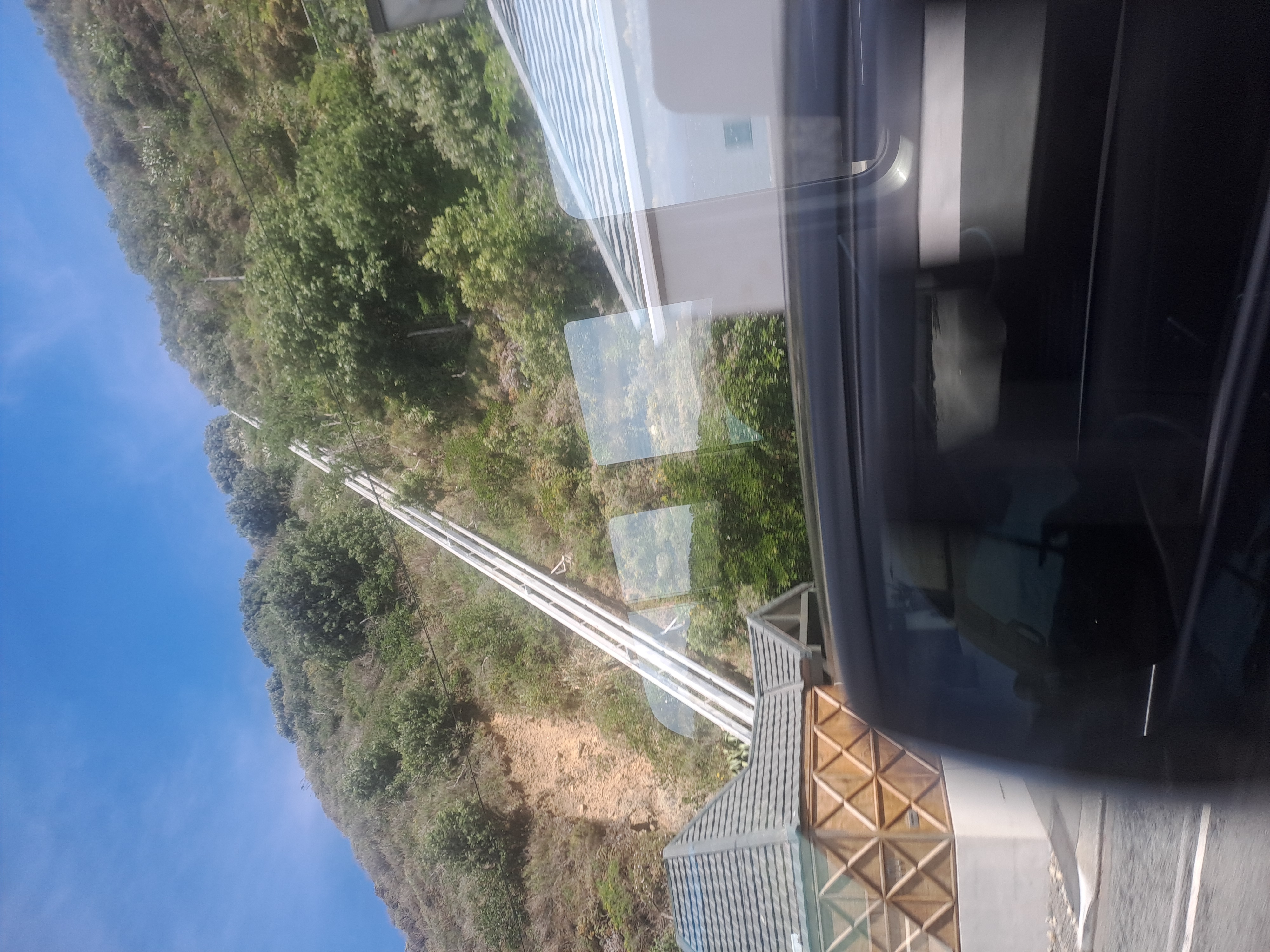
We also saw another feature peculiar to Wellington the lifts up to houses. Due to the steep hillside above Wellington this is how some of the expensive properties are accessed. As the lifts cost $200,000 upwards, plus annual testing and maintenance, you can only imagine what the actual houses are worth.
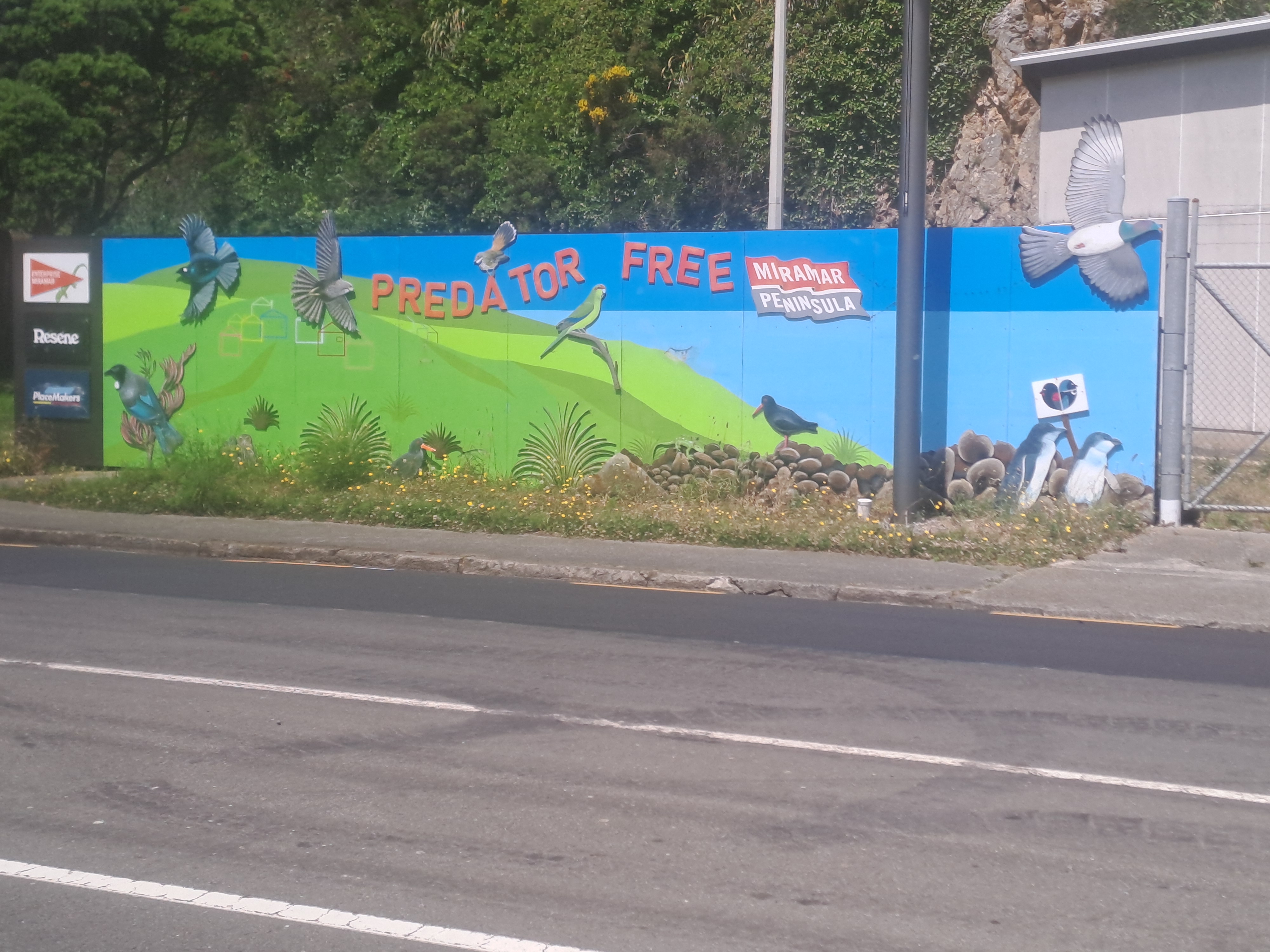
We were also told about predator free plan for New Zealand to help the native species. Mainly wingless birds which are prayed on by stoats and feral cats which have been introduced to N Z. Wildlife parks have special fencing extended below the ground to keep predators out and protect the birds. This scheme has started in Wellington with many traps around and the idea is to extend it to the whole island by 2030.

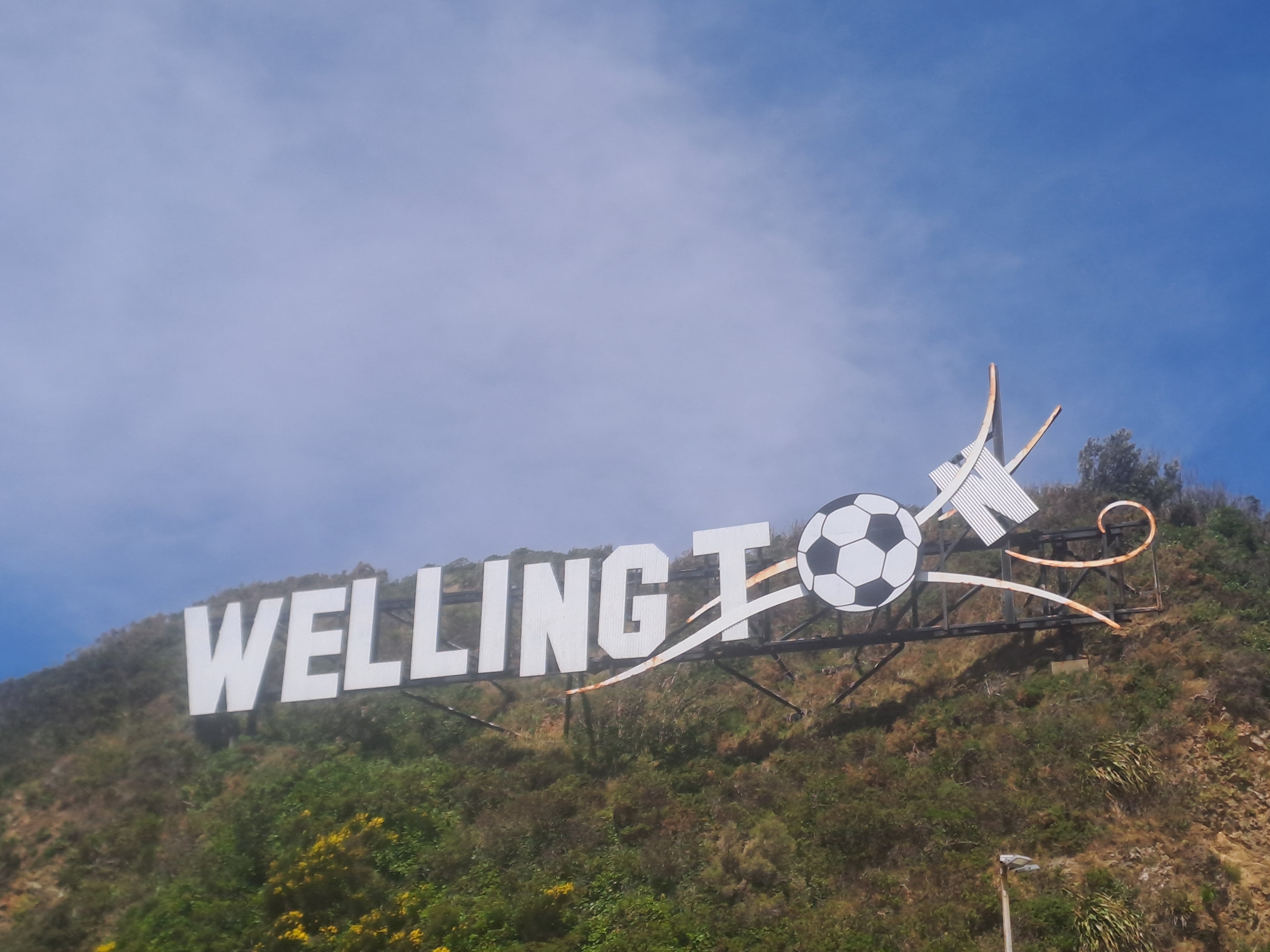
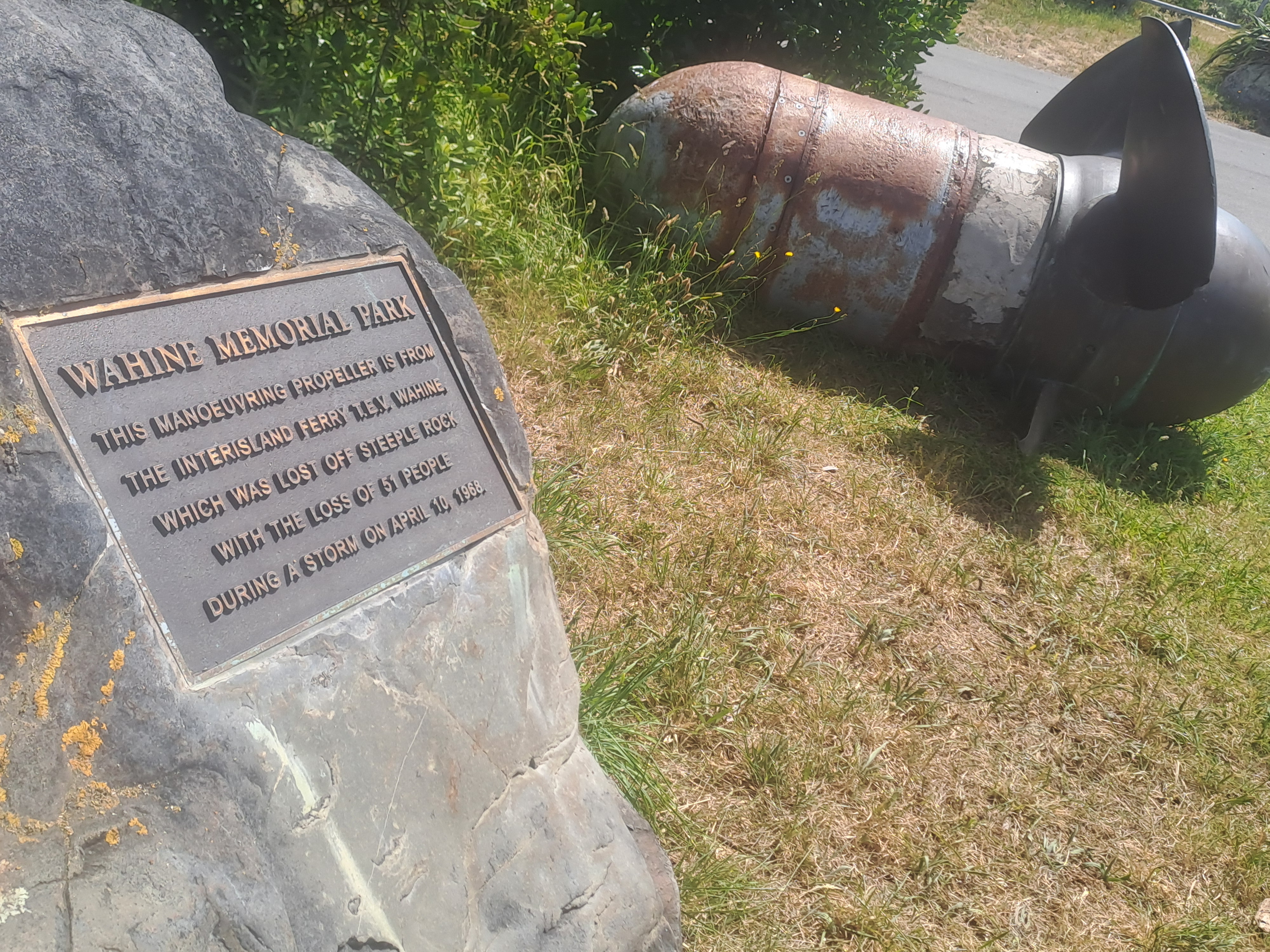
We saw the memorial site for an inter island ferry disaster in 1968. At least the record has been good since then, to give me confidence for our crossing. We heard about Peter Jackson (director of The Hobbit) buying one of the peninsula to protect it for the wildlife. He lives in Wellington and invests in the community.
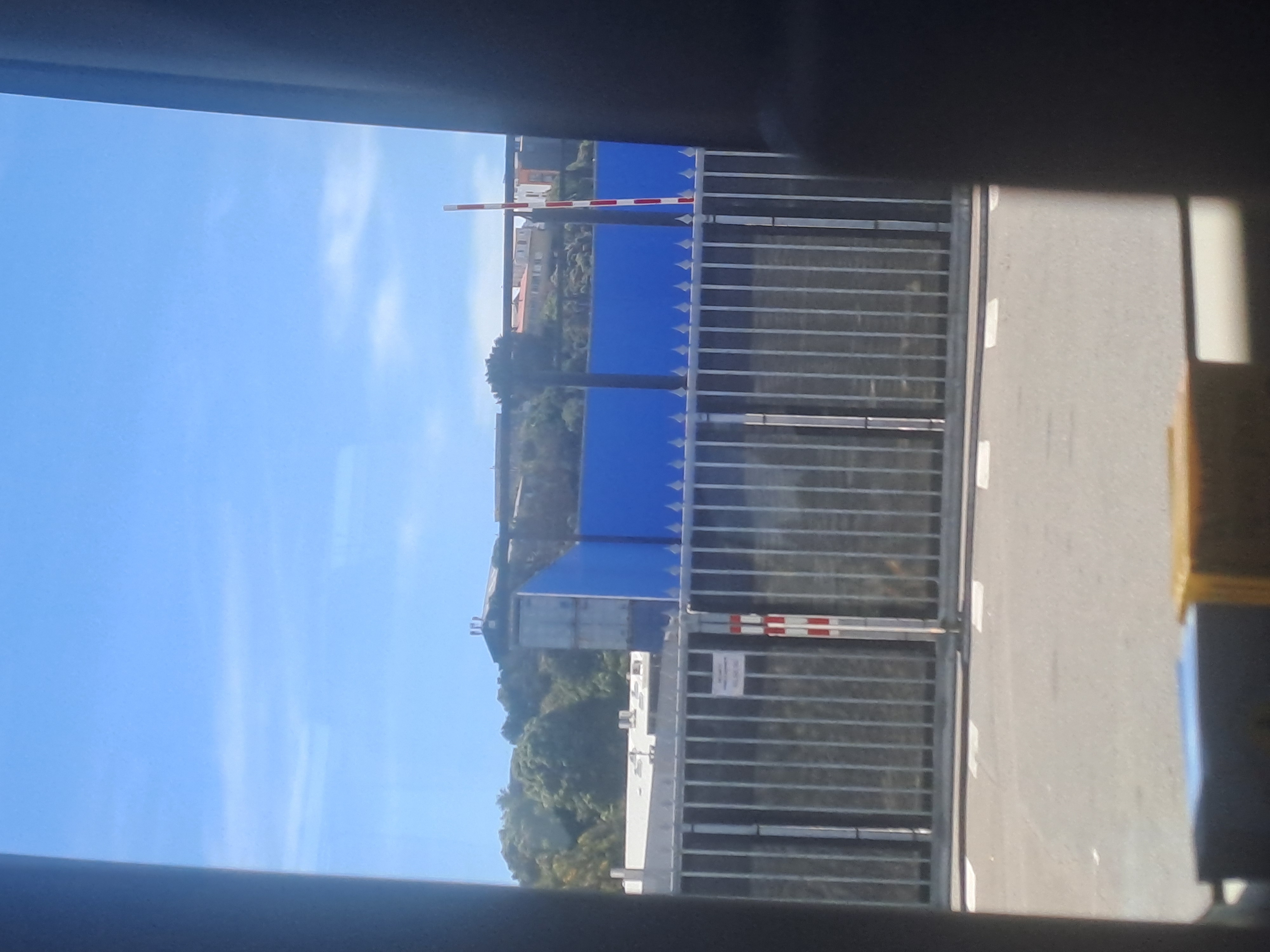
We also drove to the film studio area for a quick drive past and saw Stone Studios who apparently have the largest blue screen in the southern hemisphere, we could see the top of it from outside. Streets in this area regularly get closed during filming to help with security.
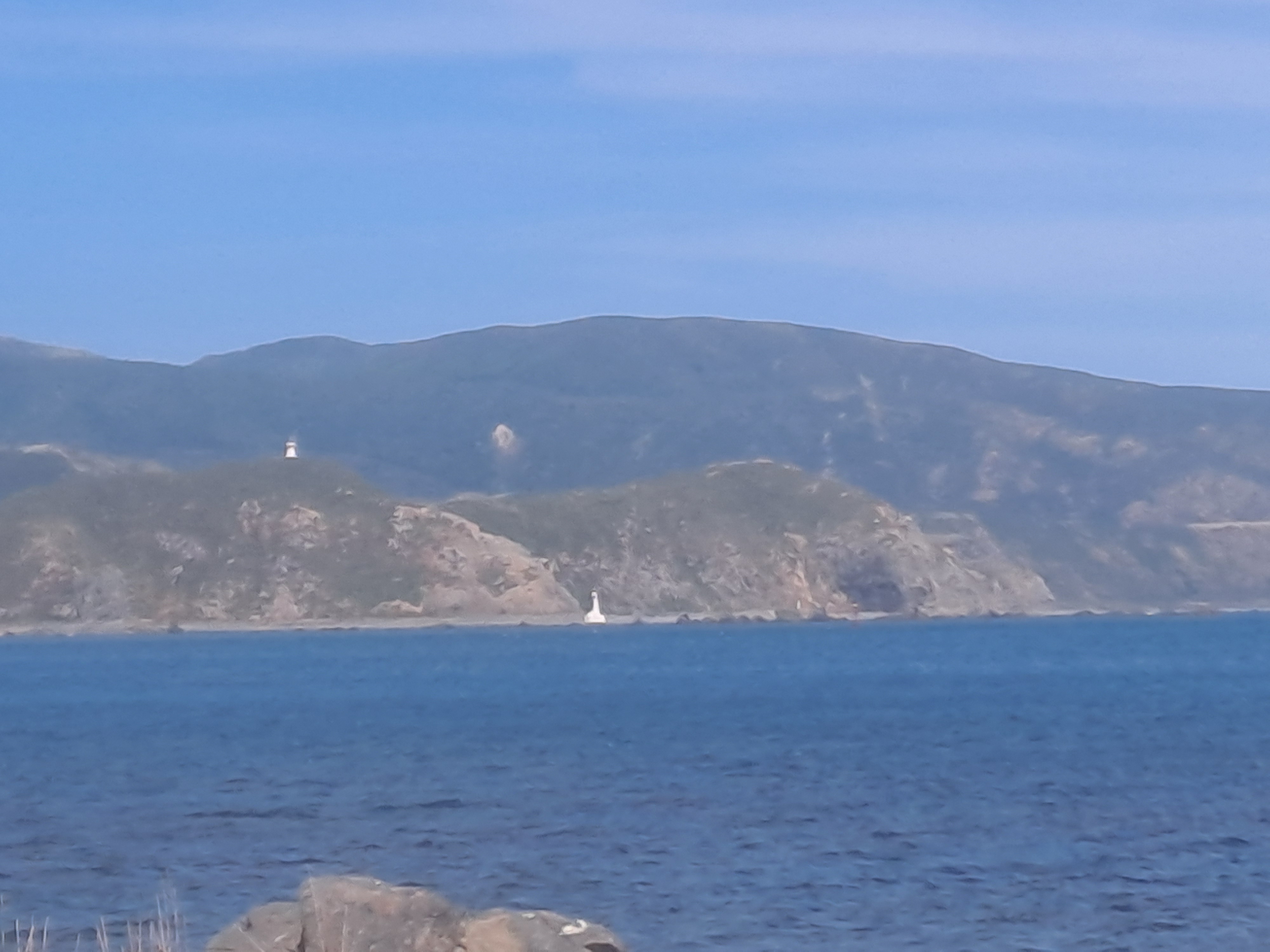
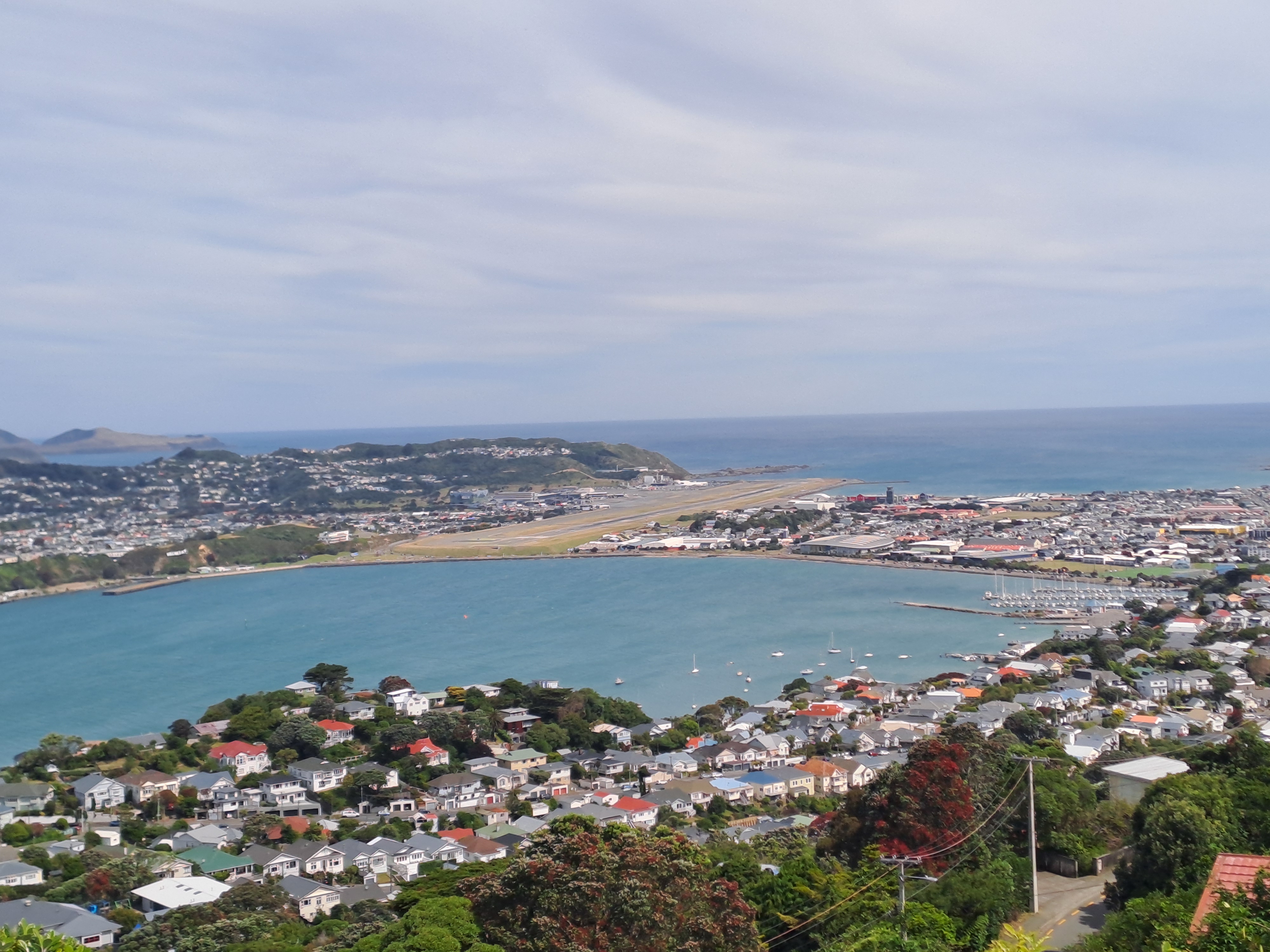
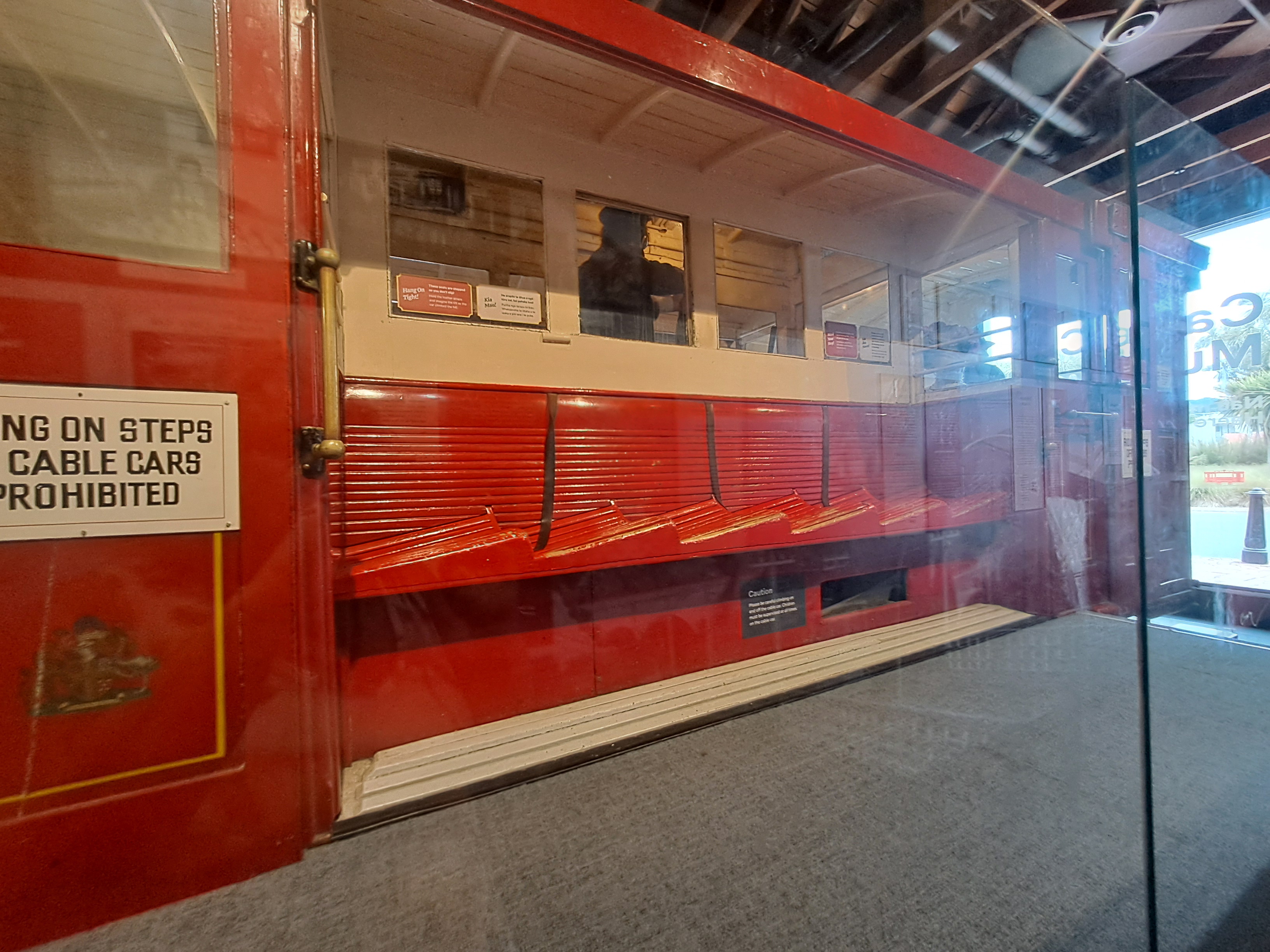
One of our last stops was to go up the cable car to get the view over Wellington we’d been looking for on our journey in.
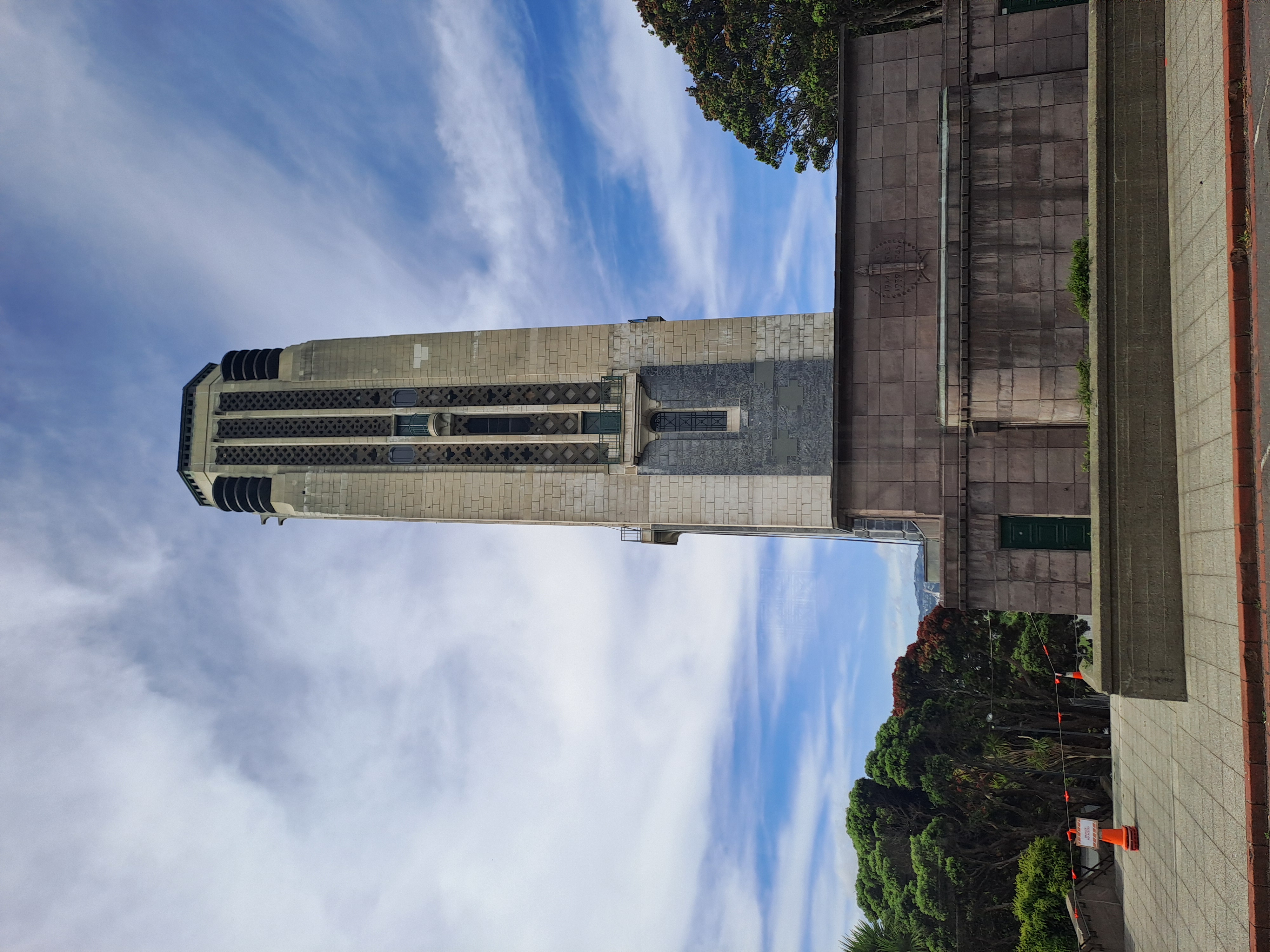

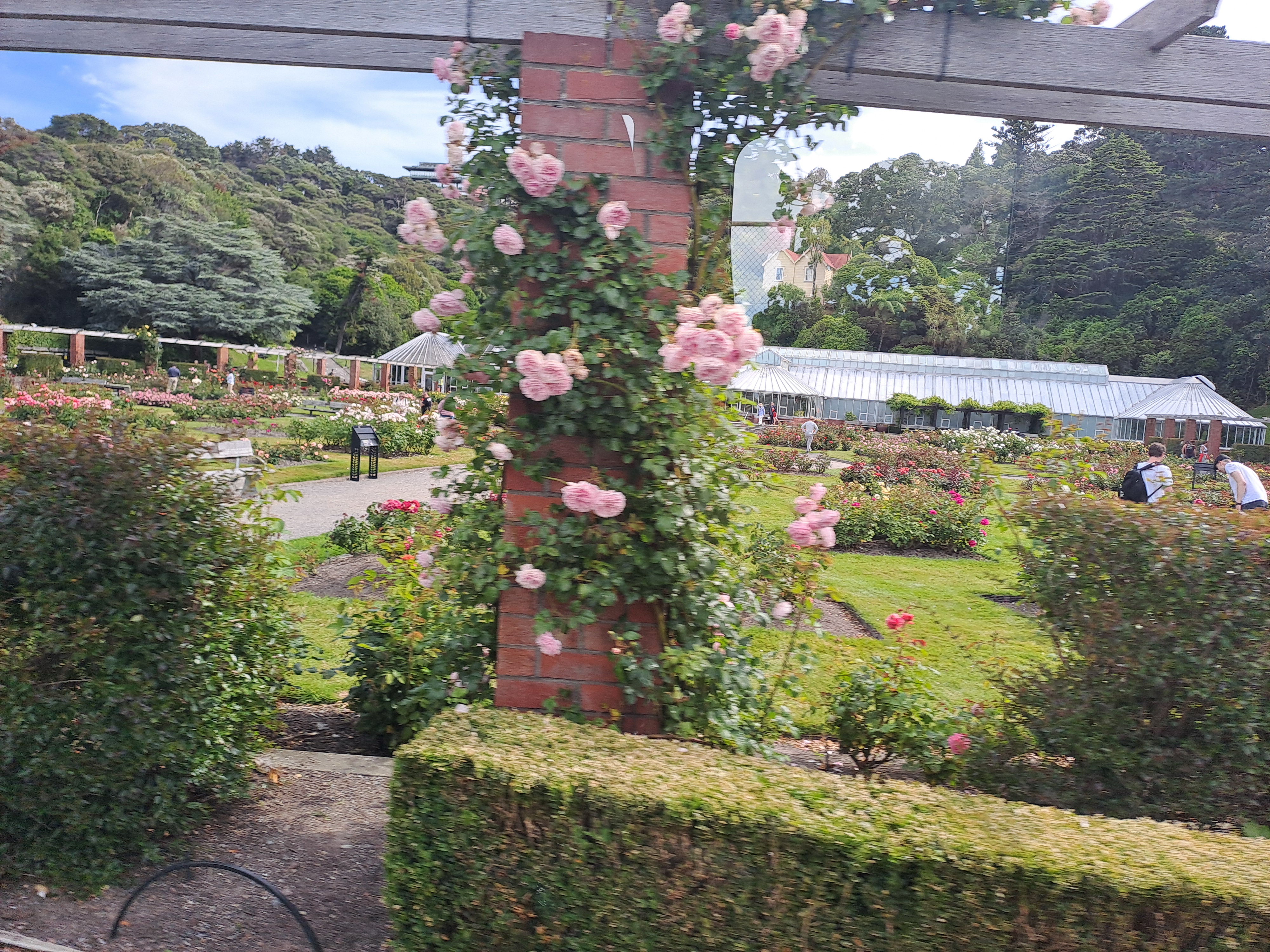
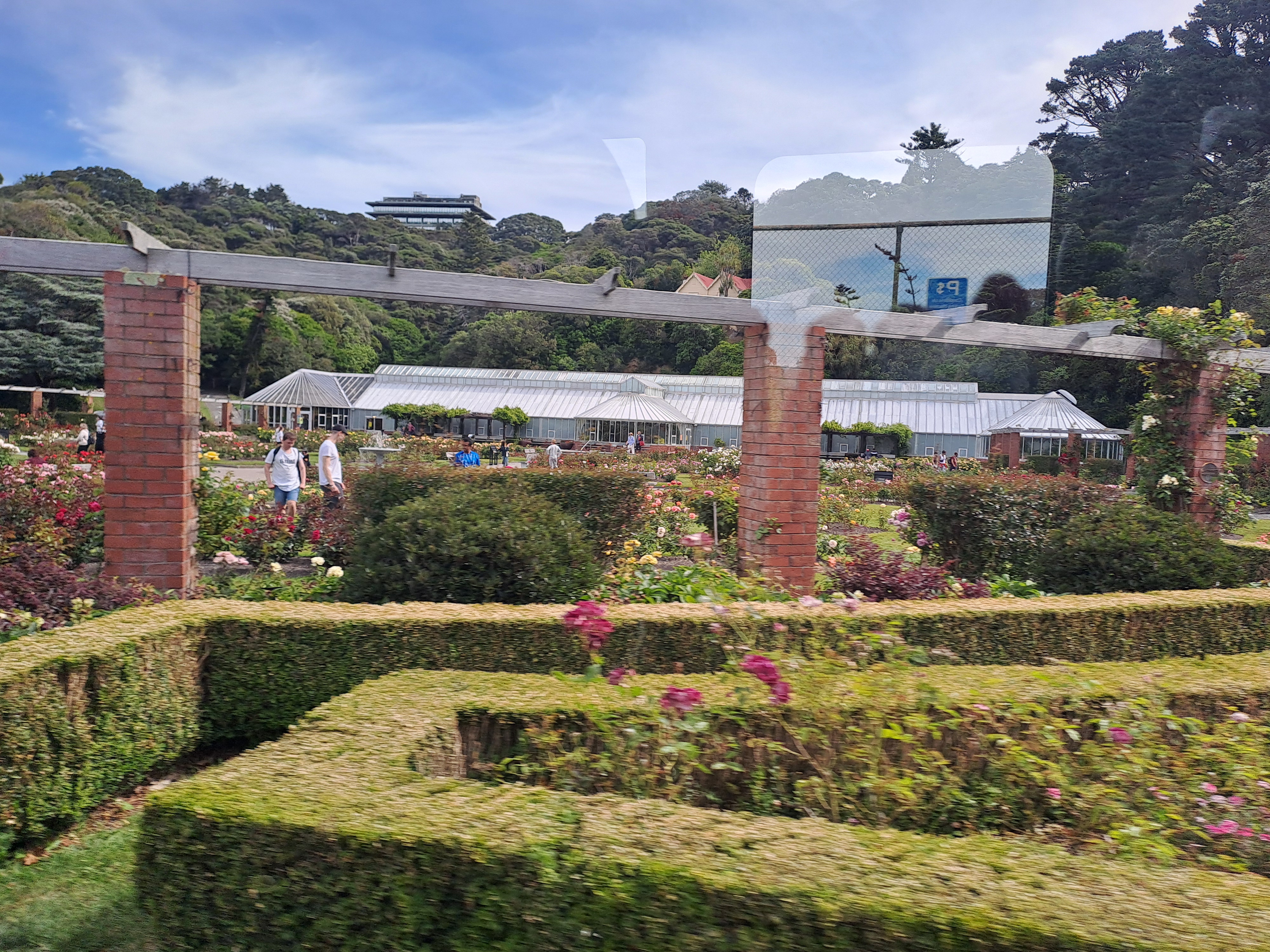
We had a quick trip through the botanical gardens and past the parliament building and that was Wellington and the done for us, apart from one last thing.

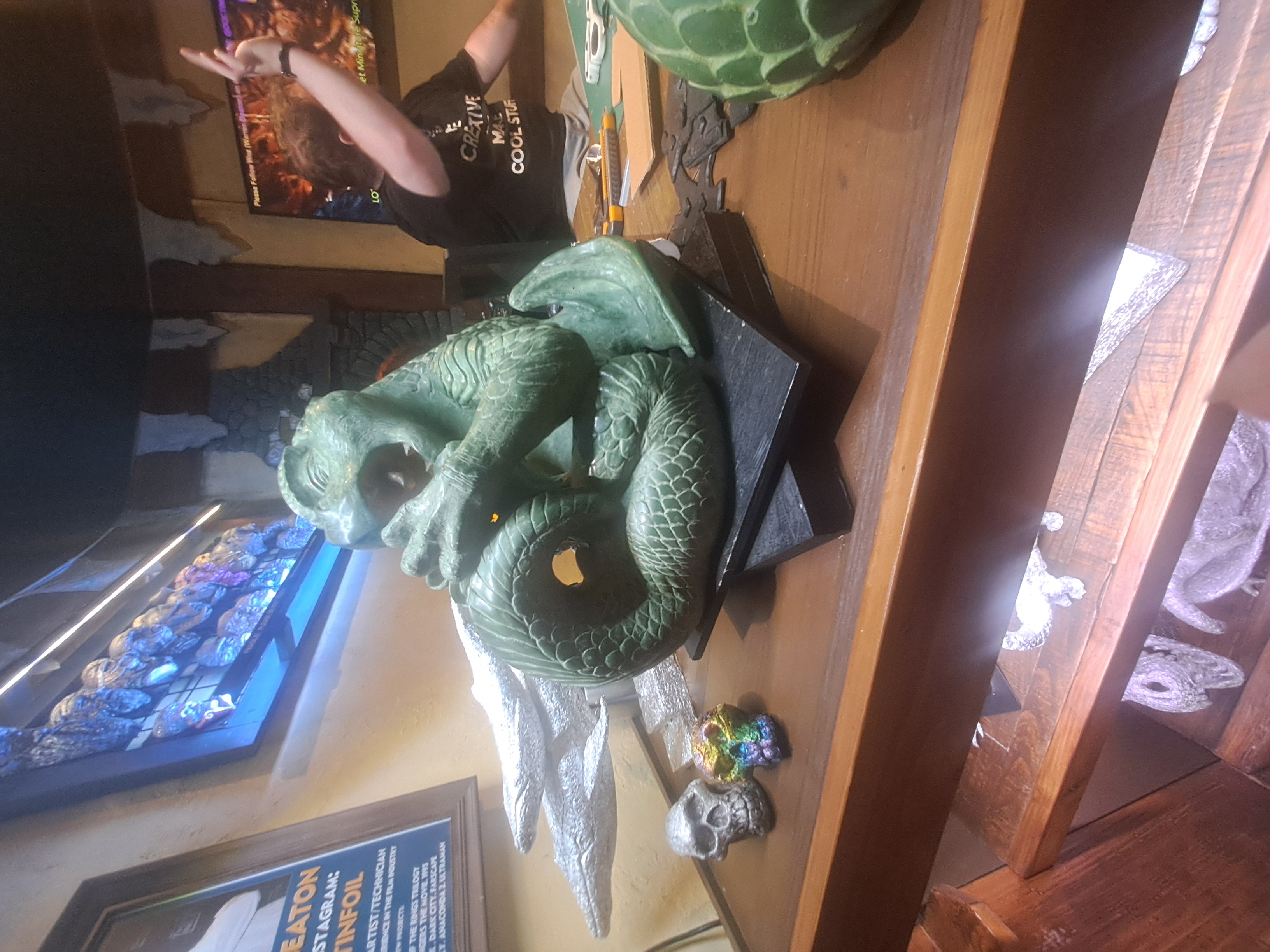
My special treat was the Weka workshops. Suppliers for props for so many films.
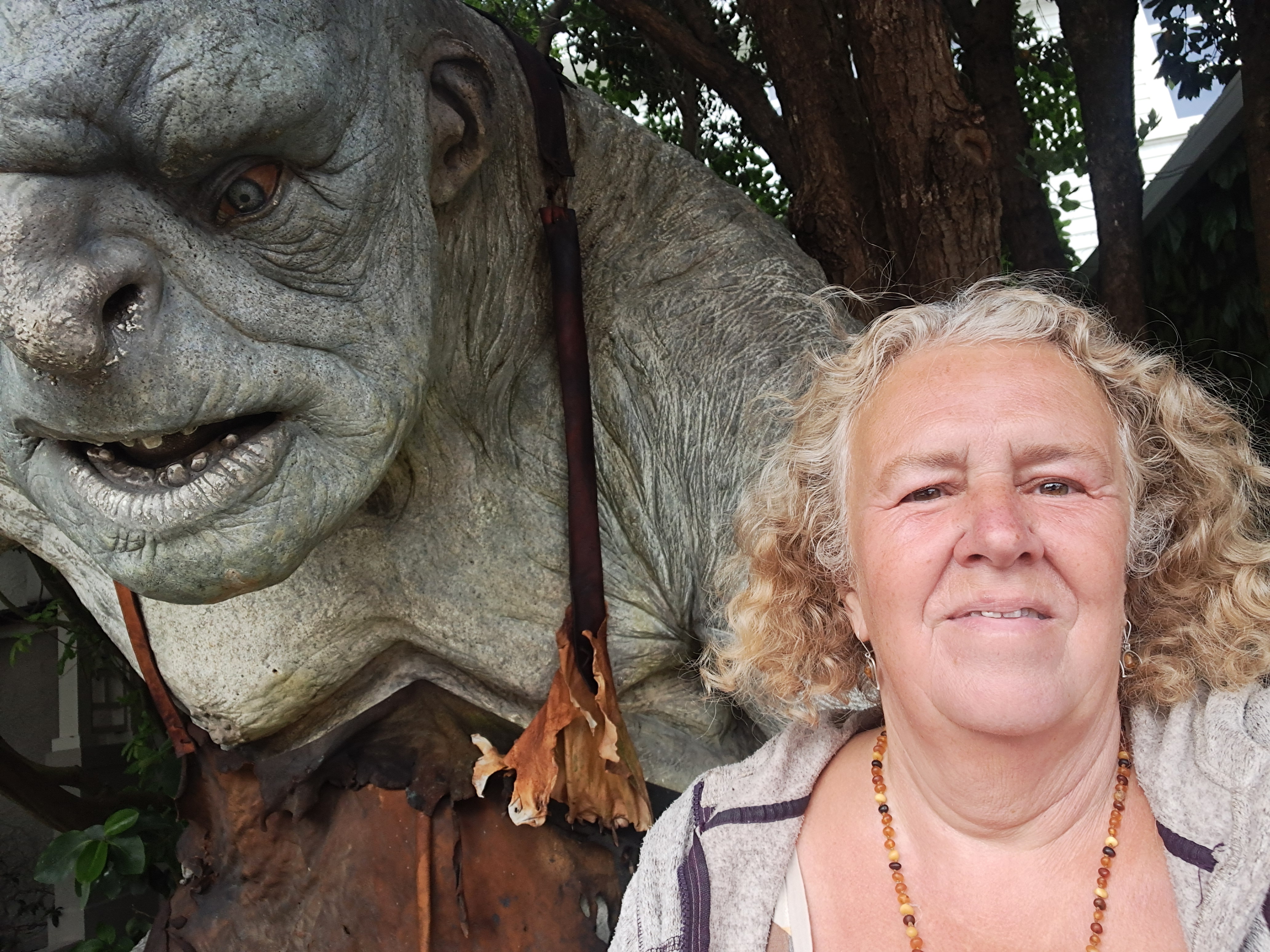
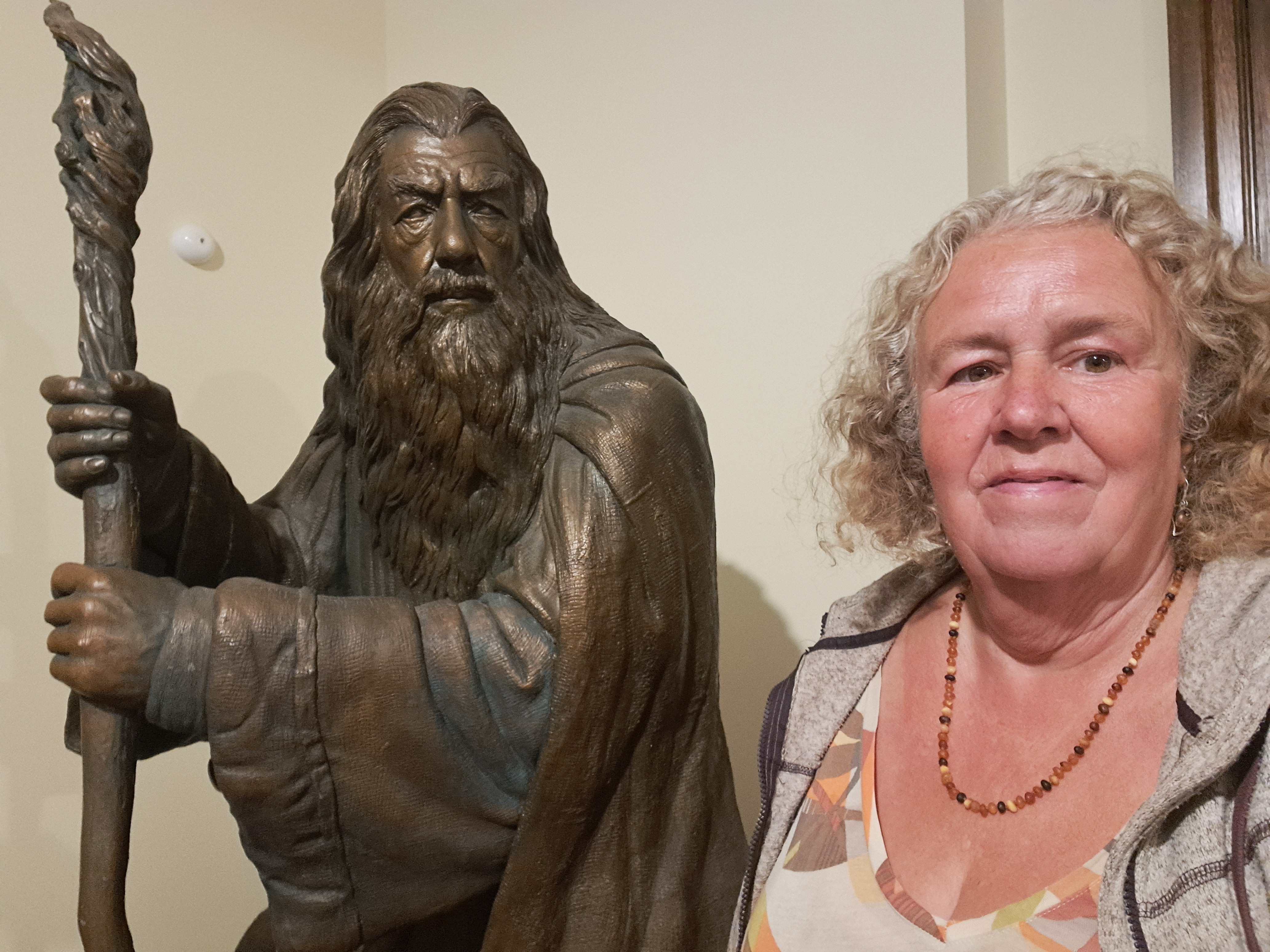
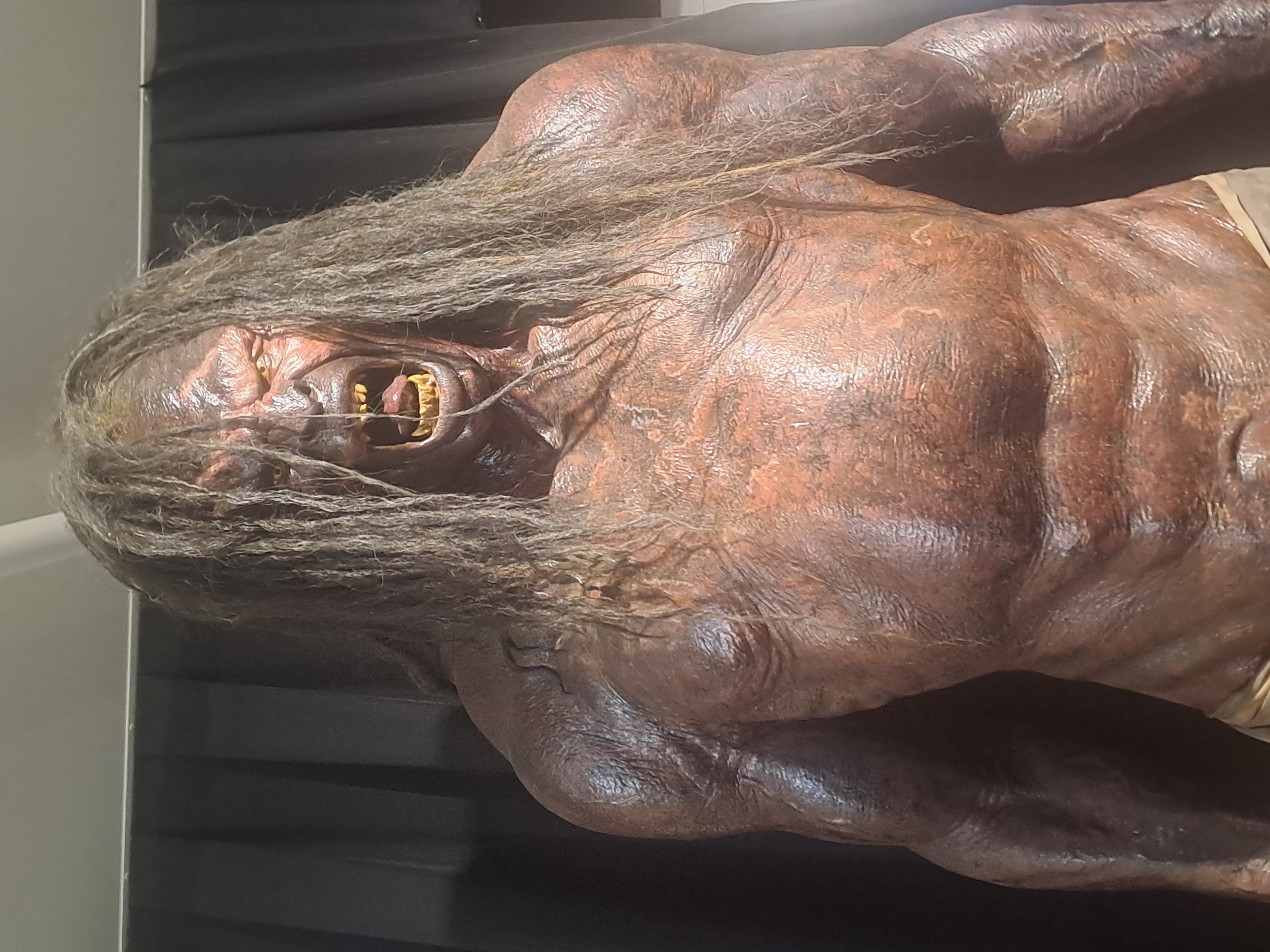
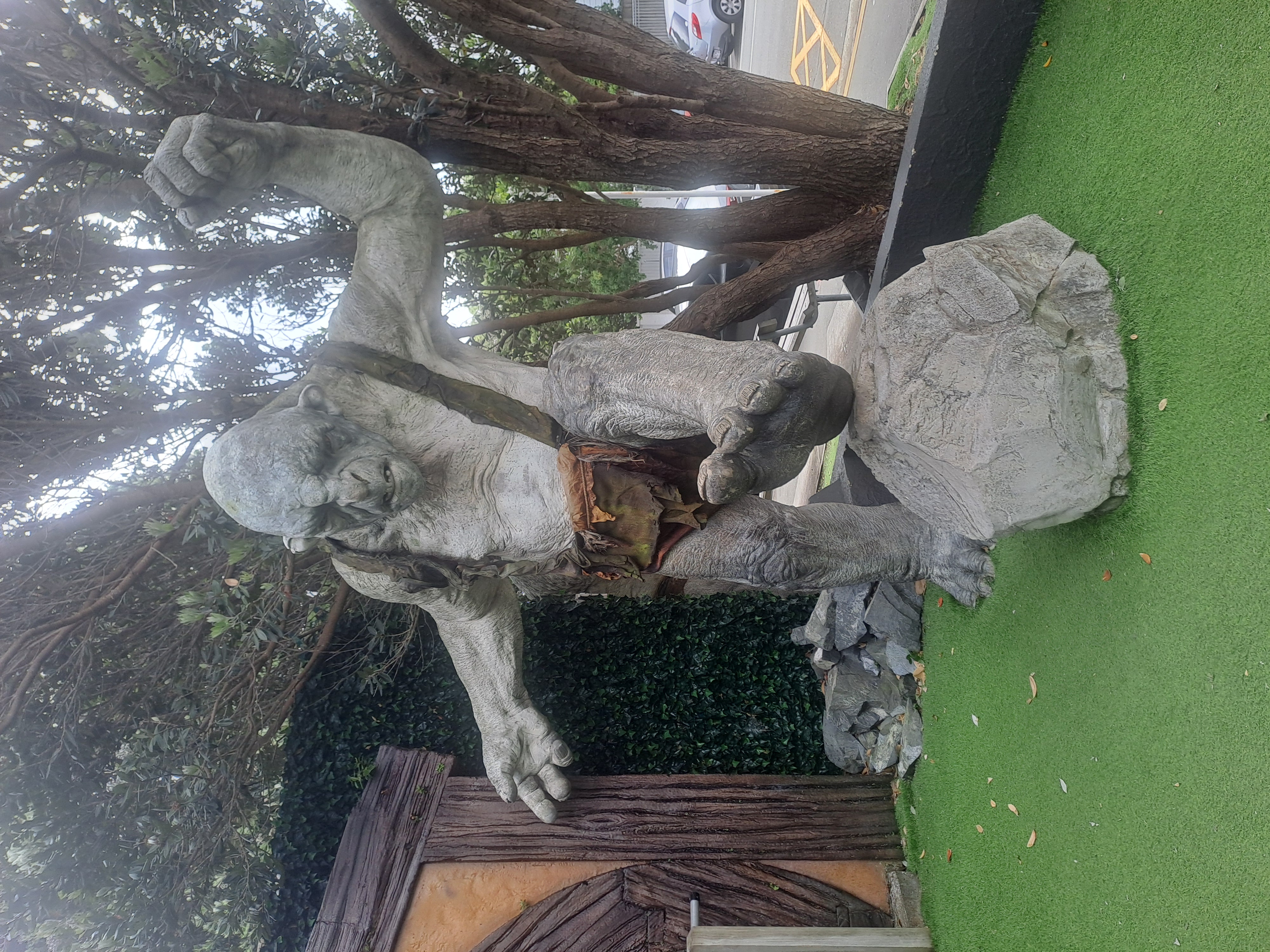
The tour went through several prepared rooms showing us what they produce. The first few rooms had donated items from films, which we weren’t allowed to phograph. We also saw a short film on making costumes for covered actors whose faces you never see. It is a specialty as not many people can cope with the hours of sitting with your face completely covered for casts and then hours of application before acting. The whole process of application, acting and then removal can take almost 24 hours. Needless to say everything has to be scheduled around that actor’s part. We moved on to displays of casts and a model of an ork head which can be controlled to move slightly.
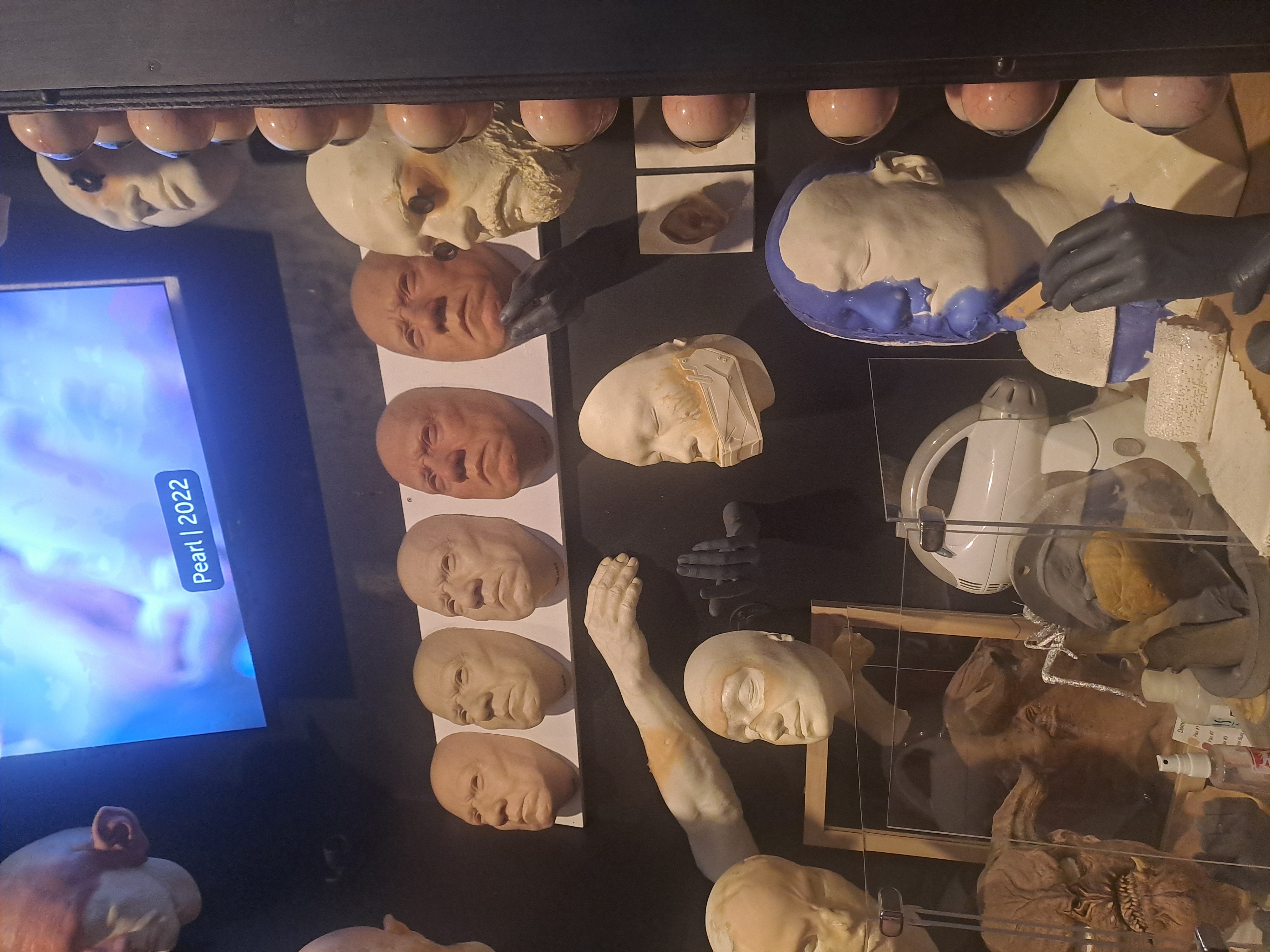
We were told repeatedly that there is no training for this industry. Everyone is self taught in their own field, maybe through YouTube videos or experimenting. They also need lots of imagination to make exciting props out of everyday materials. We saw space armour made from an old leather jacket and backpack, we were shown the butchers cloth used to make elven chain mail. There was an emphasis on cheap simple solutions.
The studio also exports its ideas for props, as it would cost too much to export the items and this has increased the number of films using their expertise.
Modelling is often done with crushed tin foil carefully shaped and then costed for strength or used as a mold. See below, and the dog isn’t real by the way.
The have their own weapons maker, self taught in what he really wanted to do. Weapons vary depending on their use and proximity to the camera. Cheaper lightweight ones further away, full weight being used for realistic movement and detail when close to the camera.
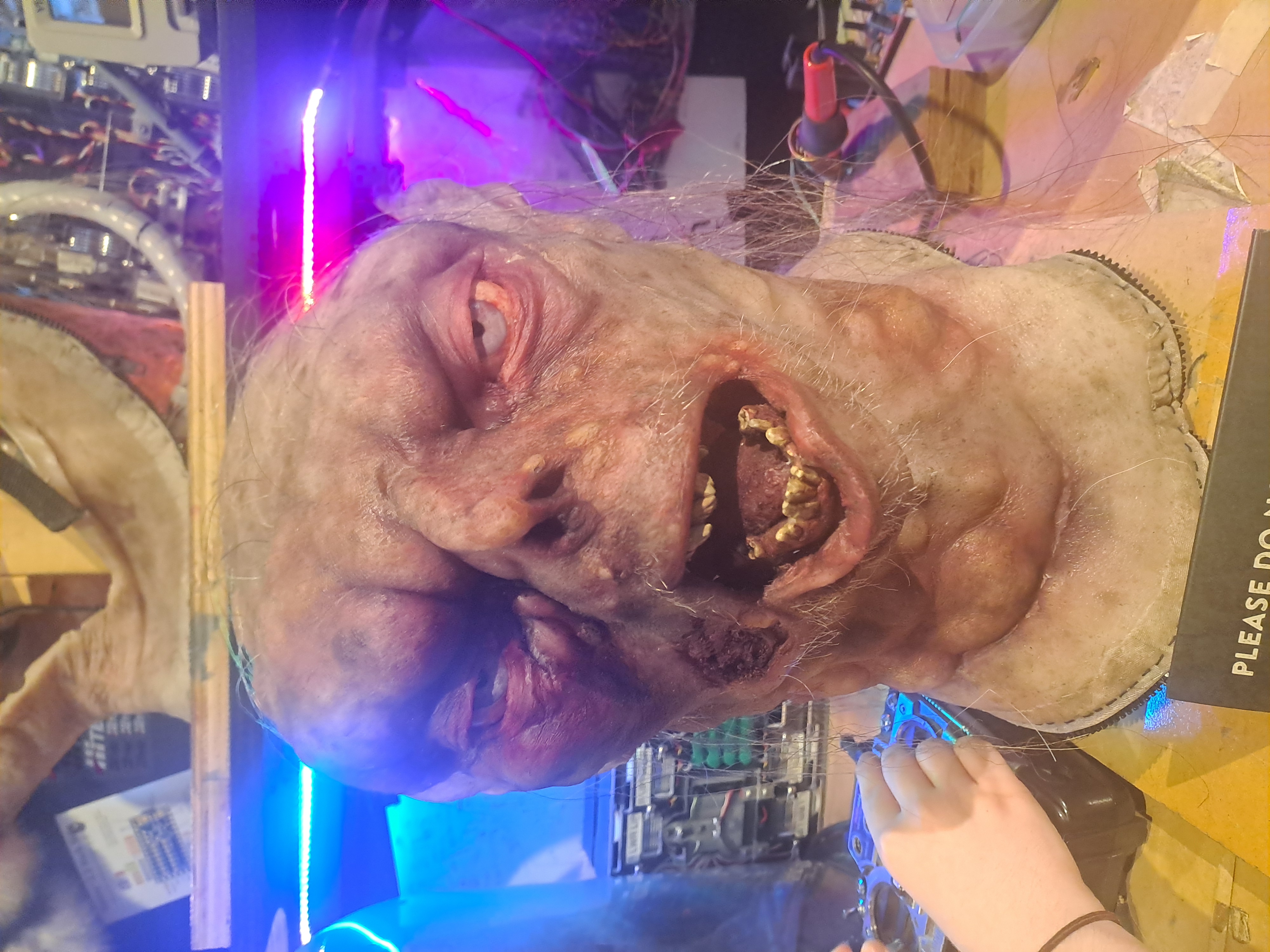

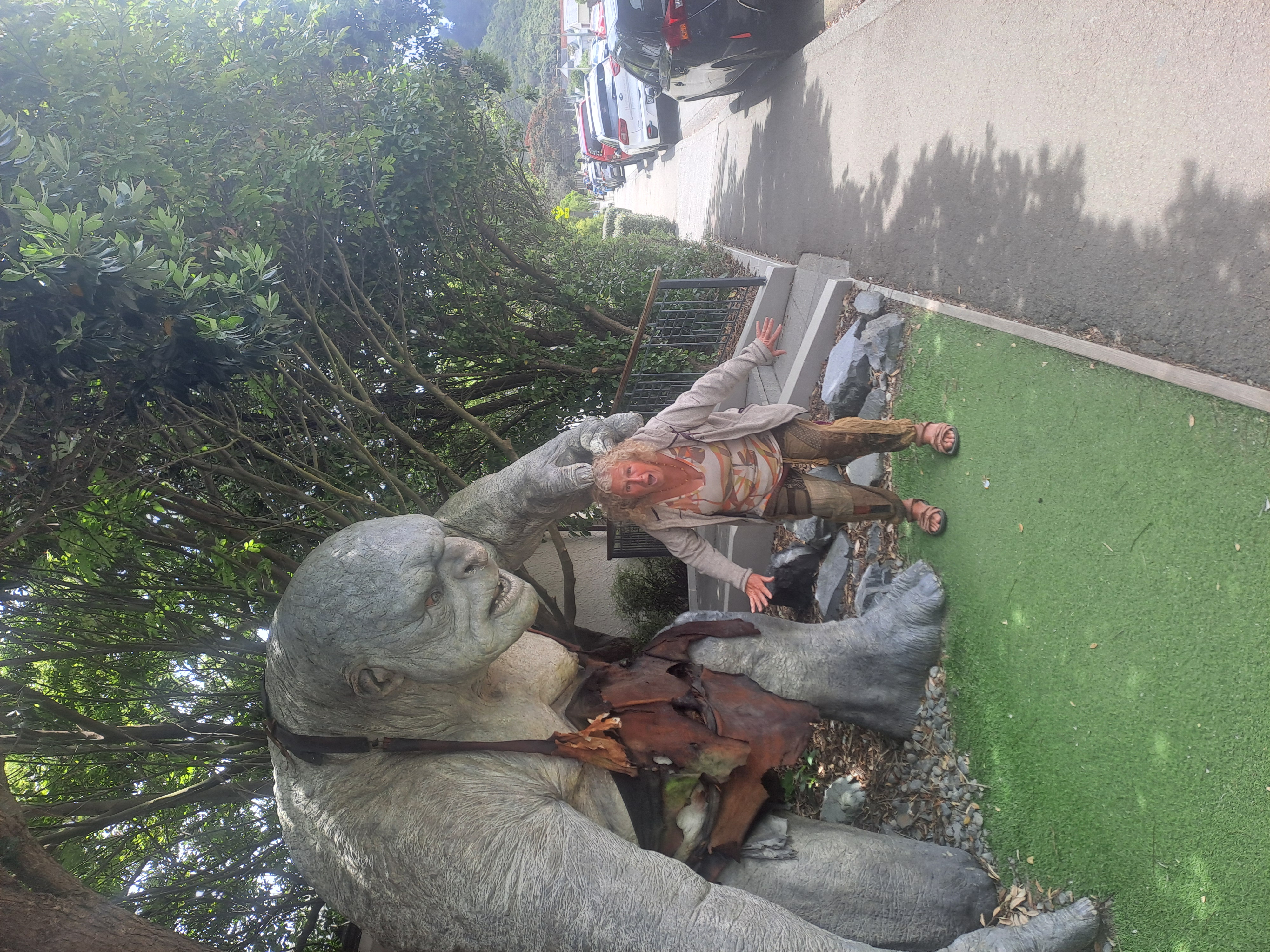
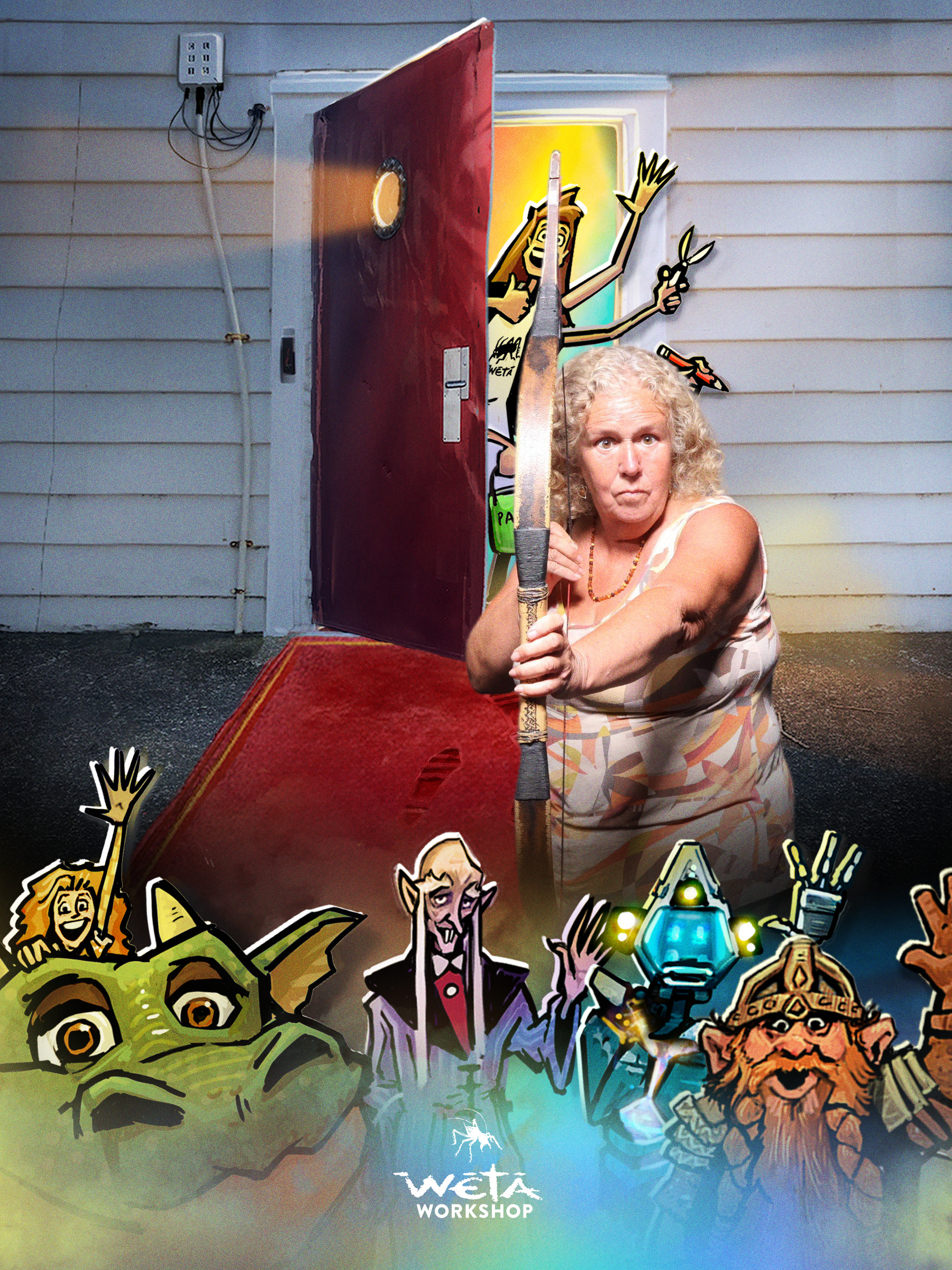
So after a bit of a tangled with an orc we were ready for the ferry to the South Island.