16th to 26th July 2025
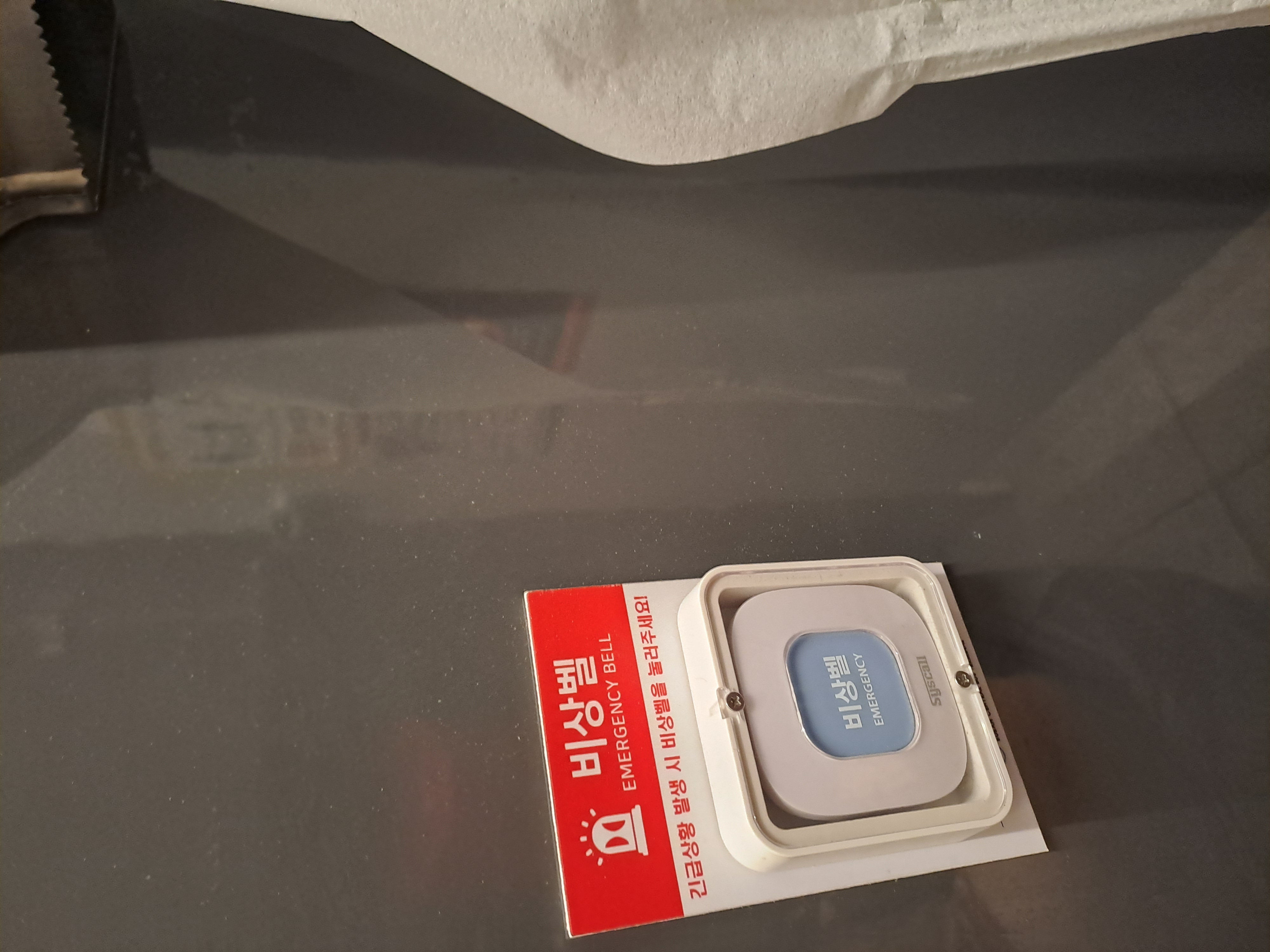
On too South Korea, land of the electronic toilet, with a lit up toilet bowl, air conditioned public toilets with plentiful toilet paper. Emergency buttons inside public toilets- in case if collapse? Attack?
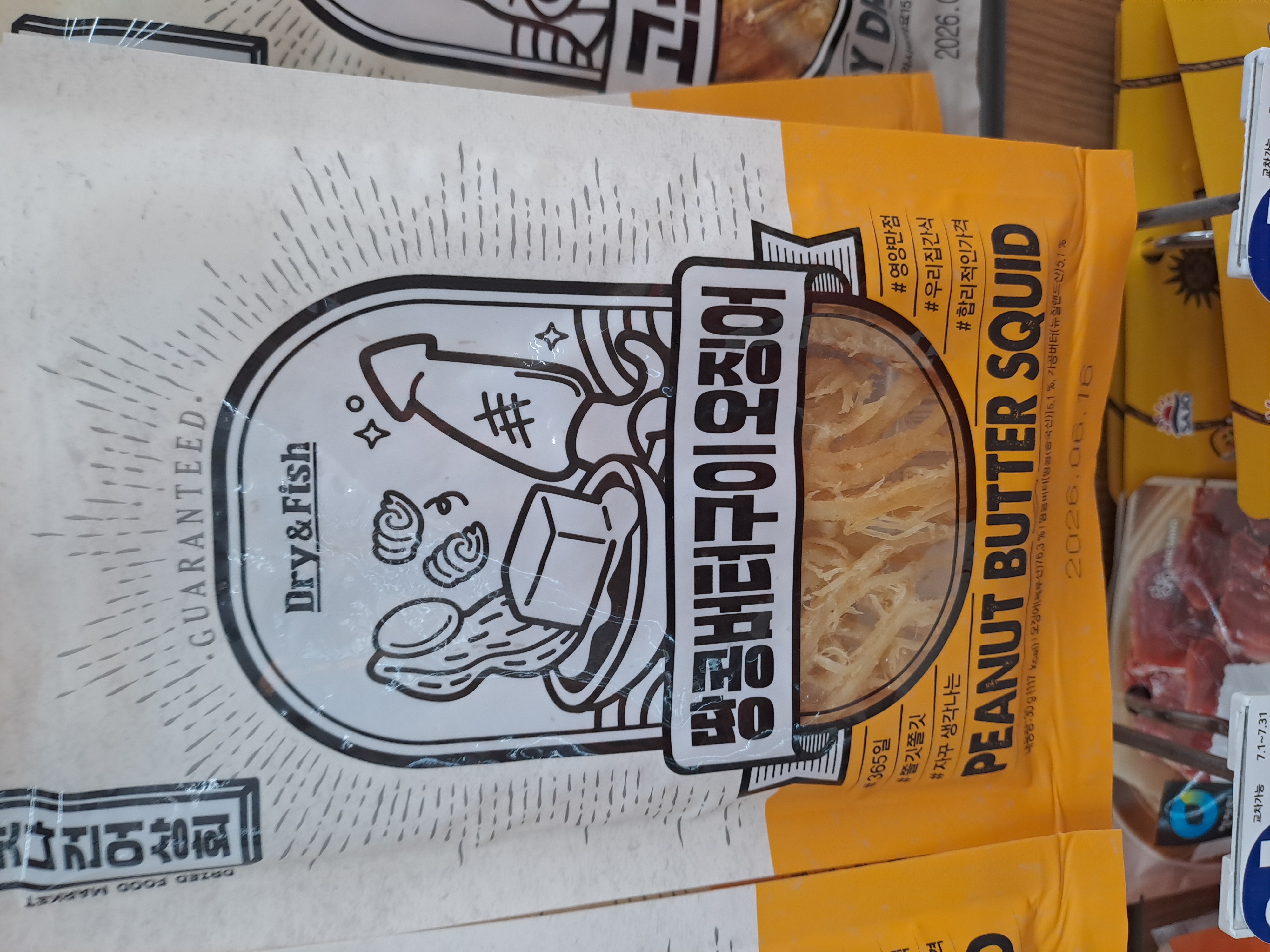
And even more unusual (to us westerners) food different to China. Many animal parts that we don’t normally eat and very plentiful sea food that I’d have loved to have tried, but didn’t want to order a whole plate of. Of course the food constant here is kimchi, part of every meal as a side, breakfast, lunch and dinner. Fermented vegetables are a big part of the diet.
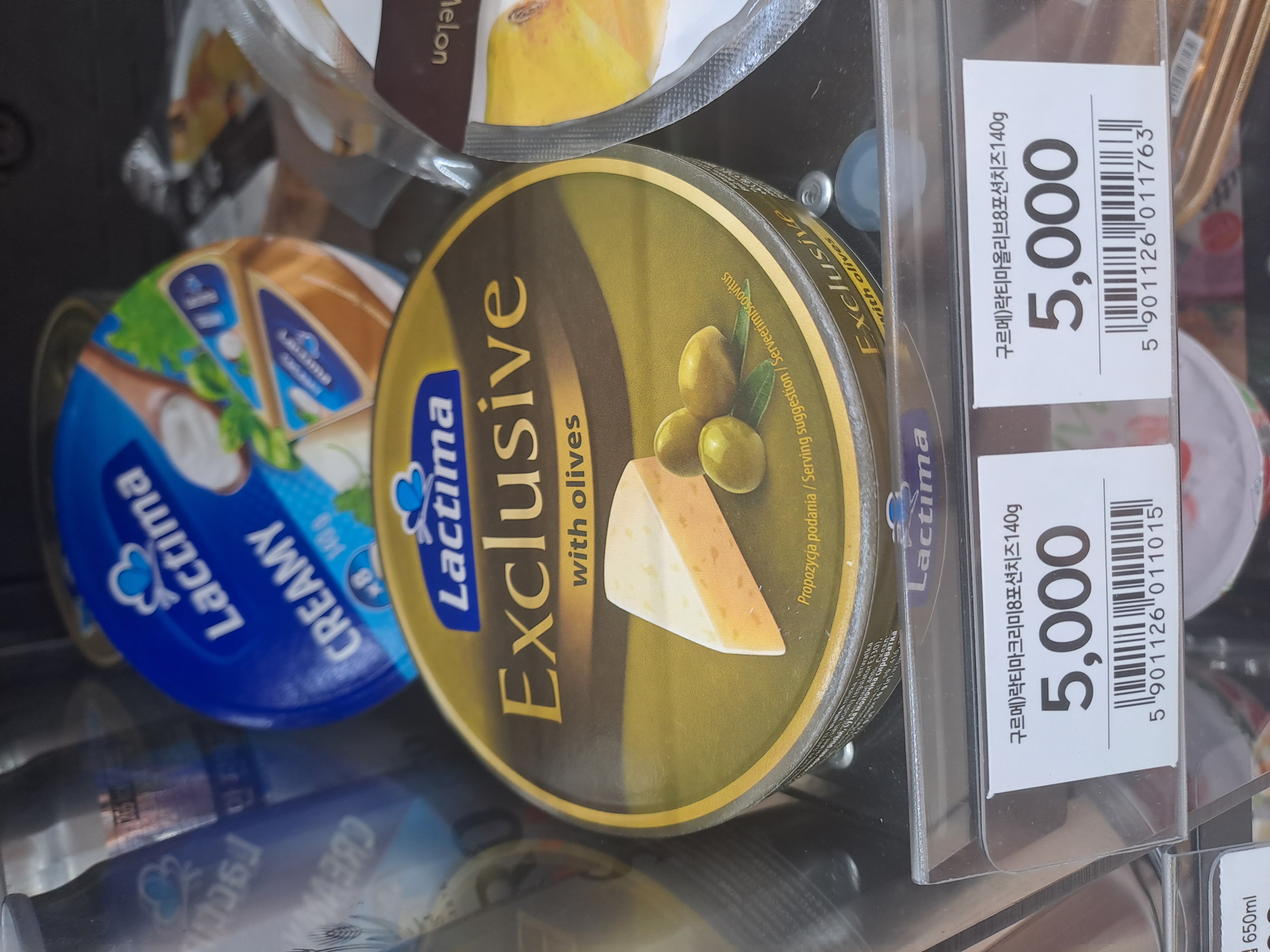
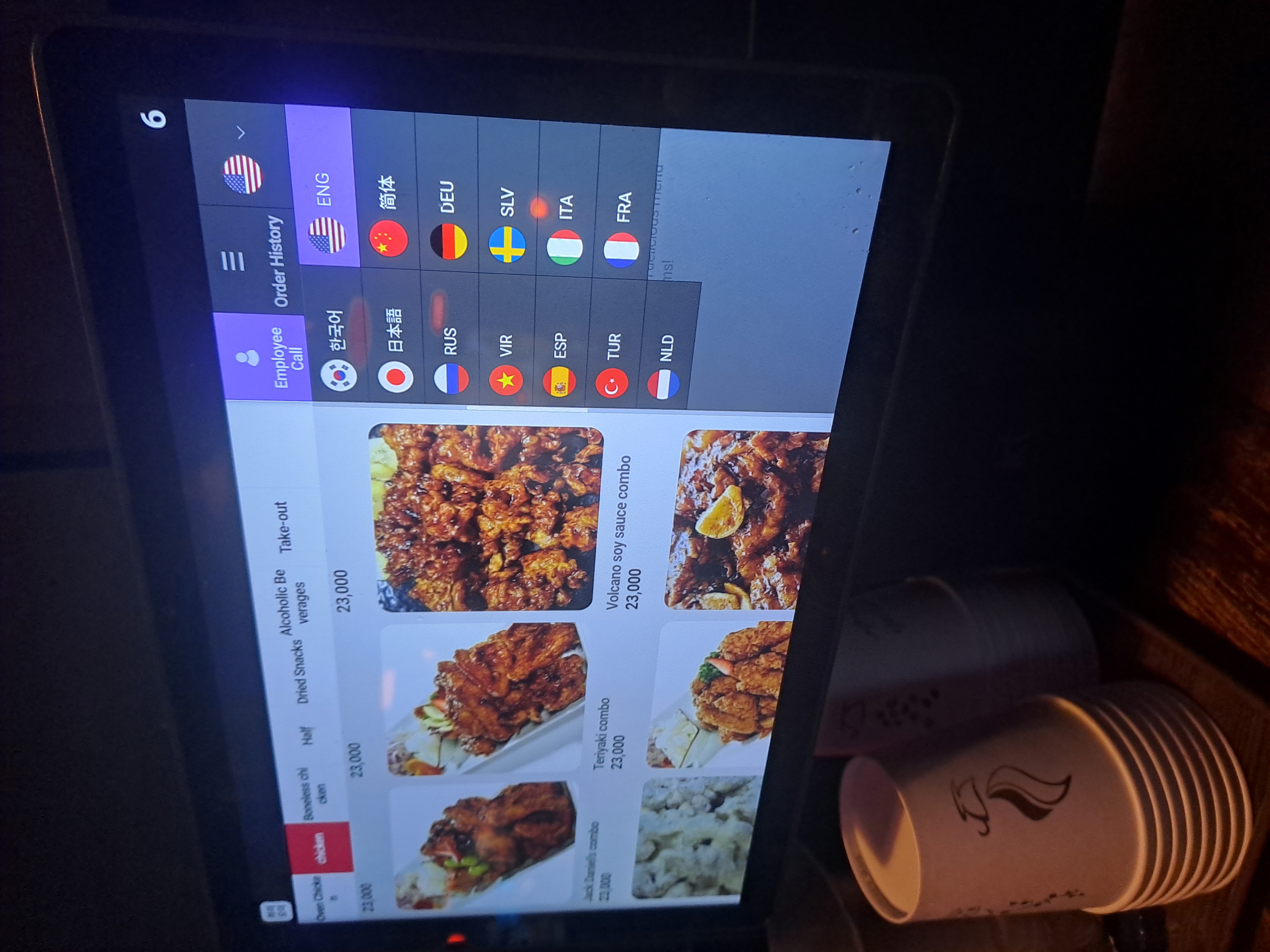
Electronic ordering, with translation available. Still no real cheese but we did like the cheese and olive triangles, although I don’t know if they were really good or we were just desperate for cheese.
I am currently fantasising about my shopping list in Australia with cheese at the top of the list.

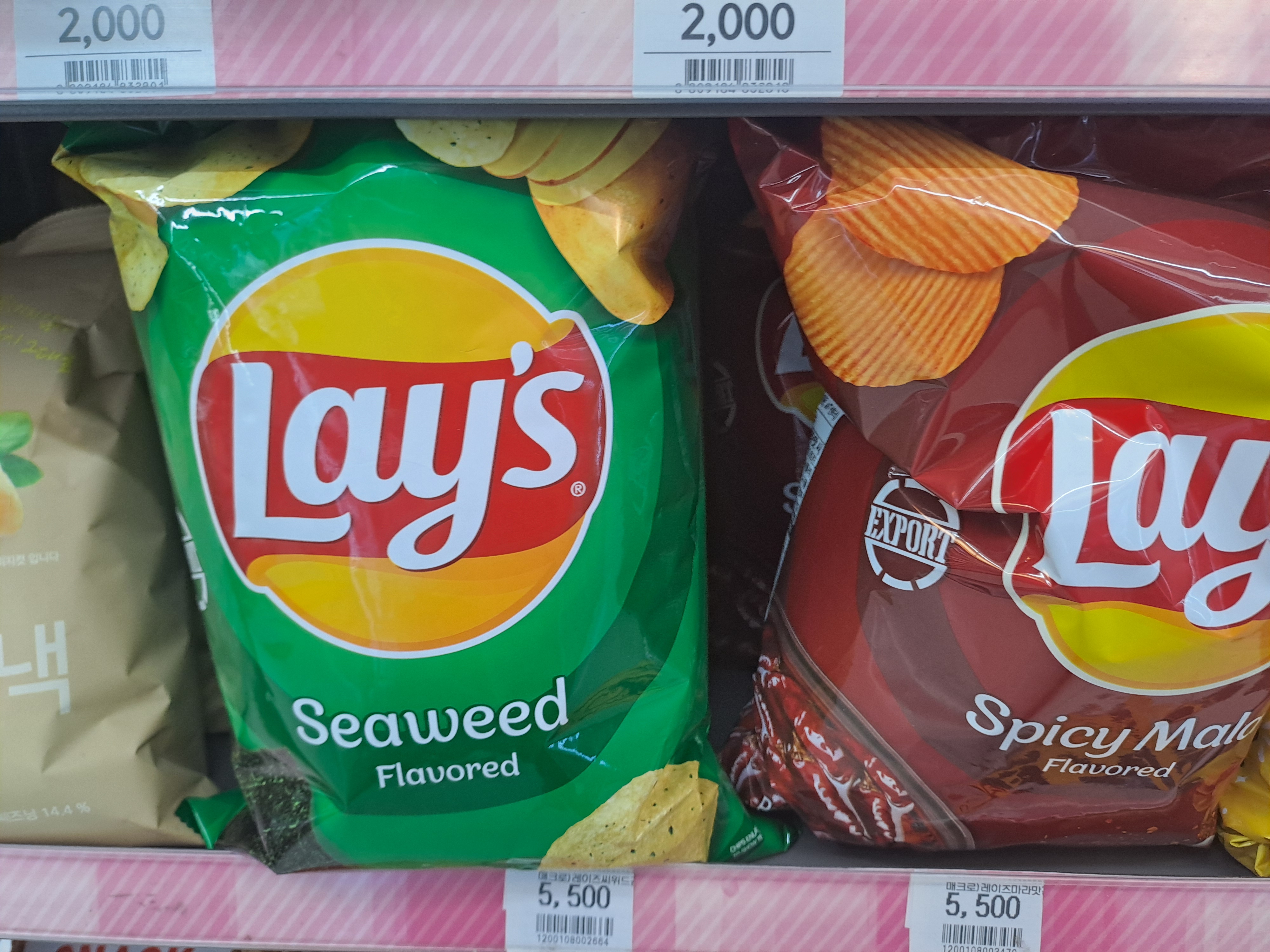
We found new flavours of crisps and new flavours of savoury snacks. I didn’t quite get around to trying either!
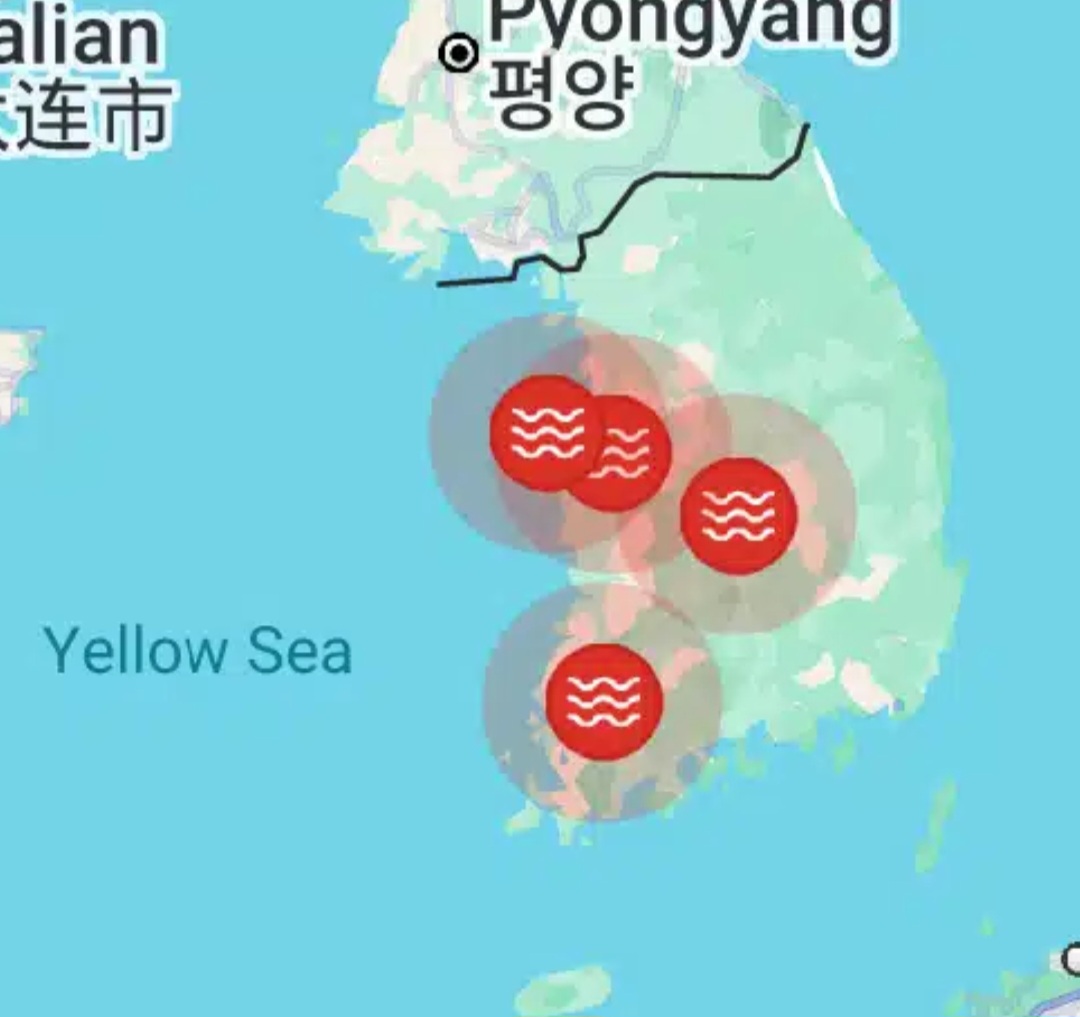
We were incredibly fortunate not to be visiting any of the areas hit by floods. There was serious flooding south of us in whole areas having a devastating effect.
Our trip from the airport at Seoul to our hotel, a long one by bus was accompanied by continual torrential rain. The driver had to keep getting out and into the rain at stops to unload cases. By the time we got to our stop he was obviously desperate to minimise his time outside. We emerged from the bus to find our bags thrown out from the hold already and lying in an inch or so of water in the gutter.
The rain was sufficient for us to be soaked on our quick dash for the subway and then from there to the hotel entrance. After that it eased up and once we crossed to the west the weather was dry again.
Our introduction to Korean cuisine on the first night was by necessity- the heavy rain limited to the nearest restaurant we could see. The house set dishes were fried squid or mince tartare. We couldn’t work out what anything else was so we tried the formal meal. Cutlery (chopsticks) and other table items were we discovered kept in a draw at the end of the table. This was standard across restaurants and the chopsticks were thin and steel. It was like having to start all over again as they were so slippery. Just when we thought we knew what we were doing! The meal was a bit mystifying as we weren’t quite sure what to do with all the various small plates of stuff laid out for us. Some later restaurants actually had instructions in English for us ignorant foreigners.
Several other members of our group went to the same restaurant and none of us were over keen. We could have done with a lesson on how to eat in Korea.
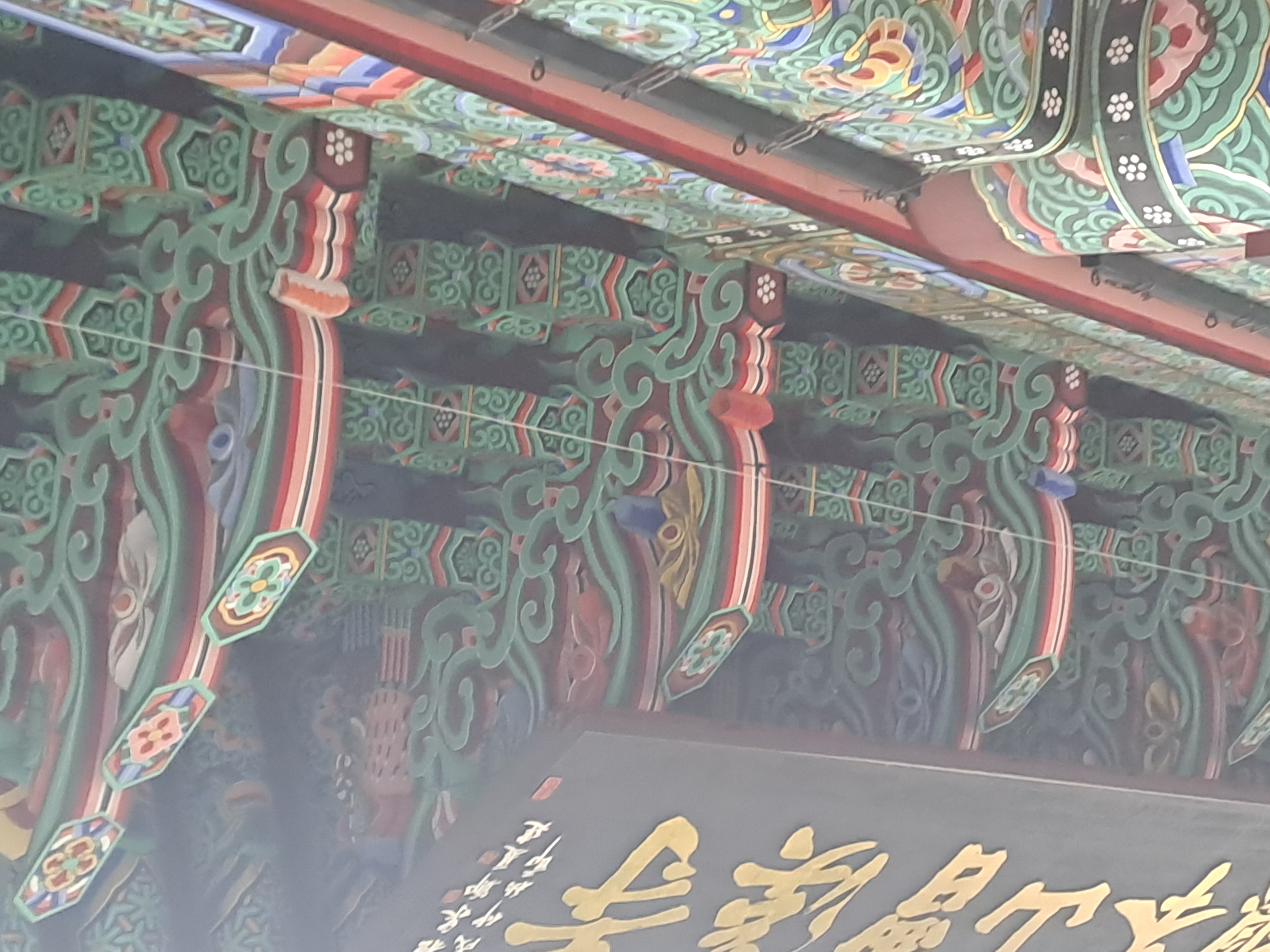
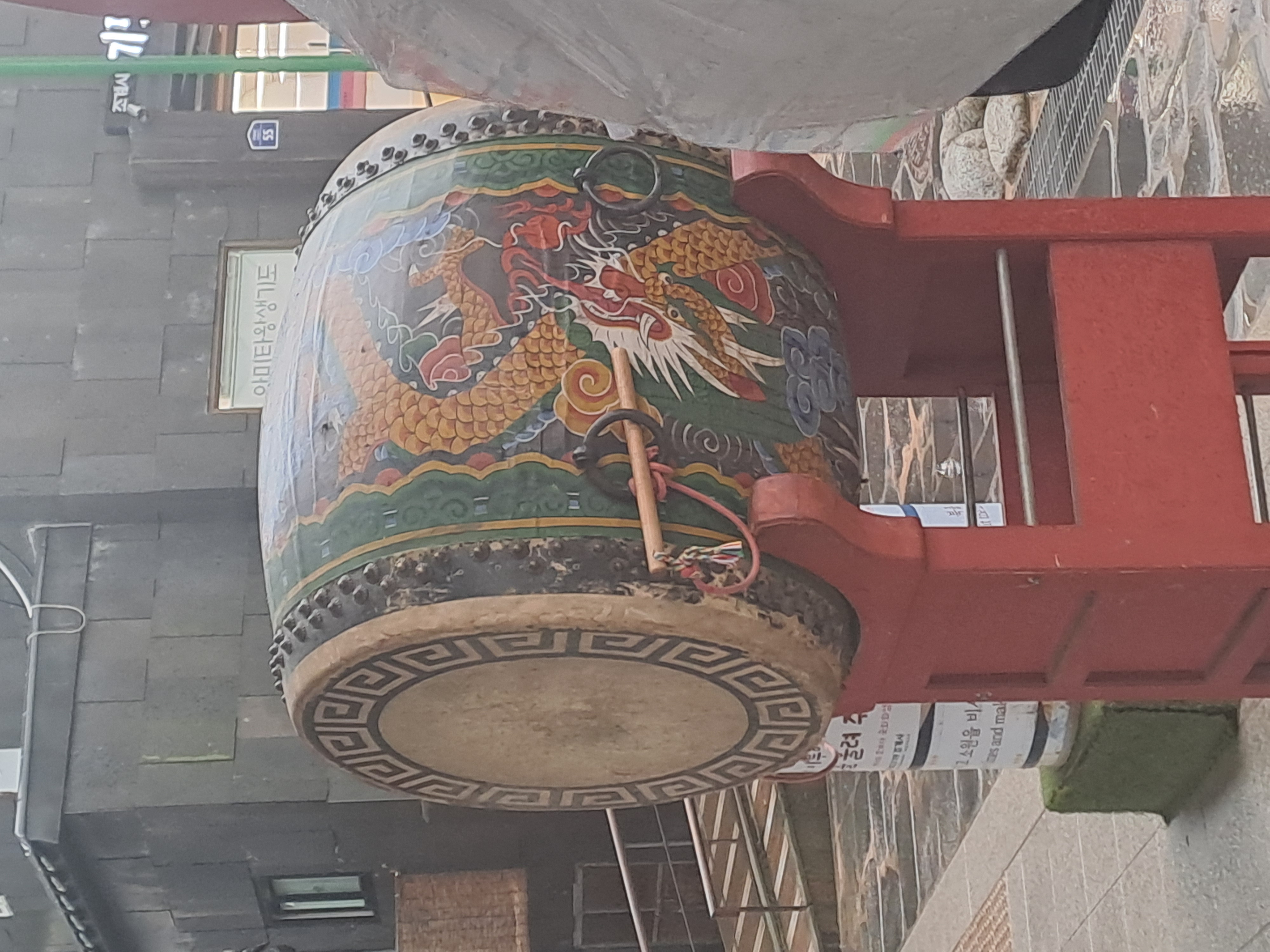
The next day we set off on a tour of some of the sites on Seoul. Every city wants to show off its temple, so that was first on the agenda. This was very much a working temple with many people reading or praying inside.
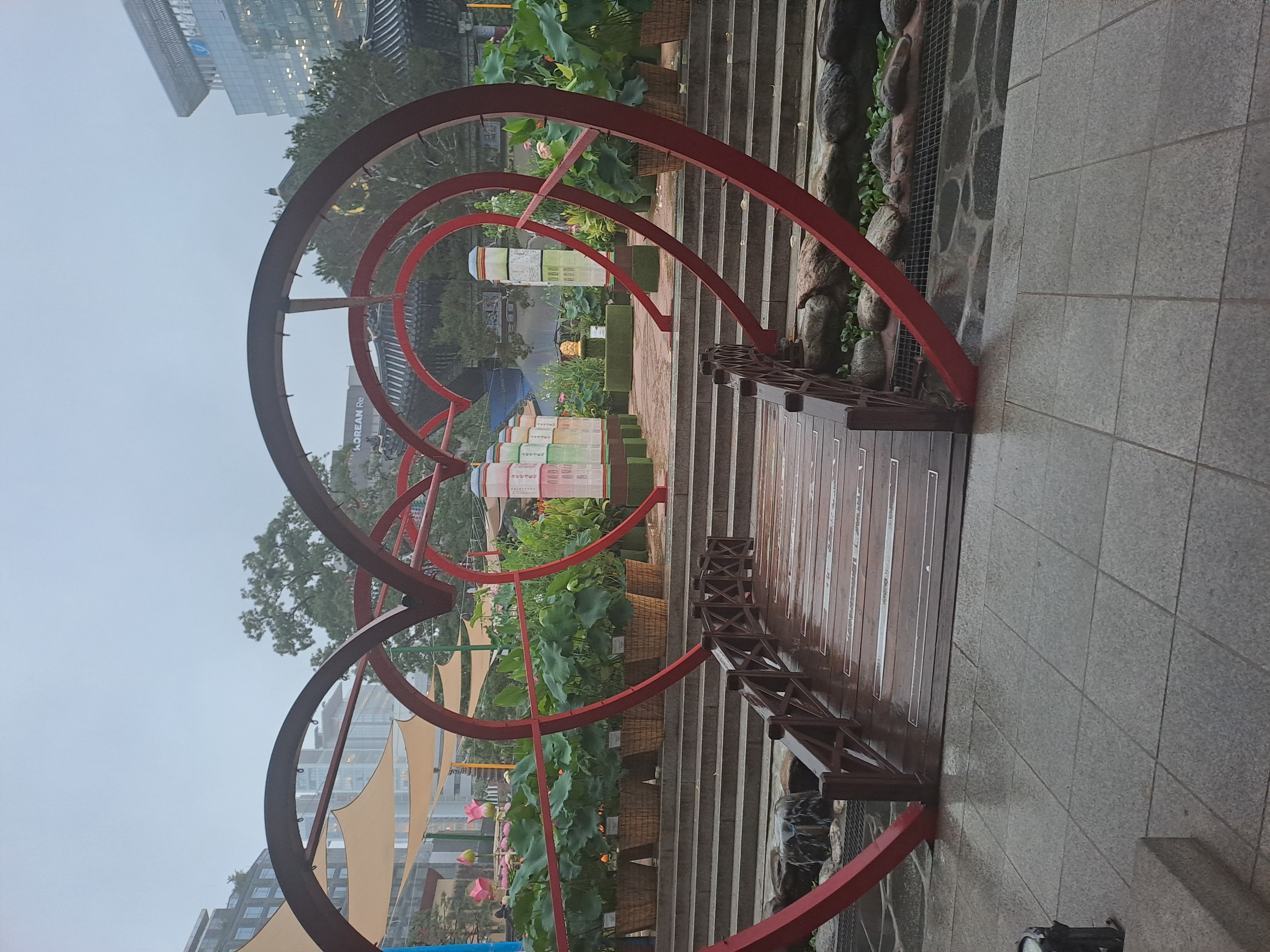

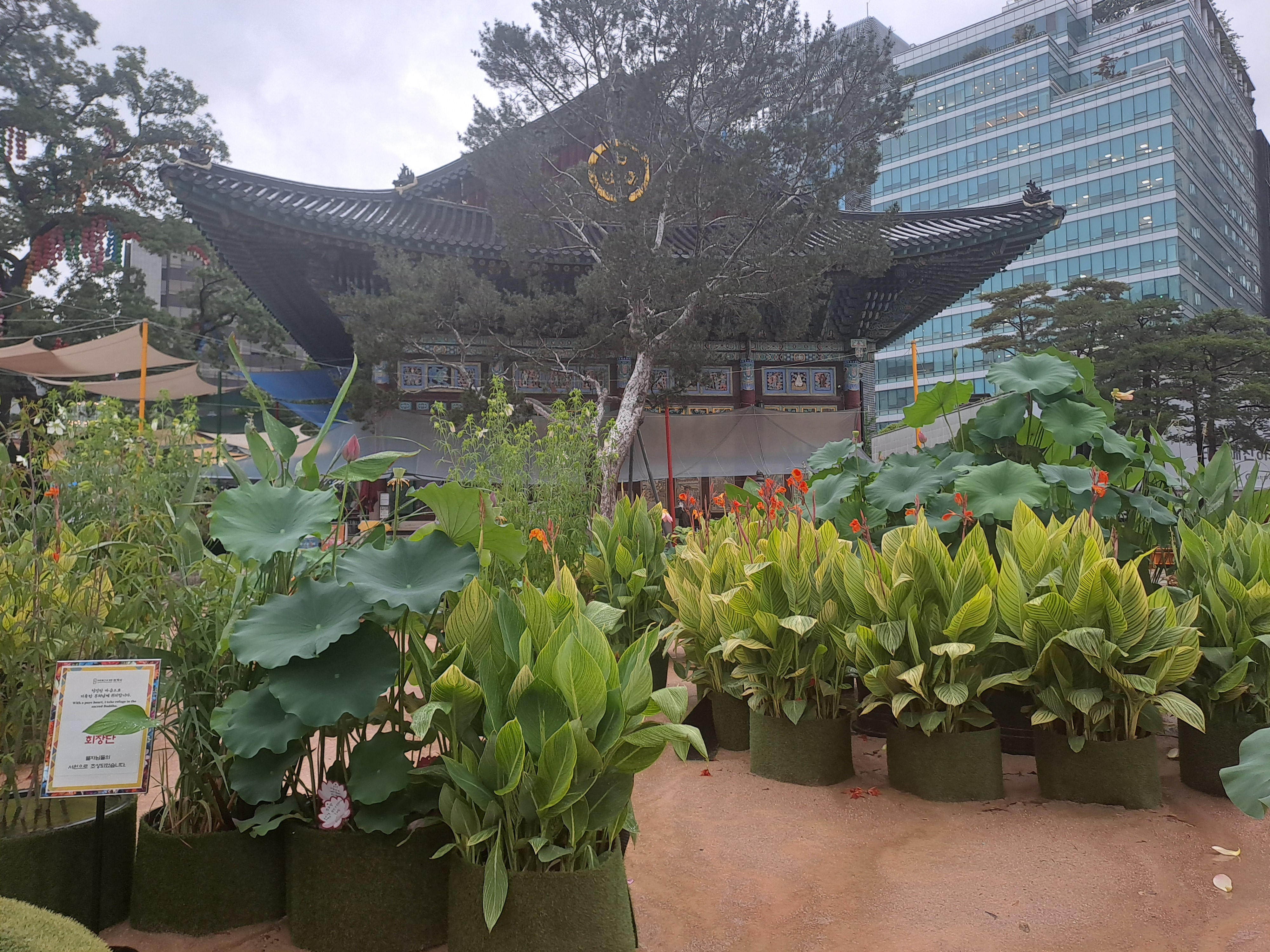
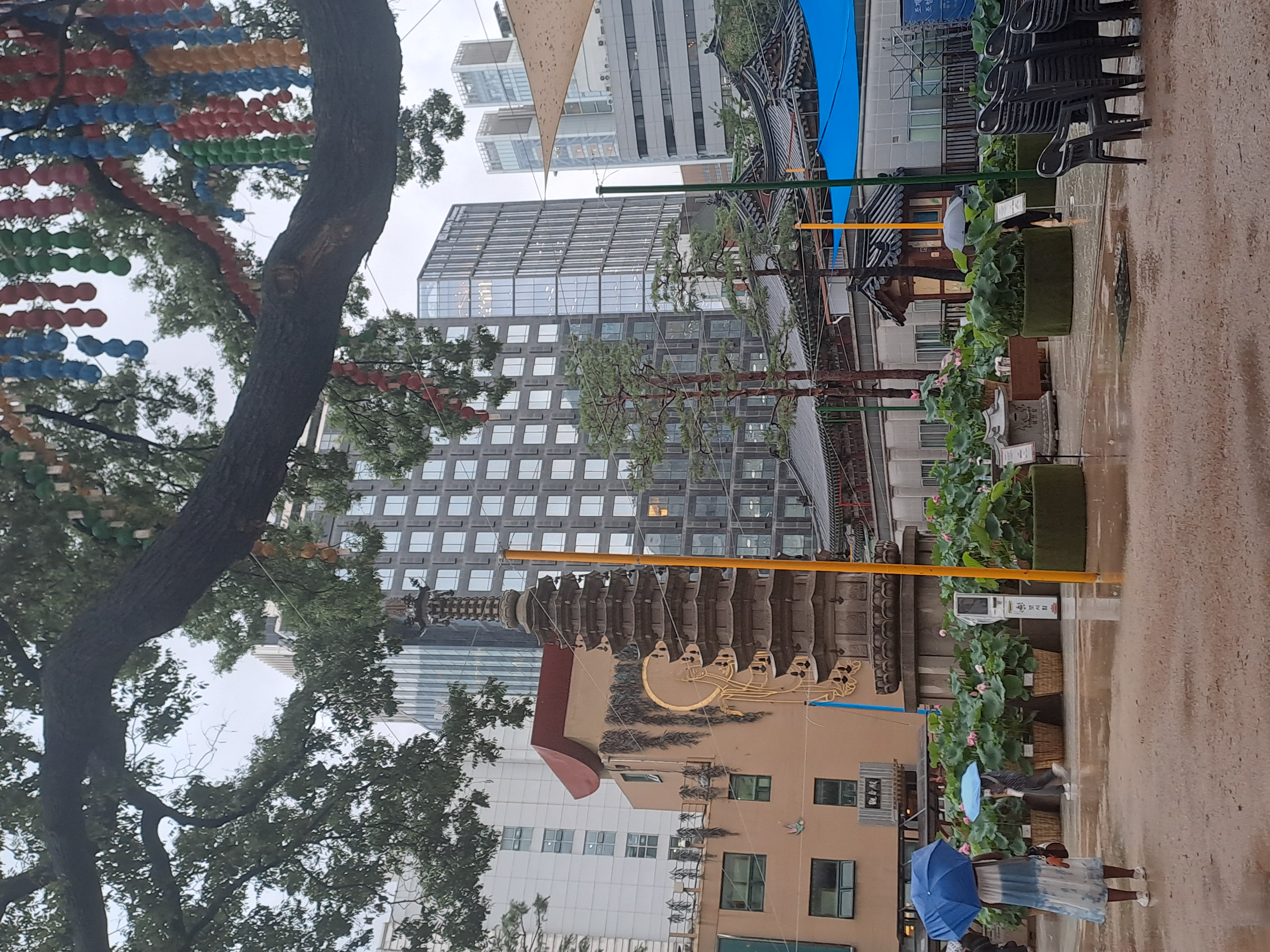
It also had a nice garden with lotus flowers and a range of other plants. It was quite strange seeing it against a background of high-rise buildings.
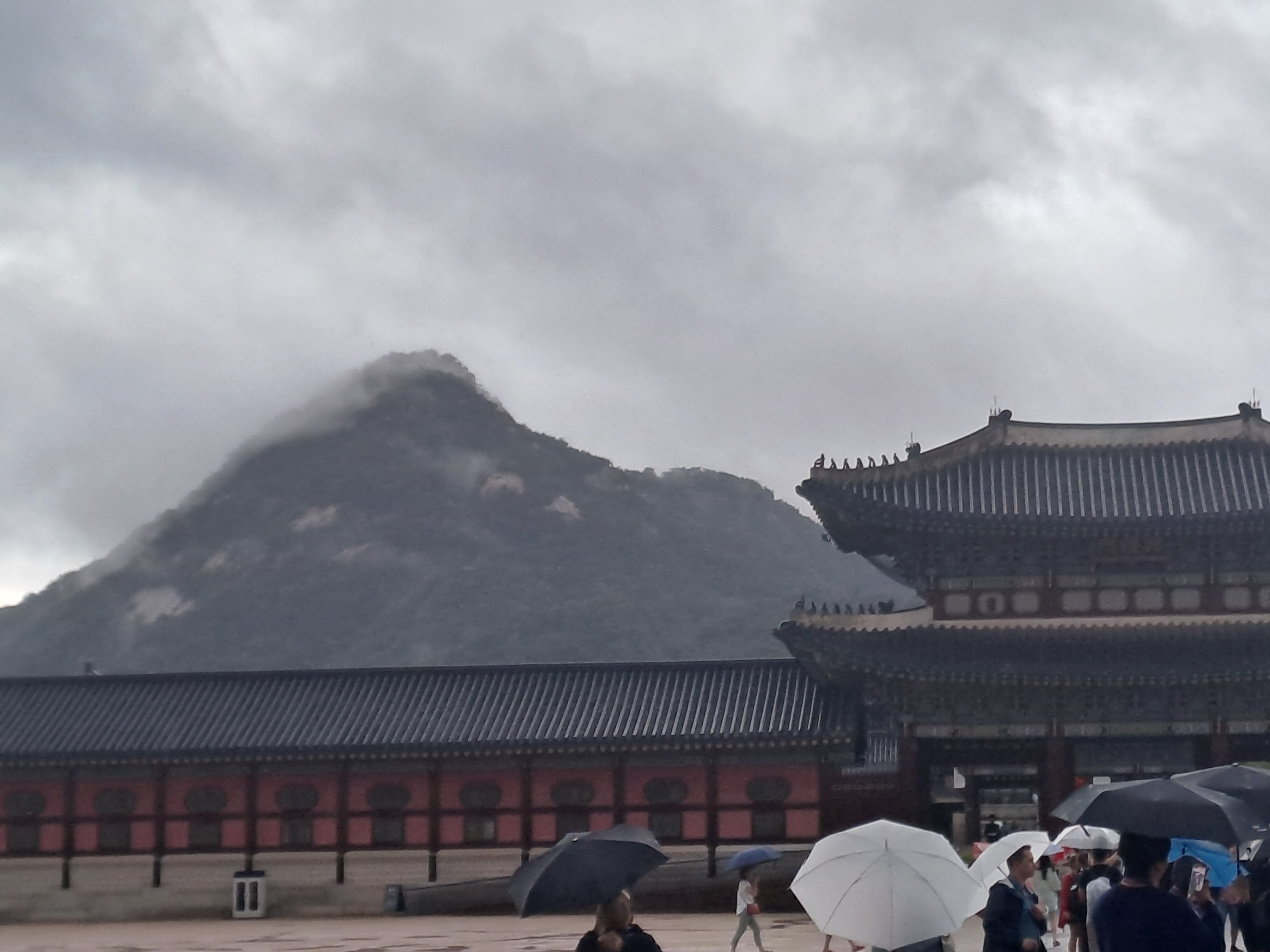
We went onto a palace set against the mountains behind
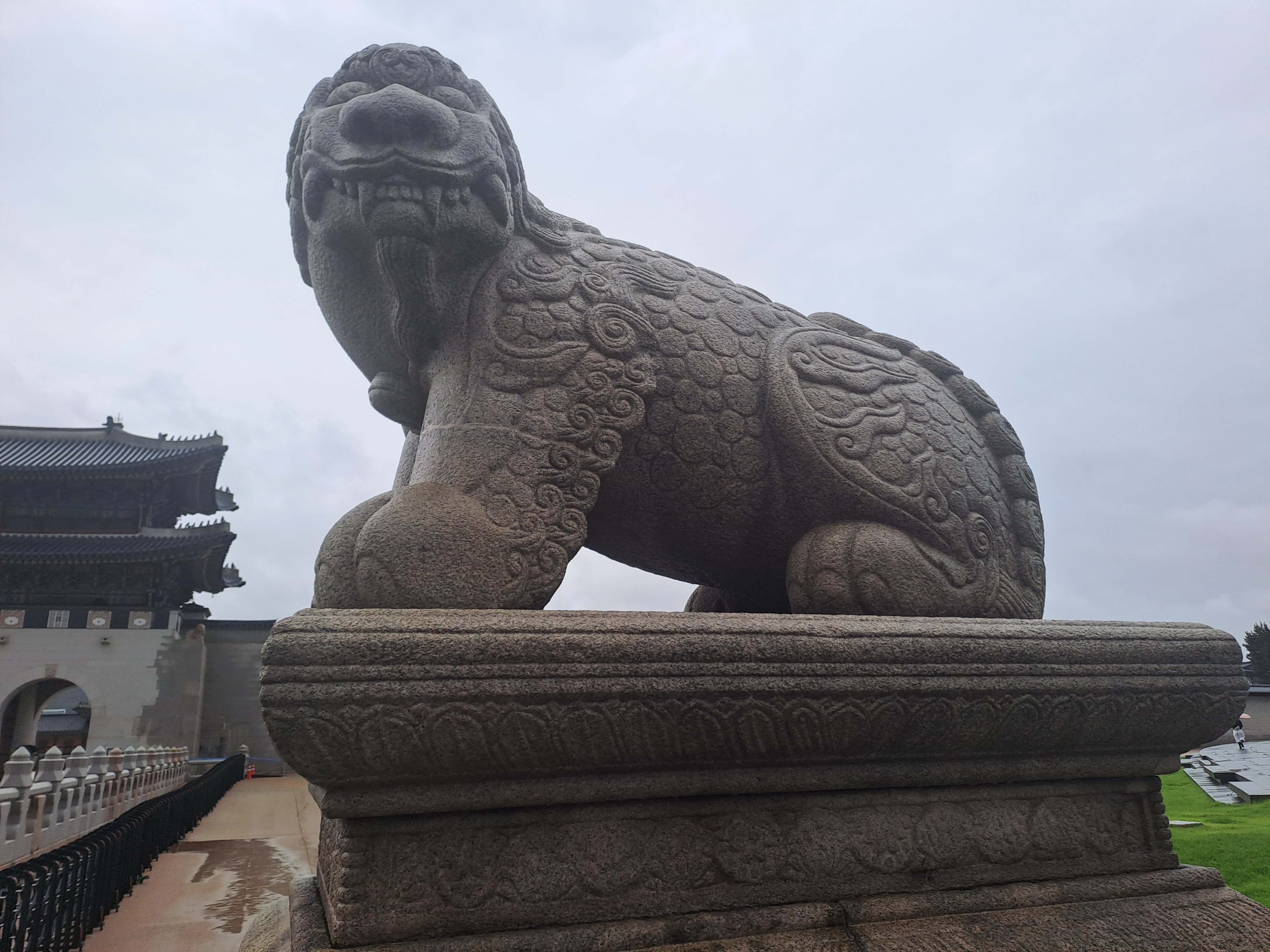
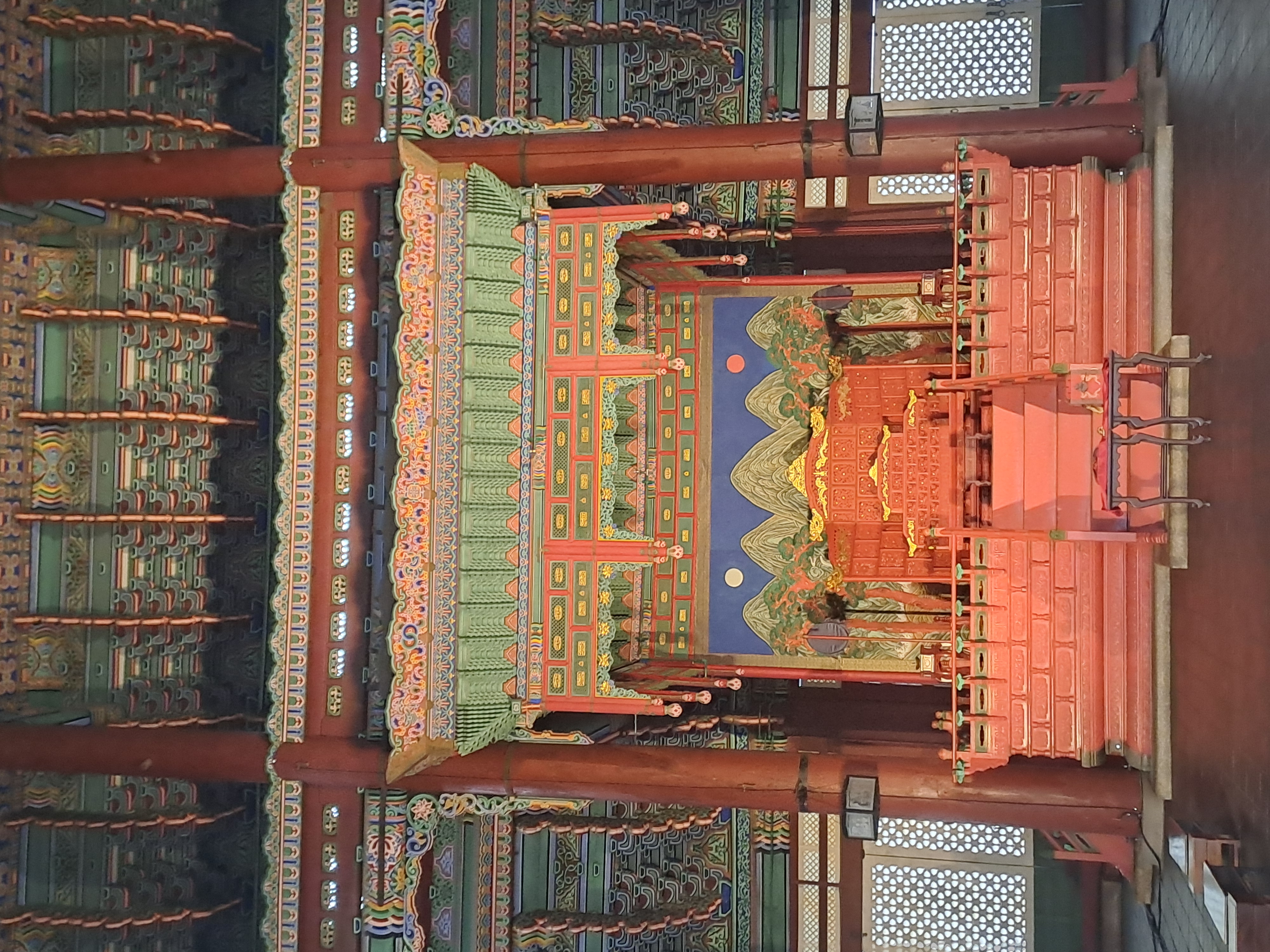
Apparently the King’s building couldn’t have any furniture in it in case of a wouldbe assassin. It all looked a bit empty, although carefully guarded by the creatures in front. The picture inside is very famous representing the sun and the moon and the five peaks, showing the kings authority and a wish that the dynasty would last for ever.

On to the museum where we were shown the traditions of family life, marriage and childbirth. The process gone through for these things. Negotiating the marriage, announcing the birth and sex of a child by hanging decorations over the door etc.
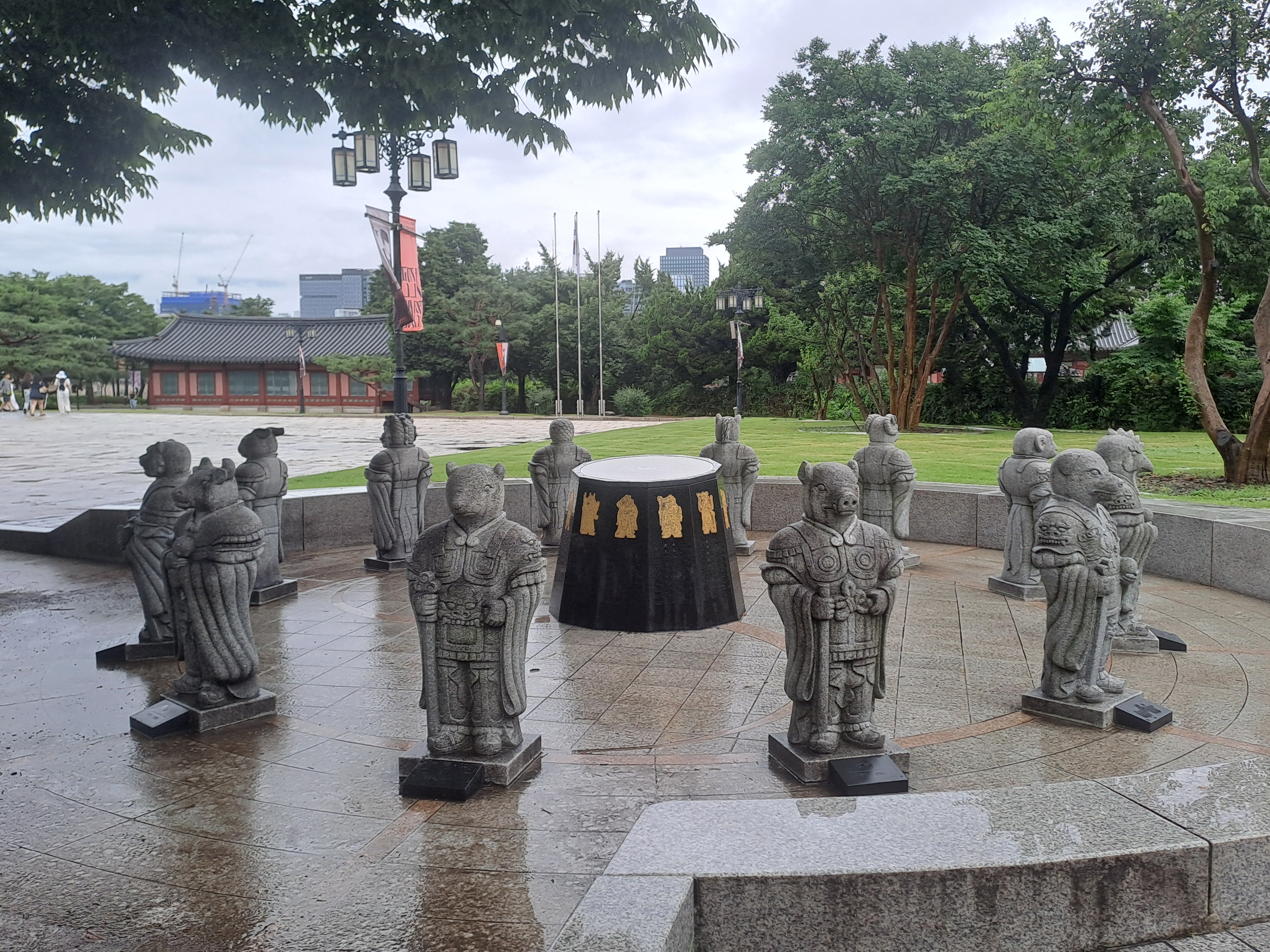
In front of the museum were statues of the zodiac.



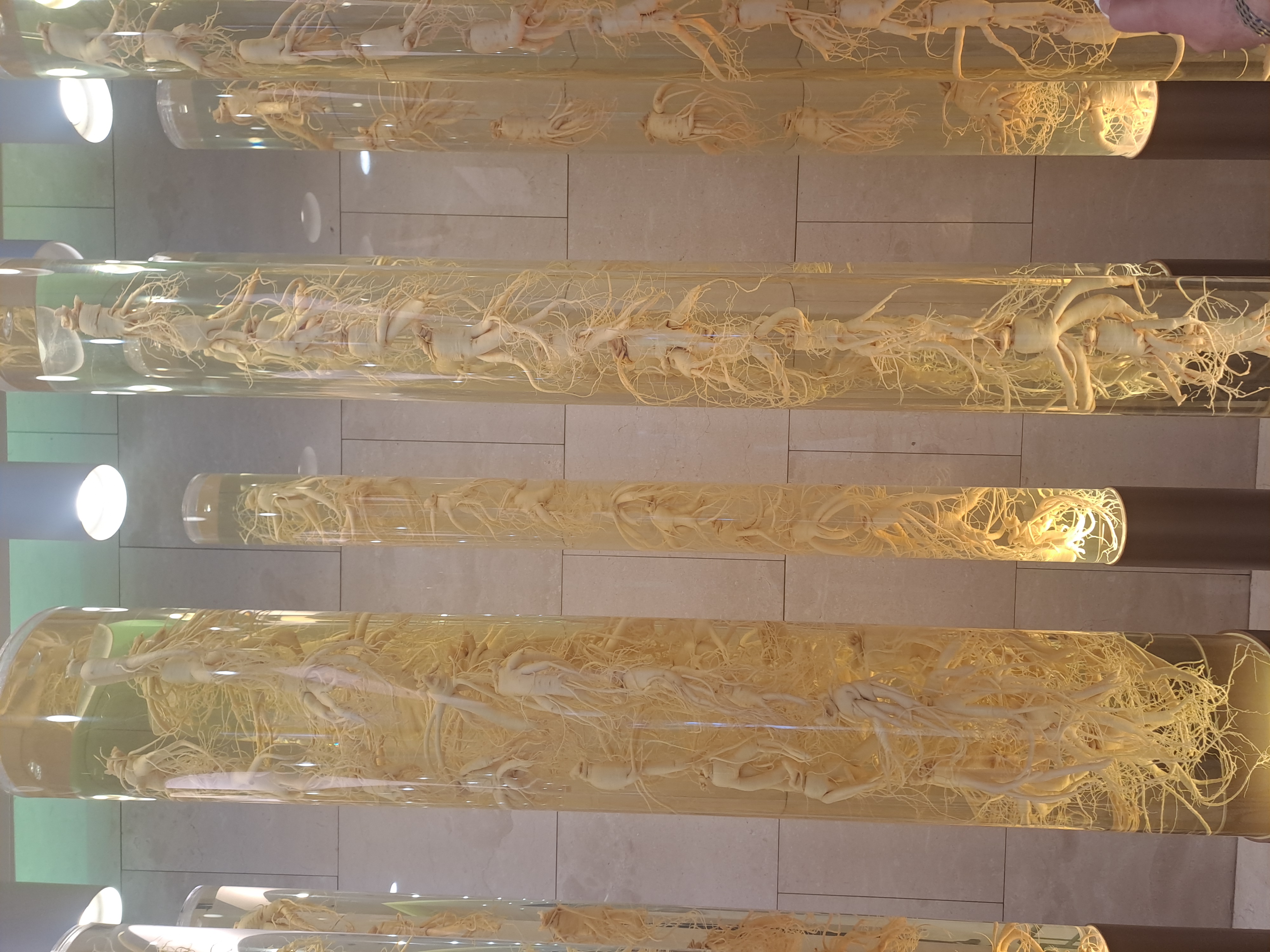
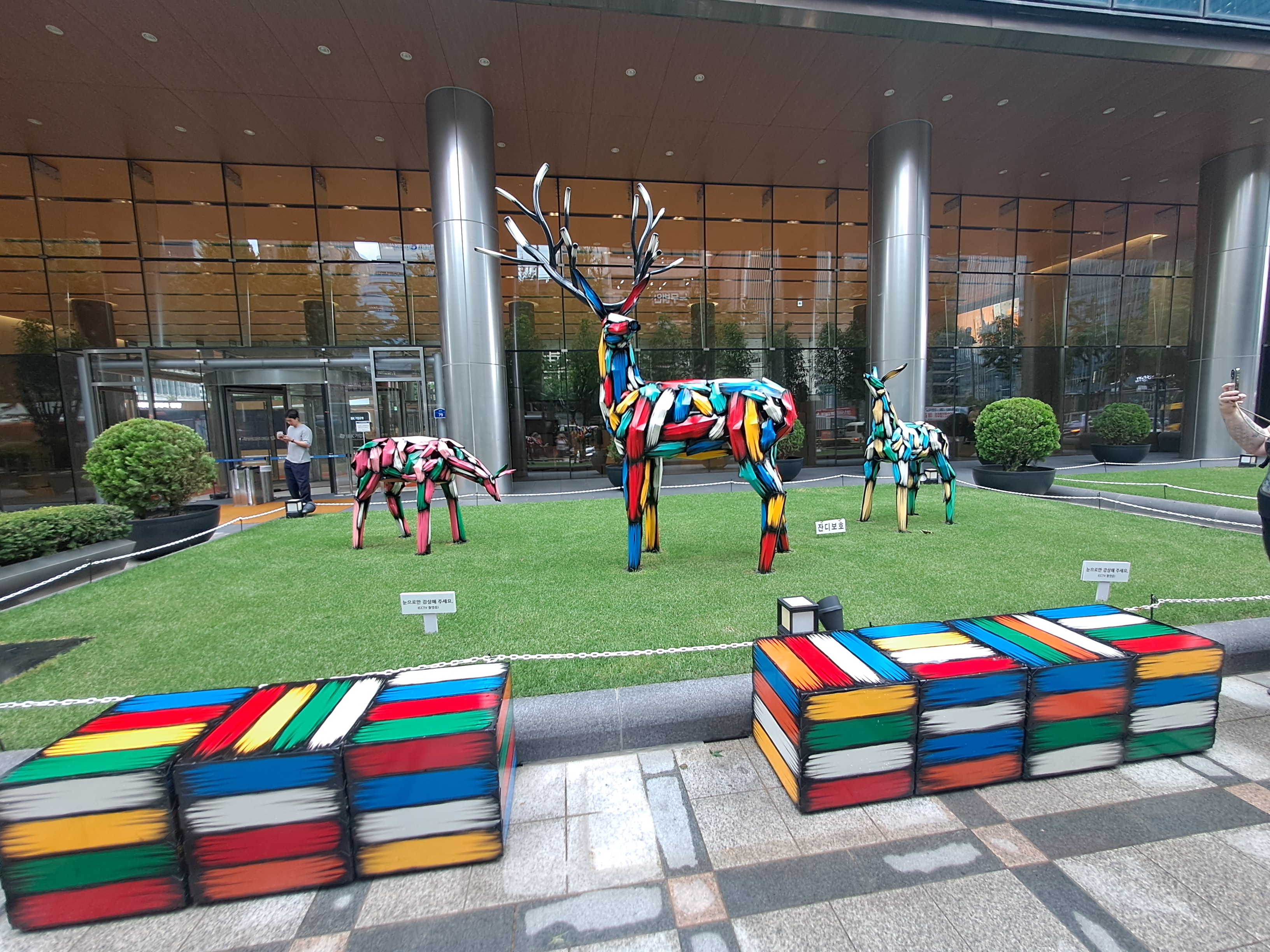
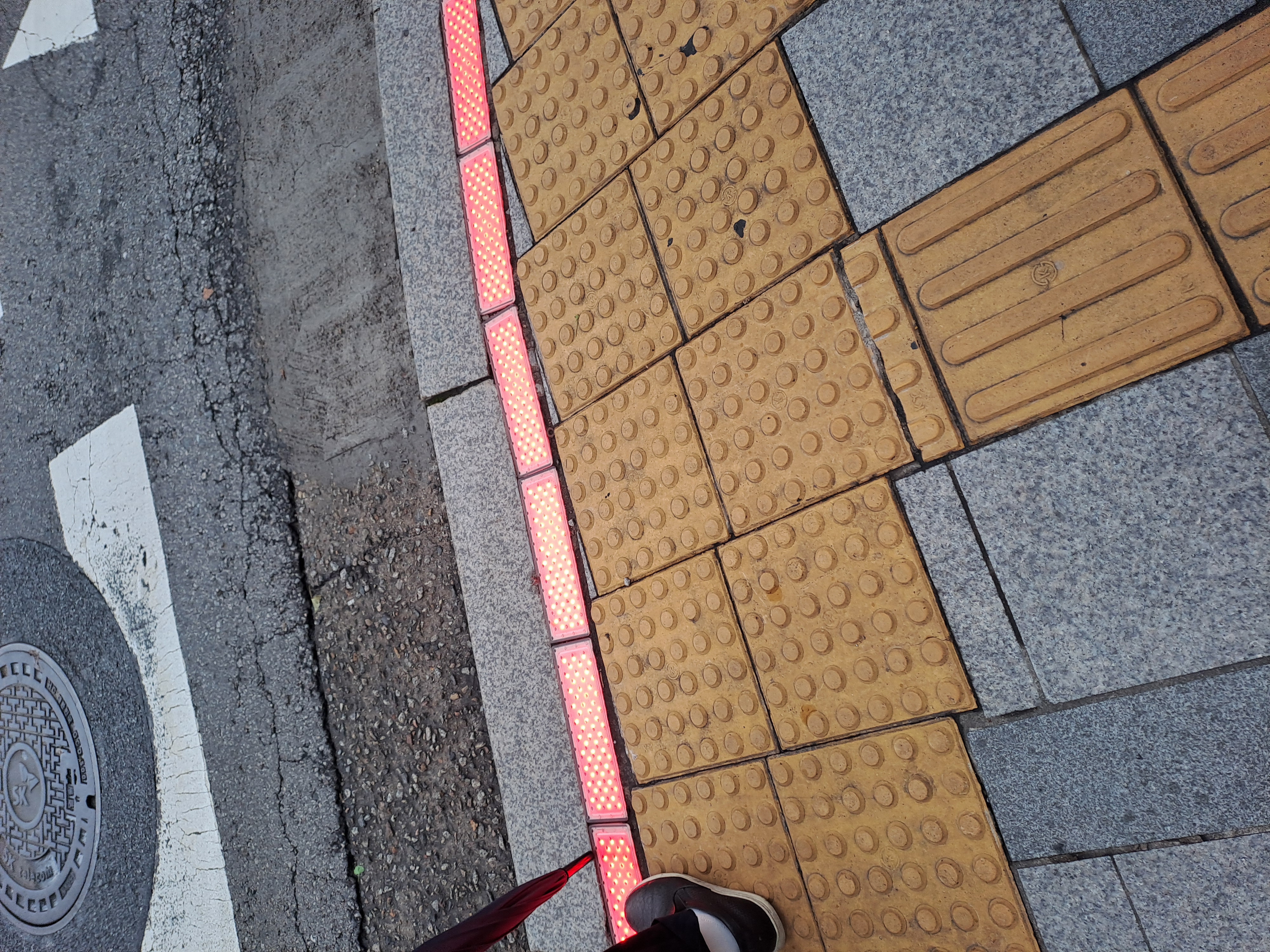
Last on the visit was the ginseng museum or rather sales shop. It was interesting learning about how it is grown and ideally harvested at 6 years. We also got to sample various sweets and things with ginseng in. On the way back we stopped to look around some of the local sculptures and the wonders of flashing kerb stones at the pedestrian crossings.

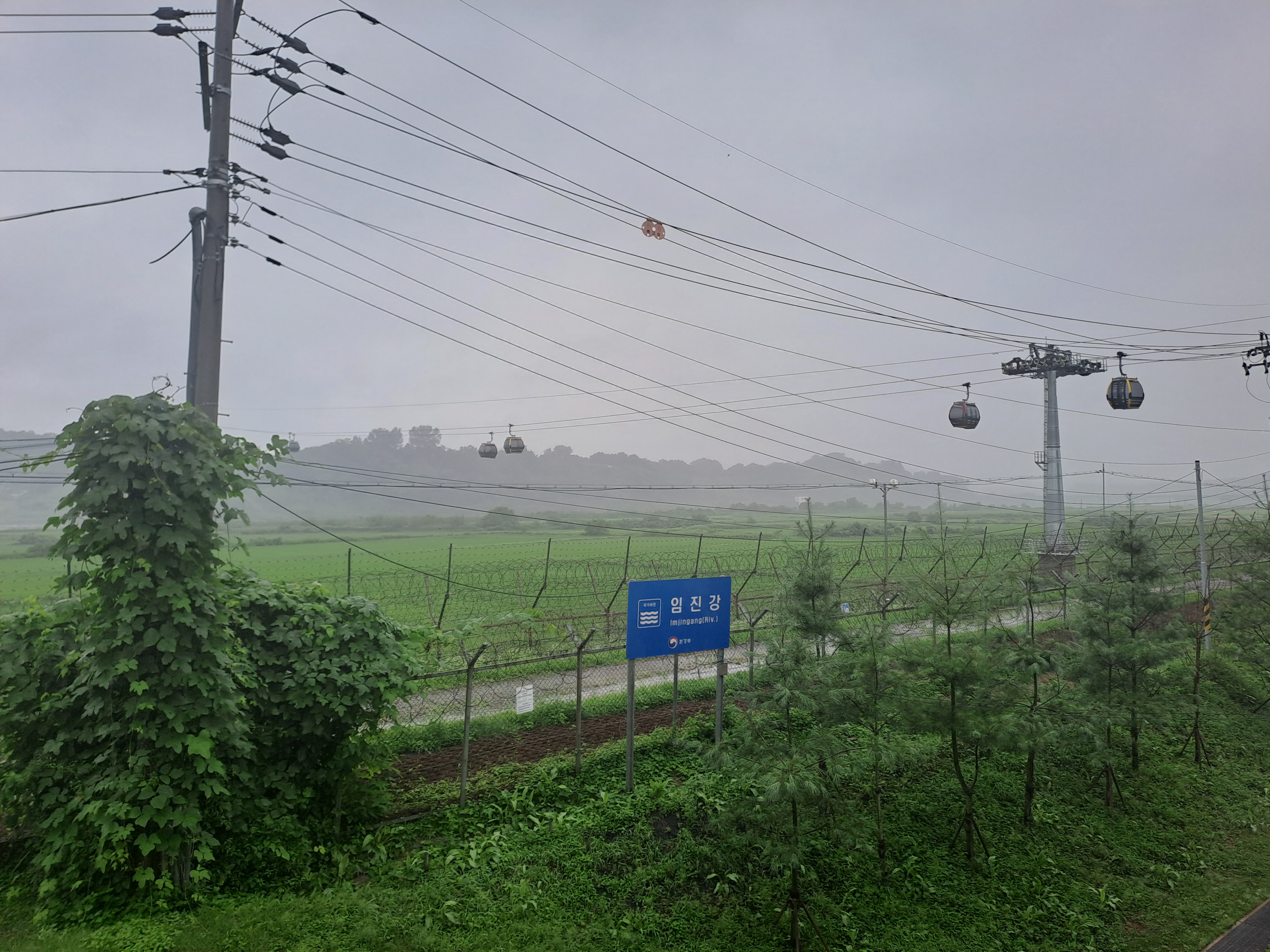
I guess the highlight of this part of the tour was visiting the DMZ (Demilitarised Zone). This was our chance to see North Korea in the distance!
Unfortunately our day was very wet and cloudy so we got to see lots of fog over North Korea, but no actual land. A picture explained what we would have seen, pointing out landmarks.
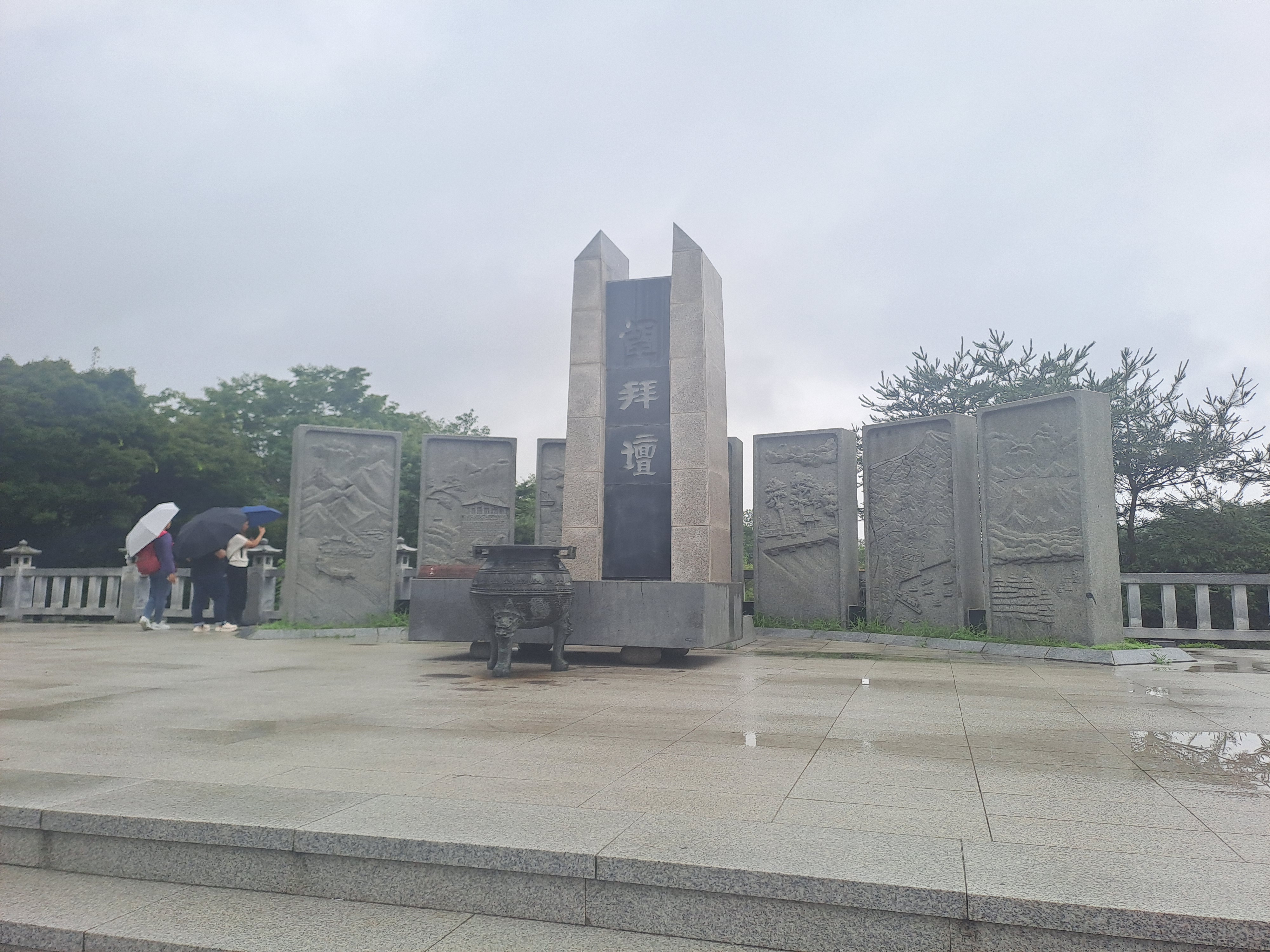
We saw the altar which is the closest to North Korea people can go to give offerings to their ancestors, and the freedom bridge where people have been returned.

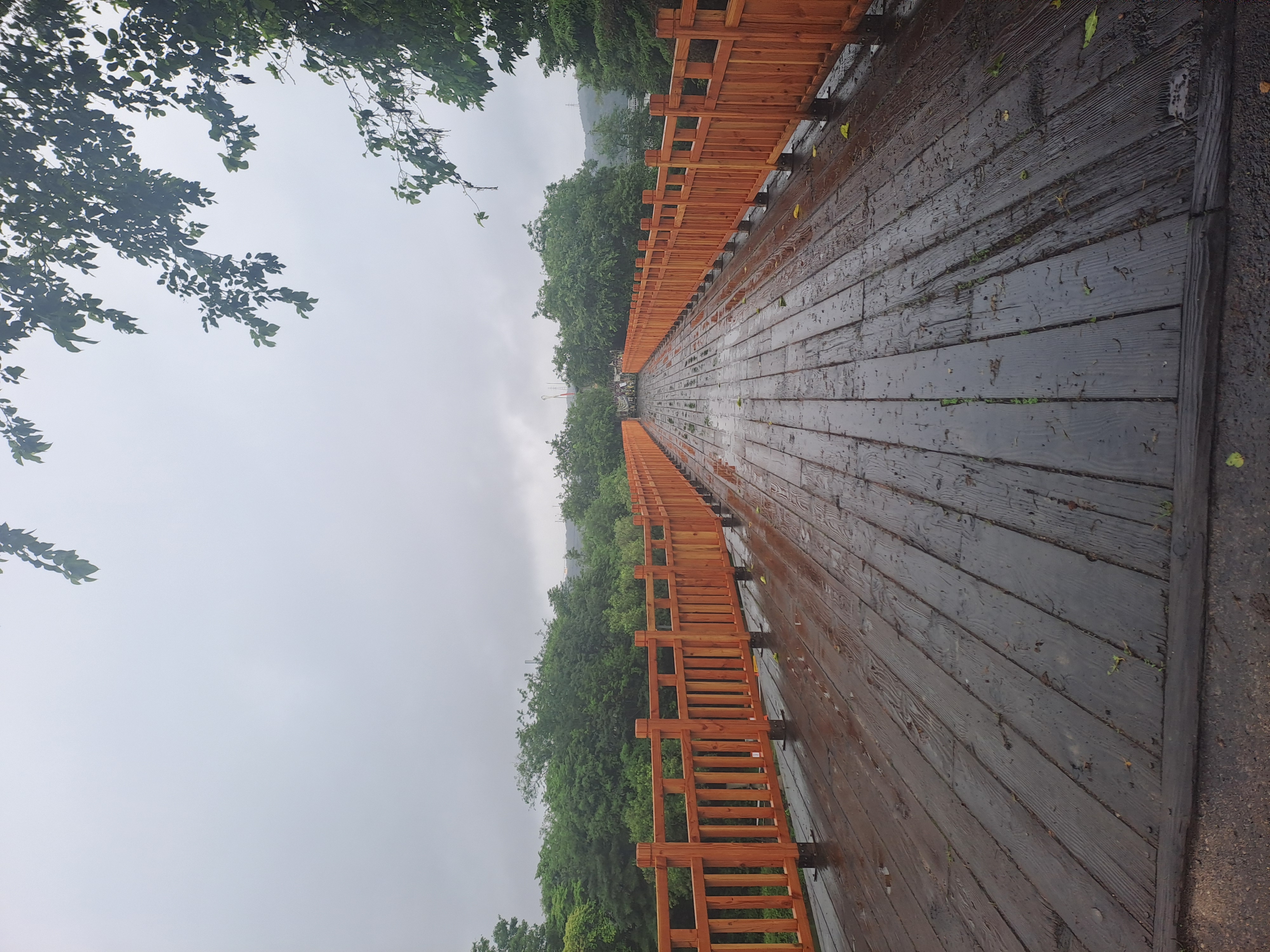
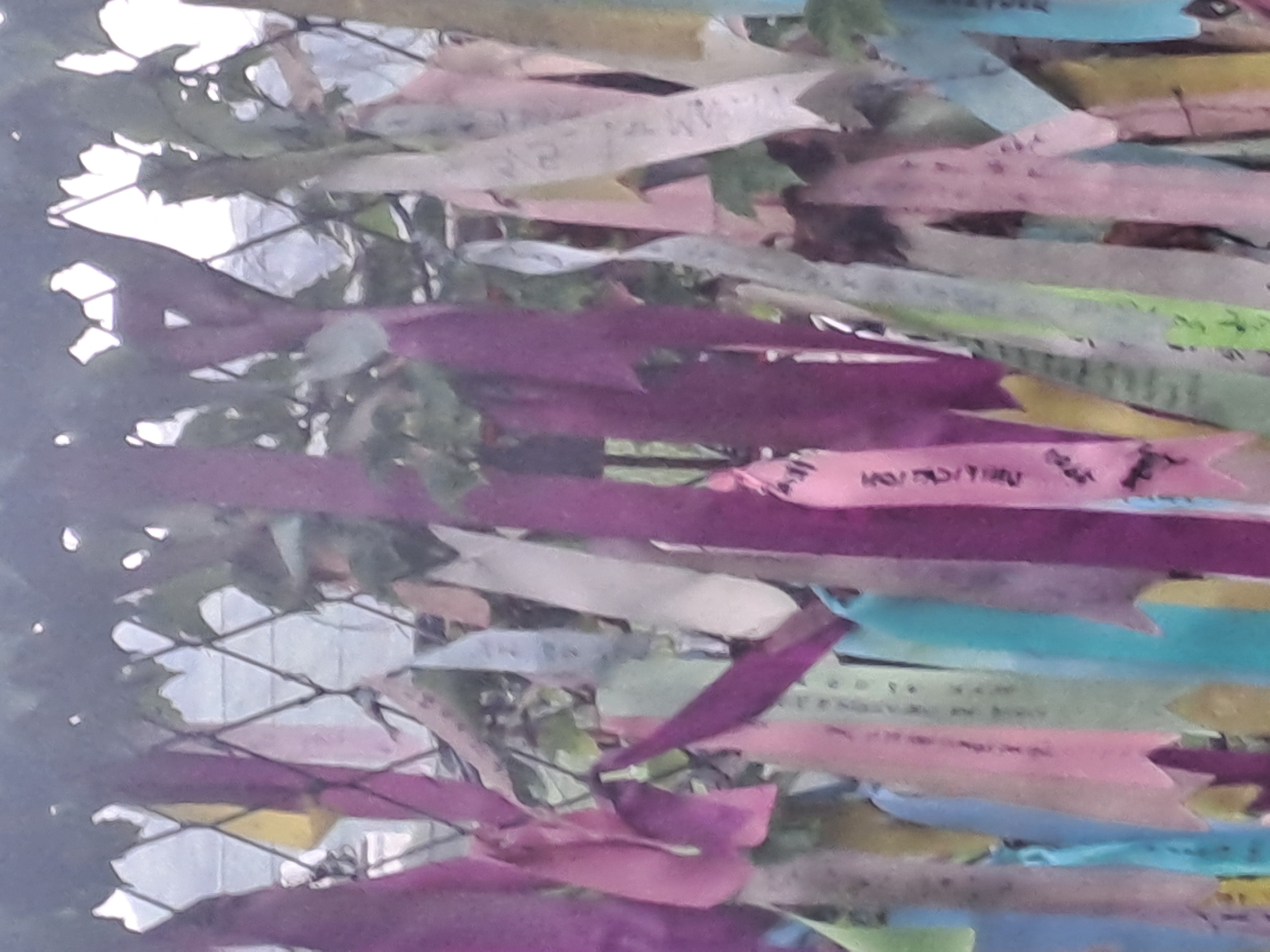
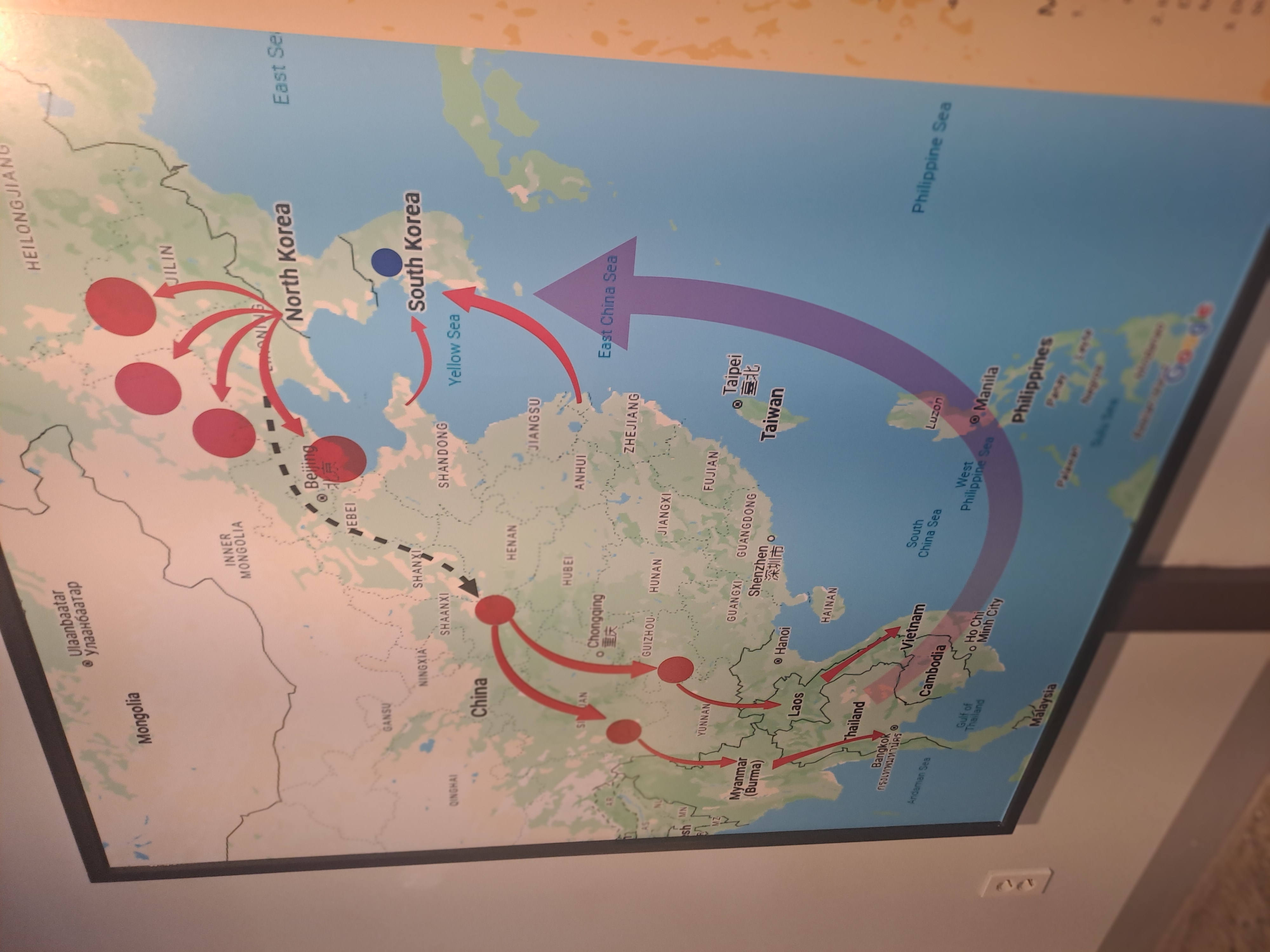
There are many ribbons with prayers and messages for friends and relatives. Much of the exhibition focused on the idealogy and threat from North Korea. We had a video about this and then were able to have a question and answer session with a defector from North Korea. This was very emotional for her recalling the events and answering questions about North Korea. She had crossed a river to China and then to Tibet to a refugee centre. They were told at home that they were in paradise and the rest of the world is hell. Several famines though have given the lie to this. The map shows the most popular escape routes.
Outside there are two women statues to the comfort women. Young girls taken by Japanese during occupation to service the soldiers. After this the women were shunned by Koreans even though they had no choice.

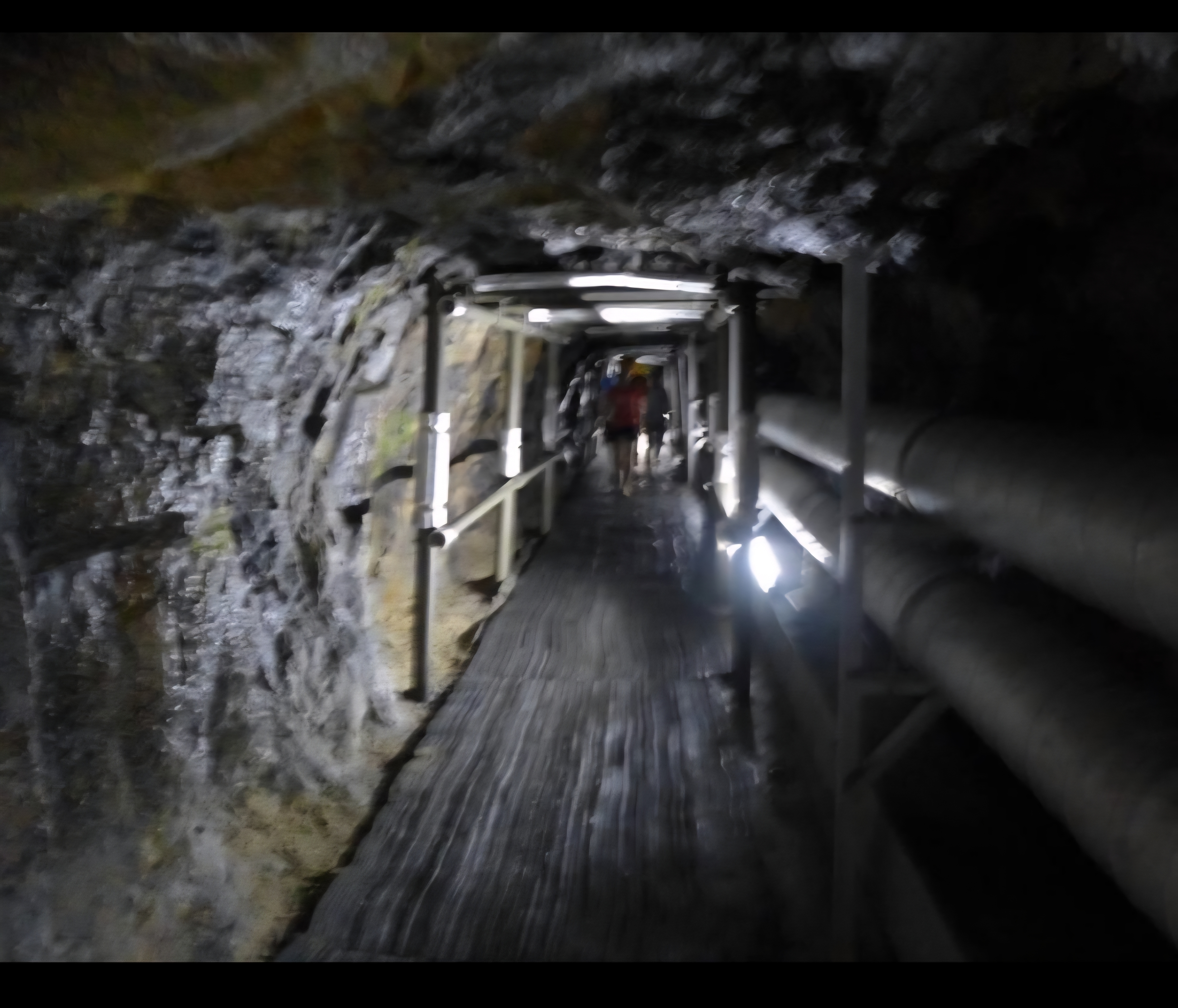
We then went to see the third tunnel, a long sloping walk to a point almost at the border where it was blocked. This is one of 4 invasion tunnels found. The first was found because one of the labourers defected and made authorities aware of the existence but couldn’t be precise about the location. Many tubes were put into the ground and filled with water to detect if a tunnel came beneath them. Two years later force drove water out of one of the tubes from impact and the first tunnel was detected. Since then 3 more have been found.
Thinking today is that tunnels are no more effective as missiles now have a longer range.
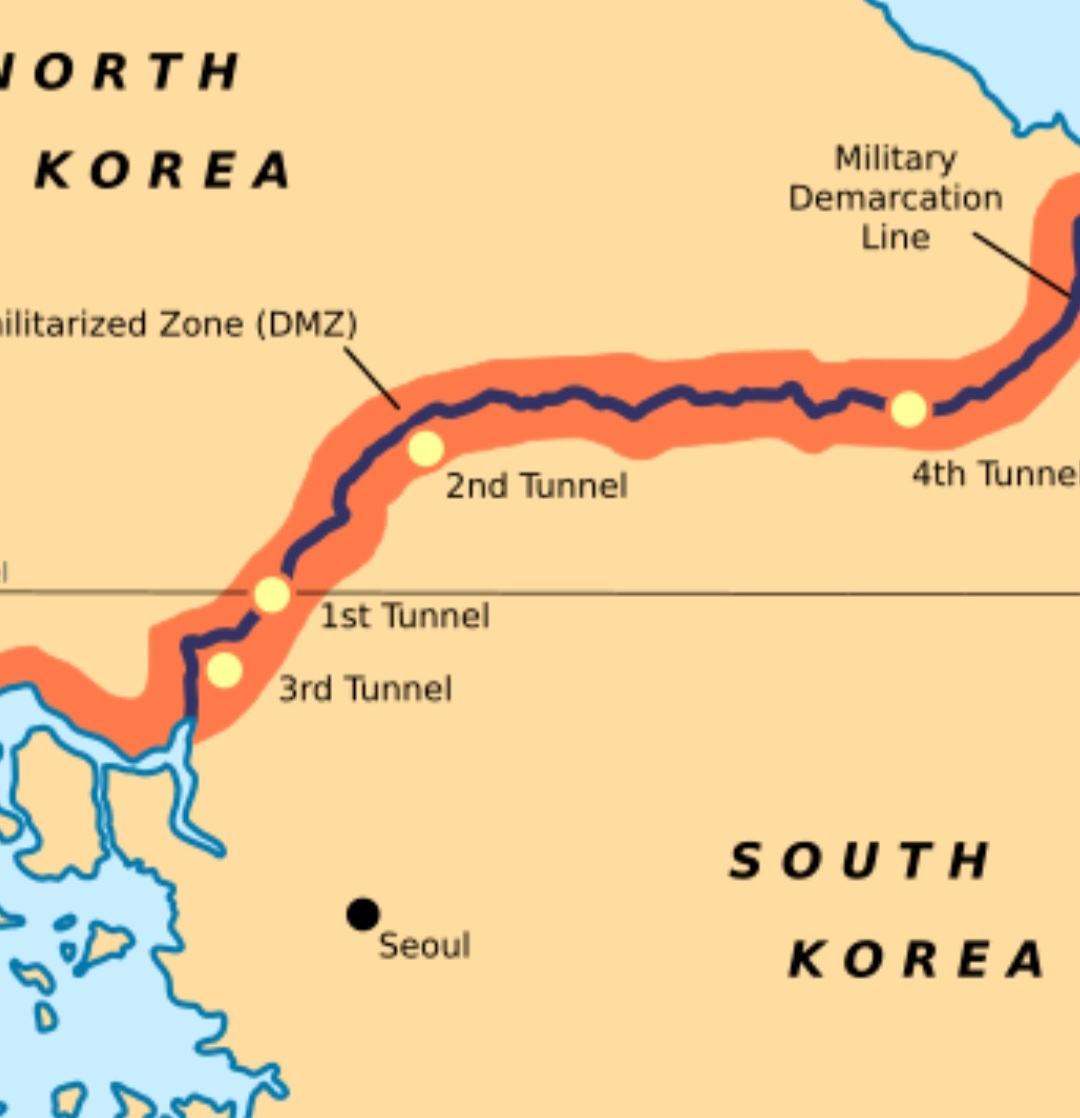
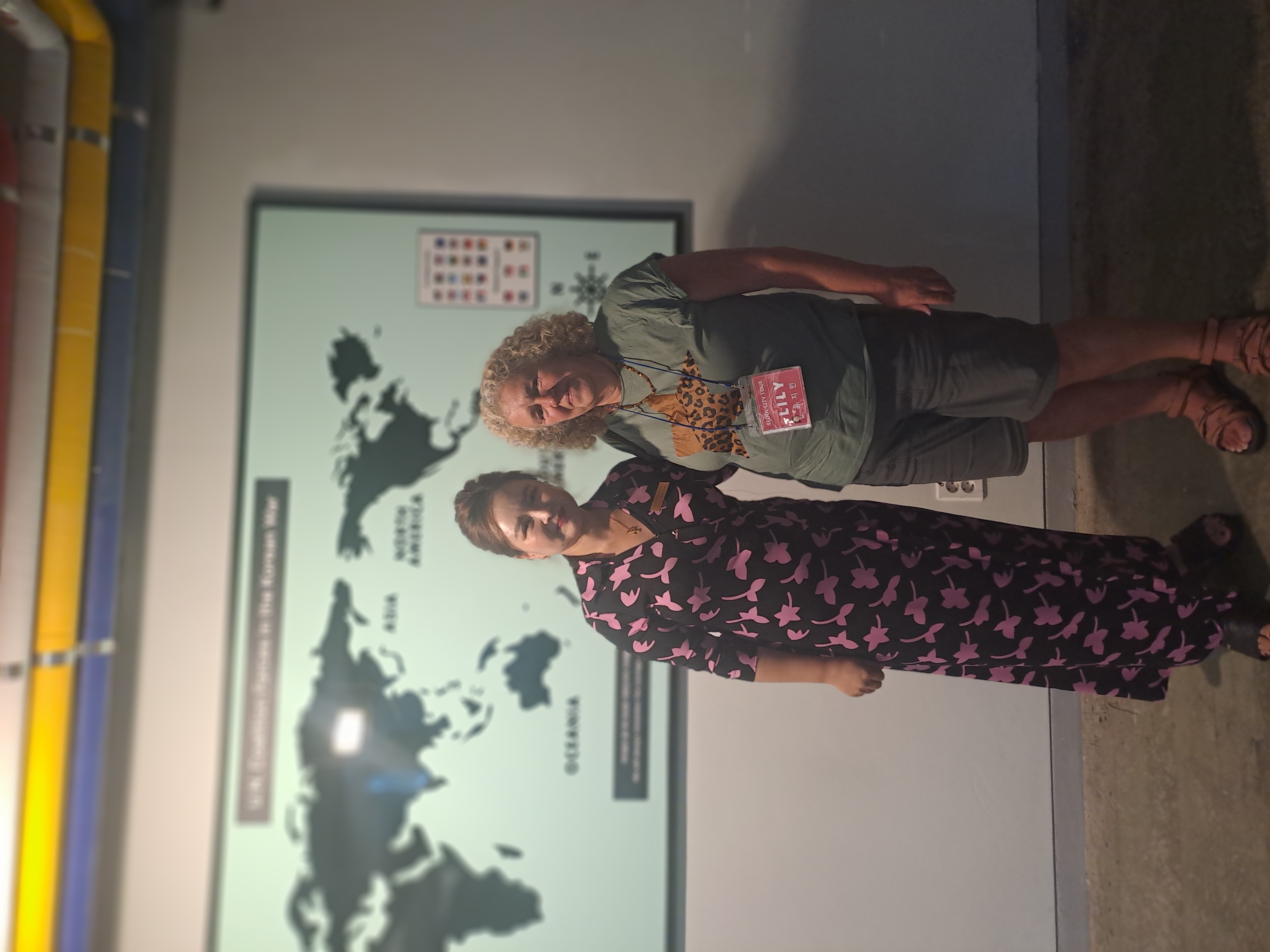
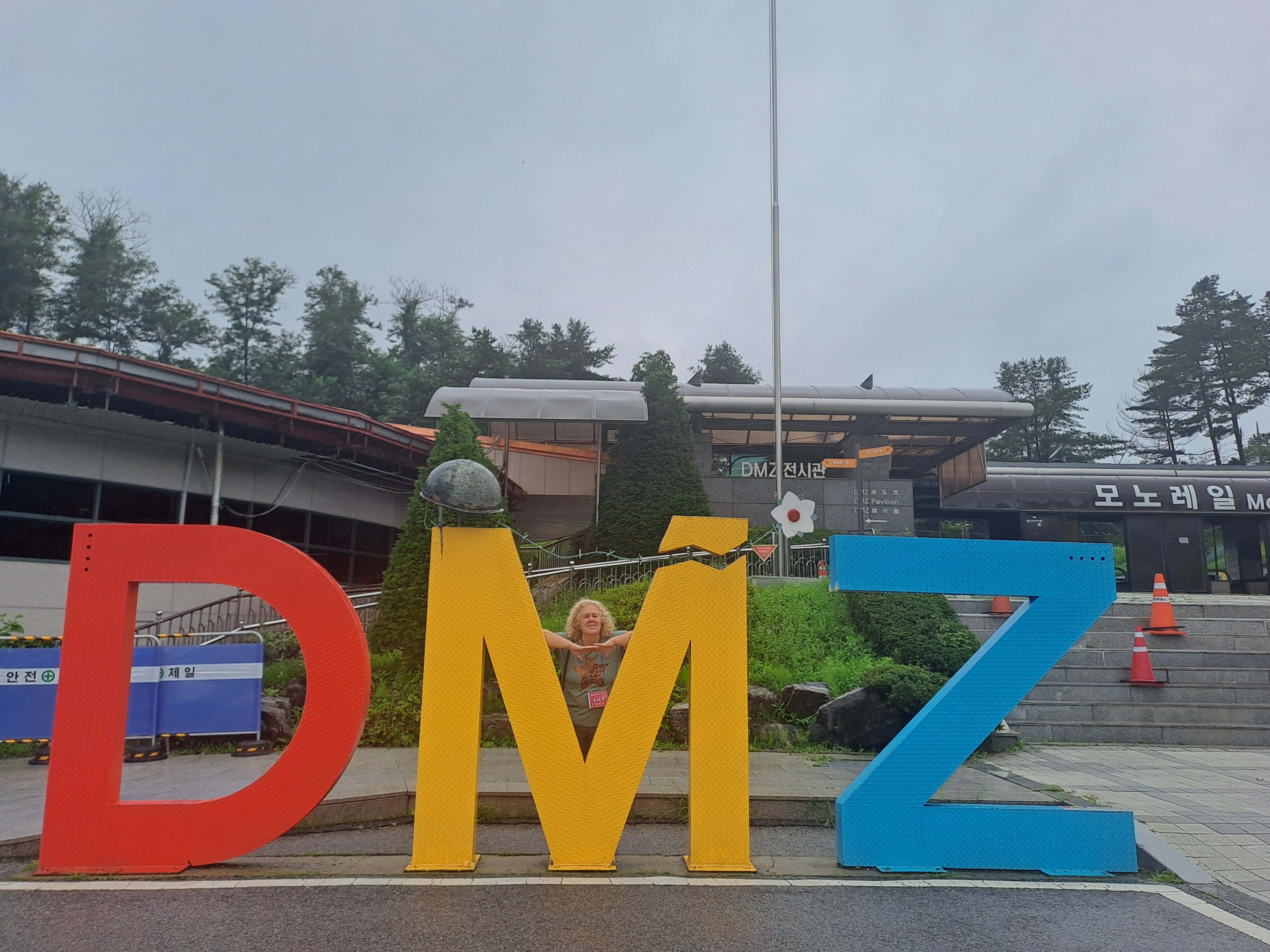
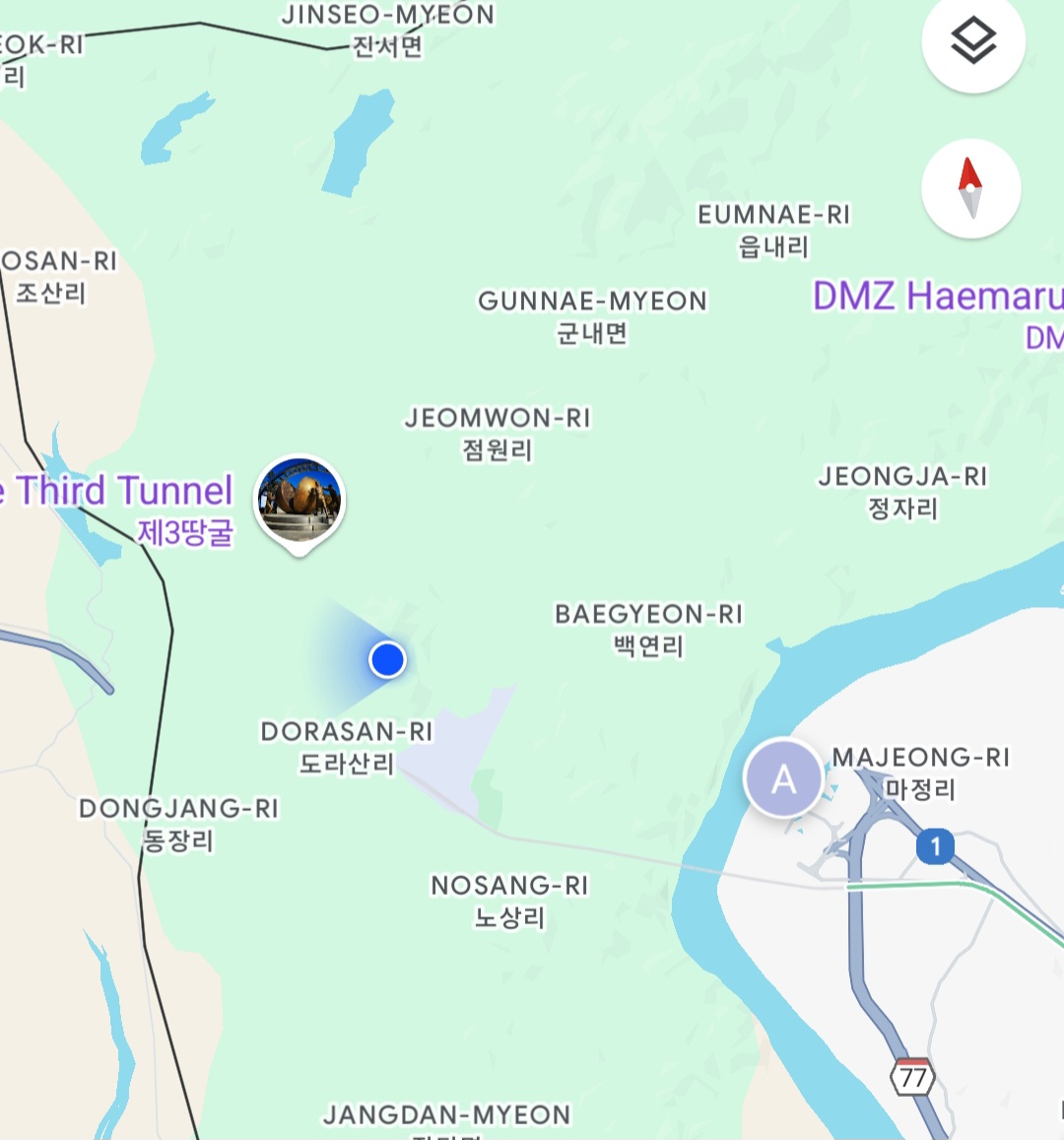
Here am I in the DMZ and our location from Google maps.
After our meal disaster of the first night in Seoul we discovered that the city is actually very varied. Away from our hotel – Travelodge- we found food was very Western with coffee shops and bakeries.
The overall feel of Seoul was that it wasn’t as ‘new’ as the Chinese cities we had been too.
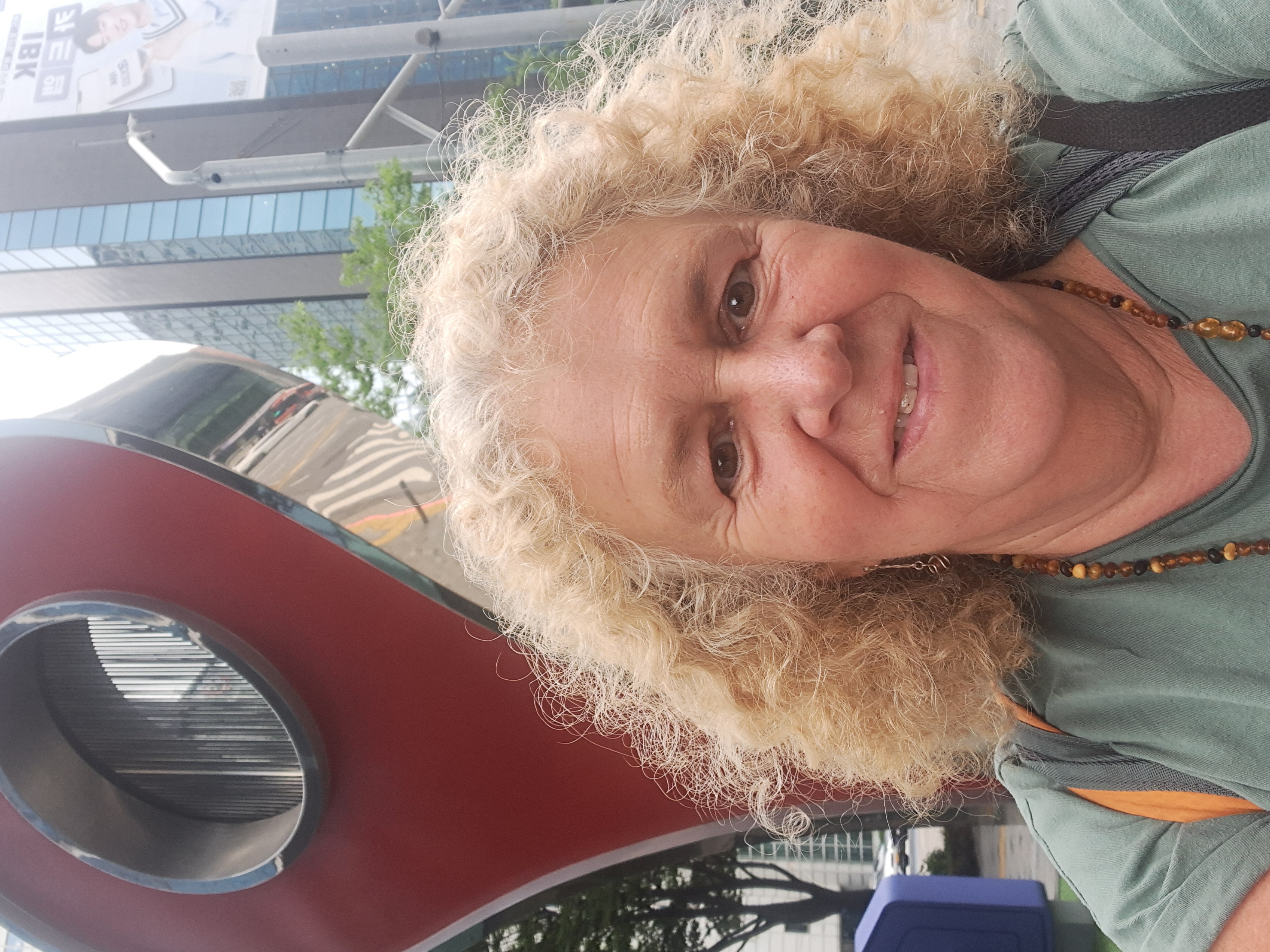
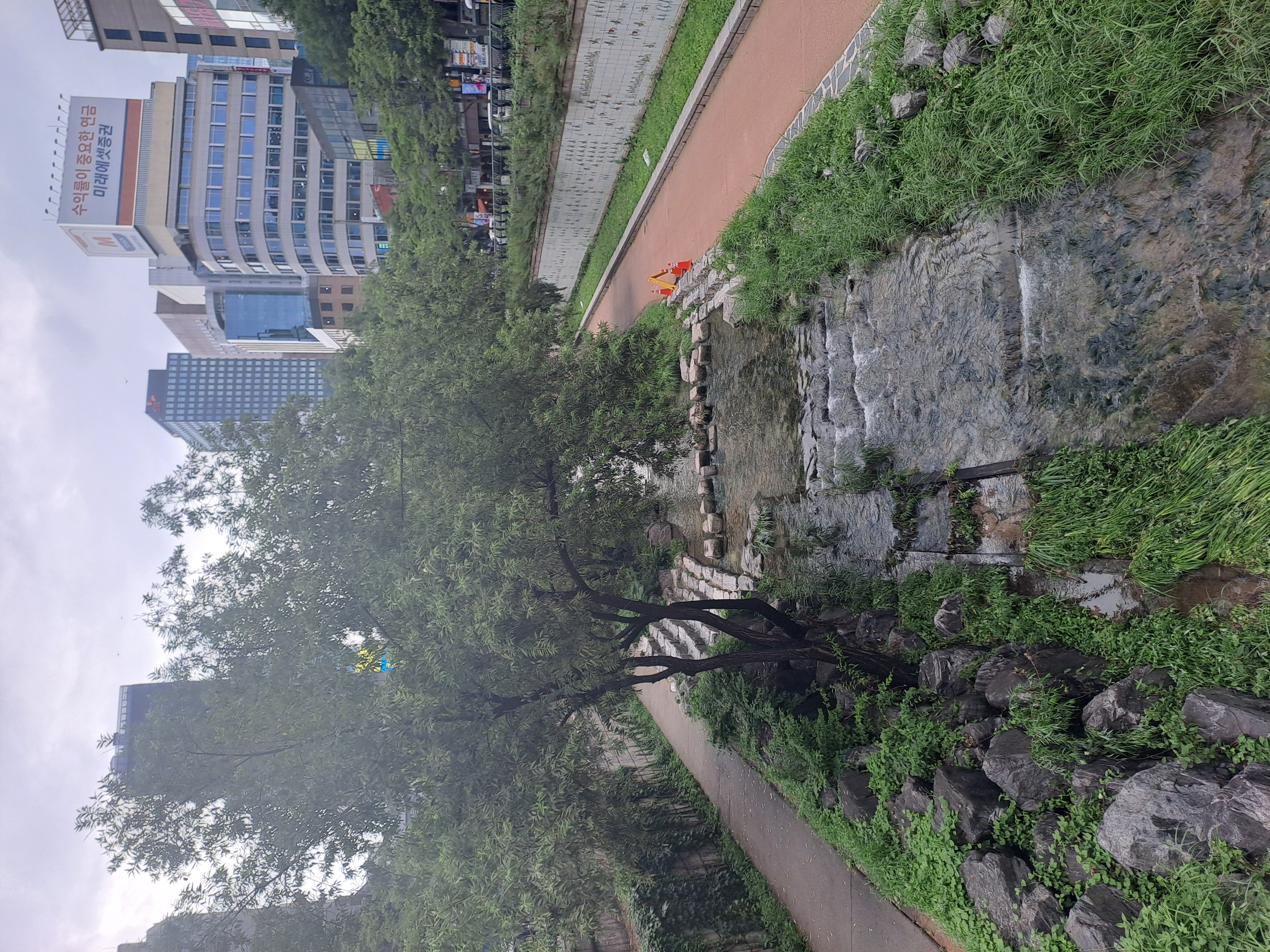
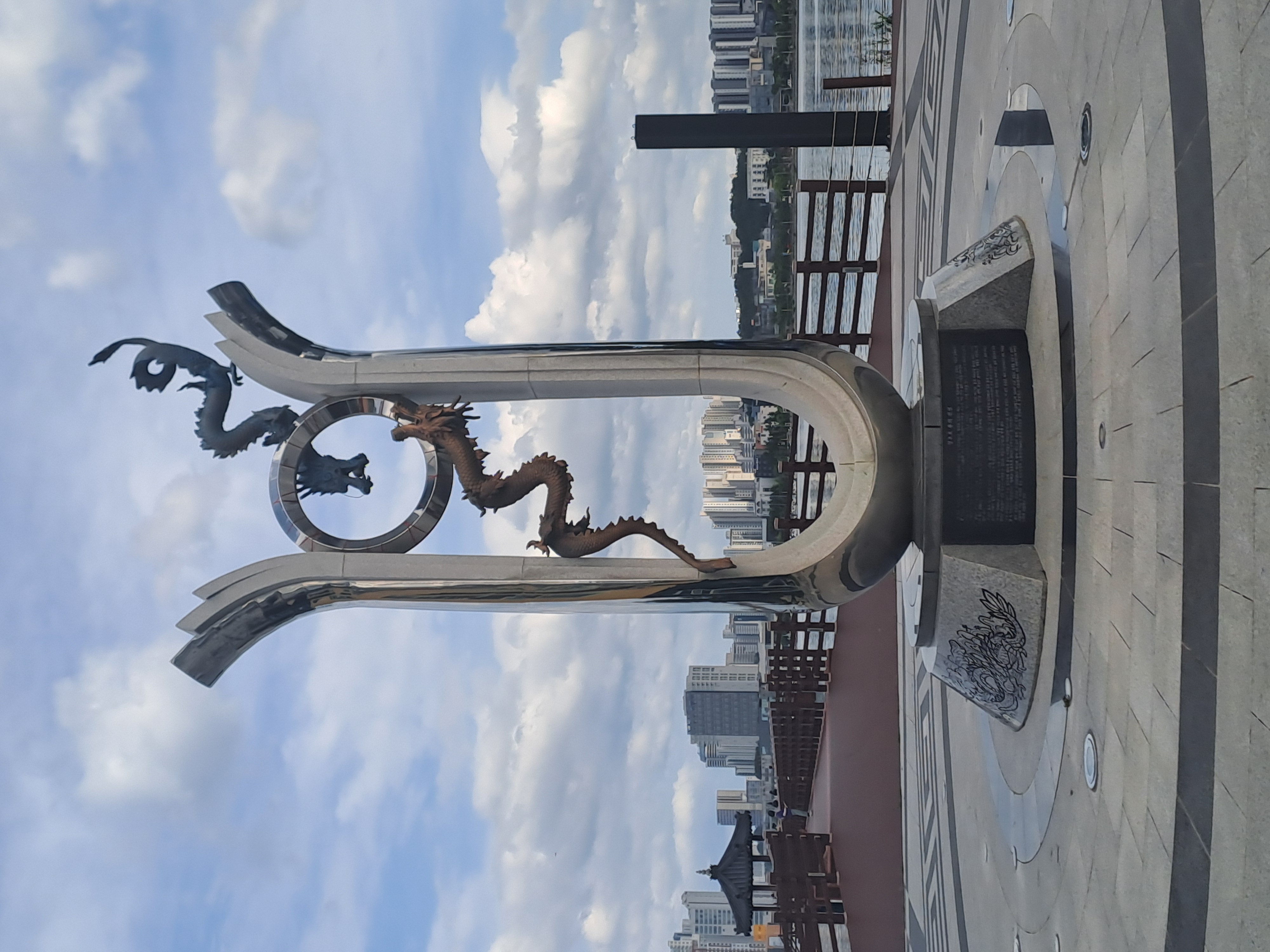
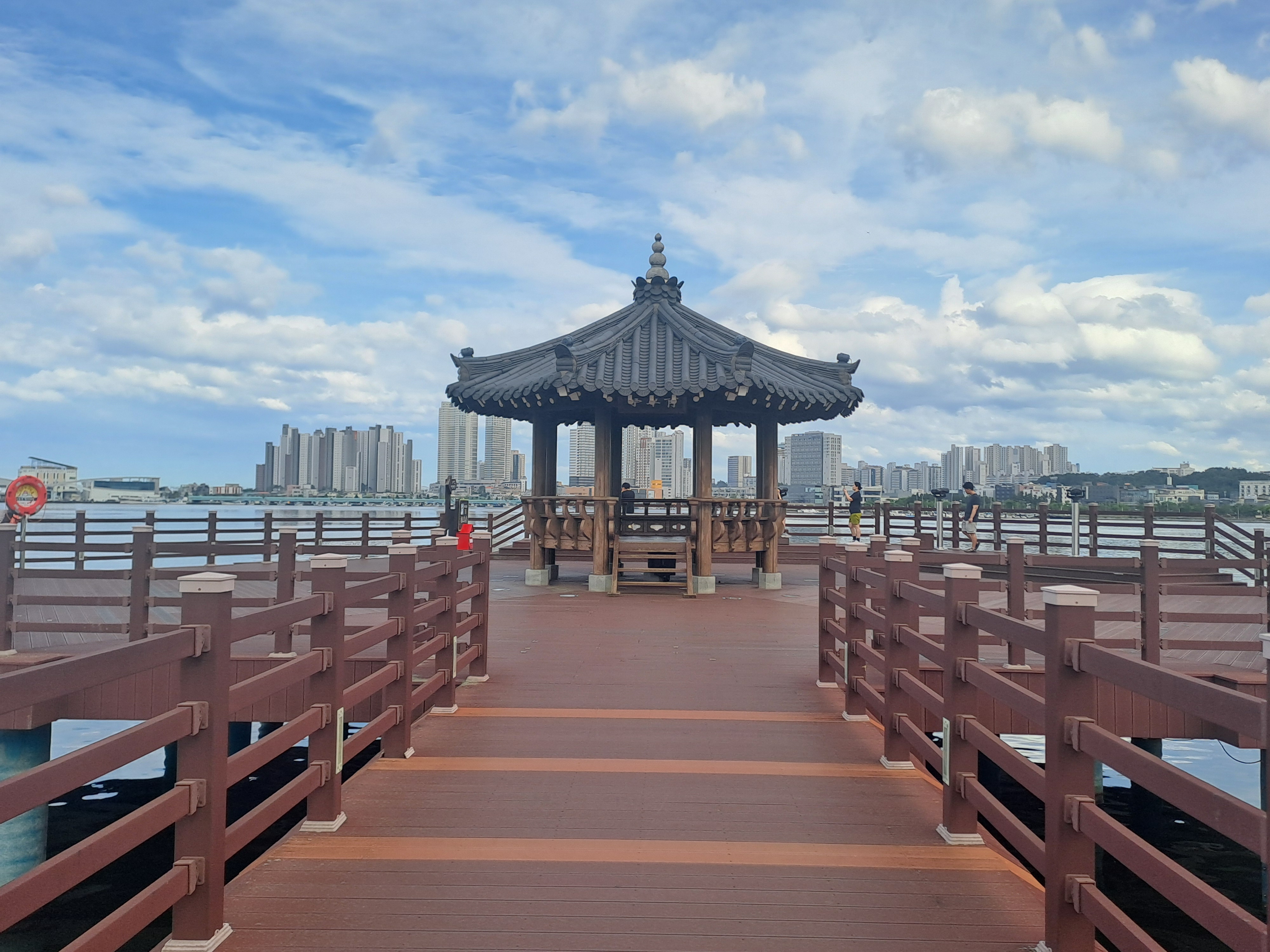
On from Seoul to the East side of the country thankfully as the west side was flooded. We took the bus to Sokcho on the coast and our first chance to visit a beach since Ephesus, so long ago. We were next to a large lake connected to the harbour
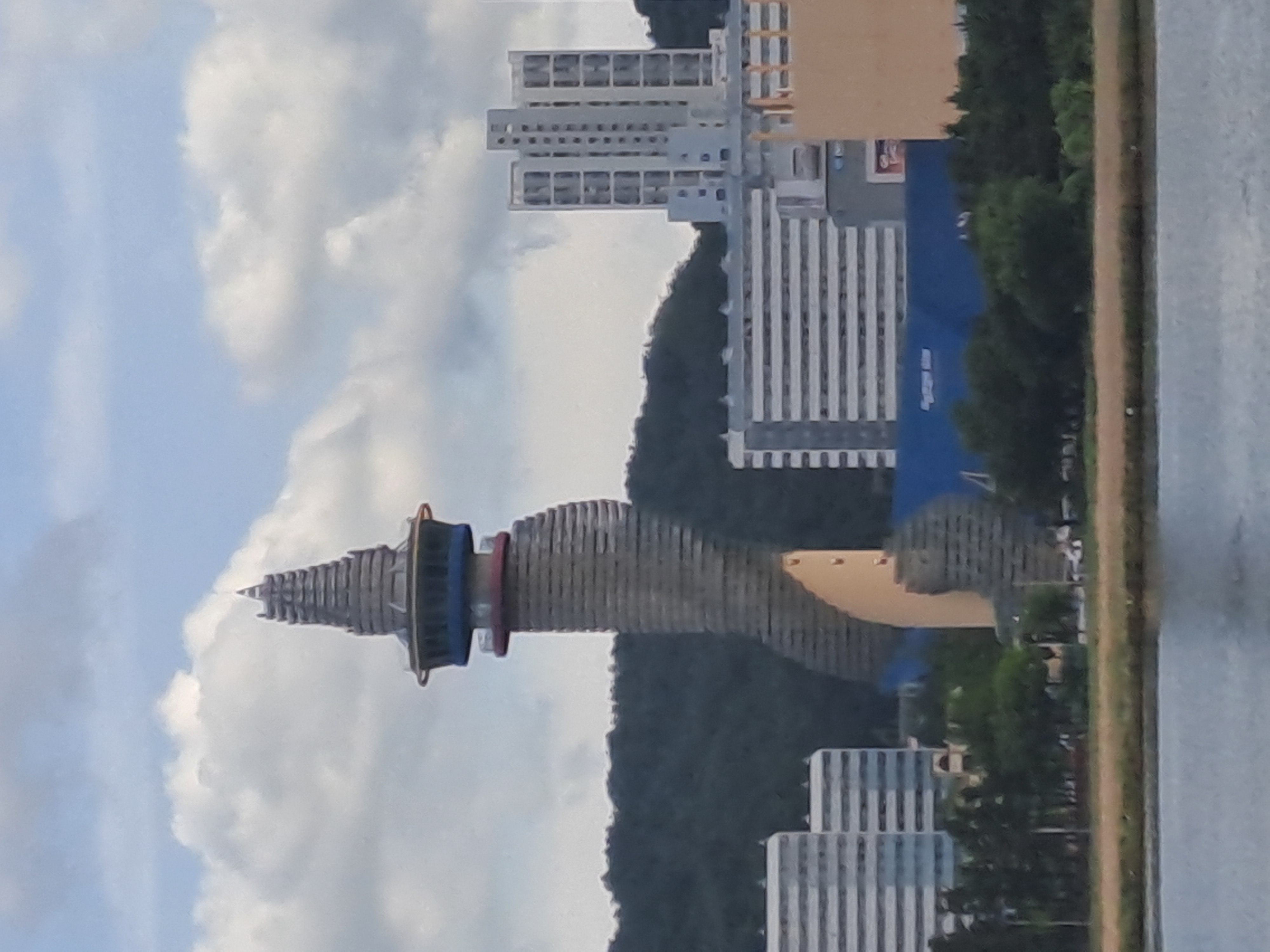
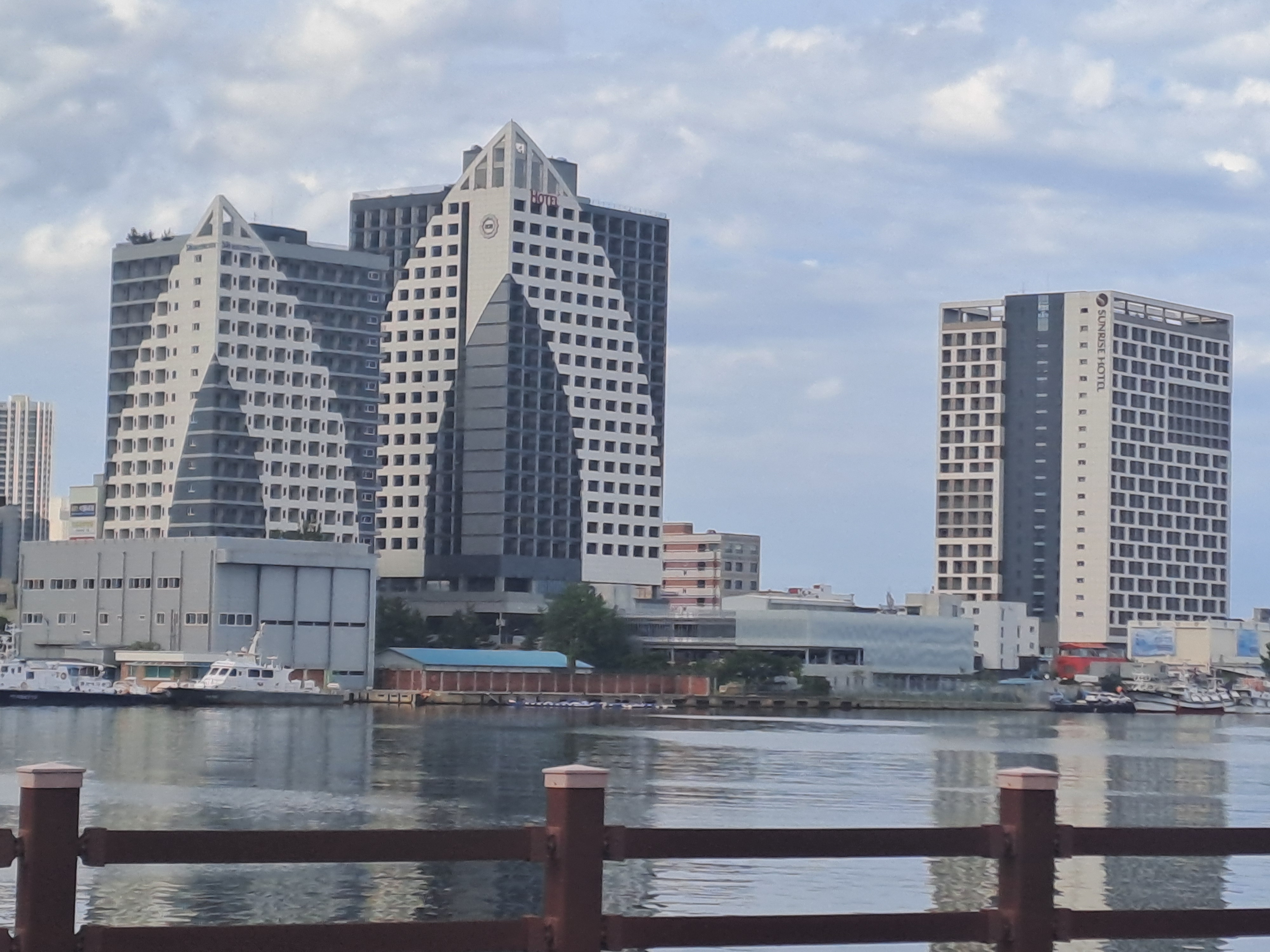
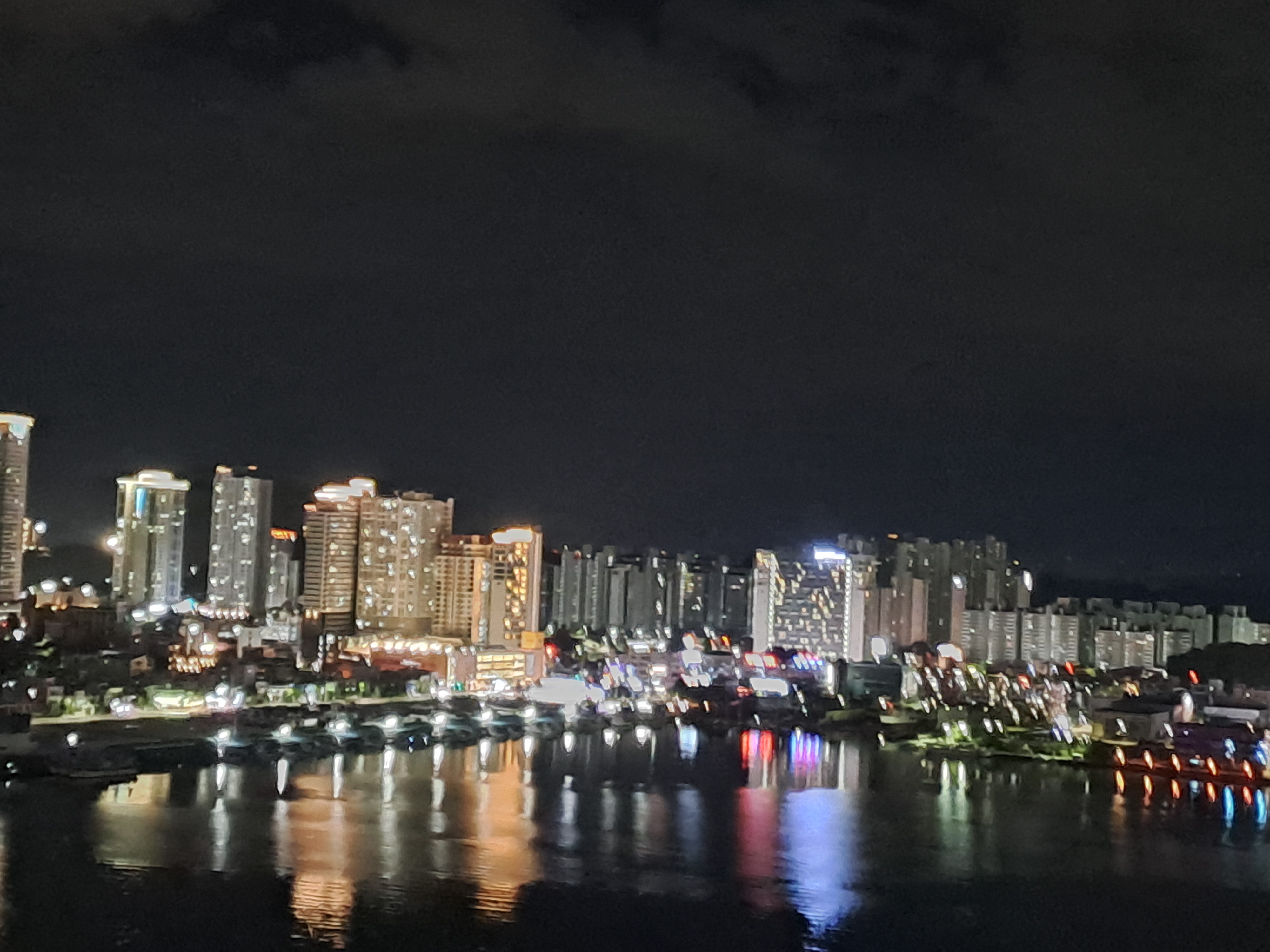
Our hotel had access to the roof with a wonderful view of the city, so we had to have drinks on the roof the first night just because we could!

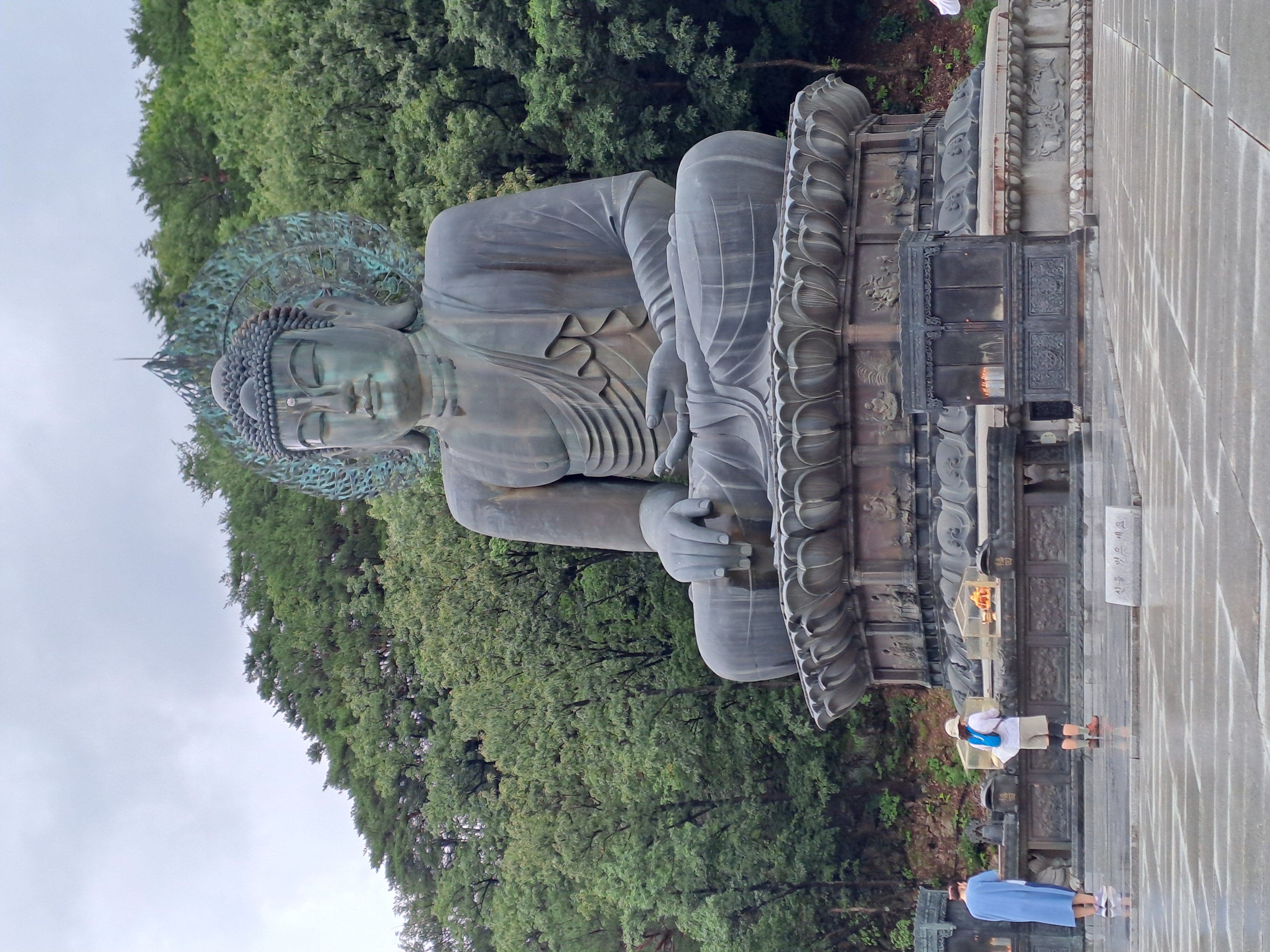
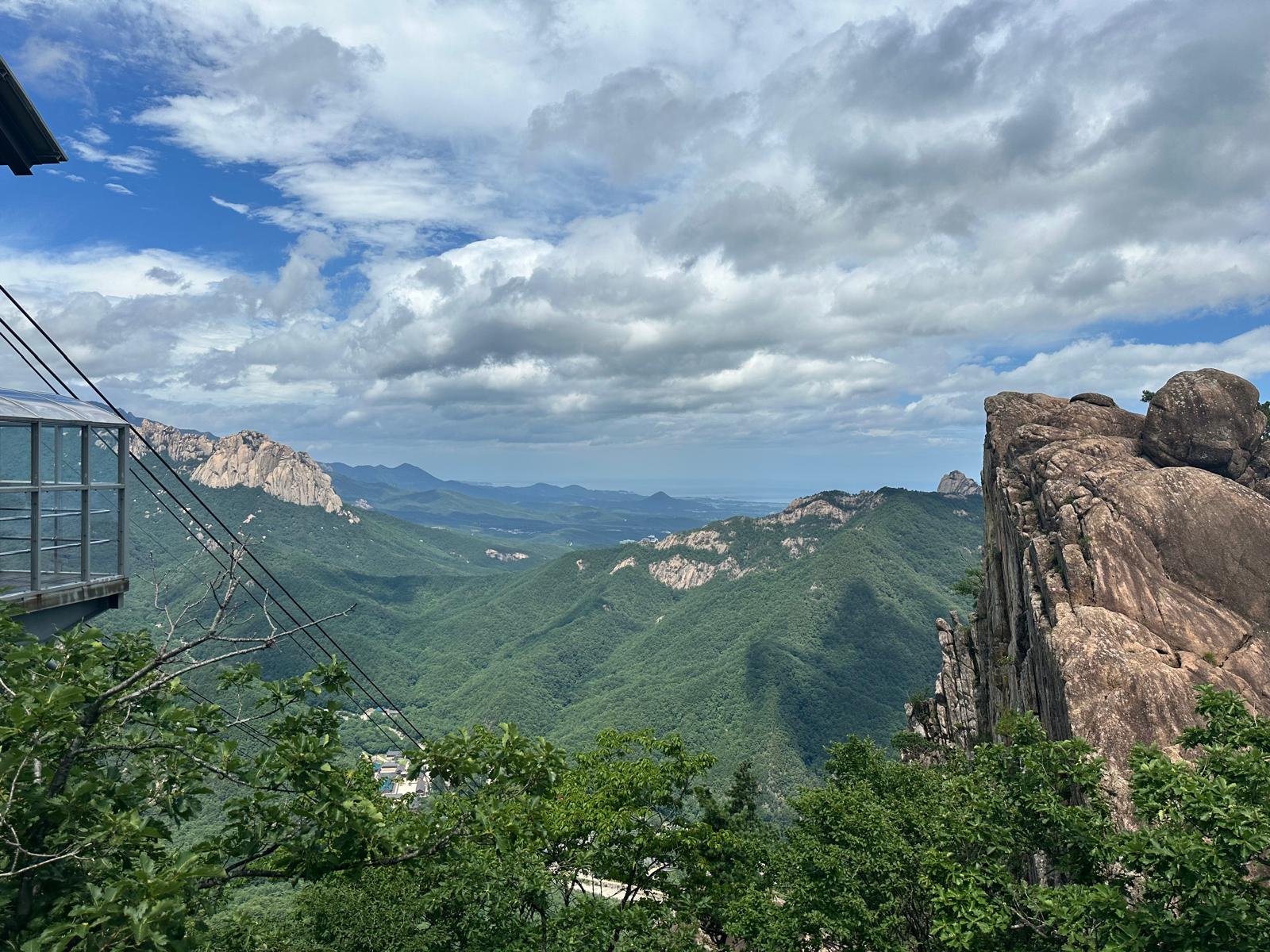
While here we visited Seoraksan national park including the temple there and another giant Buddha.
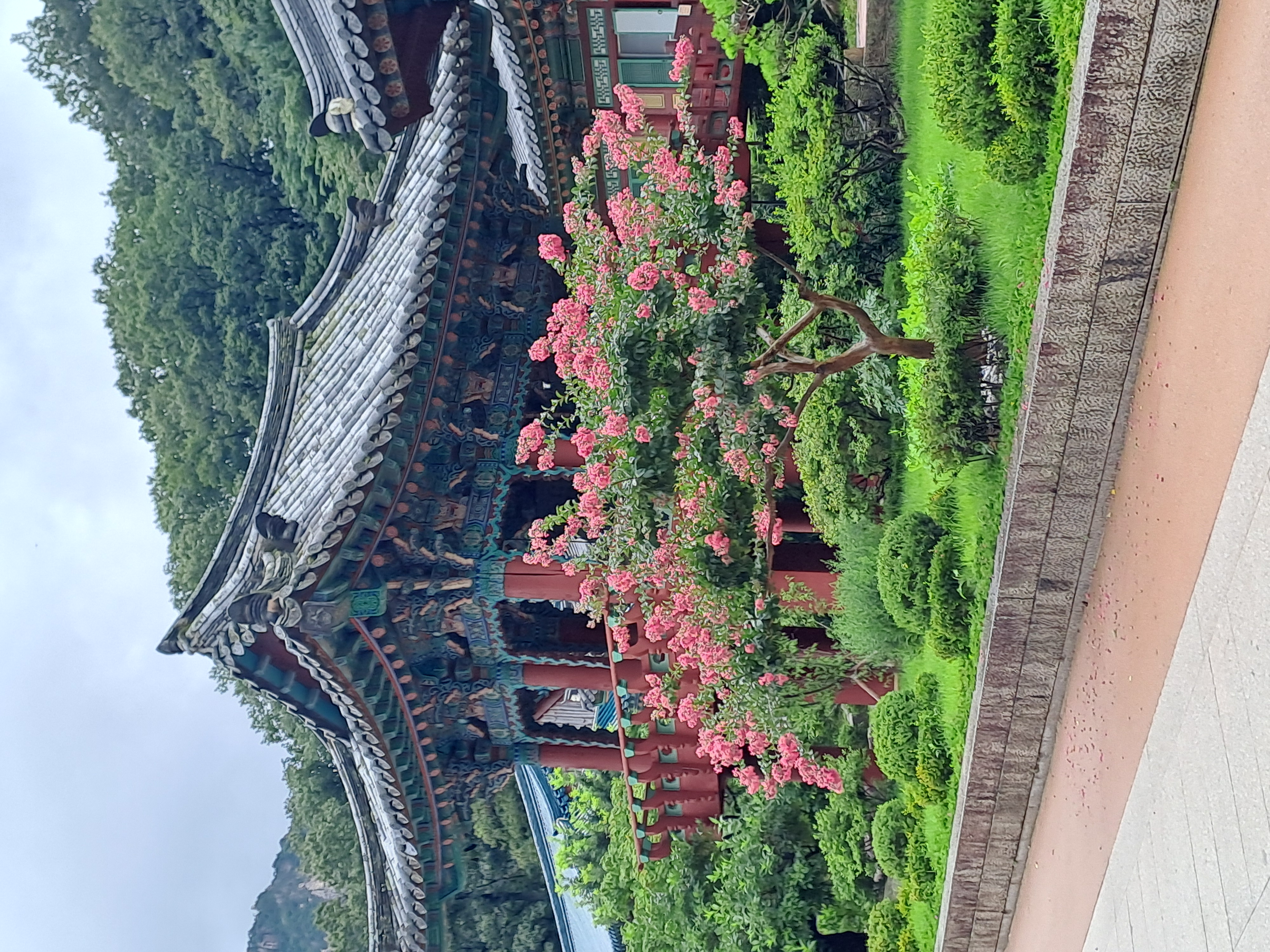

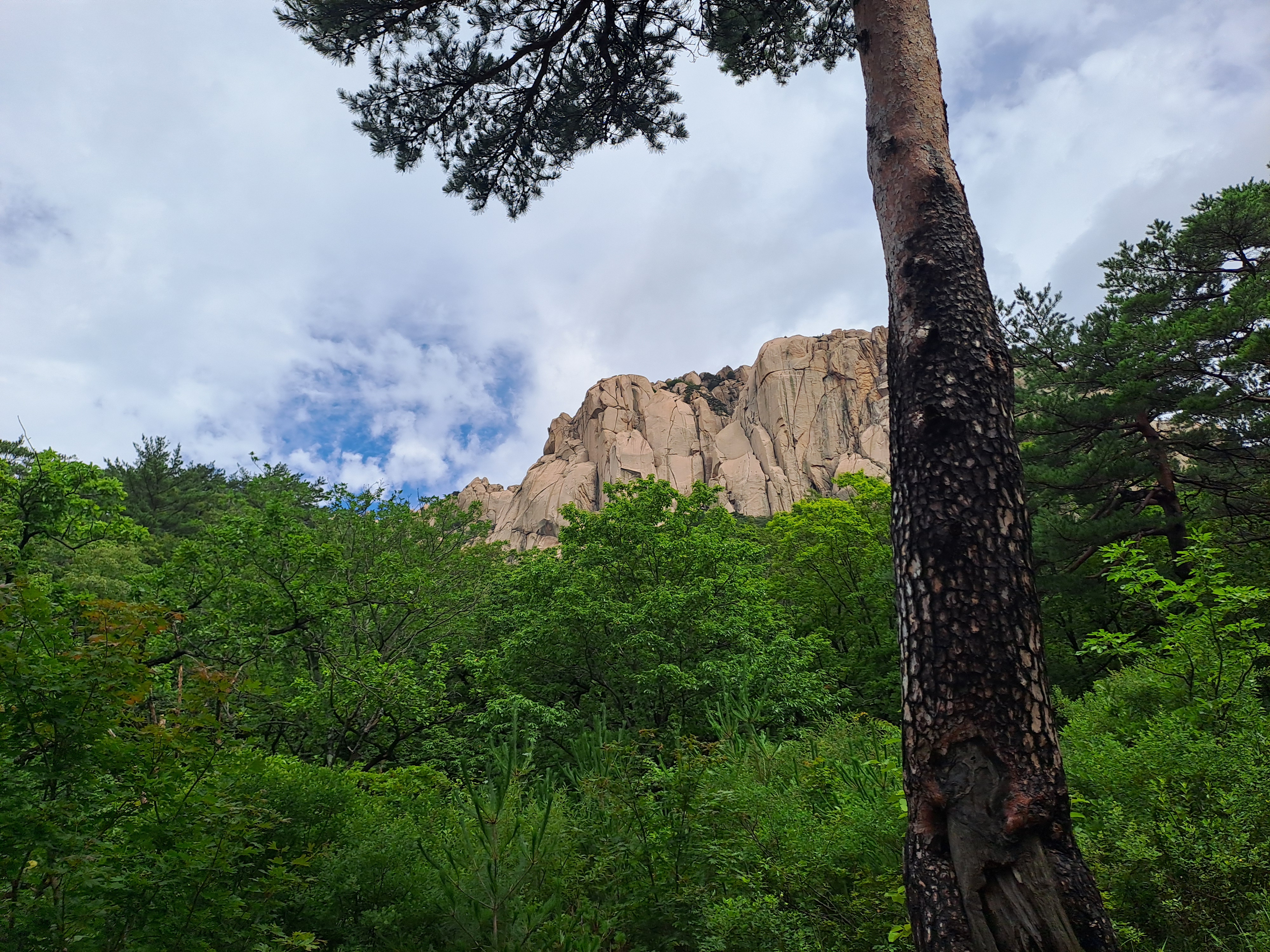
We decided to walk up to a rock peak, however the heat defeated most of our group- only the hardy few made the top.
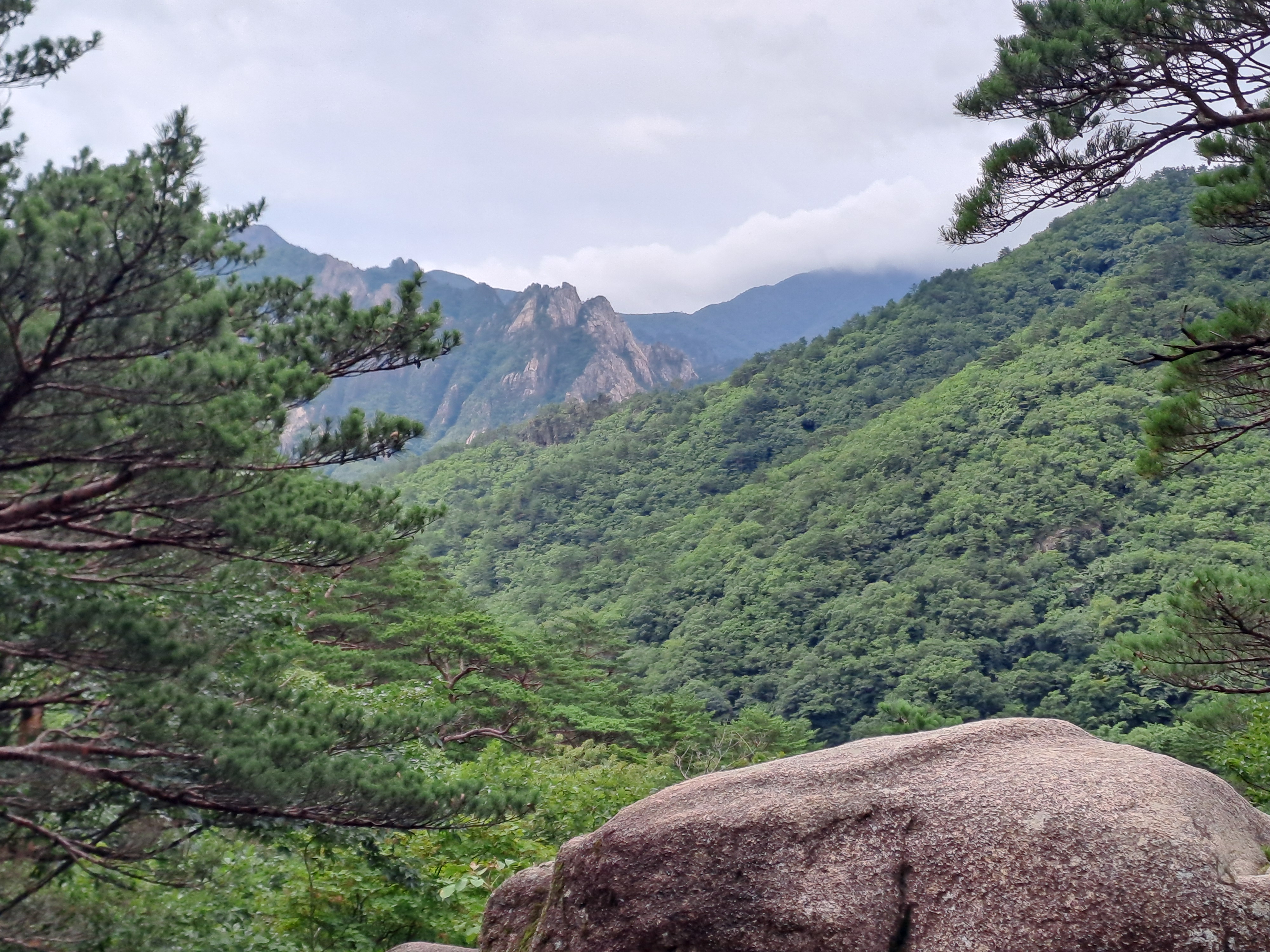
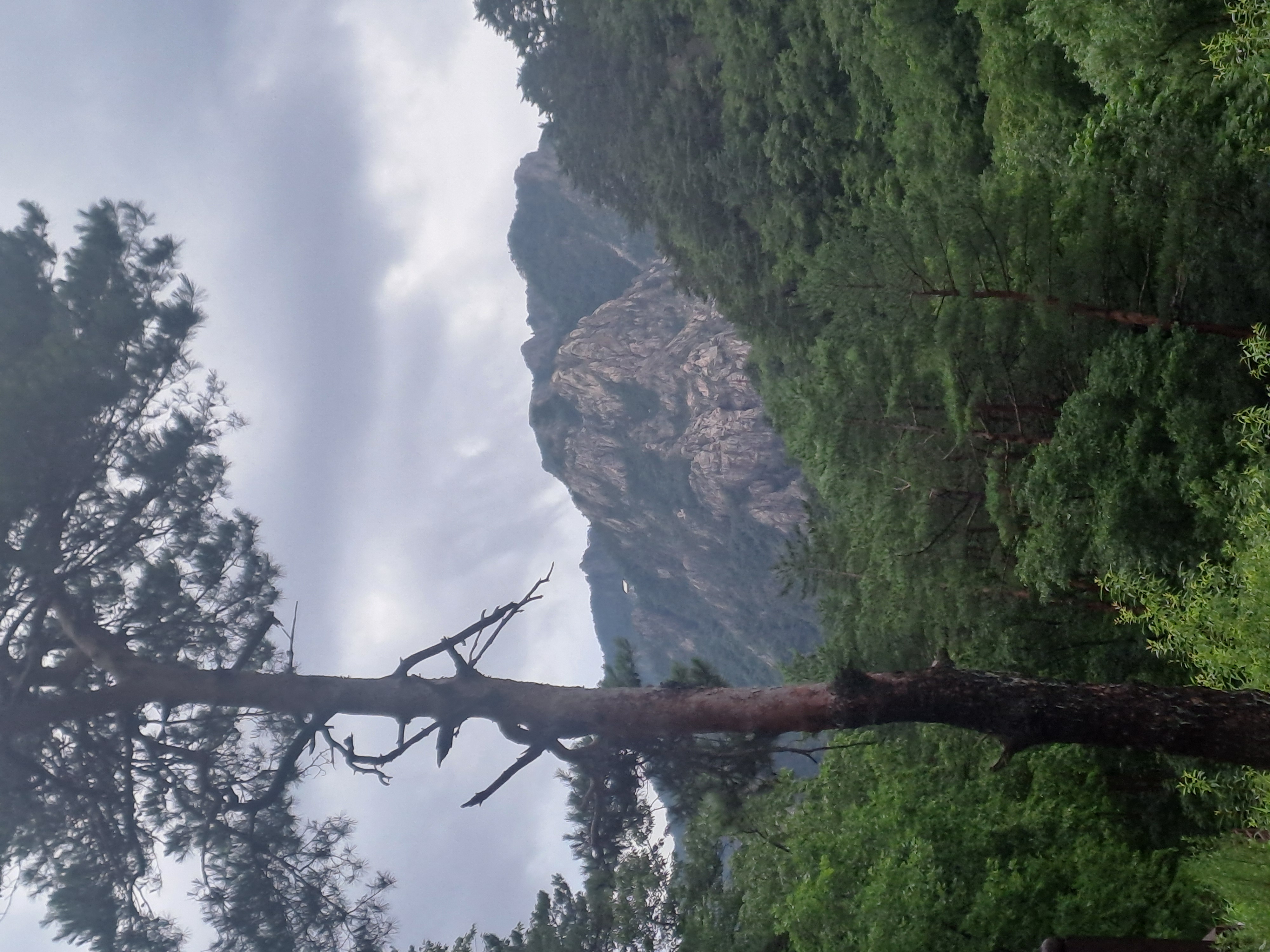
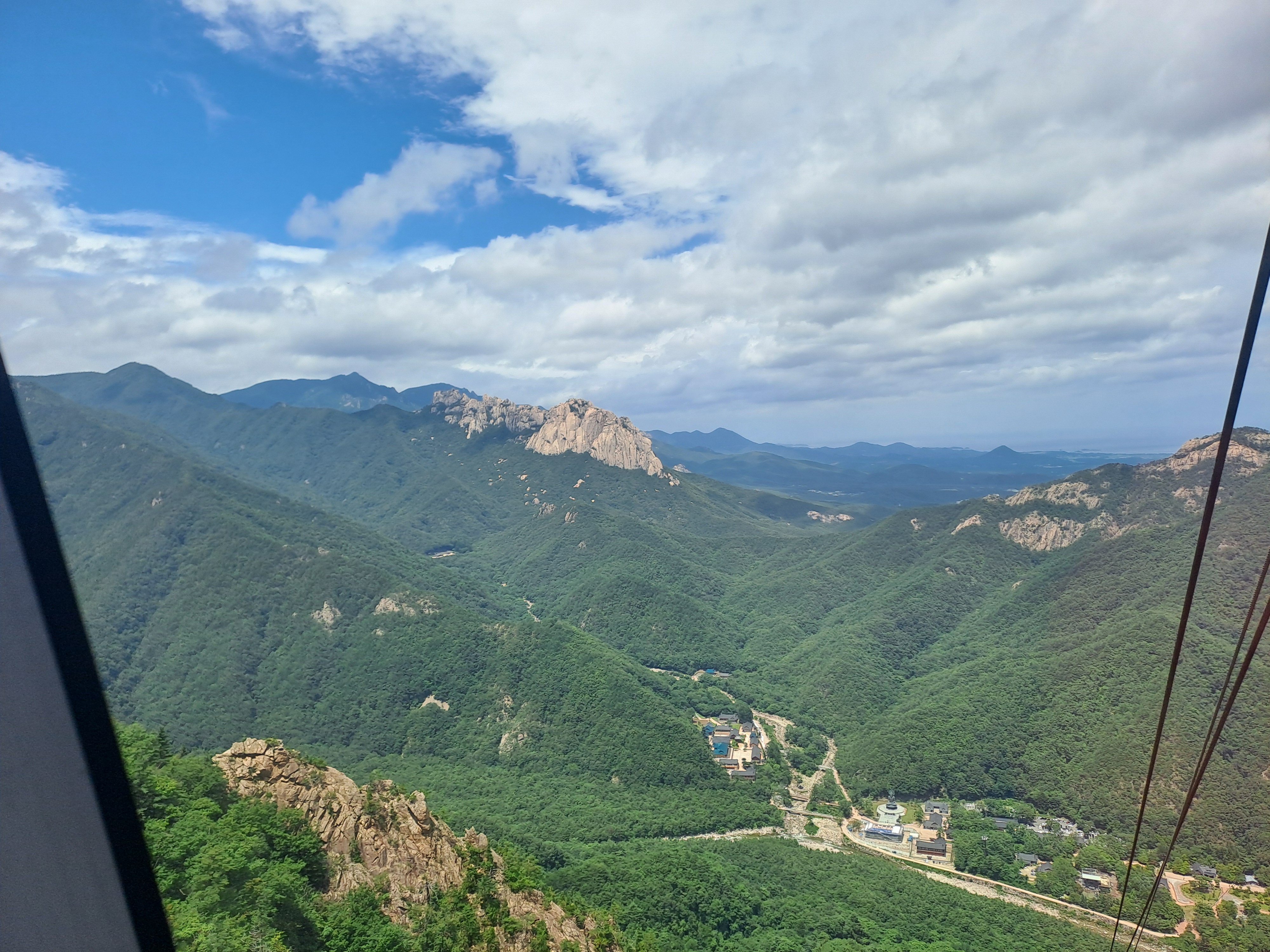

I used my free time when I got down to do it the easy way with a cable car trip. There were fantastic views back to Sokcho.


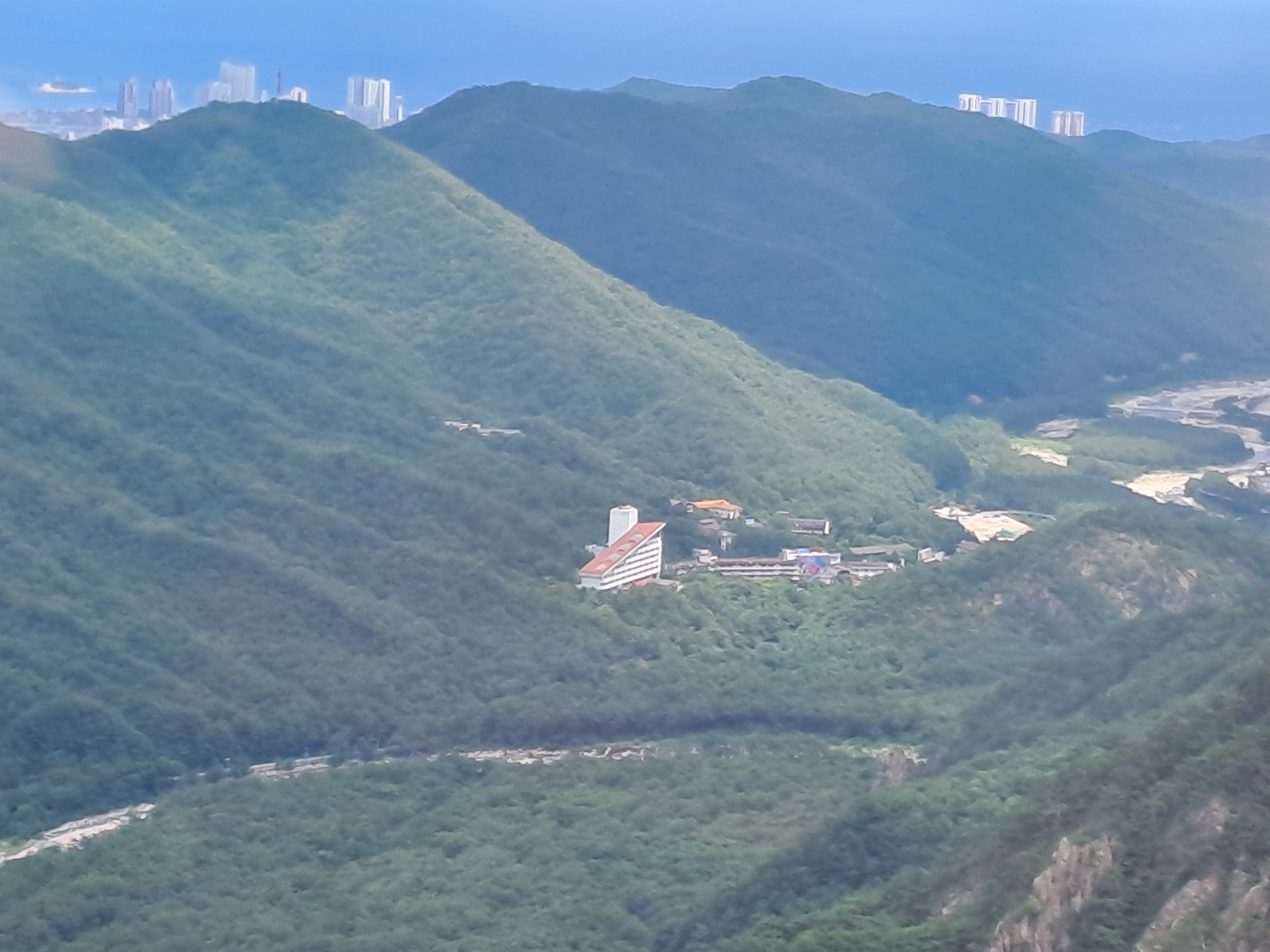
I had to do the beach for an afternoon swim and sunbath. Unfortunately on the way back I saw temptation- fish, chips and beer! What more could we want. Ashley even thought it was worth the walk for such a surprising a delicacy.


After Sokcho we got a minibus down to Gyeongji. There are no trains on this side of the country and the public transport didn’t do this trip.
Bulguksa temple was first built in 538 AD Buddhism flourished in the Silla dynasty and Korean Buddhism is practiced here.
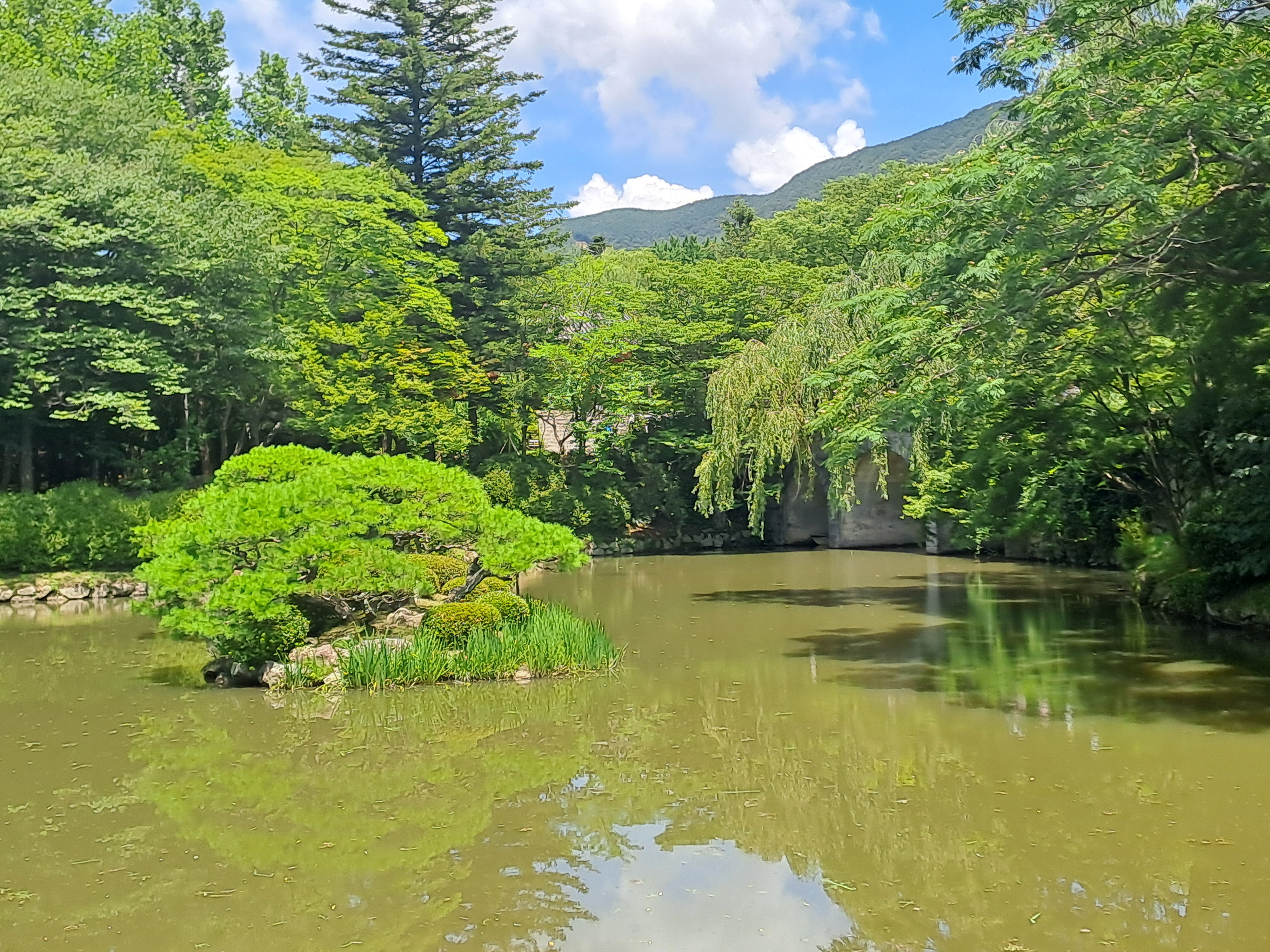
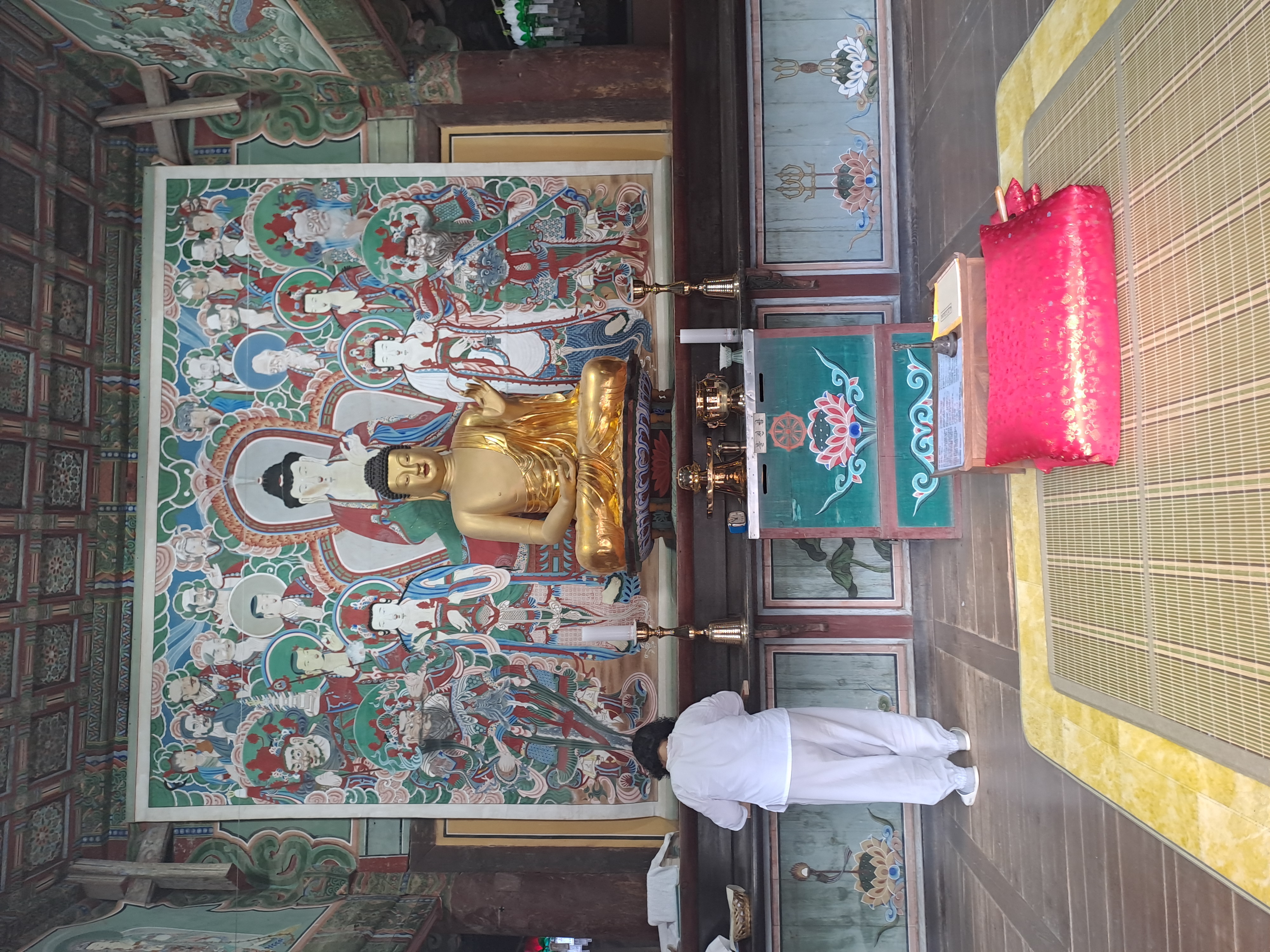
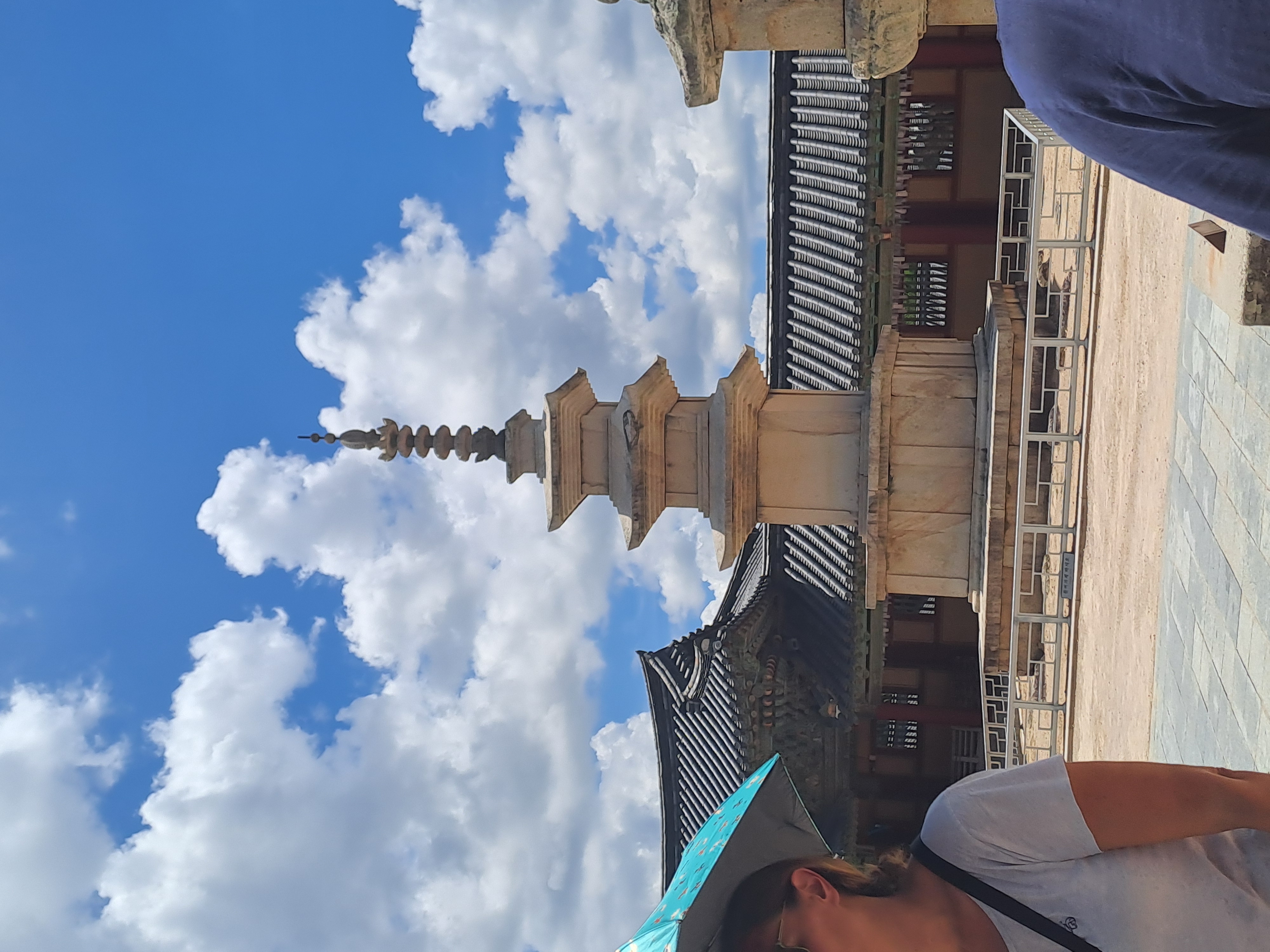
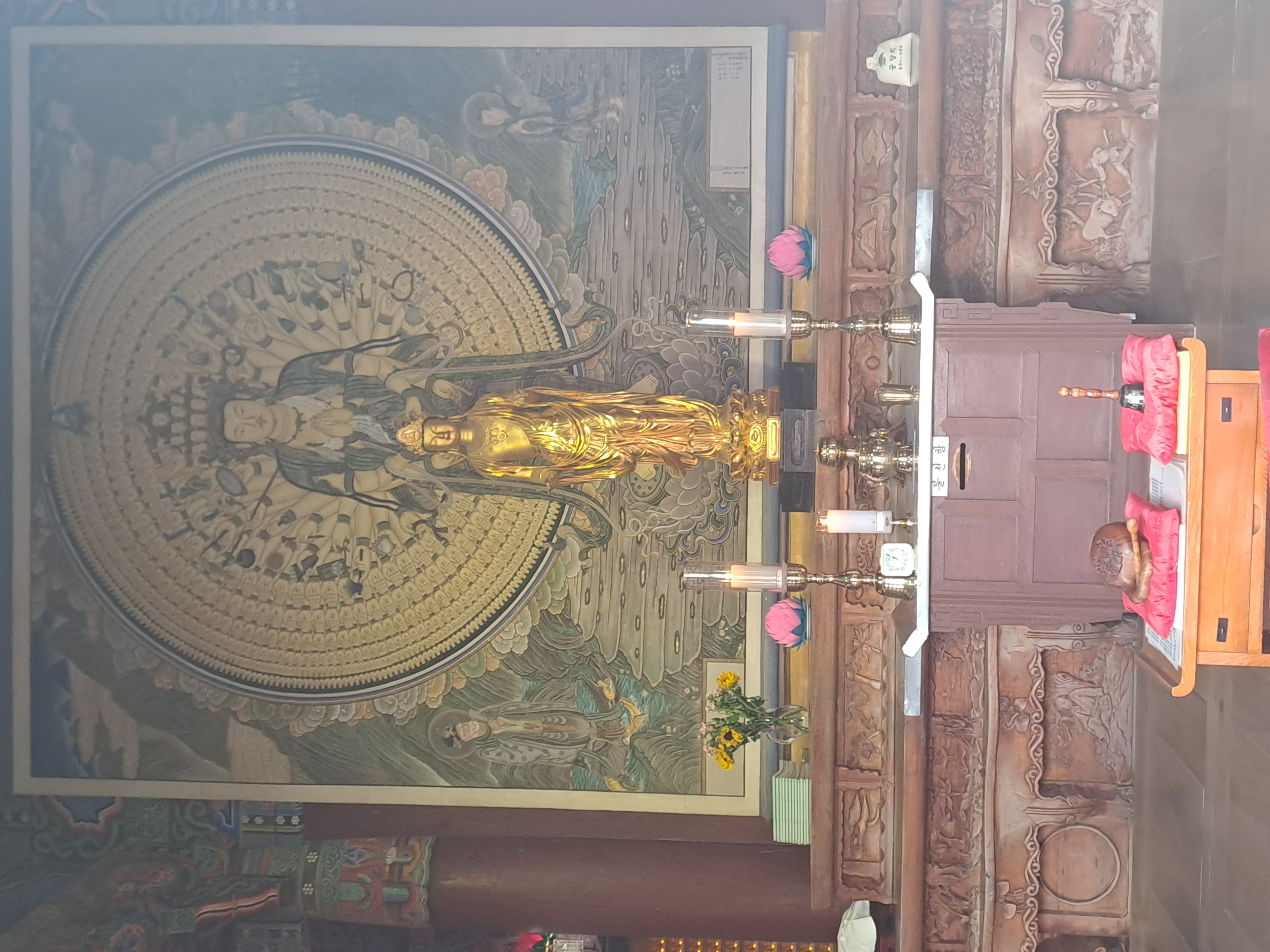
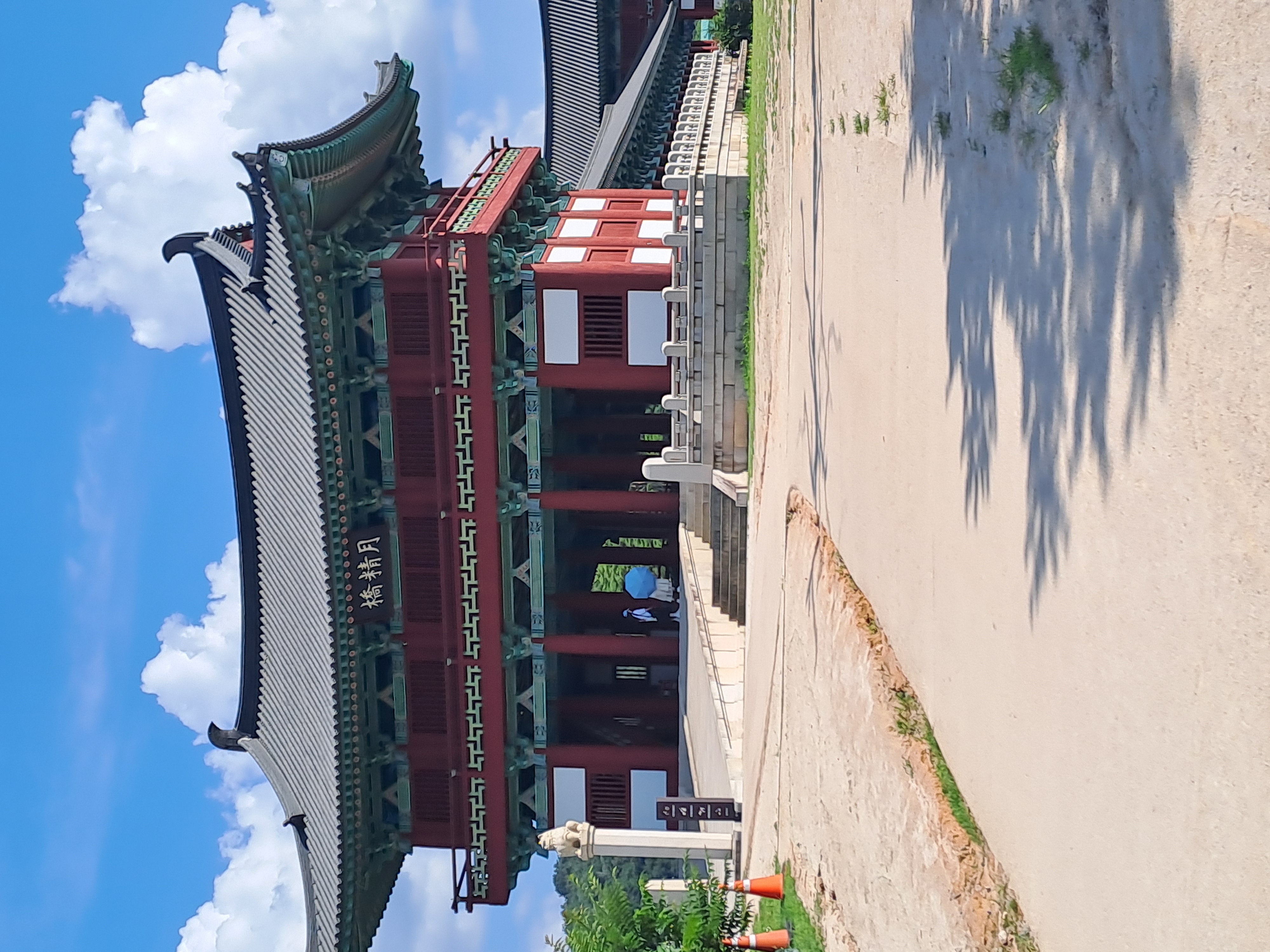
We went on to the Choi residence and bridge. The Choi family were wealthy philanthropists who worked to maintain their wealth to benefit others with it. They had six principles including limiting their rank in government to mid level, limiting their wealth, not buying land in a famine, not allowing anyone to starve to death within their speare, treating passers-by well and only allowing daughters in law to wear cotton during the first three years of their marriage.


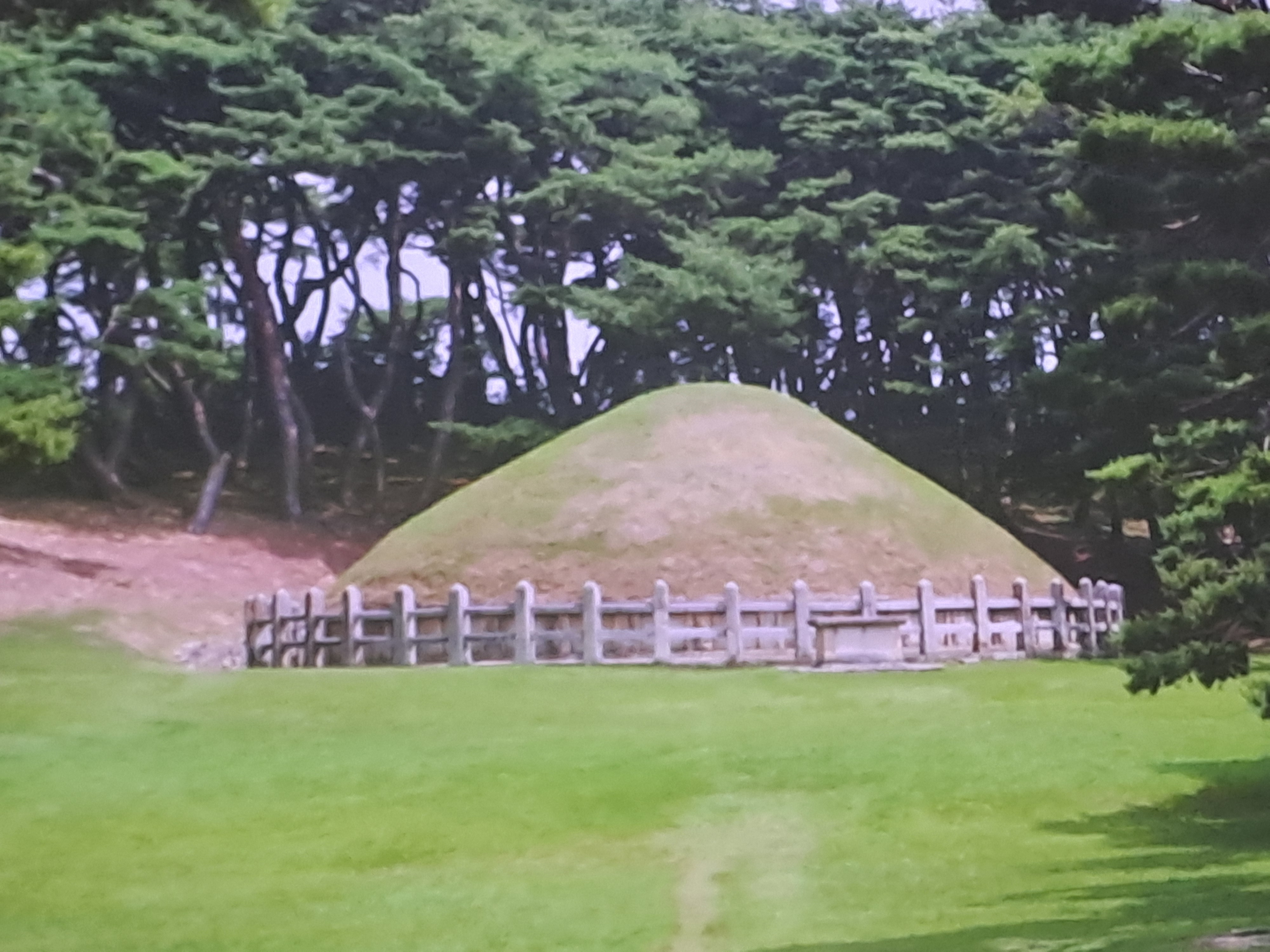
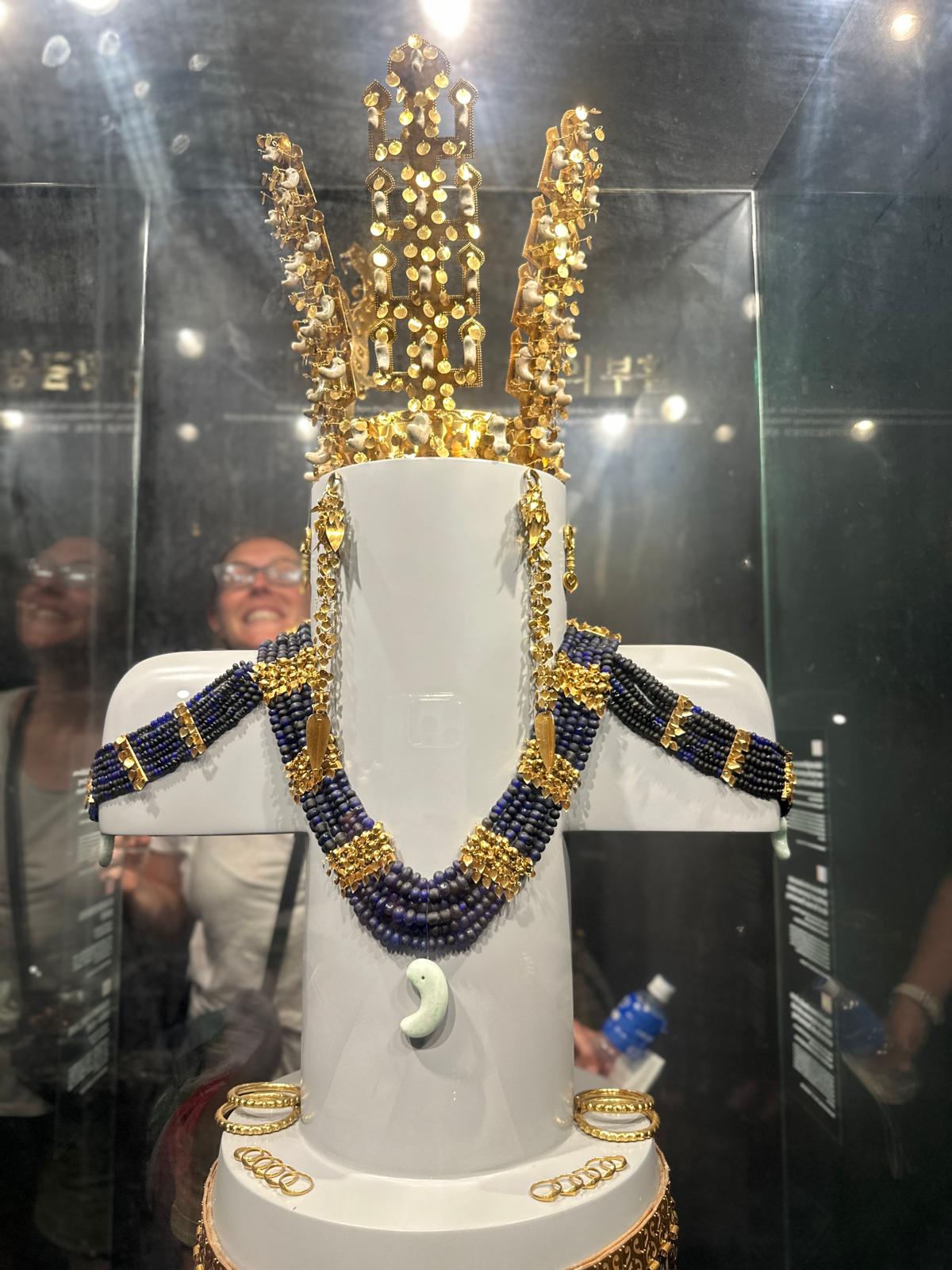
Near us were parks with many domes in them. These are burial domes for ancient kings. They start with a wooden frame which is then carefully filled with rocks leaving an opening on the top for the body and what is being taken to the afterlife. After the burial it is filled in. A museum there had a great video experience and explained the process. It expressed huge frustration with the standard of the work the Japanese had done and the artifacts taken when they had annexed Korea.
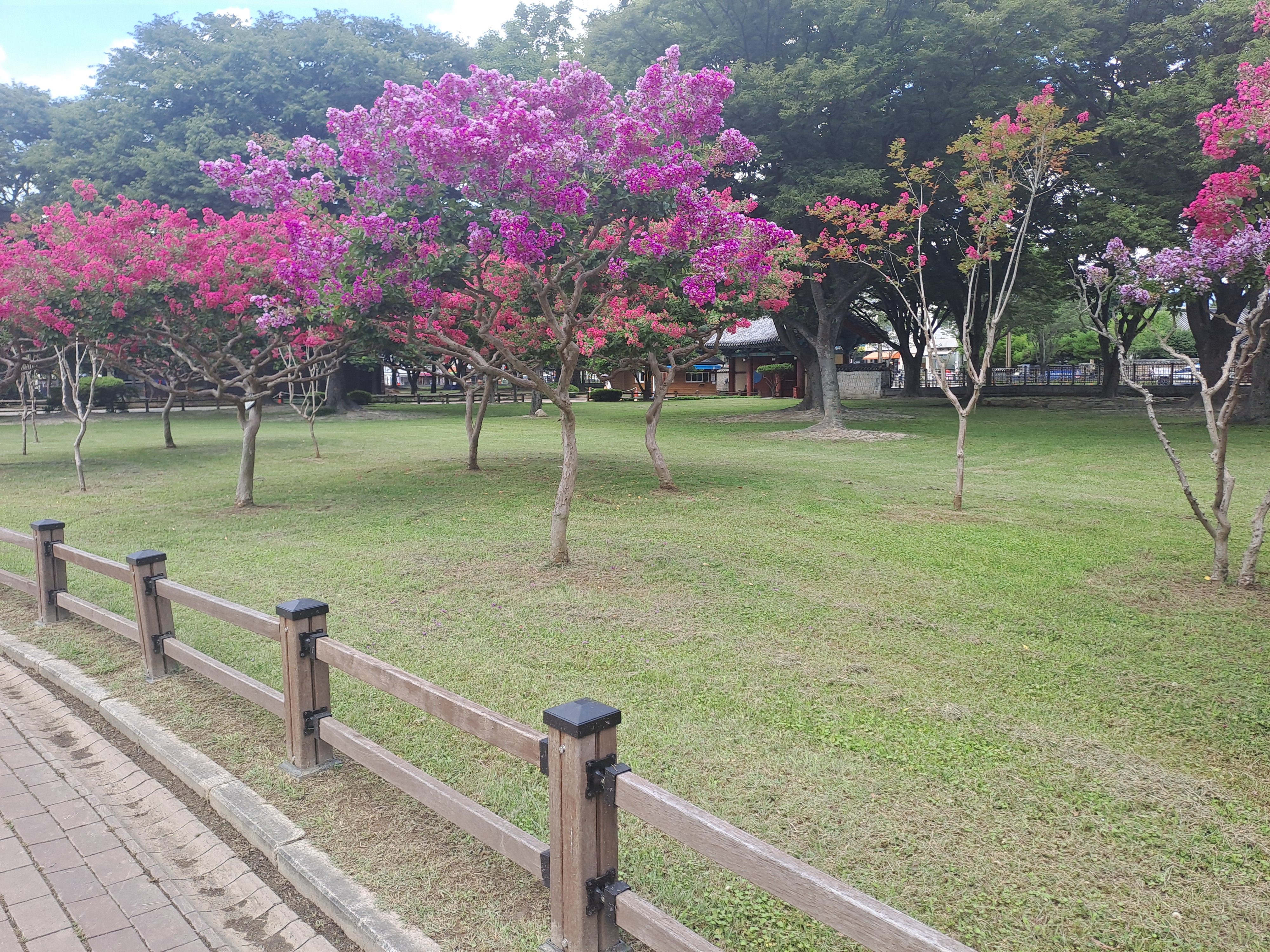
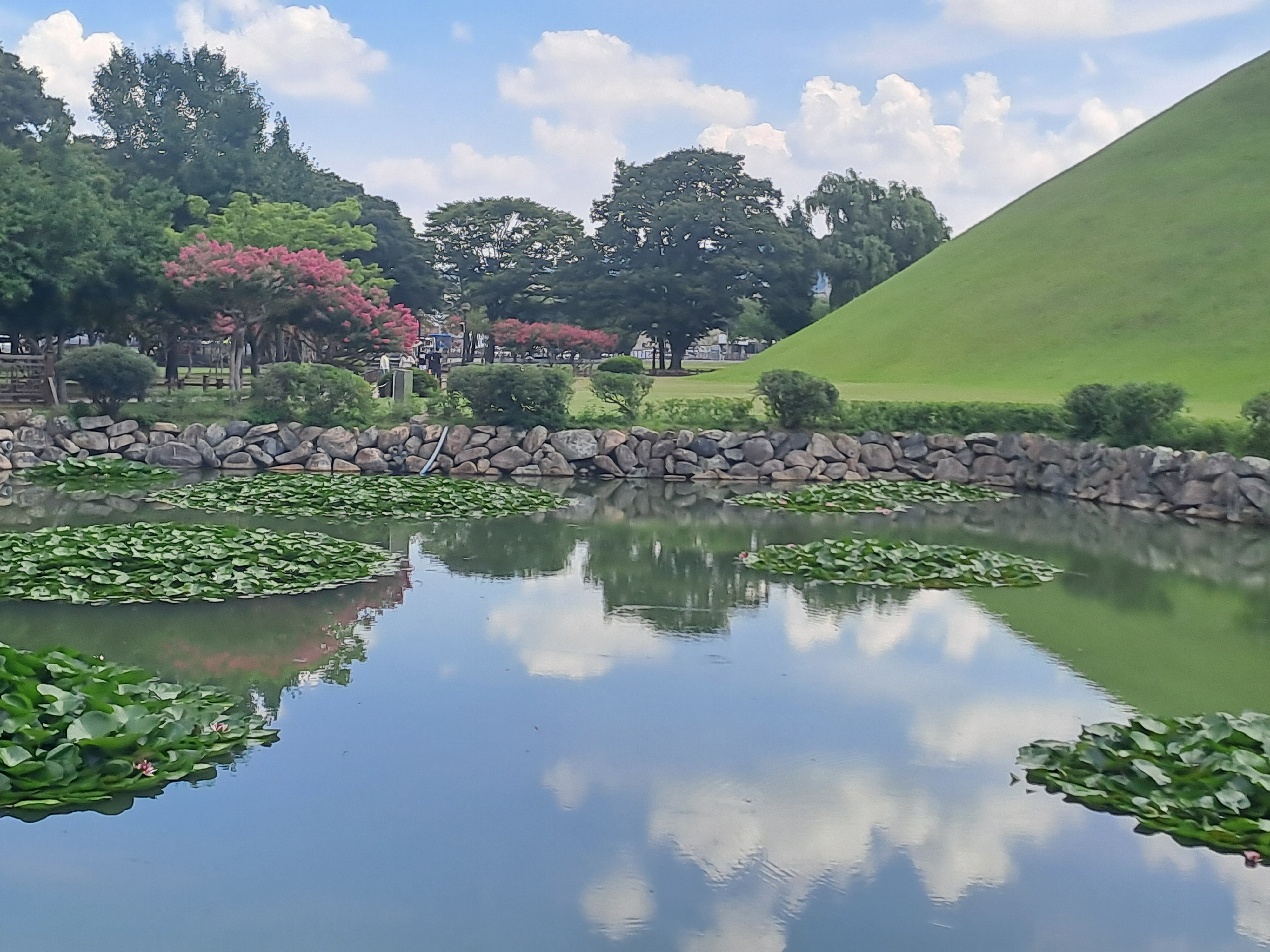
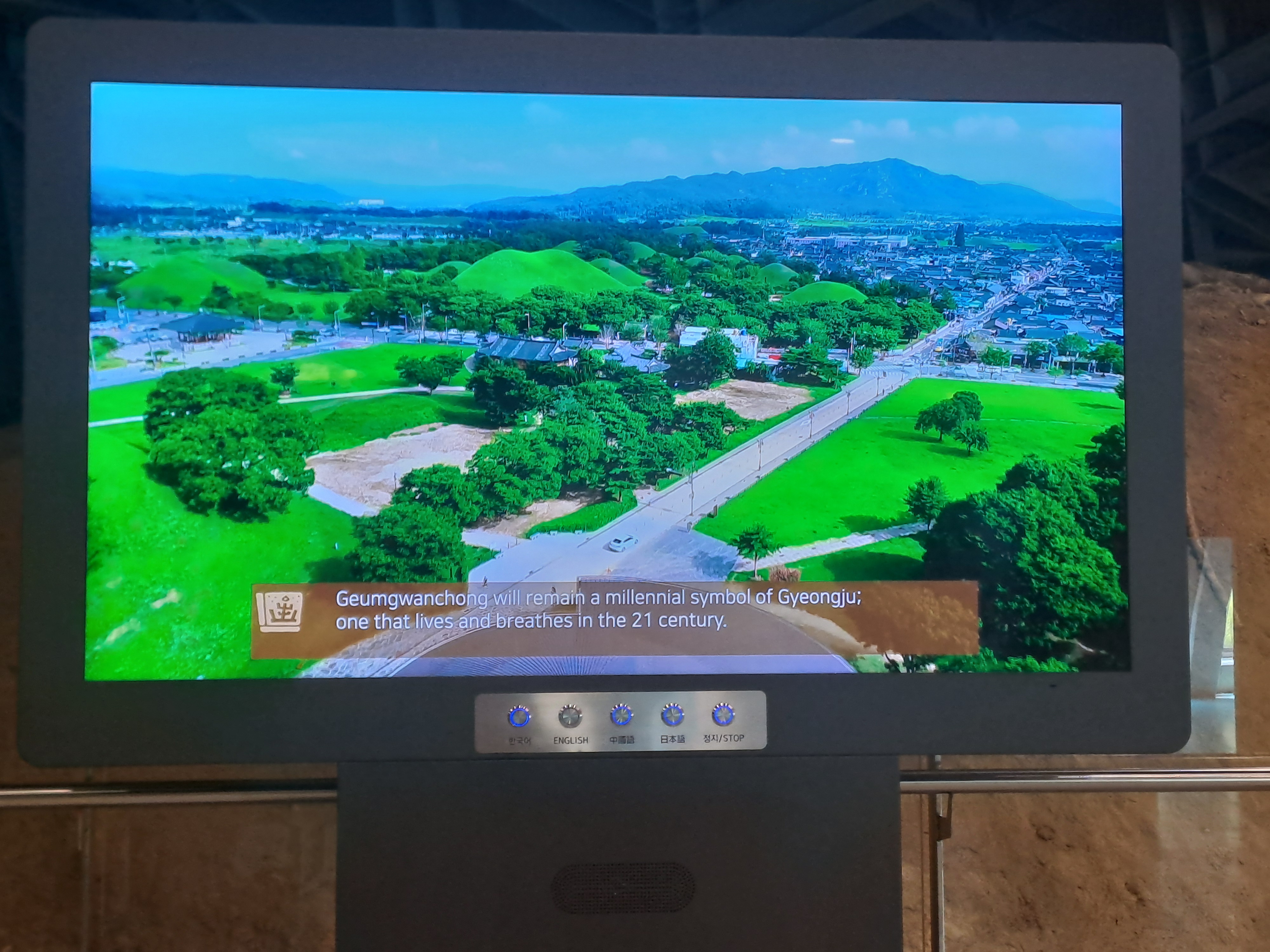
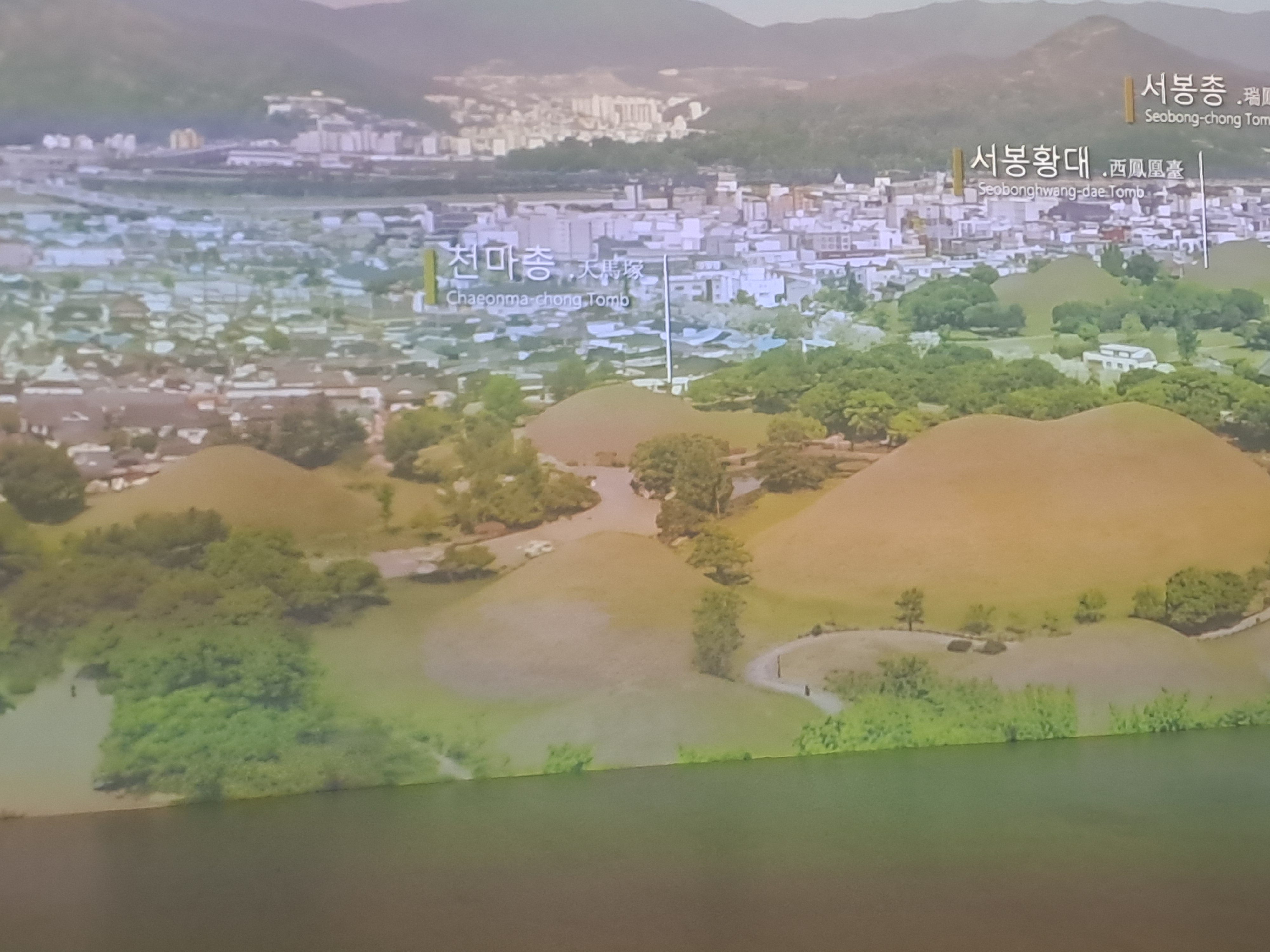
There is a large area of parks around the domes and abrupt break from the city. The dome tombs are taken very seriously with signs warning of massive fines and up to 2 years imprisonment for climbing on them. The artifacts displayed in the museum are replicas.


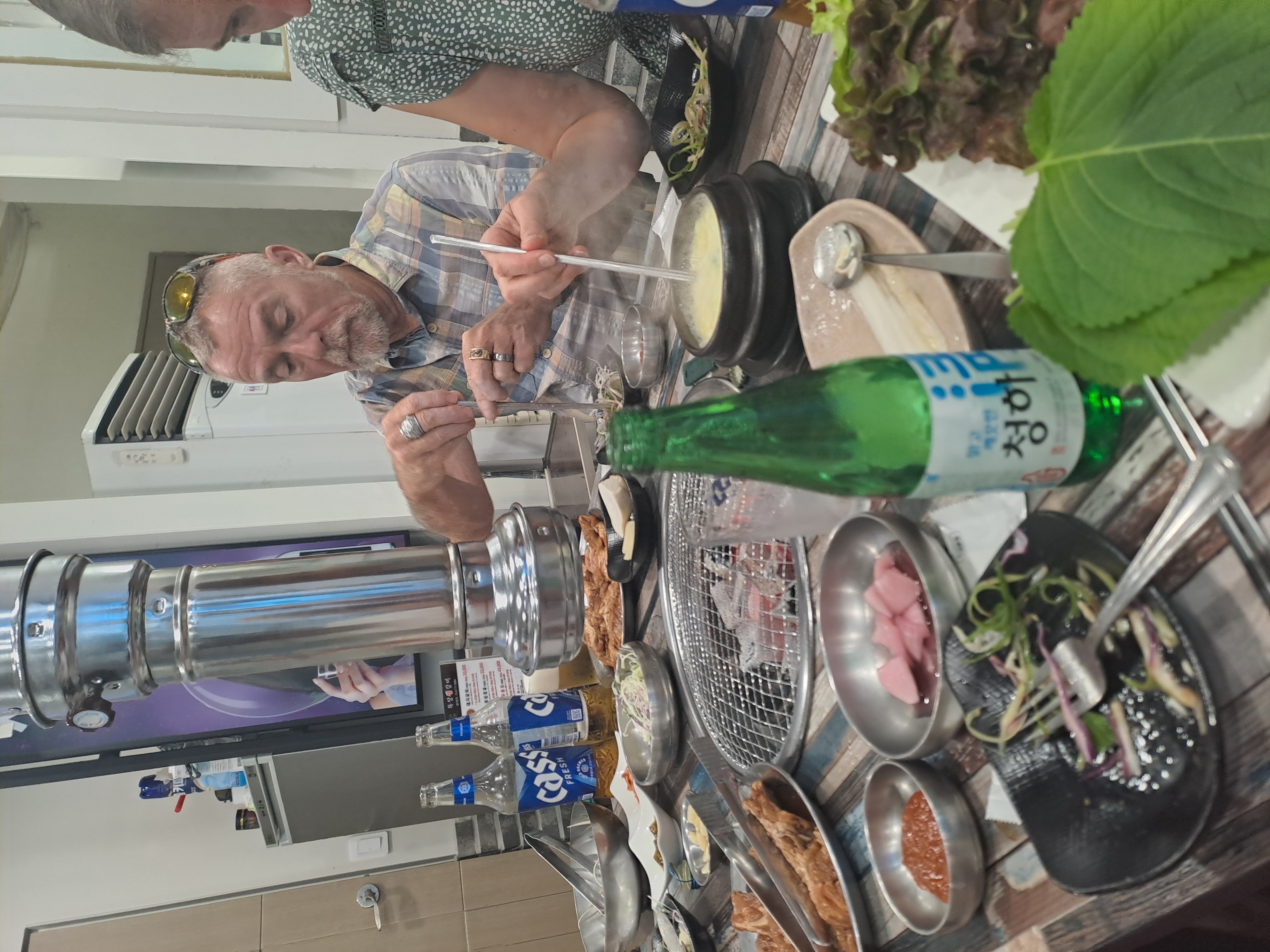
It was here we tried a Korean barbecue. We had a bucket of hot coals put in a well in the table and cooked our meat which we had with an assortment of accompaniments including of course the ubiquitous kimchi maybe we should do this in England to beat our weather!

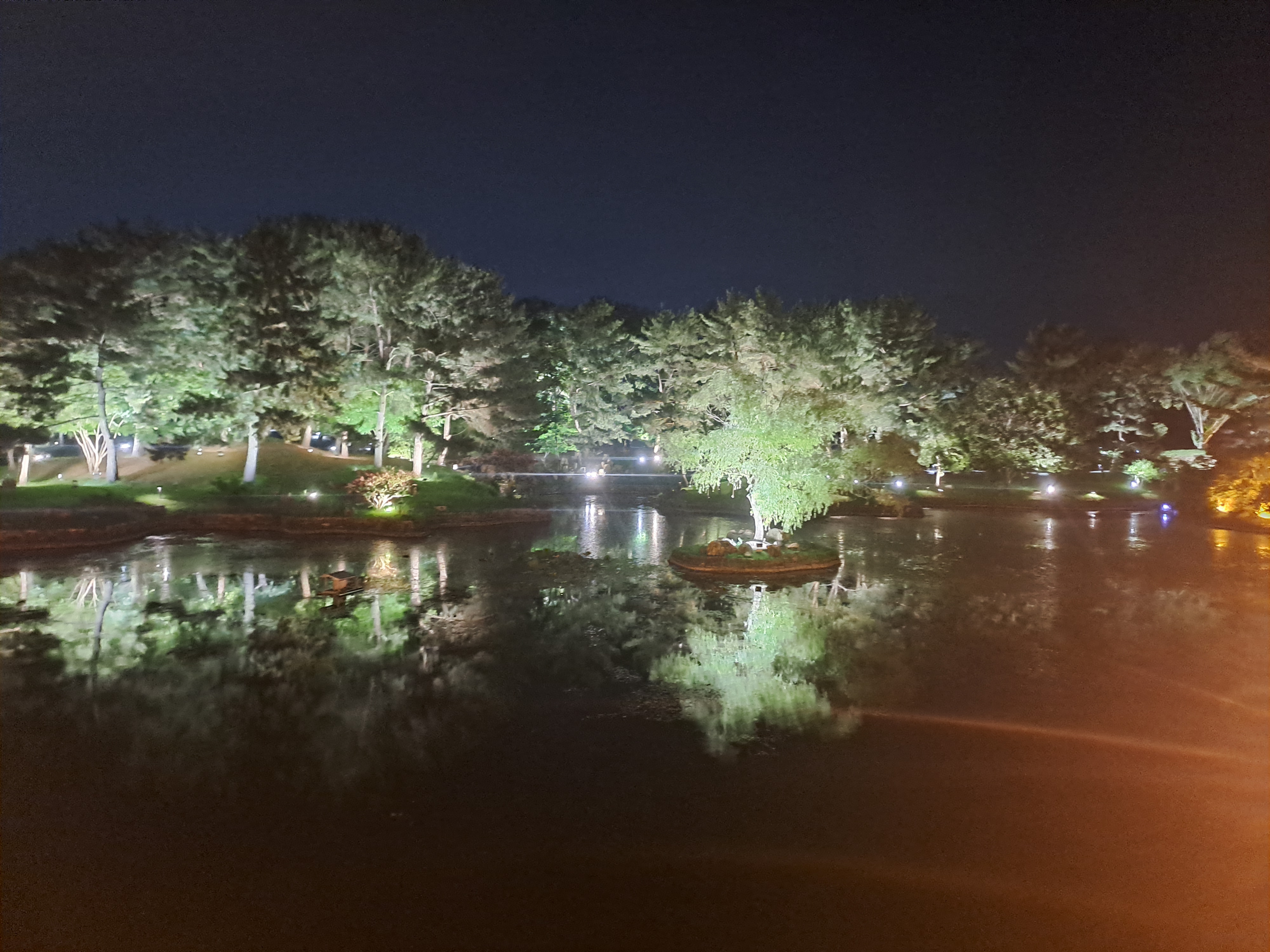
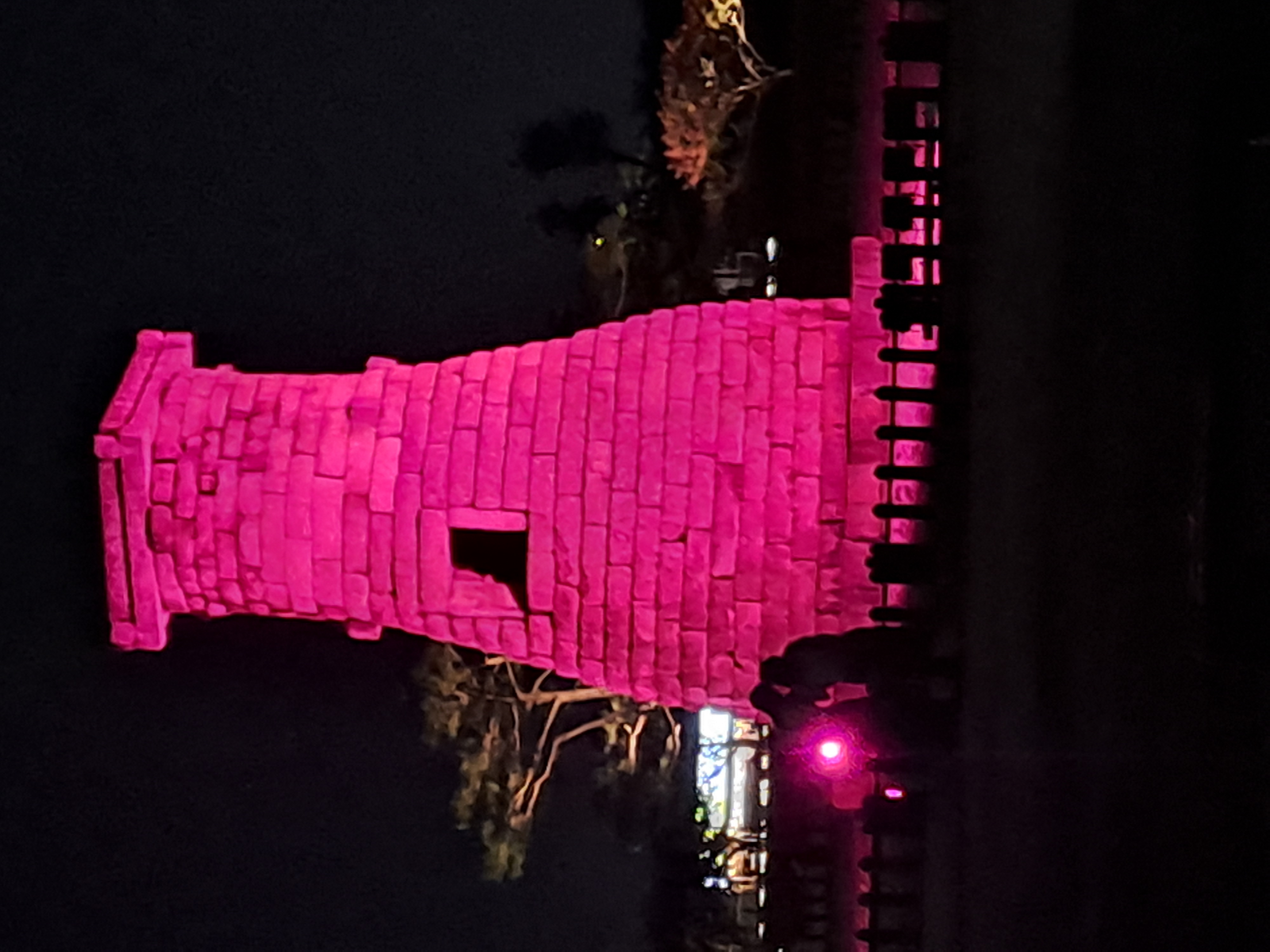
I ended my experience in gyeongji with a walk around Dongung Palace and Wolji pond gardens at night, which was beautiful withe the reflections in the water and the lights. We came back via the observatory and tombs.


So finally on to our last stop on Korea, Busan. I chose to spend my first day visiting the Citizens Park. A large park built on the site of a old Japanese Imperial army headquarters during the occupation and then a United States army barracks after the Second world war. It was returned to the local government in 2006 and opened as a park in 2014.
It has 5 themes memory, culture, pleasure, nature and participation. It was a lovely area to wander around and sit in. There as a number of sculptures around the park in keeping with its themes.
it has various children’s areas scattered through the park and even a water play area and beach. I was so tempted to get under the water sprays, but the thought ot walking back in wet shorts put me off!
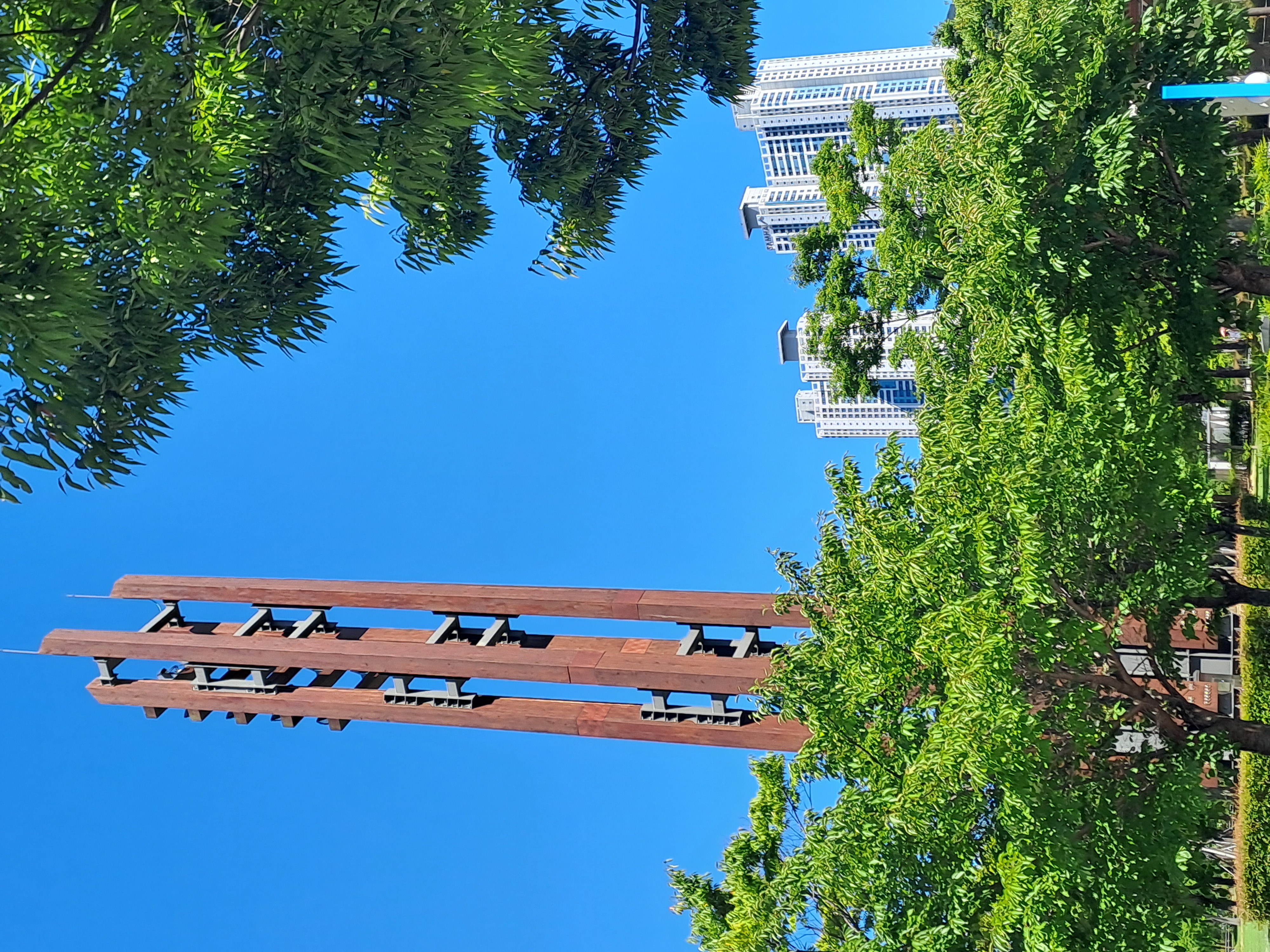

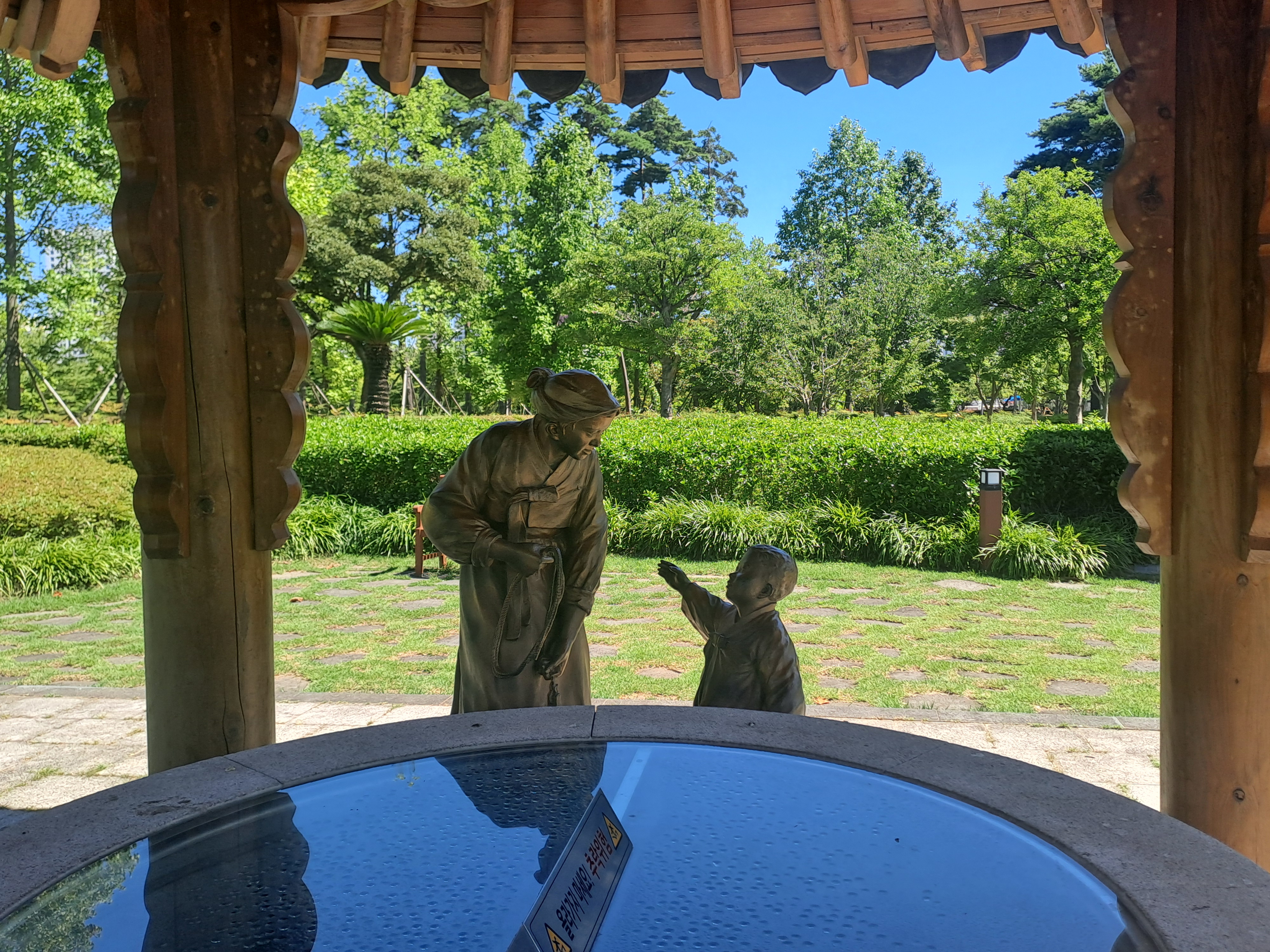
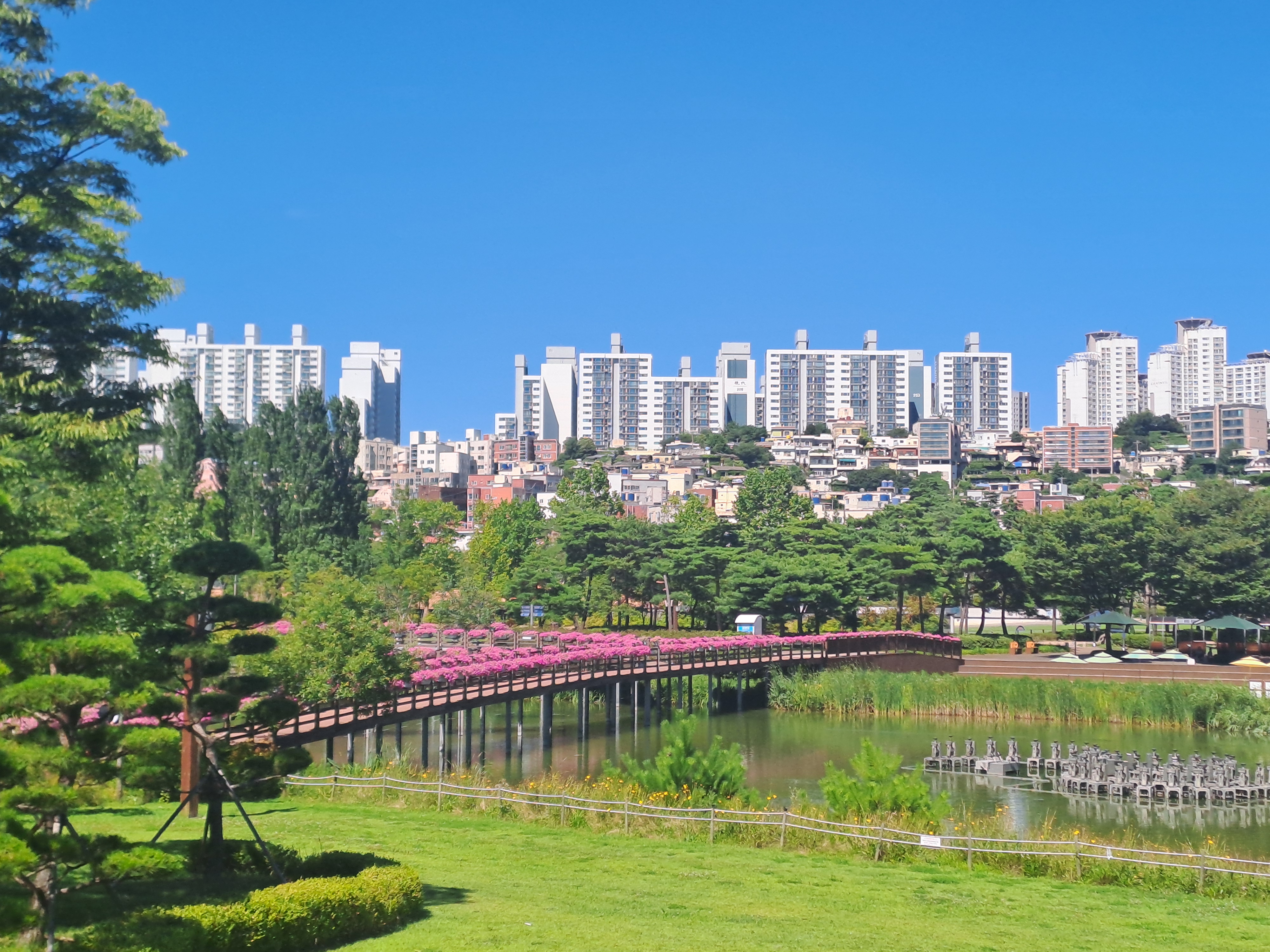
The city has gradually grown around the area while in use by the military and as a park it provides an oasis in a sea of high-rise buildings.

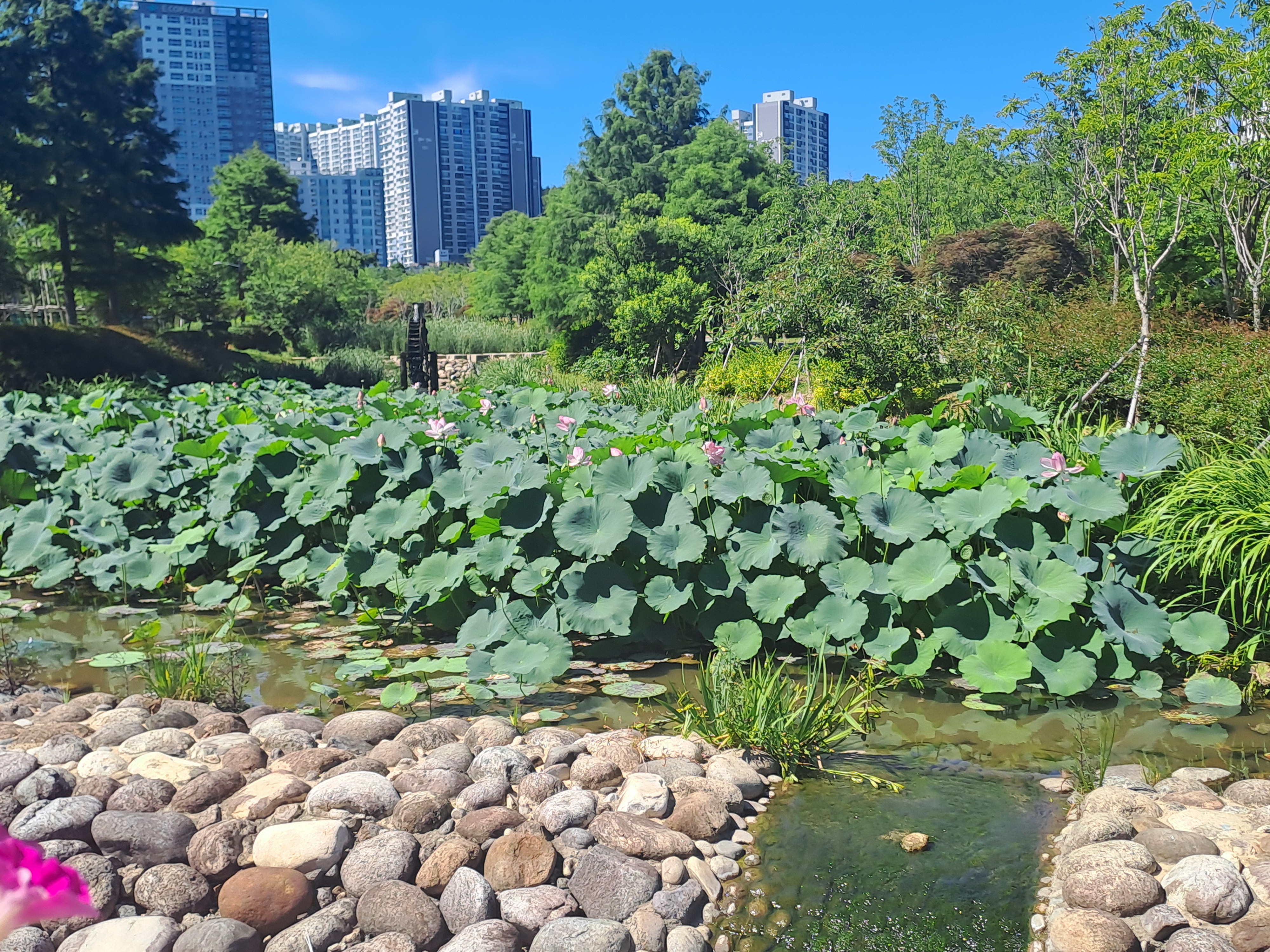

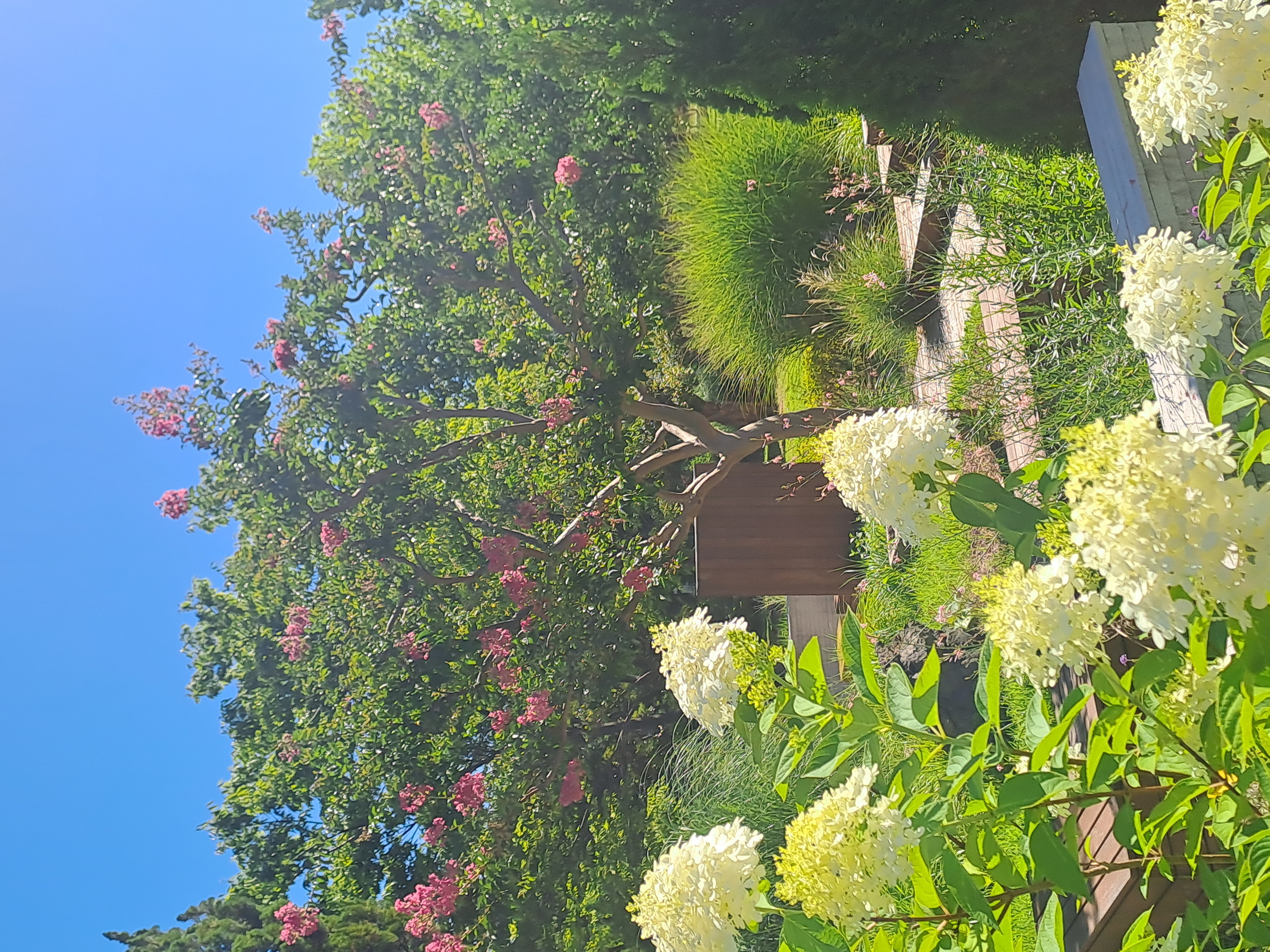
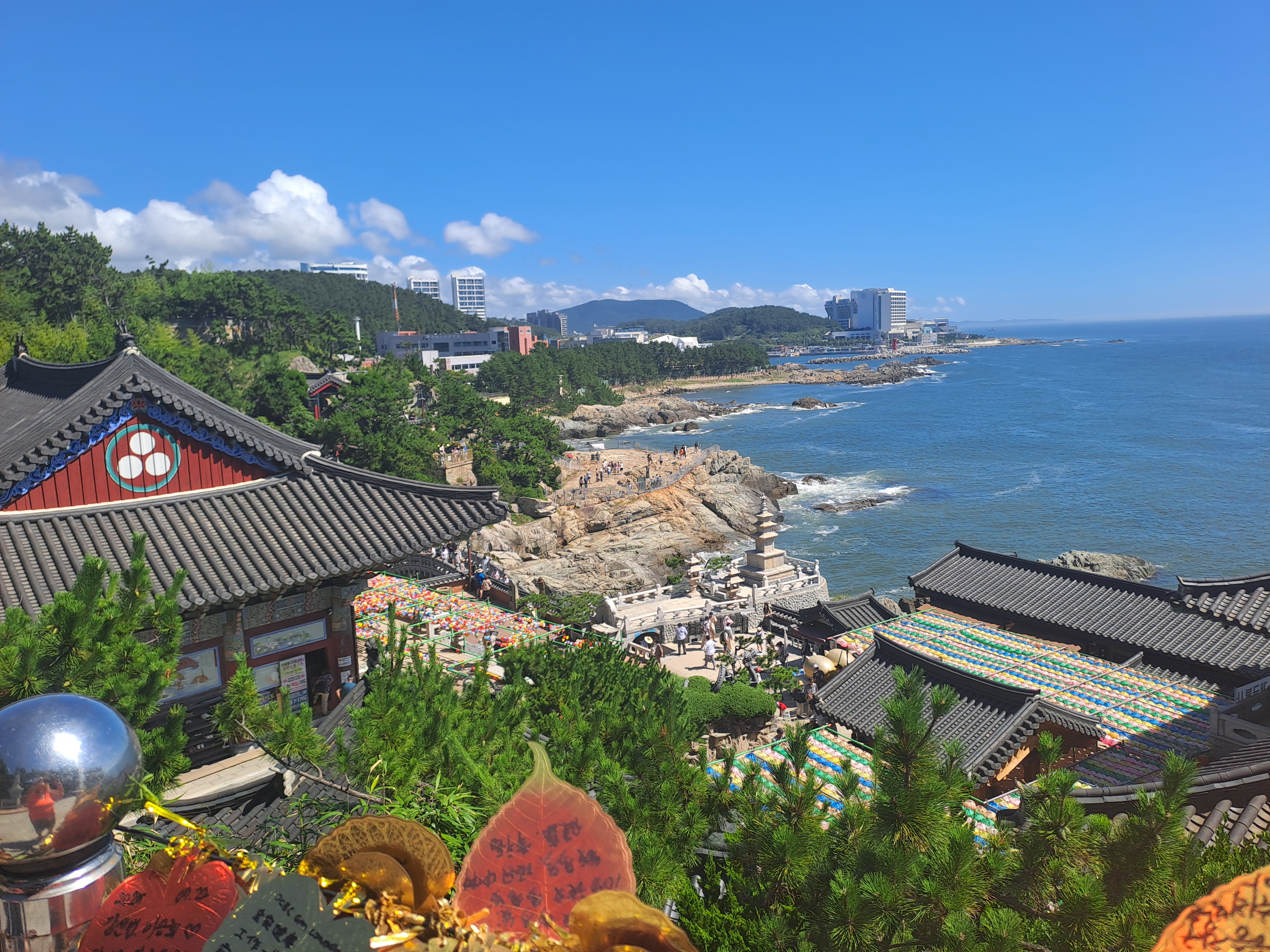
The next day we had a tour organised by bus starting at the Haedong Yonggungsa Buddhist temple complex. This was quite different from others in that it was next to the sea with wonderful views
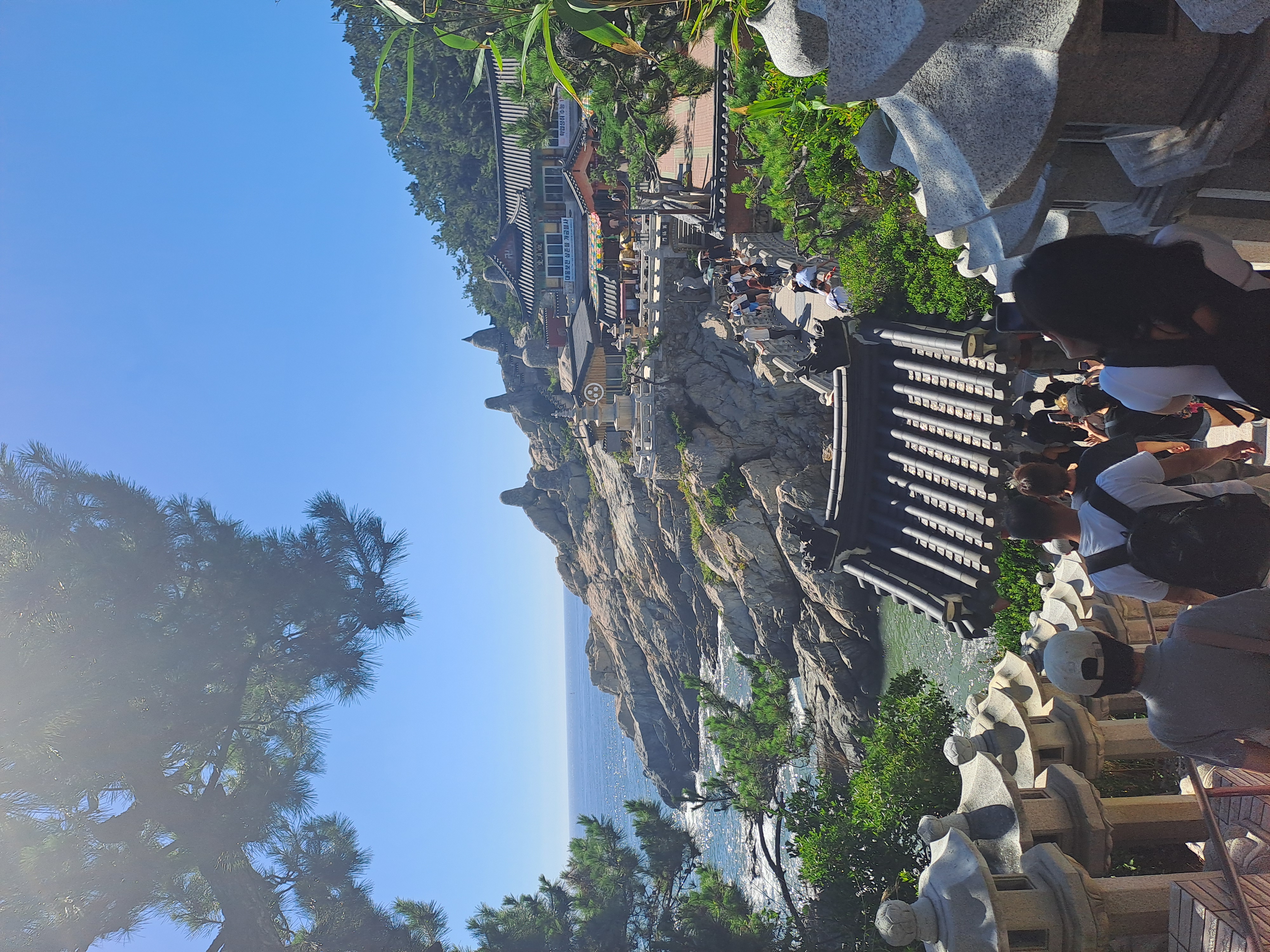


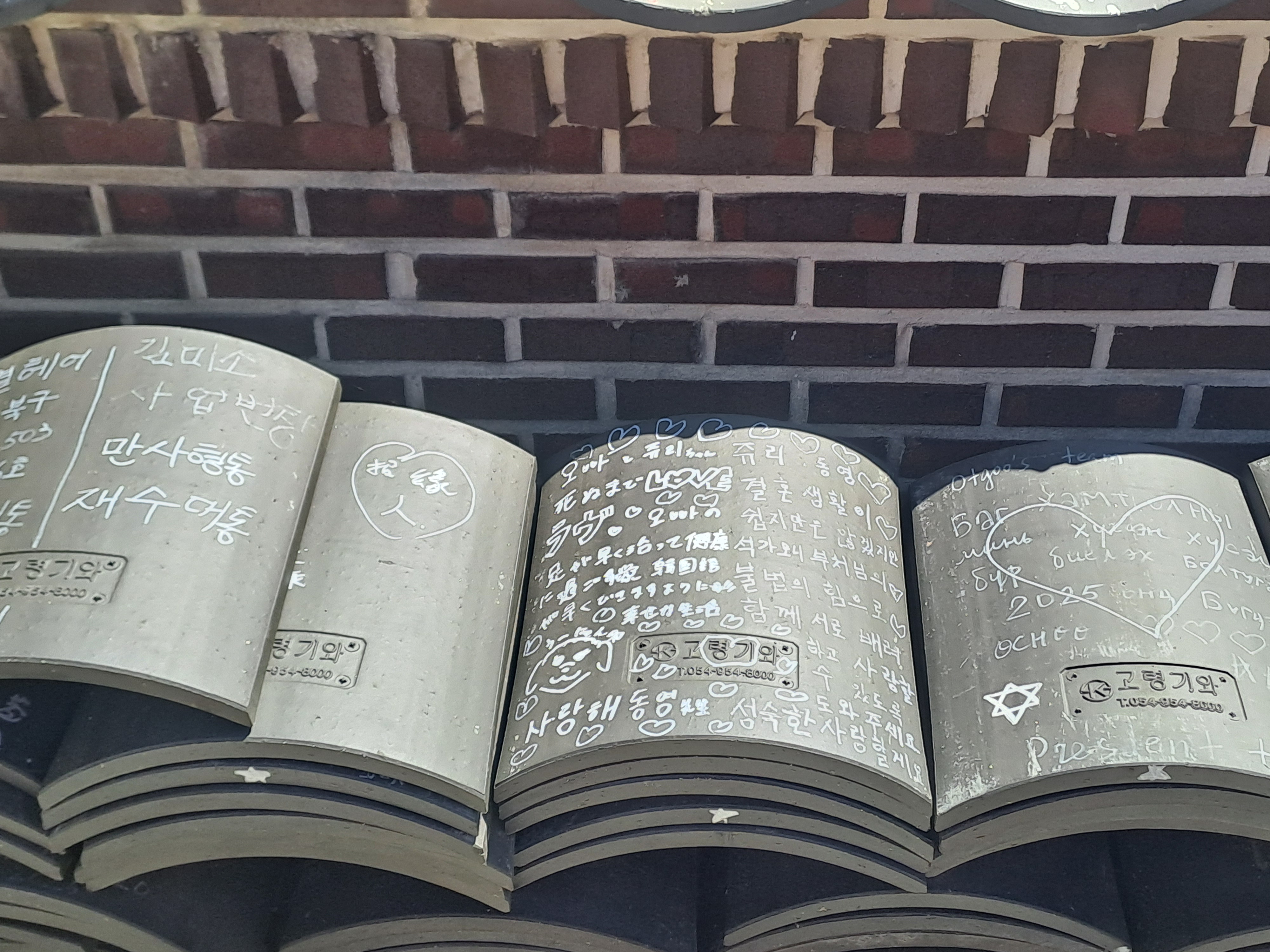
As with other temples it was raising money for further buildings by selling roof tiles so people could have their messages on the underside of the tiles. It had a modern flavour with a shrine for road traffic accidents!
Here I am cuddling up to the rat which is apparently my zodiac sign 🤪


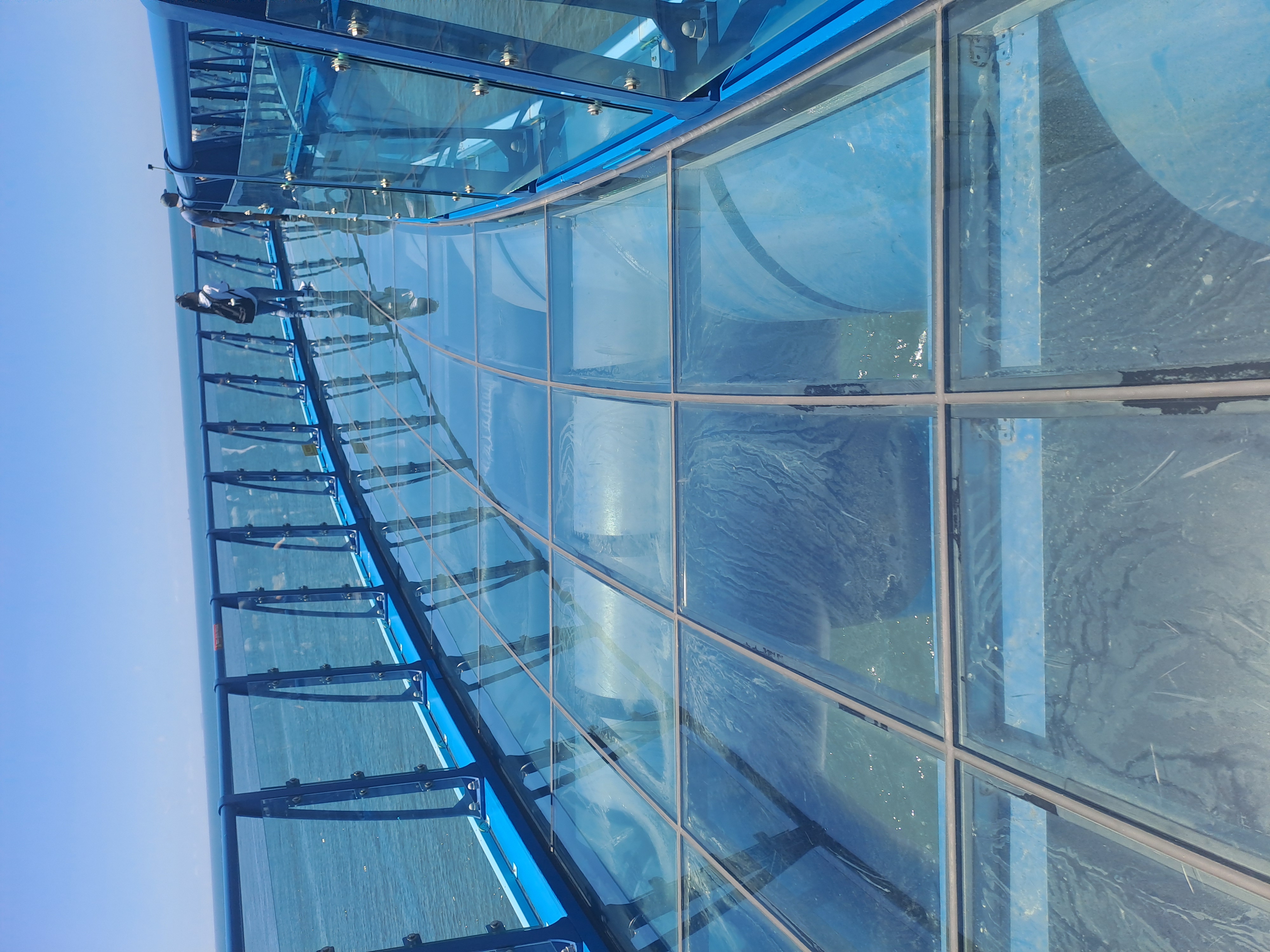
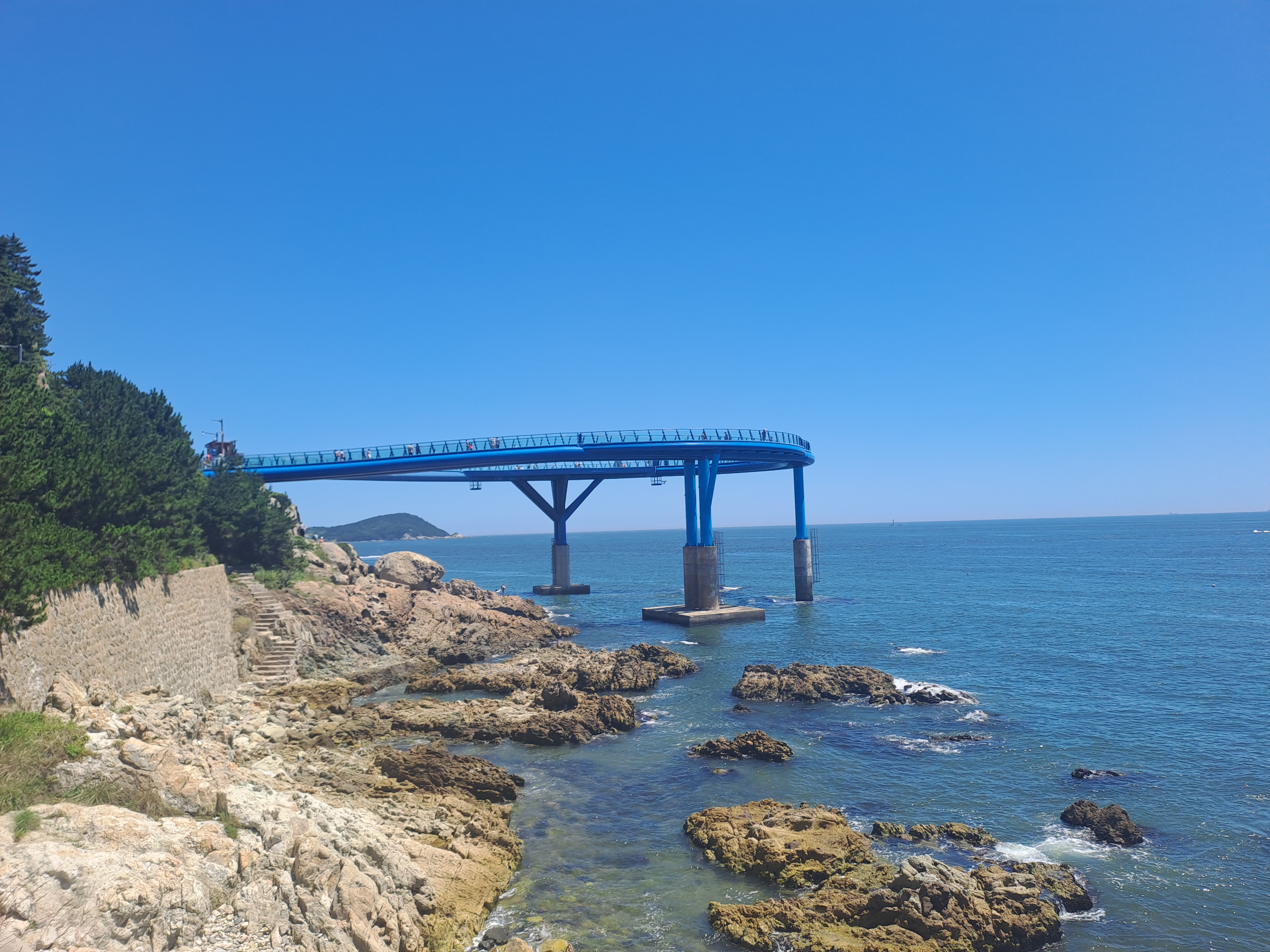
We went on to the Cheongsapo Daritdol skywalk. Not for the faint hearted, several members of the group had to pointedly not look at their feet for the experience.

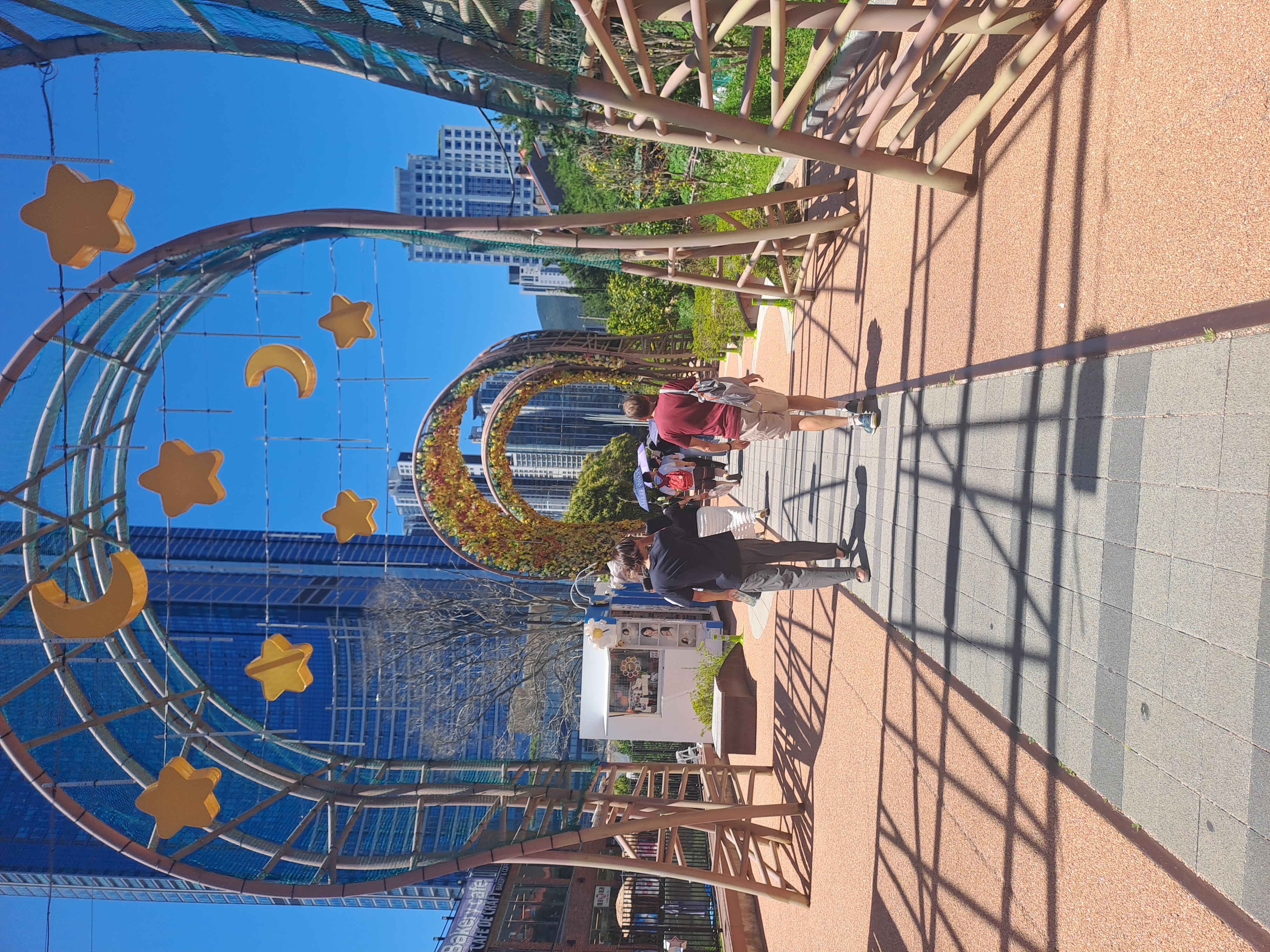
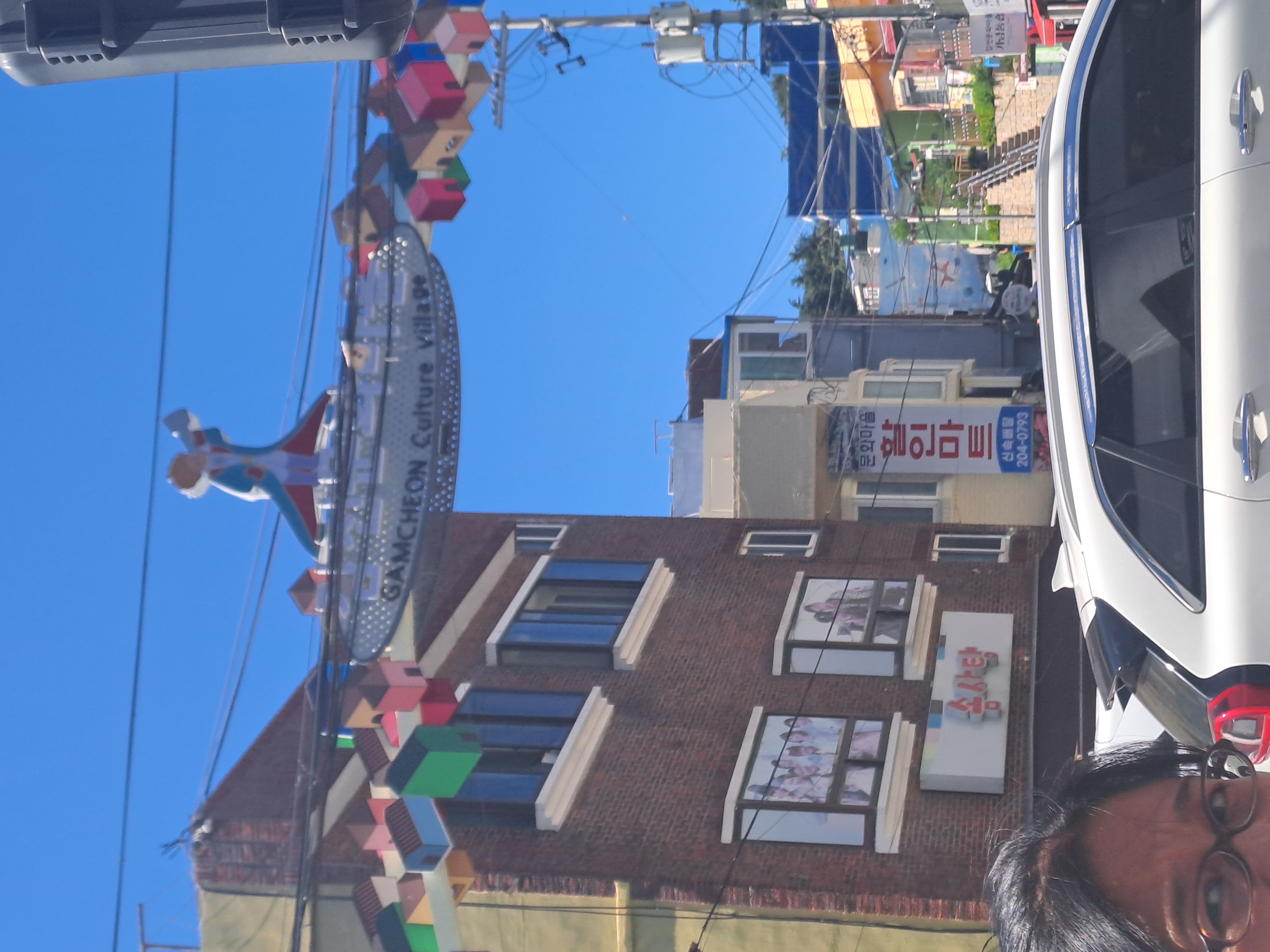
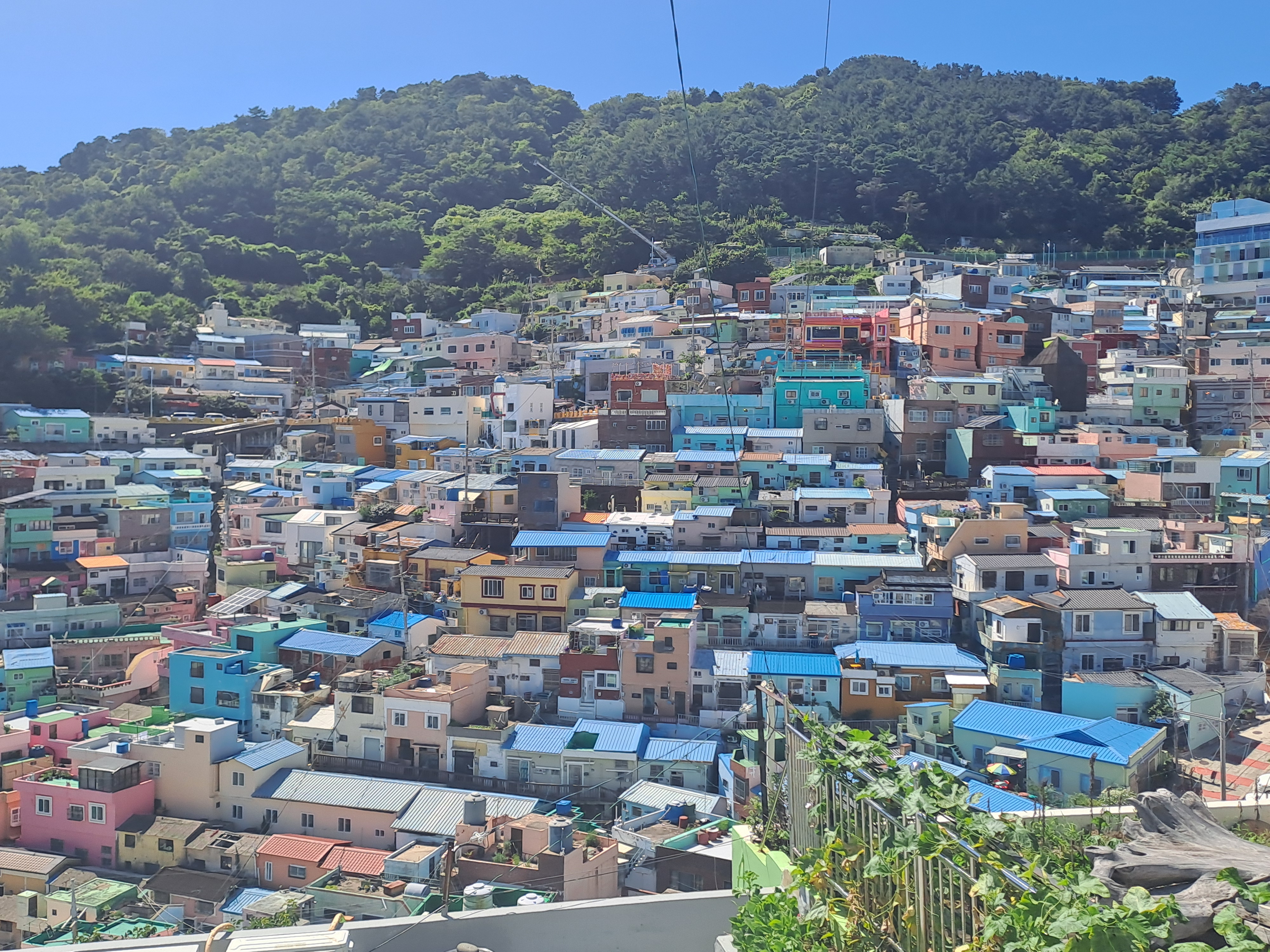
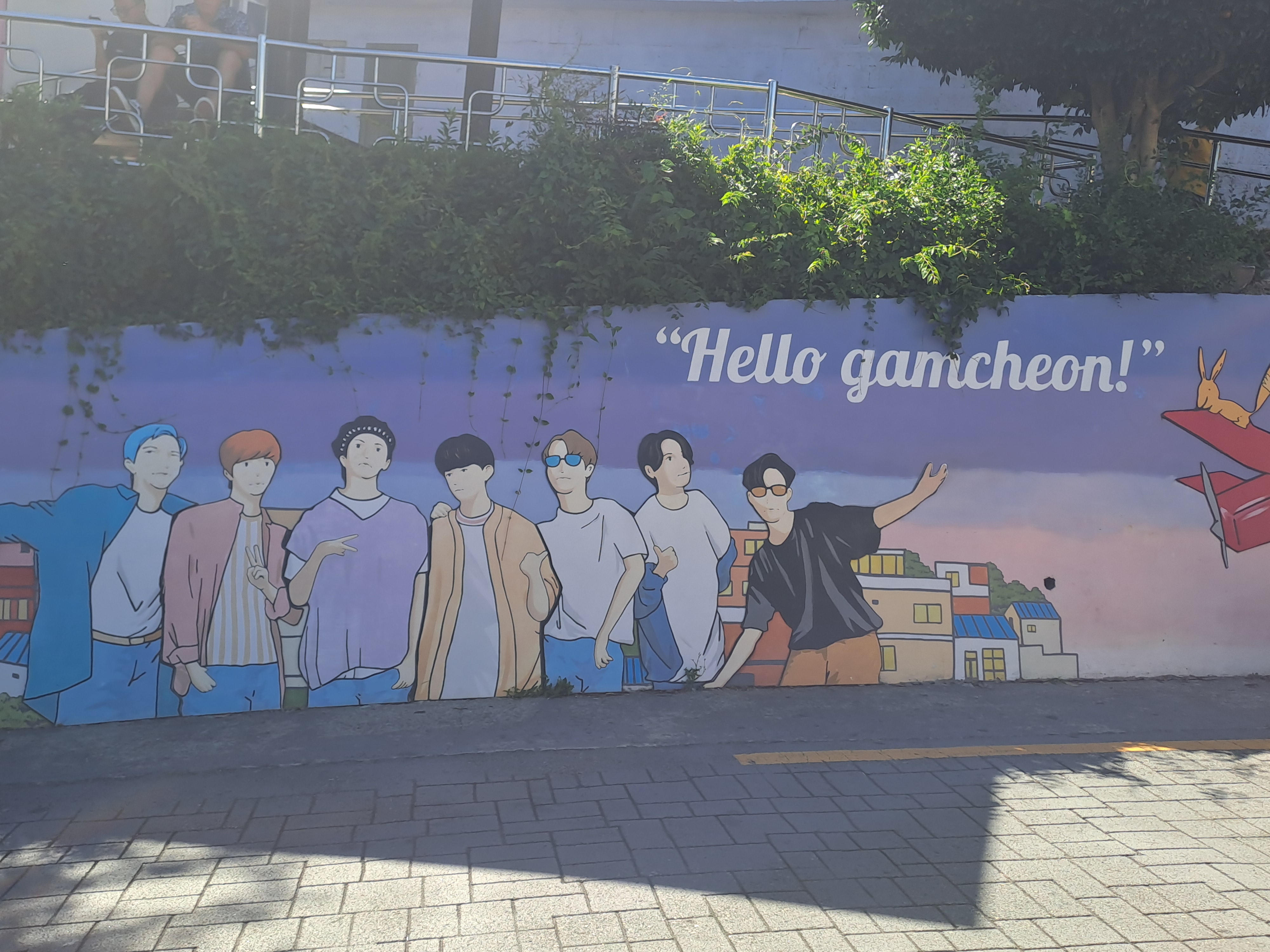
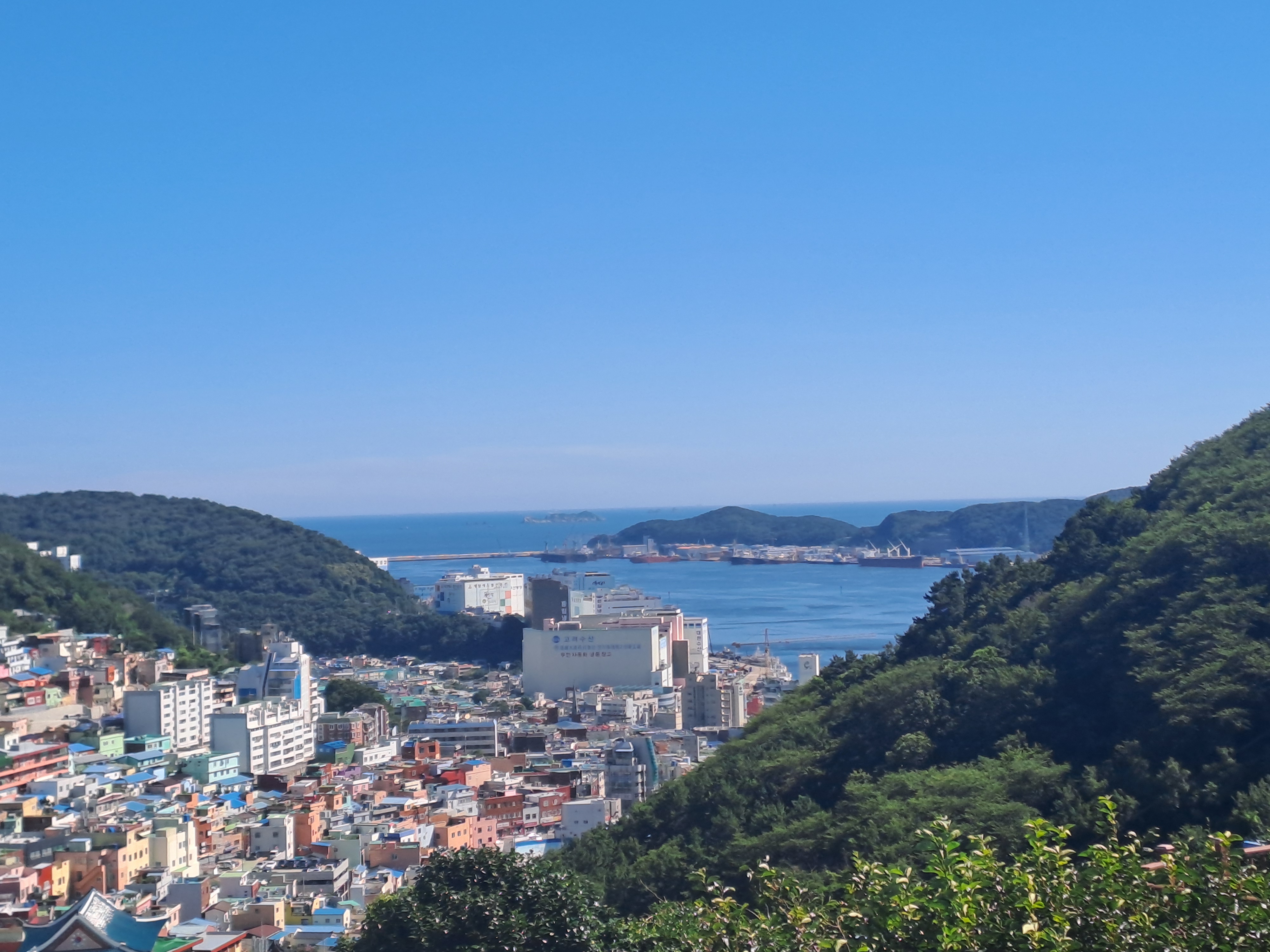
We then went onto the Huinnyeoul cultural village quite pretty with the colours and a haven for k-pop culture. Several people bought BTS souvenirs for friends and family and I believe this is them on a mural.
So that’s our whistle stop tour of South Korea, next stop Japan.
