October 27th to 10th November 2025
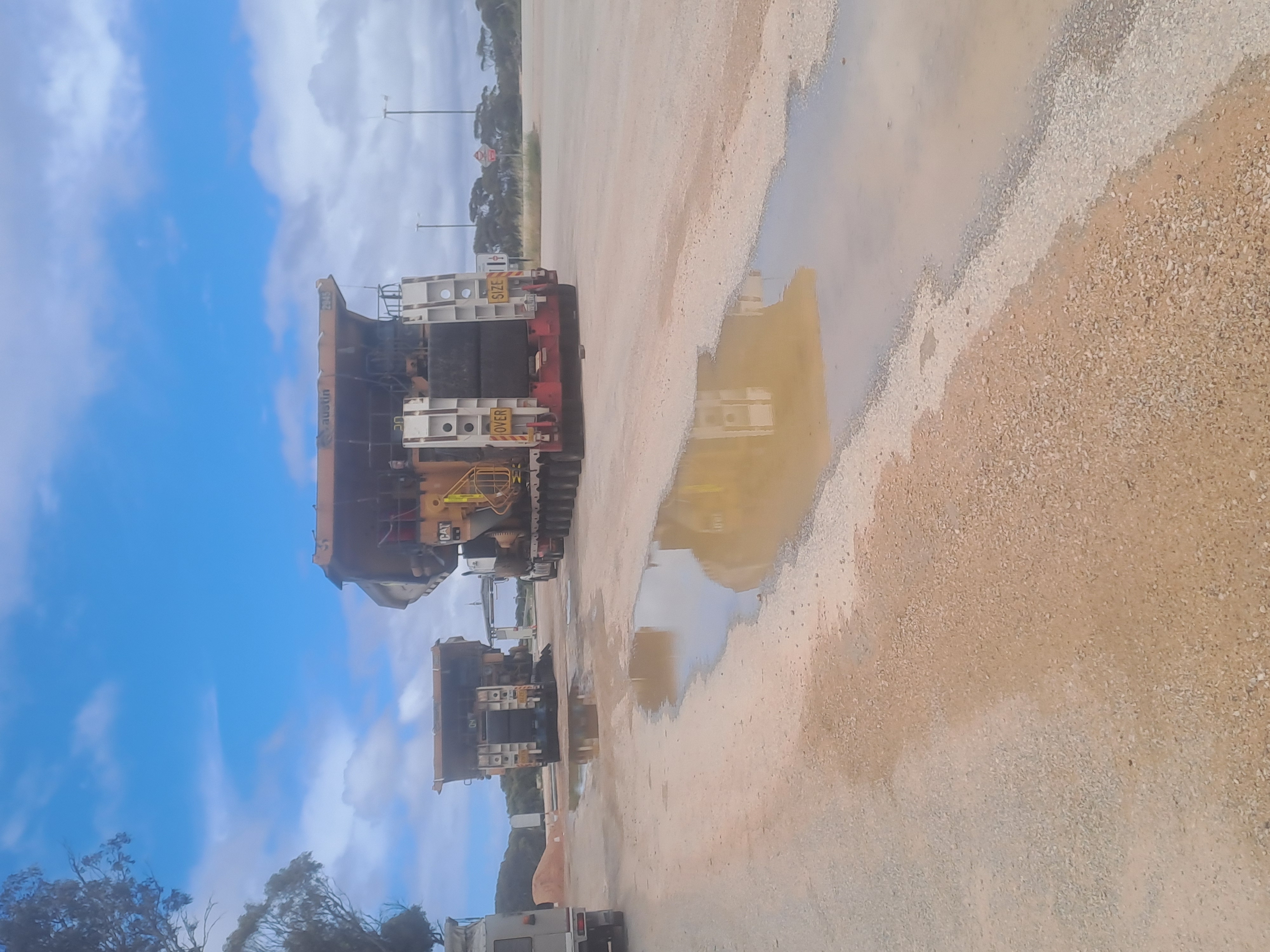
The entry to South Australia was really low key. The customs house was only for those going the other way, and there was no parking at the sign. I had to run back for the photo. I did manage to get a photo of one of the enormous mine trucks being transported while I was there though.
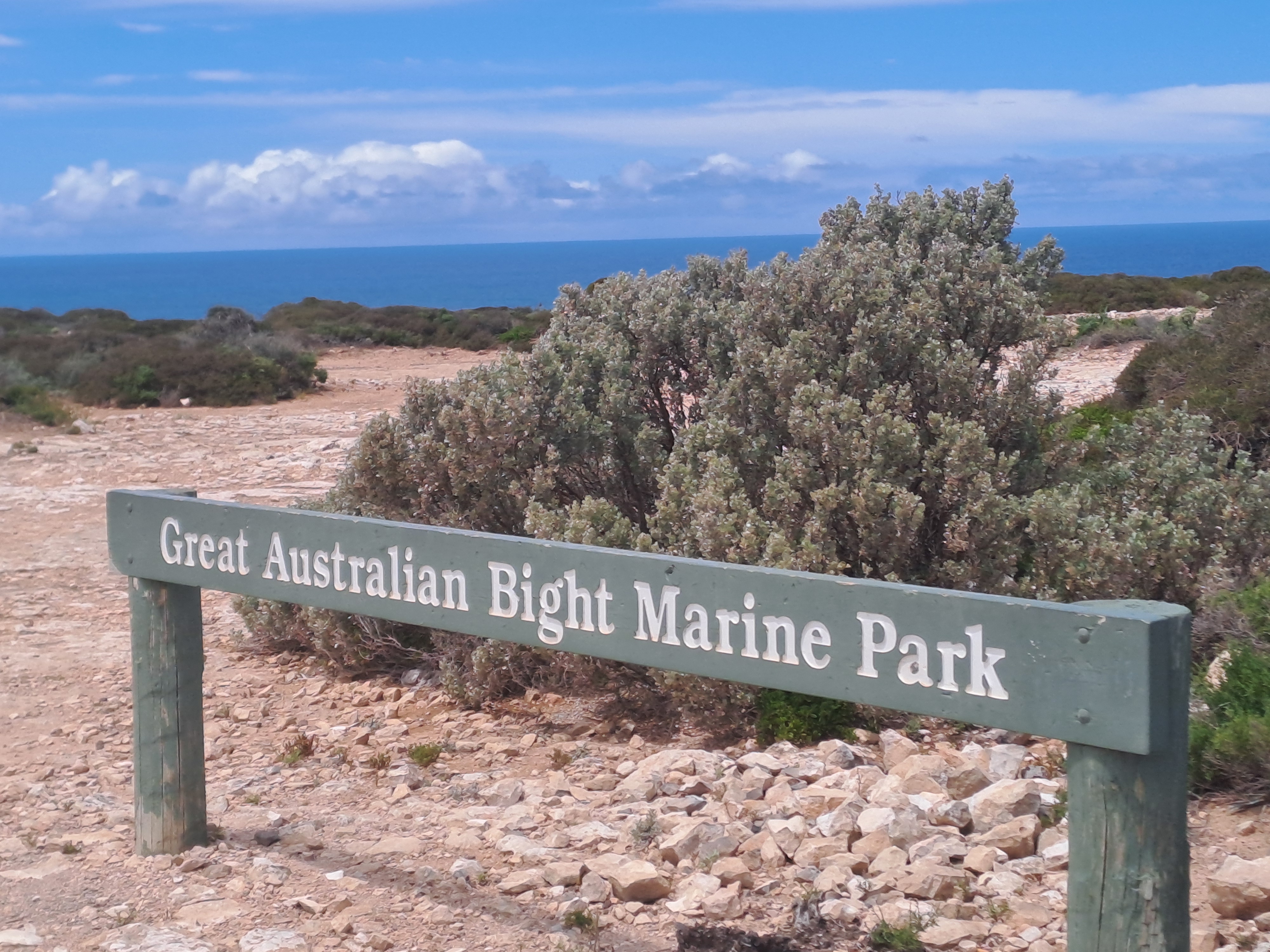
This was the start of the Great Australian Bight
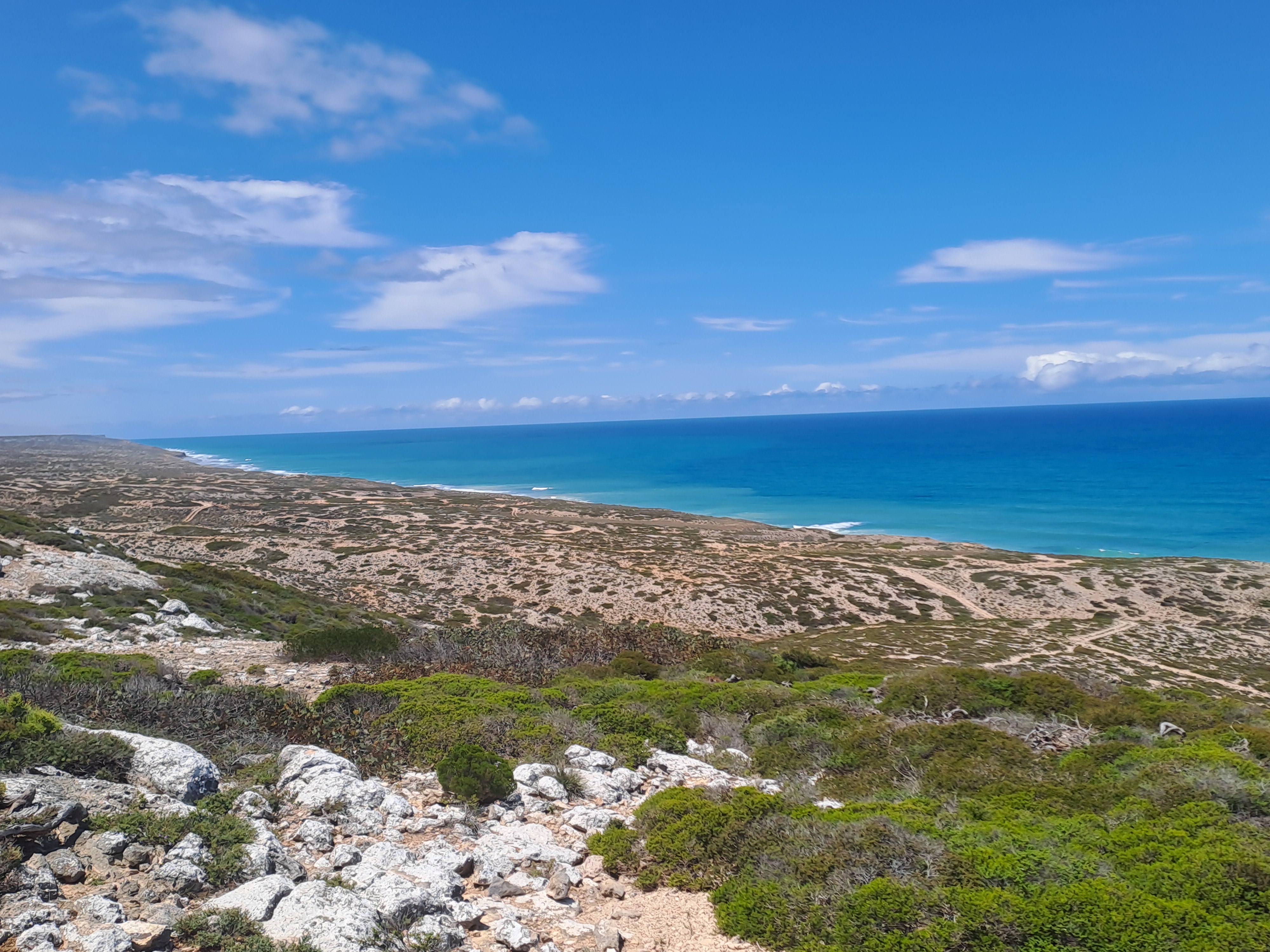
A ginormous bay at the bottom of Australia. There is very little access to the sea though as most of it is cliffs, the main access is here at the start.
We had access to some wonderful views though and kept stopping at view points for photos
Although virtually all Australia has to be water conscious, with many Roadhouses and all towns and stations having to find and make drinkable their own supply, it was in South Australia that we met regular rationing. Some showers were metered with a slot machine to buy 5 minutes- a bit of a shock first thing in the morning with no warning and no change. Some showers just turned off with a wait before they’d start again.




We however carried along the Nullarbor.


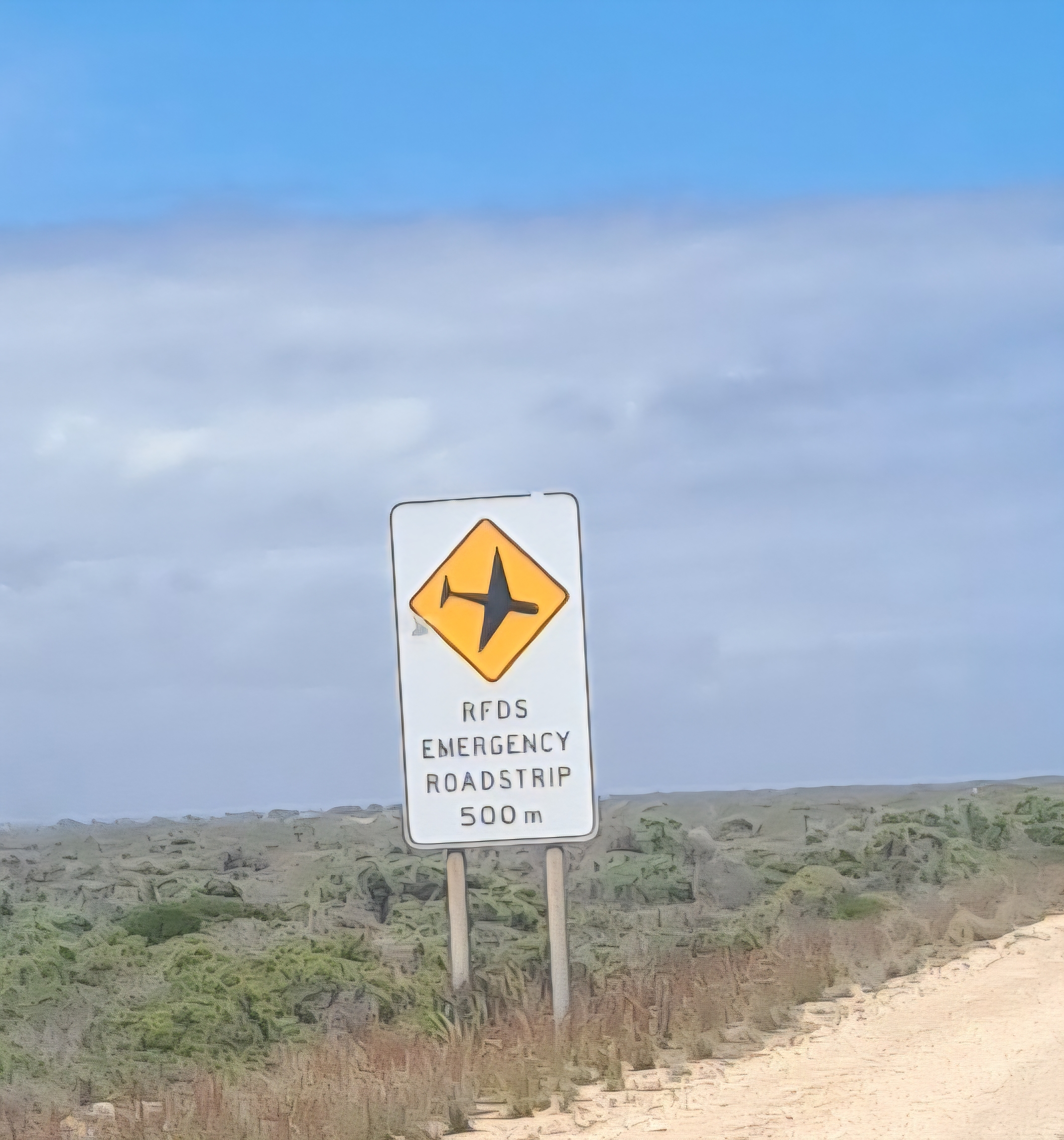
Here we drove along our first emergency landing strip. This is for the flying doctors. A lot of homesteads have their own strips as well.
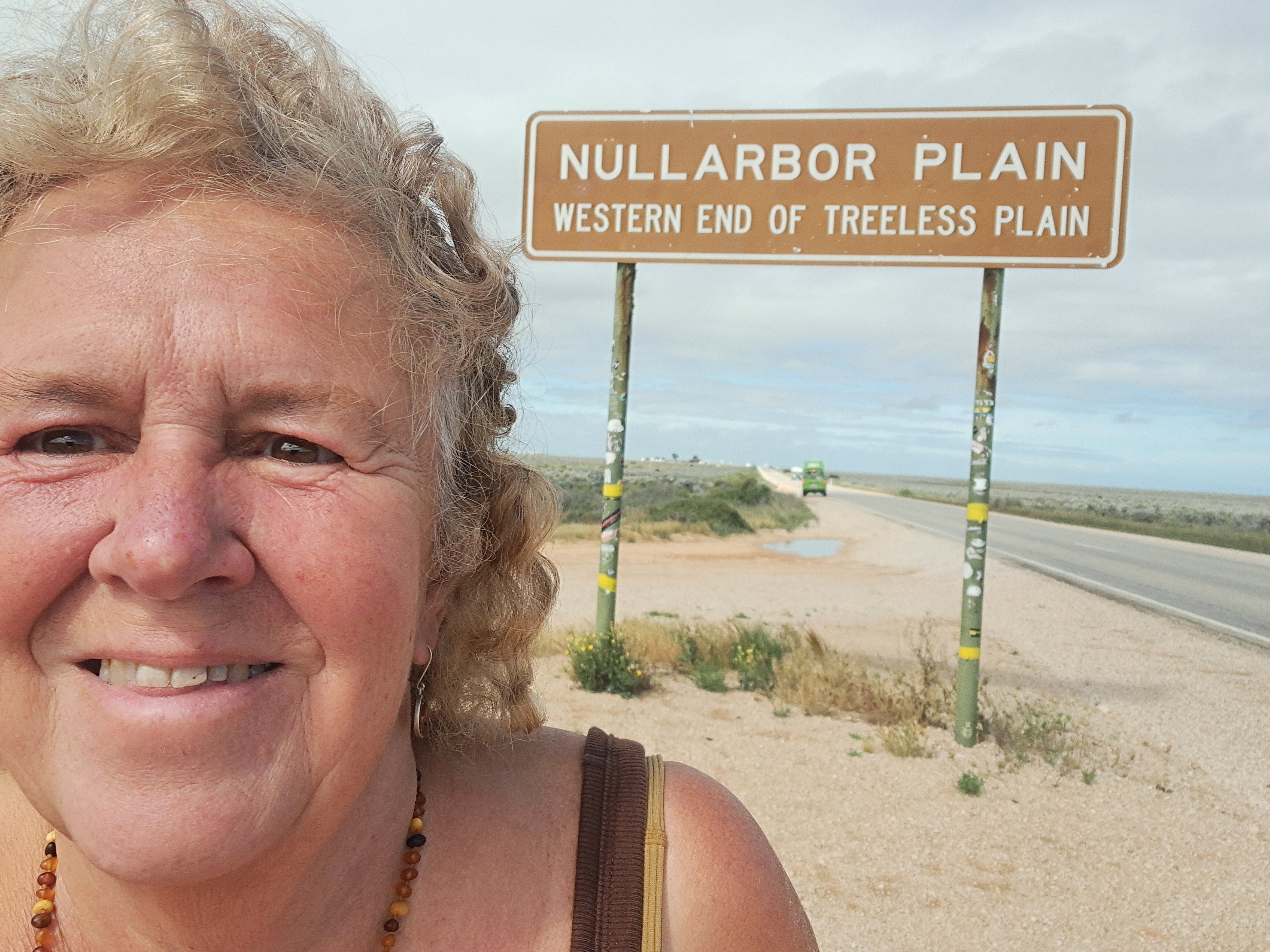
Up until this point I thought we were already crossing the Nullarbor Plain, but no here was the official sign for it the start of the treeless plain, Null Arbor – meaning no trees.

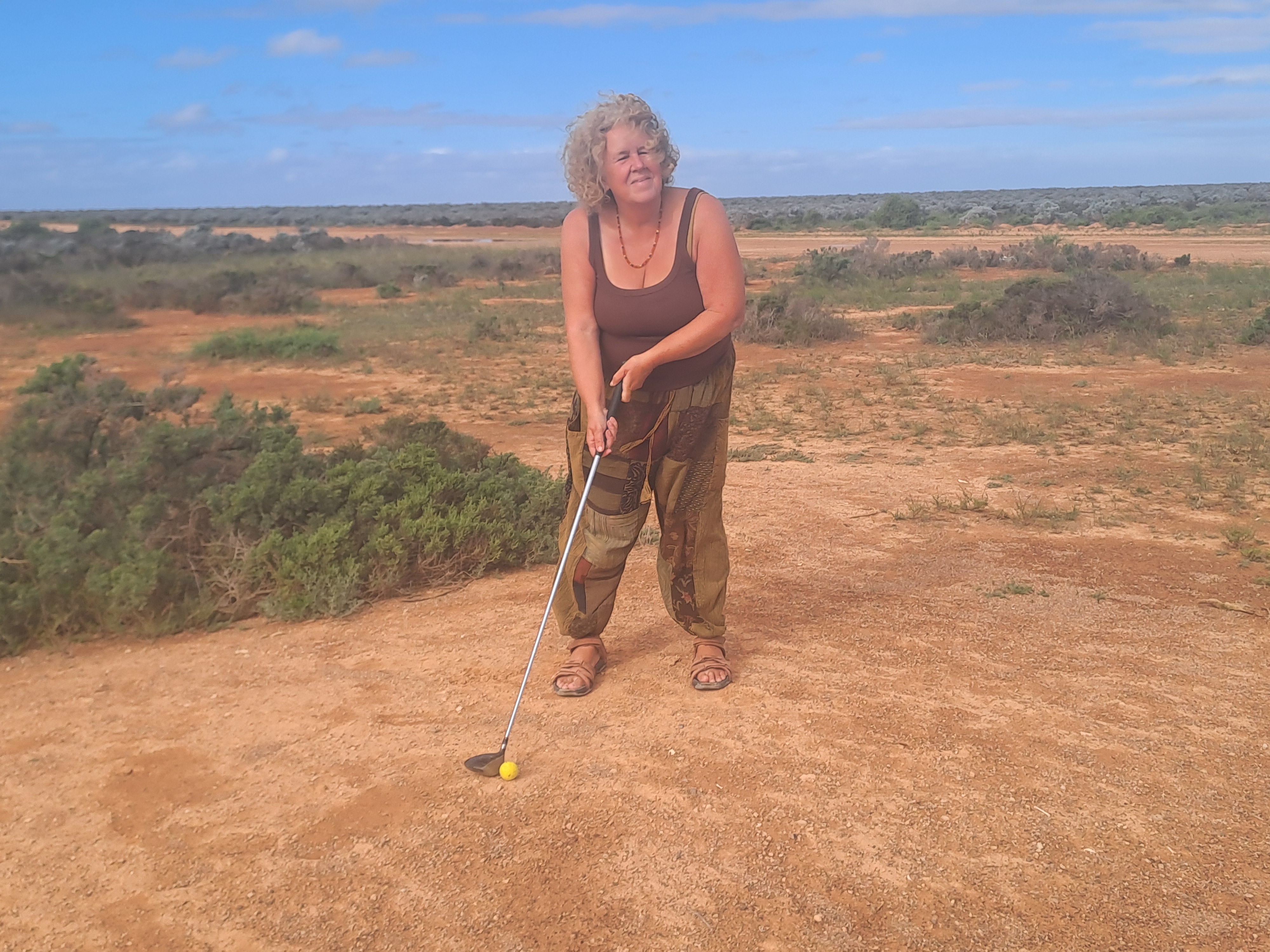
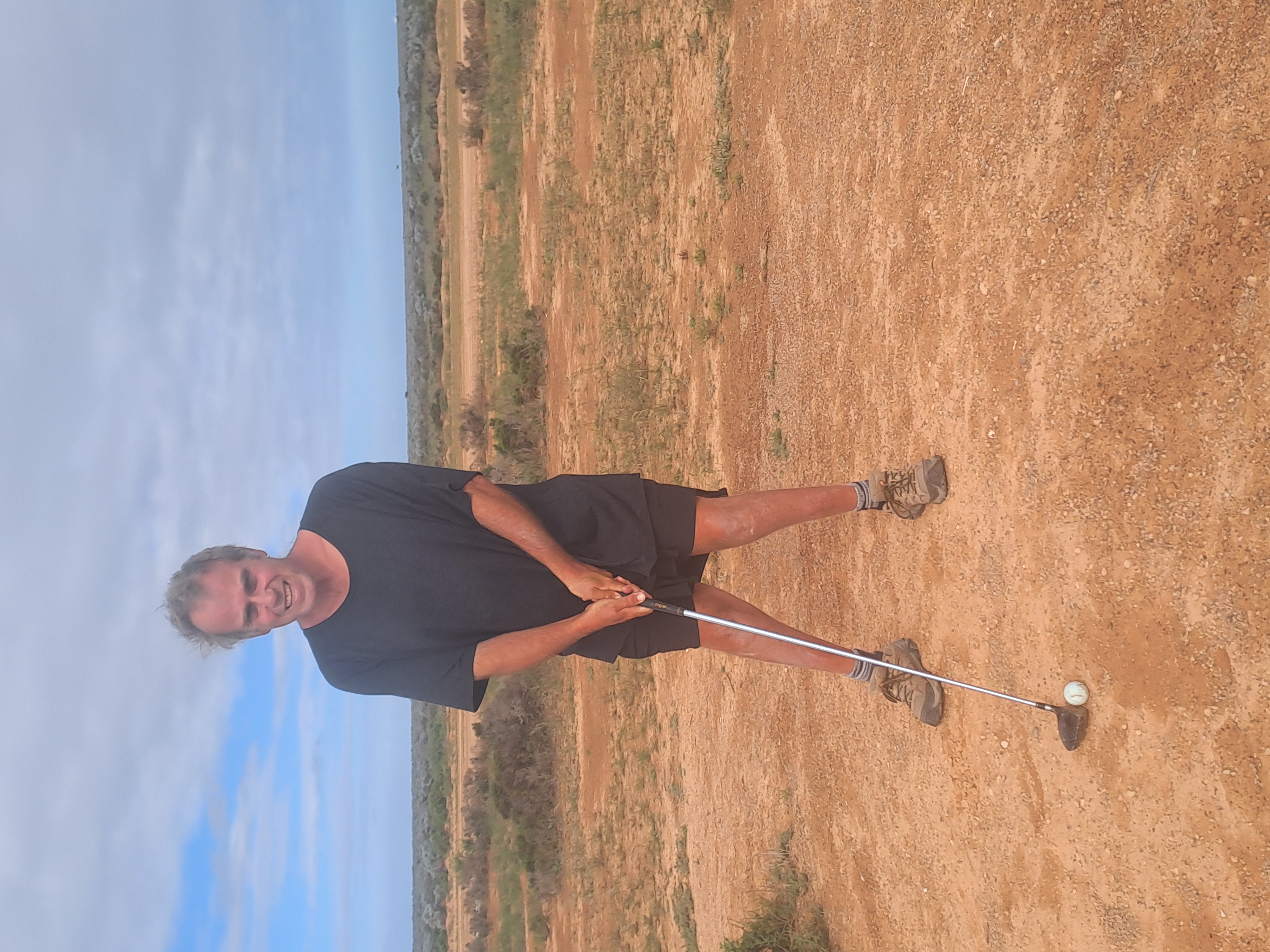
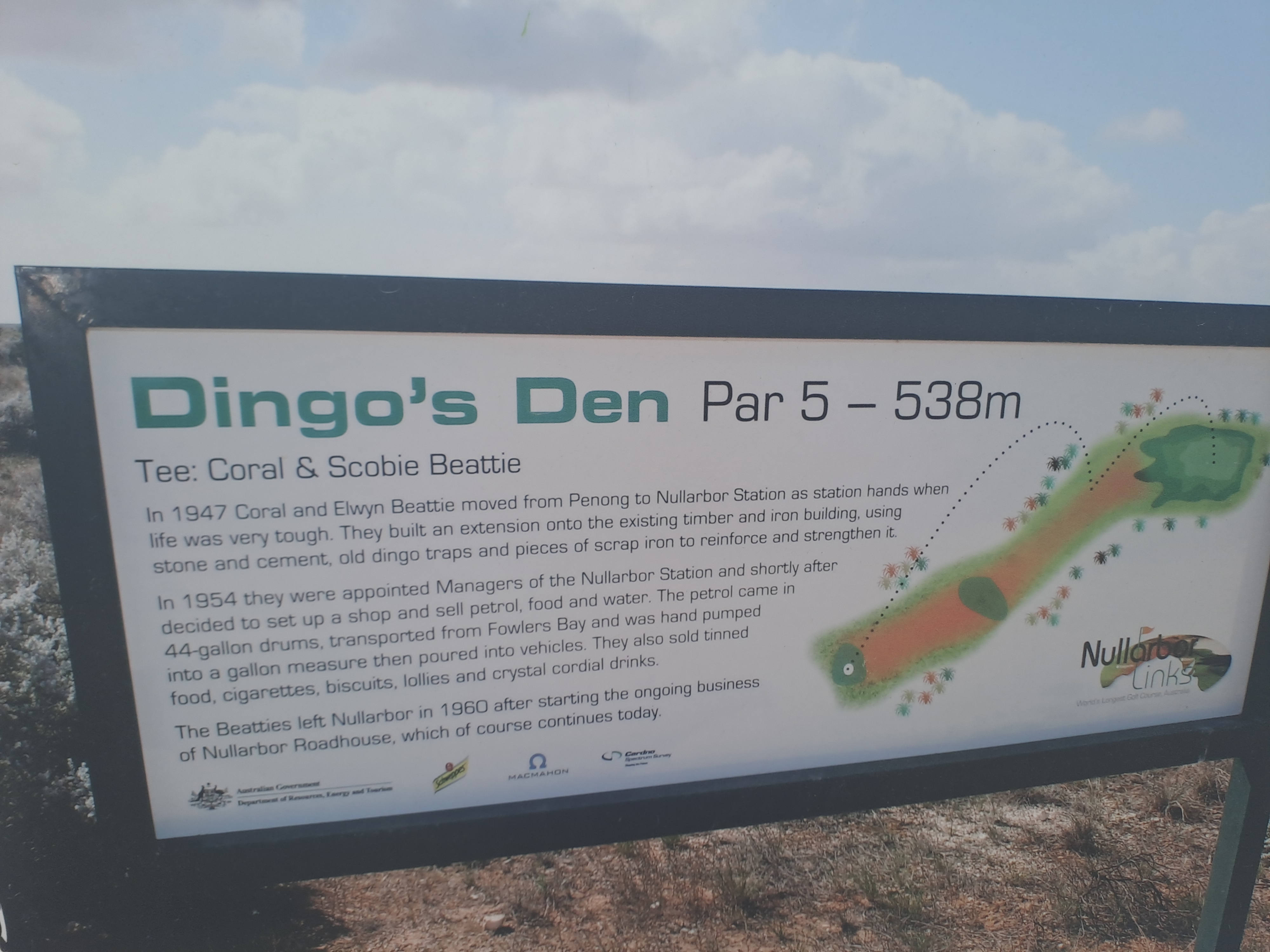
At the Nullarbor Roadhouse we thought we’d better try the golf course. Not a lot of grass here just a patch of the artificial stuff for the putting green. There was also a landing strip in the middle of the fairway! Not your average golf course. We were well above par here but then we don’t do a lot of golf.


At Billabong Roadhouse we found the answer to one of the questions at the back of my mind. What happens when a Roadhouse in the middle of nowhere runs out of petrol? In this case it was the electricity for the pumps that was the problem. As it was we had planned to stay the night anyway, but we found a lot of other travellers doing an unscheduled overnight stop. We all hoped the power would sorted out overnight and luckily it was so we could all leave in the morning. Those forced to stay were offered a discount and we all felt for the owners who had just taken it over and probably had a lot of working to do.
The whale theme reflects how near the coast we were and whale sightings. Indeed while driving we could see a blue tone to the sky over the ocean even if we couldn’t see the sea. We also started seeing a new animal added to the warning signs, the wombat.
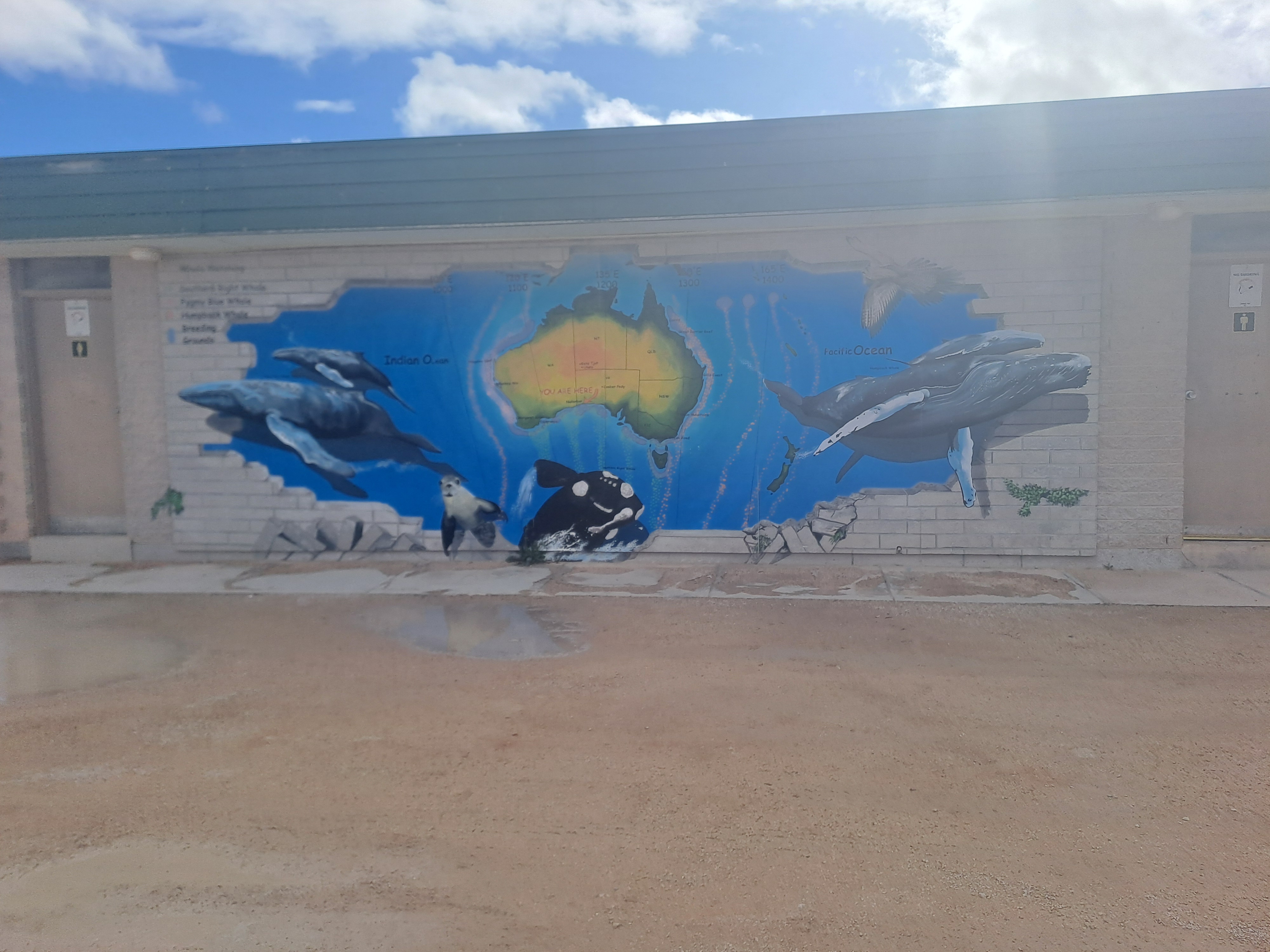
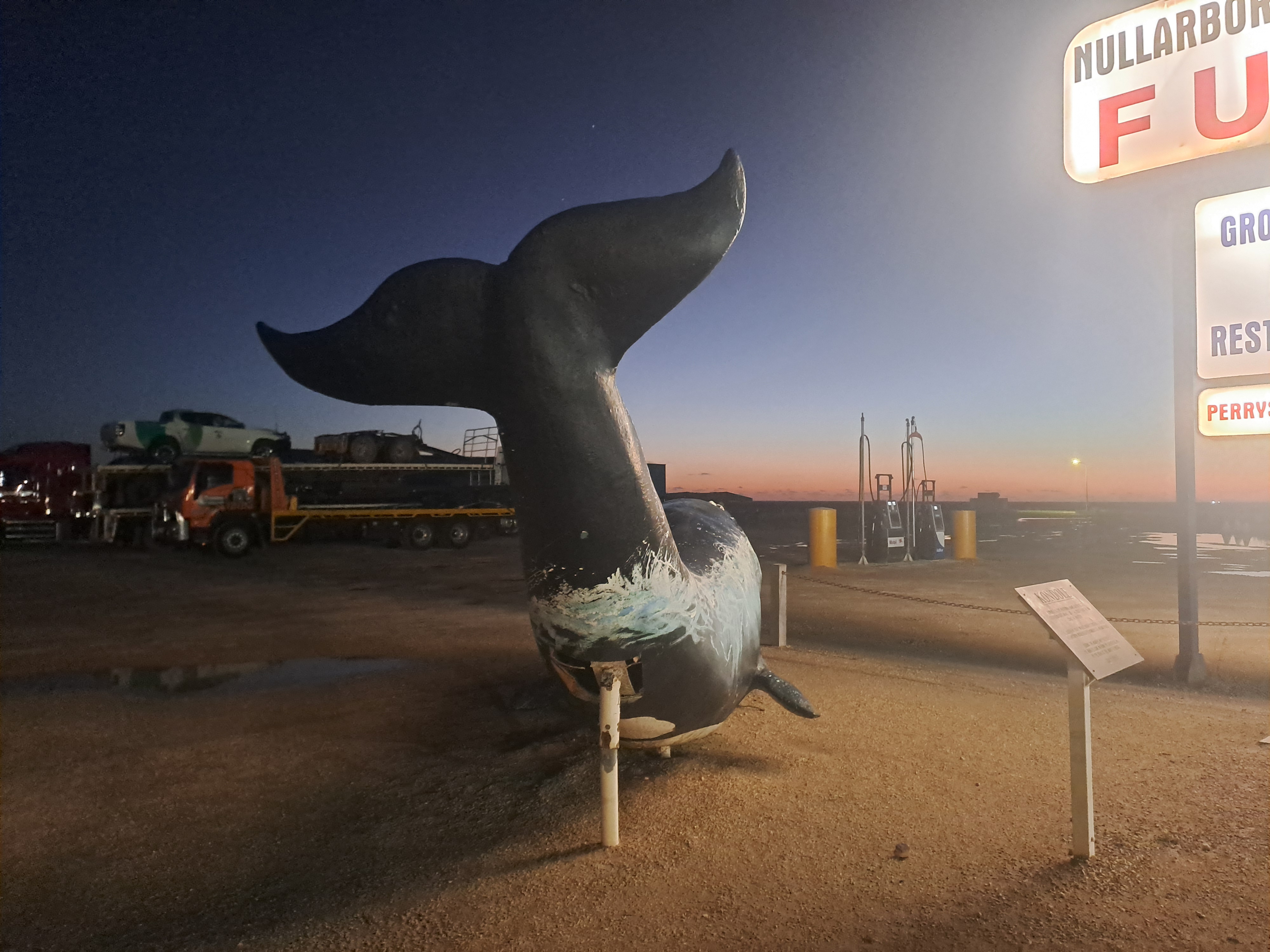
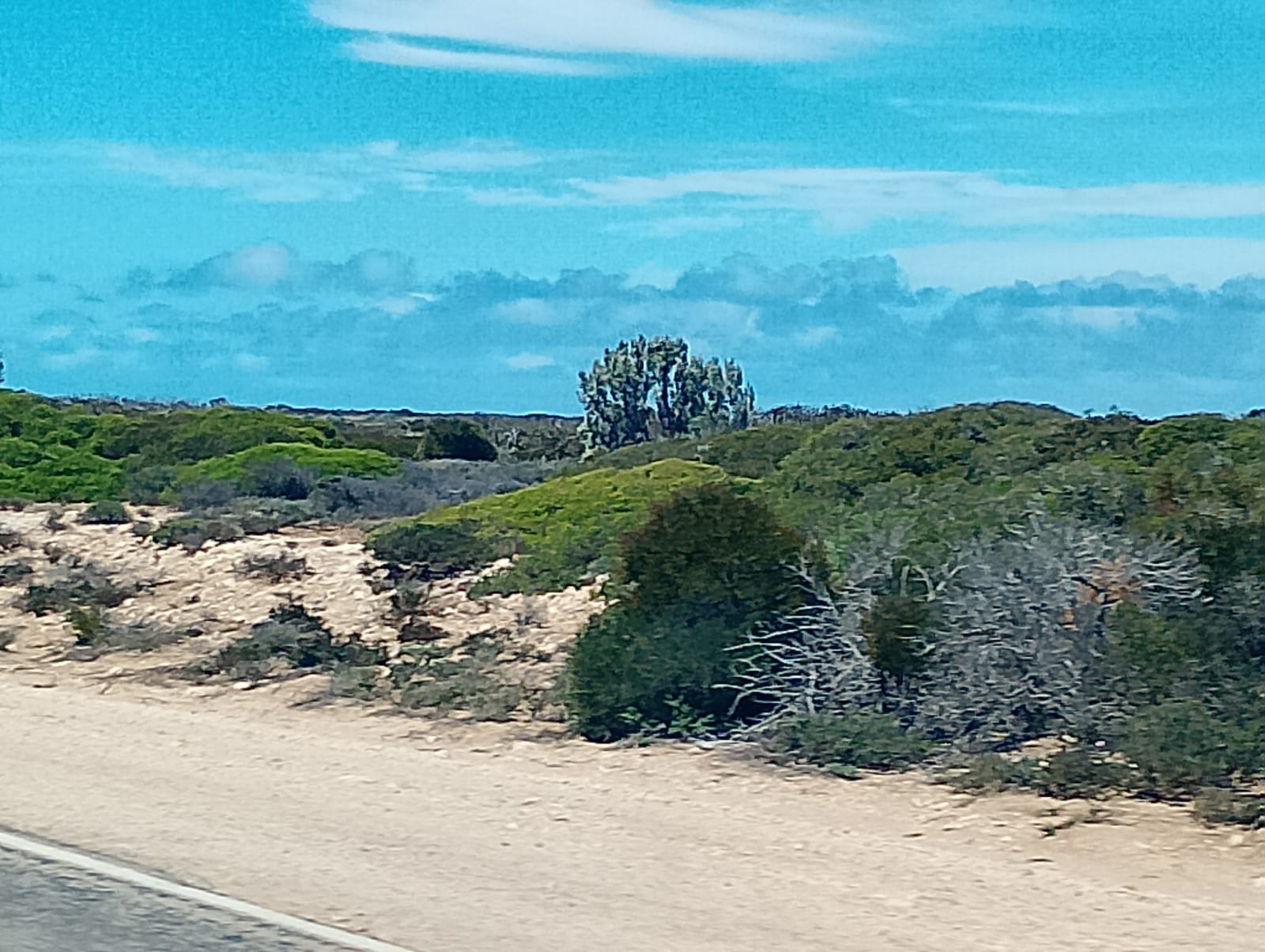
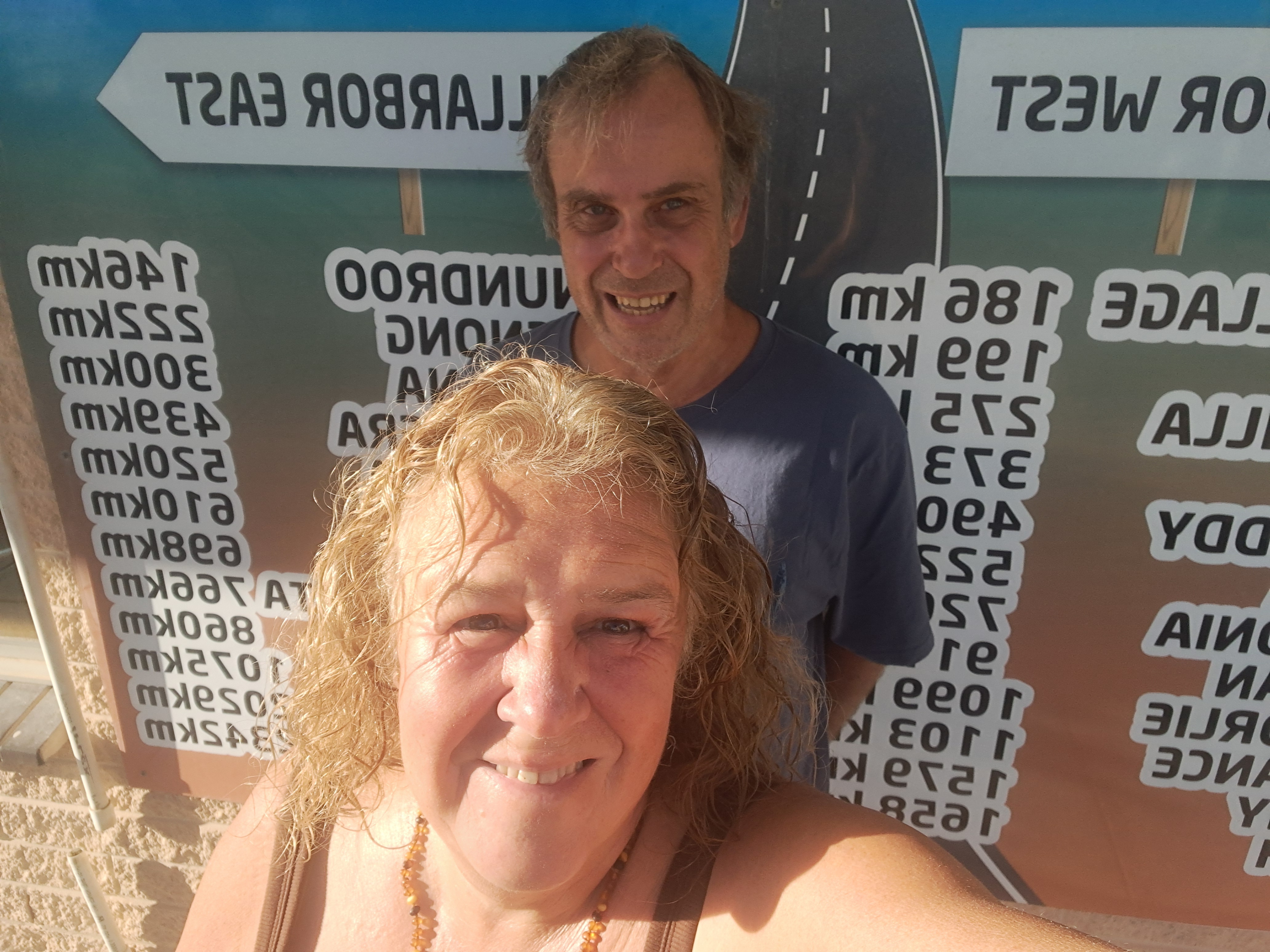


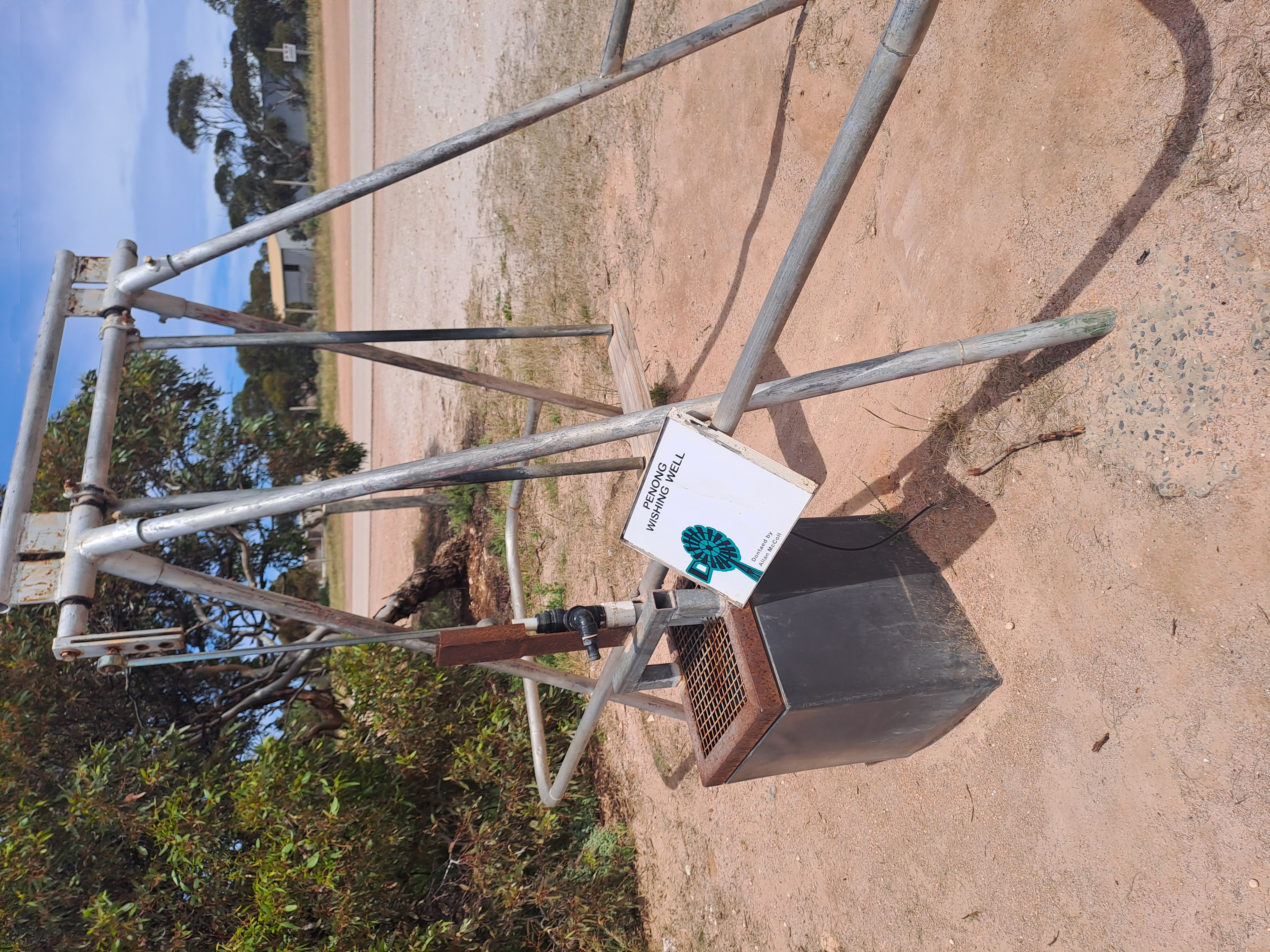
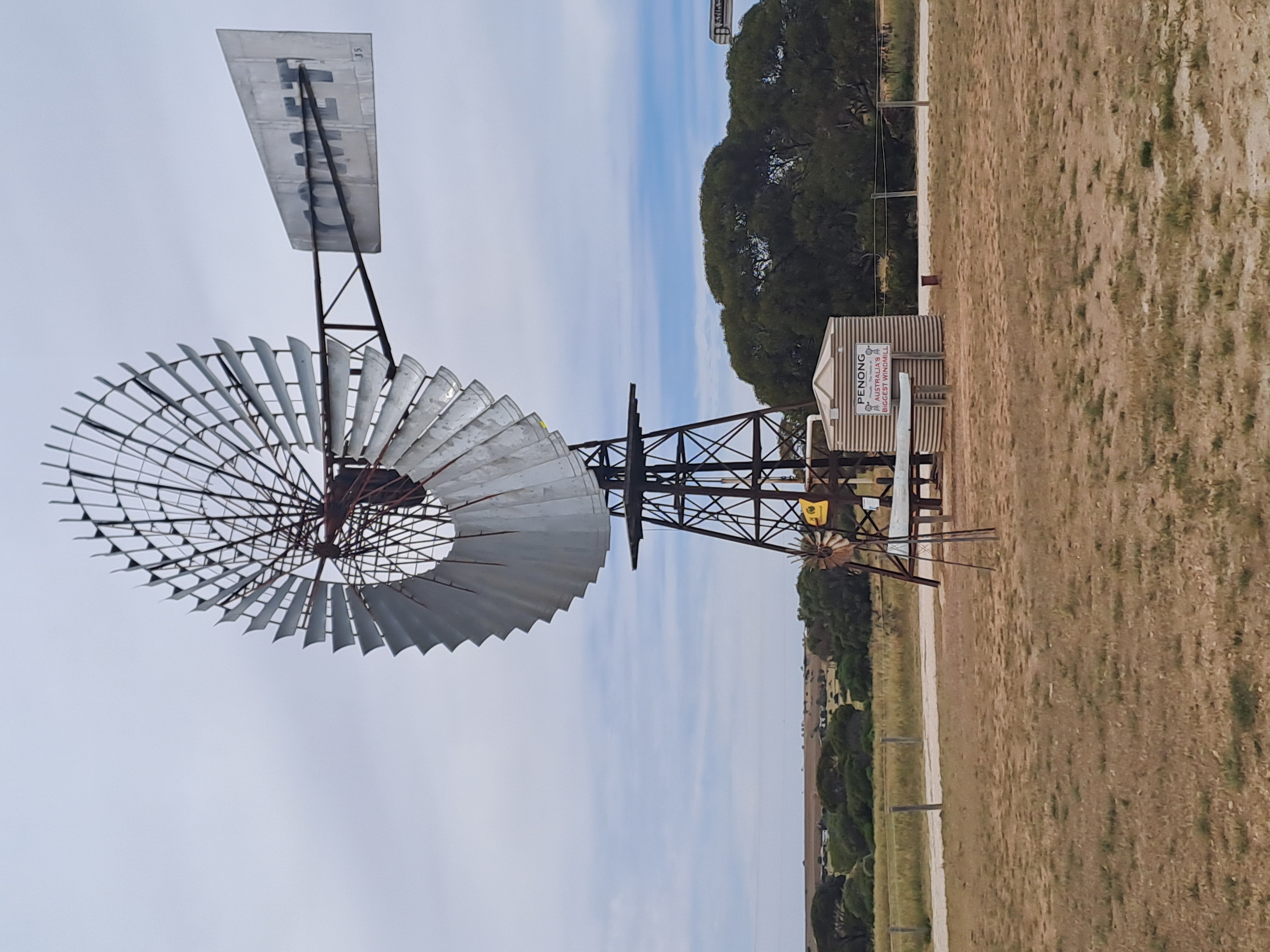
The Nullarbor plain officially ended, but the road was still sufficiently boring that we stopped at the windmill farm. The proud accomplishment of the local community, it included a swing pump. We also stopped at the Pantry – pan tree as this was a local landmark.


And on to civilisation of a sort at Port Augusta. The sign at the entry declaring it a dry zone said a lot about the town and it’s inhabitants. The railings around the campsite and being locked in said the rest. It was a busy port for iron ore


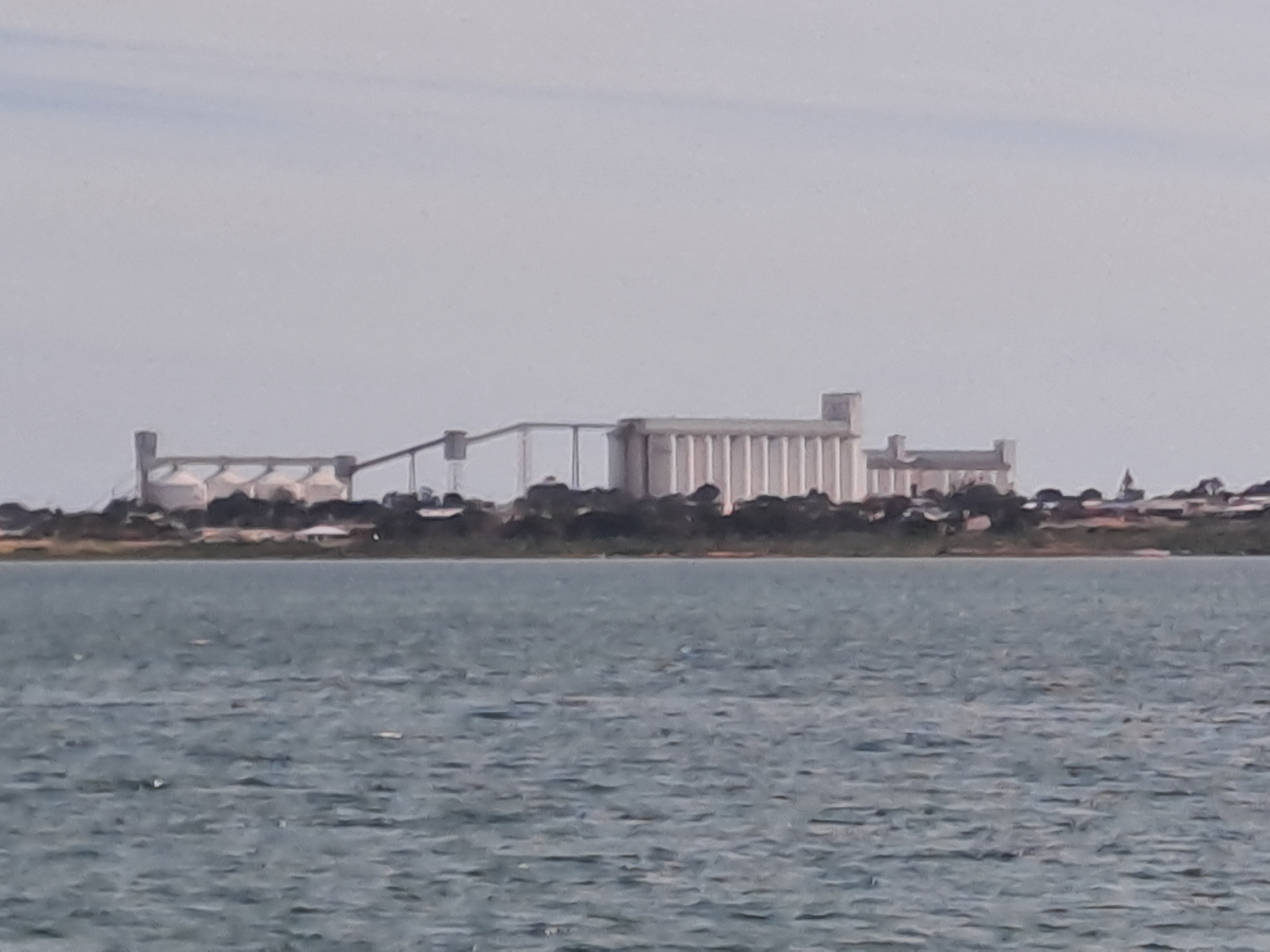
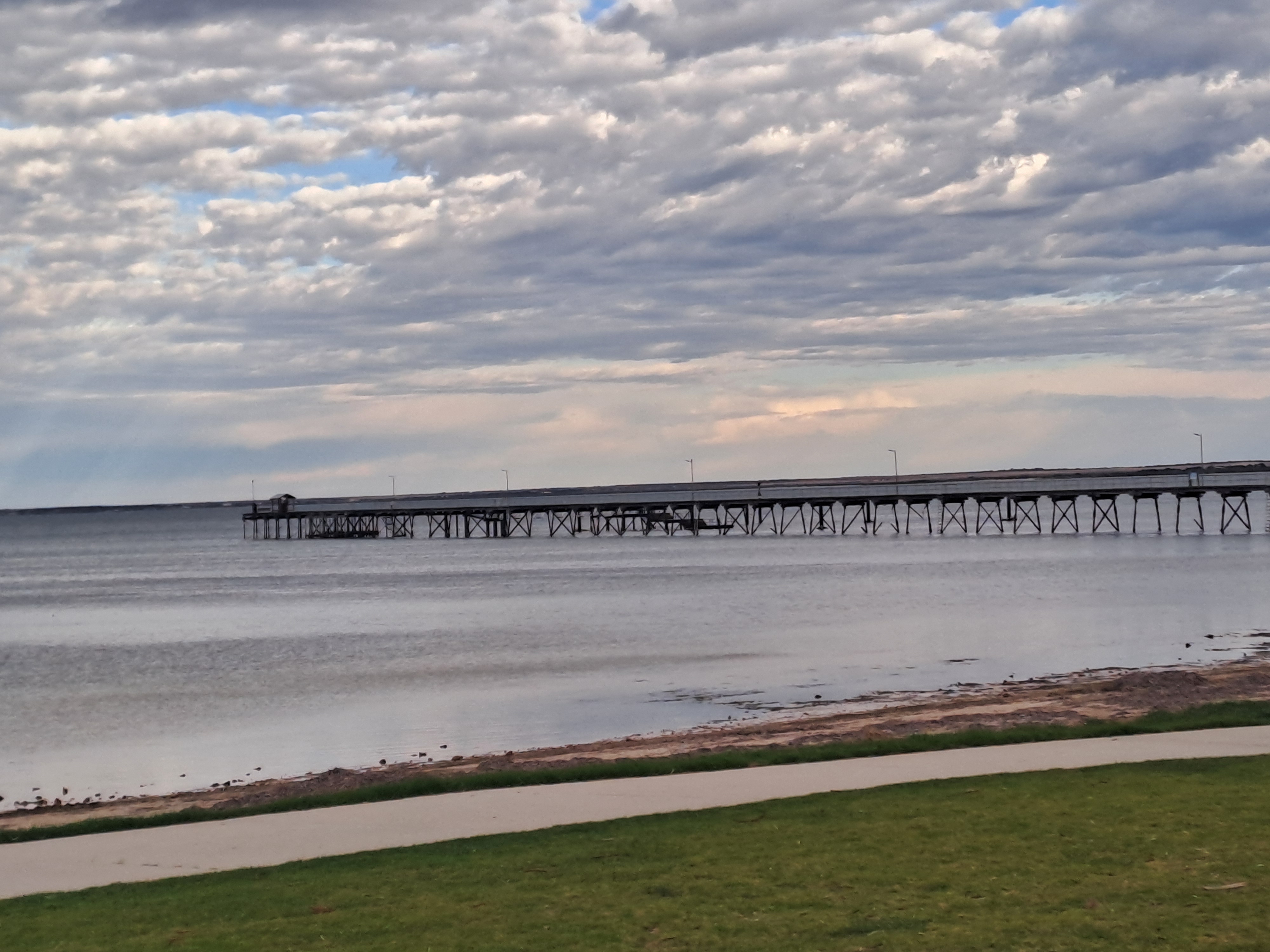
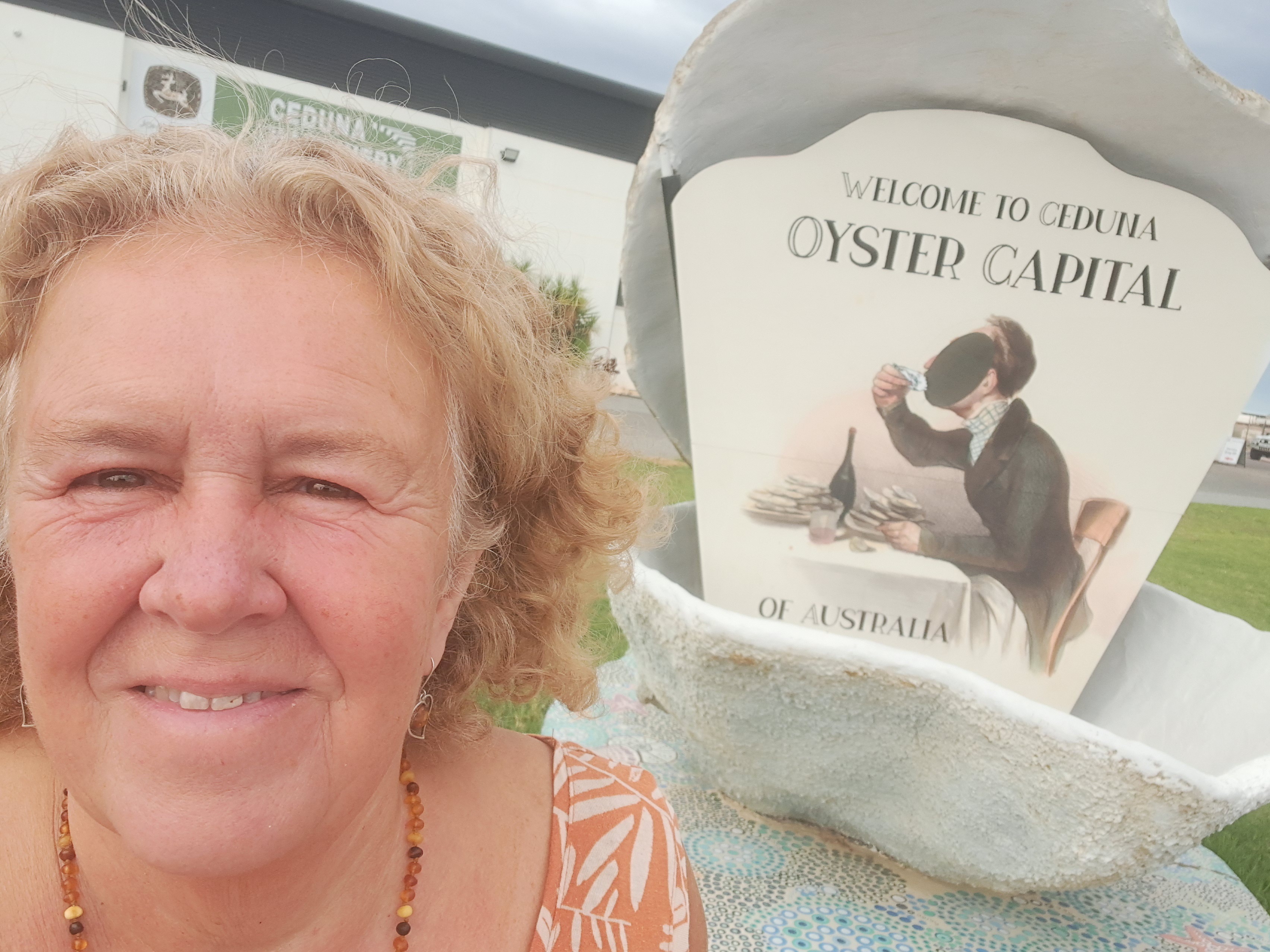
It was also, we discovered, the oyster capital
Now we headed up to the interior heading back into the bush, and for Coober Pedy the opal mining town. We turned off onto the Stuart Highway. The same Stuart Highway we were on back in Northern Territory but hundreds of kilometres away on the opposite side of Australia.
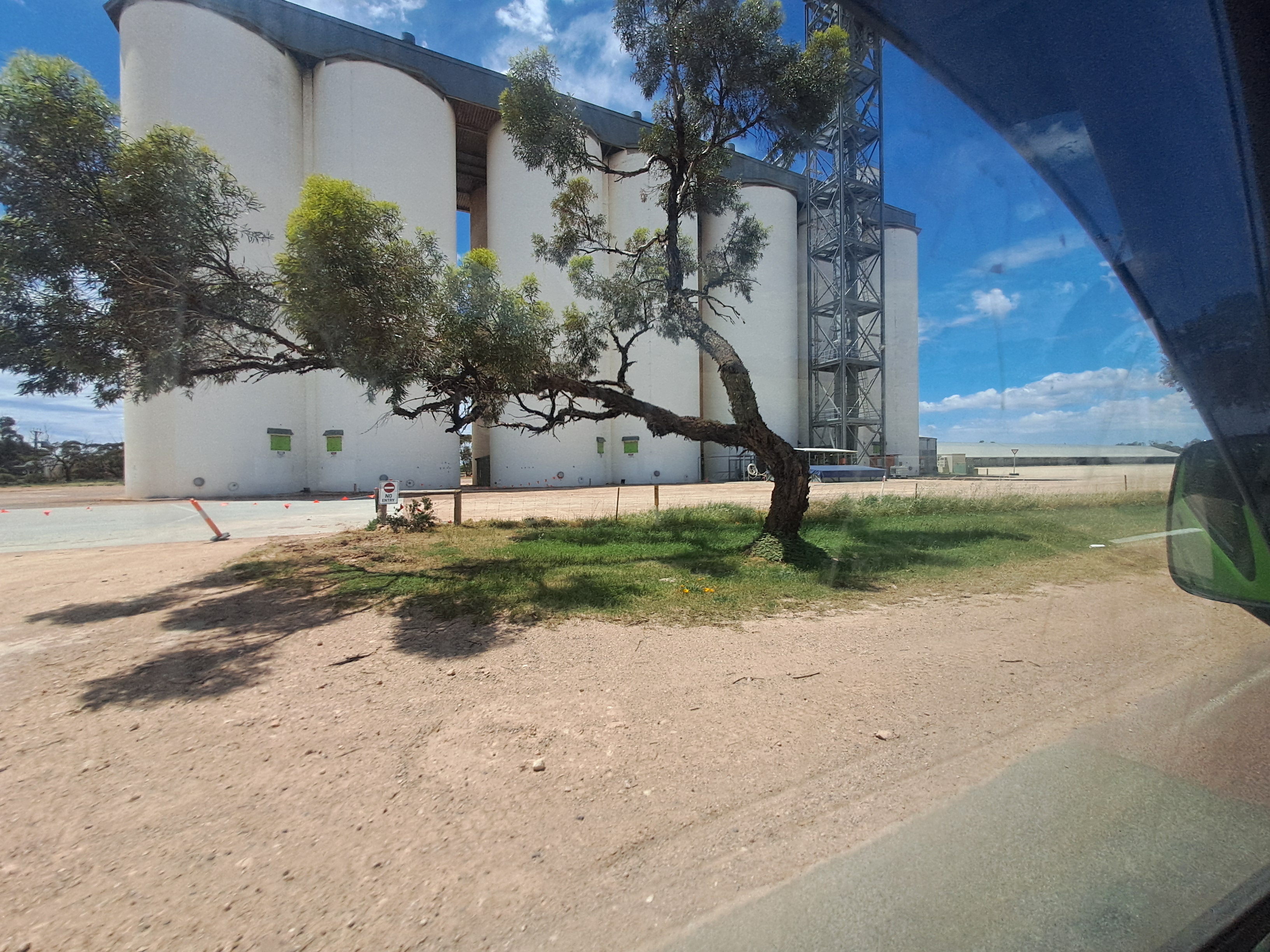
Initially there were small towns and massive grain silos and an inland jetty, built as a joke so that Wirrulla could keep up with the coastal towns.
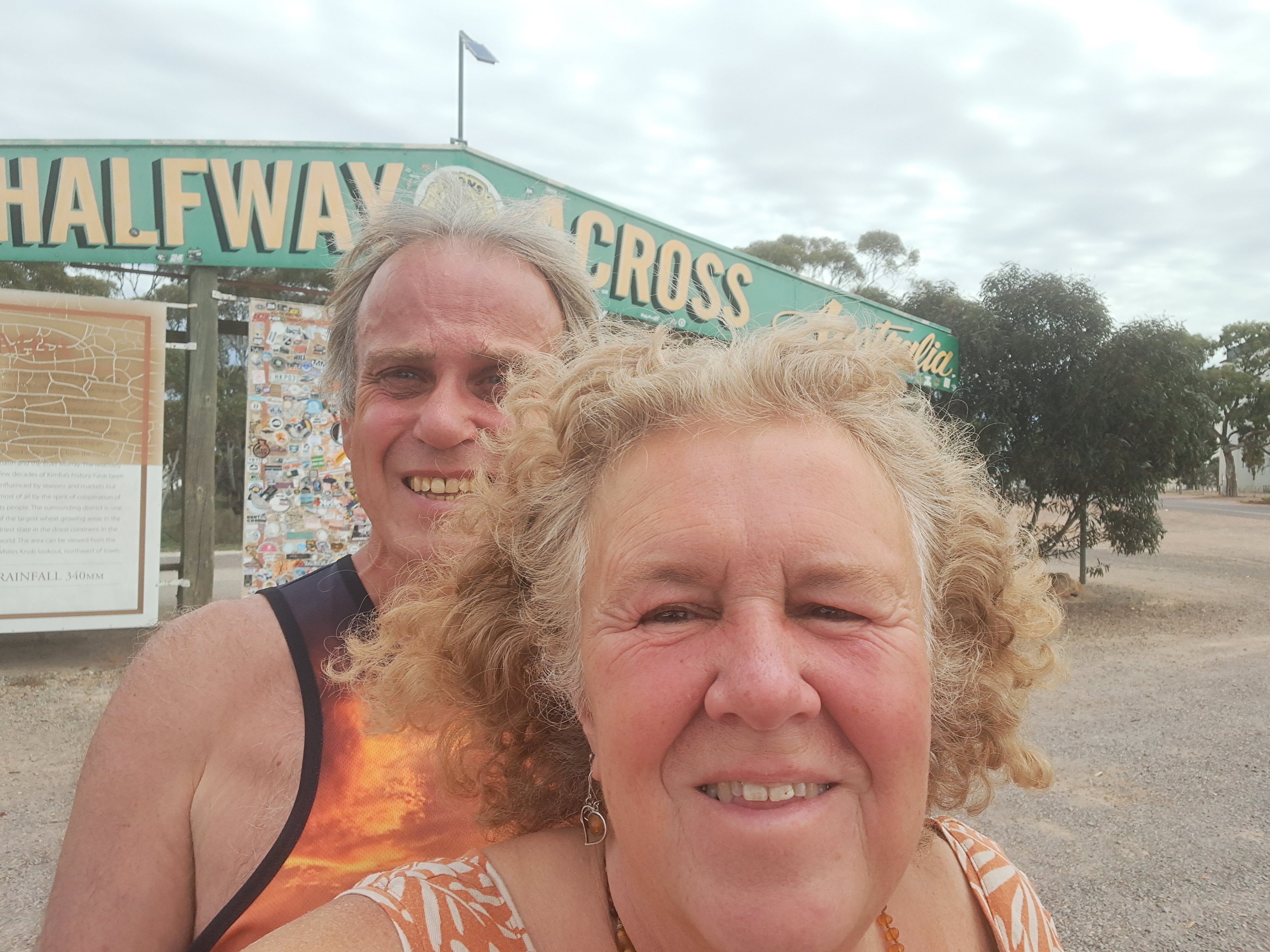
Following the big theme we found the big Galah the pink bird below at Kimber where we also found the halfway around Australia sign. Unfortunately the map of Australia there has been completely covered with stickers so I’m not quite sure why this place is halfway way around Australia.



rhb


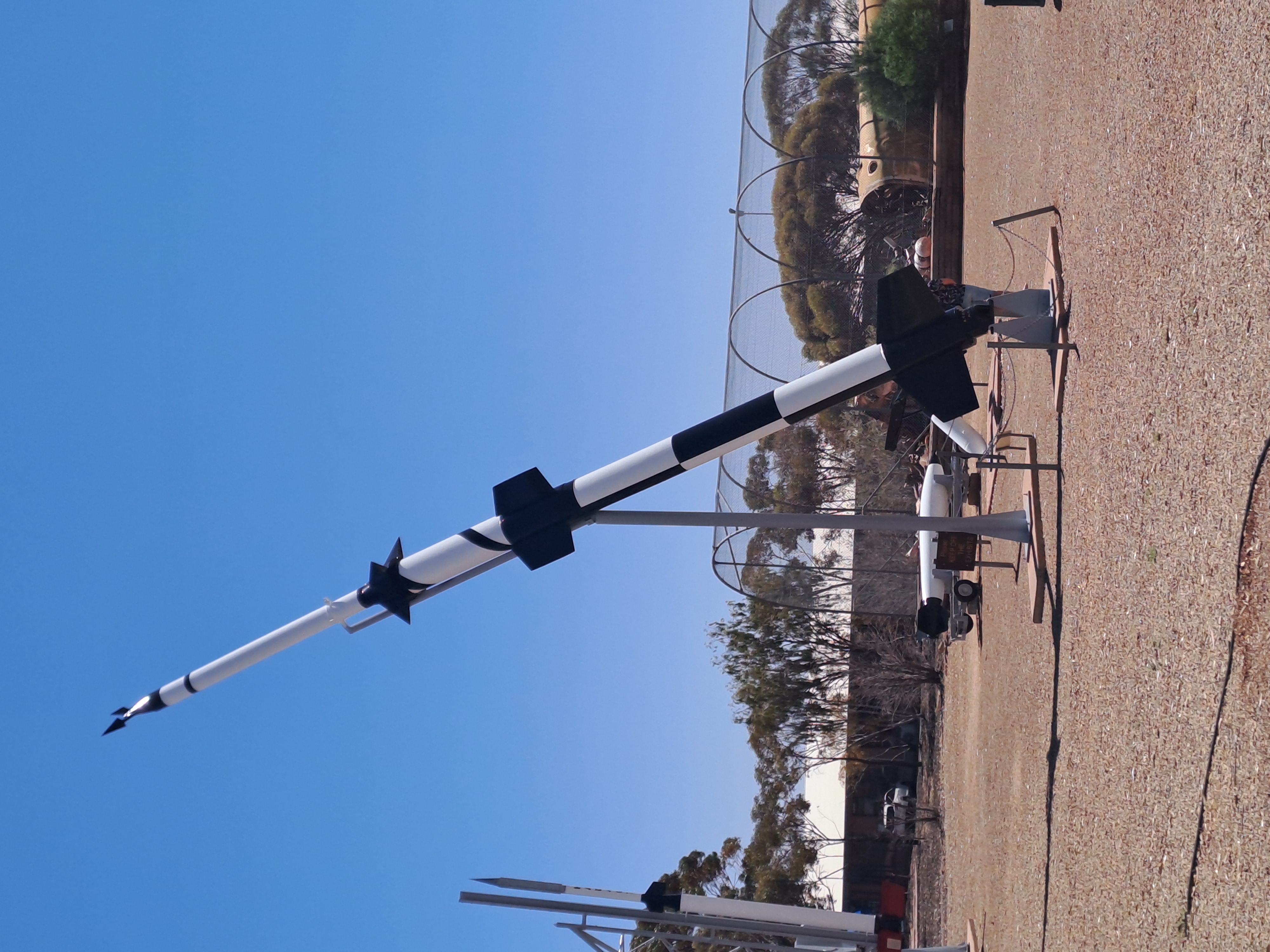
We turned off to visit Woomera. A restricted military area now allowing visitors into the town, but not necessarily to all the rest of the area. The area was established in 1947 after a search through several countries including Canada and Wales for a suitable isolated place for bomb testing. This was a response to the V2 bomb, the first intercontinental missile, developed by Germany in the second world war. It has a rocket park showing some of the missiles developed and tested there. All set out on display.



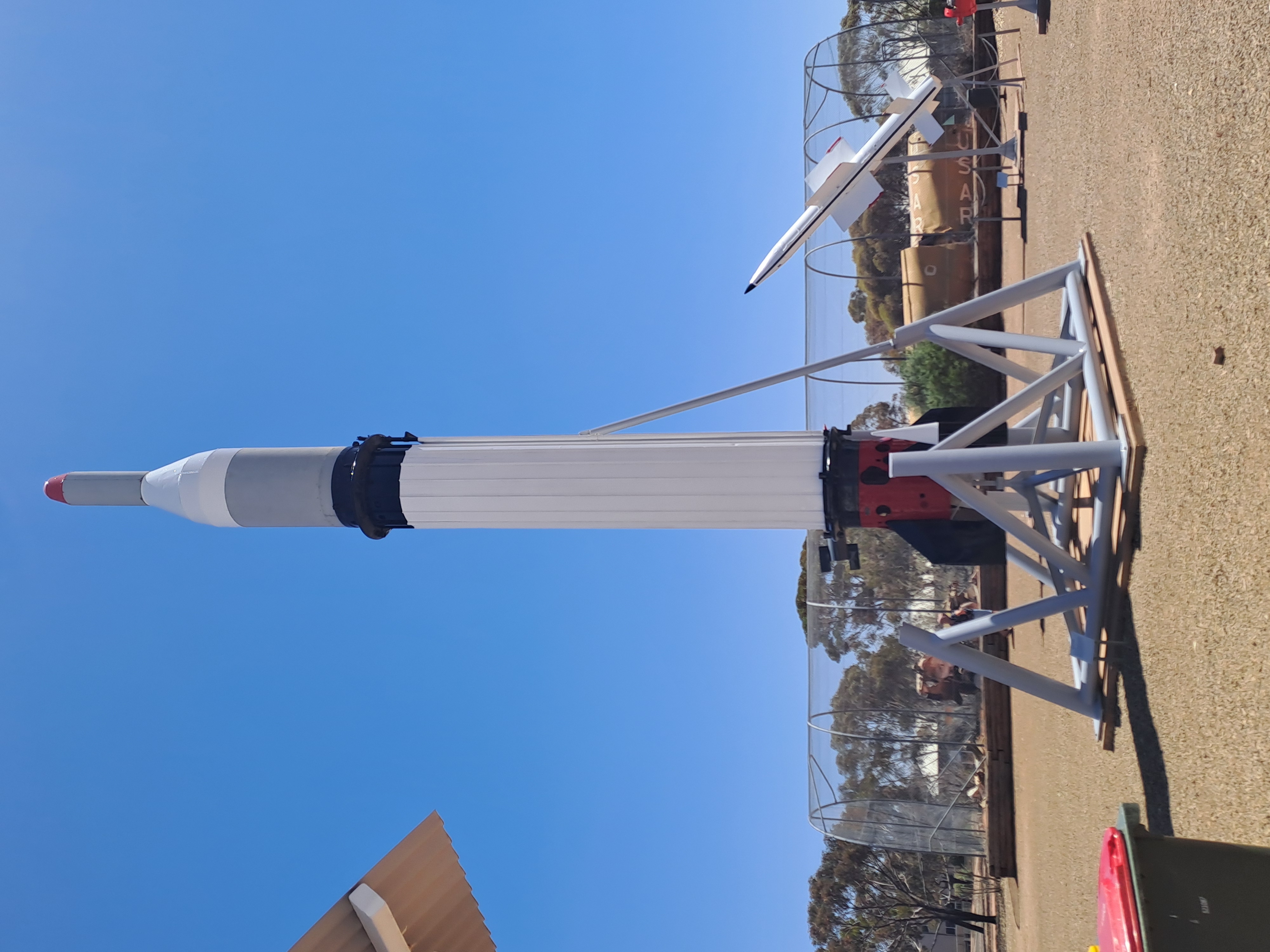
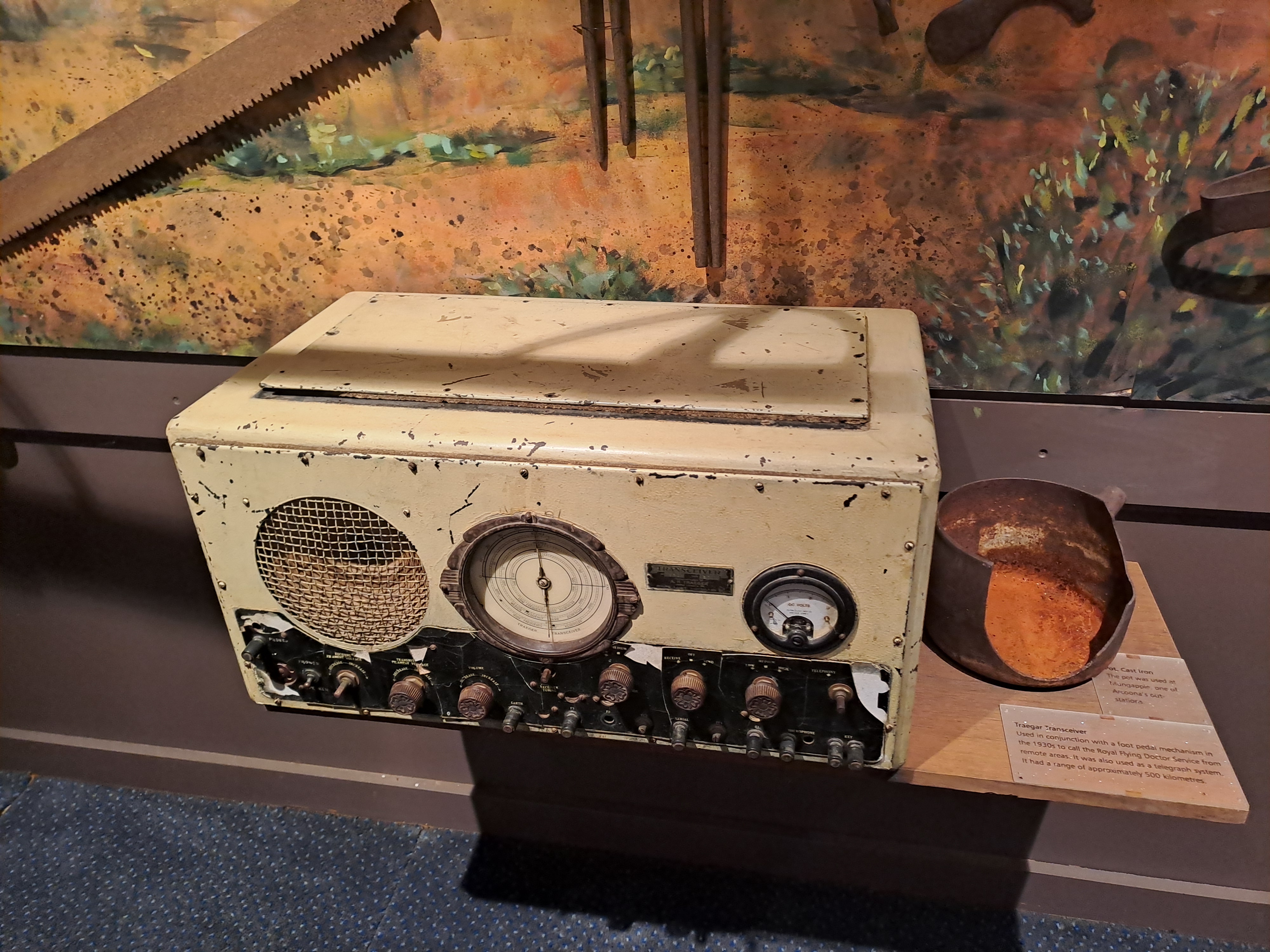
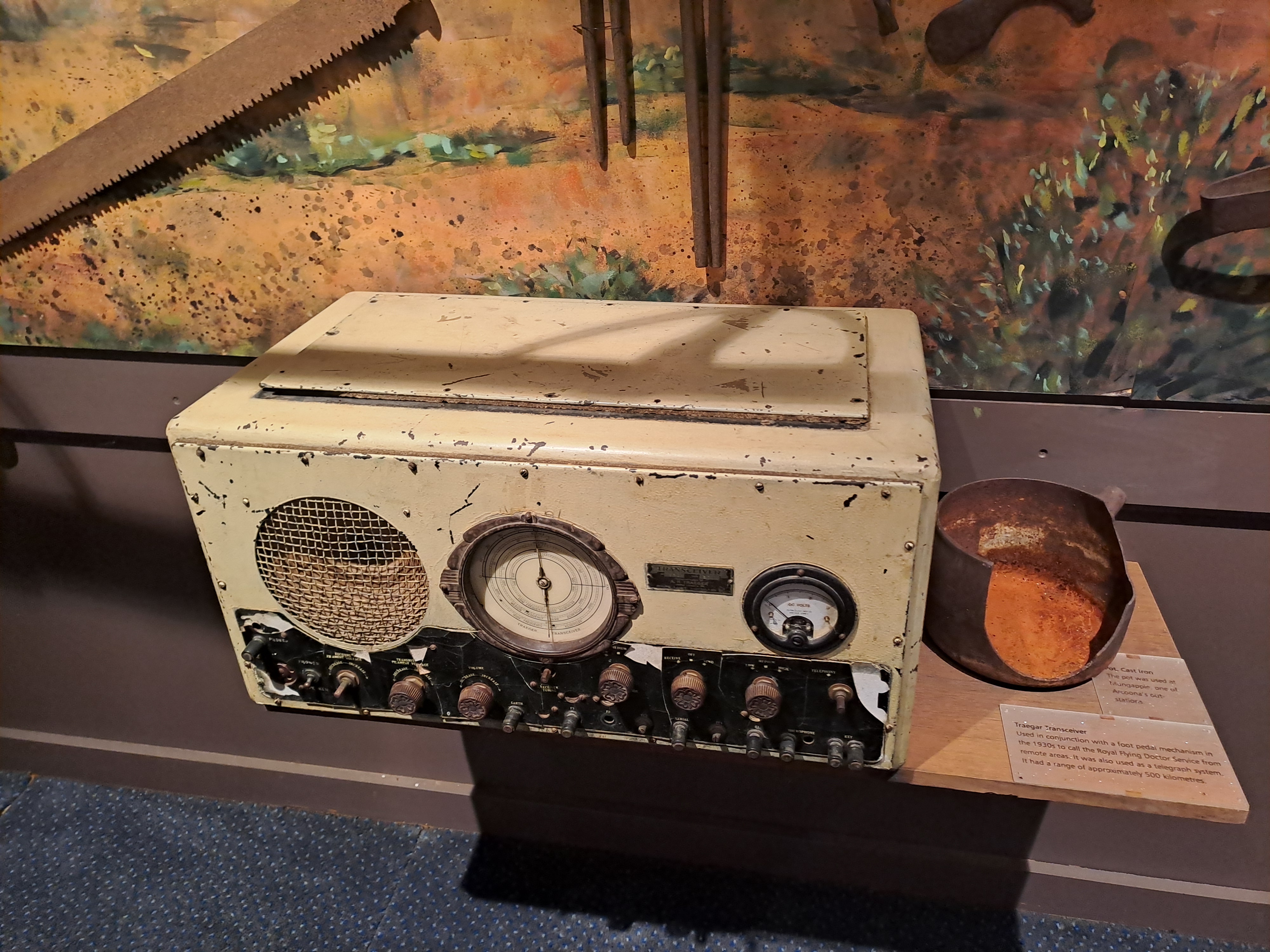
The museum inside has more of the history and it is at this point that you realise how antiquated these missiles are. This was in the days before micro chips and mobile phones. They didn’t even have a telephone at the start. Below is the telephone switch board and telephone from when there were installed.
The museum is dedicated to Len Beadell, a surveyor who did all the work involved in surveying the land for the infrastructure. Someone who seemed very at home roughing it in the bush.
As the town developed it became important to have the facilities to keep the troops isolated there happy. Two Olympic size swimming pools were built and cinemas etc. Women were encouraged to the area for work and of course to keep the men happy. Thus followed many weddings and pregnancies.


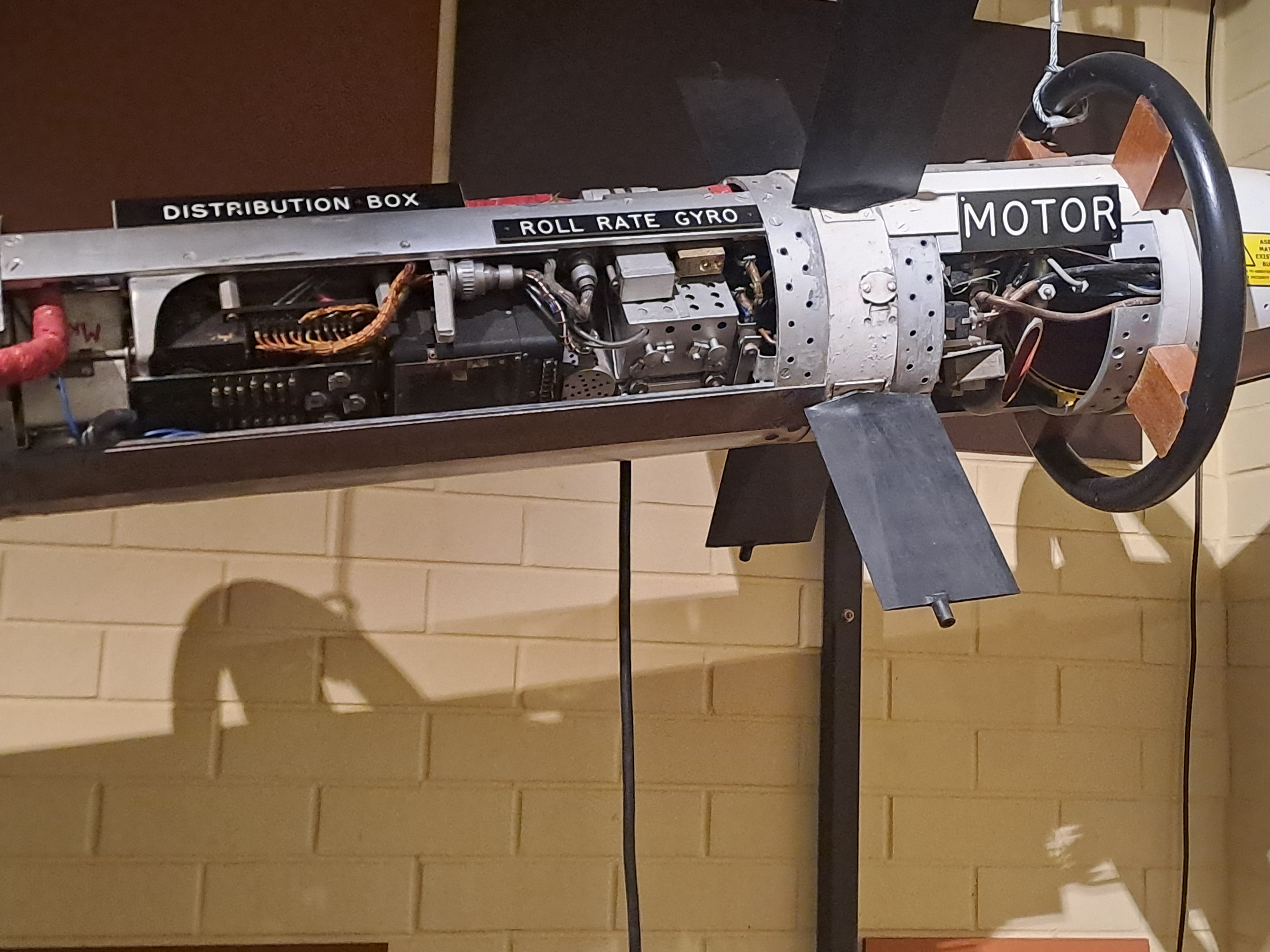
A look inside some of the rockets reveals how technology has come on since the ones on display were built
Testing is still going on and we were constantly being warned by flashing signs that the road might be closed for short periods, due to this.


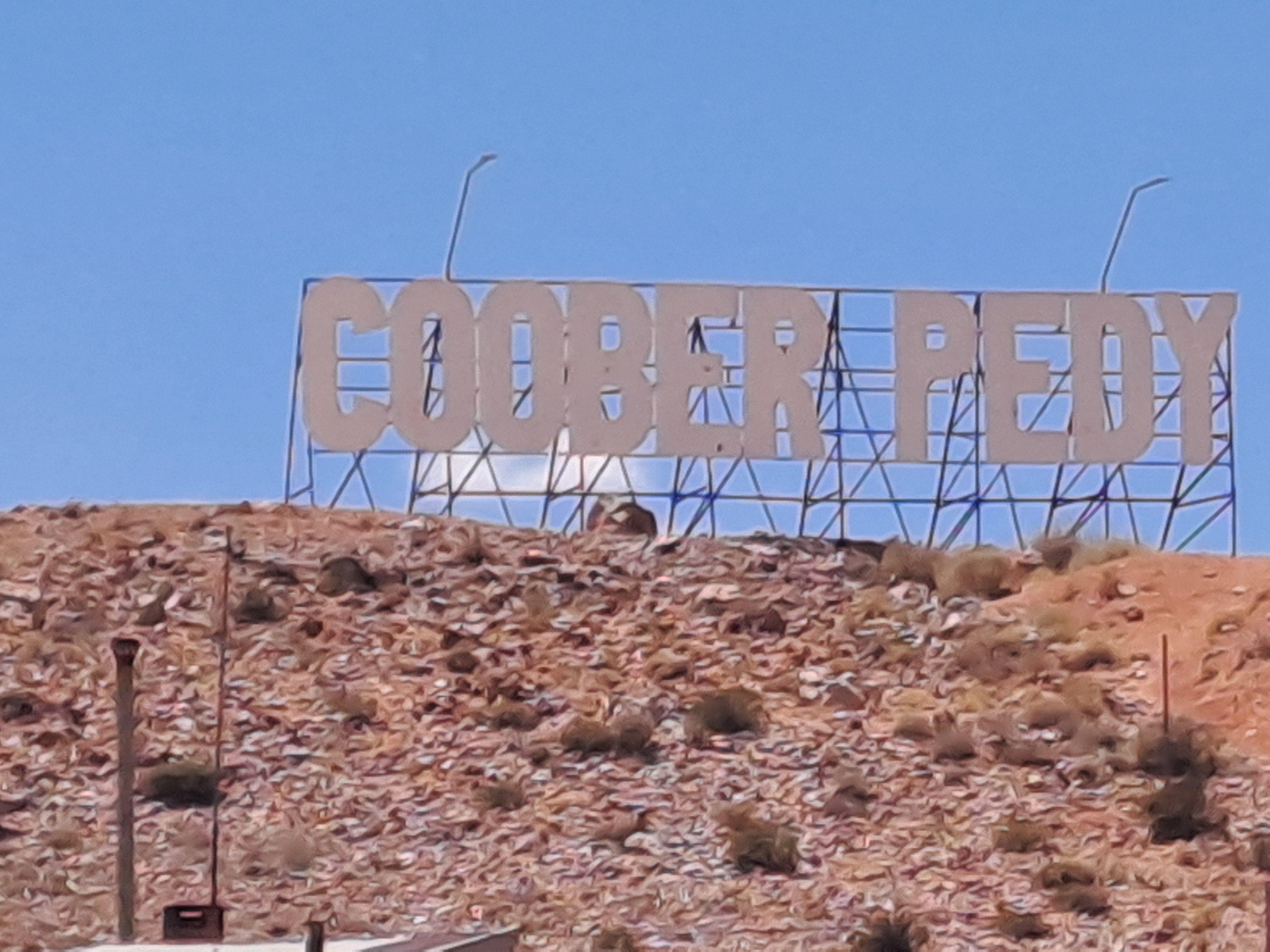
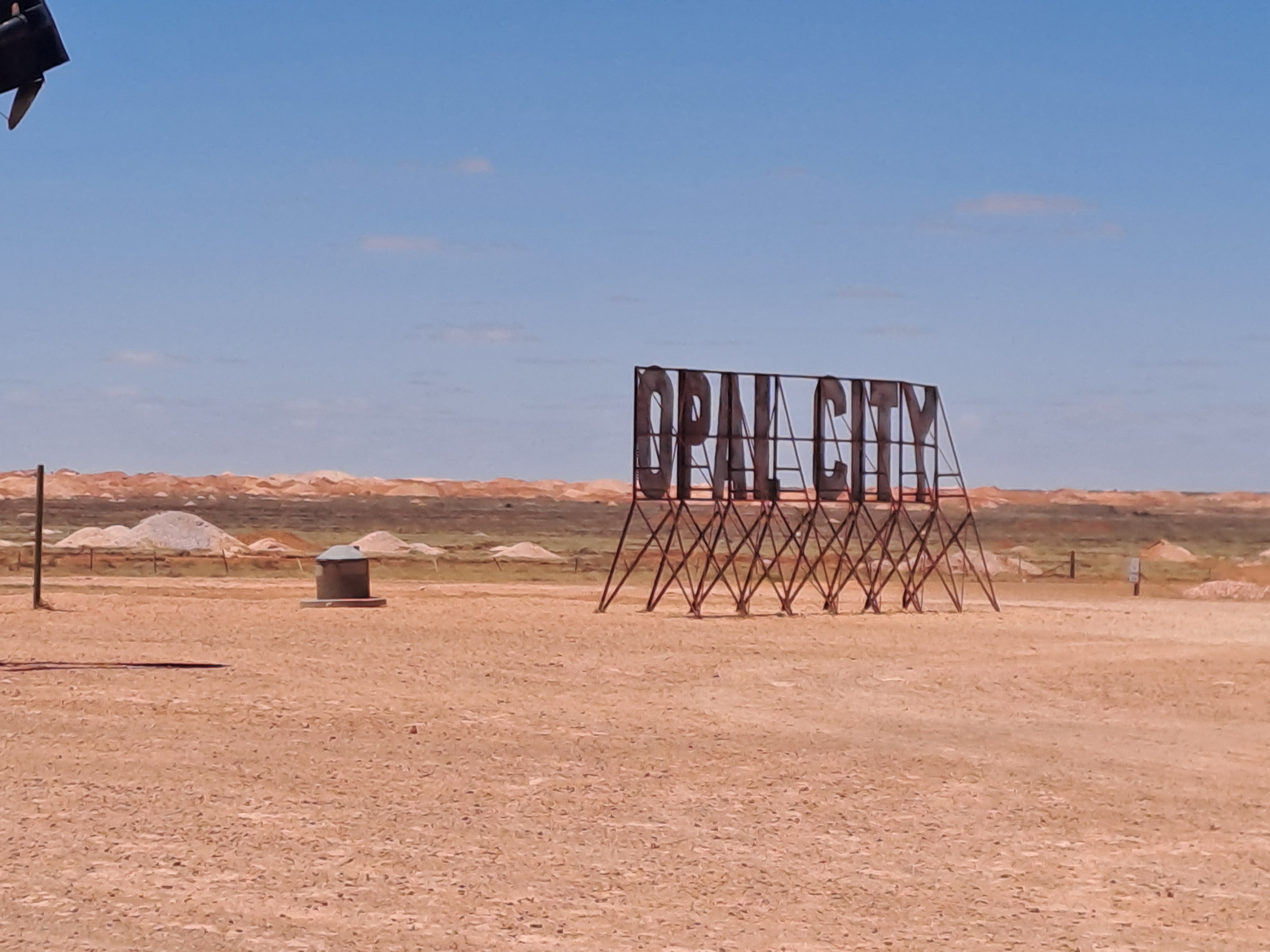
We were back in the bush again and the ground got more and more bare as we approached Coober Pedy. Here the focus is totally on opals. Everyone’s job is dependant on them and everyone is there for them.
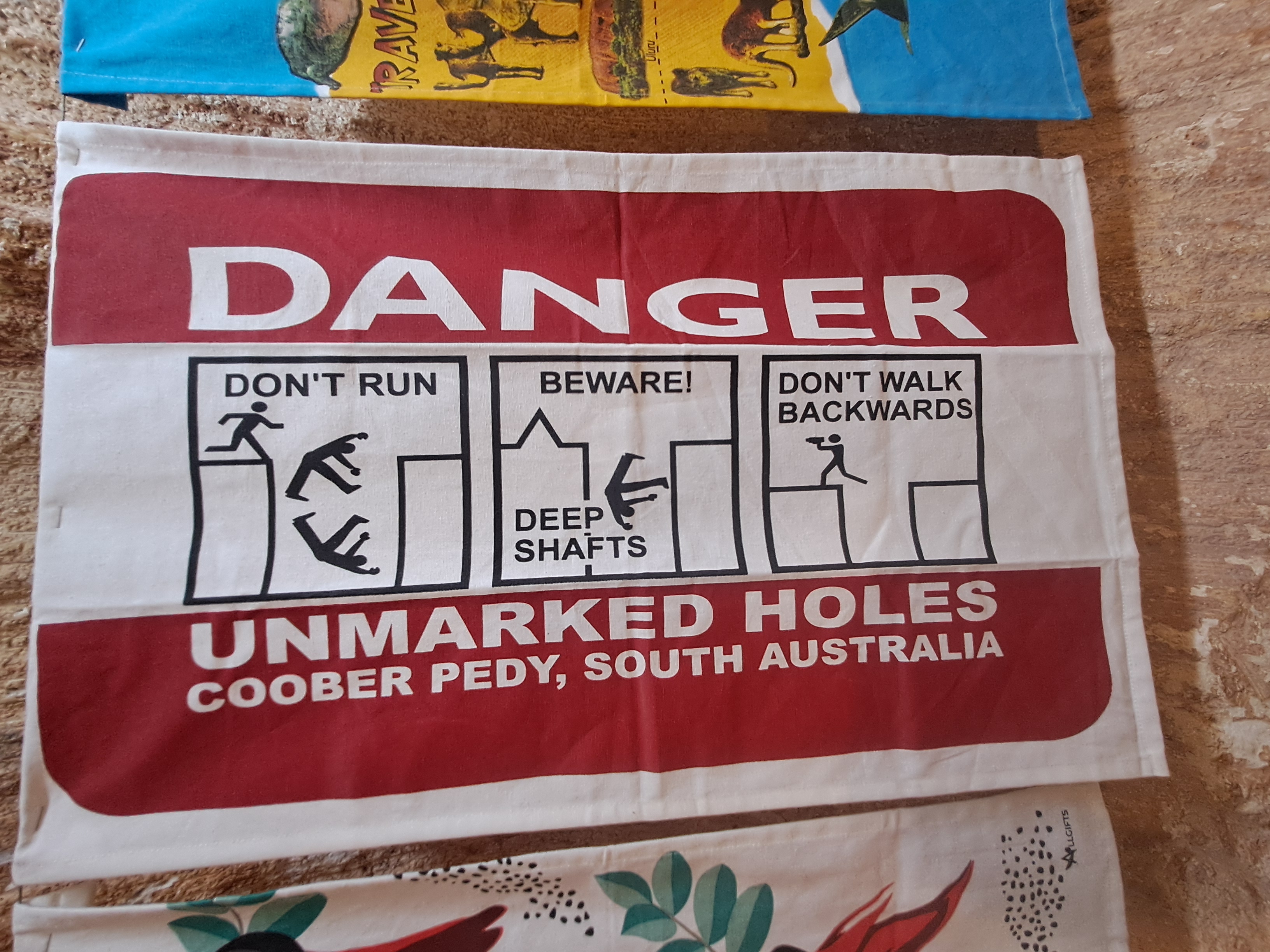
As we approached the town we started seeing piles of earth and big signs warning don’t run, deep shafts, don’t walk backwards.
The history of Cooper Pedy started in 1915 when a gold prospector found opals while hiding from a sand storm.
The journey to Coober Pedy took us 2 days driving but back then with no roads it was a long dry walk to this point in the middle of nowhere. In the summer the temperature is in the 50s, so just getting there alive was a serious logistical problem.
Once there surviving was the next issue. Homes were built into the hillside to provide cool accommodation and a water source had to be found. The challenges here have formed a community very proud of its accomplishments and very independent. Also everyone we met was in love with opals.
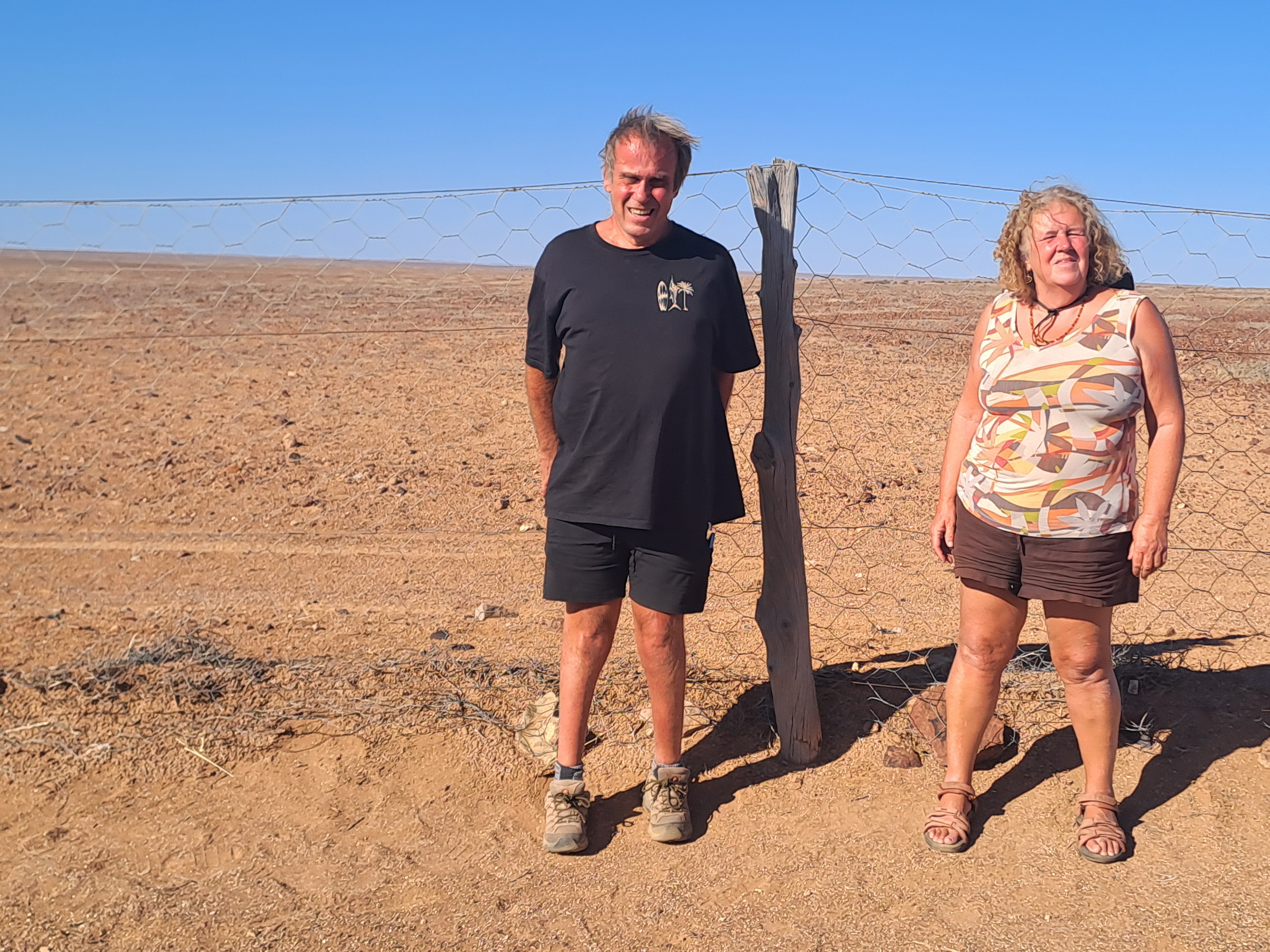
One of the first things we saw here was the dingo fence. This started off as individual stations fencing off their land, then the group decided it would be more economical to join together and eventually the government built the fence. Thus marks the change from beef farming to sheep farming. At the cattle grids we were shown how deep it is between the grid so nothing can get across.


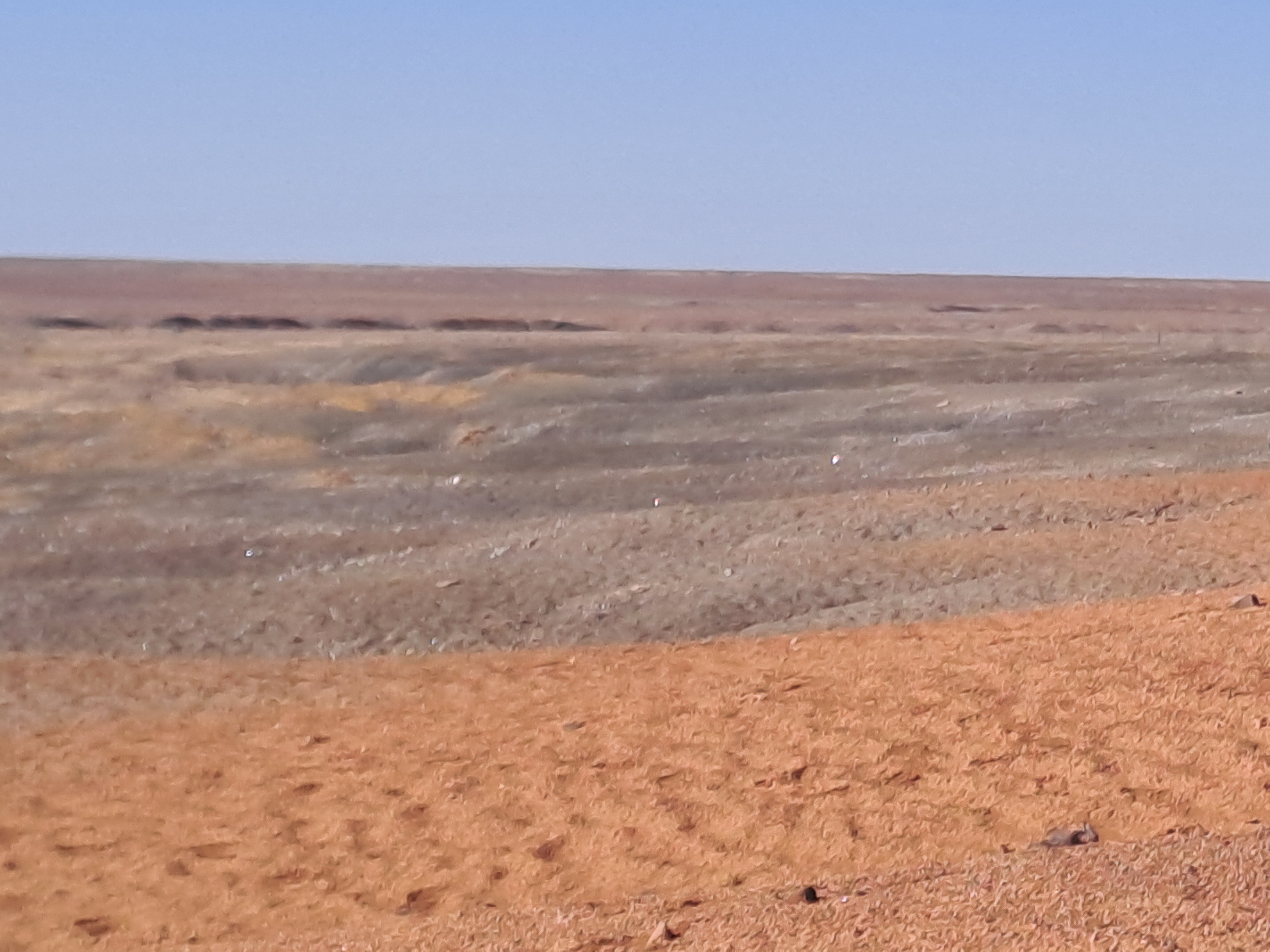

We got taken on a tour by a fellow who obviously loves his home and is proud of it but wasn’t the most politically correct person. We thought there might be a fall out between him and one of the other people on the tour.
On one hand it is right to give the land back to its original owners, on the other hand it is difficult to lose your right to wander the land where you used to and to find that some if the protective measures you’d planned are no longer welcomed. Our guide felt very strongly about the land.
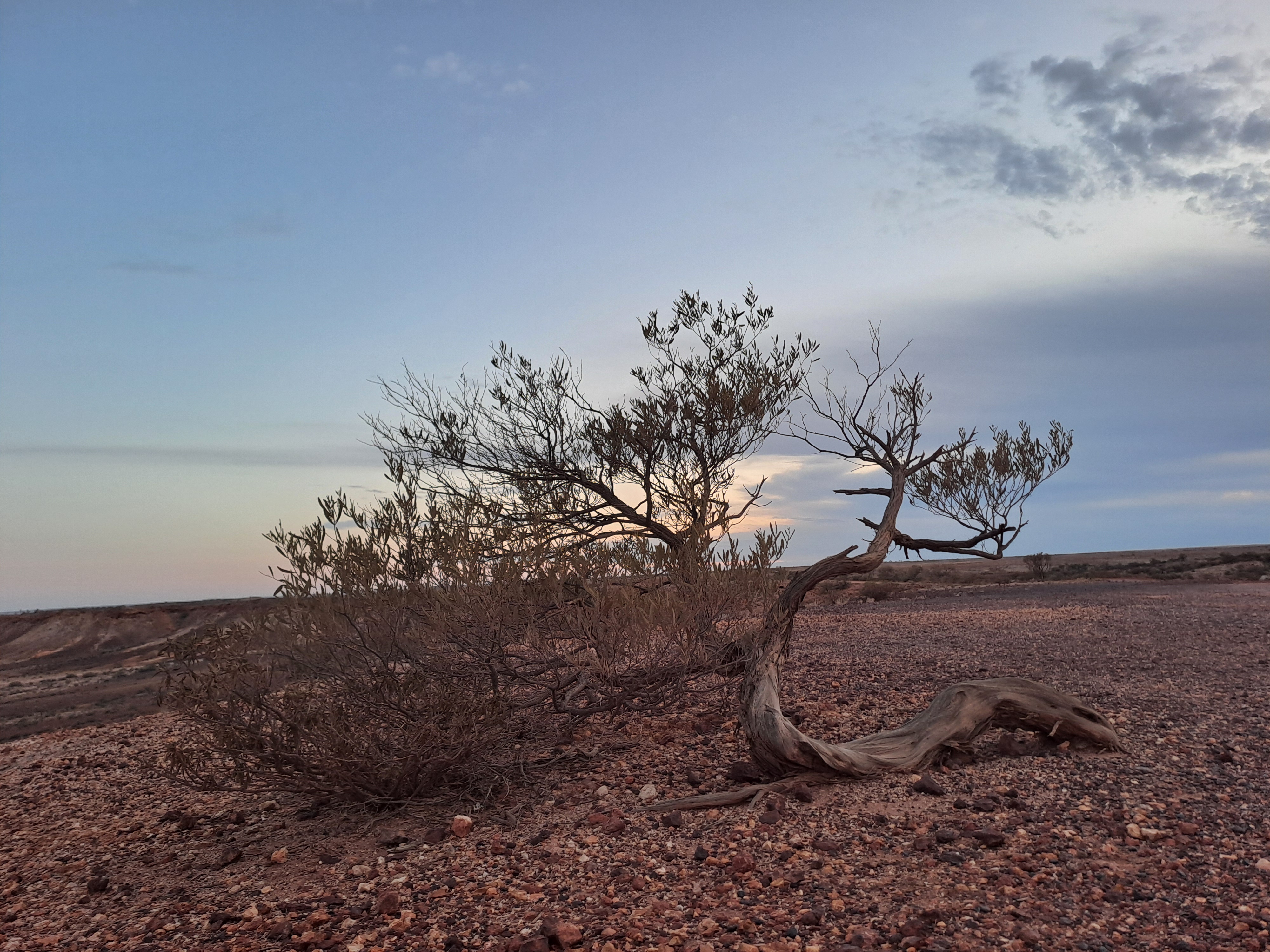
The land around had its own beauty despite being barren
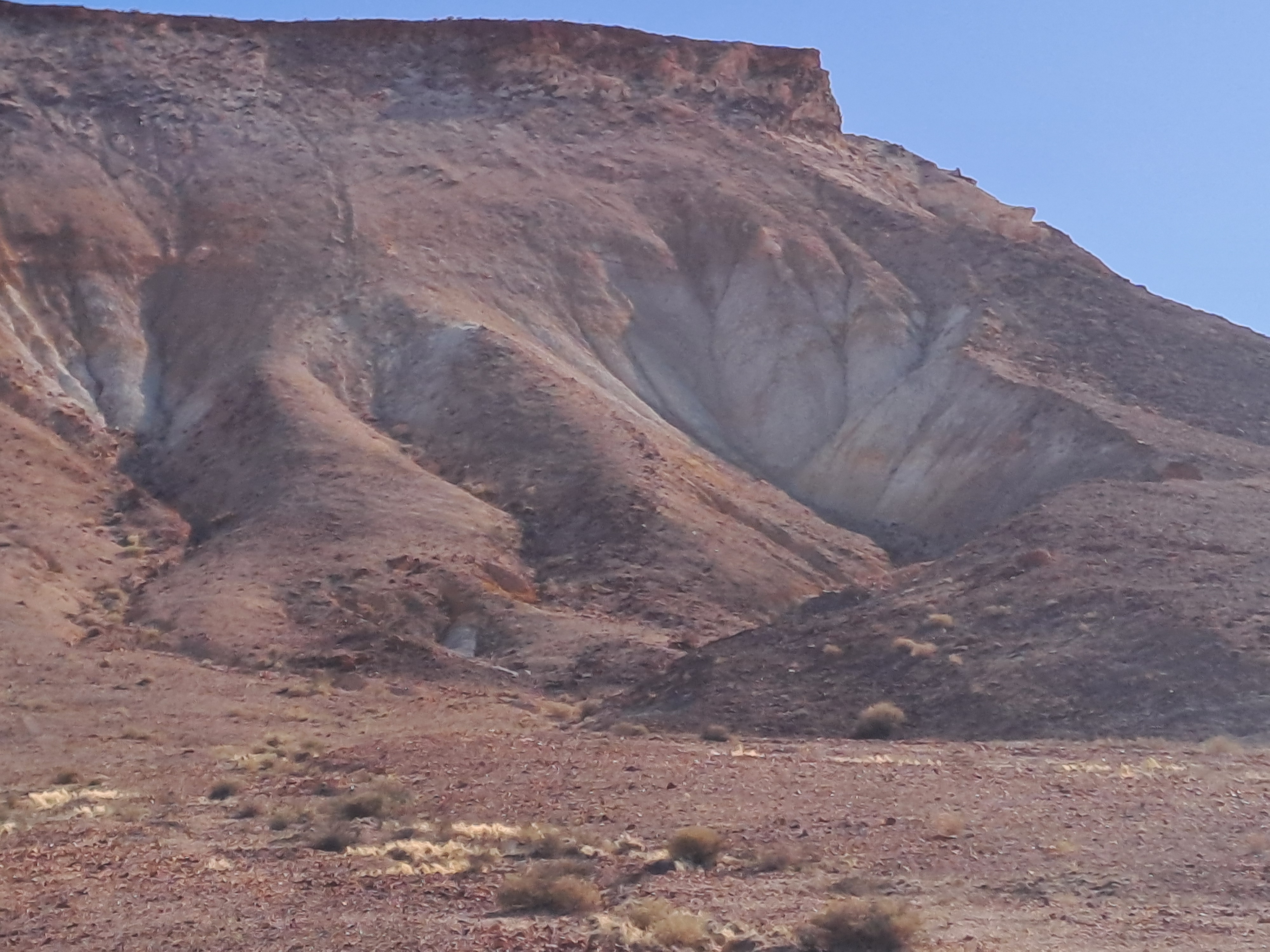
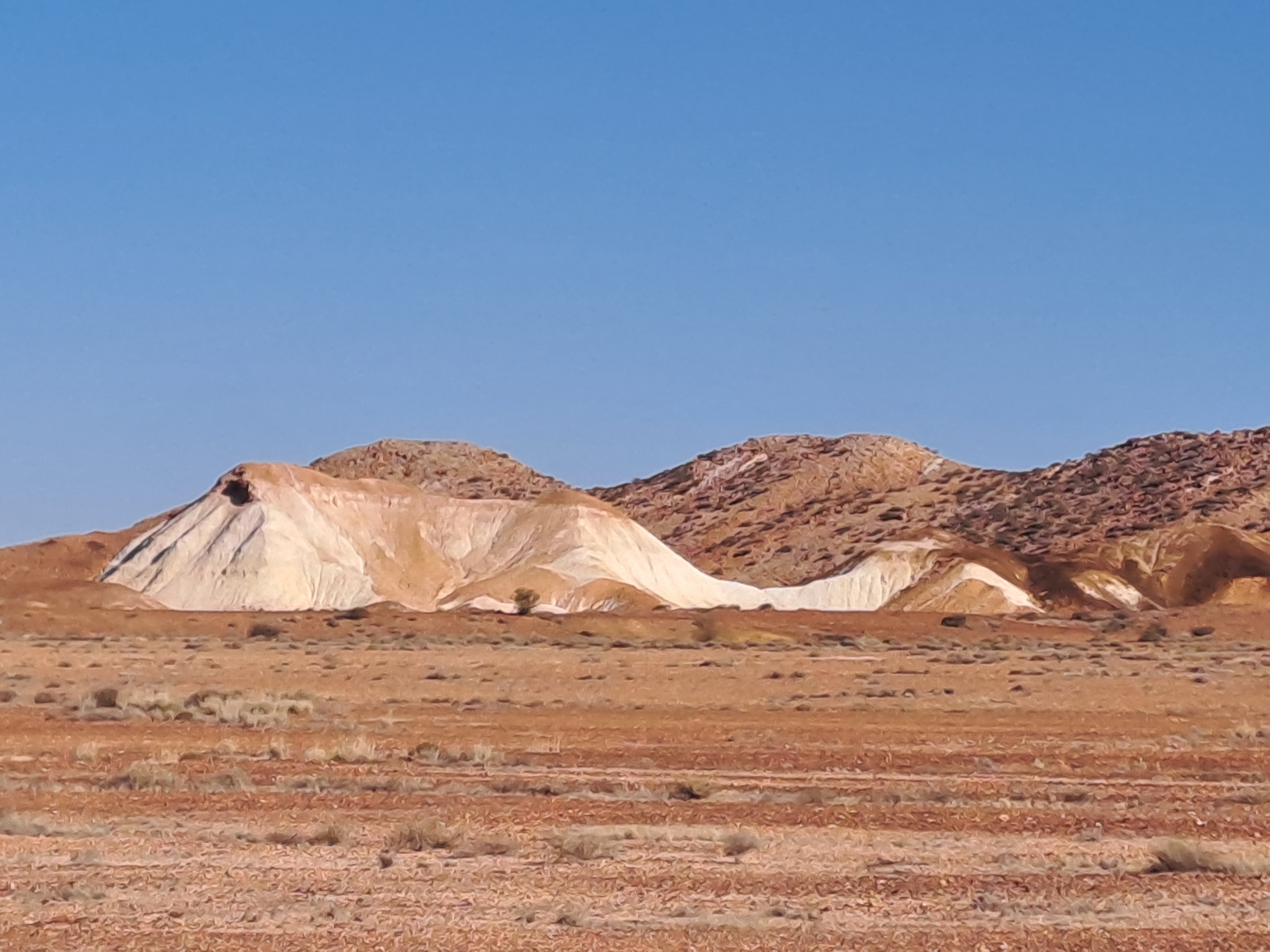
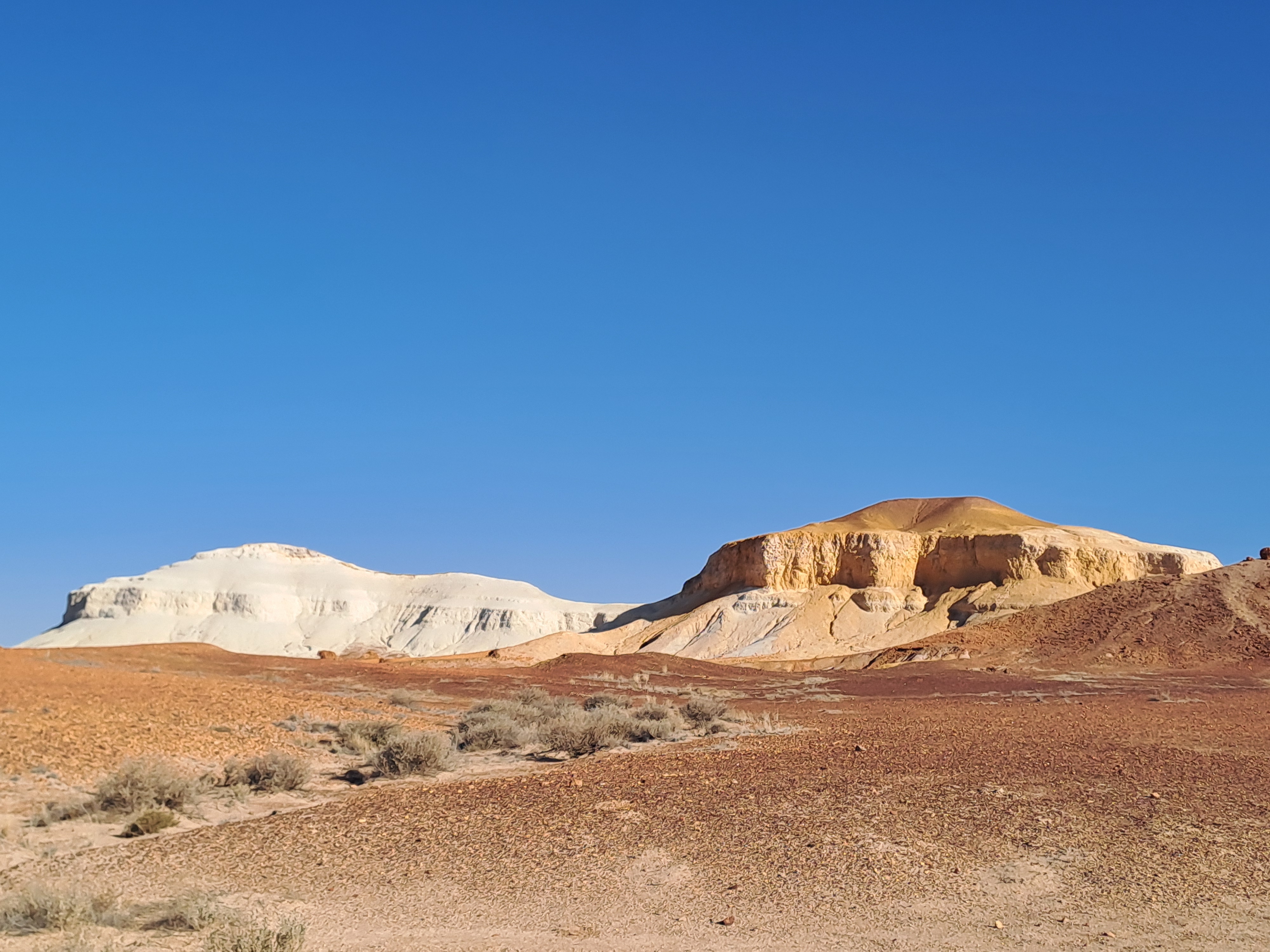
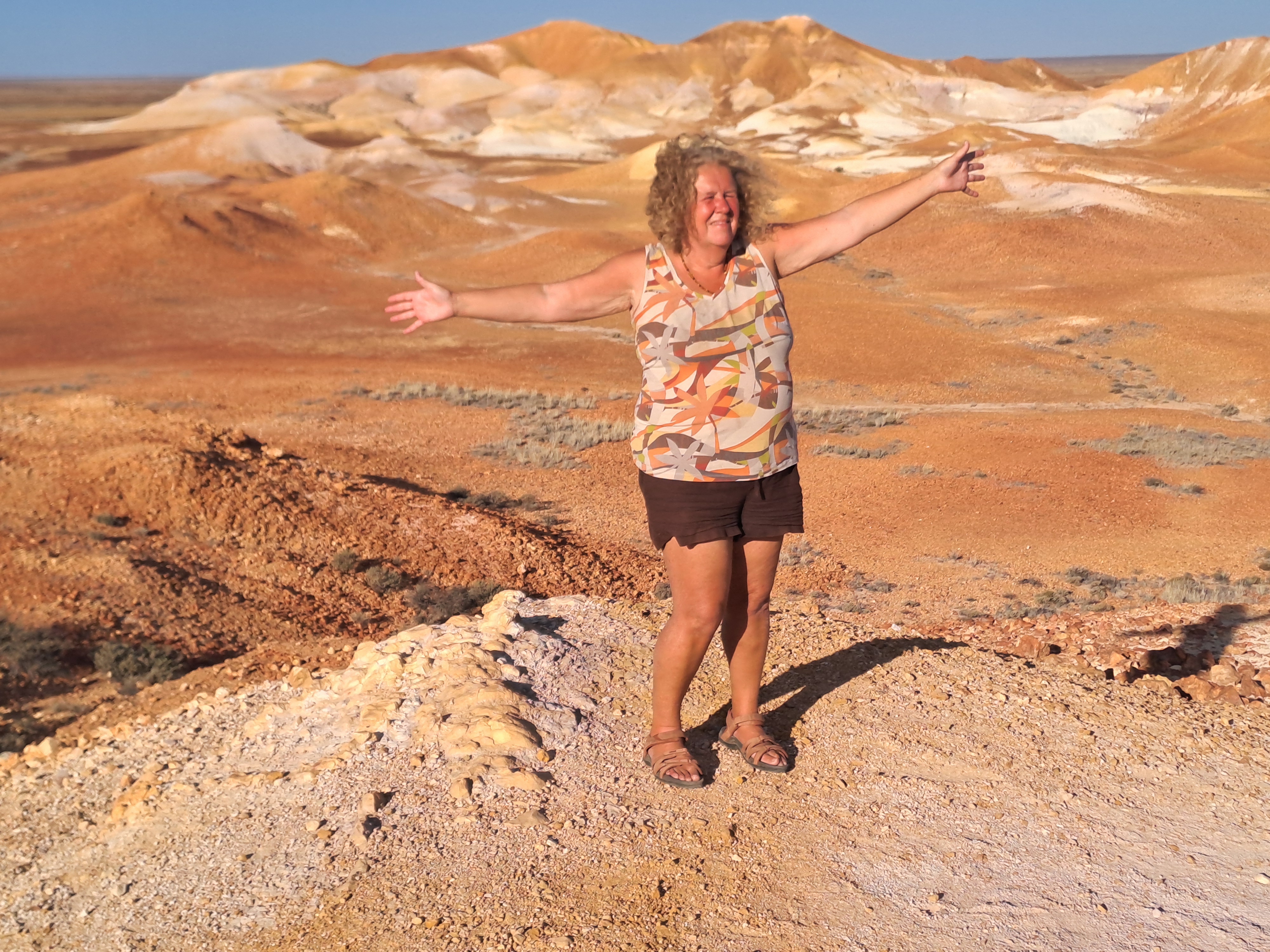
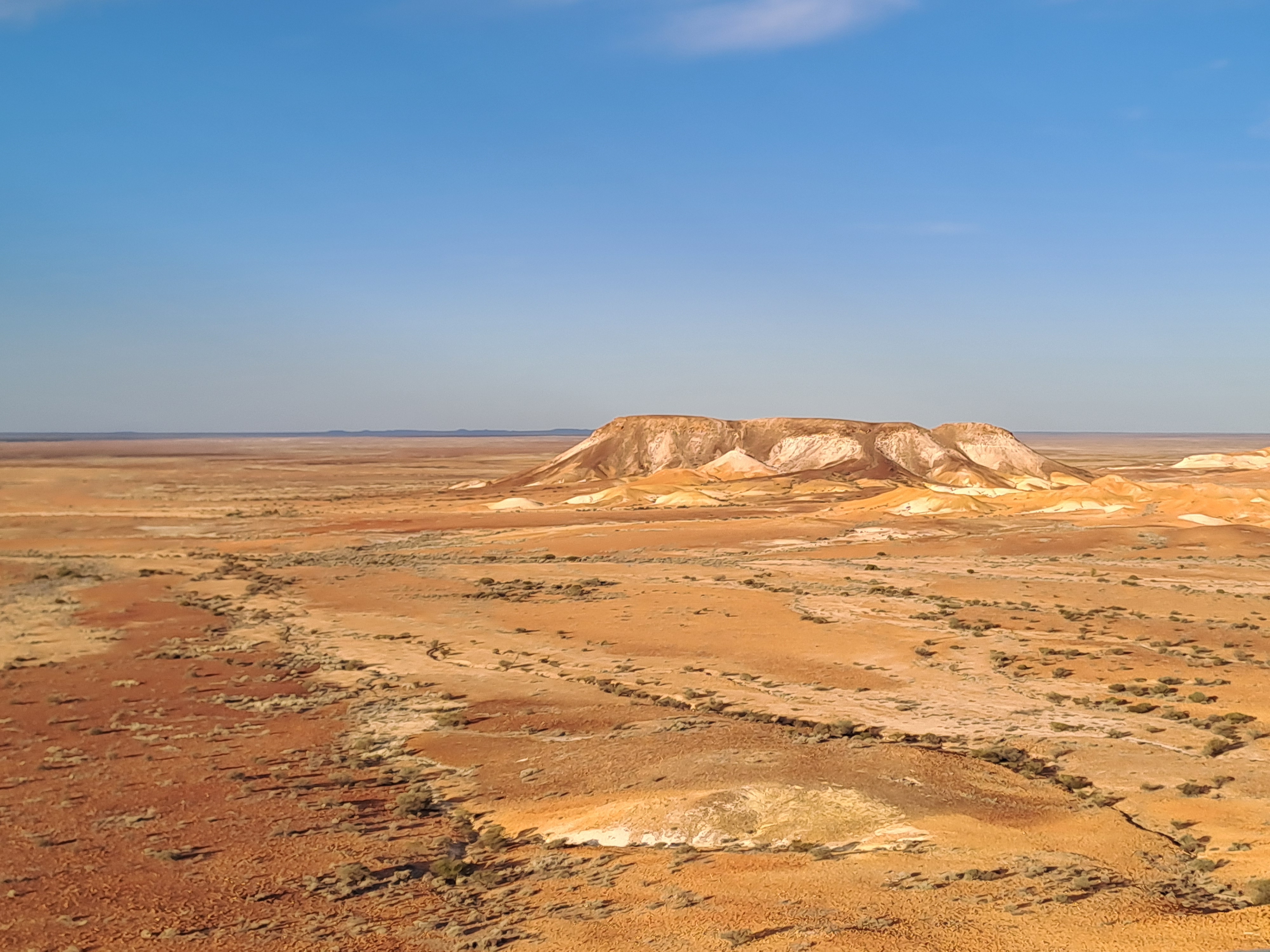
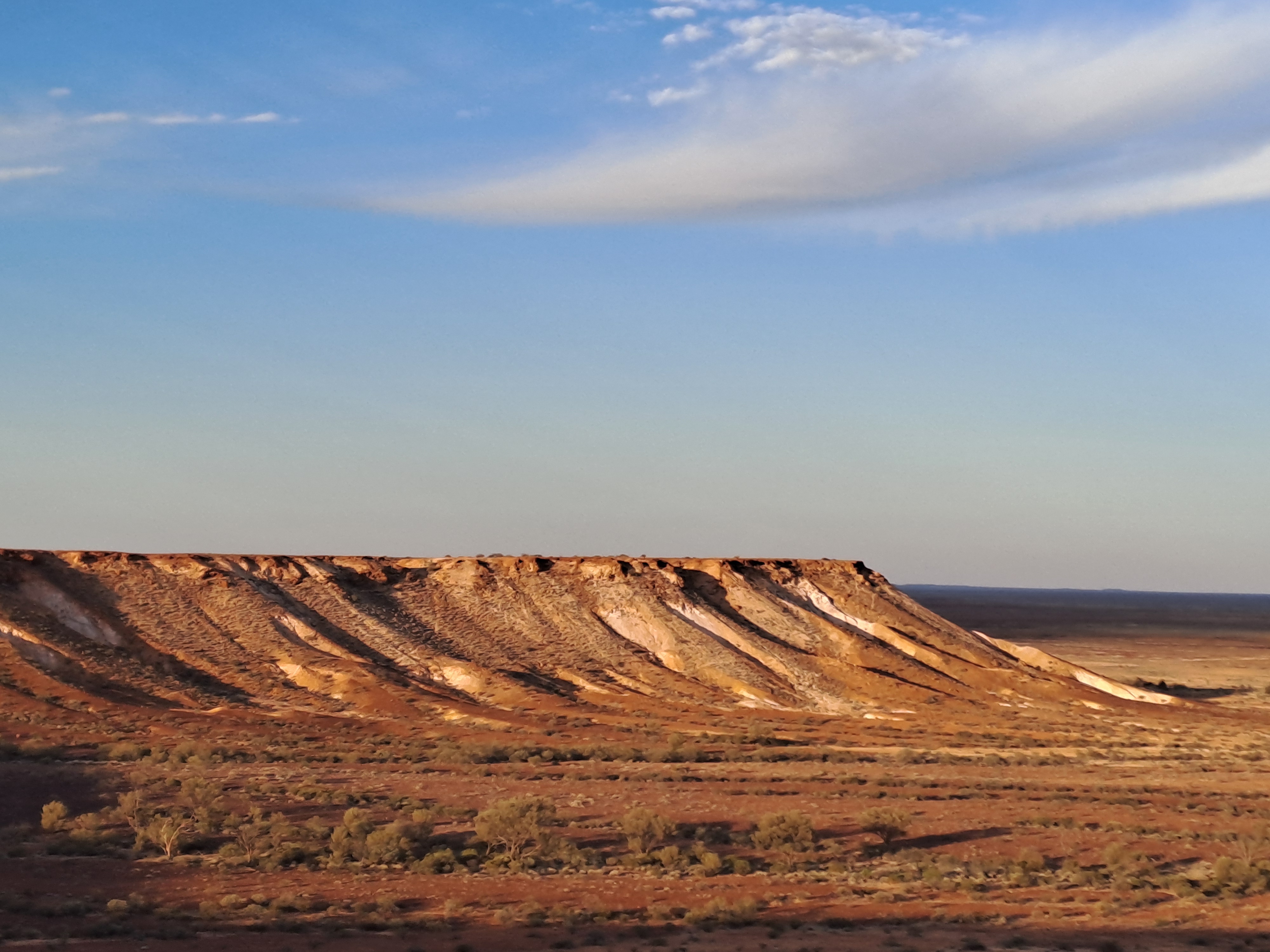

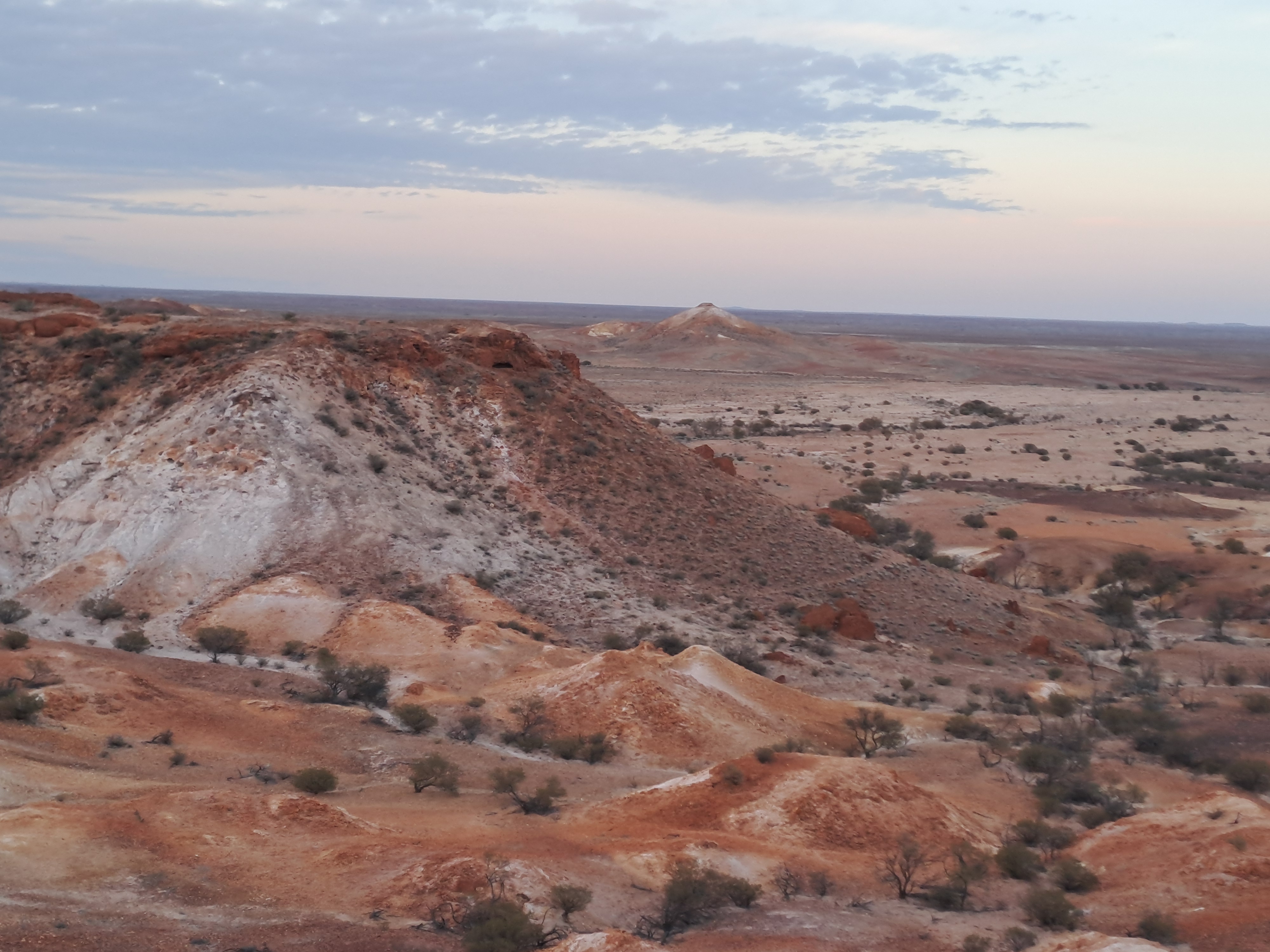
The stakes originally used in the dingo fence were from local trees resistant to termites and very strong. The newer posts are not as long lasting. The orange top layer of rock is harder than the white one below so the white gets worn away faster.


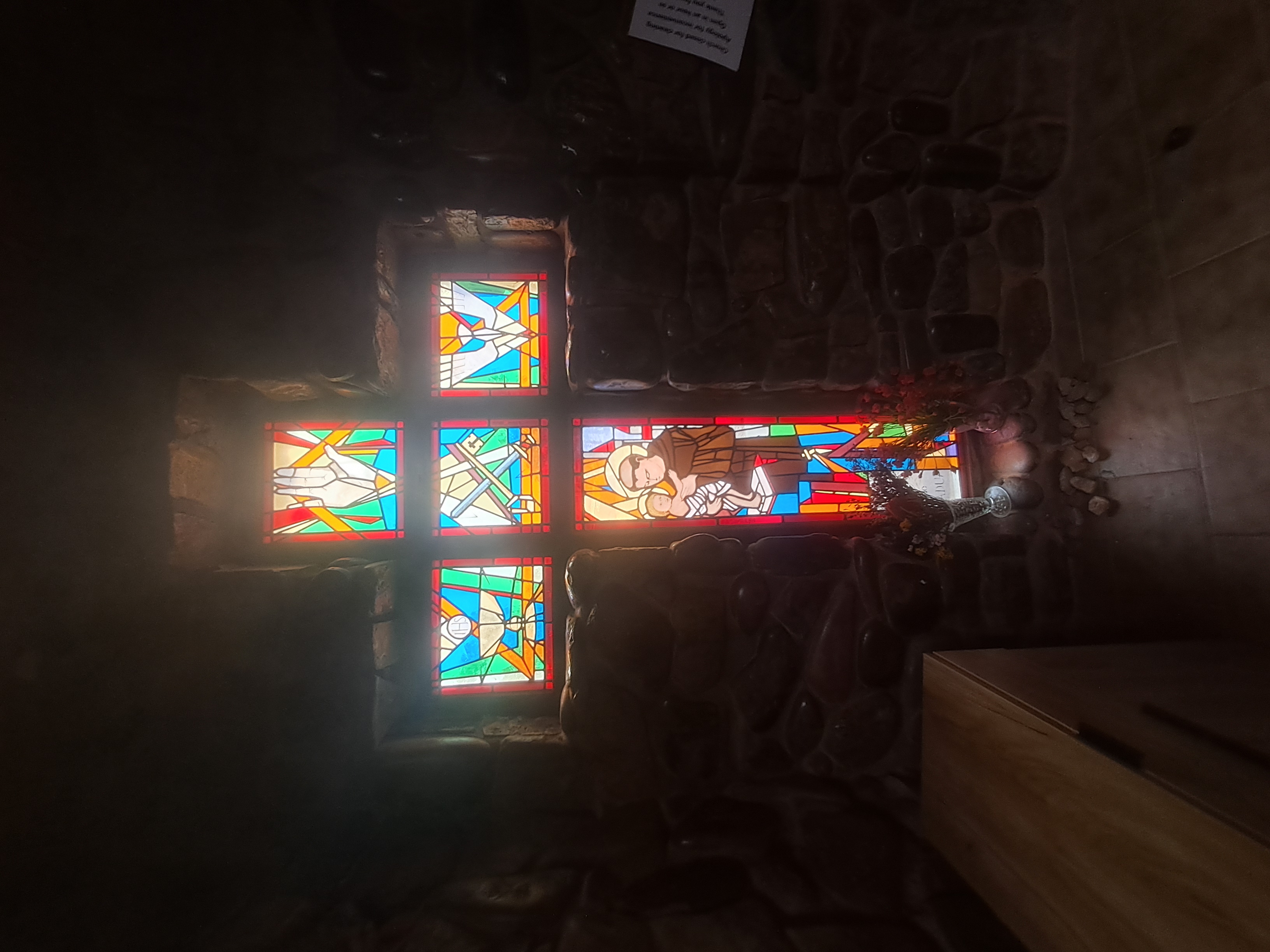
Many of the buildings are built into the hillside for protection from heat. We visited a local church that was dug out by the first priest and his congregation. The first part by hand and later the smoother walls mechanically excavated.


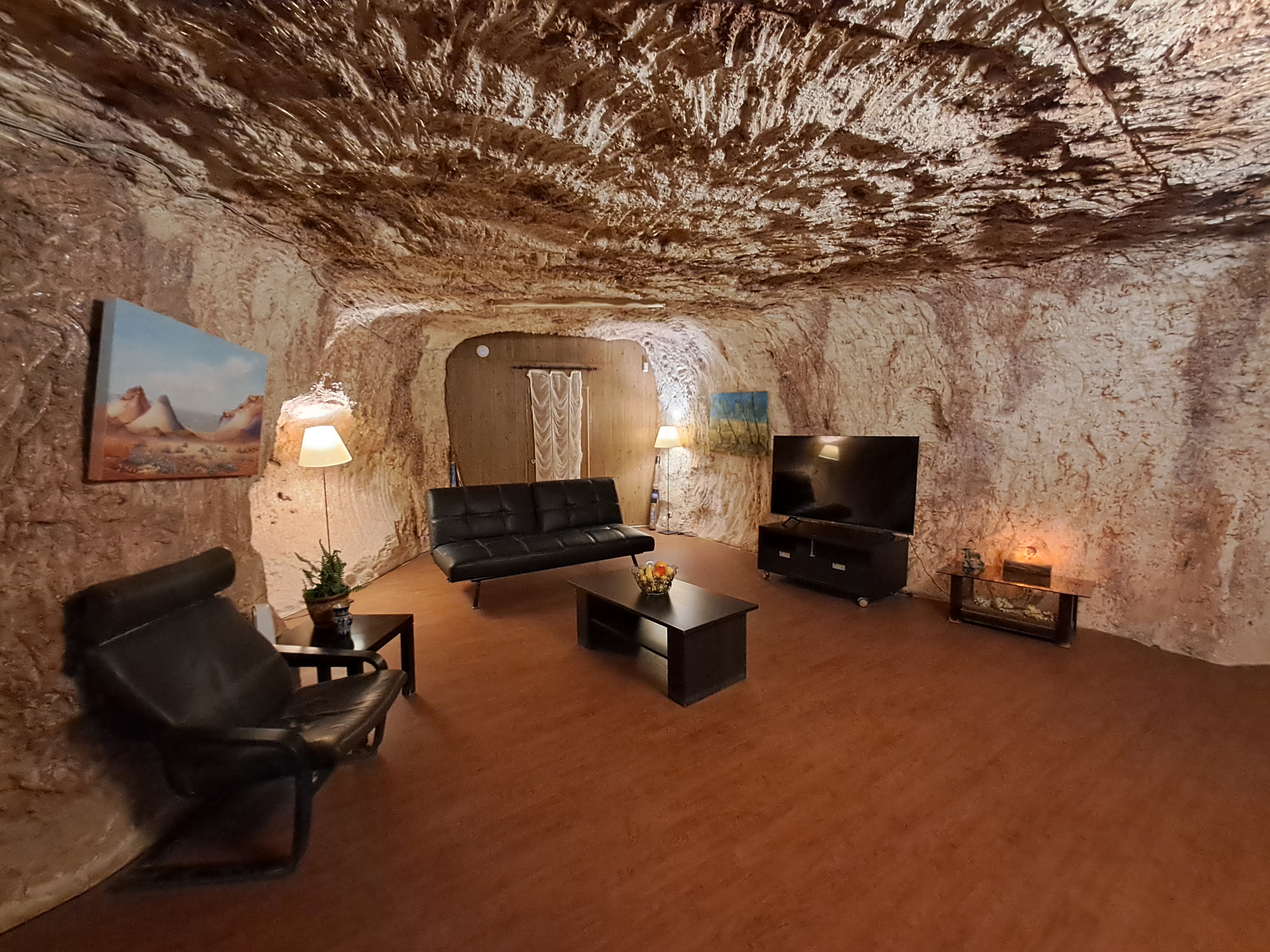
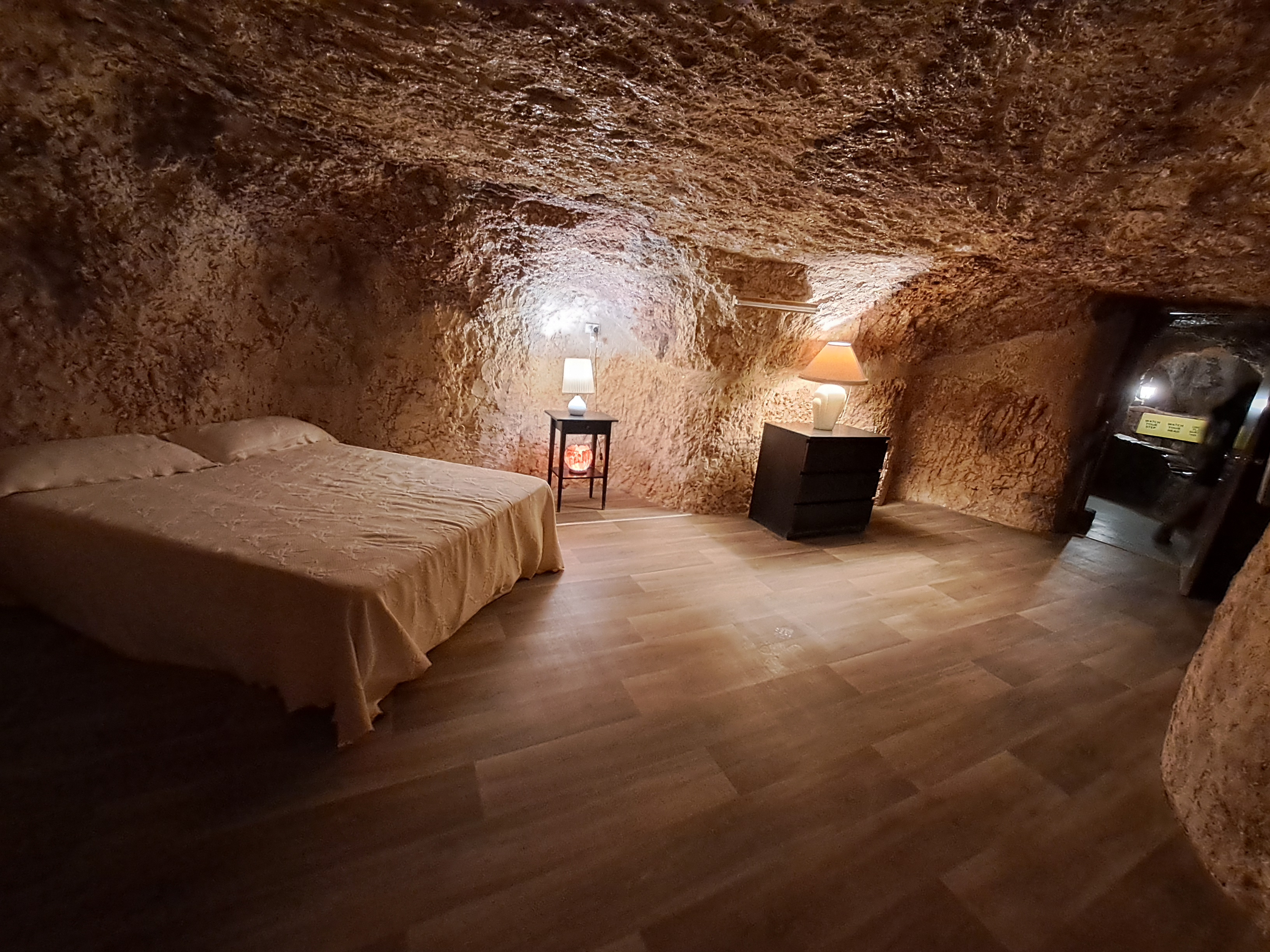
We also visited an underground home to see all the mod cons installed underground. The kitchen and bathroom are nearest the door and a bit lower in case or any blockages.
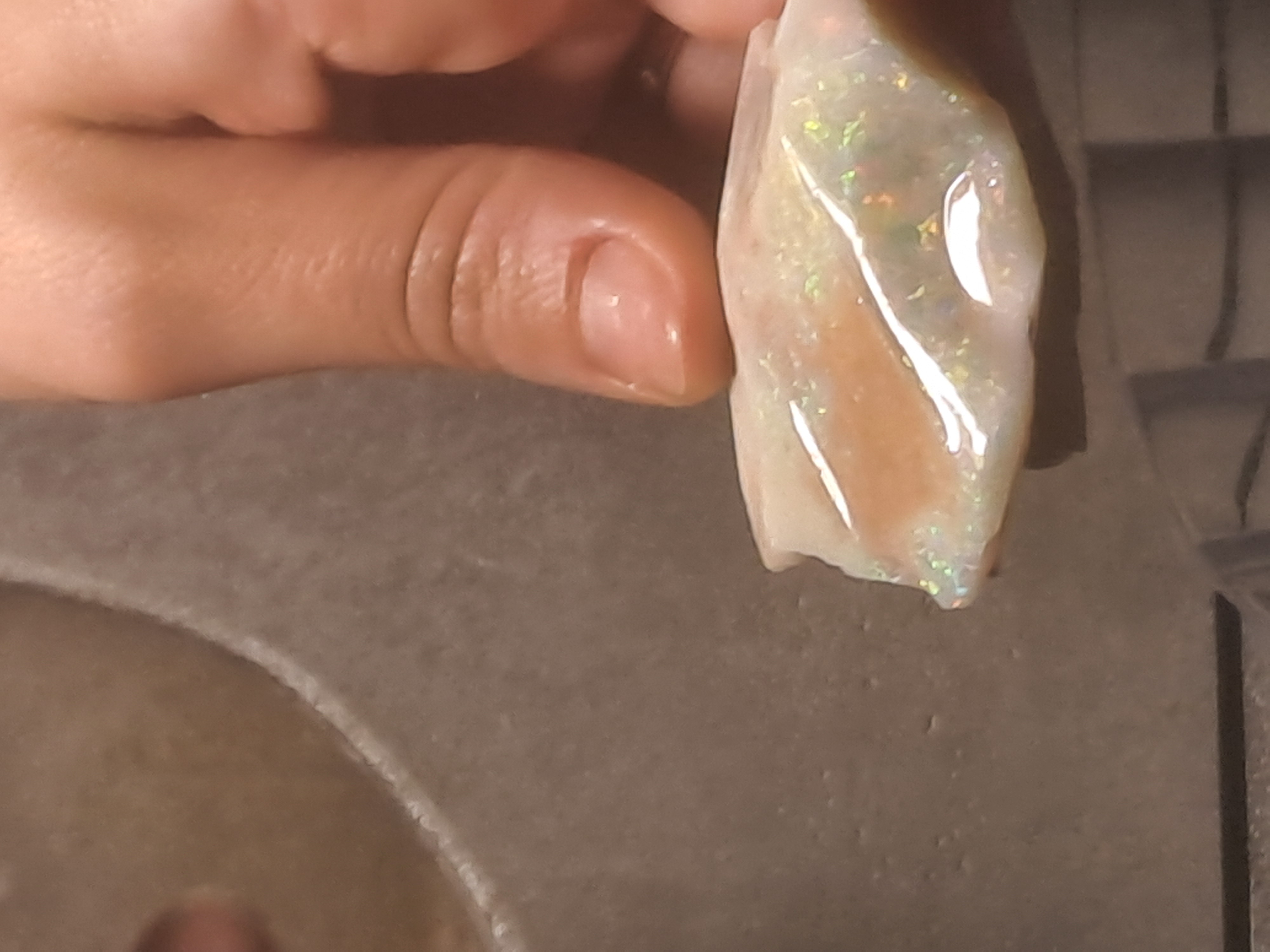

Of course we had to see a working mine to get a picture of how the opal are extracted. Most people work a claim 50 x 100 metres However one man and his partner got together and registered them, their wives and grown up kids so they have enough space for an open cast mine which is much more efficient, but needs more space. That is the exception though.

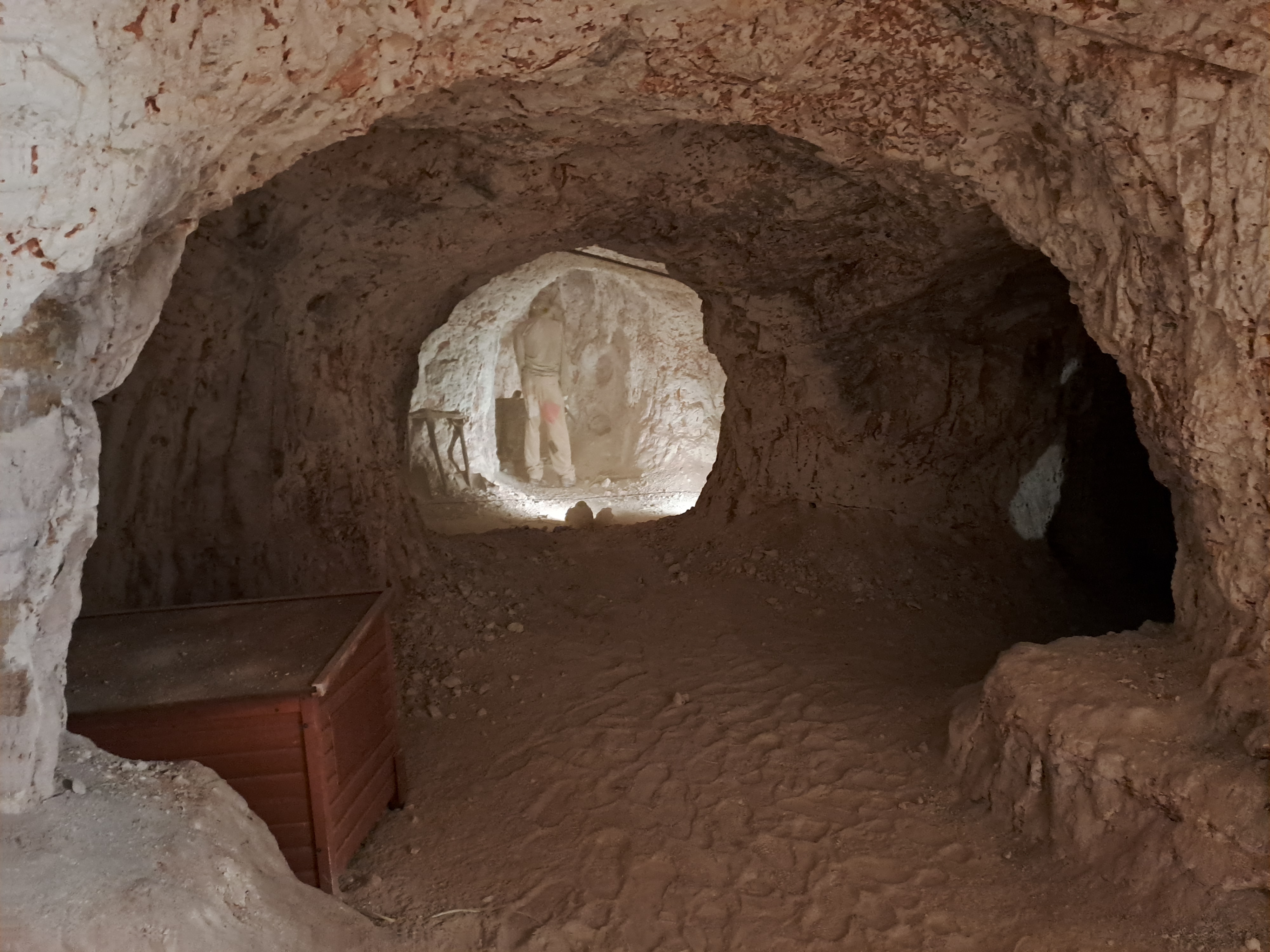

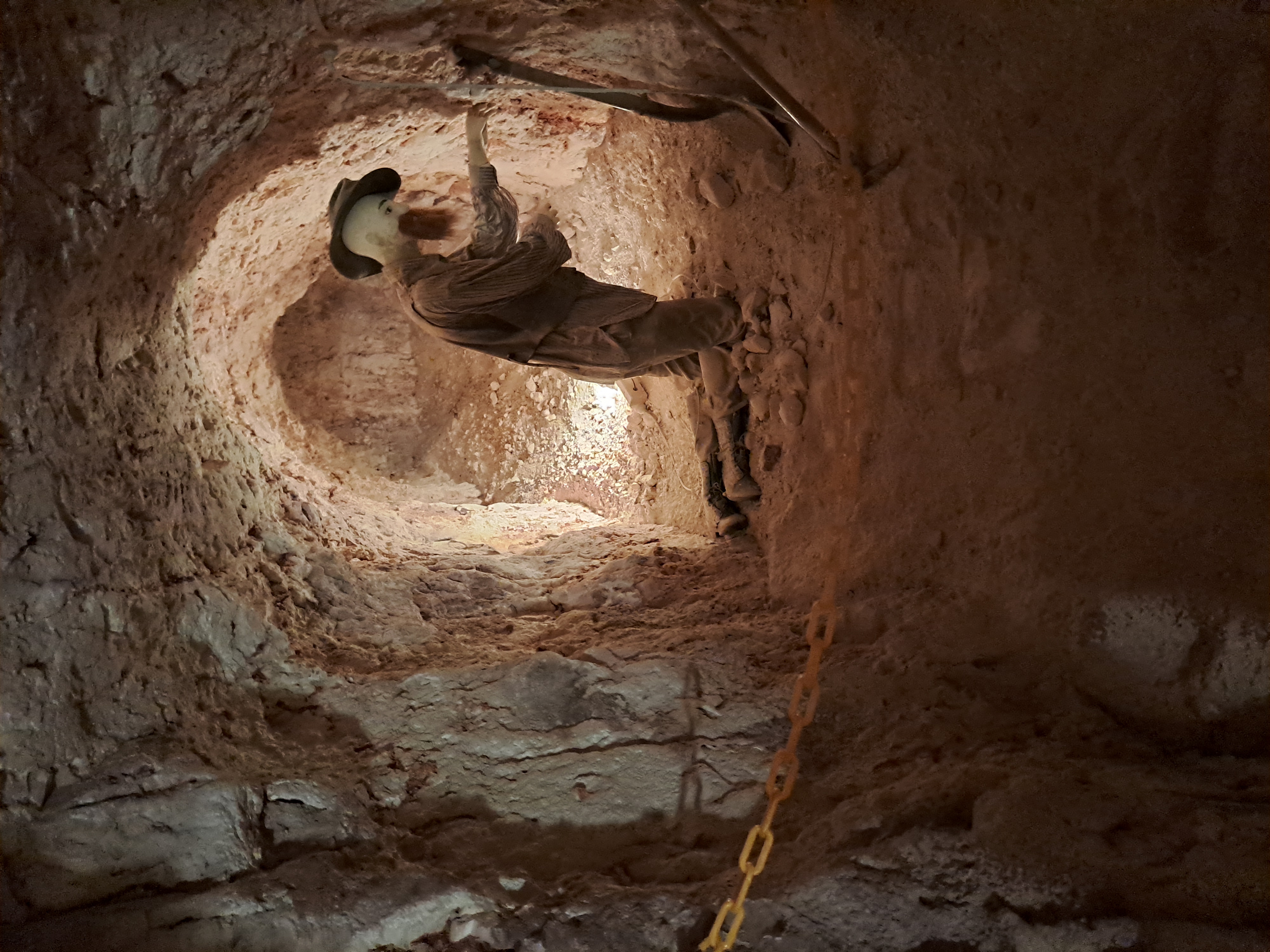
In the museum we learnt about how opal develops and sometimes inside a dead sea creature to come out in distinctive shapes. We also learned abouts the dingo fence.


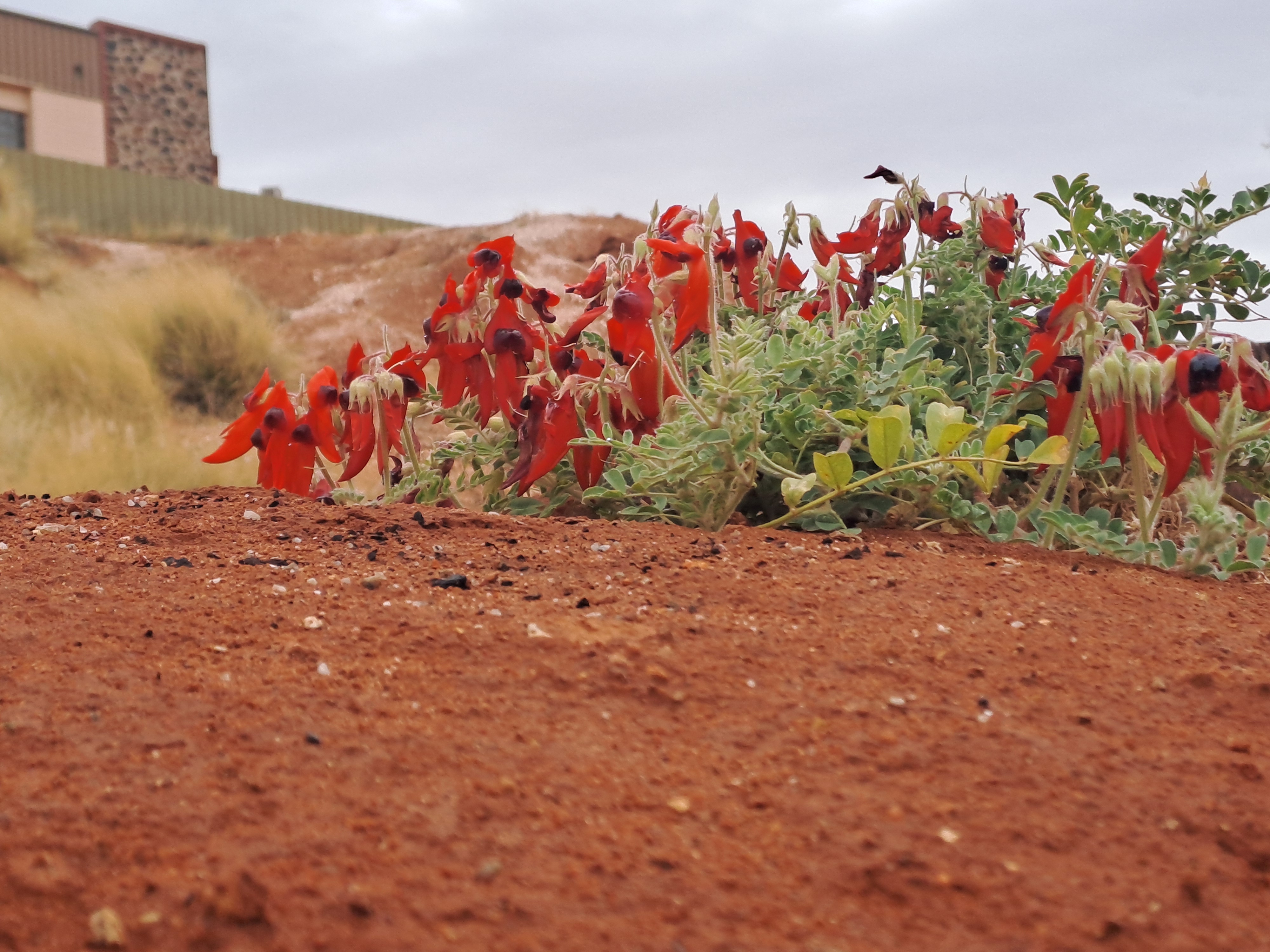

We went to see the local golf course, no grass of course. The greens are black, sump oil and sand, carefully raked after each game. We also went out to see some of the machinery in use. The rock is vacuumed out and then noodles to catch opals.


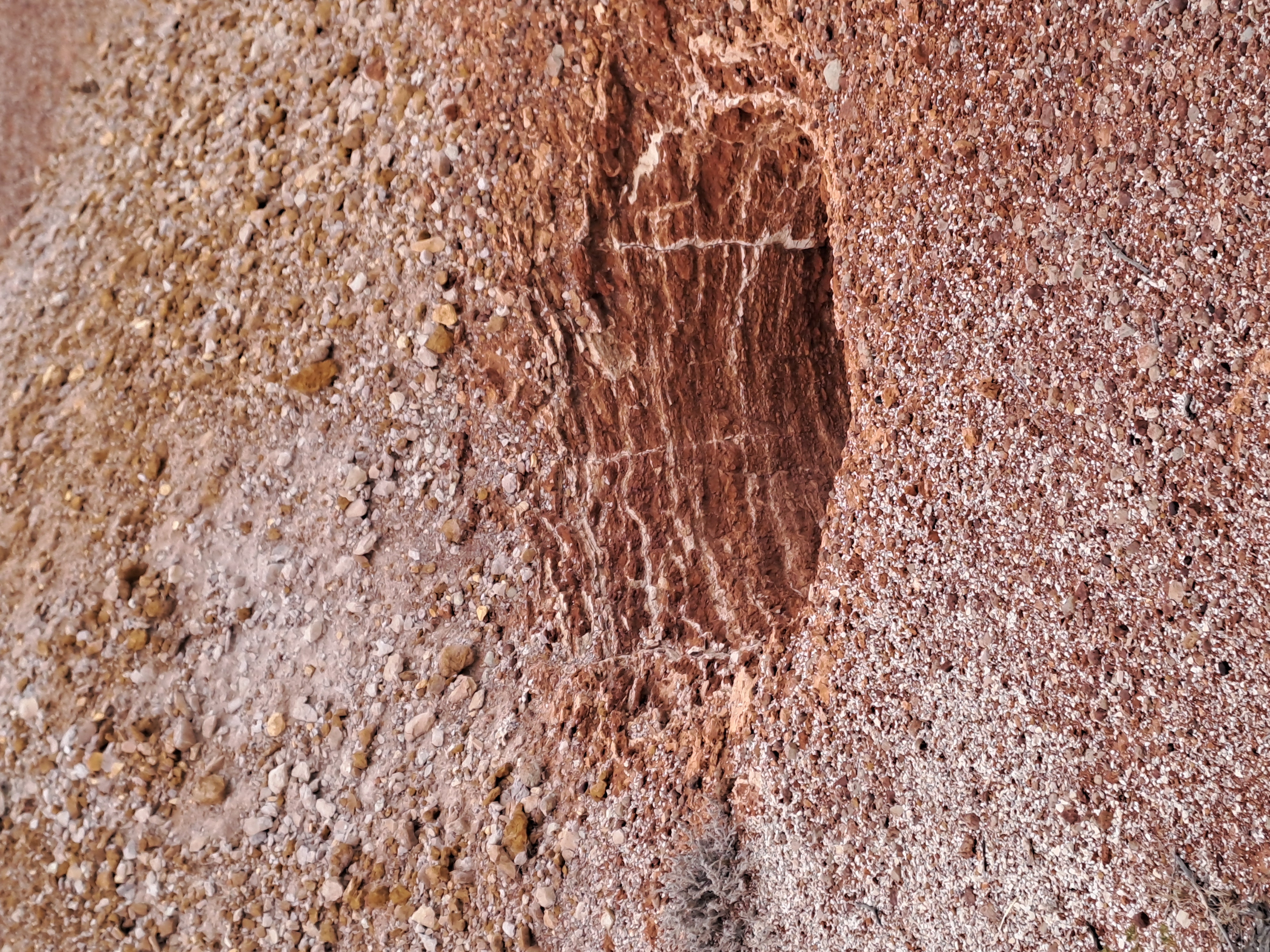
There are piles of debris everywhere and somewhere nearby the hole it came out of, waiting for the un-wary to fall into.
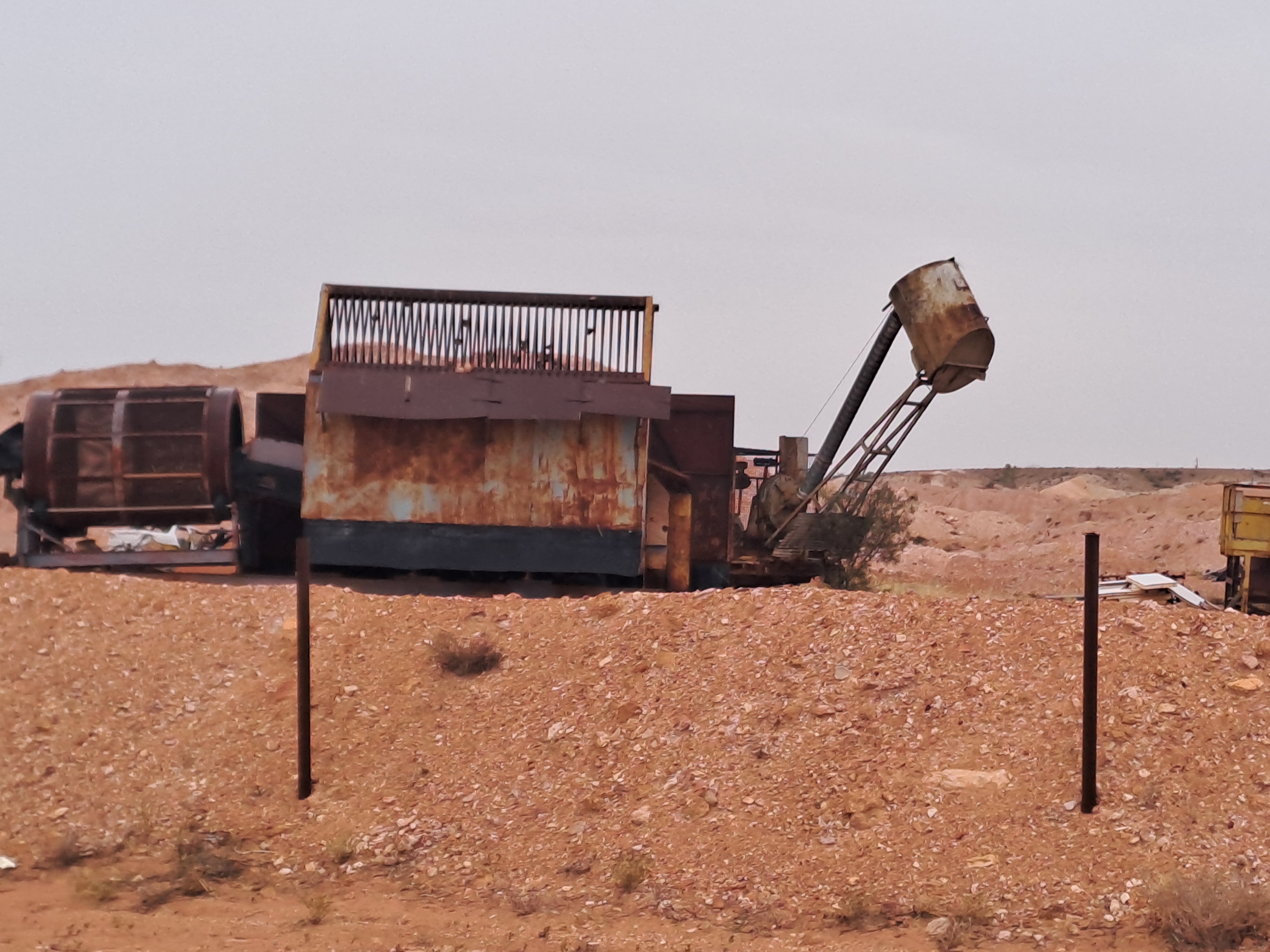
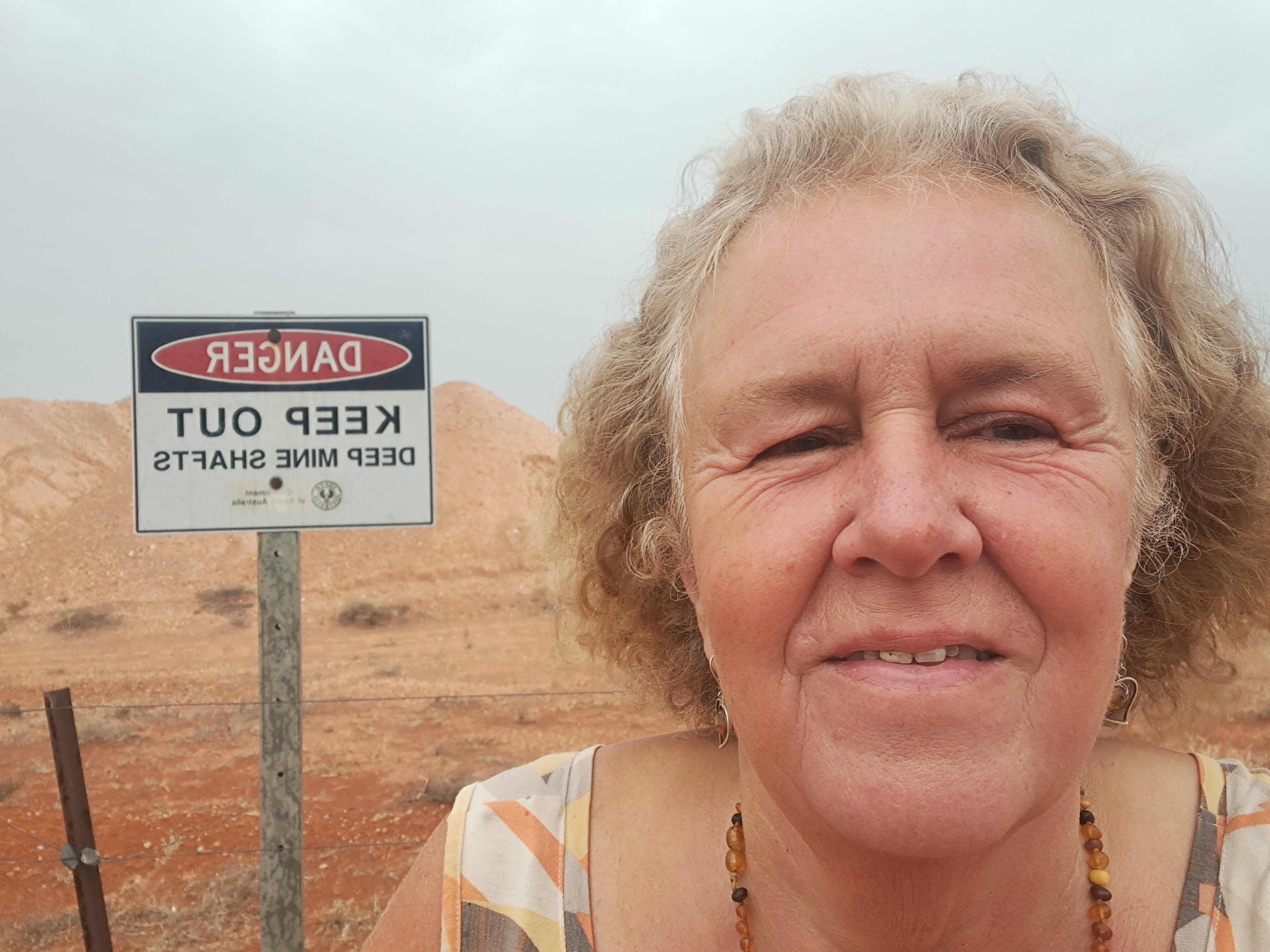
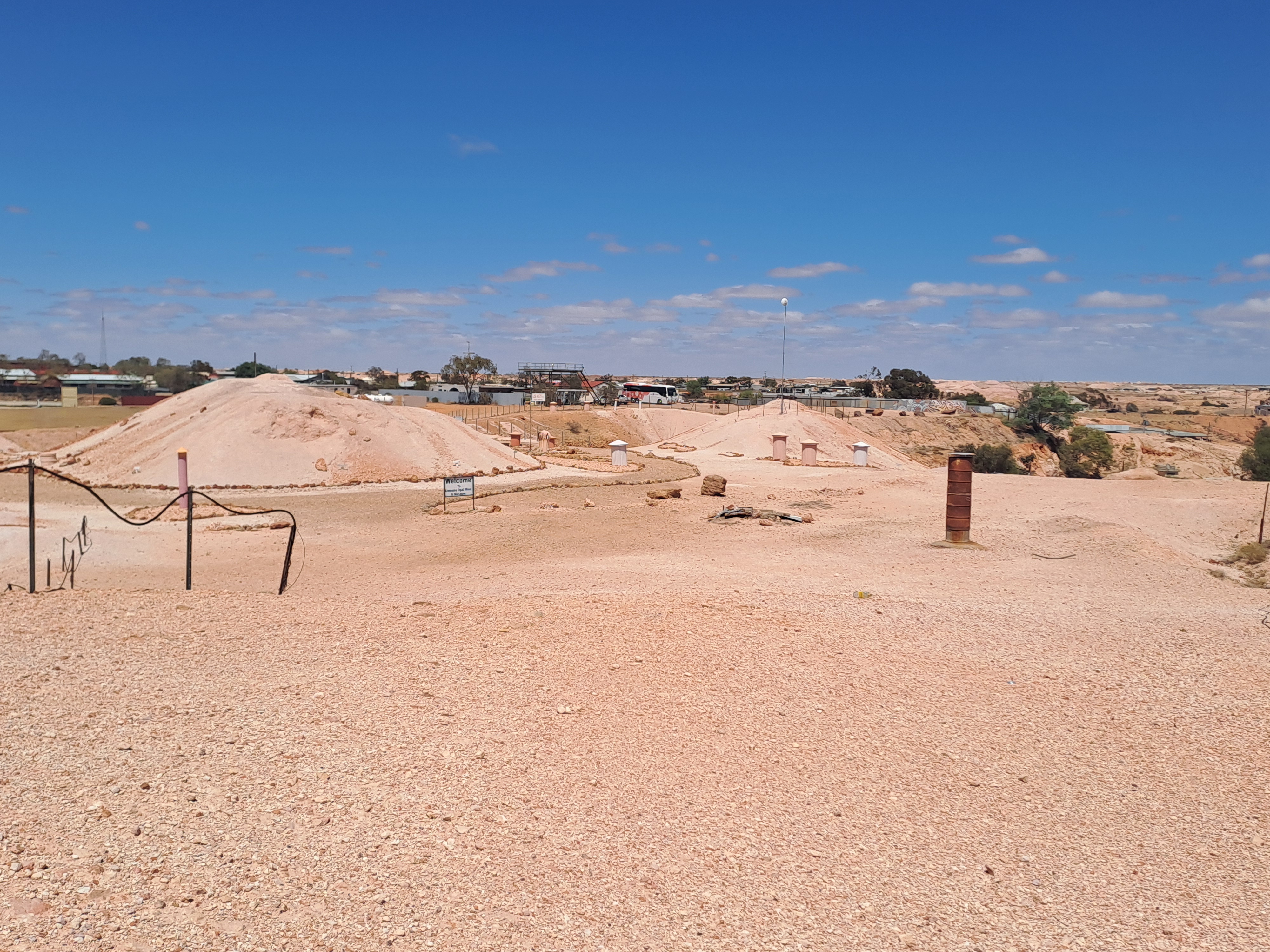
The landscape lends its self to certain films such as Mad Max so has its claim to fame there and a left over space ship.


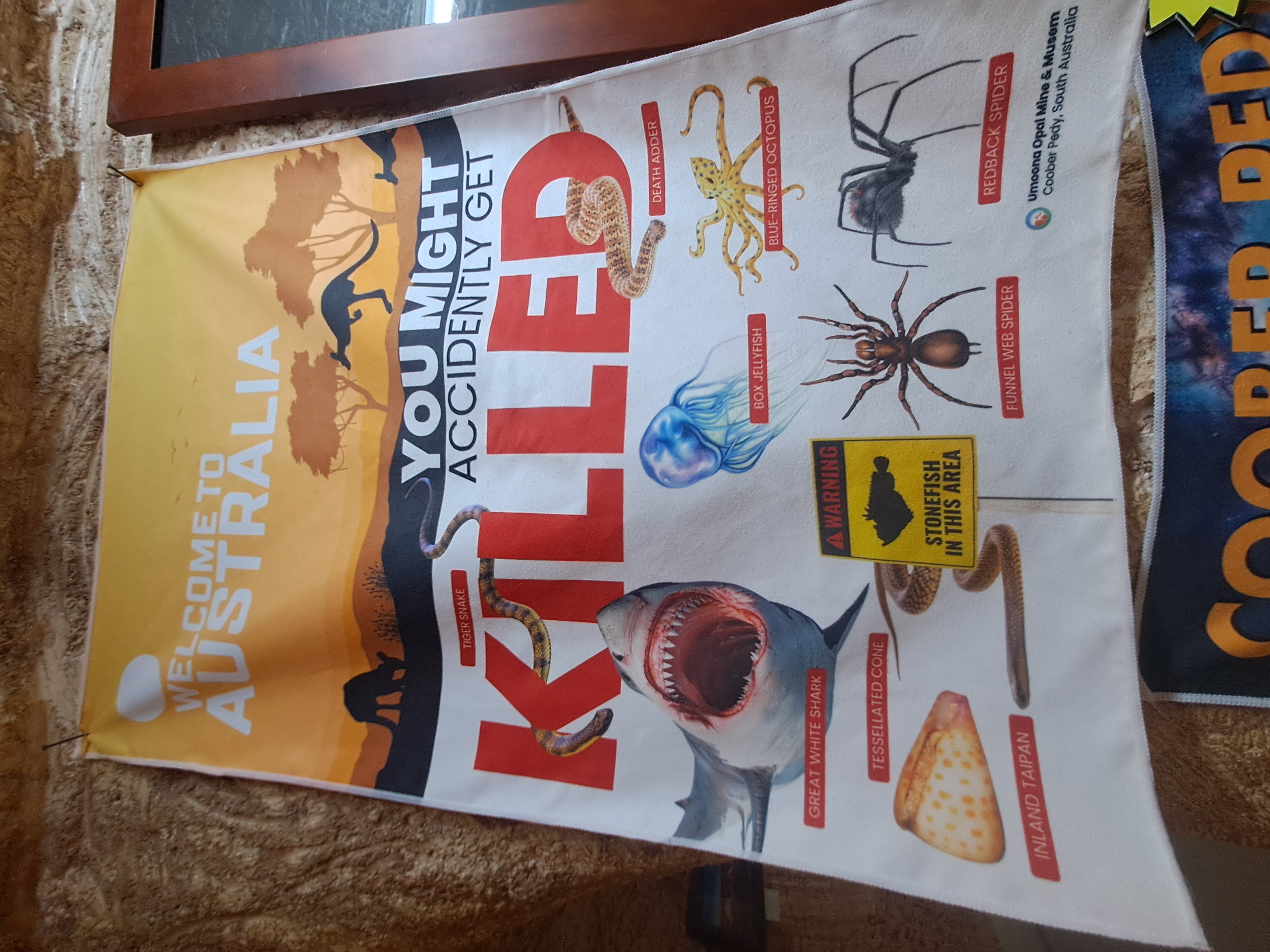
The local tea towel reflected the character of the place. One of our big surprises was the local supermarket, I wasn’t expecting much, but what I found was apparently the 4th best supermarket in the country it was amazing. I even found a fruit I’d searched for earlier in England to fulfil a request, the bitter melon or gourd. I had to buy it just to say I’d eaten it so it got added to our curries after that.
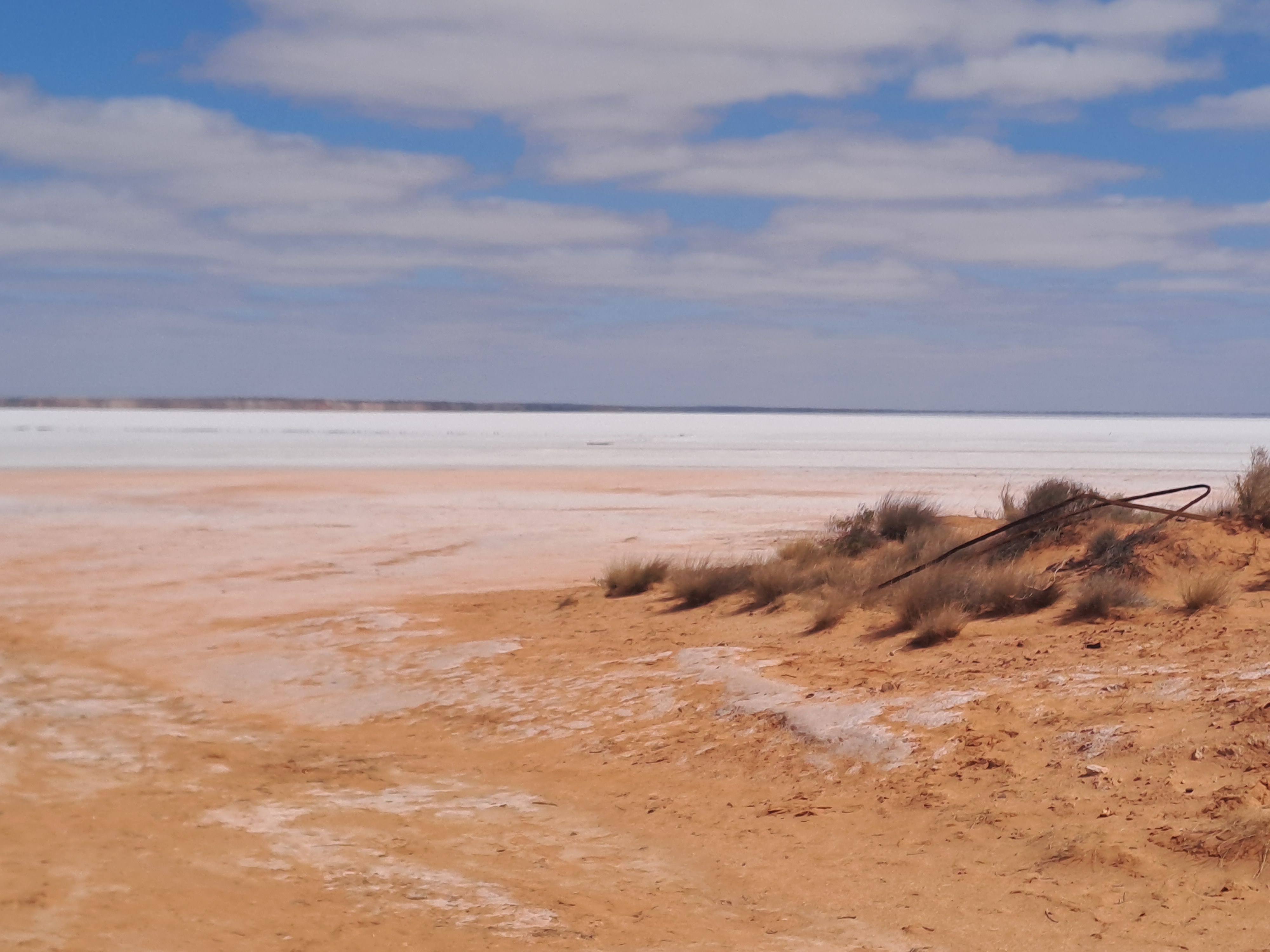
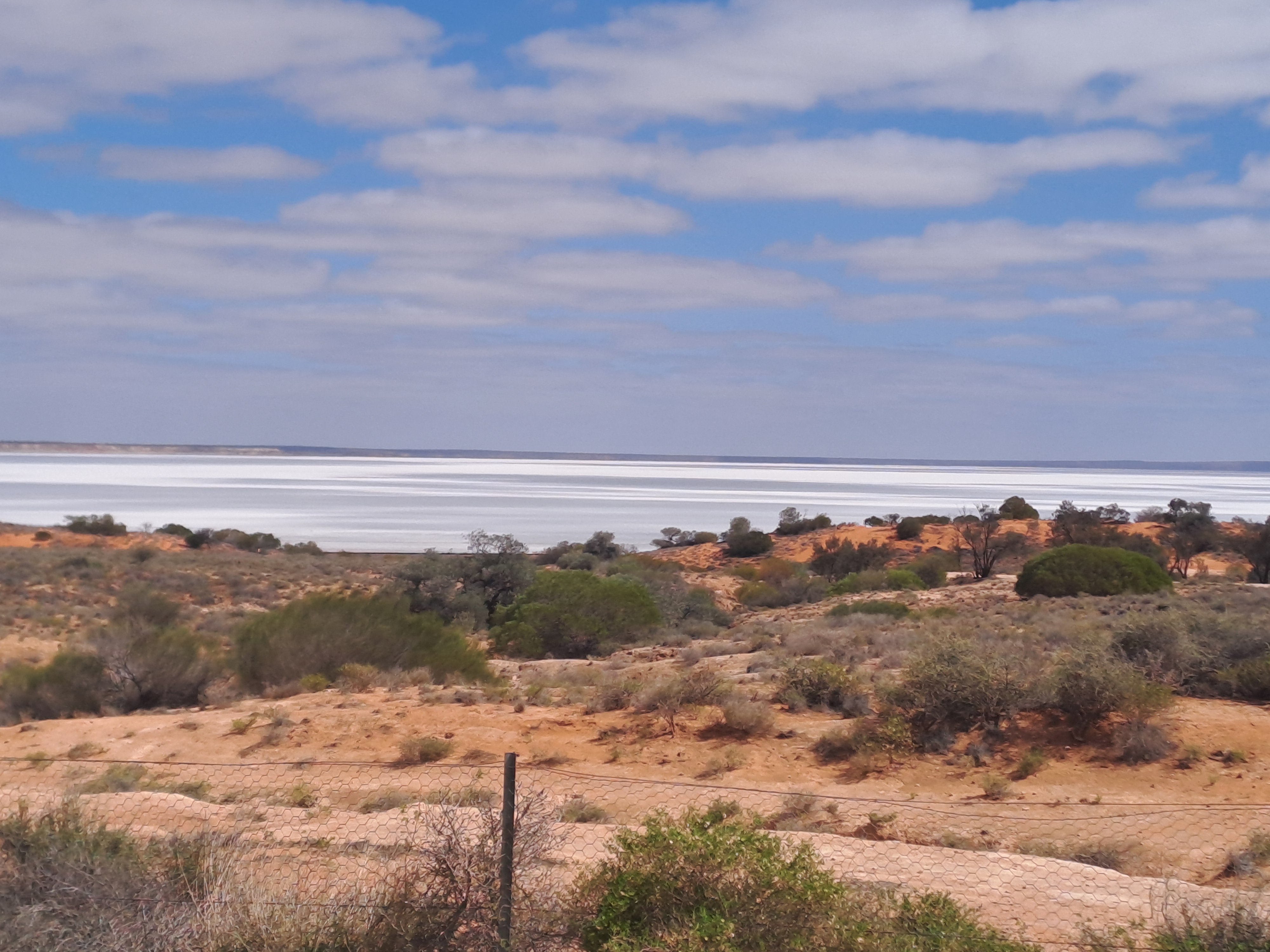
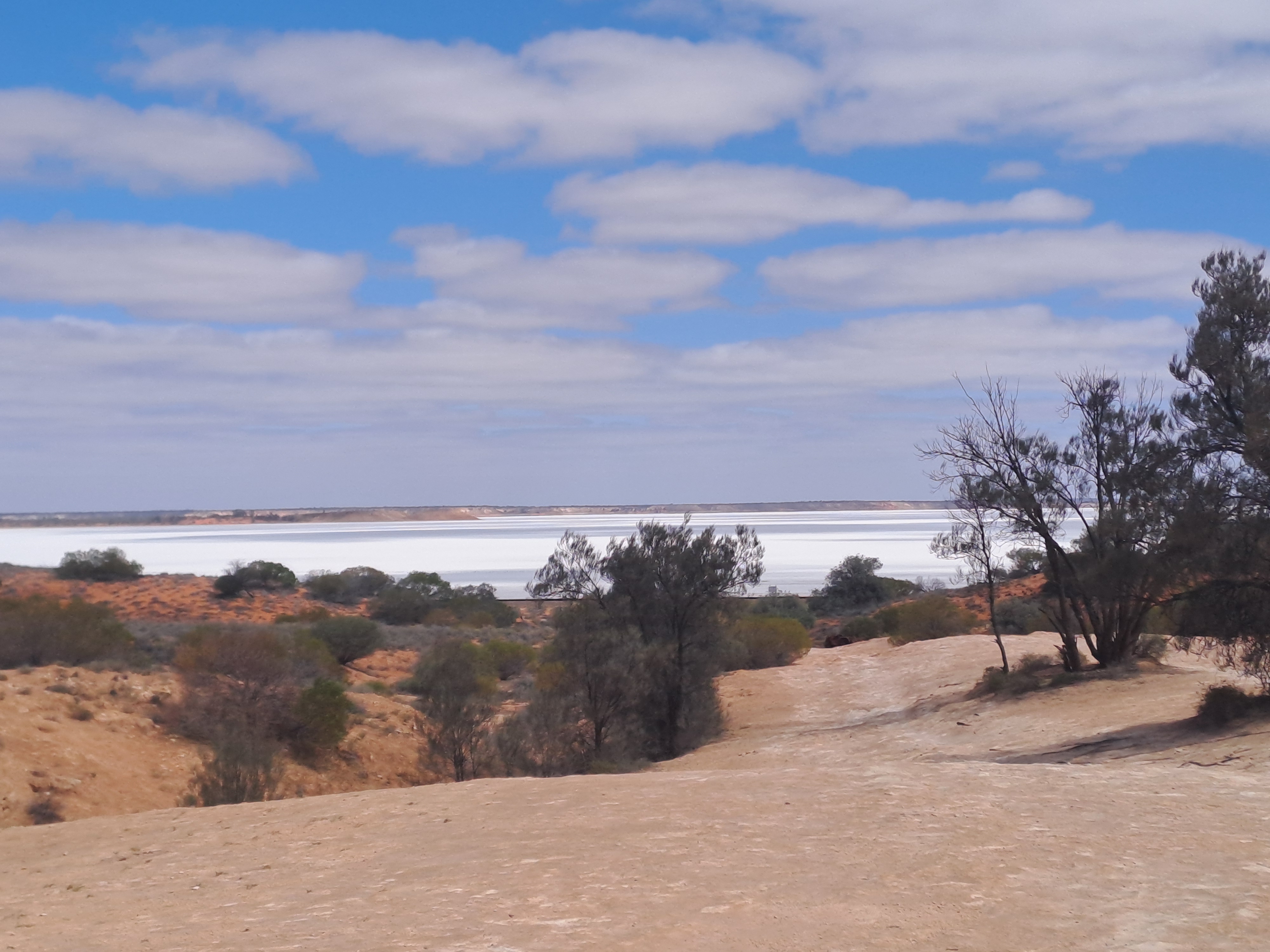
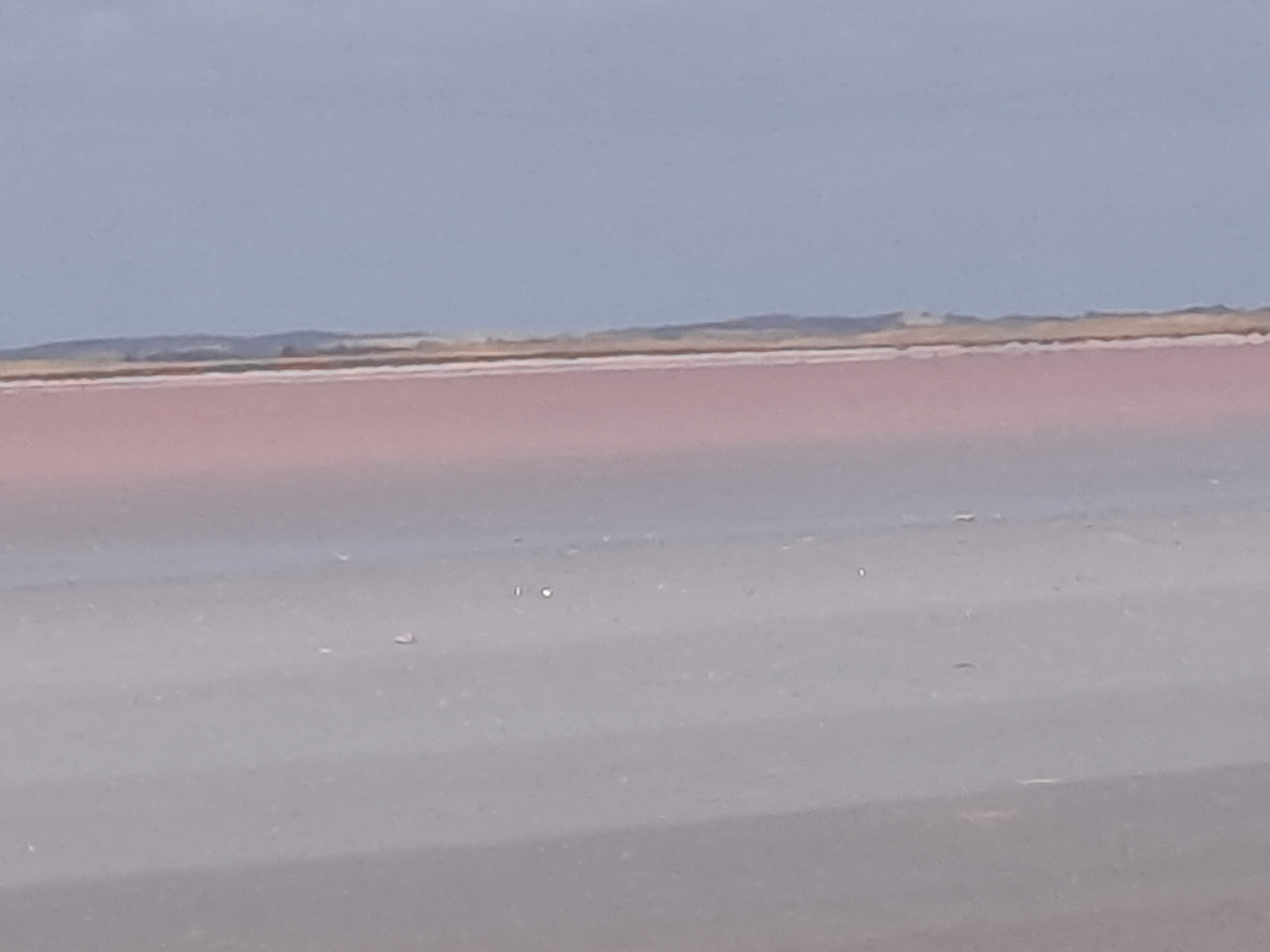
On our journey back we stopped at one viewpoint so I could walk down to the salt lake to get a closer view. Close too I found the view was blocked by a railway line on a bank. However, a tunnel had thoughtfully been provided through for people so I decided that was the same as giving me permission to go through to see the lake.


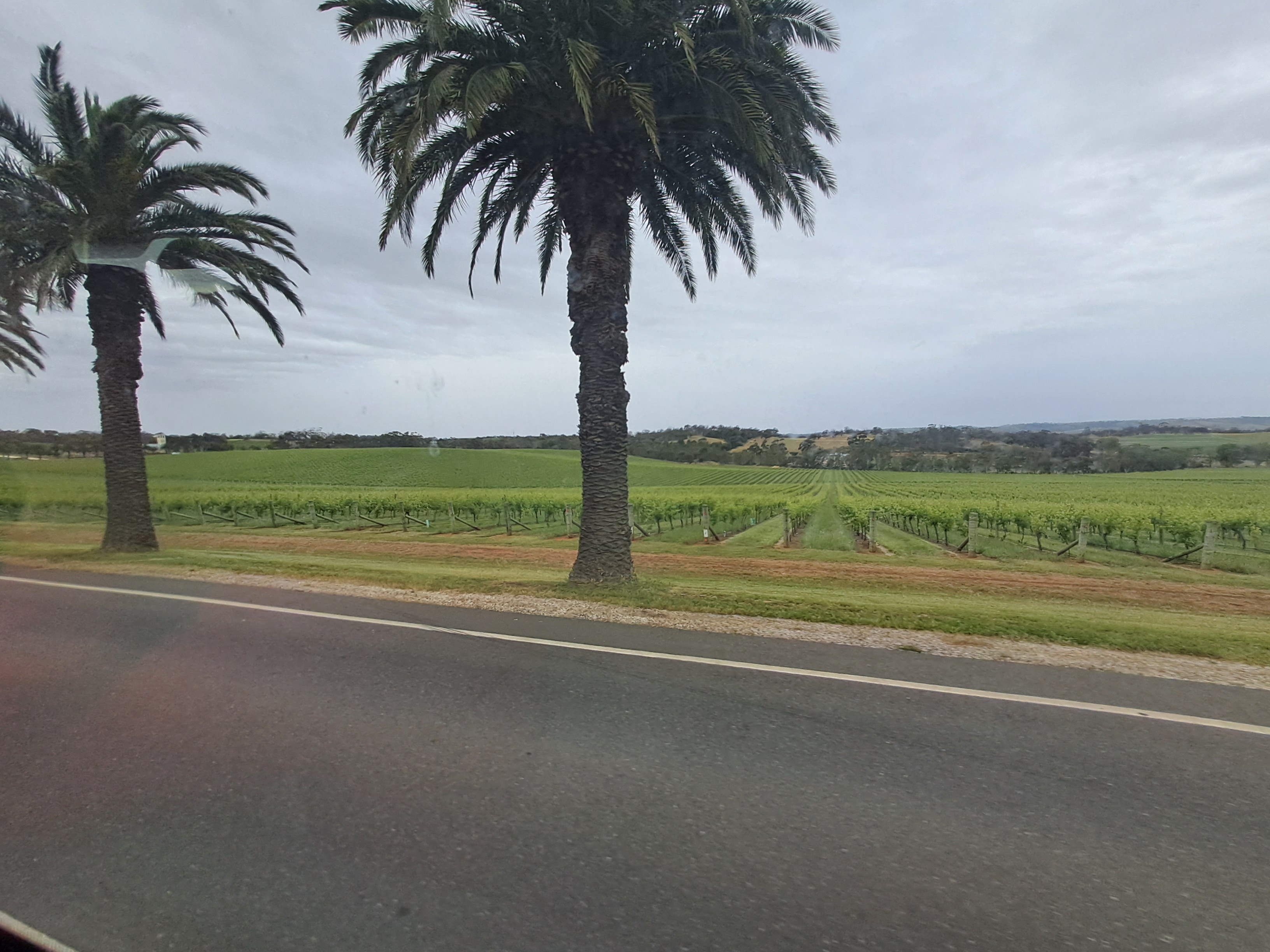
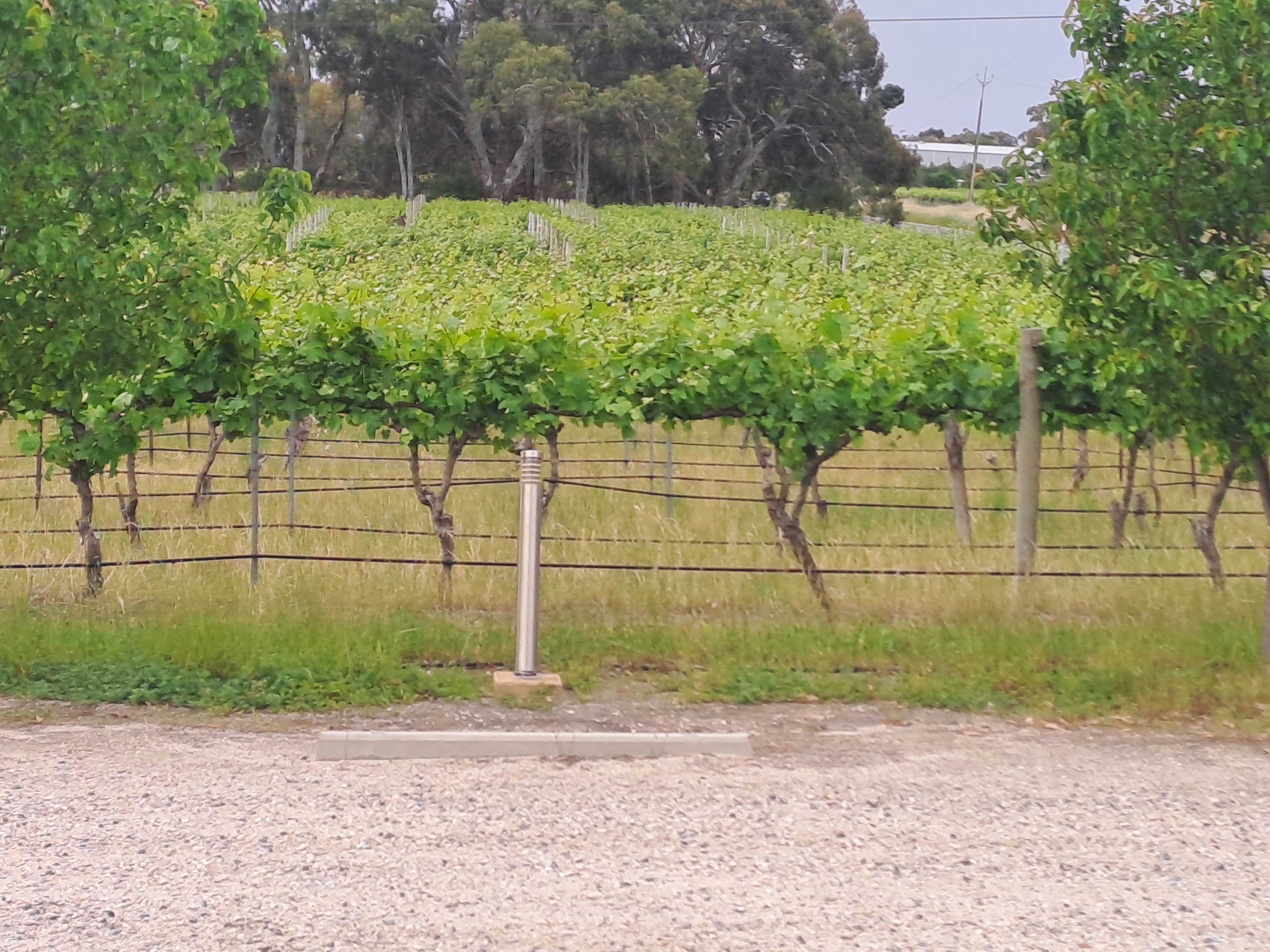
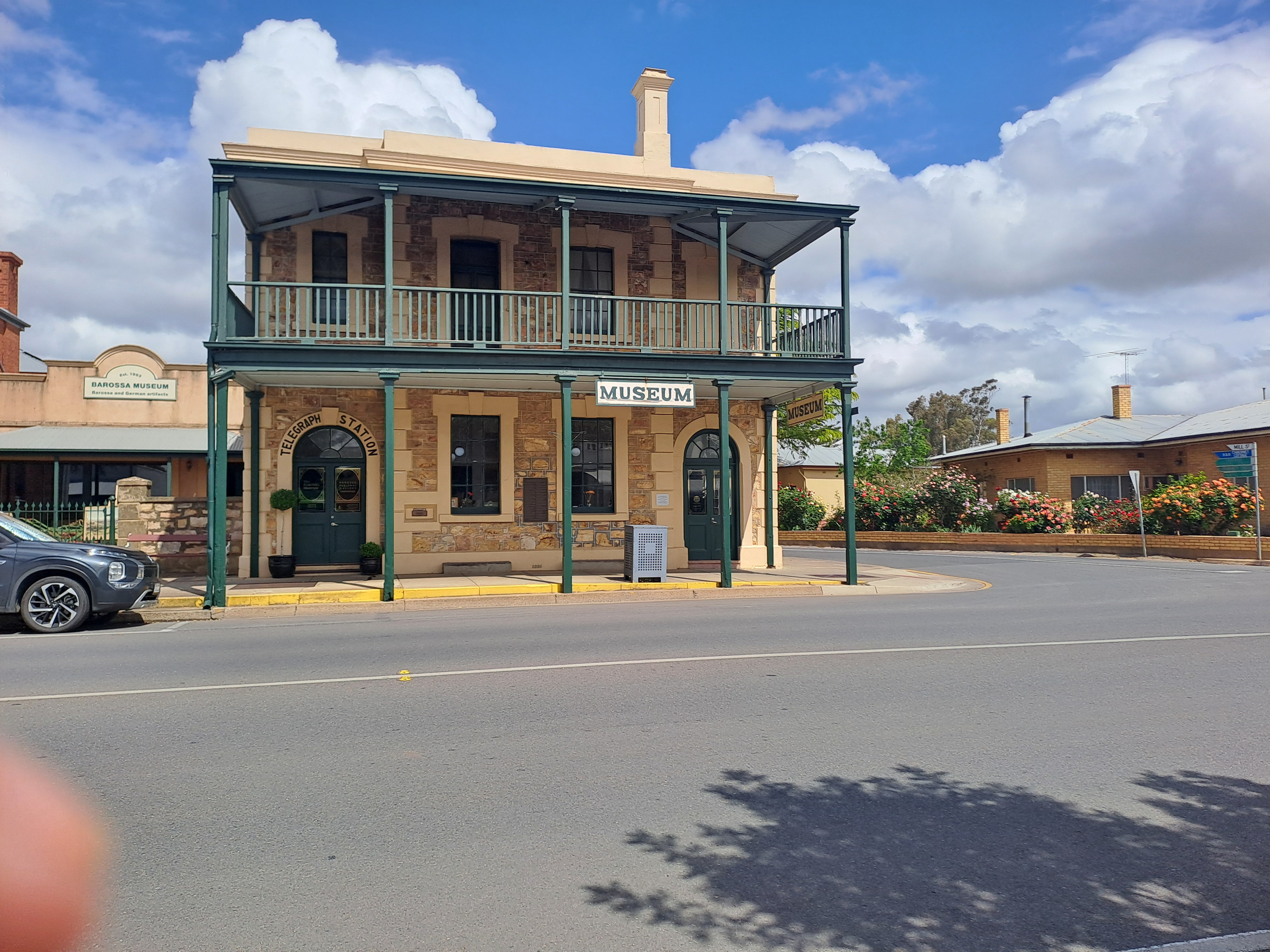
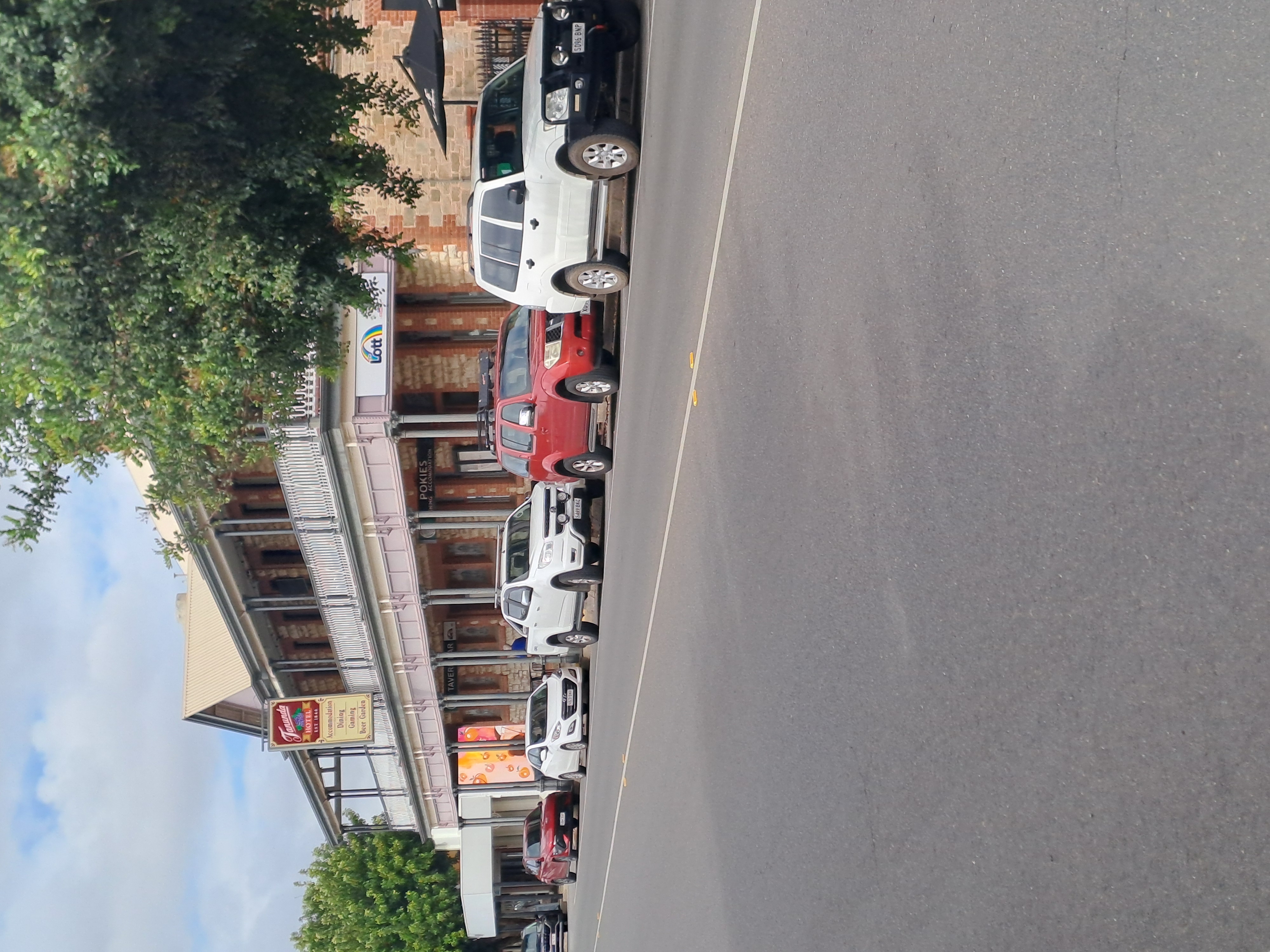
By contrast our next location was the Barossa Valley lush and green and full of vineyards. Our route there was quite different windy country road, Australian style as in road trains could use them. Here communities were close to each other and still looked like they were in the 1950s. We had two days here so we had to do a wine tour of course and learn a little of the history. This area was predominantly settled by Germans


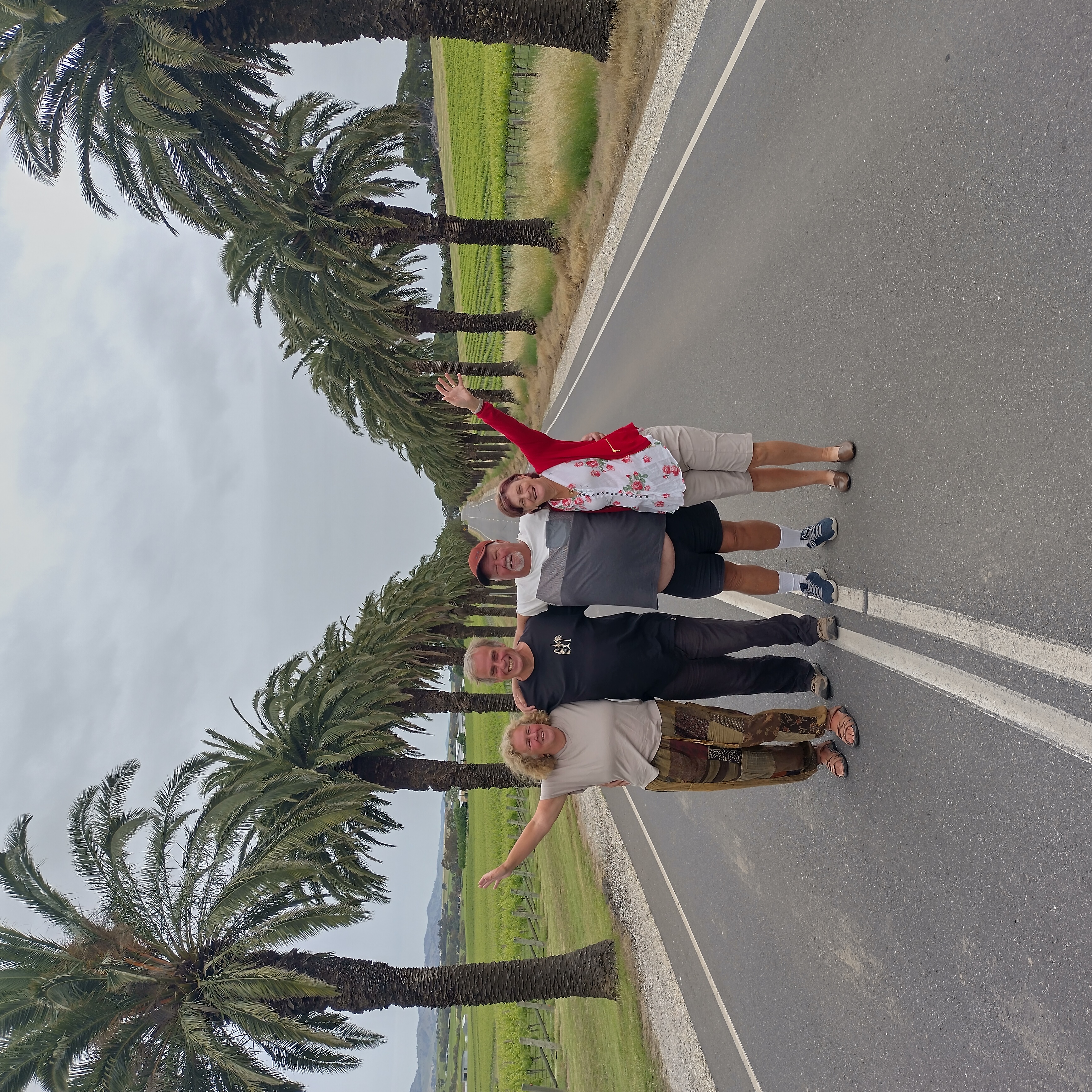
We visited the avenue of palms planted during the great depression to give work locally

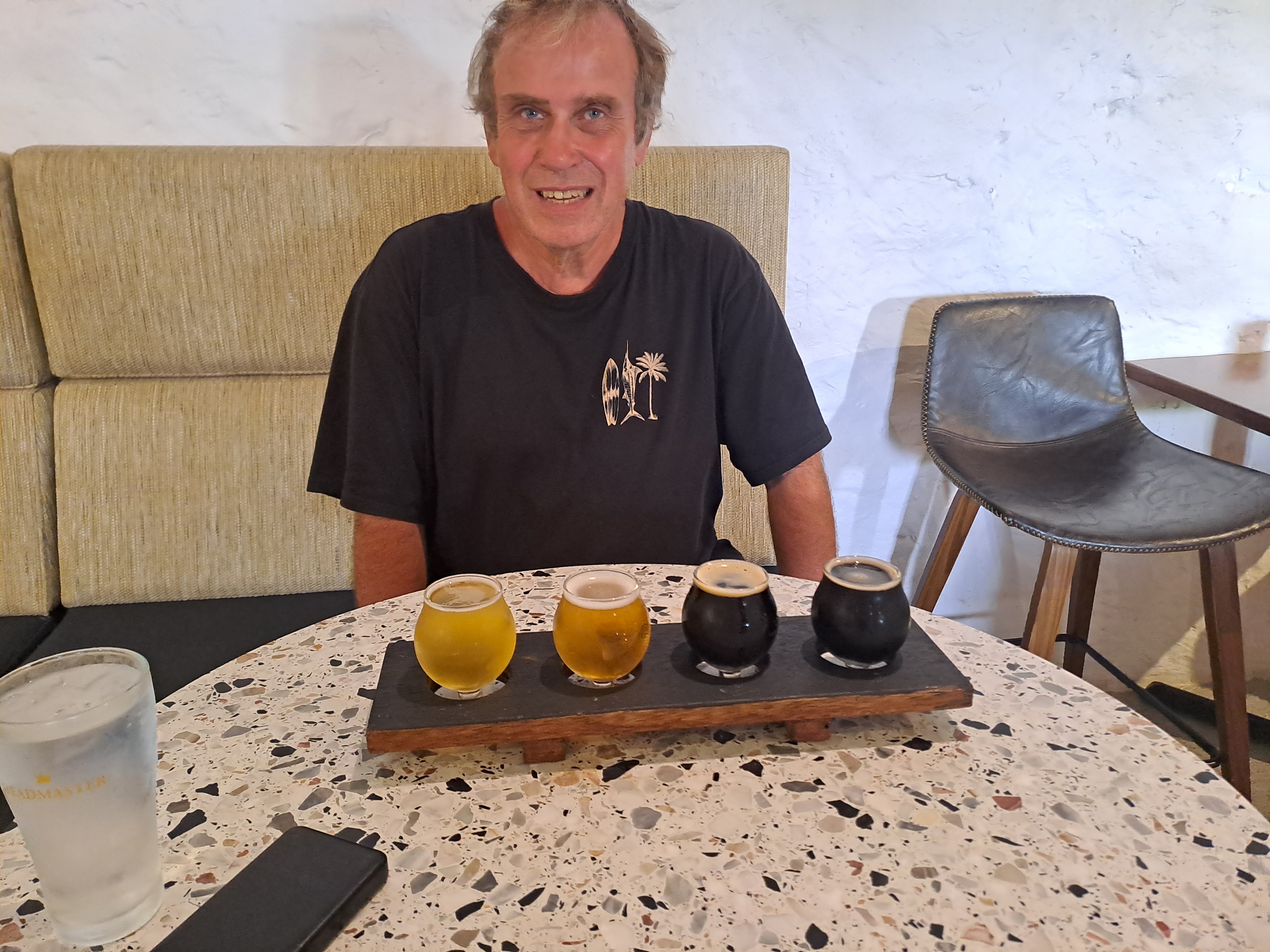
The next day was a special day for Ashley, we did a chocolate tasting in the morning both the drink and individual chocolates and in the afternoon a beer tasting


Along our route towards the Great Ocean Road we found a whole variety of salt lakes, another pink lake, but also bright lime green, and running parallel to the ocean a long dark olive lake. As we journey towards Coorong National Park we were close to the but separated by high dunes on a thin strip of land and this lake


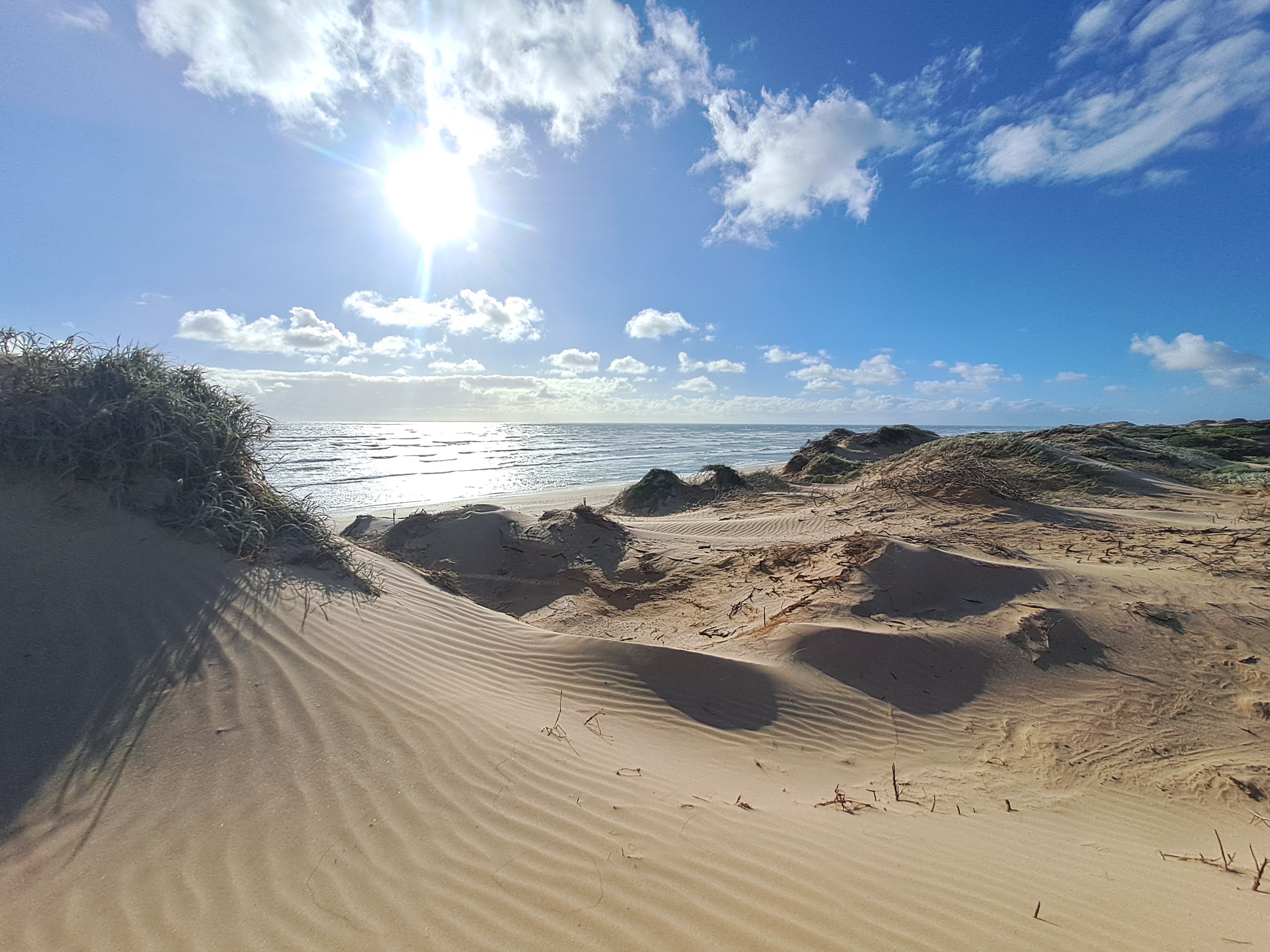
At the National Park we were still a good walk from the sea, through bush and dunes, my evening project. I was glad the path was well worn or I’d have been completely lost. The last part had long posts, part covered with sand as the dune was drifting.
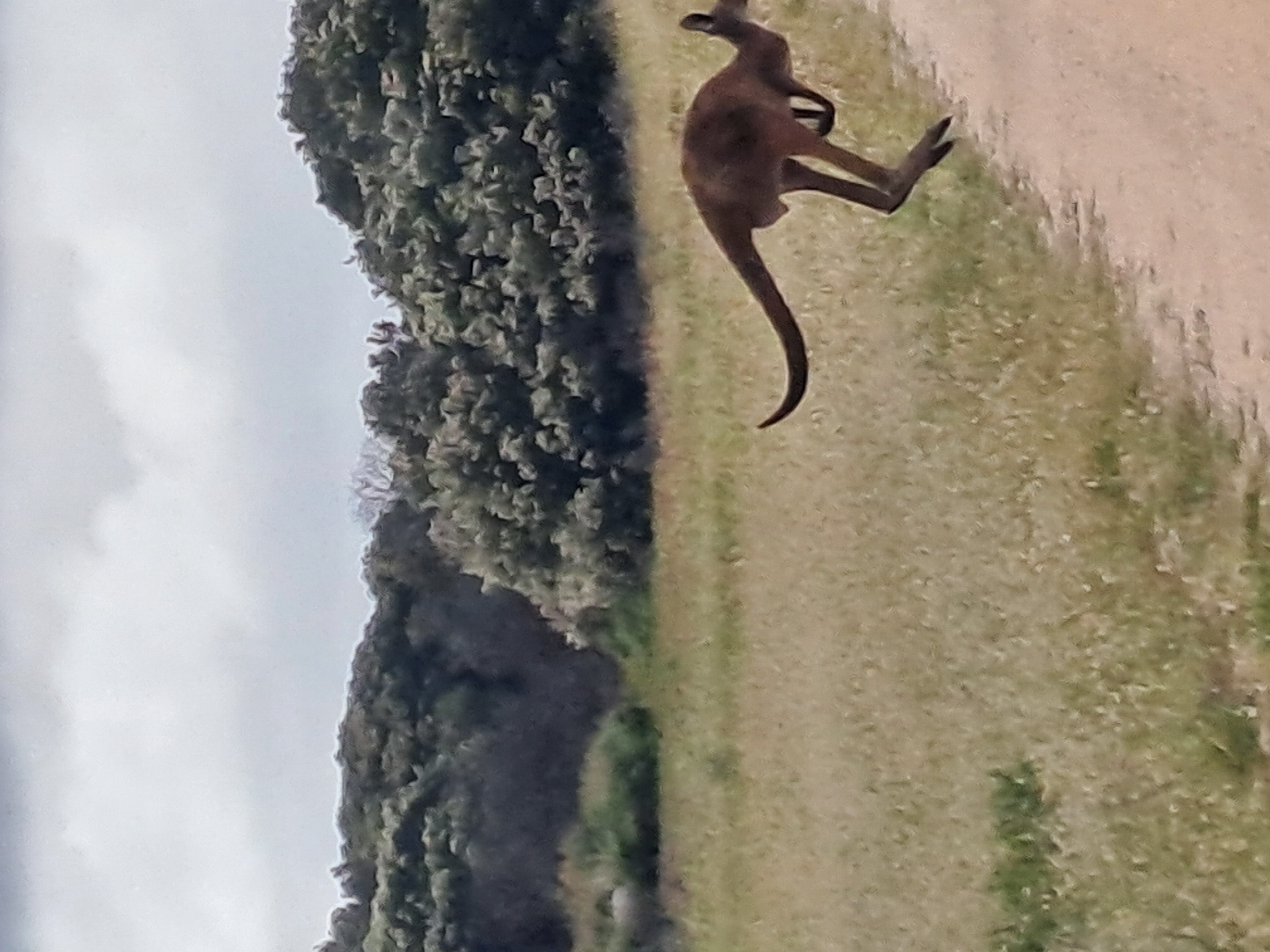
Walking along I almost bumped into kangaroos and a couple of emus.

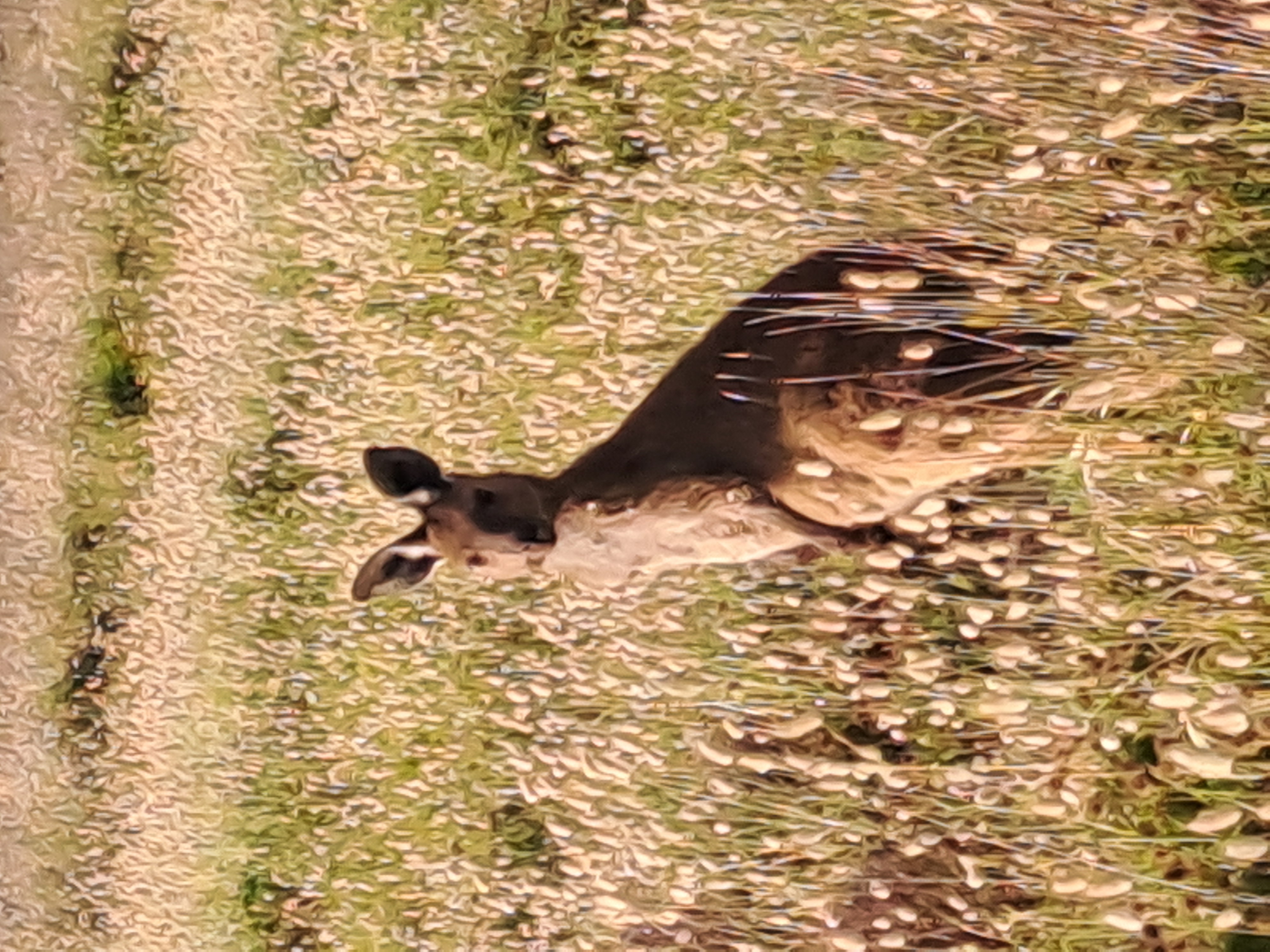

Later on we could sit in our van watching the kangaroos feed, and first thing in the morning as well. It was brilliant.

It’s amazing what you find along the road in Australia such as this giant lobster!


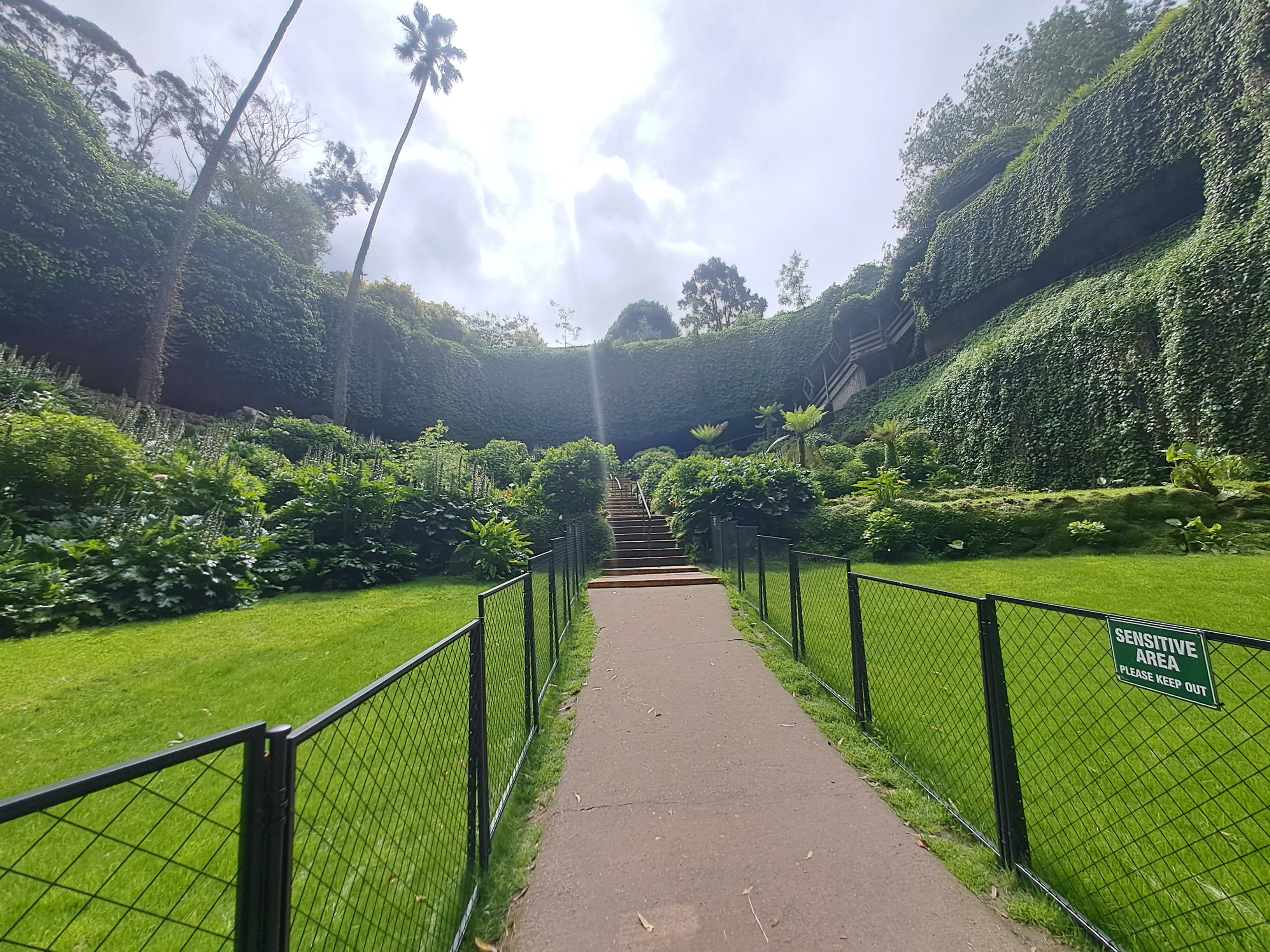
Our last stop in South Australia was at Mount Gambier whose claim to fame is the Uompherston sink hole. A big attraction originally as part of a Victorian garden with a lake at the bottom. The lake is no more, but I wandered down to see this very English garden.
I thought the warning about bees was a bit over the top, of course you find bees in gardens. However at the bottom I followed the sound of water to find the source. Here a became aware of a different sound the sound of the many bees whose hives were in the rock above. That decided me not to linger in that part of the garden.


fh

gjk